Ag News Archives for 2024-08

*Update 9-1* Tragic Loss at Beutler Ranch: Devastating Death Toll Test the Rodeo Family's Resilience

Our thoughts and prayers here at Oklahoma Farm Report go out to Bennie, Rhett, and all the Beutler Family as they navigate through the grief and loss of some of their most beloved Rodeo Stock. Right now, it's being reported that Beutler and Son Rodeo Company has lost upwards of 70 horses due to feed contamination. The Cattle Drug that has been mentioned (Brand Name Rumensin) is used to prevent coccidiosis and improve feed efficiency in cattle, but when fed to horses, it can prove to be deadly. An investigation is ongoing, and at this point, we do not know if any other farms or ranches have been affected by this feed. We will update you as this story unfolds. (Scroll Down for Updates)
This is an update from Kendra Santos Facebook Page, a Family Friend to the Beutlers:

"The level of catastrophic loss that's still unfolding at the Beutler Ranch in Elk City, Oklahoma right now is beyond comprehension. The horror of so many dead horses—the death toll is now approaching 70 and counting, I'm told—is devastating a family-dynasty breeding program that's a 95-year-old cowboy empire. What Elra, Jake and Lynn Beutler started in 1929, and Elra's grandson Bennie and his son Rhett built onto with Beutler & Son Rodeo Company today can't be replicated or replaced.


I have intentionally sat quiet on this story, knowing the Beutlers can't even breathe right now. They have no words, or tears left. They also have their hometown rodeo to produce this weekend, and with so much of their horse herd and generations-deep legacy wiped out without warning.


I've had many off-the-record conversations with cowboy people about this tragic turn of events in the last few days. I just had my first one on the record with the friend and veterinarian the Beutlers have entrusted with their four-legged family, Dr. Gregg VeneKlasen. Because of what may lie ahead legally, we will stick to only the facts that can be appropriately shared publicly at this time. More to come later, when the time is right for the Beutler family.


Early reporting that many of the Beutlers' horses were accidentally fed cattle feed is false, according to VeneKlasen.
"What these horses got was actually a horse feed mix with a huge amount of the cattle drug monensin (brand name Rumensin) in it," VeneKlasen said. "This was a tragic case of human error somewhere along the line, because tiny amounts of monensin is poison to horses. It kills them. Monensin is used in some cattle feed, but this amount in this horse feed delivered to the Beutlers would have killed cattle, too.
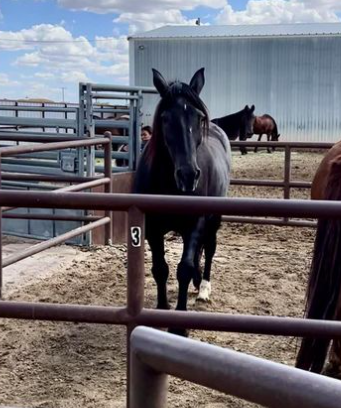
Pic of Black Kat, courtesy of Kendra Santos


"Much is known about what has happened here that cannot yet be told. But the bottom line on this story is that it's an important one to tell, so this never happens to anyone else. I will say this: Never buy horse feed from a mill that makes cattle feed. Period. Please quote me on that. Every horse that ate this feed is dead. The only bucking mare still alive is (NFR bucker) Black Kat, because she was at my place (Timber Creek Veterinary Hospital in Canyon, Texas; that's her in this picture) when this feed was delivered. The only Killer Bee baby that is still alive refused to eat the feed.


"I cried. We all cried. These bloodlines were five generations in the making. Many of the stars of this breeding program are gone. To see what's happened here to these horses will make you puke."


I stopped using the word "tragedy" a long time ago for situations that did not warrant it. "It's not a tragedy if nobody died" has become a famous line of mine when perspective is lost and drama is overblown. This, my friends, is a tragedy in our rodeo family.


The one silver lining I've seen so far is the heartwarming generosity of other stock contractors stepping up and offering their stock to the Beutlers. That's how our rodeo family rolls in the toughest of times, and it's something special to behold and be very proud of.


This story continues to unfold. More when we can. Until then, God Bless every horse who has died. And prayers for the Beutler family as they try to find a path forward with so many family members missing."

The Elk City Rodeo of Champions is set for this weekend, and The rodeo community has rallied around the Beutlers to help lessen the burden. Sammy Andrews of Andrews Rodeo is one of the many people stepping up to the plate during a time of need.

According to Prorodeo.com, "The Andrews and Beutlers go way back," Sammy said. "Our families have always kind of been intertwined. Bennie and I have been the best of friends forever. So, it was a no-brainer for us to step in and help. When a disaster like this hits the goodness of everybody steps up."
 
**8-31-24 Update 1:**
To help prevent further public panic over feed safety, Dr. VeneKlasen today made the following statement on this subject: "Many brands of feed—Purina, Nutrena and Bluebonnet, to name a few off the top of my head—are made in equine-only mills, and are safe. I suggest people stay with the big commercial companies with strict regulations in place. Because bucking-horse genetics are prone to metabolic syndrome, I feed Triple Crown Senior to everything here at Timber Creek (Veterinary Hospital), even the babies, because it's beet-pulp based with low sugar and high fat content.
"If you're going to get custom feed from a mill that makes feed for multiple species, including horses, cattle, goats, pigs and whatever else, make sure before it leaves the mill that it's been tested for ionophores. It's not an expensive test, but it's a critically important one. You can't have even trace amounts of ionophores, which can happen in unintentionally cross-contaminated feed, because the smallest dose impacts horses' hearts. If they eat even a tiny amount of it and don't die today, it might kill them in three weeks, three months or three years."
More details will be released as is appropriate from Team Beutler. Thank you all for your patience, understanding and prayers.


**8-31-24 Update 2:**
Livestock Nutrition Center, who delivered the load of feed to the Beutlers, issued a statement today. Team Beutler wanted it shared with you all.


"We are truly sorry for what the Beutler family is going through. Our preliminary tests show a load of feed delivered to Beutler and Son Rodeo Company in Elk City contained monensin, which can be toxic to horses. This likely occurred due to a combination of a failed cleanout procedure and a sensor malfunction. We have confirmed this is an isolated incident to this single load of feed from a single facility and no other feed has been impacted and is safe for animal consumption.


We take this seriously and are working with the State Departments of Agriculture in Oklahoma and Kansas and the FDA to get to the root cause of the problem and will take any and all corrective actions needed.
Words are cheap but we are dedicated to assist and support the Beutler family and make this right because our customers and employees expect and deserve it.


Our deepest sympathies go out to Mr.'s Bennie and Rhett Beutler and family and everyone affected by the recent tragic event at their ranch. The loss of so many valued animals is devastating."
Ronnie Castlebury, Ph.D-President of Livestock Nutrition Center

For those of you who want to follow along with Kendra Smith's Update, click here to see her facebook page.

Many friends and patrons have asked Beulter and Son how we can all help, and their response was, "Go to a rodeo," Which is what folks in Western Oklahoma have been doing this weekend. The 2024 Elk City Rodeo of Champions has seen Sold-out performances, and there will be upcoming rodeos at the Oklahoma State Fair and across the state.

8-31-24 Update 3:

After speaking with Dr. Mottet, Dr. VeneKlasen asked that she write this statement, and that I include it as today's third important update. "This is information everybody needs to know," Dr. VeneKlasen said. "It's a simple way for horse owners to check on the safety of their feed. There are so many feeds I've never even heard of. This is an easy way for people to check on the feed they're using."

~

From Rachel Mottet, MS, PhD, Equine Nutritionist:

Most U.S. feed companies are extremely safe and reliable, even those with multi-species mills. The greatest safety risk comes from mills that produce ionophore-containing feeds in the same mill and production lines as their equine feeds. This becomes fewer mills each year, yet there are still some that do this, often for logistical reasons. The most important thing you should find out is what your feed company's policy is regarding ionophores (the toxic compound involved in this situation) in their equine feed manufacturing mills.

My team has been compiling a list of company statements to give owners assurance about the safety of their feed. You can find this list here: https://docs.google.com/.../17IVu88GVlLU04C3uitCT.../edit.... There are some blanks as we are awaiting the response from a number of companies. A blank does not mean that your feed company is not safe, but for legal reasons, these statements can take time and we will populate them as they become available.

In our list, Ionophore Free refers to a mill where there are no ionophores present. Ionophore Safe refers to a company that has production policies to keep equine feed separate from feed with ionophores. If your company is ionophore safe vs. free, please connect with them directly to ensure they have completely separate equipment for equine feed production and ionophore free trucks to haul bulk feed. If they do not, please make a decision about how to best reduce your horse's risk of exposure.

The major U.S. feed companies tend to be extremely safe and have many checks and balances in place due to the volume of feed they produce. If your feed is Ionophore Safe vs. Free, do no panic, yet I advise that you follow-up with your company to get clarification on their production practices.

9-1-24 Update:

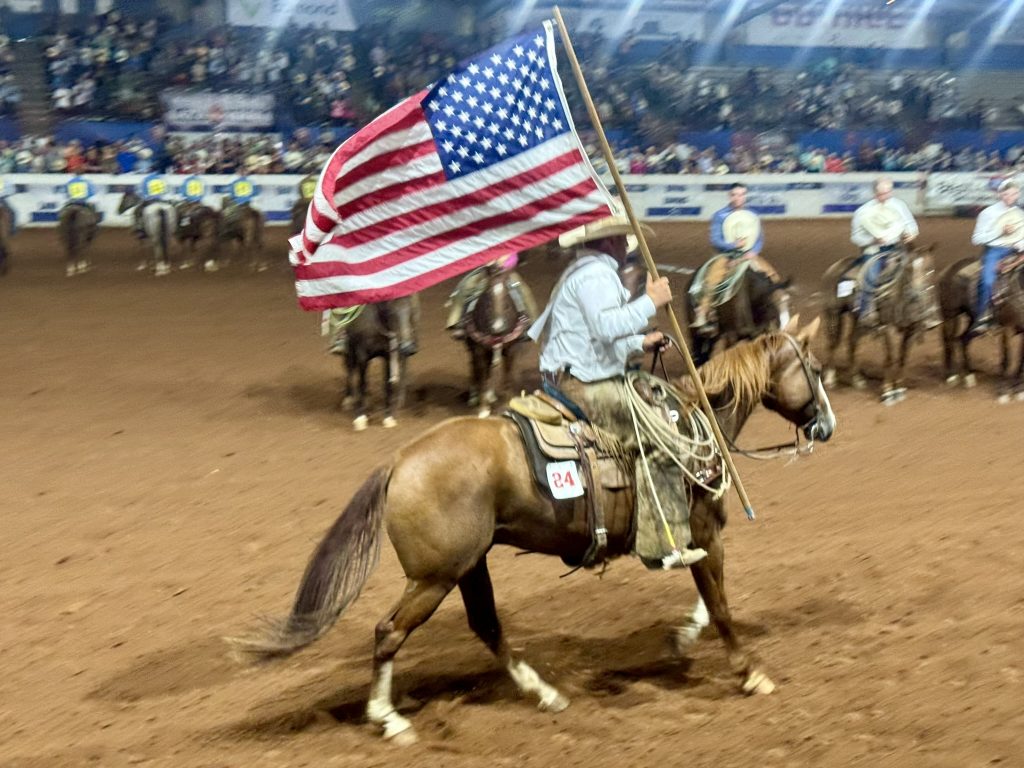
As fate, God and all those brand new Beutler bucking horses in Heaven would have it, the lone bucking-mare survivor of the recent Beutler-horse-herd tragedy, Black Kat, just won the Elk City Rodeo of Champions...held in Beutler and Son Rodeo Company's hometown...in Beutler Bros. Arena, which was named after founding brothers Jake, Lynn and Elra...for the second-straight year. Roedy Farrell of Thermopolis, Wyoming went 88.5 on the big black beauty for the win. Bonus points for it be a Cowboy State cowboy with all the 400,000-plus wildfire hell going on in his home country right now. We all needed something to smile about. And we got it tonight.❤️


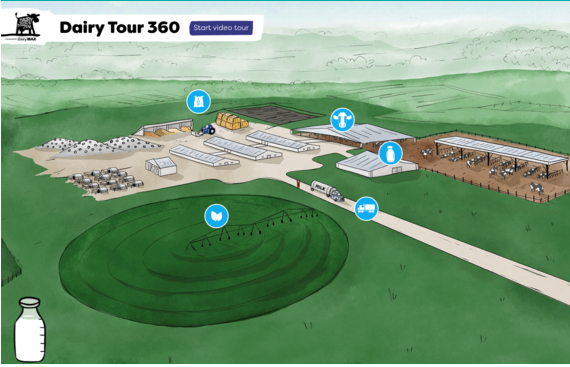
Dairy Tour 360 with Ag in the Classroom

Explore Dairy Farming with Dairy Tour 360: An Interactive Virtual Learning Tool for Your Classroom

In today's digital age, students are more connected than ever, accessing information in new and dynamic ways. As educators, it's essential to meet students where they are, especially when it comes to teaching about food and agriculture. Dairy Tour 360 is an innovative educational tool designed to do just that, providing an immersive, interactive experience that brings dairy farming directly into the classroom.

Dairy Tour 360 offers a unique 360-degree virtual tour of a dairy farm, allowing students to explore the farm environment as if they were actually there. With three accessible viewing options—desktop, virtual reality headset, and mobile device—students can stand in the feed lane, ride the milking carousel, or even fly over the fields, connecting with the world of dairy farming in an entirely new way.

Aligned with 14 lessons from the National Agricultural Literacy Curriculum Matrix, Dairy Tour 360 is perfect for enhancing your lessons. This virtual tool is not only engaging but also accessible and cost-effective, overcoming common challenges such as time, location, and budget constraints. Whether you're looking to show students how dairy cows are cared for, how land is used, the milking process, or how milk arrives at the grocery store, Dairy Tour 360 makes it possible.

Dairy MAX recently introduced this this innovative educational resource to teachers at the Oklahoma Ag in the Classroom Conference, and now it's your turn to explore! Discover Dairy Tour 360 at DairyTour360.com, and give your students an unforgettable virtual journey through the world of dairy farming!

Calling all industry experts: Texas & Southwestern Cattle Raisers Association seeks speakers for 2025 School for Successful Ranching

Texas & Southwestern Cattle Raisers Association announced an open call for speakers for the 2025 School for Successful Ranching, a premiere educational event for the cattle raisers, wildlife managers, landowners and others with a vested interested in the beef industry.

The 2025 School for Successful Ranching is held annually in conjunction with the Cattle Raisers Convention & Expo and is scheduled April 11 – 13 in Fort Worth. The 2025 curriculum will explore practical and innovative topics impacting cattle raisers, wildlife managers and landowners.

Interested speakers must apply online before Oct. 1. Applicants are asked to provide an outline of a proposed topic, including presenting speakers for the session. Applicants may submit multiple proposals.

For more information, visit tscra.org/texas-southwestern-cattle-raisers-association-seeks-speakers-for-2025-school-for-successful-ranching.

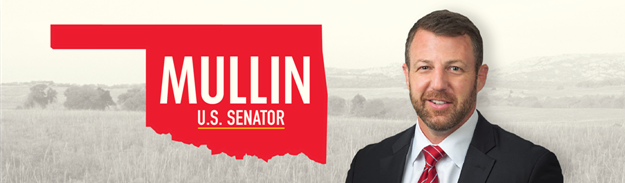
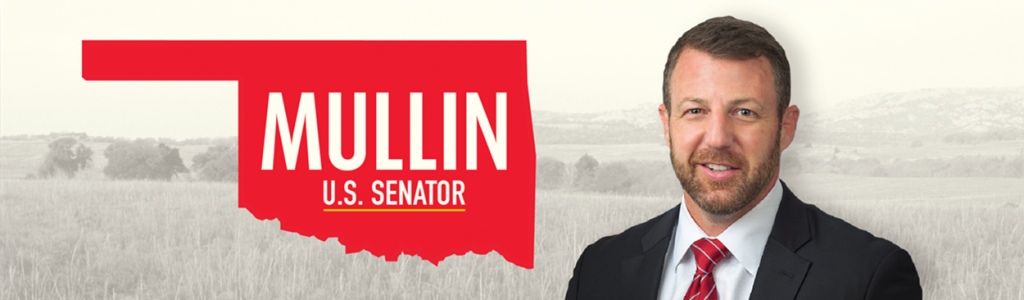
Mullin Travels Northwest Oklahoma for Community Conversations with Constituents, Businesses, and Local Leadership

Yesterday, U.S. Senator Markwayne Mullin (R-OK) spent the day in Northwest Oklahoma with community leaders, constituents, and local elected officials. The senator made stops in Medford, Cherokee, Northwestern Oklahoma State University, and Fairview where he held 'Community Conversations' pertaining to his work in Washington and Oklahoma, and answered limitless questions on topics ranging from inflation and agriculture to the Environmental Protection Agency (EPA) and the border crisis.

"It was great to be on the road again yesterday with so many fired up constituents," Sen. Mullin said. "At every stop my team and I are interacting and engaging with Oklahomans who are fed up with burdensome regulations, high taxes, and politicians telling them how to live their lives. Just like Wednesday, we're sharing with them how we're putting a stop to that."

Senator Mullin started his day in Medford where he sat down with Mayor Gary Bowen, City Manager Dea Mandevill, Grant County Farm Service Agency Exective Director Dakotah Lane, and members of the community. He updated attendees on the Biden-Harris border crisis, talked through the ongoing budget negotiations, and shared his journey in politics. Before heading off to the next stop, he took questions involving his constituent services, securing elections, and how the 2024 race will impact the state.

Click HERE for photos of Sen. Mullin's visit to Medford, Oklahoma.

Following Medford, the senator pulled off in Cherokee for a productive conversation about states having more say in federal spending, the Israel/Hamas war, his faith, and social security. He met with City Manager Chad Roach, Alfalfa County Commissioner Nate Ross, Mayor Kolby Arnold, Sen. Roland Pederson (SD-19), Rep. Carl Newton, OD (HD-58), and a large audience.

Click HERE for photos of Sen. Mullin's visit to Cherokee, Oklahoma.

After his visit in Cherokee, Senator Mullin stopped at Northwestern Oklahoma State University in Alva to meet with Northwestern Oklahoma State University President Dr. Bo Hannaford, Mayor Kelly Parker, City Manager Stephen Ford, Oklahoma Sorghum Commission and National Sorghum Producers Board member Dr. Kent Martin, local business and community leaders, educators, and spoke to a large crowd which included university students. Emphasizing his seat on the Senate Health, Education, Labor, and Pensions Committee and his relationship with fiscal conservatives, the senator discussed the farm bill, appropriations, entitlements, and took questions pertaining to rights of the unborn, and the debt. He concluded the conversation with sharing advice for becoming politically active.

Click HERE for photos of Sen. Mullin's visit to Northwestern Oklahoma State University.

The senator wrapped up his day in Fairview where he met with City Manager Robert Laverty, Assistant City Manager George Eischen, Fairview Chamber of Commerce Executive Director Tree Kelly, Rep. Mike Dobrinski (HD-59), Pioneer Telephone Cooperative Inc. General Manager Blake Callaham and constituents from the surrounding area. While there, he gave his thoughts on runaway spending in DC, the threat of China, discussed his voting record, and took questions from the group that covered election integrity, the Farm Bill, and food supply. He made clear that he'll continue to push legislative priorities for Oklahoma and that he'll fight to get the Internal Revenue Service off the backs of constituents in the state.

Click HERE for photos of Sen. Mullin's visit to Fairview, Oklahoma.

Background: On Wednesday, Senator Mullin kicked off a 'Community Conversations' tour in Northwest and Southwest Oklahoma as part of his efforts to connect with constituents during the August state work period. The goal of these conversations are for local Chamber of Commerce and residents to hear from the senator, ask questions, and discuss local and national issues impacting their communities.

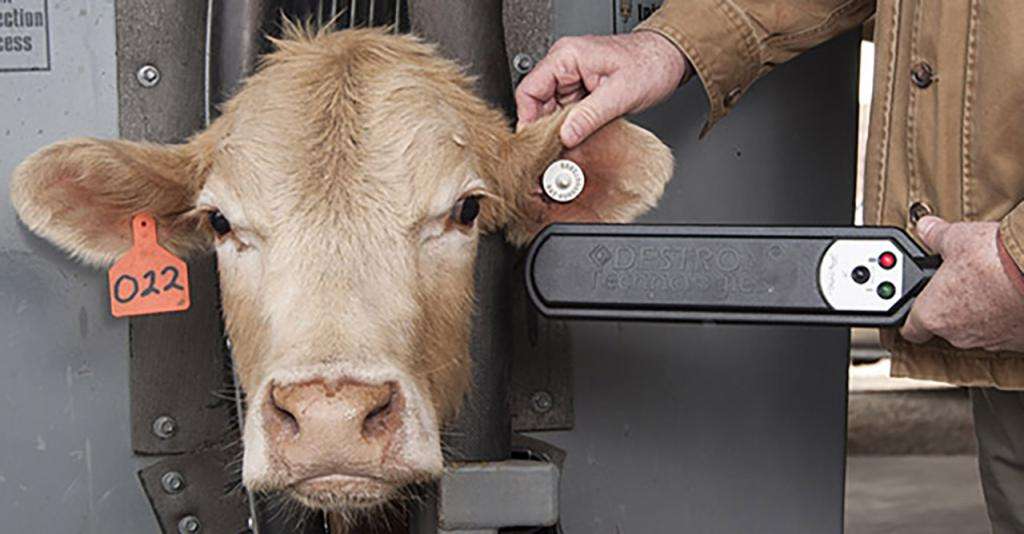
Updated EID Tag Requirements for Disease Traceability

Thursday, September 5, 2024 at 6:00 PM CST

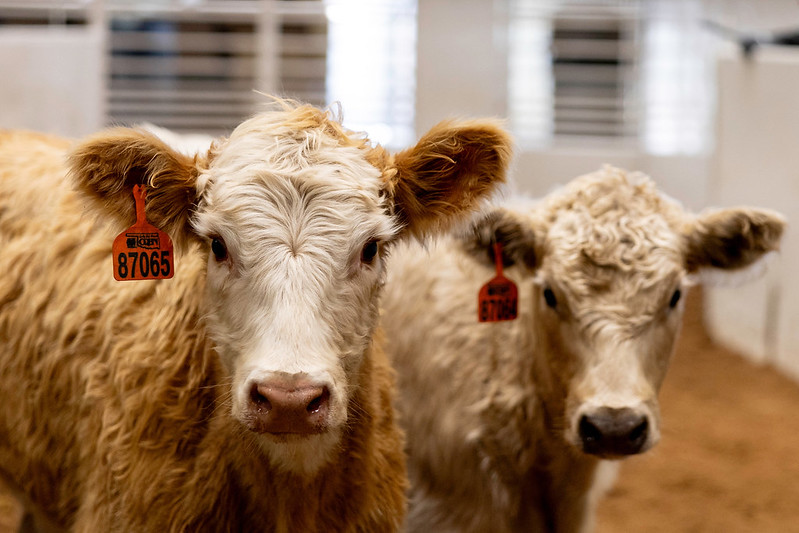
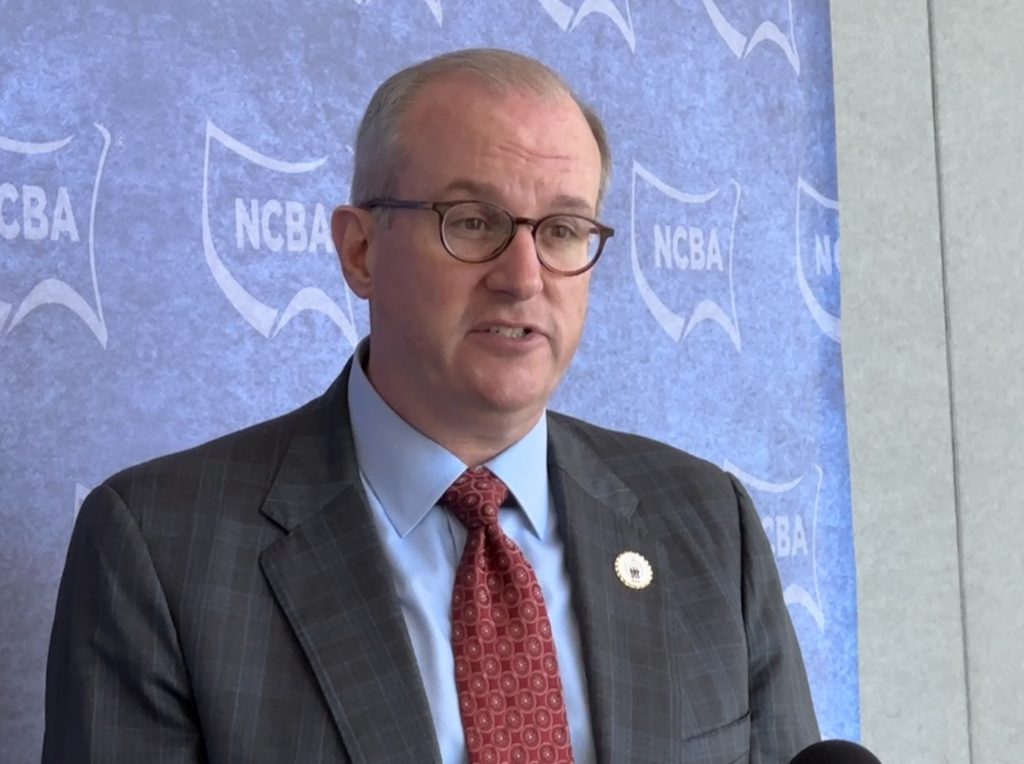
In April 2024, USDA-APHIS issued a final rule updating their existing 2013 regulations on animal disease traceability (ADT). The updated rule will take effect on November 5, 2024. This update now requires ear tags to be used as official animal identification for the interstate movement of covered classes of cattle to be both visually and electronically readable. For more than a decade, NCBA has been at the forefront of this regulatory discussion, working to ensure that a nationally significant ADT system works for our producers, protects their data, operates at the speed of commerce, and strengthens our ability to respond to the growing threat of a foreign animal disease outbreak. Dr. Alex Turner, DVM, Director of the National Animal Disease Traceability and Veterinary Accreditation Center at USDA-APHIS Veterinary Services and Sigrid Johannes, NCBA Senior Director of Government Affairs will be leading the discussion.

Join us to hear more about what this updated rule means for you!

Potts Family Foundation Expands Support for Early Childhood in Rural Oklahoma Communities

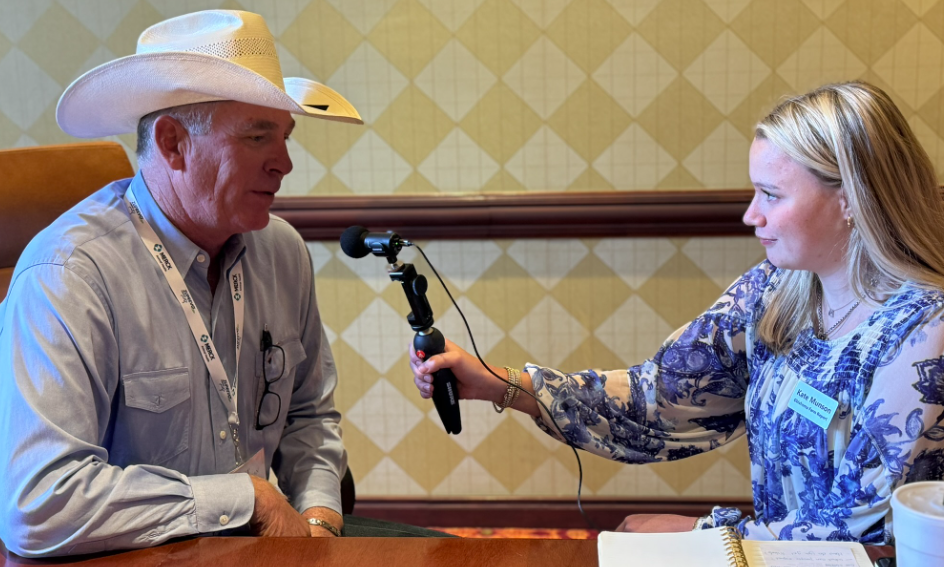
Listen to Ron Hays talking with AJ Griffin about how the Potts Family Foundation is expanding aid to rural areas in Oklahoma.

Senior Farm and Ranch Broadcaster caught up with Former Senator AJ Griffin, current CEO of the Potts Family Foundation,, to talk about the Potts Family Foundation and its recent gift to rural Oklahoma Communities. Potts Family Foundation was created in 1980 and is a private operating foundation begun by the Ray and Pat Potts family. Since Ray's passing, Pat and her three sons and daughter continue philanthropic work in communities.

The mission of the Potts Family Foundation is two-fold: They are the largest funder of the Oklahoma Center for Non Profits, and Pat was its founder. "We are very concerned about non profit sustainability and making sure the non profit community across the state is healthy and vibrant," Griffin said.

The other major area of focus is early childhood – the first five years of life. "Ray and Pat adopted one of their children, and as they raised her, they learned the importance of the years when she wasn't part of their family. So, Pat has made it a personal mission to help families provide the very best early experience for their children."

Research has shown that events that occur during a child's prenatal period and up to the fifth year of life can permanently impact the development of the individual's brain. "We do a lot of trauma training and trauma information work all across the state as a key component of our mission at Potts Family Foundation," she added. "We also support innovation in early childhood programs through grants, training and support, technical assistance, and helping with collaborations."

The Potts Family Foundation recently awarded eight rural Oklahoma communities a total of $4.5 million dollars to expand the state's Family Resource Center Network to 23 counties serving about 30,000 children under the age of 5 and their families and they are open for business. The project, known as Know and Grow Oklahoma: Building Resilient Children, Families and Communities, is funded in part by a portion of the state's American Rescue Plan Act (ARPA) and in partnership with the Oklahoma State Department of Health.

The Potts Family Foundation submitted the Know and Grow Oklahoma proposal to the Oklahoma Legislature to address recovery issues for the youngest of Oklahomans, specifically those born immediately before and during the pandemic, from 2019 to May 2023. Research shows that thousands of these children are experiencing developmental delays as a result of the very unique, often isolated period of time they were born into, however, the Family Resource Centers' services will be available to all members of the communities they serve.

Family Resource Centers are a national model and must comply under a certain set of standards. Before the Potts Family Foundation's inception, there were only three Family Resource Centers in the state – Tulsa, Oklahoma City, and Norman. The Potts Family Foundation has since added eight more Family Resource Centers to the network – Woodward, Enid, Ponca City, Stillwater, Grove, Shawnee, Duncan, and Hugo.

"Those eight communities have 23 counties in their service areas," Griffin said. "Roughly 50,000 Oklahoma children under the age of five reside in those 23 counties."

Family Resource Centers are managed with a framework that strengthens families to help parents, caregivers and their children become more resilient. They rely on community representation and collaboration and are known by many different names nationwide, including Family Support Centers, Family Resource Hubs and Parent-Child Centers. They may be community, school or faith-based and offer activities and programs developed to be reflective and responsive to the specific needs, cultures and interests of the communities and the populations they serve.

The Potts Family Foundation assists the Family Resource Centers in navigating the labyrinth of federal funding, connects them with partners in other parts of the state to learn new ways to help, and equips them with what they need which, in many instances, is trained people.

"Another thing we are using this for is to identify gaps in the service model across rural Oklahoma," she said. "We get into a lot of communities and learn that even access to prenatal care is a challenge. I can take that back to the capital and advocate for expansion of services to make sure that we can use the existing things to do a better job of supporting families."

Each of the Family Resource Centers is different from the other. A couple are in association with a youth services agency, so they may have onsite mental health treatment, or services for children in DHS custody. Some are faith-based, and others are community coalitions that connect people who want to help.

"A Family Resource Center isn't necessarily a single place," Griffin commented. "Sometimes it is a hub of connected services. They all look different. That is one of the great things about this. I am a big believer, especially in rural Oklahoma, in building things that are assets-based. In some communities, when you have a great church building and a Dollar General Store, that's where you start. Maybe the asset is a really active FCCLA chapter at the local high school, so you get them involved. We help communities use their assets and support the families that are living there."

The Potts Family Foundation works closely with the Payne County organization, Our Daily Bread, which began as a food pantry. With the support of the community, the organization has grown to include wrap-around services making it a perfect model for a Family Resource Center.

"That front door of tangible need is a key component," Griffin said. "If a family comes in the door, and they need food, diapers, formula, and likely struggling with other things such as access to job training, signing up for childcare subsidies, mental health treatment, help navigating the healthcare system, they will get what they need."

She emphasized the importance of having children ready to learn when they start school, and they must be prepared long before they ever reach that age. "We have seen that if a child is established and grounded in their family in those first five years – we call that early relational health, but that's a fancy word for being bonded in their families. In order to have tight bonds between parent and child, parents have to feel supported and cared for themselves. A parent who is struggling and worried about providing for their family is going to be less likely to be bonded and attached to their child. If a Family Resource Center can support mom and dad and relieve some of the stress, that is good for kids," she said.

The Know and Grow concept stemmed from "Things that we know that help kids grow." Griffin explained, "We believe in avoiding adverse experiences for kids and helping families build tight connections that will last for the child's entire life through tangible support, and community-based understanding of the importance of the first five years."

She described that there was a time when experts believed that if a child didn't remember an incident, it wouldn't affect them. New research has proven that to be untrue. "Trauma experienced, even by mom when she's pregnant, impacts the development of the child's brain. Working to alleviate trauma in the first five years of life is a wonderful investment of public dollars and it will pay dividends forever. That individual will grow up healthier, be more successful, will be less likely to go to jail or have a substance abuse disorder, and less likely to die of heart disease.

Since funds from the Potts Family Foundation and federal dollars have kicked of the new Family Resource Centers, how will the organizations continue to operate? "We started from the very beginning with sustainability plans in each of the communities. We will use our expertise to help them fundraise locally. The model lends itself to once you get rolling, it can just spin-off, so a lot of training – once you put that into an entity, it is permanent. We will do a lot of skills development in local communities, but we are also going to use our advocacy chops to go back to the state to say, 'Here's this investment we have made of these federal dollars, and here is the proven outcome."

She said that families and communities outside of the 23 covered Oklahoma counties can still reach out to the Potts Family Foundation through their website pottsfamilyfoundation.org.

Daily Email for August 30, 2024


Oklahoma's Latest Farm

And Ranch News

Friday, August 30, 2024


Enjoy Your Labor Day Holiday Weekend- We Return With Your Next Email Report on Tuesday, September 3rd

 
Howdy Neighbors!

Here is Your Daily Oklahoma Farm and Ranch News Update: 


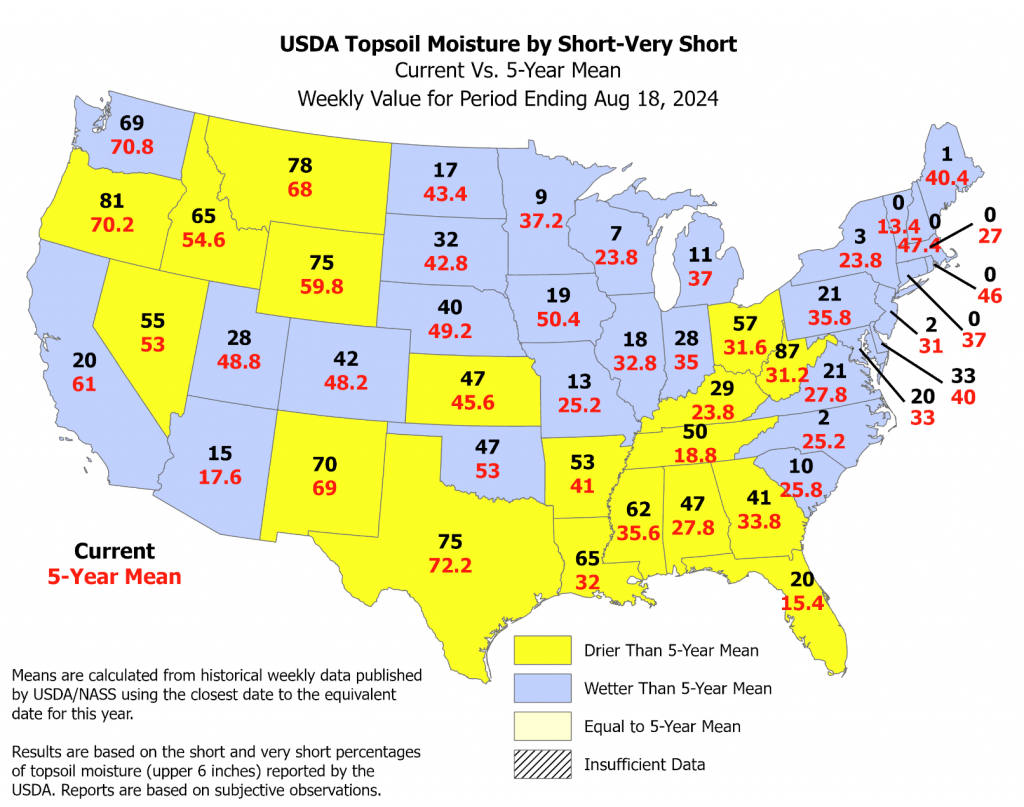
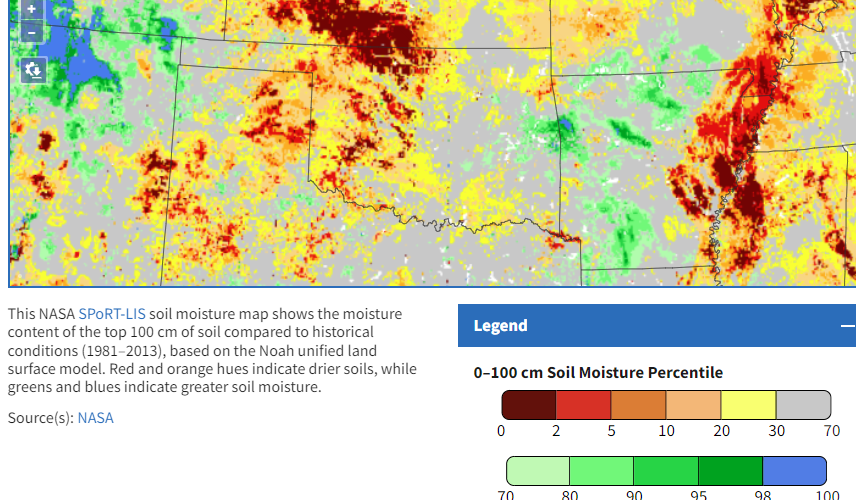
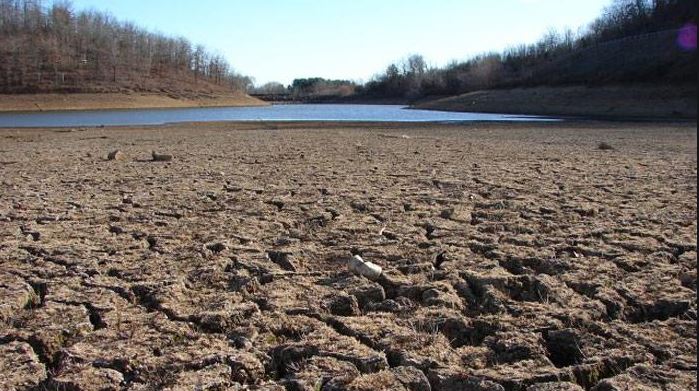
  • Extreme Drought Returns to Oklahoma in Latest Drought Monitor Report


  • Insights from Dr. Rosslyn Biggs: The Risks of Monensin in Horse Feed


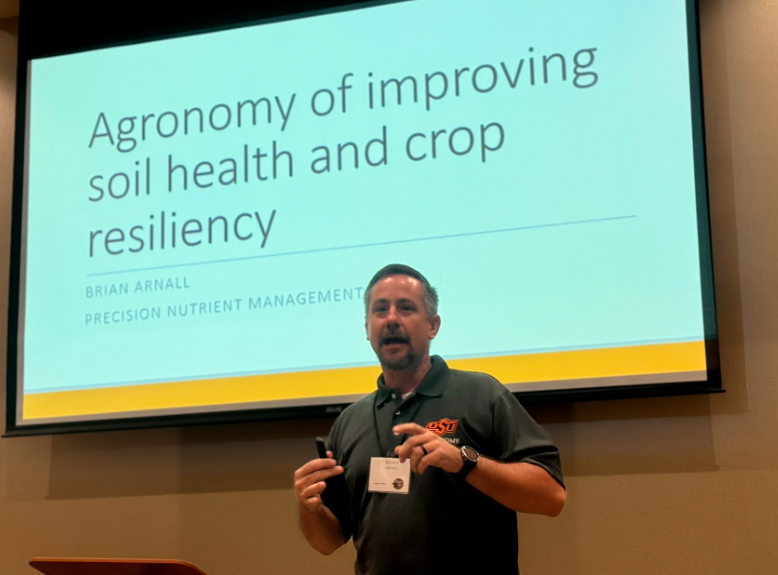
  • The Agronomy of Improving Soil Health with OSU's Dr. Brian Arnall


  • Oklahoma Dept of Ag Involved in Investigation of Horse Deaths in Western Oklahoma


  • Tragic Loss at Beutler Ranch: Devastating Death Toll Test the Rodeo Family's Resilience


  • Dr. John Michael Riley Discusses the Highs & Lows of Grain Markets

  • Parasite management is a Foundation for Herd Health at Buford Ranch


  • Massive Change in How You Tag a Vehicle in Oklahoma Starts September First
 

Extreme Drought Returns to Oklahoma in Latest Drought Monitor Report

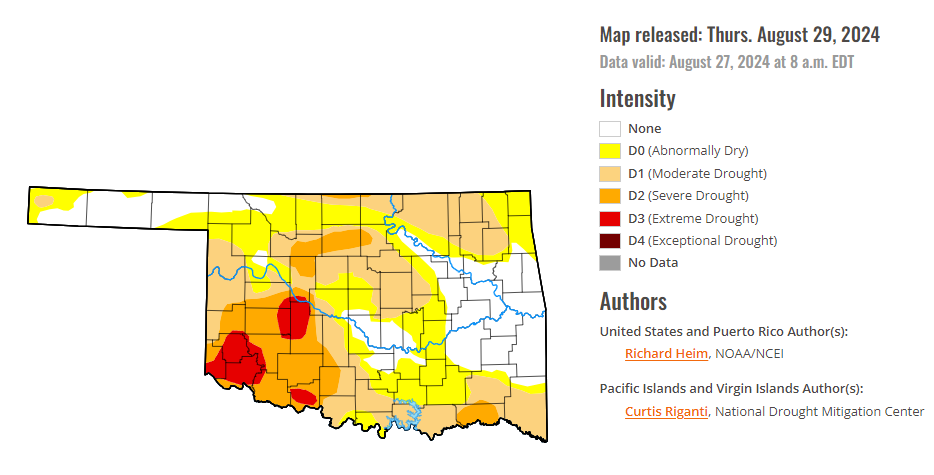
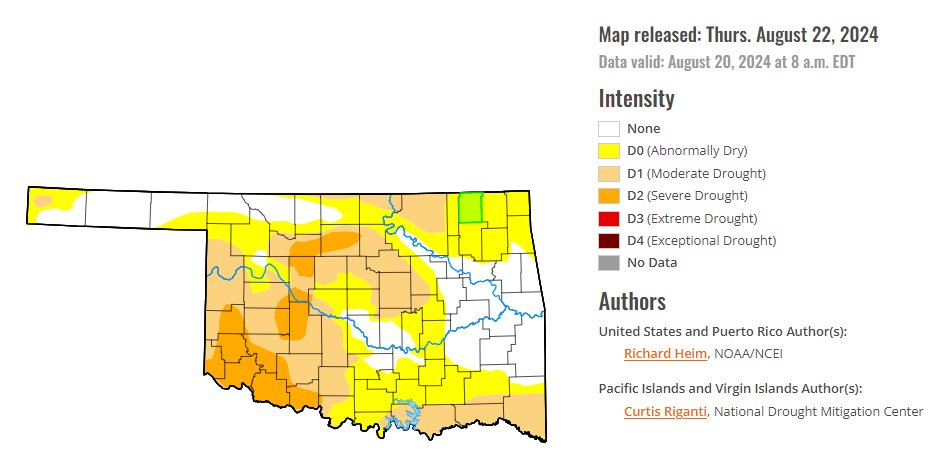
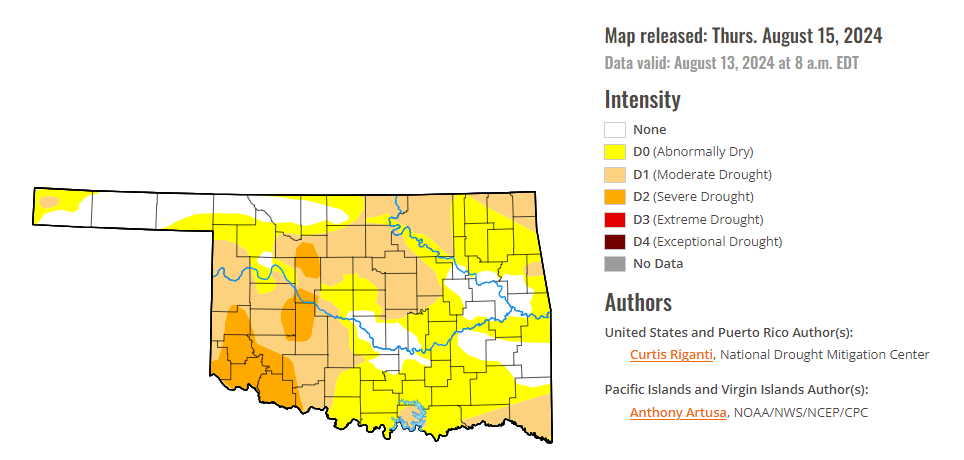
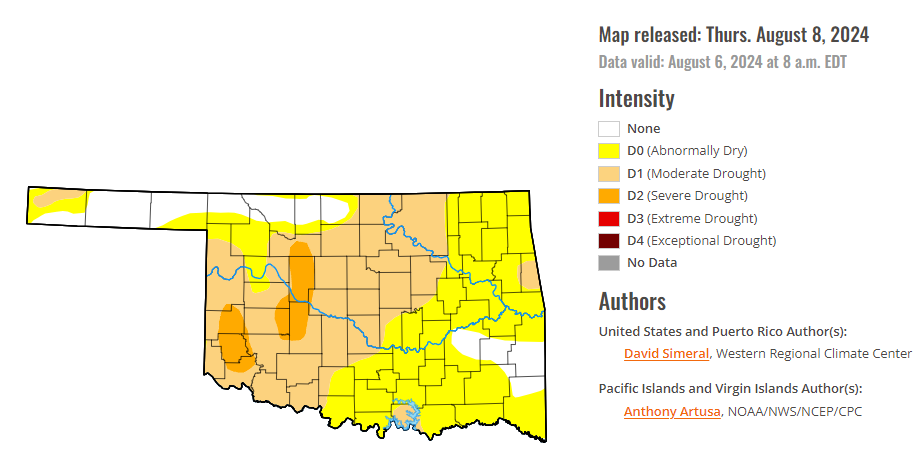
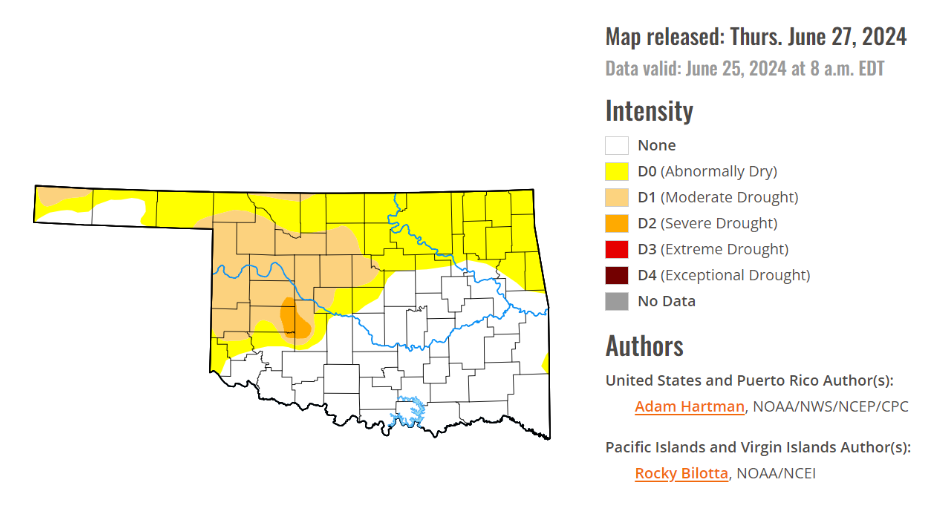
According to the latest Oklahoma drought monitor report, exceptional drought remains at zero percent, unchanged from the start of the calendar year.


Extreme drought or worse is now 4.56, up from zero since the start of the calendar year.


Severe drought or worse has increased to 17.52 percent, up from 10.24 percent last week.


Moderate drought or worse, has increased to 47.55 percent, up from 39.66 percent last week.


Abnormally dry or worse conditions are now at 74.36 percent, up from last week's 72.17 percent.


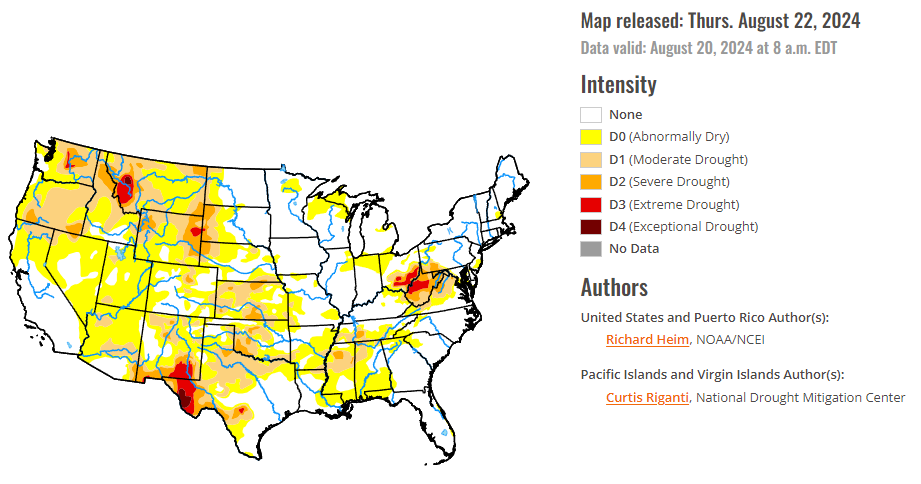
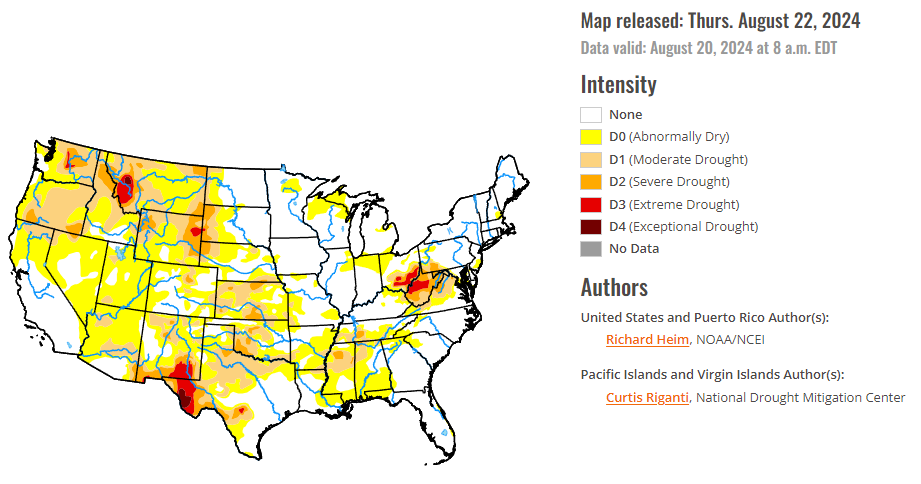
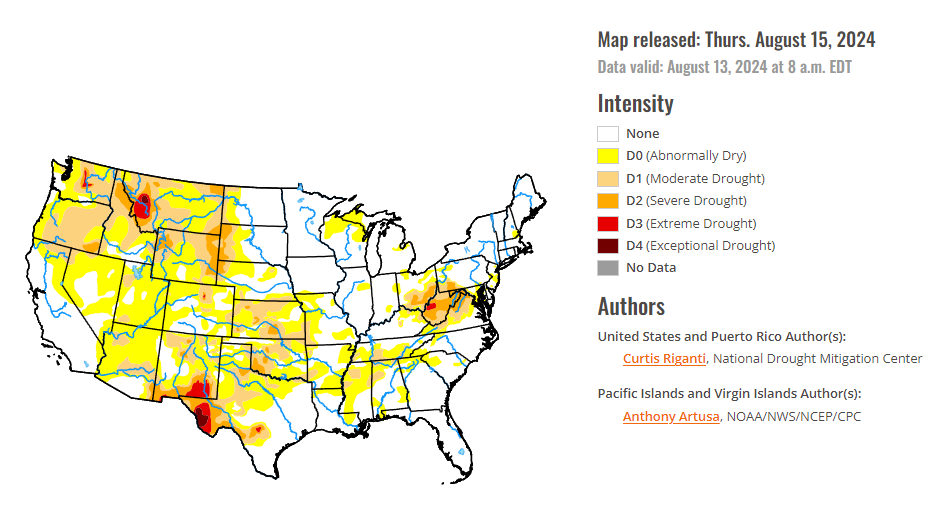
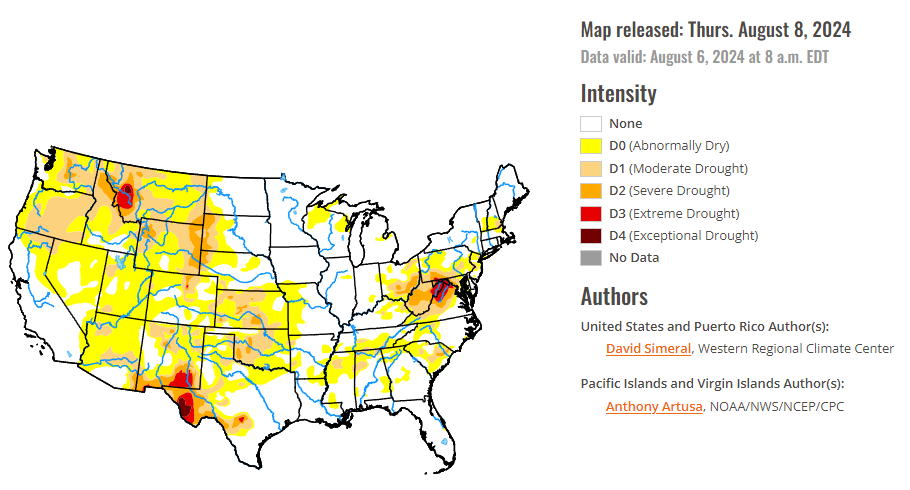
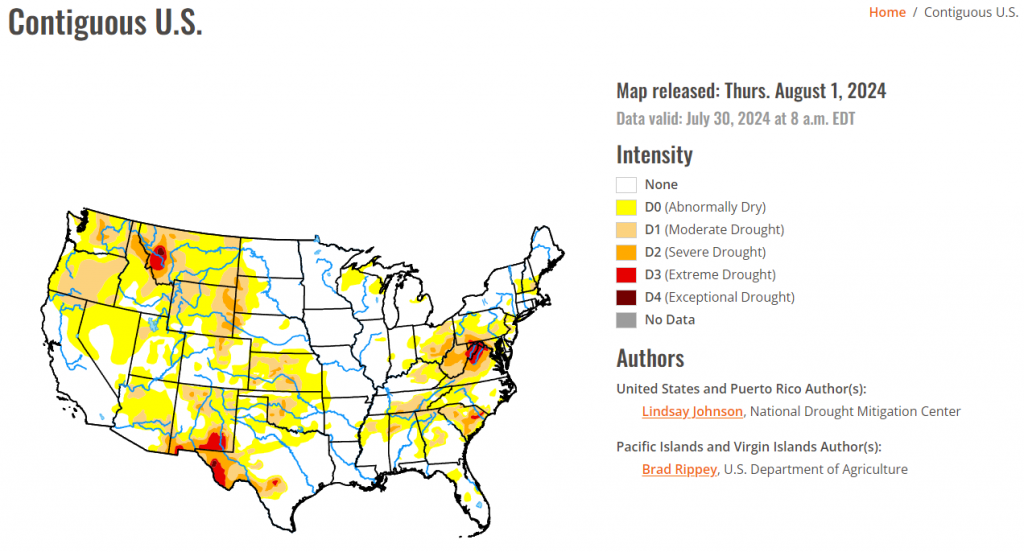
As for our neighbors, a strong ridge of high pressure maintained its grip across the central part of the contiguous U.S. bringing abnormal dryness and drought that expanded and intensified across the southern Plains. Most of the South region had no rain this week. Abnormal dryness and moderate to severe drought expanded in all of the states, while extreme drought expanded in Texas and developed in Oklahoma, Mississippi, and Tennessee. 


Kansas Drought Monitor continues to show roughly half of the state in Moderate Drought- 50.07% this week versus 50.55% last week. Texas Drought ratings jumped 8 percentage points to 48.13% versus 40.01% a week ago.


Click here for the Kansas Drought Monitor Page and Click here for the Texas Drought Monitor Page.

Read more about the latest Drought Monitor Report Here

Sponsor Spotlight


As the premier John Deere dealer across Oklahoma & Arkansas, P&K Equipment is proud to serve our 20 communities and the surrounding areas. From residential, small ag & hay, large ag, & compact construction equipment- the P&K team makes it easy to buy & own your John Deere equipment.


You'll find transparent pricing & easy financing options on the website & in stores. You'll have technology, sales, parts, and service support long after the sale. So when you're ready to experience the ease of operating John Deere equipment- you can trust the experts at P&K Equipment.


Insights from Dr. Rosslyn Biggs: The Risks of Monensin in Horse Feed

A high-level rodeo stock contractor in Canute, Oklahoma, lost over seventy head of performance horses after receiving feed containing sodium monensin, a common additive intended for cattle, sheep, goats, and poultry. Known by the brand name Rumensin, when fed to the correct species, it is known to increase milk production, control ketosis, reduce bloat, control coccidiosis, and improve feed efficiency and reproductive performance.


When ingested by the wrong species, horses, pigs, or dogs, it can be fatal. The horses would have experienced myocardial necrosis, heart failure, and death. Horses that survive will likely suffer from chronic heart damage. It takes 2 mg per kg to poison a horse, which is more than a bite or two, but still not a large quantity.


Senior Broadcaster Ron Hays contacted Dr. Rosslyn Biggs, OSU Professor in the School of Veterinary Medicine, to hear her take on the situation.


She said that the tragic event serves as a reminder to others to pay close attention when they are feeding multiple species on the same ranch. It is important to read labels carefully and communicate their needs clearly and effectively with feed dealers.


"We have cattle and horses at our house, and oftentimes it isn't me dumping the feed so I make sure I communicate very clearly," she said. "At my house, we don't use anything with monensin because it is always a concern that we might give the wrong feed to a horse and run into a problem."

Listen to Ron's conversation with Dr. Rosslyn Biggs and read more about it here

The Agronomy of Improving Soil Health with OSU's Dr. Brian Arnall

At the Women in Agriculture Conference, Farm Director KC Sheperd spoke with OSU Professor Plant & Soil Science and Extension Specialist Dr. Brian Arnall about soil health and crop resiliency.


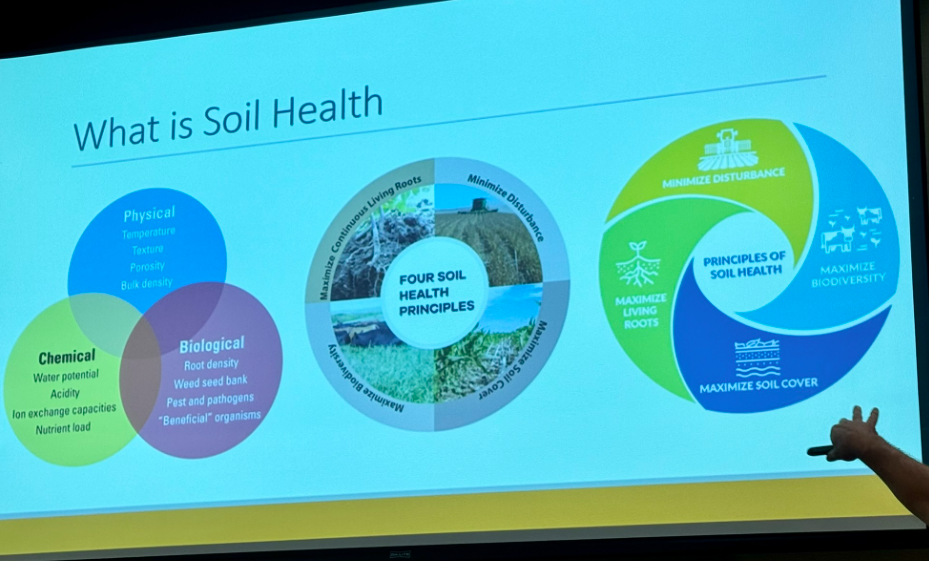
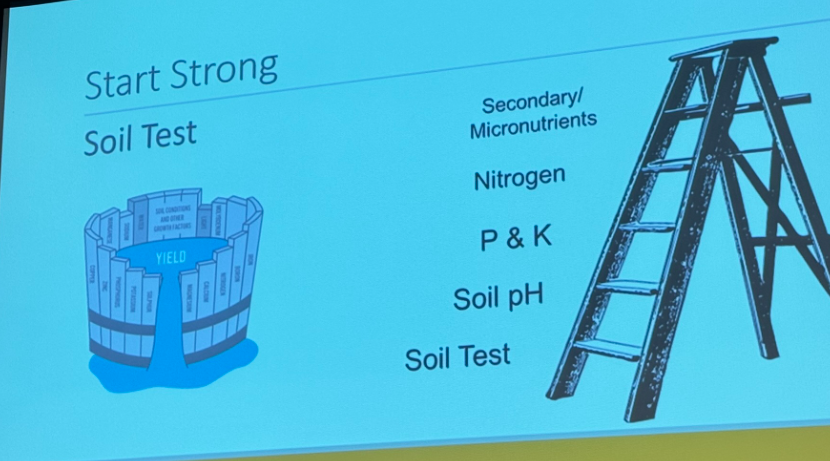
Arnall said that his definition of soil health begins with where the soil is at in terms of structure, its ability to resist weather extremes including both drought and flooding, and its ability to grow a crop, both economically and environmentally within a sustainable realm. Steps to soil health include increasing organic matter, and in effect, carbon in the soil, thus changing the structure of the soil which will allow for better water retention and more microbial and fungal activity to increase soil diversity.


Dr, Arnall said the soil in Oklahoma is nearly as varied as it gets and what works in one part of Oklahoma may not work in another. "We go from 'gators to antelope all in one state, and there's not many states that can say that," he said. "Every soil is different – we have rainfall, we have how the soil was formed – but even within a farm, you have different soils. You have the side slopes, the bottoms, the good ground, the poor ground, and the eroded ground. We have the clay soils in Ottawa County, we have the red soils in the middle and in the high plains. Maybe we need more cover crop for carbon and soil stability on a slide slope, but our bottom ground needs something that increases water infiltration depth, so maybe a deep-rooted tap crop or a rotation that helps our roots go deeper."

Listen to KC's interview with Dr. Brian Arnall and read more about it here
 
 
Sign Up for Our Daily Email- Free Because of Our Sponsors!

Support Our Sponsors!


KIS logo


Advertise With Us!
 

For our farmers who have either- always have had cotton on their farms- or those who have more recently have added the fiber crop to their operations- we have a daily report heard on several of our Radio Stations- It's Called Cotton Talk!

Click on the Button below to listen to our most recent report
Click here for our Latest Cotton Talk- Hosted by KC Sheperd


Sponsor Spotlight

The Oklahoma Cattlemen's Association is the trusted voice of the Oklahoma Cattle Industry. With headquarters in Oklahoma City, the OCA has a regular presence at the State Capitol to protect and defend the interests of cattlemen and cattlewomen.


Their Vision Statement explains the highest priority of the organization- "Leadership that serves, strengthens and advocates for the Oklahoma cattle industry."


To learn more about the OCA and how you can be a part of this forward-looking group of cattle producers, click here for their website. For more information- call 405-235-4391.


ODAFF Statement on Tragic Loss of Horses at Beutler and Son Rodeo Co.


The Oklahoma Department of Agriculture, Food and Forestry is aware of the tragic loss of horses at Beutler and Son Rodeo Co. in Elk City.


ODAFF received word from a veterinarian last Friday, August 23, of a potential issue with horses relating to a single bulk feed order for Beutler and Son Rodeo Co. As the state regulator of animal feed, an inspector visited the Beutler and Son site on behalf of the department on Monday, August 26, and learned that the feed originated in Kansas. The ODAFF inspector collected a feed sample which is being analyzed in two state-certified laboratories.


ODAFF has informed the Kansas Department of Agriculture of the inspector's site visit and continues to work in coordination with KDA. ODAFF has assisted Beutler and Son Rodeo Co. with carcass disposal to ensure all state regulations were adhered to.


State Veterinarian Dr. Rod Hall encourages all livestock and pet owners to be judicious in reviewing labels on feed provided to animals in their care and contact a veterinarian with whom they have a strong veterinary-client-patient relationship if they have questions about the safety of their feed or ingredients.


We invite you to listen to us on great radio stations across the region on the Radio Oklahoma Ag Network weekdays-

if you missed this morning's Farm News - or you are in an area where you can't hear it- click below for this morning's Farm news from Ron Hays and KC Sheperd on RON.
Listen to our latest Farm and Ranch News for Friday with KC Sheperd
 
 
Subscribe To the Daily Email


Sponsor Spotlight


The Oklahoma Wheat Commission promotes greater use of wheat in domestic and international markets through research, market development and public education.


Our Commissioners develop policy and programs, direct the funding, represent producer interests and, of course, promote Oklahoma wheat!


Learn more about the Oklahoma Wheat Commission by clicking here for their website. 


Tragic Loss at Beutler Ranch: Devastating Death Toll Test the Rodeo Family's Resilience

Our thoughts and prayers here at Oklahoma Farm Report go out to Bennie, Rhett, and all the Beutler Family as they navigate through the grief and loss of some of their most beloved Rodeo Stock. Right now, it's being reported that Beutler and Son Rodeo Company has lost upwards of 70 horses due to feed contamination.


This is an update from Kendra Santos Facebook Page, a Family Friend to the Beutlers:


"The level of catastrophic loss that's still unfolding at the Beutler Ranch in Elk City, Oklahoma right now is beyond comprehension. The horror of so many dead horses—the death toll is now approaching 70 and counting, I'm told—is devastating a family-dynasty breeding program that's a 95-year-old cowboy empire. What Elra, Jake and Lynn Beutler started in 1929, and Elra's grandson Bennie and his son Rhett built onto with Beutler & Son Rodeo Company today can't be replicated or replaced."


Santos goes on to say "I've had many off-the-record conversations with cowboy people about this tragic turn of events in the last few days. I just had my first one on the record with the friend and veterinarian the Beutlers have entrusted with their four-legged family, Dr. Gregg VeneKlasen. Because of what may lie ahead legally, we will stick to only the facts that can be appropriately shared publicly at this time. More to come later, when the time is right for the Beutler family.


"Early reporting that many of the Beutlers' horses were accidentally fed cattle feed is false, according to VeneKlasen.

"What these horses got was actually a horse feed mix with a huge amount of the cattle drug monensin (brand name Rumensin) in it," VeneKlasen said. "This was a tragic case of human error somewhere along the line, because tiny amounts of monensin is poison to horses. It kills them. Monensin is used in some cattle feed, but this amount in this horse feed delivered to the Beutlers would have killed cattle, too."

Click Here to Read More from the Facebook post on the Horse deaths in Western Oklahoma

Parasite management is a foundation for herd health at Buford Ranch

Efficiency and efficacy are the two things Doug Branch is looking for in a parasite control program. As manager of the Buford Ranch Osage Division in Oklahoma, Branch oversees a registered herd of Hereford cattle, a large part of the ranch's commercial cow/calf herd and a registered Quarter Horse operation. Keeping the cows and calves healthy with a solid vaccination and parasite management program is important to the ranch's success.


"With spring calving and fall calving herds, we are always doing something with the cattle," said Branch. "We are fortunate that the cattle can graze the majority of the year, so managing our forages is critical. That is also why parasite management is so important for our operation."


Branch noticed some rough hair coats showing up and it just didn't seem like cattle were responding the same way after being treated with parasite control products. "I suspected that we had some resistance but wasn't sure," said Branch. "We agreed to participate in an Oklahoma State University research project about prevalence of resistant parasites in Oklahoma cowherds."


As part of the project, university researchers pulled individual fecal samples on the ranch's spring-born bred Hereford heifers to conduct fecal egg count reduction tests (FECRT). Half the heifers were treated with Dectomax® Injectable and the other half received Ivomec® Plus. Then, 14 days later fecal samples were pulled again. "The reduction of egg counts wasn't as high as it should have been, indicating we were seeing some resistance issues with our parasite management program," said Branch.

Read more about Buford Ranch's Research Project with OSU here

Dr. John Michael Riley Discusses the Highs & Lows of Grain Markets

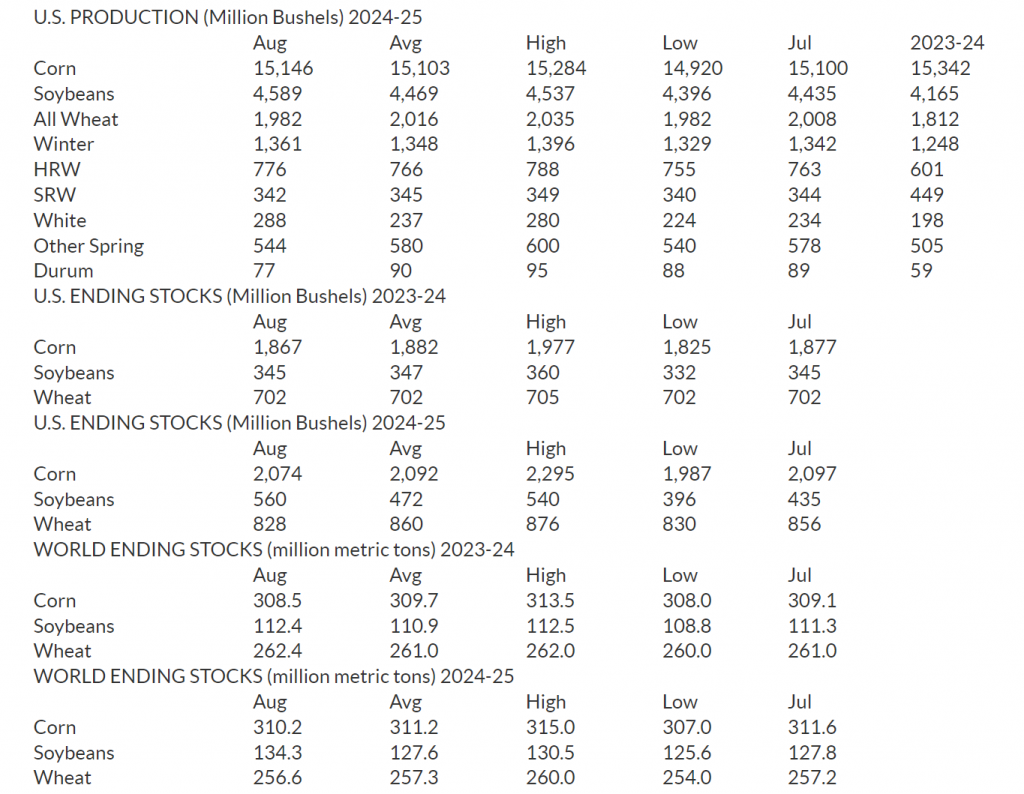
This week on SUNUP, OSU Agriculture Economist Dr. John Michael Riley discusses the highs and lows of current grain markets after the last WASDE report.


Soybeans dropped about 40 cents on the day of the WASDE report and the day after. Prices have leveled out since then, and have currently risen 10 to 20 cents since the aftermath of that report to the mid to upper nines which is similar to futures.


Dr. Riley said that corn and wheat didn't have any big news in the last WASDE report. "They did well coming out of the report counter to what soybeans were. Cotton had a little bit of a bright spot in terms of lower acres expected and lower carryover, but mostly benefited that day and then tailed off shortly thereafter."


Cotton has strengthened in terms of overall price over the past week, upwards of 70 cents per pound nearing the prices of early to mid-July. Cotton's success is relative to where the U.S. dollar compares to other currencies. Due to the dollar's weakness, cotton prices have been elevated.

Listen to Dr. John Michael Riley and read more here

Massive Change in How You Tag a Vehicle in Oklahoma Starts September First

The legislature mandates massive changes in how to tag a newly purchased vehicle in Oklahoma on or after September 1.


Starting September 1, 2024, the new vehicle registration process will expedite the issuance of metal license plates along with two temporary decals provided during a pre-registration that is completed with the initial purchase of a vehicle. Oklahomans can learn more at ReadySetTag.com.


KC Sheperd caught up with Jay Doyle, Chief Executive Officer for Service Oklahoma, to talk about Ready Set Tag, which is set to take effect on September 1.


Ready Set Tag is a public awareness campaign around the Mason Treat Act. What this means is that any vehicle purchased September 1 or after in the state of Oklahoma will be subjected to a pre-registration process. The goal of the preregistration process is to get a metal plate on the back of the vehicle as soon as possible.

Read more and listen to KC's interview with Jay Doyle here

Interviews Worth Checking Out Over the Holiday Weekend

Cooler Temps arrive with a Cold Front Next week Says State Climatologist Gary McManus
 
A Third, A Third and a Third- the Life and Times of Kim Anderson
 
Oklahoma State Fair Kicks off September 12- KC Sheperd Talks With Scott Munz
 
Dr. Derrell Peel Sees Start of Wheat Pasture "What If" Season
Let's Check The Markets!
OKC West is our Market Links Sponsor- they sell cattle three days a week- Cows on Mondays, Stockers on Tuesday and Feeders on Wednesday- Call 405-262-8800 to learn more.
 
Today's First Look:
Ron on RON Markets as heard on K101  
mornings with cash and futures reviewed- includes where the Cash Cattle market stands, the latest Feeder Cattle Markets Etc.
Hear Today's First Look
 

Wholesale Boxed Beef Prices were mixed - Choice Beef was up $1.37 and Select Beef was down $1.44 on 8/29/2024.


Click on the Button below for the latest report from USDA Market News

Boxed Beef Report from 8/29/2024
 

Weekly Cattle Auction Reports


The buttons below allow you to check out the weekly Cattle Auctions in the region that we post on our website and here in our daily email update:

Oklahoma National Stockyards Market Report from 08/26/2024
 
Tulsa Stockyards on Monday August 26, 2024
 
Joplin Regional Stockyards Market from Monday 08/26//2024
 
Oklahoma National Stockyards Replacement Cattle for Tuesday 08/27/2024
 
OKC West in El Reno Market Report from 08/27 and 12/28/2024
 
Woodward Livestock Market from Thursday 8/29/2024
 
Each afternoon we are posting a recap of that day's markets as analyzed by Justin Lewis of KIS futures - click below for the latest update on the Livestock and Grain Futures Trade..
Click Here to Listen to Justin's Commentary From 8/29/2024
 
Okla Cash Grain:  
Daily Oklahoma Cash Grain Prices- as reported by the Oklahoma Dept. of Agriculture- The report available after the close of the Futures Trade for that day.
Read Cash Grains Report from 8/29/2024
 
Our Daily Market Wrapup from the Radio Oklahoma Ag Network - analyzing the Futures Markets for that trading day- as reported by KC Sheperd.
Click to Listen to Our Weekday Wrap with KC
 
Slaughter Cattle Recap: 
The National Daily Slaughter Cattle Summary- as prepared by the USDA Market News
Read Report
 
TCFA Feedlot Recap:  
Finally, here is the Daily Volume and Price Summary from the Texas Cattle Feeders Association.
Read Report

Our Oklahoma Farm Report Team!!!!


KC Sheperd, Farm Director and Editor


Ron Hays, Senior Farm/Ranch Broadcaster and Editor


Dave Lanning, Markets and Production


Stevie White, Farm News and Email Editor


Pam Arterburn, Calendar and Template Manager

Podcasts From Oklahoma Farm Report and More

Two of our regular reports are also podcasts that you can subscribe to- Our daily Farm and Ranch News with KC Sheperd- available here on the Apple Podcast Platform


The second is our daily Beef Buzz with Ron Hays- available here on the Apple Podcast Platform


Periodically- we offer interviews on our Ag Perspectives Podcast series- this podcast is available here.


Ron has also has a series of podcasts from interviews with newsmakers at the Cattlemen's Congress- Click here or you can find them on your favorite Podcast platform- look for them by searching for Cattlemen's Congress Conversations.


We are making plans to jump back into regular installments of what has been called the Road to Rural Prosperity- a new name and fresh content is in the works- for now- click on the blue button below for one of our favorites that is a timeless classic.

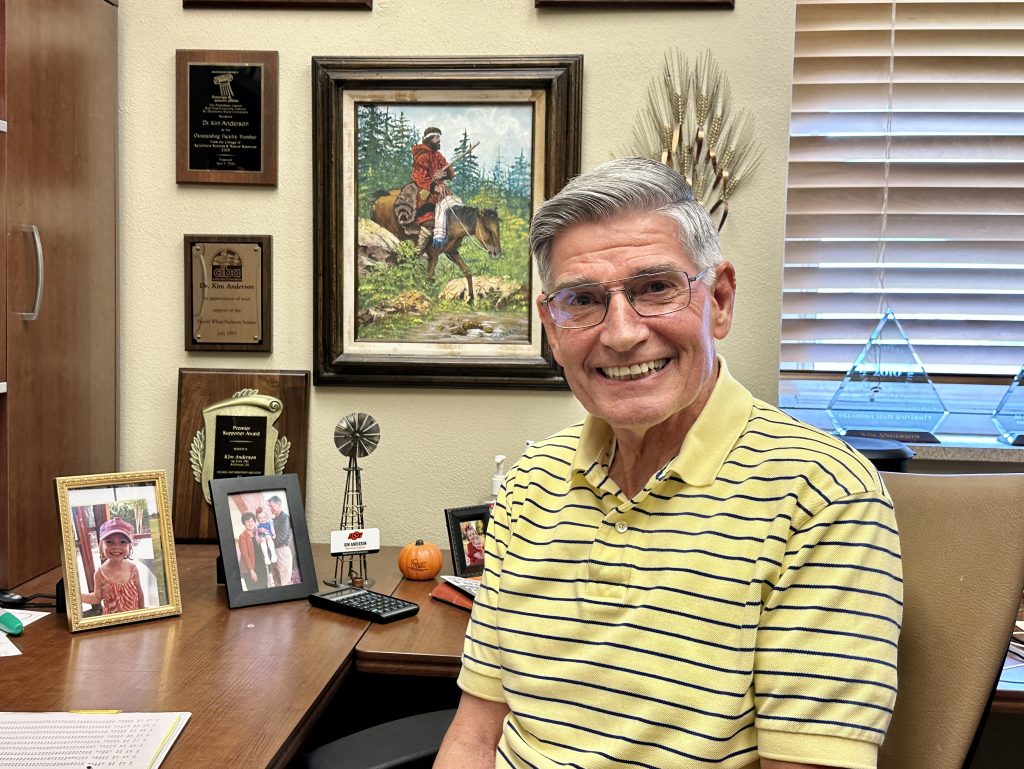
Listen to Ron Hays talk with Dr. Kim Anderson About His Life That Has Included 42 Years with OSU Extension- and More
 
 
Listen to Ron
Beef Buzz
 
Blue Green Gazette
Calendar
Auctions
Market Links
Facebook  Twitter  Youtube  

Our thanks to Midwest Farms Shows, P & K Equipment, Oklahoma Farm Bureau, Oklahoma Ag Mediation Program, Great Plains Kubota, Stillwater Milling Company, National Livestock Credit Corporation, Oklahoma Beef Council, Oklahoma Wheat Commission, Oklahoma AgCredit, the Oklahoma Cattlemens Association, Invenergy Oklahoma and  KIS Futures for their support of our daily Farm News Update.


For your convenience, we have our sponsors' websites linked here- just click on their name to jump to their website- check their sites out and let these folks know you appreciate the support of this daily email, as their sponsorship helps us keep this arriving in your inbox on a regular basis- at NO Charge!


We also appreciate our Market Links Sponsor - OKC West Livestock! 


We invite you to check out our website at the link below too that includes an archive of these daily emails, audio reports and top farm news story links from around the globe.

Head to Our Website OklahomaFarmReport.Com
God Bless!
Reach Out To Us:
Tim West
President/General Manager
Rural Oklahoma Networks

405-317-6361

***************

Mike Henderson
Director of Sales

405-615-4922

KC Sheperd
Farm Director
Radio Oklahoma Ag Network

405-443-5717

Email KC
Ron Hays
Senior Farm/Ranch Broadcaster
Radio Oklahoma Ag Network

405.473.6144
Email Ron

Supplemental Trace Minerals as Complexed or Inorganic Sources for Beef Cattle During theReceiving Period

Trace minerals have many important physiological functions in beef cattle including vitamin synthesis, hormone production, enzyme activity, collagen formation, tissue synthesis, oxygen transport, energy production, and other physiological processes related to growth, reproduction and health. Thus, trace minerals must be supplemented to beef cattle diets when forages and rations are deficient or have incorrect proportions. Traditionally, trace minerals used in animal feed have been categorized as either inorganic (primarily sulfate and oxide forms) or organic. "Organic" simply means that the mineral is bound to an organic material. These materials are generally amino acid complexes, proteinates,
chelates, polysaccharide complexes, and propionates.

The issues associated with health and management of newly received cattle continue to pose significant animal welfare and economic challenges for the beef industry. Shipping fever, or bovine respiratory disease complex (BRD), is the most common morbidity and mortality event among feedlot cattle in the United States.1 BRD accounts for approximately 75% of morbidity2 and 50 to 70% of mortality in feedlots.3 The incidence of BRD is greater within the first days after feedlot arrival (receiving period)4; usually the first 4 to 8 weeks in which relocated beef cattle adjust to their new environment. University of Arkansas research investigated the effects of inorganic or complexed sources of trace minerals (zinc, copper, manganese, and cobalt) on beef heifer growth performance, morbidity, and mineral status during a receiving period.

In this study, 287 crossbred beef heifer calves (509 lb) arriving on three delivery dates were used in a 42-day receiving trial. The heifers were obtained from a cooperating producer, who purchased calves in small groups in regional sale barns (within ~155 miles) over a period of 3 days, transporting them to a single site. Then cattle were shipped (93 miles) to the University of Arkansas Division of Agriculture Beef Cattle Research Facility near Fayetteville, AR. Heifers arrived in 3 shipment sets (block) with arrival dates of October 6, 26, and November 23, 2021. Heifers were processed after arrival, stratified by day −1 body weights (BW) and allocated randomly to eight pens (11 to 13 heifers/pen, 24 pens total). Within the truckload, pens were assigned randomly to dietary treatment (12 pens/treatment).

Heifers were housed on 1.04-acre grass paddocks, provided ad libitum bermudagrass hay and provided dietary treatments in grain supplements fed daily. Treatments consisted of supplemental zinc (360 mg/day), copper (125 mg/day), manganese (200 mg/day), and cobalt (12 mg/day) from complexed (Zinpro Availa 4, Zinpro Corp.) or inorganic sources (sulfates). The heifers were observed daily for clinical BRD. If presenting BRD symptoms and rectal temperature ≥104°F, heifers were deemed morbid and treated with antibiotics. Six heifers/pen were bled to determine serum haptoglobin concentrations on days 0, 14, and 28. Liver biopsies were taken on day 5 ± 2 and 43 ± 1 from three calves selected
randomly from each pen for mineral status comparisons.

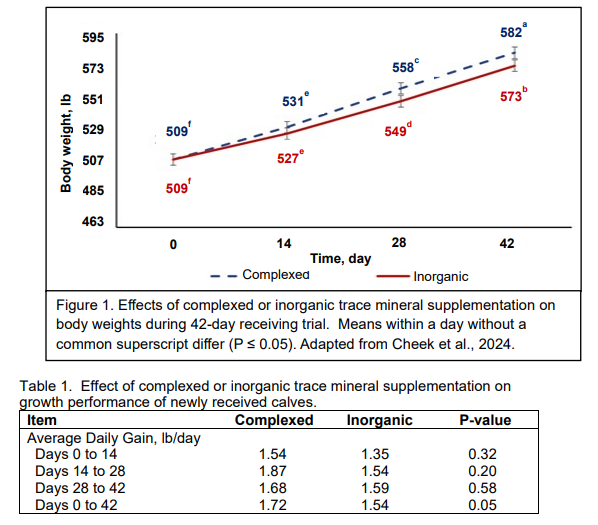
These researchers reported that there tended to be a treatment-by-day interaction for body weights (P = 0.07). Body weights were not different on day 0 (P = 0.82) and day 14 (P = 0.36), but heifers supplemented with complexed trace mineral sources had greater body weights on day 28 (P = 0.04) and day 42 (P = 0.05). Calves receiving the complexed trace mineral sources were 9 lb heavier than those receiving inorganic sources by day 42 (Figure 1). The effect of treatment on average daily gains (ADG) are shown in Table 1. Supplementing cattle for the first 42 days after arrival with complexed trace mineral sources resulted in greater (P = 0.05) overall ADG when compared to supplementing inorganic sources (P = 0.05; 1.72 vs. 1.54 lb/day). Heifers supplemented with inorganic trace minerals had greater BRD incidence (P = 0.03; 58 vs. 46%). The source of trace mineral supplementation had no effect (P ≥ 0.20) on liver mineral concentrations and there were no treatment × day interactions (P ≥ 0.35).

In conclusion, in this study replacing inorganic sources of trace minerals with complexed sources of trace minerals (zinc, copper, manganese, and cobalt) improved growth performance and decreased morbidity treatments and associated medication costs during the 42-day receiving phase. The source of trace mineral supplemented had no effect on liver mineral concentrations during the 42-day receiving trial. These authors noted that "these results demonstrate the variability observed in trace mineral concentrations in liver, and highlight the continued need to better understand factors that influence liver mineral concentrations. These calves experienced stress through sale barn exposure, commingling, and transportation which may have influenced differences in trace mineral source bioavailability."

  • USDA-APHIS. 2013. Pages 18 in Feedlot 2011 Part IV: Health and Health Management on U.S. Feedlots with a Capacity of 1,000 or More Head. USDA–APHIS–Veterinary Services, Fort Collins, CO. Available at: https://www.aphis.usda.gov/sites/default/files/feed11_dr_partiv.pdf
  • Edwards, A. J. 1996. Respiratory diseases of feedlot cattle in the central USA. Bovine Practitioner 30:5–7.
  • Loneragan, G. H., D. A. Dargatz, P. S. Morley and M. A. Smith. 2001. Trends in mortality ratios among cattle in US feedlots. J. Am. Vet. Med. Assoc. 219: 1122-1127.
  • Snowder, G. D., L. D. van Vleck, L. v. Cundiff, and G. L. Bennett. 2006. Bovine respiratory disease in feedlot cattle: environmental, genetic, and economic factors. J. Anim. Sci. 84:1999–2008.
  • Cheek, R. A., E. B. Kegley, J. R. Russell, J. L. Reynolds, K. A. Midkiff, D. Galloway, and J. G. Powell. 2024. Supplemental trace minerals as complexed or inorganic sources for beef cattle during the receiving period. J. Anim. Sci. 102. Available at: https://doi.org/10.1093/jas/skae056.

Exploring the Challenges of Rebuilding the Beef Cow Herd: Insights by Livestock Analyst Abbi Prins

Listen to Ron Hays talking with Abbi Prins about the current status of the U.S. beef cow herd and the challenges of rebuilding it.

Senior Farm and Ranch Broadcaster, Ron Hays, caught up with Abbi Prins, Livestock Industry Analyst with CoBank, who, like many experts believes that herd rebuilding will be slow. Prins authored an article for CoBank regarding the current status of the U.S. beef cow herd and the challenges of rebuilding it.

Prins said the project was begun to see what the beef cow inventory is doing in regards to cow-calf operators, rather than from a feedlot standpoint. "We did this because the cow calf producers are providing the next generation of animals to become our beef supply," Prins said. "How many beef cows do we have? How productive are they? What are their offspring doing to support the beef supply over the next few years?"

She said that the study showed that numbers have been dwindling since the peak in the 1970s, so the question becomes, when will this turn around in the 2020 – 2030-year range?

Through financial analysis, it is apparent that the cow calf producer isn't in any hurry to begin rebuilding. Record high calf prices create an inviting cash flow for them and allow them to pay down debt from high feed prices and high interest rates.

"We specifically looked at what is going on with Kansas prices," Prins said. "Based on the livestock marketing center and the USDA, those calves could be sold for around $300 per hundred-weight. If you are selling them at around 550 pounds or so, that is a $1,600 check, roughly, for that animal to go to the feedlot."

According to a new research brief from CoBank's Knowledge Exchange, current market conditions are incentivizing cow-calf producers to sell heifer calves rather than retain them for future breeding purposes. From a financial standpoint, the benefit of selling calves for immediate gain far outweighs the risks of investing in those calves to become part of their reproductive cow herd.

"Given the route calf prices have gone, it's become a no-brainer decision for some cow-calf operators to sell new crop calves for immediate cash flow. As feed prices soften, there is some improved incentive for retention. However, these are unique market conditions as beef calf prices are at record highs."

Prins said that beef cow herds could potentially return to the numbers of three to four years ago but predicts that the growth will come slowly and not steadily.

The Beef Buzz is a regular feature heard on radio stations around the region on the Radio Oklahoma Ag Network and is a regular audio feature found on this website as well. Click on the LISTEN BAR at the top of the story for today's show and check out our archives for older Beef Buzz shows covering the gamut of the beef cattle industry today.

Rural Economic Outlook Conference Coming up October 16, at OSU

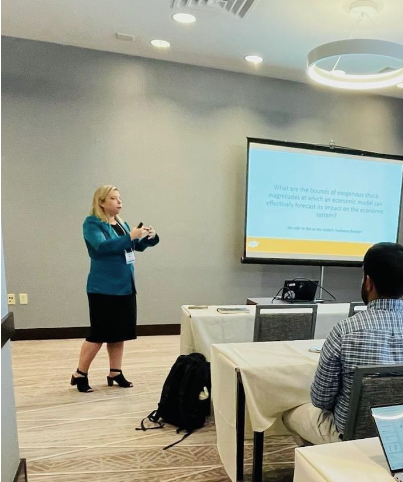
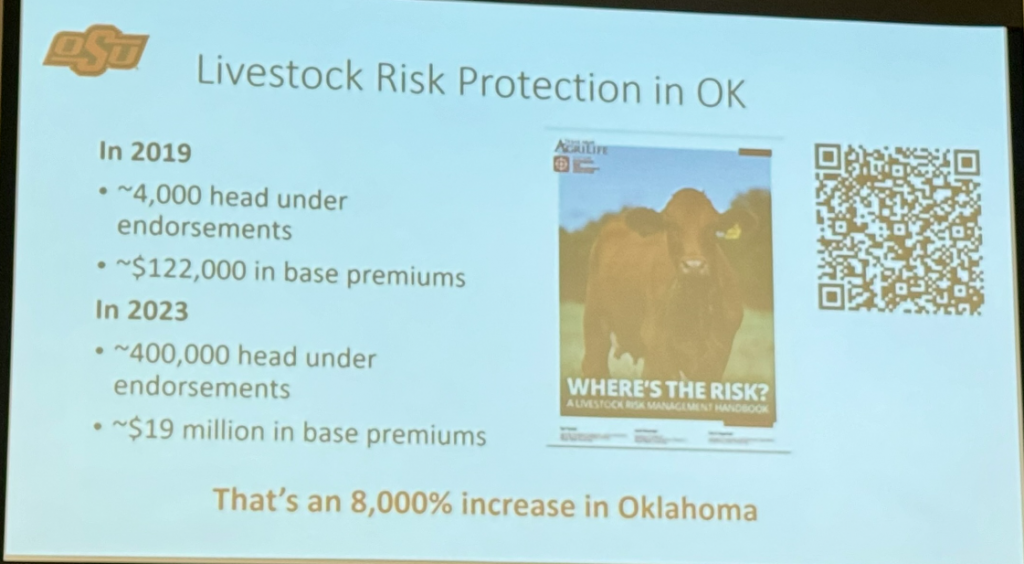
Producers, lenders, and policy-makers seeking to gain insight into the rural agricultural economy and make more informed decisions will be interested in attending the 2024 Rural Economic Outlook Conference, Wednesday, October 16 at the Conoco Phillips OSU Alumni Center in Stillwater. This annual one day conference features outside keynote speakers plus OSU faculty. Kenny Burdine, Extension Professor in Livestock Economics at the University of Kentucky is a featured keynote speaker providing an update on Livestock Risk Protection Insurance for Feeder Cattle.

Another featured keynote speaker, Randy Daniels, Chief Risk Officer at Triangle Insurance will discuss the Impact of the Agricultural Insurance Market on the Ag Industry.

Participants also have an opportunity to hear from OSU experts about departmental research, value-added enterprises, and updates on the livestock market as well as faculty views on Ag finance and grain markets.

The registration fee is $50 and includes breakfast, lunch, and breaks.

Click https://agriculture.okstate.edu/.../rural-economic... for the conference agenda and to register for the 2024 Rural Economic Outlook Conference.

Cattle Market Trends with Bob Rodenberger: High-Yielding Cows Maintain Value Despite Challenges

Listen to KC Sheperd talk with Bob Rodenberger about the latest in the cattle markets.

KC Sheperd, Farm Director, is back talking with Bob Rodenberger, a Stockman Oklahoma Livestock Marketing partner, as he gives the latest on the cattle markets.

Bob reported that the market had been steady, with some pressure on the calf market due to quality issues. Despite this, the overall market remained good, with high-yielding cows still selling for $1.25 - $1.35. Light calves weighing below 600 pounds are still in high demand.

"People are starting to get farming on their minds, and this hot weather has been tough on the health of all these calves, right now," Rodenberger said. "The cool weather we have coming up will be a relief for everyone."

He said that the fat market is under pressure, too, with fat cattle in the low eighties. The feeder index has come down to the low forties, but it is all typical for the time of year and was a larger margin in 2023.

He said that the Oklahoma City sales will be closed on Monday and Tuesday for Labor Day, but sales for the rest of the week won't change.

"We had a nice run yesterday at Apache, with a little over two thousand," he said. "We had a lot of cows - about 450. I thought we had sold a lot of cows, but we are starting to see people cull quicker. We had several sets of 20 – 30 head. People went through and preg-checked their cows – they were short-bred cows or cows that were open."

 He added that pond water is already an issue, and some people are having to haul water so they are thinning herds before they get into a worse situation.

Latin American Buyers Attend Processing Seminar, Tour Nebraska Meat Industry

Meat buyers from Latin America learn about the attributes of U.S. red meat at the University of Nebraska

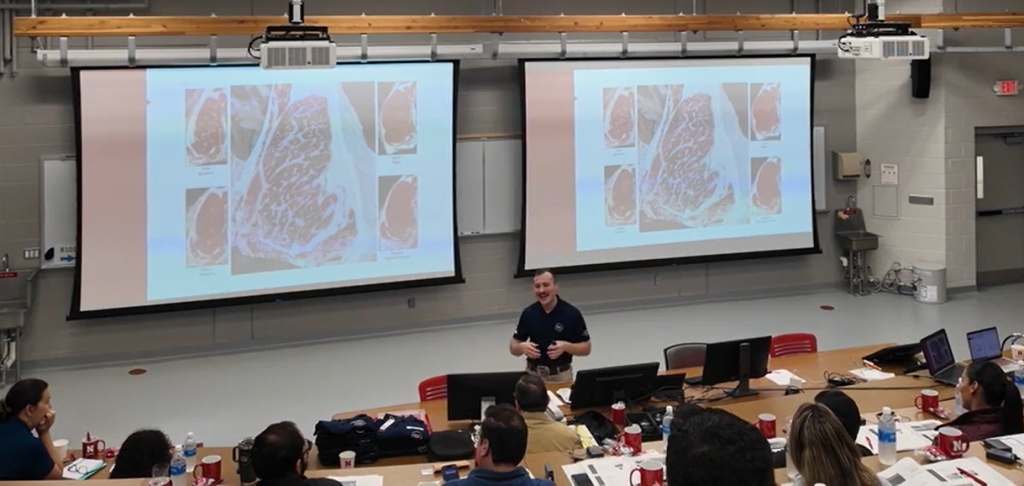
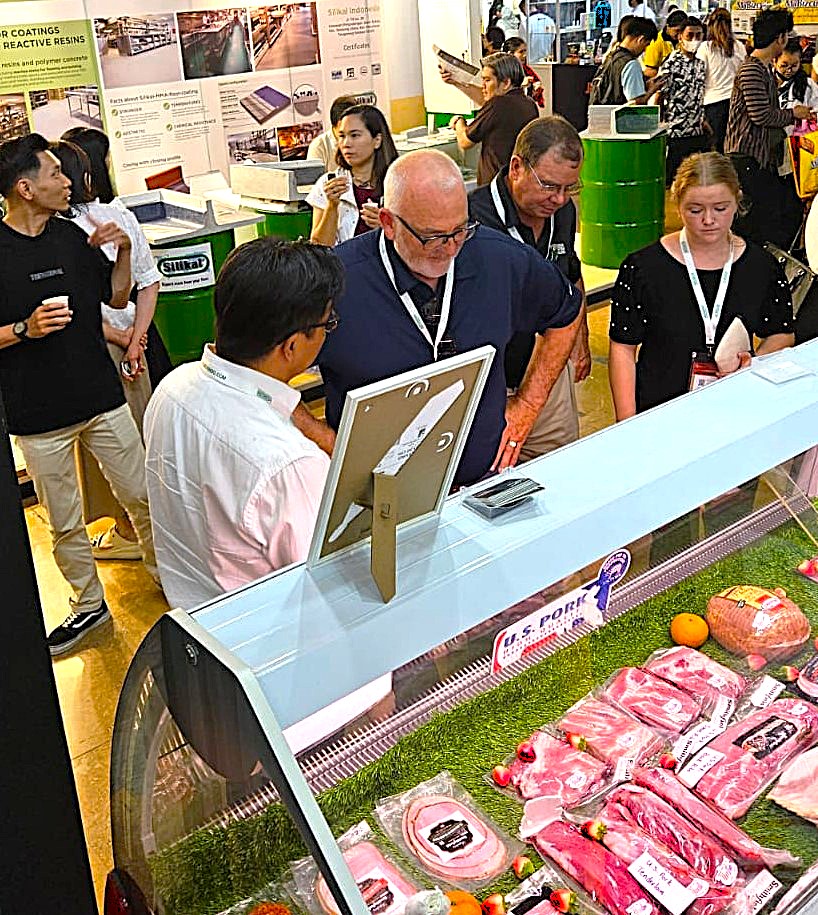
The U.S. Meat Export Federation (USMEF) brought importers from Mexico and Central and South America to the University of Nebraska-Lincoln for a global meat processing seminar, where they learned about the attributes of U.S. pork and beef. They also examined meat and livestock production trends, new techniques for processing, packaging and merchandising, and safeguards for ensuring product safety. 

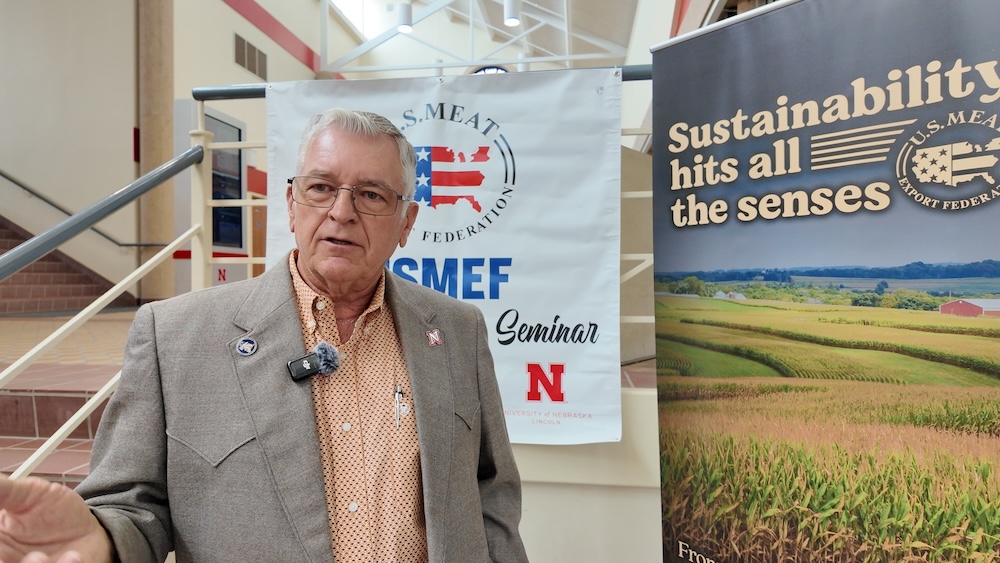
USMEF Secretary/Treasurer Dave Bruntz

USMEF Secretary/Treasurer Dave Bruntz, a farmer and cattle feeder from Friend, Neb., took pride in welcoming the group to his home state.

Colombian importer Valery Ways

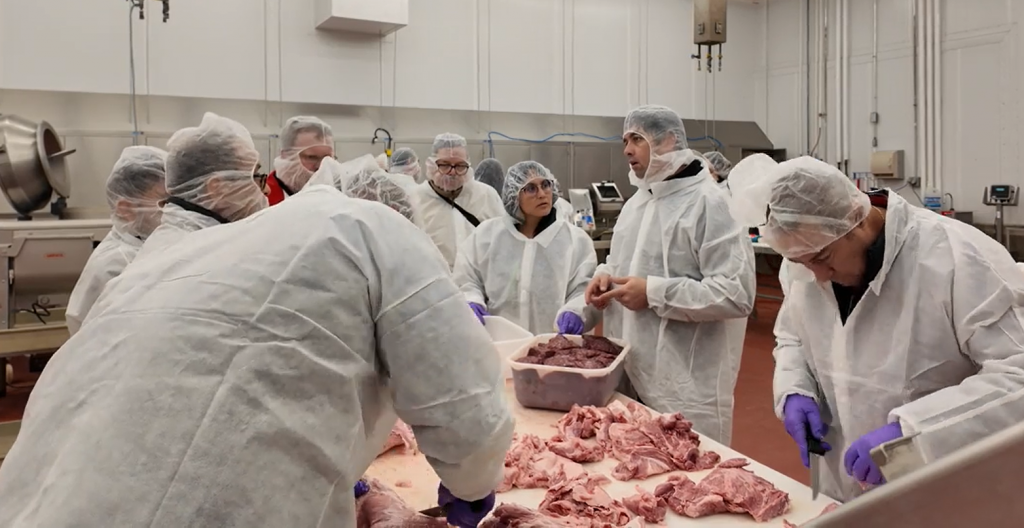
The seminar included hands-on product development projects conducted in the university's meat lab. This was a highlight for Valery Ways, an importer from Barranquilla, Colombia.

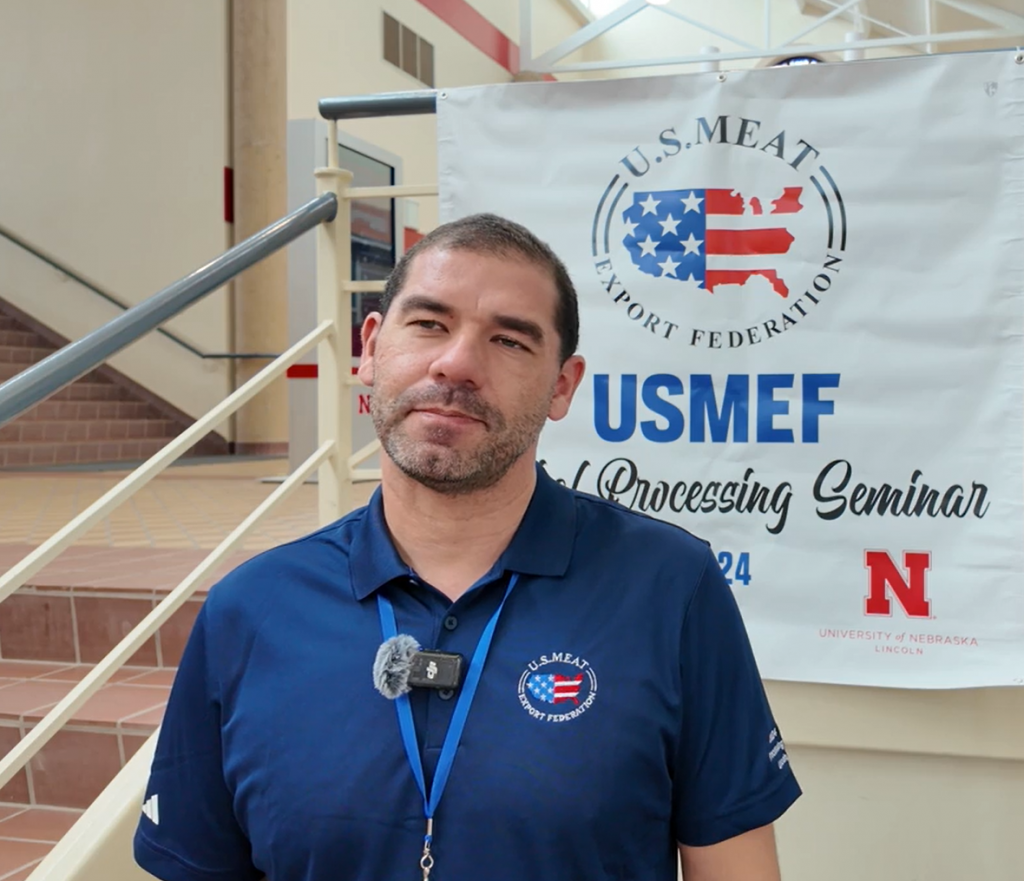
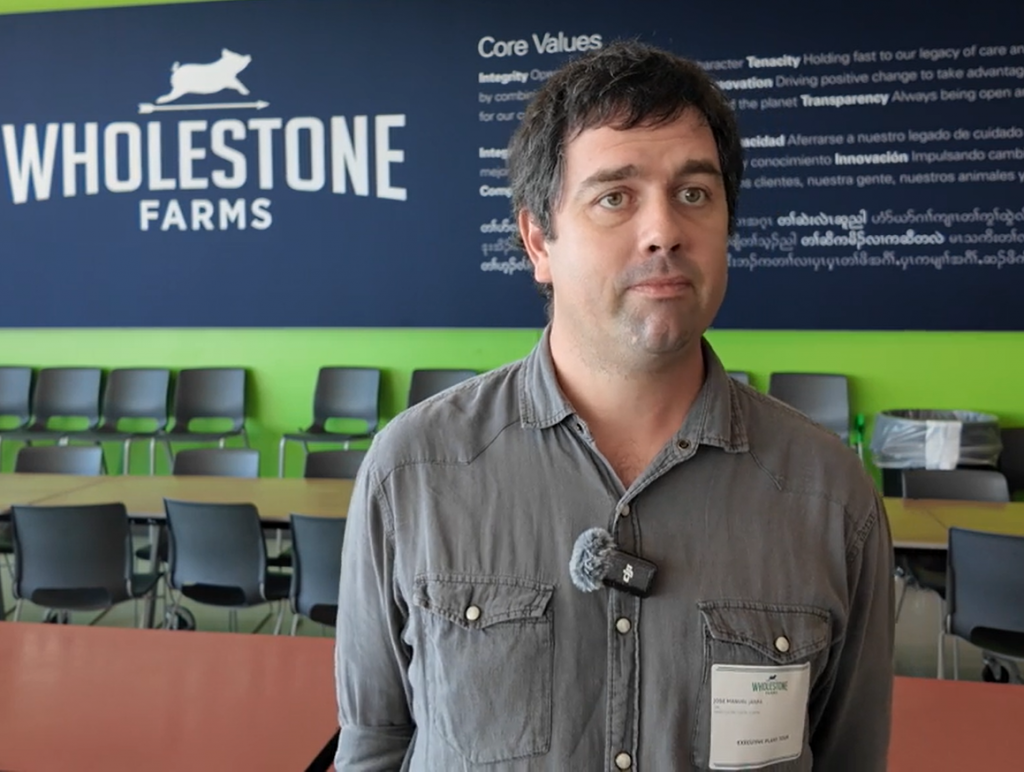
Chilean importer Jose Manuel Jarpa

Following the seminar, the delegation visited retail outlets and toured processing facilities, including the Certified Piedmontese plant in Lincoln and the Wholestone Prestage pork plant near Fremont, Neb. Chilean importer Jose Manuel Jarpa had purchased spareribs from Wholestone Prestage earlier this year, and the plant visit solidified his confidence in these products.

In addition to Mexico, Colombia and Chile, buyers also participated from El Salvador, Guatemala, Honduras and Peru. The seminar and other activities were made possible through support from the National Corn Growers Association and the South Dakota Soybean Checkoff.

Meat buyers from Latin America work with cuts of U.S. pork and beef at the University of Nebraska meat lab

NCGA Supports the Next Generation of Agriculture with Student Scholarships

The National Corn Growers Association (NCGA) is pleased to announce the awardees for the 2024 NCGA Scholarship Programs. Eleven outstanding students were selected by a committee of grower leaders to receive scholarships for this fall semester. NCGA is proud to continue supporting these vital programs in partnership with BASF Corporation.

"At NCGA, we are committed to securing a strong future for corn farmers through every initiative. These scholarships represent a key investment in cultivating the next generation of ag industry leaders and problem-solvers," said Dan Nerud, Nebraska grower and chair of the NCGA Member & Consumer Engagement Action Team. "The caliber of this year's applicants and the diversity of their skills is truly impressive. I'm eager to see how these students will contribute to shaping the industry and driving innovation that will sustain farms for generations to come."

Discover more about each recipient by exploring their full bios with the links below.

Graduate Student Scholarship Winners:
Charles Tesch
Paige Madison

Technical School Scholarship Winners:
Joshua Gnade
Kara Siemieniewski
Sam Wells
Von Herron

Undergraduate School Scholarship Winners:
Eric Sibenaller
Hadley Beechinor
Harrison Blay
Lainey DeVries
Sydney Wellsandt

Congratulations to this exceptional group of students, and our sincere thank you to all who applied and to BASF for their continued support of the NCGA Scholarship Programs.

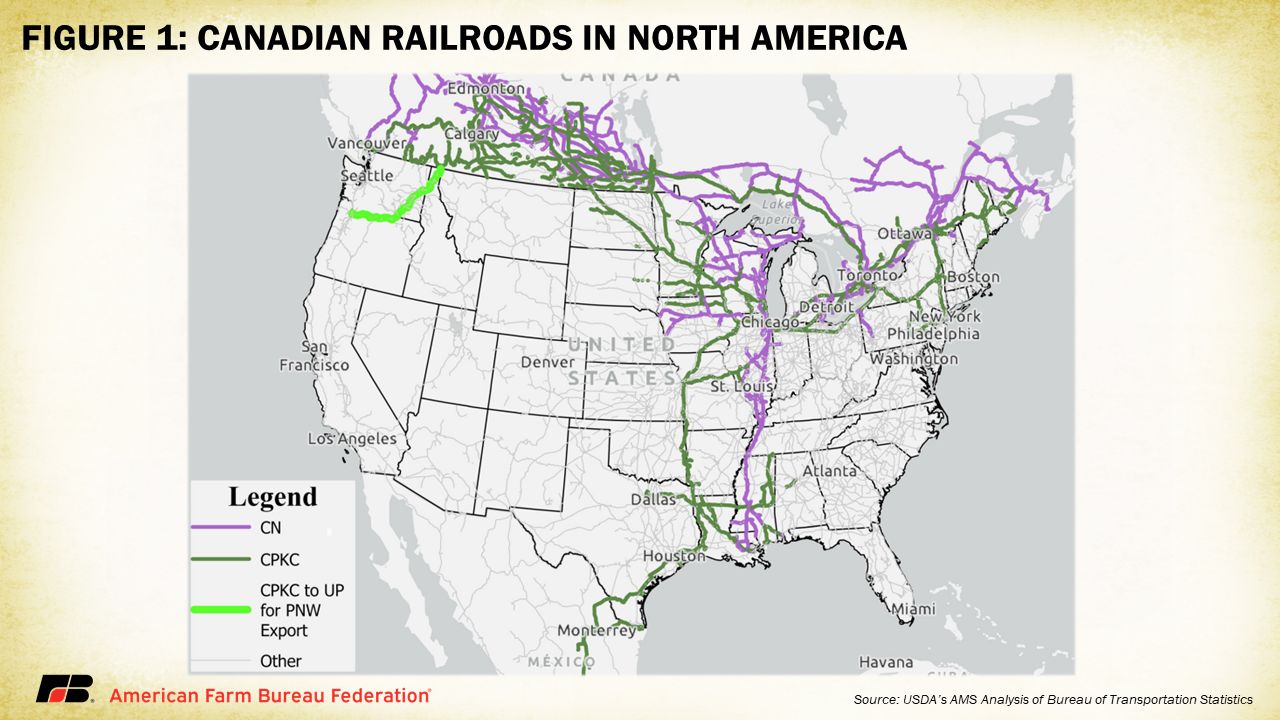
Canada Rail Back on Tracks

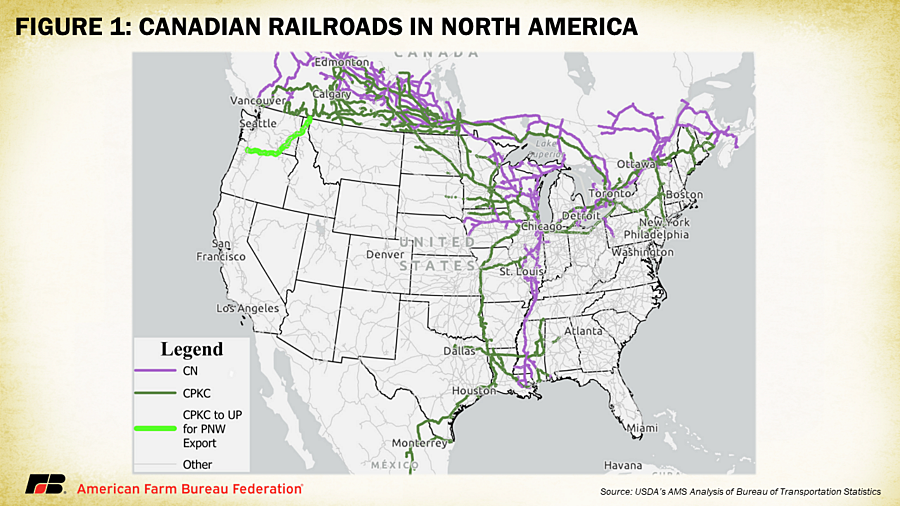
Canada's two major freight railroads resumed work on Monday after a brief lockout last week brought operations to a halt.

The Canada Industrial Relations Board issued an order imposing binding arbitration between the Canadian National (CN) and Canadian Pacific Kansas City (CPKC) networks over the weekend, mandating that no rail network stoppage – whether a lockout or strike – can occur during the arbitration process.

While railroad workers have returned to the job, the Teamsters Canada Rail Conference (TCRC) has vowed to challenge the ruling by the CIRB in court.

Soy Transportation Coalition Executive Director Mike Steenhoek said that while it's preferable for the two parties to have the flexibility to arrive at an agreement themselves, an agreement remained elusive, and therefore, "It is entirely appropriate for the Canadian federal government to intervene on behalf of the country and all those, like U.S. agriculture, who depend upon a predictable, reliable cross-border supply chain." He added, "We look forward to a return to normalcy as soon as possible."

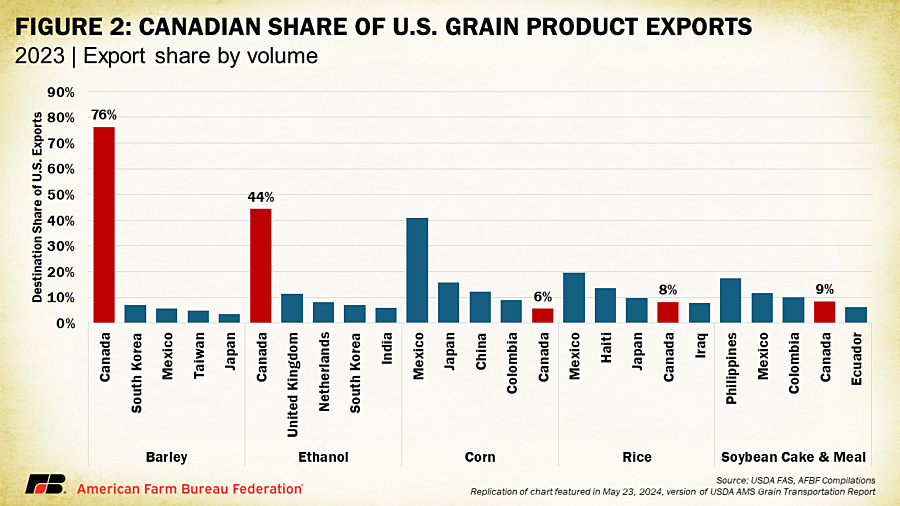
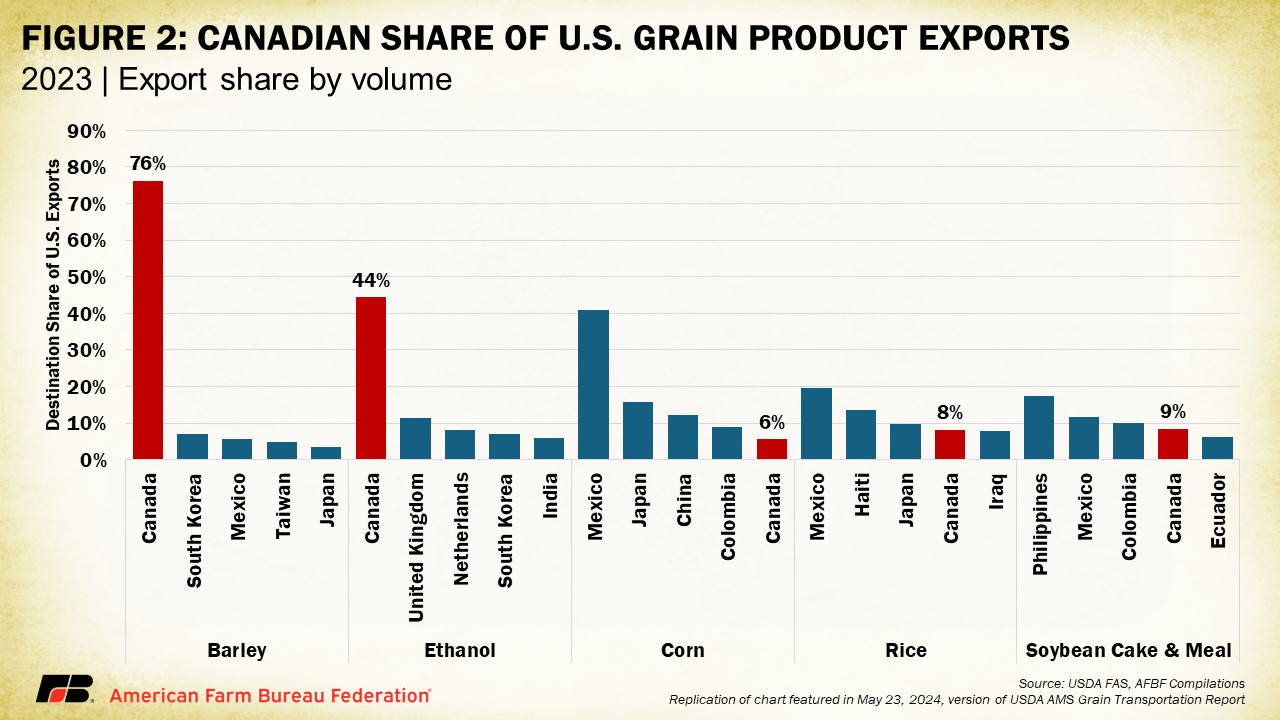
Canada is the U.S.' fourth-largest soy meal market with a value of $614 million and its largest soybean oil market with a value of $106 million, and the U.S. ships some whole beans to Canada. The U.S. also exports soybeans and soybean meal through Canadian ports (Vancouver, Prince Rupert, etc.).

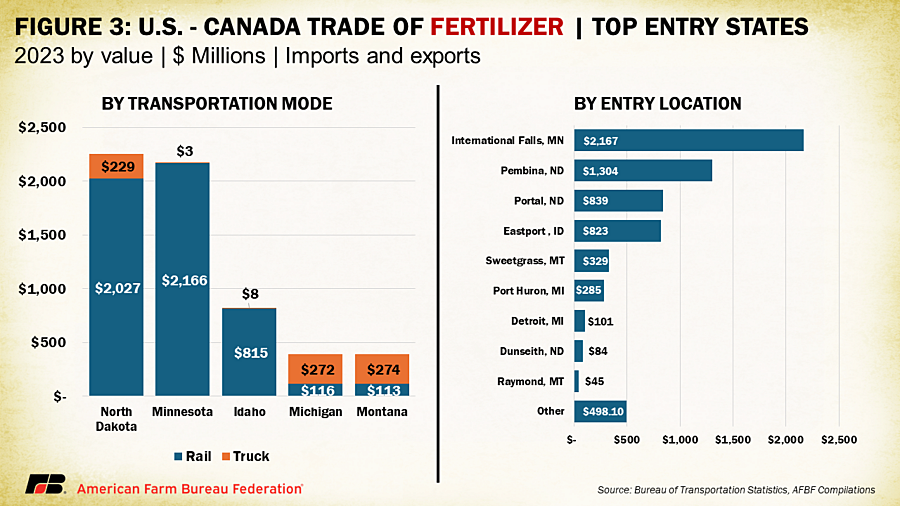
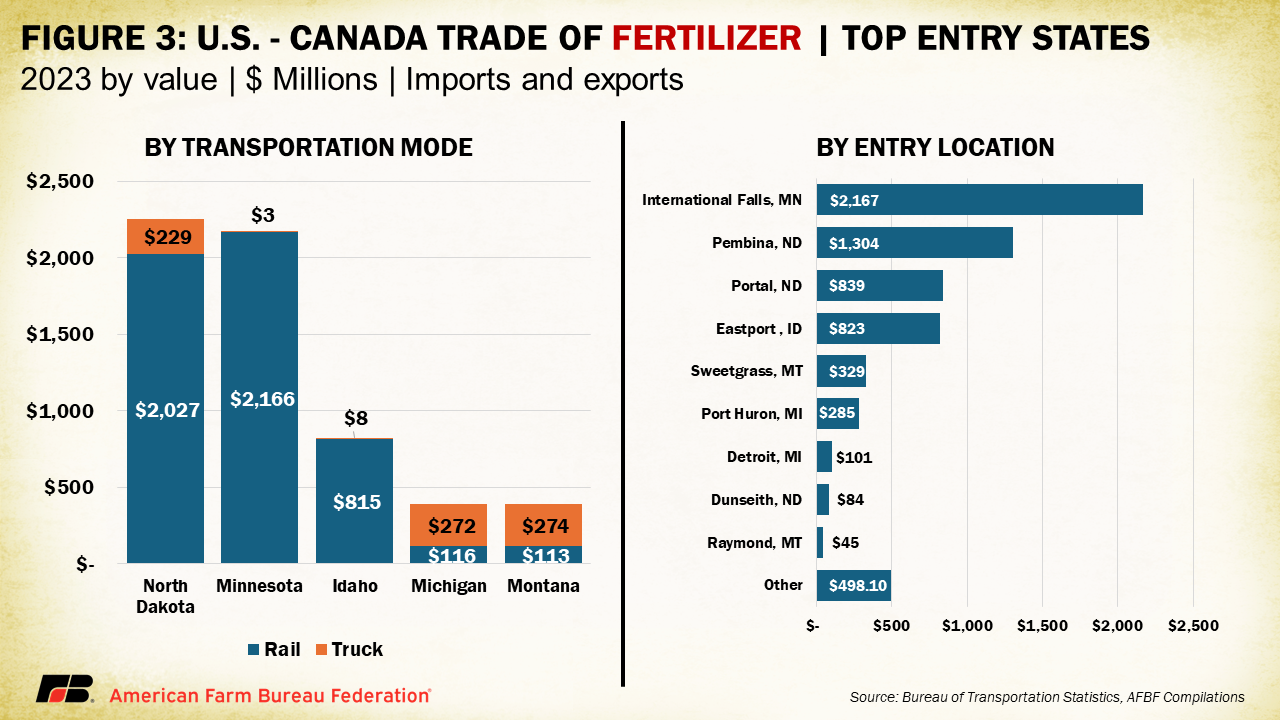
Uninterrupted rail service is also critical for transporting fertilizer to U.S. farmers, timely feed grains for livestock and other agricultural inputs. Additionally, many facilities quickly run out of storage capacity during a stoppage and incur shortages of incoming raw materials.

As SNAP Turns 60, Congress Debates Its Future

Today, House Agriculture Committee Ranking Member David Scott published an op-ed titled "As SNAP Turns 60, Congress Debates Its Future" in the Atlanta Journal-Constitution. Read it online or below.

Come September, members of Congress will return to Washington after the long August recess to debate the future of America's safety net. The future of our nation's most effective anti-poverty tool, the Supplemental Nutrition Assistance Program (SNAP), hangs in the balance.

For six decades, the program has provided a crucial lifeline to low-income Americans trying to make ends meet, including about 700,000 Georgians. The choices made by Congress will decide whether we maintain SNAP and continue to help our neighbors or weaken it and allow vulnerable Americans to fall through the cracks.

SNAP provides a modest, but vital, benefit of $6 a day for individuals struggling to keep food on the table. It is unique in that the money provided can be spent only on food sold by eligible retailers, creating the double benefit of feeding our families and supporting the economy. From the farm that produces the food, to the manufacturer who creates the packaging, to the truck driver who delivers it, to the clerk who checks you out at your local supermarket — every $1 in SNAP benefits ripples through the supply chain, creating around $1.50 in economic activity.

The 2018 Farm Bill, which passed with overwhelming bipartisan support, provided a historic victory for America's hungry families by reforming federal nutrition policy to allow SNAP benefit levels to better reflect current food costs. This change came after decades of rising food costs and inflation, which meant a slow-to-adapt SNAP was falling further behind and was increasingly unable to meet the needs of modern American families.

Unfortunately, congressional Republicans want to turn the clock back on SNAP. Their 2024 Farm Bill would revert the underlying SNAP calculus to the past, leading to decreased SNAP benefit levels. Four in five SNAP households include a child, elderly person or someone with a disability, and every single one of them would suffer from the $30 billion cut to SNAP that House Republicans call for.

Republicans are quick to point out how much the cost of groceries has increased because of inflation and corporate price gouging. I agree that we must do more to help families whose pocketbooks are being stretched thin. Taking people's food away, however, does nothing to improve the situation.

To the contrary, House Democrats envision the 2024 Farm Bill not as a vehicle to relitigate what was just enacted into law five years ago or leave SNAP in a worse position than it was before 2018 but as an opportunity to further improve food and nutrition policy. When people have adequate access to food, everyone benefits. Children with full stomachs do better in school. Elderly people who eat adequately have lower health care costs. Parents, caretakers and people with disabilities who have enough money for groceries can take care of their families and have the dignity of knowing where their next meal comes from.

SNAP has helped countless Americans secure brighter futures. Some of them now serve in Congress, where they will write the next chapter of our nation's food policy. We should support and fund this historically bipartisan program. Failing to do so will not only diminish the dignity and well-being of the over 42 million individuals who SNAP helps every month, but it also would reduce our collective potential as a nation. Furthermore, as acknowledged by my friend, Agriculture Committee Chairman Glenn "GT" Thompson, R-Penn., and as noted by food and nutrition experts who have appeared before our committee, food security is now a national security issue.

We all have seen the effects of poverty and neglect in our communities. Let us do what we can to support one another, to be neighborly and kind and to pass robust nutrition policy that recalls us to the better angels of our nature.

John Deere Unveils Advanced Gator Utility Vehicles with Cutting-Edge Technology

Listen to Maci Carter talk with Eric Halfman about the latest John Deere Gator models.

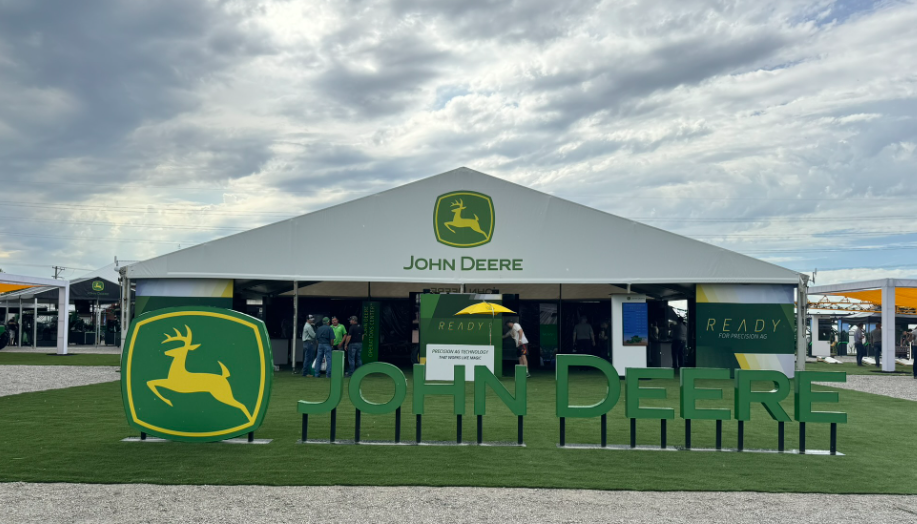
Eric Halfman, Go-To-Market Manager for John Deere Gator Utility Vehicles, discusses the new XUV845 gas and XUV875 diesel models showcased at the Farm Progress Show with Oklahoma Farm Report's Maci Carter.

In July, John Deere launched their XU845 and XU875 SUV Signature Edition John Deere Gators. The XU845 is the gas-powered version, and the XU875 runs on diesel. The full-size crossover machines are designed for production precision ag, livestock, and rural lifestyle customers.

Key features include HVAC cab comfort, optional Green Star Ready for boundary mapping, and an auto-track ready option for spraying applications.  

"Yes, you can auto-track with a Gator," Halfman said. "Specifically, a great opportunity for that would be in a spraying application where you can hook up a tow-behind sprayer, and rate control with that sprayer."

He noted that technology in the agricultural industry is growing and changing very quickly. "With that technology, we are trying to drive efficiency, and productivity, and save real money for our customers."

XUV 845

He added that the real advantage that John Deere has for its customers is integrated technology which provides a plug-and-play experience. The cargo boxes that come standard on these new John Deere Gators are composite, which allows for flexibility in design.

"Our engineers did an awesome job giving customers the ability to customize that cargo box with dimensional plywood, 2'x4's, and 2'x8's to really configure the cargo box the way they want," Halfman added. "There are multi-levels of ability with that cargo box, and one really cool application is setting the box up for fencing. You could separate your fencing material – posts, post pounder, and wire."

The cargo box also has a 12V plug-in adapter for spraying applications, so the days of running wires to the battery are over with these new Gators. There is even easily accessible an on/off power switch on the dashboard.

The cargo box's side rails even feature stake-bed pockets for even further customization with dimensional wood. It even has a stake-pocket clamp that could be used for a chainsaw.

"We have early adopters that are always ready to jump in and try something new," Halfman said. "Then we have a middle group that waits until the technology is proven, and then they'll jump in when they've seen that there is a return on investment. Then there are customers who may not farm as much ground and technology may be too expensive for them, or they may not need the most advanced technology in their operations. So, we try not to sunset our technology. It becomes very viable in the user market. It may not be the latest and greatest, but it is tried and proven, and they can take advantage of it down the road."

The best place to view, buy, and ask questions about John Deere equipment is at a local dealership. Another good place is deere.com.

Serve the best steak to the best of pro football? Check. ✅

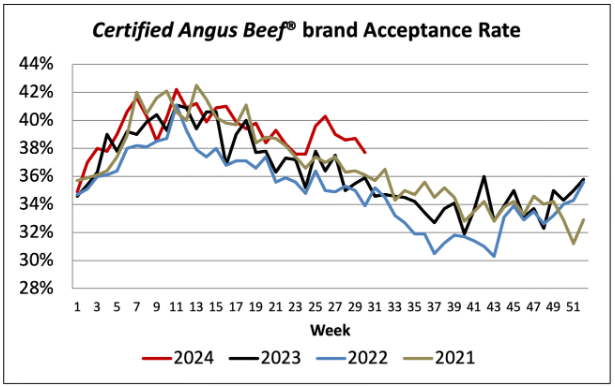
During the first weekend in August, Certified Angus Beef took center stage at the Pro Football Hall of Fame Enshrinement Festival. From the Enshrinees' Gold Jacket Dinner to the Class of 2024 Unscripted & Tailgate, the brand not only celebrated football's greatest, but continued to elevate beef as the choice for premium experiences.

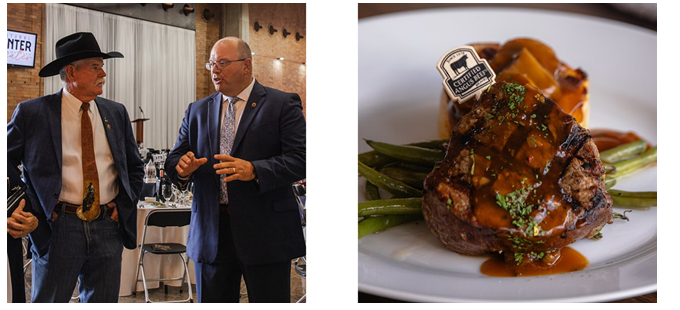
At the Enshrinees' Gold Jacket Dinner, Certified Angus Beef ® filet was served up among NFL legends. Then the Class of 2024 Unscripted & Tailgate brought 1,500 football fans the ultimate game day experience, with CAB leading the charge through mouthwatering bulgogi hoagies, kabobs, frankfurters and more.

A highlight from the week's events was Virginia Angus rancher, Chuck Grove, past American Angus Association president and CAB board member, connecting the audience to the heart of our brand. His presence wasn't just significant because of his deep roots in the beef industry but also from his connection to the NFL through his son's career with the Oakland Raiders and Miami Dolphins.

"I know firsthand the dedication it takes to not only compete in the NFL, but to truly stand out and be enshrined into the Pro Football Hall of Fame," Grove shared on the main stage for the Gold Jacket Dinner. "Your commitment to the game is not unlike the commitment it takes to raise the best beef you'll enjoy tonight." 

This exposure doesn't just look good—it works. By showcasing the best beef at a world-class event, we amplified the demand for CAB. When consumers see the brand at such prestigious events, it reinforces their trust in choosing us during their next grocery store trip. This increased brand recognition directly benefits you, creating more opportunities and sustaining demand for the high-quality beef you produce.

Land Ownership and the Preservation of Family Farm Legacies

The preservation of land for future generations and the creation of family legacies is an important part of the U.S. agricultural heritage.  Unfortunately, many families are left vulnerable to losing their land or face complicated management decisions.  This occurs because the land is passed down from one generation to the next without an appropriate transition plan or without a properly probated will.  

Two recent Southern Ag Today articles (referenced below) focused on estate and transition planning, both illustrating the importance of the process of organizing and arranging the transfer of one's assets, including real estate, to heirs in a structured and legally recognized manner. It typically involves creating a will or trust, designating beneficiaries, and addressing issues like taxes and debts. It is a crucial aspect of risk management that can keep land in the family.  Land ownership where property is passed down without clear legal documentation and is shared among all the heirs is known as heirs property.  

Heirs property can limit land management and complicate access to some federal programs. Each heir has an equal right to full use and possession and is legally responsible for taxes and other property-related expenses and activities.  As land is passed down to future generations, and the number of heirs increases, it becomes more fractionated with each person's percentage interest in the land decreasing.  Furthermore, heirs property becomes vulnerable to loss through issues such as partition sales, tax sales, or adverse possession.  Maintenance of the land and the ability to manage the use of the lands resources is also limited and can result in conflict and disputes amongst the heirs.  

While heirs property is a significant issue, there are means to resolution and preventing the future creation of heirs property.  This starts with a will or appropriate estate or transition plan.  According to a Gallup Poll in 2020, only 46% of U.S. adults have a will.  Almost a quarter of adults 65 years and older are also without a will.  While we do not have these data for agricultural producers, the USDA Census of Agriculture does report the number of producers who are engaged in some form of estate and transition planning.  Table 1 reports the percentage of producers in the 13-state southern region that reported being engaged in estate or transition planning in the 2017 and 2022 Census of Agriculture.  In 2017, this percentage ranged from a low of 49% in Louisiana to a high of 62% in Oklahoma.  These numbers fell in 2022 in all states, with Louisiana remaining the smallest percentage at 44% and Oklahoma, while still the highest, dropped to 56%.  This illustrates the significant gap that exists in agricultural estate planning, leading to increased risk of creating heirs property for future generations. 

 There are various reasons why individuals do not engage in proper estate planning.  Sometimes they feel they do not have enough assets, the process is too expensive, or the process is too complicated.  Another reason is that some people are simply holding off because the conversation is uncomfortable and morbid. However, the best prevention for heirs property is education, choosing the right attorney, and formalizing a transition plan. A well-crafted estate plan can prevent a property from becoming heirs property by ensuring that a clear title is passed down to future generations.  More information on the resolution and prevention of heirs property can be found in the Heirs Property in Alabama publication. 

Table 1: Percentage of Agricultural Producers Engaged in Estate or Transition Planning 

State20172022Percentage 
Change
OK62%56%-6%
AR57%53%-4%
TX58%53%-5%
VA56%53%-3%
AL56%52%-4%
GA55%52%-3%
MS55%51%-4%
SC56%51%-4%
TN55%51%-4%
KY55%50%-5%
NC54%50%-4%
FL51%48%-3%
LA49%44%-5%

Source: Author Calculations based on 2022 USDA Census of Agriculture 

References:

Gallup. "How Many Americans Have a Will?" The Short Answer. June 23, 2021.

Graff, Natalie. "Government Incentives for Agricultural Generational Transfer?" Southern Ag Today 4(25.4). June 20, 2024.

Johnson, Portia, Ryan Thomson, Adam Rabinowitz, and Katie Keown. "Heirs Property in Alabama." Alabama Cooperative Extension System HE-0852. Revised July 2024.

Article courtesy of: Martinez, Charley, and Kevin Ferguson. "Estate Transition Planning." Southern Ag Today 4(27.3). July 3, 2024.

More Than 50% of Ag Economists Now Think the U.S. Ag Economy is Already In a Recession

U.S. corn prices hit a four-year low as the prospect for record corn and soybean crops takes shape in the field. The eroding outlook also appeared in the August Ag Economists' Monthly Monitor as more economists are concerned U.S. agriculture is either already in a recession or on the brink of one, but economists point out if it weren't for strong cattle prices, the ag economic picture would look even worse.

"When you look at, what we said for both, relative to last month or last year, some of the most pessimistic readings we've had, since we've been surveying here on 2024," said Scott Brown, interim director, Rural and Farm Finance Policy Analysis Center (RaFF), University of Missouri who also helps author the Monthly Monitor each month.

August Ag Economists' Monthly Monitor
August Ag Economists' Monthly Monitor (Lindsey Pound)

The latest Ag Economists' Monthly Monitor tried to get a better gauge of the risk of financial stress in agriculture, and asked the more than 70 economists surveyed if agriculture is on the brink of a recession. Nearly 60% said "yes."

"Maybe what was even more surprising to me is the responses to the question, 'Are we already in a recession?' More than 50% said 'yes, we're already in a recession.' That's a big change from where we were just 16 to 24 months ago, and it shows a lot of folks are worried about where we sit today."

The Monthly Monitor also asked economists to provide more explanation of why they think the U.S. ag economy is already in a recession. Economists said:

  • "At least for most crop producers, the sharp drop in prices and cash receipts has resulted in lower net income and financial pressure on leveraged producers. The picture is generally less dire on the animal agriculture side of the ledger, as prices are up (cattle, milk) for some commodities and feed costs are declining."
  • "I do think the U.S. ag economy is in a recession. The projection for 2023 and 2024 farm incomes in real dollars are the two largest declines in history. Costs exceed prices for most commodities. And the outlook doesn't provide indication of improvement soon."
  • "Farm incomes are down. Ag manufacturers are laying people off. Suppliers for those manufacturers are laying people off. What are the bright spots? Cattle, depending on the segment? Trade with Mexico? After that, the list gets pretty thin."
  • "We aren't in one yet, but we are on the brink of one."
  • I think we'll enter into a recession after the election."

Cattle Are Helping the Overall Ag Economic Picture

As the concerns about the ag economy pour in, Brown points out the net farm income situation would look even worse if it weren't for more positive prices in livestock.

"Cattle prices, I think, have been helpful in pulling it up. At the same time, we see corn and soybean prices continue to move lower," Brown says. "We know crop receipts are going to be lower than what they would have said back at the start of the year, cattle probably higher, hogs probably higher and dairy probably higher. But economists also expect production expenses to not go up from where they were originally during the first part of the year."

https://www.youtube.com/embed/5j81-R5W18o?si=y95RUrfQnvQ7wuwdNet Farm Income Could Fall Further

U.S. Department of Agriculture's (USDA) Economic Research Service (ERS) gave its first glimpse at 2024 Net Farm Income in February with the Farm Sector Income & Finances: Farm Sector Income Forecast. At that time, USDA ERS' forecast showed net farm income to fall after reaching record highs in 2022.

USDA ERS' forecasts showed:

· Net farm income, which is a broad measure of profits, reached $185.5 billion in calendar year 2022 in nominal dollars.

· After decreasing by $29.7 billion (16.0%) from 2022 to a forecast $155.9 billion in 2023, net farm income in 2024 is forecast to decrease further from the 2023 level by $39.8 billion (25.5%) to $116.1 billion.

· Net cash farm income reached $202.3 billion in 2022. After decreasing by $41.8 billion (20.7%) from 2022 to a forecast $160.4 billion in 2023, net cash farm income is forecast to decrease by $38.7 billion (24.1%) to $121.7 billion in 2024.

USDA is set to revise its 2024 Net Farm Income forecast in September.
USDA is set to revise its 2024 Net Farm Income forecast in September. (Lindsey Pound)

ERS will provide an updated 2024 forecast in September. Even with improvements in livestock margins, the August Ag Economists' Monthly Monitor showed the majority of ag economists expect the further deterioration in crop prices to weigh on the overall net farm income picture and force the agency to revise their forecast lower.

· Nearly 57% expect USDA to revise its forecast

· 36% think the revision will be 5% to 10% lower

· 7% think USDA will leave its forecast unchanged from February.

What Will Impact Crop Prices Over Next 6 Months

The August Monthly Monitor also asked economists to outline what will impact crop prices over the next six months. Economists said:

  • Growing crop size and limited exports
  • Bioenergy and feed demand
  • South America's weather and crop size, specifically the second crop final production numbers and plantings for the first crop
  • Potential for new tariffs and relations with China
  • Fertilizer prices and the impact on 2025 acreage.

What Will Impact Cattle Prices Over Next 6 Months

With a more bullish outlook for cattle, the August survey asked economists what will impact cattle prices over the next six months. 

  • Weaker demand
  • Lower corn prices
  • Possibility of tighter cattle numbers 

"I think the supply fundamentals are essentially unchanged since this spring. The big question is demand. If we have an economy-wide recession, what happens to beef demand," responded one economist in the anonymous monthly survey. 

What to Watch 

From geopolitics to the evolving situation in supply and demand across all commodities, the Monthly Monitor asked economists to outline the factors not being covered enough in the media. 

  • "Deterioration in liquidity."
  • "Growing gap between the situation for crop and livestock producers."
  • "Impact of a Trump vs. Harris win and misconceptions around who is better for the farm economy."
  • "Continued high cost for many ag inputs."
  • "I'm frustrated by the continued pressure on U.S. farmers to be more sustainable which often results in higher farm costs and could lead to more regulation or hoops to jump through or reduced production. At the same time, South American producers continue to rapidly expand production in a less sustainable way. I'm also concerned that this will lead to vertical integration in crop farming."
  • "The cataclysmic risk of rising tariffs."
  • "Will congress set in to support farm incomes at these levels? ARC/PLC are ineffective at this point. Ad hoc spending has been rampant."
  • "Inflation."
  • "Possible government farm program payments this fall (last year's crop year)."
  • "Fund manager use of Algo computers."

Article courtesy of Agweb, Tyne Morgan

ODAFF Statement on Tragic Loss of Horses at Beutler and Son Rodeo Co.

The Oklahoma Department of Agriculture, Food and Forestry is aware of the tragic loss of horses at Beutler and Son Rodeo Co. in Elk City.

ODAFF received word from a veterinarian last Friday, August 23, of a potential issue with horses relating to a single bulk feed order for Beutler and Son Rodeo Co. As the state regulator of animal feed, an inspector visited the Beutler and Son site on behalf of the department on Monday, August 26, and learned that the feed originated in Kansas. The ODAFF inspector collected a feed sample which is being analyzed in two state-certified laboratories.

ODAFF has informed the Kansas Department of Agriculture of the inspector's site visit and continues to work in coordination with KDA. ODAFF has assisted Beutler and Son Rodeo Co. with carcass disposal to ensure all state regulations were adhered to.

State Veterinarian Dr. Rod Hall encourages all livestock and pet owners to be judicious in reviewing labels on feed provided to animals in their care and contact a veterinarian with whom they have a strong veterinary-client-patient relationship if they have questions about the safety of their feed or ingredients.

This week on SUNUP: Dr. John Michael Riley Discusses the Highs & Lows of Grain Markets

Listen to Dr. John Michael Riley discuss the highs and lows of current grain markets.

This week on SUNUP, OSU Agriculture Economist Dr. John Michael Riley discusses the highs and lows of current grain markets after the last WASDE report.

Soybeans dropped about 40 cents on the day of the WASDE report and the day after. Prices have leveled out since then, and have currently risen 10 to 20 cents since the aftermath of that report to the mid to upper nines which is similar to futures.

Dr. Riley said that corn and wheat didn't have any big news in the last WASDE report. "They did well coming out of the report counter to what soybeans were. Cotton had a little bit of a bright spot in terms of lower acres expected and lower carryover, but mostly benefited that day and then tailed off shortly thereafter."

Cotton has strengthened in terms of overall price over the past week, upwards of 70 cents per pound nearing the prices of early to mid-July. Cotton's success is relative to where the U.S. dollar compares to other currencies. Due to the dollar's weakness, cotton prices have been elevated.

"Another thing to keep in mind with that is recent indications from the federal reserve that they may be lowering interest rates," Dr. Riley cautioned. "Stock markets have been improving. The spill over there is that consumers may have a little more ability to spend, and cotton is going to be one of the bigger ones to benefit from that."

Wheat and Corn have been under pressure, and Dr. Riley says it's hard to pinpoint why. They benefited on the day of the report, but have since fallen. Wheat is experiencing a bit of pressure from overseas markets, and corn may be experiencing the results of expectations of a big corn crop.  

This week on SUNUP:

  • Becky Carroll, OSU Extension fruit and nut specialist, discusses the progress of this year's pecan crop. She also previews the upcoming 2024 Fall Pecan Field Day. 
  • Wes Lee, OSU Extension Mesonet agricultural coordinator, predicts cooler weather for this weekend. State climatologist Gary MacManus says drought in southwestern Oklahoma is getting worse. 
  • Paul Beck, OSU Extension beef cattle specialist, says now is the time to start planning for fall calving and weaning of spring-born calves. 
  • John Michael Riley, OSU agricultural economist, discusses the pressure on the corn and wheat markets.

Oklahoma Agriculture Starts at SUNUP!

Weekly Statewide Broadcast: Saturday at 7:30 a.m. & Sunday at 6 a.m. on OETA (PBS)
Stream Anytime: YouTube.com/SUNUPtv 

U.S. Soybean Export Sales Drop to Historic Low, but a Rebound Could be Coming

Global demand for U.S. soybeans has fallen sharply as international buyers remain discouraged by a strong dollar, slowing economic growth and uncertainty over the direction of U.S. trade policy in an election year. Export sales of new-crop soybeans are historically low as the U.S. enters the 2024/25 soybean marketing year on Sept. 1. However, several tailwinds could emerge to rejuvenate demand for U.S. soybeans in the marketing year ahead.

According to a new research brief from CoBank's Knowledge Exchange, the pace of early season soybean export sales historically has a low correlation with final export numbers for the marketing year. With a record U.S. soybean harvest expected this fall, continued weakness in prices will likely attract new export demand.

"The U.S. soybean export program faces a number of obstacles in the weeks and months ahead, particularly with flagging demand from China," said Tanner Ehmke, lead grain and oilseed economist for CoBank. "But a slow start to the export sales pace does not necessarily mean it will be bad year for U.S. soybean exports. We see the potential for several developments that could bolster exports later in the year."

The peak shipping period for U.S. soybeans runs from September to December, with typically more than half of all shipments for the season occurring in those four months before the arrival of the South American harvest.

China typically accounts for the majority of U.S. soybean export sales. Following record imports from Brazil, Chinese bookings of new-crop U.S. soybeans are among the lowest levels in two decades. China is not alone in their current reluctance to buy U.S. soybeans. Total U.S. new-crop export sales are the lowest since 2008, aside from the trade war low in 2019.

Ehmke pointed to four key factors that could reverse the lackluster pace of soybean exports. A smaller-than-expected South American soybean harvest, a bump in European demand for soybeans from non-deforested acreage, falling interest rates in the U.S., and a recovery of the Chinese economy could all fuel increased export demand for U.S. soybeans in the year ahead.

USDA is currently forecasting a record Brazilian soybean crop of 169 MMT. However, low prices may discourage Brazilian farmers from expanding soybean acreage as planting begins in the coming weeks. La Niña to also expected to emerge this September, which could negatively impact Brazilian soybean yields.

New European demand for U.S. soybeans is also expected to emerge when rules surrounding imports and deforestation take effect. Beginning Dec. 30, 2024, new imports into the EU must be certified to have come from land that was not deforested in the past decade. That gives soybeans of U.S. origin an advantage over South American soybeans in the European market.

An economic recovery in China could lead to an acceleration of soybean purchases. The Chinese government is expected to aggressively lower interest rates in an attempt to stimulate the country's sagging economy. An economic boost that raises consumer demand for meat in China could lift demand for soybeans and soybean meal.

Finally, interest rate cuts from the Federal Reserve may also drive money back into emerging markets like Brazil, strengthening Brazil's currency against the U.S. dollar. A stronger Brazilian real versus the U.S. dollar will give U.S. soybeans an advantage in the export market.

Read the research brief, U.S. Soybean Export Sales Down, but Not Out.

About CoBank

CoBank is a cooperative bank serving vital industries across rural America. The bank provides loans, leases, export financing and other financial services to agribusinesses and rural power, water and communications providers in all 50 states. The bank also provides wholesale loans and other financial services to affiliated Farm Credit associations serving more than 77,000 farmers, ranchers and other rural borrowers in 23 states around the country.

CoBank is a member of the Farm Credit System, a nationwide network of banks and retail lending associations chartered to support the borrowing needs of U.S. agriculture, rural infrastructure and rural communities. Headquartered outside Denver, Colorado, CoBank serves customers from regional banking centers across the U.S. and also maintains an international representative office in Singapore.

EPA Calls for Nominations for 2025 Green Chemistry Challenge Awards

Today, Aug. 29, the U.S. Environmental Protection Agency announced it is now accepting nominations for the 2025 Green Chemistry Challenge Awards from companies or institutions that have developed a new green chemistry process or product that helps protect human health and the environment. EPA's efforts to speed the adoption of this revolutionary and diverse discipline have led to significant environmental benefits, innovation and a strengthened economy. The awards program highlights green chemistry that helps prevent pollution before it is even created, making it a preferred approach for providing solutions to some of the nation's most significant environmental challenges.

"Green chemistry is an important way to create products that prevent waste and increase resource efficiency. In recent years, we've seen tremendous innovation in transforming how we can more effectively use renewable feedstock, agricultural waste and bio-based proteins," said EPA Office of Chemical Safety and Pollution Prevention Deputy Assistant Administrator for Pollution Prevention Jennie Romer. "The Green Chemistry Challenge Awards spotlight cutting-edge technologies and show us how green chemistry will continue to protect our environment and ensure we all have cleaner air and water."

The 2025 competition includes six award categories, including a category to recognize green chemistry technology that can prevent or reduce greenhouse gas emissions and a category that debuted last year to emphasize circularity through the design of greener chemicals and materials that can be continuously reused or remanufactured - thereby reducing waste.

Nominations are due to EPA by Dec. 13, 2024. An independent panel of technical experts convened by the American Chemical Society Green Chemistry Institute will formally judge the 2025 nominations and make recommendations to EPA for the 2025 winners. EPA anticipates announcing awards to outstanding green chemistry technologies in fall 2025.

Additionally, EPA is announcing a webinar to be held on Wednesday, Oct. 9, 2024, from 2-3 p.m. ET, to educate stakeholders on the Green Chemistry Challenge Awards and the nomination process. Register for the webinar.

Since the inception of the awards more than a quarter century ago, EPA has received more than 1,800 nominations and presented awards for 139 technologies that decrease hazardous chemicals and resources, reduce costs, protect human health and spur economic growth. Previous winners of the awards include a company that developed a textile dying process that dramatically reduces the use of water, energy, dyes and chemicals compared to traditional dyeing methods, and a university professor who designed a way to refine agricultural waste into materials like lithium-ion batteries which are important for the transition to green energy.

Winning technologies are responsible for annually reducing the use or generation of hundreds of millions of pounds of hazardous chemicals, saving billions of gallons of water and eliminating billions of pounds of carbon dioxide equivalents.

More information on past award winners and how to submit entries can be found on EPA's Green Chemistry website.

Extreme Drought Returns to Oklahoma's Latest Drought Monitor Report

To view the latest Oklahoma drought map, CLICK HERE.

According to the latest Oklahoma drought monitor report, exceptional drought remains at zero percent, unchanged from the start of the calendar year.

Extreme drought is now 4.56, up from zero since the start of the calendar year.

Severe drought or worse has increased to 17.52 percent, up from 10.24 percent last week.

Moderate drought, or worse, has increased to 47.55 percent, up from 39.66 percent last week.

Abnormally dry or worse conditions are now at 74.36 percent, up from last week's 72.17 percent.

According to the 6-to-10-day precipitation outlook map, most of the state is leaning near normal chances of precipitation through September 7th.  A small pocket in the Northern-most portion of Eastern Oklahoma is leaning below a 33% - 40% chance of percipitaion, and much of extreme Southern Oklahoma and Southeastern Oklahoma, except for the western corner is leaning above a 33% - 40% chance.

To view the United States Drought Map, CLICK HERE.

According to the latest U.S. Drought Monitor, a strong ridge of high pressure maintained its grip across the central part of the contiguous U.S. (CONUS) during this week (August 21-27). It was responsible for warmer-than-normal temperatures that stretched across the Plains and into the Upper Midwest. Upper-level troughs of low pressure dominated the West and East coasts, keeping weekly temperatures cooler than normal on both ends of the country. Pacific weather systems spread above-normal precipitation over northern California to the Pacific Northwest as they moved through the western trough, then triggered bands of thunderstorms over the Rockies and central to northern Plains as they bumped up against the ridge. In between the West Coast and Rockies rain areas, the West was dry from southern California to northern Montana. Rain developed along a stationary front that was draped across Florida. But for most of the CONUS east of the Rockies, the week was drier than normal with little to no rain falling from western Texas to the Mid-Atlantic Coast. The ridge migrated eastward as the week ended, so warmer-than-normal temperatures spread into the Midwest and Southeast. Abnormal dryness and drought expanded and intensified across the southern Plains and Tennessee and Lower Mississippi Valleys in a rapidly developing flash drought situation, as well as parts of the Southeast, Mid-Atlantic, Midwest, northern Plains, and Far West. Exceptional drought (D4) developed in parts of Ohio and West Virginia for the first time in the 25-year USDM history. Hurricane Hone's rains brought improvement to most of the main Hawaiian Islands.

In the Southern Plains, hot and dry conditions continued this week. Western parts of Texas and Oklahoma were the epicenter of the heat, with weekly temperatures averaging 6 to 10 degrees above average, with local areas even warmer. In the east, Arkansas, Mississippi, and Tennessee averaged 2 to 4 degrees cooler than normal. Parts of coastal Texas to the state's interior received half of an inch to locally 2 inches of rain, but this mostly fell on drought-free areas. Most of the South region had no rain this week. Abnormal dryness and moderate to severe drought expanded in all of the states, while extreme drought expanded in Texas and developed in Oklahoma, Mississippi, and Tennessee. The heat and dryness of this August have resulted in flash drought conditions. Summer last year was a period of record and near-record heat and dryness. These extreme conditions of these two periods have combined to overwhelm the wet conditions that happened during the intervening months. More than half of the topsoil and subsoil moisture was short or very short across all states, with Texas leading at 72% of the subsoil and 81% of the topsoil so rated. More than 70% of the topsoil was short or very short in Louisiana (77%) and Mississippi (72%), and more than 60% so rated in Arkansas (63%) and Tennessee (64%). In Texas, 41% of the cotton crop and 58% of the pasture and rangeland was in poor to very poor condition. Drought impact reports in Oklahoma included desiccated fields, dry ponds, and a high risk of wildfires, as well as low reservoir levels in the southwestern part of the state. In Tennessee, drought impacts include pastures providing little to no feed, drying or dried up ponds, creek levels very low, complete or near crop failure. In Mississippi, 4 counties have burn bans, pastures in the northern half of the state are no longer producing grass for cattle, and soils are so dry they no longer can support vegetation.

In The High Plains, weekly temperatures were warmer than normal, ranging from near to 2 degrees below normal in western Colorado to 6 to 10 degrees above normal in parts of Nebraska and the Dakotas. Thunderstorm complexes moved across parts of the region, dropping locally 2 to 3 inches of rain. In many cases, the storms were localized with one part of a county receiving rain and another part getting nothing – this was the case in other parts of the country as well. Drought or abnormal dryness contracted in a few areas of Colorado, Kansas, Nebraska, and South Dakota, but expanded or intensified in parts of all of the High Plains states. USDA statistics indicate half or more of the topsoil is short or very short in Wyoming (73%), Colorado (52%), and Kansas (52%), and half or more of the subsoil is short or very short in Wyoming (81%) and Kansas (57%).

In the West, was cooler than normal, with temperatures more than 10 degrees below normal across interior portions, especially in Nevada; eastern areas were warmer than normal, up to 6 or more degrees above normal in eastern Montana and eastern New Mexico. More than 2 inches of rain fell over coastal parts of northern California, southern Oregon, and northern Washington, with 0.5 to 2 inches over large parts of the Four Corners states. The rain that fell was not enough to make up for deficits that have accumulated over several months to more than a year, so no improvement to the depiction was made. Abnormal dryness expanded in Nevada and southern California, where little to no rain fell this week, and moderate to extreme drought expanded in Montana. According to USDA statistics, half or more of the topsoil moisture was short or very short in Montana (82%), Oregon (77%), Idaho (68%), Washington (64%), New Mexico (62%), and Nevada (55%), and half or more of the subsoil moisture was short or very short in Montana (82%), Oregon (72%), Nevada (70%), Idaho (64%), Washington (63%), and New Mexico (63%). Half or more of the pasture and rangeland was rated in poor or very poor condition in Oregon (64%), Washington (60%), and Arizona (52%).

Looking ahead in the two days since the Tuesday valid time of this USDM, scattered showers and thunderstorms brought areas of rain to a few parts of the Southwest, northern Rockies, northern and southern Plains, Midwest, and Florida, but the rest of the CONUS was mostly dry. For August 29-September 3, an upper-level ridge will build over the West, bringing warmer- and drier-than-normal weather, while a weather system moves across the eastern CONUS and a weather disturbance lingers over the western Gulf of Mexico Coast. An inch or more of rain, with locally over 2 inches, is forecast for the southern Plains to Lower Mississippi Valley, Upper Mississippi Valley, and Carolinas to New York. Four or more inches could fall over parts of the southern Plains, New Mexico, and western Gulf Coast. The rain will help to improve drought conditions in the Deep South and central Appalachians, but won't be enough to end the drought. The Rockies to West Coast, and western High Plains, are forecast to receive no precipitation during this period.

For much of the next 2 weeks, a ridge will remain anchored over the West with a trough along the East Coast, while a couple weather systems try to move through this upper-level blockade. The Climate Prediction Center's (CPC) 6-10 Day Outlook (valid September 3-7) and 8-14 Day Outlook (valid September 5-11) favor warmer-than-normal temperatures across the West, central and northern Plains, along the Gulf of Mexico Coast, and over the eastern half of Alaska, with near to cooler-than-normal temperatures expected over parts of the southern Plains and from the Ohio Valley to East Coast. Odds favor below-normal precipitation across most of the West, the northern tier states, the Midwest, the northern and central Plains, and Hawaii. Odds favor above-normal precipitation across the Gulf of Mexico Coast to the Carolinas, and over eastern Alaska.

To view the 6-10 Day Precipitation Outlook Map, click here.

To view the 6-10 Day Temperature Outlook Map, click here.

To view the Monthly Drought Outlook Map, click here.

The Agronomy of Improving Soil Health with OSU's Dr. Brian Arnall

At the Women in Agriculture Conference, Farm Director KC Sheperd spoke with OSU Professor Plant & Soil Science and Extension Specialist Dr. Brian Arnall about soil health and crop resiliency.

Arnall said that his definition of soil health begins with where the soil is at in terms of structure, its ability to resist weather extremes including both drought and flooding, and its ability to grow a crop, both economically and environmentally within a sustainable realm. Steps to soil health include increasing organic matter, and in effect, carbon in the soil, thus changing the structure of the soil which will allow for better water retention and more microbial and fungal activity to increase soil diversity.

Dr, Arnall said the soil in Oklahoma is nearly as varied as it gets and what works in one part of Oklahoma may not work in another. "We go from 'gators to antelope all in one state, and there's not many states that can say that," he said. "Every soil is different - we have rainfall, we have how the soil was formed - but even within a farm, you have different soils. You have the side slopes, the bottoms, the good ground, the poor ground, and the eroded ground. We have the clay soils in Ottawa County, we have the red soils in the middle and in the high plains. Maybe we need more cover crop for carbon and soil stability on a slide slope, but our bottom ground needs something that increases water infiltration depth, so maybe a deep -rooted tap crop or a rotation that helps our roots go deeper."

Dr. Arnall said that farmers looking to improve their own farm's soil health need to ask themselves some questions: What is your end goal? What is your capability? Are you willing to stop and plan out chemical rotation, crop rotation, and implement rotation, because building soil health takes time?

"The starting point is the soil test. Know where you are at. Is your pH okay? Is your phosphorus and potassium at good levels, because if not, those things need to be fixed before we go into any major implementation," he said.

While no-till is a common practice for people focused on soil conservation, Dr. Arnall says that it does have a place. "We have areas in Eastern Oklahoma. If they want to plant corn, they are no-till up until their corn crop. It's cool. It's wet. It's heavy clay. They need to get a little bit of ground to open up for it to dry and to warm. So they do tillage in front of corn - looking at strip till, there.

"Also, we are looking at other properties that have been no till for 20- to 30-years, and we are having to evaluate do we get in there and do a tillage event because we have so many seeds and so much nutrient stratification. We may do an inversion tillage and come it with a cover crop immediately, which buries that wees see that's got all of the chemical resistance. It puts a nutrient rich layer that is six or eight inches down, and then stabilizes the top of the soil. We kind of have a fresh start going in there."

Depth of soil is the most difficult thing to improve, and nearly impossible. He said, "When you have a shallow soil, a lot of the soil health and regenerative ag is intensifying how many plants we have growing. but if we have shallow soil, we can't hold moisture to support that many plants when we go hot and dry. The challenge is knowing what you land capability is. That deep bottom where you can send a root eight feet deep, we've got a lot of capability, but that eroded red hill over in Kingfisher County is a whole other ballgame. It's a lot more challenging to establish and maintain."

Dr. Arnall said that producers need to have a five year plan for soil health, but be ready to change it tomorrow. In a perfect world that gets the correct amounts of rainfall and temperature, you have one plan; however, you should have an alternate plan for drought and for flooding which can happen in the same year. He advised to be adaptive and realize that the road to improved soil health isn't easy.

Daily Email for August 29, 2024


Oklahoma's Latest Farm

And Ranch News

Thursday, August 29, 2024


Beef Up the Blood Supply Drive is Today and Tomorrow

 
Howdy Neighbors!

Here is Your Daily Oklahoma Farm and Ranch News Update: 


  • Dr. Derrell Peel Sees Start of Wheat Pasture "What If" Season


  • USDA Projects that Ag Exports Could Fall Again in 2025


  • A Third, a Third and a Third- the Life and Times of Kim Anderson


  • Senator Lonnie Paxton Comments on State Grocery Tax Cut Taking Effect Thursday


  • BASF's Josh Putman Introduces Innovative Surtain Herbicide to Help Corn Farmers Manage Resistant Weeds


  • Beef Quality Assurance in 2024 with Mark Johnson


  • New vaccine created by Mizzou researchers protects cattle from bovine anaplasmosis
 

Dr. Derrell Peel Sees Start of Wheat Pasture "What If" Season

Senior Farm and Ranch Broadcaster Ron Hays is Beef Buzzing with Oklahoma State University Extension Livestock Marketing Specialist Dr. Derrell Peel about wheat pasture prospects and stocker demand.


"There is always interest in grazing wheat in the fall," Dr. Peel said. "If a producer is interested in forage, it's about getting wheat in in late summer. It is always a race between summer temperatures, soil moisture conditions, and such."


He described seeing a lot of farming going on in Northwest Oklahoma as he drove through recently. Anhydrous was being applied, ahead of planting proving their growing intent of planting for forage, as grain raisers don't generally plant until late October.


At this point in the season, Dr. Peel says that there are still many questions to be answered. Will weather conditions allow for wheat pasture to grow? What will the stocker economics look like?

Read more and listen to Ron's Beef Buzz with Dr. Derrell Peel here

Sponsor Spotlight


The Oklahoma Agriculture Mediation Program knows this is a hard time for farmers and ranchers. We want you to know we are still open, and we are still here for you. The Ag Mediation program is a free service that provides mediation to agriculture producers who may need help with ag-related disputes.


At Oklahoma Ag Mediation, we have been helping people in agriculture resolve conflicts since 1987. We know firsthand about working together to resolve conflicts, so you don't have to go through the court systems. Let our professional mediators help you. Mediation is allowed for lease issues, farmer/neighbor disputes, family farm transitions, and more. These services are available at no cost for Oklahoma farmers and ranchers in all 77 counties. For more information, you can go to ok.gov/mediation, or give us a call at 800 248 5465.


USDA Projects that Ag Exports Could Fall Again in 2025

USDA Chief Economist Seth Meyer says export volumes may increase but at low prices. "A lot of this is tied to falling commodity prices, and the world getting a lot more comfortable with where supplies of corn, wheat, beef, and cotton all are relative to where we were between 2020 and 2023," he said. "Yes, volumes are up a little bit, but that is because, in order to move a more abundant product, you are having to see some price declines to move some of that stuff out the door."


The fiscal year 2025 could cause producers dependent on exports to tighten their belts, as USDA is projecting that year's exports at $169.5 million, which is down $4 billion from this current year, and down 26.5 billion from two years ago.


Meyer said that in addition to falling commodity prices, other things around the world are affecting the export prices. He listed, "Maybe a slower Chinese economy, continued strength of the U.S. dollar, China diversifying its sources for trade, perhaps a little bit weaker on export competitiveness for ourselves... those are all things which are posing some challenges for our exports."


Meanwhile, exports continue to rise. The USDA reports that 2025 could end up with an Ag Trade Deficit of more than $42 billion.

Read More from Seth Meyer with commentary from KC Sheperd here

A Third, a Third and aThird- the Life and Times of Kim Anderson

If you have ever taken the advice from OSU Grain Market Economist Dr. Kim Anderson- or sat in one of his Sales Marketing classes he taught for 24 years- you need to pull this conversation up and listen to the wit and wisdom and advice from the now retired OSU Ag Economist.


On this latest Ag Perspectives Podcast- He and Ron Hays with the Oklahoma Farm Report have a conversation that will take you through Kim growing up in Muskogee County to studying at Connors after High School to working for the Green Giant as he turned 19 before enlisting in the Navy.


Dr. Anderson tells of a turning point in his life under a full moon in Guam- what he learned while being a consumer extension specialist at the University of Kentucky to being able to come home "west of the Mississippi" in 1982 to Stillwater, Oklahoma, when he took the extension grain market economist position.


He told us about trying comedy in his extension presentations early on- found out that didn't work and switched to a all meat approach- providing farmers in the state and region things to think about when it came to marketing strategy.


AND Ron and Dr. Anderson dove into the story behind the Third, the Third, The Third marketing plan for winter wheat each year after harvest- which Dr. Anderson says was(and still is) all about dollar cost averaging.


You can listen to this conversation with Kim on our website by clicking on the button below- or you can find it where ever you listen to your podcasts- click here for the link on the Apple Podcasts platform.


Click here for Ron and Kim Anderson's conversation about his life that has included 42 years at OSU
 
 
Sign Up for Our Daily Email- Free Because of Our Sponsors!

Support Our Sponsors!


KIS logo


Advertise With Us!
 

For our farmers who have either- always have had cotton on their farms- or those who have more recently have added the fiber crop to their operations- we have a daily report heard on several of our Radio Stations- It's Called Cotton Talk!

Click on the Button below to listen to our most recent report
Click here for our Latest Cotton Talk- Hosted by KC Sheperd


Senator Lonnie Paxton Comments on State Grocery Tax Cut Now in Place

Senator Lonnie Paxton, R-Tuttle, offered comments ahead on the elimination of the state portion of the grocery tax that took effect at 12:01 AM this morning.


The grocery tax cut was a key legislative priority this past session and something that will bring Oklahoma families financial relief immediately.


"With the grocery tax cut taking effect tomorrow, Oklahomans will see immediate savings at the checkout counter," Senator Paxton said. "This tax relief is a crucial step in our ongoing efforts to reduce the financial burden on working families and ensure that basic necessities are more affordable for everyone. This tax cut is not just about saving money—it's about helping families put more food on the table and making Oklahoma a more affordable place to live. I'm proud of the work we've done to make this a reality, and I will continue to fight for policies that support our hardworking citizens."


The legislation, passed by the Oklahoma Legislature earlier this year, eliminates the 4.5% state sales tax on groceries. The move is expected to save Oklahomans hundreds of dollars annually.


The state grocery tax cut has garnered widespread support across the state and in both the Senate and House. The reduction applies to a wide range of food items, including milk, baby food, fruits and vegetables and meats.


For additional information on the grocery tax cut, click here.


We invite you to listen to us on great radio stations across the region on the Radio Oklahoma Ag Network weekdays-

if you missed this morning's Farm News - or you are in an area where you can't hear it- click below for this morning's Farm news from Ron Hays and KC Sheperd on RON.
Listen to our latest Farm and Ranch News for Thursday with KC Sheperd
 
 
Subscribe To the Daily Email


Sponsor Spotlight


National Livestock was founded in 1932 in Oklahoma City. National's Marketing Division offers cattle for sale weekly at the Oklahoma National Stockyards in Oklahoma City. The Finance Division lends money to ranchers across several states for cattle production. The Grazing Division works with producers to place cattle for grazing on wheat or grass pastures. 


One of the newest additions to the National Family is Dakota Moss- and Livestock Risk Services.


National also owns and operates other livestock marketing subsidiaries including Southern Oklahoma Livestock Auction in Ada, Oklahoma, OKC West Livestock Market in El Reno, Oklahoma, and the nation's premier livestock video sale, Superior Livestock Auction. National offers customers many services custom made for today's producer. To learn more, click here for the website or call the Oklahoma City office at 1-800-310-0220.


BASF's Josh Putman Introduces Innovative Surtain Herbicide to Help Corn Farmers Manage Resistant Weeds

While attending Farm Progress, Maci Carter caught up with Josh Putman to learn about the company and his role there. Putman is the technical marketing manager for corn herbicides in the United States.


"We want to bring farmers the latest and greatest technology to help manage resistant weeds in corn production systems," Putman said. "One of the things that we are really excited to highlight here is Surtain Herbicide"


Surtain Herbicide is the company's newest pre-emergent product to be offered to corn producers. Surtain Herbicide is unique because it has the flexibility to be used both pre- and post-emergence. It is composed of a mixture of both pytoxasulfone (Zidua SC) and saflufenacil (Kixor). Adding to its appeal, it contains the only solid encapsulated herbicide on the market.


"Especially in seasons like we had in 2024, weeds in corn fields tend to get away from us," Putman said. "This product gives us a bigger window for application."

Click here to read more and listen to Maci's interview with Josh Putman

Beef Quality Assurance in 2024 with Mark Johnson

Mark Johnson, Oklahoma State University Extension Beef Cattle Breeding Specialist, offers herd health advice as part of the weekly series known as the "Cow Calf Corner," published electronically by Dr. Peel, Mark Johnson, and Paul Beck. Today, Johnson talks about the Beef Quality Assurance Program.


Beef Quality Assurance (BQA) is a nationally coordinated, state-implemented program that provides systematic information to U.S. beef producers and beef consumers of how common-sense animal husbandry techniques can be coupled with scientific knowledge to raise cattle under optimum management and environmental conditions. BQA guidelines are designed to make certain all beef consumers have confidence in the entire beef industry. The BQA program is a producer-driven certification program designed to assure consumers that cattle from all industry segments (cow-calf, stocker, feedlot) are healthy, wholesome, and have been produced under the best management practices in the cattle industry. When beef producers become BQA certified it sends a message to consumers that they are willing to take the management steps necessary to produce a quality product.


The BQA program is voluntary. There is no requirement for cow-calf or stocker operations to be certified unless they sell calves into a premium or branded program that includes BQA certification as a requirement. The Oklahoma Quality Beef Network (OQBN) does require producers to be BQA certified. Accordingly, while certification is not required for cow-calf or stocker operations, it can open the door to increased profit potential. Most packers require fed cattle they purchase be sourced from BQA-certified operations, not surprisingly, nearly all feedlots are BQA-certified.

Read more about the Beef Quality Assurance Program here

New vaccine created by Mizzou researchers protects cattle from bovine anaplasmosis

University of Missouri researchers are working to develop the first-ever vaccine proven to protect cattle from a devastating tick-borne cattle disease known as bovine anaplasmosis. The research is vital to the state's economy as it aims to protect Missouri's $1.6 billion cattle industry.


Bovine anaplasmosis — which is common in Missouri — infects the red blood cells of cattle and causes hundreds of millions of dollars in economic losses nationwide each year and nearly $1 billion in losses worldwide, primarily due to reduced cattle production, treatment costs and deaths.


Roman Ganta, a McKee endowed professor in Mizzou's College of Veterinary Medicine and a Bond Life Sciences Center researcher, led the study that created the new vaccine. The work involved genetically modifying the pathogen Anaplasma marginale — which causes bovine anaplasmosis — in a lab. By deleting a specific gene and then injecting the modified pathogen into cattle, the vaccinated cattle were successfully immunized against the disease.


"I often receive calls from cattle producers who are excited about our research and want to know how soon they can get the vaccine," Ganta said. "There is currently no effective, widely available, vaccine for the disease, and cattle farmers are very worried about the disease harming or killing their cattle. We want to help farmers in Missouri and around the world and are working hard to come up with a viable solution."

Read more about the new vaccine here
Let's Check The Markets!
OKC West is our Market Links Sponsor- they sell cattle three days a week- Cows on Mondays, Stockers on Tuesday and Feeders on Wednesday- Call 405-262-8800 to learn more.
 
Today's First Look:
Ron on RON Markets as heard on K101  
mornings with cash and futures reviewed- includes where the Cash Cattle market stands, the latest Feeder Cattle Markets Etc.
Hear Today's First Look
 

Wholesale Boxed Beef Prices were lower - Choice Beef was down $4.68 and Select Beef was down $2.62 on 8/28/2024.


Click on the Button below for the latest report from USDA Market News

Boxed Beef Report from 8/28/2024
 

OKC West in El Reno had 4,524 head on Tuesday and Wednesday of this week- their final sales in August.


According to USDA Market News- Compared to last week: Feeder steers and heifers traded fully 6.00-8.00 higher than last weeks lower market. Demand continues to be be good for feeders. Steers and heifer calves sold 5.00-10.00 higher. Demand good despite the continued heat.


Meanwhile, OKC West Manager Bill Barnhart offered these comments on the market's Facebook page- "After last week's head fake lower the market came back this week at the auction. Calves were 5.00-10.00 higher Tuesday. On Wednesday, steers #900 up were 1.00-5.00 higher, #900 down 5.00-10.00 higher. A volatile market for sure. Packers managed to buy cattle cheaper last week improving their margins. Choice boxes are still trading above 310. No fat trade as of yet this week. No cow sale Monday for Labor Day but we will conduct our regular Tuesday/Wednesday sales next week."


Click below for the complete closing report.

OKC West in El Reno Market Report from 08/20 and 12/20/2024
 
Woodward Livestock Market from Thursday 8/22/2024
 
Each afternoon we are posting a recap of that day's markets as analyzed by Justin Lewis of KIS futures - click below for the latest update on the Livestock and Grain Futures Trade..
Click Here to Listen to Justin's Commentary From 8/28/2024
 
Okla Cash Grain:  
Daily Oklahoma Cash Grain Prices- as reported by the Oklahoma Dept. of Agriculture- The report available after the close of the Futures Trade for that day.
Read Cash Grains Report from 8/28/2024
 
Our Daily Market Wrapup from the Radio Oklahoma Ag Network - analyzing the Futures Markets for that trading day- as reported by KC Sheperd.
Click to Listen to Our Weekday Wrap with KC
 
Slaughter Cattle Recap: 
The National Daily Slaughter Cattle Summary- as prepared by the USDA Market News
Read Report
 
TCFA Feedlot Recap:  
Finally, here is the Daily Volume and Price Summary from the Texas Cattle Feeders Association.
Read Report

Our Oklahoma Farm Report Team!!!!


Ron Hays, Senior Farm/Ranch Broadcaster and Editor


KC Sheperd, Farm Director and Editor


Dave Lanning, Markets and Production


Stevie White, Farm News and Email Editor


Pam Arterburn, Calendar and Template Manager

Podcasts From Oklahoma Farm Report and More

Two of our regular reports are also podcasts that you can subscribe to- Our daily Farm and Ranch News with KC Sheperd- available here on the Apple Podcast Platform


The second is our daily Beef Buzz with Ron Hays- available here on the Apple Podcast Platform


Periodically- we offer interviews on our Ag Perspectives Podcast series- this podcast is available here.


Ron has also has a series of podcasts from interviews with newsmakers at the Cattlemen's Congress- Click here or you can find them on your favorite Podcast platform- look for them by searching for Cattlemen's Congress Conversations.


We are making plans to jump back into regular installments of what has been called the Road to Rural Prosperity- a new name and fresh content is in the works- for now- click on the blue button below for one of our favorites that is a timeless classic.

Listen to Ron Hays talk Dr. Kim Anderson about his life that has included 42 years in Extension at OSU- and lot more
 
 
Listen to Ron
Beef Buzz
 
Blue Green Gazette
Calendar
Auctions
Market Links
Facebook  Twitter  Youtube  

Our thanks to Midwest Farms Shows, P & K Equipment, Oklahoma Farm Bureau, Oklahoma Ag Mediation Program, Great Plains Kubota, Stillwater Milling Company, National Livestock Credit Corporation, Oklahoma Beef Council, Oklahoma Wheat Commission, Oklahoma AgCredit, the Oklahoma Cattlemens Association, Invenergy Oklahoma and  KIS Futures for their support of our daily Farm News Update.


For your convenience, we have our sponsors' websites linked here- just click on their name to jump to their website- check their sites out and let these folks know you appreciate the support of this daily email, as their sponsorship helps us keep this arriving in your inbox on a regular basis- at NO Charge!


We also appreciate our Market Links Sponsor - OKC West Livestock! 


We invite you to check out our website at the link below too that includes an archive of these daily emails, audio reports and top farm news story links from around the globe.

Head to Our Website OklahomaFarmReport.Com
God Bless!
Reach Out To Us:
Tim West
President/General Manager
Rural Oklahoma Networks

405-317-6361

***************

Mike Henderson
Director of Sales

405-615-4922

KC Sheperd
Farm Director
Radio Oklahoma Ag Network

405-443-5717

Email KC
Ron Hays
Senior Farm/Ranch Broadcaster
Radio Oklahoma Ag Network

405.473.6144
Email Ron

Stop Hidden Production Losses: Three Ways to Fight Hypocalcemia

Support cows' calcium needs beyond Day 1 of freshening.

While clinical cases of hypocalcemia, also known as milk fever, have declined, thanks to improvements in transition cow protocols, subclinical hypocalcemia (SCH) continues to be one of the toughest challenges facing transition cows. As many as 73% of dairy cows on third or greater lactations are reported to be impacted by SCH.1 Yet, by definition, SCH doesn't present with any physical signs of disease, making it difficult to detect.

"That's why a lot of dairymen and -women don't realize there's a problem — they may not see clinical signs associated with hypocalcemia, but it is impacting the cow," said Joe Gillespie, DVM, Boehringer Ingelheim.

SCH occurs when blood calcium levels are just below what's considered normal for fresh cows (8.5–10.5 mL/dL). These cows have enough calcium to avoid the more severe symptoms of clinical hypocalcemia, but are still deficient.

"With subclinical hypocalcemia, you're losing milk production because the cow is putting so much calcium into the milk that she doesn't have enough calcium left over for the important body functions such as immune function, muscle function and overall health," explained Dr. Gillespie.

But there are things producers can do to keep cows healthy and productive after freshening.

Manage for Days 2 and 3 post freshening

While many producers provide calcium supplementation immediately after calving, Dr. Gillespie said it's not enough. "Hypocalcemia doesn't just happen on Day 1; it can be a problem over several days."

To help further define this challenge, recent research categorized the types of SCH, based on the timing and duration of blood calcium–level drops:2,3

·         Normal SCH: Normal blood calcium levels on Days 1 and 4 post calving

·         Transient SCH: Low blood calcium only on Day 1 post calving

·         Persistent SCH: Low blood calcium on Days 1 and 2 post calving

·         Delayed SCH: Low blood calcium only on Day 2 post calving

Cows with persistent or delayed SCH are more likely to develop subsequent early-lactation diseases, be removed from the farm and have reduced milk yield compared to cows with normal blood calcium levels or cows with transient SCH.3

"The goal is to maintain blood calcium levels throughout the entire transition period," said Dr. Gillespie. "Providing a second calcium bolus on Day 2 helps maintain calcium levels more effectively."

The right kind of supplementation

Providing a calcium supplement that's easily absorbed and used by the body is important to ensure cows' calcium needs are met after calving.

"If you have an insoluble salt, it just passes right through the animal's system," noted Dr. Gillespie. "You need to provide the right kind of salt that's going to be absorbed quickly and work effectively."

Of the three main types of calcium salts, acidogenic salts are the most appropriate. Providing a calcium bolus supplement containing calcium chloride and calcium sulfate (both considered acidogenic) allows for more available calcium in the blood during the fresh period.

"Calcium chloride and calcium sulfate are absorbed and available in the blood stream, which helps cows maintain blood levels without negatively impacting calcium utilization from the body," continued Dr. Gillespie. "Adding calcium early and the ability for the body to make calcium available provides a more efficient transition."

Balanced management

Supporting feed intake and reducing stress can lessen the impacts of SCH and start cows on the path to a successful lactation.

"Because cows are diverting so much calcium to milk production, some of the basic body functions are compromised, and what's compromised the most is muscle function," said Dr. Gillespie. "Depressed muscle function, especially the smooth muscles important for digestion, means animals may not get as many nutrients into their body."

Evaluating nutrient availability and digestibility in the close-up and fresh cow rations and not overcrowding the fresh pen can help manage stress and encourage feed intake.

"At the end of the day, we want to make sure fresh cows have an acceptable diet, are comfortable and have enough calcium to maintain normal body functions," concluded Dr. Gillespie. "If we do all those things in balance, we have the opportunity for those cows to have a more productive lactation."

A successful fresh cow program is a team effort. Dr. Gillespie encourages producers to work with a nutritionist and veterinarian to make a comprehensive fresh cow program unique to your herd's needs.

2024 High School Discussion Meet Registration

Registration for the 2024 OKFB High School Discussion Meet is now open! This discussion meet is open to Oklahoma high school students, with a maximum of two students per school. Awards will be presented to the top four contestants at the OKFB Convention on November 8, 2024, with prizes ranging from $200 to $1,000.

Awards will be presented to the top four contestants at the OKFB Convention on November 8, 2024 at the 1:30 p.m. session:

  • First Place: $1,000
  • Second Place: $500
  • Third Place: $350
  • Fourth Place: $200

To learn more about the High School Discussion Meet or to register, visit okfb.news/HSDiscussionMeet

Insights from Dr. Rosslyn Biggs: The Risks of Monensin in Horse Feed

Listen to Ron Hays talking with Dr. Rosslyn Biggs about the dangers of feeding monensin to horses.

A high-level rodeo stock contractor in Canute, Oklahoma, lost over seventy head of bucking horses after feed containing sodium monensin, a common additive intended for cattle, sheep, goats, and poultry.  Known by the brand name Rumensin, when fed to the correct species, it is known to increase milk production, control ketosis, reduce bloat, control coccidiosis, and improve feed efficiency and reproductive performance.

When ingested by the wrong species, horses, pigs, or dogs, it can be fatal. The horses would have experienced myocardial necrosis, heart failure, and death. Horses that survive will likely suffer from chronic heart damage. It takes 2 mg per kg to poison a horse, which is more than a bite or two, but still not a large quantity.

Senior Broadcaster Ron Hays contacted Dr. Rosslyn Biggs, OSU Professor in the School of Veterinary Medicine, to hear her take on the situation.

She began by saying, "Our hearts go out to our other friends in Western Oklahoma who are dealing with this. Those horses were performance athletes."

She said that the tragic event serves as a reminder to others to pay close attention when they are feeding multiple species on the same ranch. It is important to read labels carefully and communicate their needs clearly and effectively with feed dealers.

"We have cattle and horses at our house, and oftentimes it isn't me dumping the feed so I make sure I communicate very clearly," she said. "At my house, we don't use anything with monensin because it is always a concern that we might give the wrong feed to a horse and run into a problem."

She added that monensin is a great additive for beef cattle, and she recommends it to cattle producers to improve their bottom lines. "This product is well known and effective, and both veterinarians and nutritionists want to see it in ruminant diets," she said.

The Beef Buzz is a regular feature heard on radio stations around the region on the Radio Oklahoma Ag Network and is a regular audio feature found on this website as well. Click on the LISTEN BAR at the top of the story for today's show and check out our archives for older Beef Buzz shows covering the gamut of the beef cattle industry today.

Parasite management is a foundation for herd health at Buford Ranch

Efficiency and efficacy are the two things Doug Branch is looking for in a parasite control program. As manager of the Buford Ranch Osage Division in Oklahoma, Branch oversees a registered herd of Hereford cattle, a large part of the ranch's commercial cow/calf herd and a registered Quarter Horse operation. Keeping the cows and calves healthy with a solid vaccination and parasite management program is important to the ranch's success.

"With spring calving and fall calving herds, we are always doing something with the cattle," said Branch. "We are fortunate that the cattle can graze the majority of the year, so managing our forages is critical. That is also why parasite management is so important for our operation."

Branch noticed some rough hair coats showing up and it just didn't seem like cattle were responding the same way after being treated with parasite control products. "I suspected that we had some resistance but wasn't sure," said Branch. "We agreed to participate in an Oklahoma State University research project about prevalence of resistant parasites in Oklahoma cowherds."

As part of the project, university researchers pulled individual fecal samples on the ranch's spring-born bred Hereford heifers to conduct fecal egg count reduction tests (FECRT). Half the heifers were treated with Dectomax® Injectable and the other half received Ivomec® Plus. Then, 14 days later fecal samples were pulled again. "The reduction of egg counts wasn't as high as it should have been, indicating we were seeing some resistance issues with our parasite management program," said Branch.

With that knowledge, Branch reached out to Dalton Brown, his Zoetis sales representative, and his local veterinarian, Dr. Trace Lenaburg, and Rick Clovis, the local Oklahoma State University extension agent, to discuss options. "I believe in pooling the best information from trusted experts when making decisions about herd health and nutrition," said Branch.

Brown met with the ranch team and their veterinarian to tell them about Valcor® (doramectin and levamisole injection), its two active ingredients and how the ingredients work together for effective parasite control.

In August 2023, Branch made the decision to use Valcor on the fall calving cows about a month before they began calving. "We needed a person on each side of the chute to split the dosage, but it was still more convenient to use one product with a single administration type," said the ranch manager. "It was also less stressful not needing to catch heads to administer an oral drench along with a topical product like we had done before under our veterinarian's direction."

The ranch also did another FECRT on the spring heifers, following the same protocol as the university research study. This time Branch treated the heifers with Valcor and saw a 99% reduction in fecal egg counts.

"The product works well, and we saw great results with our early use," said Branch. "The cost to use Valcor is 70 cents more per head than using an oral drench and a topical parasite control product, but the convenience of using one product that is effective against potentially tough worms more than outweighs the additional cost."

The results at Buford Ranch are similar to the results from research done on the product prior to and after it came to market. Valcor consistently exceeded 99% fecal egg count reduction in studies with more than 6,300 head of cattle in multiple locations across the country.1-6

For more information on Valcor, visit your local veterinarian or go to ValcorTough.com.

IMPORTANT SAFETY INFORMATION: Do not treat cattle with Valcor within 15 days of slaughter. Not for use in female dairy cattle 20 months of age or older, including dry dairy cows; not for use in beef calves less than 2 months of age, dairy calves, and veal calves. Safety has not been evaluated in breeding bulls. Use with caution in cattle treated with cholinesterase inhibitors. This product is likely to cause injection site swelling; tissue damage (including granulomas and necrosis) may occur. These reactions have resolved without treatment. See full prescribing information at ValcorTough.com/pi.

Dectomax Injectable has a 35-day pre-slaughter withdrawal period. Do not use in female dairy cattle 20 months of age or older. Do not use in calves to be processed for veal. Dectomax has been developed specifically for cattle and swine. Use in dogs may result in fatalities. Consult your veterinarian for assistance in the diagnosis, treatment, and control of parasitism.

About Zoetis
As the world's leading animal health company, Zoetis is driven by a singular purpose: to nurture our world and humankind by advancing care for animals. After innovating ways to predict, prevent, detect, and treat animal illness for more than 70 years, Zoetis continues to stand by those raising and caring for animals worldwide – from veterinarians and pet owners to livestock farmers and ranchers. The company's leading portfolio and pipeline of medicines, vaccines, diagnostics and technologies make a difference in over 100 countries. A Fortune 500 company, Zoetis generated revenue of $8.5 billion in 2023 with approximately 14,100 employees. For more information, visit www.zoetis.com.

Travelers Say Goodbye to Summer With Labor Day Trips

As the Labor Day holiday weekend approaches, travelers are capping off a strong summer, highlighted by busy highways and record airport crowds to celebrate the unofficial end of summer.

According to AAA booking data, overall domestic travel over Labor Day weekend is up 9% compared to last year, while the cost to travel domestically is down 2%. Those lower costs this year are led by domestic airfare, which is 2% lower than last year, and rental cars, down 16% in price. Domestic hotels, however, are running 7% more expensive this Labor Day weekend compared to last year, according to AAA Travel bookings.

Air Travel Soaring

In addition to domestic airfares being cheaper this Labor Day, international flights are also 8% less expensive than last year, fueling a continuation of a record-breaking air travel summer.  

The U.S. Transportation Security Administration (TSA) said it is prepared to screen more than 17 million people during what is expected to be the busiest Labor Day travel period on record, which will run Thursday, August 29 through Wednesday, September 4. The peak air travel day is projected to be Friday, August 30, when TSA expects to screen 2.86 million people.

The top ten busiest travel days in the agency's history have all occurred this year since May 2024. The agency reached a new milestone on July 7, when Transportation Security Officers (TSOs) screened more than 3 million people in a single day.

"Travel volumes have been robust domestically and internationally all summer," said Rylie Fletcher, spokesperson for AAA in Oklahoma. "Because most children have returned to school in the Sooner State, not everyone travels for Labor Day. However, there are certainly plenty of people trying to squeeze in one last three-day weekend to end summer. Others may take off the week after Labor Day to kick off "shoulder season" travel, which can mean lower travel costs and fewer crowds at many destinations in the United States and abroad."

Labor Day Gas and EV Charging Prices

Of those who travel on holiday weekends, typically 85%-90% drive to their destinations. Drivers will save money at the pumps along the way, with Oklahoma's gas price average at $2.92, 59 cents per gallon less than one year ago.

Labor Day Gas Price Trends

 NationalOklahoma
8/28/2024$3.36$2.92
8/28/2023$3.81$3.51

Current state and national gas prices available at https://gasprices.aaa.com/

The free AAA mobile app, available on the Apple App Store and Google Play, lets drivers check gas prices, at any location during their road trip, allowing them to shop for the lowest prices at the pumps.

For drivers taking road trips in their electric vehicles, AAA now offers information on the cost of Level 2 commercial EV charging and updates that data weekly.

Best and Worst Times to Travel by Car Over Labor Day Weekend

INRIX, a provider of transportation data and insights, says car travelers should avoid the afternoon and early evening hours of Thursday and Friday, August 29 and 30, as those times will be the most congested. Drivers should hit the road in the morning unless they're leaving on Saturday when the best time to travel by car is in the afternoon. Travelers returning on Sunday (Sept.1) and on Labor Day (Sept. 2) should leave as early as possible to avoid heavy traffic in the afternoon.

Labor Day 24 Best Worst.png

Make Sure Your Vehicle is Road-Ready

Even though Labor Day weekend signals the unofficial end of summer vacation season, it's not too late to make sure your vehicle is road-ready. AAA recommends a full vehicle inspection by a trusted mechanic. A list of AAA Approved Auto Repair facilities may be found at https://www.aaa.com/autorepair/.

"It's important that drivers remember that their vehicle can break down just as easily over Labor Day weekend as it can at any time of year and that they take every precaution to ensure that their cars are road-ready," Fletcher said.

Vehicle Maintenance Tips from AAA:

  • Check tire pressure of all tires – don't forget to check the spare.
  • Check that tires are not worn and have sufficient tread
  • Check battery is in good working order (most batteries last 3-5 years)
  • Check air conditioning
  • Check windshield wipers to make sure they are in good working order
  • Check fluids
  • Check lights – headlights, turn signals, brake lights – to ensure they are all working
  • Make sure your cell phone is fully charged so you can call for help if needed
  • Make sure your AAA membership is up to date and you have the AAA mobile app or the toll-free roadside service number programmed into your phone if you need to request assistance
  • Stock a Summer Emergency Kit with: jumper cables, tools, first aid supplies, flashlight with fresh batteries, road flare or reflective triangle, extra medications, snacks and plenty of drinking water

Safety While on the Road

AAA urges Labor Day weekend road-trippers to pack their patience and be prepared for extra congestion on the highways and around recreation or tourist areas. To improve safety for all, AAA urges drivers to:

  • Slow down
  • Be extra cautious in road construction zones, obeying the reduced speed limits and paying attention to lane closures and narrowing.
  • Avoid driving distracted. Let a passenger navigate your mapping app or change your playlist.
  • Use seatbelts or child safety seats – everyone in the vehicle, every trip, regardless of location.
  • Obey the state "Move Over" law to protect the lives of first responders, roadside workers and even drivers dealing with a disabled vehicle on the side of the road.
  • Never drive impaired by drugs or alcohol. Have a designated driver or arrange a safe ride.

Polar King Mobile Introduces Avalanche Series Drop-Deck Loading Walk-In Refrigerated Trailers

Polar King Mobile to showcase new PKM616 Avalanche Series Refrigerated Trailer this week at NATDA Trailer Show in Nashville 

Polar King Mobile (PKM), the leading provider of affordable mobile cold storage solutions, announces the launch of its Avalanche Series walk-in refrigerated and freezer trailers. 

The PKM68, PKM612 and PKM616 Avalanche Series Refrigerated Trailers feature industry-leading Sure-Trac technology with ground-level loading systems, eliminating the need for ramps and simplifying the handling of perishable items. 

Christian Aitken, Vice President of Polar King Mobile, emphasizes that these trailers are engineered for safety, efficiency, and versatility. "Whether you're a small business owner, event organizer, or just require seasonal refrigeration, the Avalanche Series delivers a seamless and dependable solution for transporting temperature-sensitive goods," he says. 

PKM616 Avalanche Series Refrigerated Trailer 

The PKM616 Avalanche Series walk-in offers the largest capacity in the Avalanche lineup, with a 16-foot trailer perfect for larger-scale operations. It combines the advanced features of the Avalanche Series with increased space and flexibility. 

With a temperature range of 0°F to 50°F, these all-electric over-the-road trailers also include dual doors for easier cargo management for loading and unloading.  

Key Features: 

  • Temperature Range: 0°F to 50°F 
  • Power Requirements: 110V, 15 amps 
  • E-Track Ready: Secure and customizable cargo management 
  • Safety-Enhanced Drop Deck Design: Ground-level loading for maximum safety and efficiency 
  • Dual Doors: Convenient back and side door access 
  • Additional Features: Custom cart floor, bumper guard, strip curtains, E-Track reinforcement, and 12V LED loading light 

PKM612 Avalanche Series Refrigerated Trailer 

The PKM612 Avalanche Series is a 12-foot trailer designed to provide a spacious and efficient mobile refrigeration solution. Capable of maintaining temperatures between -5°F and 50°F, this all-electric trailer features a drop-deck design for easier loading and unloading. 

The trailer is equipped with both rear and side doors, providing flexible access to cargo and improving overall efficiency. 

Key Features of the PKM612 Avalanche Series: 

  • Temperature Range of -5°F to 50°F: Operates on 110V and 15 amps, ensuring energy efficiency and consistent temperature control. 
  • Power Requirements: 110V, 15 amps 
  • E-Track Ready: Allows for secure and customizable cargo management 
  • Safety-Enhanced Drop Deck Design: Lowers the deck to ground level, eliminating the need for ramps and ensuring safe, easy loading and unloading 
  • Dual Doors for Loading Convenience: Offers flexible access, enhancing efficiency during loading and unloading 
  • Additional Features: Custom cart floor, bumper guard, strip curtains, E-Track reinforcement, and a 12V LED loading light. 

PKM68 Avalanche Series Refrigerated Trailer 

The PKM68 Avalanche Series is a compact 6'x8' trailer designed for efficient mobile refrigeration. It maintains temperatures from -10°F to 50°F and features a drop-deck system for smooth, safe loading. 

Key Features of the PKM68 Avalanche Series: 

  • Temperature Range of -10°F to 50°F: All-electric operation with 110V and 15 amps, ensuring optimal cargo temperatures in any condition 
  • Power Requirements: 110V, 15 amps 
  • E-Track Ready: Provides secure, customizable cargo management for a variety of uses 
  • Drop Deck Design: Lowers the deck to ground level, removing the need for ramps and ensuring hassle-free loading and unloading 
  • Additional Features: Custom cart floor, bumper guard, strip curtains, E-Track reinforcement, and a 12V LED loading light 

Like all Polar King Mobile trailers, the Avalanche Series is all-electric, operating on 110V and 15 amps for energy efficiency. The seamless fiberglass exterior ensures internal products are protected from external weather conditions. 

Polar King Mobile trailers are designed for industries requiring reliable cold storage, including foodservice, catering, hunting, farming, and artisan businesses. 

To learn more about Polar King Mobile, visit polarkingmobile.com or call (866) 536-1266. 

For NATDA Trailer Show Attendees 

Polar King Mobile will be at Booth No. 1583, where the company will showcase the PKM616 Avalanche Series Refrigerated Trailer for the first time. PKM executives will be available to discuss the Avalanche series, as well as other cold storage solutions.  

Additionally, PKM invites NATDA Trailer Show attendees to visit the booth for free 90-day floor planning through North Point Financial. Attendees are encouraged to speak with national sales manager Danny Gaviria to see if they qualify.  

About Polar King Mobile 

Polar King Mobile was founded in 2020 to provide North America with the first affordable, small, refrigerated trailer solution. The company's refrigerated and freezer trailers, engineered specifically for outdoor and over-the-road use, feature a 100% seamless fiberglass design with a continuous surface. Polar King Mobile trailers are used by single-unit operators, chain restaurants, schools, health care facilities, government agencies, and many others requiring dependable outdoor refrigeration. For more information, visit polarkingmobile.com or call (866) 260-4686. Polar King Mobile is located at 4410 New Haven Ave Suite A, Fort Wayne, IN 46803 USA.   

Clean Fuels Urges Treasury to Immediately Issue §45Z Guidance and Safe Harbors

Today, Clean Fuels Alliance America sent a letter to Treasury Secretary Janet Yellen, urging the agency to issue guidance, including safe harbors, to the §45Z Clean Fuels Production Credit by September 1. The new producer credit becomes available on January 1, 2025, as the existing blender credit expires. Clean Fuels' letter emphasizes the difficulties that farmers, producers, and fuel marketers are facing in making the transition without guidance on the rules.

"We appreciate that Treasury understands the importance of having guidance for the section 45Z Clean Fuel Production credit well in advance of January 1, 2025, so farmers, producers and fuel customers have the certainty to continue to produce, sell, and use low-carbon biomass-based diesel," Clean Fuels writes. "U.S. biodiesel, renewable diesel, and sustainable aviation fuel (SAF) producers are facing difficulties finalizing feedstock contracts, securing capital flows, and meeting project deadlines without knowing the value of the credit. The need for policy certainty is urgent."

Clean Fuels is requesting Treasury issue safe harbor provisions allowing taxpayers to rely on existing carbon life-cycle assessments – from the most recent R&D GREET model, or the federal RFS, or California's LCFS – to calculate the §45Z credit until a final rule is in effect. Clean Fuels also asks for clarity on multiple issues, including climate smart ag practices and clean fuels used in home heating.

Kurt Kovarik, Clean Fuels Vice President of Federal Affairs, added, "Farmers, fuel producers, and marketers need to know the new tax policy rules now to successfully navigate the transition at the start of the year. The industry must negotiate feedstock contracts and fuel offtake agreements at least a quarter year in advance. By September, the entire industry could come to a standstill without the ability to reliably calculate the tax credit value. Ongoing delays could undermine production of biodiesel, renewable diesel, and sustainable aviation fuel, sacrificing jobs, economic opportunities for farmers, and near-term carbon reductions."

A copy of the letter is available for download.

NIAA Welcomes New Antibiotics Council Co-Chairs

National Institute of Animal Agriculture recently welcomed two new co-chairs to the Antibiotics Council: Dr. Heather Fowler from the National Pork Board and Dr. Alexandra Medley from the Centers for Disease Control & Prevention.

Dr_%20Heather%20Fowler.jpg
Dr. Heather Fowler

Since NIAA's inception in 1916, its mission has been to convene leaders regarding important and developing topics. Councils were developed to collaborate, learn, and discuss current and emerging topics to provide platforms to exchange scientific information, find common ground, and seek resolutions across species segments. Participation in NIAA's Councils is open to animal agriculture stakeholders. The purpose of the Antibiotics Council is to seek to enhance an animal agriculture industry that is aligned with judicious antibiotic use policies and practices.

Dr. Heather Fowler is the Director of Producer and Public Health at the National Pork Board where she oversees public health as well as occupational safety and health issues as they relate to swine production in the United States. She completed her Veterinary Medical degree at the University of Pennsylvania School of Veterinary Medicine in 2010, a Master in Public Health in Applied Biostatistics and Epidemiology at the Yale School of Public Health in 2011, and a PhD in Environmental and Occupational Hygiene from the University of Washington School of Public Health in 2017. She is board certified in veterinary preventive medicine and has expertise in the areas of zoonotic disease, public health, worker safety and health, and One Health application. 

alexandra-medley.jpg
Dr. Alexandra Medley

Dr. Alexandra Medley is a veterinary epidemiologist currently serving as the Associate Director for Antimicrobial Resistance within the Division of Foodborne, Waterborne and Environmental Diseases at the Centers for Disease Control and Prevention. She received both her Master in Public Health and her Doctor of Veterinary Medicine from The Ohio State University and her Bachelor of Music from Oberlin College.

The Antibiotics Council also hosts annual Antibiotics Symposium. Co-chairs have selected the planning committee and are currently planning 14th Annual Antibiotics Symposium in Denver, Colorado from November 19-21, 2024. Symposium topics will include an industry report on the current state of antibiotic stewardship, information on the latest antimicrobial stewardship and resistance research, regulatory updates, One Health collaborations, and more.  

To register for the 14th Annual Antibiotics Symposium please visit www.AnimalAgriculture.org. For assistance with media registration, please contact Morgan Young, Director of Communications and Outreach for the National Institute for Animal Agriculture at morgan.young@animalagriculture.org.

Ethanol Report 8-28-24: What's new from Farm Progress Show

Listen to the Ethanol Report from August 28, 2024.

It's been a beautiful week in Boone, Iowa for the Farm Progress Show, the nation's largest outdoor ag show. It is a show that the Renewable Fuels Association always attends because it brings out farmers from all over the ethanol-producing part of the country to see what's new in the industry.

RFA displayed its custom Flex Fuel Plug-in Hybrid Electric Vehicle and an off-road flex-fuel Can-Am and had staff on hand to talk about ethanol issues such as the road to E15, record exports, 45 tax credit progress, and more.

In this edition of the Ethanol Report, Chuck Zimmerman interviews RFA president and CEO Geoff Cooper and RFA Senior VP for Industry Relations & Market Development Robert White from the Farm Progress Show.

Mullin Hosts Community Conversations in Southwest Oklahoma, Meets with Constituents, Local Leadership, and Law Enforcement

Today, U.S. Senator Markwayne Mullin (R-OK) spent the day in southwest Oklahoma hosting "Community Conversations" with community leaders, constituents, law enforcement, state officials, and business owners in Cheyenne, Elk City, Mangum, and Hollis as part of a busy in-state work period.

"After a very busy July, it's great to be with southwest Oklahomans to hear their needs and discuss how I'm fighting for them in Washington," said Sen. Mullin. "I'm thankful for the warm welcomes at every stop and am appreciative of those who came prepared with hard questions, personal stories, and suggestions for how I can better serve them."

Senator Mullin began the day in Cheyenne where he met with constituents, including Cheyenne City Manager Nehemiah Yager, and local community leaders. The senator discussed Washington's terrible spending habits, the need for fiscal responsibility among elected officials, burdensome taxes, his opposition to Green New Deal policies, and his fight for a fair Farm Bill. In addition, Senator Mullin took questions regarding the Biden-Harris border crisis, and assured attendees of he and his GOP conference colleagues' efforts to secure the southern border.

Click HERE for photos of Sen. Mullin's visit to Cheyenne, Oklahoma.

Following the visit, Senator Mullin stopped in Elk City for a community leaders luncheon including City Manager Tom Ivester and Elk City Chamber of Commerce Executive Director Susie Cupp. Speaking to a large crowd, the senator talked through the ongoing appropriations negotiations, and took questions pertaining to upcoming legislation, government overreach, and why he ran for office.

Click HERE for photos of Sen. Mullin's visit to Elk City, Oklahoma.

Additionally, Senator Mullin visited Mangum to talk with business leaders, Sovereign Bank CEO Brian Crane, and Jed Winters, Owner of Wintree Homes, LLC & Mangum Brick Company, to give updates of his work on Capitol Hill. The senator explained how federal overregulation of his businesses sparked his involvement in politics, and continues to motivate his efforts to get the government off the backs of Oklahomans. The event ended with the senator taking questions from the audience that covered his seat on the Senate Armed Services Committee, and stopping corruption at the federal level.

Click HERlE for photos of Sen. Mullin's visit to Mangum, Oklahoma.

Senator Mullin concluded the afternoon in Hollis where he gave a crash course on the legislative process. He met with City Manager Mark Whisenant, Harmon County Forward Executive Director Adam Bromlow, city business leaders, and constituents, and unpacked how his efforts in the U.S. Senate translates to wins for Oklahoma. In addition to these topics, the senator listened to the audience's concerns regarding the border, crop insurance, and the Biden-Harris administration's overreach.

Click HERE for photos of Sen. Mullin's visit to Hollis, Oklahoma.

Background: Today, Senator Mullin kicked off a "Community Conversations" tour in Northwest and Southwest Oklahoma as part of his efforts to connect with constituents during the August state work period. The goal of these conversations are for local Chamber of Commerce and residents to hear from the Senator, ask questions, and discuss local and national issues impacting their communities.

2023-24 Calf Sales Generate Over $111K for R-CALF USA; Now Scheduling for 2024-25

Rollover auction fundraisers held at livestock sale barns across the Midwest have generated more than $111,000 for R-CALF USA in the past year. The national, nonprofit organization uses the proceeds to continue its work to ensure that cattle and sheep markets remain competitive and to restore fair trade for America's cattle and sheep producers.

Brett Kenzy, R-CALF USA president, who feeds cattle near Gregory, South Dakota, spoke at several of the events on issues affecting all U.S. cattle producers, such as mandatory country of origin labeling (MCOOL) for beef. 

"If we can get MCOOL, we can compete on a global stage," Kenzy said. His organization is working to include MCOOL for beef in the upcoming Farm Bill.

He also spoke about the Department of Agriculture's rules which are currently being written that would properly enforce the 100-year-old Packers and Stockyards Act, which protects independent cattle producers from market abuse by highly concentrated meatpackers. He said his group is pushing to finalize the remaining rules.

On Sept. 20, Platte Livestock Market in Platte, South Dakota, kicked off the nonprofit organization's 2023-24 calf sale fundraiser season. James Fulwider and Kevin Talsma, of Iona, South Dakota, donated a yearling steer that was auctioned off again and again to raise almost $14,400.

Buffalo Livestock Marketing in Buffalo, Wyoming, continued the momentum with a benefit calf auction on Nov. 15 that earned over $6,300. Joe and Linda Foss of Buffalo, Wyoming, donated a replacement quality heifer for the auction.

For the third consecutive year, Matt Paulsen of Niobrara, Nebraska, donated an animal for the rollover auction on Dec. 9 at Creighton Livestock Market Inc. in Creighton, Nebraska. A bred heifer that was auctioned off made over $7,000.

"I want to thank Creighton Livestock Market and the employees for the opportunity to have a rollover calf sale again this year," said Paulsen adding, "And thank all the bidders that supported the sale for recognizing the importance of an organization that is actually fighting for them."

Paulsen also said there was a good turnout of cattle producers at an R-CALF USA meeting he hosted at a local restaurant in Niobrara, Nebraska, on March 19.

Lonnie and Pam Dreyer from Winner, South Dakota, donated a steer calf for the third time in recent years for a fundraiser sale at Winner Livestock Auction Company in Winner, South Dakota, on Dec. 15. Contributions totaled more than $20,000, from both area cattle producers and Main Street businesses in Winner.

On Dec. 30, Tri-County Stockyards LLC in Motley, Minnesota, hosted another auction fundraiser. Wayne Savig of Fosston, Minnesota, donated a bred heifer that sold over and over to raise about $5,000.

Eric Nelson, R-CALF USA vice president, who feeds cattle near Sioux City, Iowa, spoke at the event about the current issues facing the U.S. cattle industry, most notably R-CALF USA's historic antitrust lawsuit in which he is a plaintiff.

"Our case is going to be heard right here in Minneapolis," Nelson said. "It's all about trying to return competition to the slaughter cattle end of this business because that's what decides what the value of feeder cattle is going to be."

Fed cattle prices affect all cattle prices, higher fed cattle prices typically mean higher prices upstream in the cattle supply chain, and vice versa.

Atkinson Livestock Market in Atkinson, Nebraska, kept the ball rolling and hosted a fundraiser calf sale on Jan. 23. Greg Todd of Brunswick, Nebraska, donated a heifer calf for the rollover sale that raised around $13,500. Before the event, cattle ranchers Bob Mitchell and Mark Lemmer from Atkinson each pledged donations of $500 to help gain traction for the rollover.

A steer donated by R-CALF USA Checkoff Committee Chair Vaughn Meyer of Reva, South Dakota, raised over $8,100 on April 4 at Belle Fourche Livestock Market in Belle Fourche, South Dakota.

A rollover auction hosted by Fort Pierre Livestock Auction in Ft. Pierre, South Dakota, on June 7 finished the 2023-24 calf sale fundraiser season with a bang. Dean and Delia Johnson of Fairburn, South Dakota, donated a calf that generated over $36,600 in contributions.

Ft. Pierre Livestock Auction and the Johnsons have worked together for several years and raised hundreds of thousands of dollars for the national organization.

"Those who contribute to these calf sale fundraisers understand the importance for America's ranching and farming families to have a unified voice," said R-CALF USA Operations Director Candace Bullard. "Membership in R-CALF USA is the way for them to have that voice and be part of the decision-making process for their industries.

"Above all, they just want to continue raising cattle and sheep to feed our nation and provide a future for their children, grandchildren, and future generations to continue doing the same," she said. To participate in this year's upcoming 2024-25 calf sale fundraisers, contact Candace Bullard at candacebullard@r-calfusa.com or (406) 591-9009.

Timeline of the ARC and PLC Programs: Why Are Payments Received a Year Later?

The Agriculture Risk Coverage (ARC) and Price Loss Coverage (PLC) programs are vital components of the farm safety net for many producers, helping them manage the considerable risks they face. Eligible commodities for these programs include wheat, corn, sorghum, barley, oats, seed cotton, long- and medium-grain rice, certain pulses, soybeans/other oilseeds, and peanuts. Given the importance of these programs, we are often asked why the payments are made so late, generally well over a year after harvest. This article illustrates the timeline for the ARC and PLC programs, explains the reasons behind the one-year delay in payments, and examines the impact on current farm bill discussions.

Typically, prior to planting a crop, producers must make a decision (i.e., an election) between ARC and PLC on a crop-by-crop and farm-by-farm basis. They generally have until March 15 to notify USDA's Farm Service Agency (FSA) of their election decision and to enroll in an annual ARC/PLC contract for the covered commodities for which they have base acres. Because ARC and PLC are decoupled from production, a producer's individual production, harvesting, and marketing decisions have no bearing on ARC and PLC payments. In fact, the marketing year is standardized and does not depend on when a farmer harvests their crops on individual farms. Instead, it is based on a fixed start date specific to each commodity, which generally aligns with the typical harvest period for that crop and lasts for 12 months from this standardized start date. For example, the marketing year for cotton and peanuts starts on August 1st and lasts until the following July 31st. The national average price over this "marketing year" is then used to calculate any required ARC or PLC payments. Farmers can then expect the processing of ARC and PLC payments to occur after October 1 following the end of the marketing year, in accordance with the farm bill. 

Figure 1 illustrates the timeline of the ARC and PLC programs using cotton and peanuts as examples. For the 2024 crop year, producers signed up for ARC/PLC and planted the crop this past spring. The marketing year started on August 1, 2024. Some producers (e.g., South Texas) have already harvested, and the remainder will be harvested this fall. The marketing year will continue into next year, concluding on July 31, 2025. USDA will then calculate marketing year average prices and county yields, and they will make any ARC/PLC payments after October 1, 2025. In other words, more than 18 months will have transpired between the time a producer enrolled in ARC/PLC and the time when assistance was eventually paid.

Interestingly, it hasn't always been this way. Using the Counter-Cyclical Payments (CCP) program – the predecessor to PLC – from the 2002 Farm Bill as an illustration: the 2002 Farm Bill required USDA to make payments "as soon as practicable after the end of the 12-month marketing year for the covered commodity." To help lessen the impact of the lagged payment timing, if the Secretary estimated that a CCP payment would be required, the 2002 Farm Bill required the Secretary to "give producers on a farm the option to receive partial payments of the [CCP] projected to be made for that crop of the covered commodity." This all changed in the 2008 Farm Bill. The 2008 Farm Bill required any CCP payments to be made "beginning October 1, or as soon as practicable thereafter, after the end of the marketing year for the covered commodity." In other words, payments were further delayed – until after October 1 following the end of the marketing year – and no partial/advance payments were allowed. The payment timing introduced in the 2008 Farm Bill was maintained with the creation of ARC and PLC in the 2014 Farm Bill, and it is still in place today. This all naturally leads to the question: why? 

First, both ARC and PLC use the marketing year average price to determine if assistance is warranted. That necessarily means waiting until the end of the marketing year before final ARC and PLC payments can be made. While some attempts have been made to reduce the wait time – such as utilizing prices based on the first few months of the marketing year – those haven't taken hold. Regardless, that doesn't explain the further delay introduced in 2008. When the drafters of the 2008 Farm Bill delayed payments until after October 1, they effectively pushed payments into a subsequent fiscal year, as the federal fiscal year starts on October 1 each year. In so doing, this "timing shift" resulted in one less year of assistance that had to be funded by the 2008 Farm Bill, freeing up those resources to be used on other priorities. The problem: reversing this would result in another fiscal year of ARC/PLC assistance having to be provided by the existing farm bill budget. While complicated, it is simply a matter of policymakers deciding if it is better to use scarce resources to (1) accelerate the timing of payments or (2) make programmatic improvements like increasing reference prices. Over the last two farm bill cycles, policymakers have opted for leaving the timing alone and making programmatic improvements instead.

The more acute concern is this: even if Congress passes a new farm bill this fall (in time for the 2025 crop year), under current ARC and PLC payment timelines, producers will not see any assistance until after October 1, 2026 (the first month of fiscal year 2027). Given growing concerns about the state of the farm economy, even with a new farm bill in place, there undoubtedly will be tremendous pressure on Congress to provide ad hoc assistance for the 2024 crop year this fall, as was highlighted in a recent Southern Ag Today article, to help fill in the gap.

Figure 1. Two-Year Timeline for Key Dates of ARC and PLC Payments Using Cotton and Peanuts as an Example


Article Courtesy of Southern Ag Today: Li, Yangxuan, Bart L. Fischer, and John Lai. "Timeline of the ARC and PLC Programs: Why Are Payments Received a Year Later?" Southern Ag Today 4(35.4). August 29, 2024. Permalink

NIAA Welcomes New Antibiotics Council Co-Chairs

National Institute of Animal Agriculture recently welcomed two new co-chairs to the Antibiotics Council: Dr. Heather Fowler from the National Pork Board and Dr. Alexandra Medley from the Centers for Disease Control & Prevention.

Since NIAA's inception in 1916, its mission has been to convene leaders regarding important and developing topics. Councils were developed to collaborate, learn, and discuss current and emerging topics to provide platforms to exchange scientific information, find common ground, and seek resolutions across species segments. Participation in NIAA's Councils is open to animal agriculture stakeholders. The purpose of the Antibiotics Council is to seek to enhance an animal agriculture industry that is aligned with judicious antibiotic use policies and practices.

Dr_%20Heather%20Fowler.jpg

Dr. Heather Fowler is the Director of Producer and Public Health at the National Pork Board where she oversees public health as well as occupational safety and health issues as they relate to swine production in the United States. She completed her Veterinary Medical degree at the University of Pennsylvania School of Veterinary Medicine in 2010, a Master in Public Health in Applied Biostatistics and Epidemiology at the Yale School of Public Health in 2011, and a PhD in Environmental and Occupational Hygiene from the University of Washington School of Public Health in 2017. She is board certified in veterinary preventive medicine and has expertise in the areas of zoonotic disease, public health, worker safety and health, and One Health application. 

alexandra-medley.jpg

Dr. Alexandra Medley is a veterinary epidemiologist currently serving as the Associate Director for Antimicrobial Resistance within the Division of Foodborne, Waterborne and Environmental Diseases at the Centers for Disease Control and Prevention. She received both her Master in Public Health and her Doctor of Veterinary Medicine from The Ohio State University and her Bachelor of Music from Oberlin College.

The Antibiotics Council also hosts annual Antibiotics Symposium. Co-chairs have selected the planning committee and are currently planning 14th Annual Antibiotics Symposium in Denver, Colorado from November 19-21, 2024. Symposium topics will include an industry report on the current state of antibiotic stewardship, information on the latest antimicrobial stewardship and resistance research, regulatory updates, One Health collaborations, and more. 

To register for the 14th Annual Antibiotics Symposium please visit www.AnimalAgriculture.org. For assistance with media registration, please contact Morgan Young, Director of Communications and Outreach for the National Institute for Animal Agriculture at morgan.young@animalagriculture.org.

Multistate Research Projects Address Avian Influenza

Avian influenza, or "bird flu," is a contagious viral disease. Currently, there is no treatment, and outbreaks of highly pathogenic avian influenza lead to mass depopulations of poultry flocks, disrupting the poultry industry and economy. 

Avian influenza viruses spread from bird to bird (and to other animal species) through direct contact with infected birds and their saliva, mucus, feathers and feces and via contaminated surfaces and materials. 

With funding support from USDA's National Institute of Food and Agriculture, scientists at more than 25 universities are working together to develop and share the information, tools and strategies needed to prevent, detect and manage avian influenza. 

Supported by NIFA's Hatch Multistate Research Fund, these projects are addressing avian influenza in a variety of ways. Part of that work is focused on understanding the genetic bases of immunity and resistance to avian influenza, which lays the foundation for breeding disease-resistant poultry and developing better vaccines. Other projects are focused on detection tools, poultry facility designs, and production practices that protect poultry health and welfare. Read more about the impact these projects are having.

Ready, Set, Tag! Kicks off September 1, 2024

Service Oklahoma announces its public awareness campaign to inform all Oklahomans of the upcoming overhaul to the vehicle registration process in accordance with Senate Bill 2035. 

Ready, Set, Tag! will educate the public about the fundamental shift in the way license plates are issued in the State of Oklahoma. Starting September 1, 2024, the new vehicle registration process will expedite the issuance of metal license plates along with two temporary decals provided during a pre-registration that is completed with the initial purchase of a vehicle. Oklahomans can learn more at ReadySetTag.com.  

KC Sheperd caught up with Jay Doyle, Chief Executive Officer for Service Oklahoma, to talk about Ready Set Tag, which is set to take effect on September 1.

Ready Set Tag is a public awareness campaign around the Mason Treat Act. What is means is that any vehicle purchased September first or after in the state of Oklahoma will be subjected to a pre-registration process. The goal of the preregistration process is to get a metal plate on the back of the vehicle as soon as possible.

Doyle said that paper tags just aren't cutting the mustard. "As the driver, you have to worry about the paper tag getting damaged, or falling off, or torn or ripped. From a law enforcement standpoint, they have no idea who is driving a vehicle that has a paper tag, so it is a liability and a public safety hazard for them."

In the new vehicle registration process, Oklahomans will have ten days from the time of purchase to get a metal license plate and two pre-registration decals on their newly purchased vehicles. The new pre-registration process simplifies the changes, making it easy for Oklahomans. 

The Mason Treat Act 
Senate Bill 2035 was named the Mason Treat Act after Senate Pro Tem Greg Treat's son was critically injured in January during a routine traffic stop. Canadian County Deputy Jose Tayahua-Mendoza was also seriously injured in the accident. The bill aims to improve road safety for drivers and law enforcement officers by limiting the amount of time temporary paper tags are on vehicles. A ceremonial signing of the bill will take place on July 31 to commemorate this momentous change for Oklahoma. 

Service Oklahoma Process Updates for September 1, 2024 
Service Oklahoma has created a user-friendly pre-registration process for dealers, sellers and buyers to submit information about the sale of a vehicle. The pre-registration process, for both dealer and private vehicle sales, must be initiated within two business days of the vehicle purchase. When purchasing a vehicle from a dealership, the dealer will assist with the buyer's pre-registration. 

To make it more convenient, the pre-registration process will be electronic so it can easily be completed online. Once completed, two pre-registration decals will be issued to the buyer by the selected licensed operator. The pre-registration decals indicate the vehicle owner information has been shared with the State, but the vehicle is not fully registered.  

"The preregistration process doesn't cost the purchaser any extra funds," Doyle allowed. "And you still have the two month period to fully register your vehicle. It really is designed to be as quick and easy as possible."

All Oklahoma license plates are assigned to people, not vehicles, so many buyers will transfer their existing metal license plates to their newly purchased vehicles. Buyers that are not transferring a metal license plate will be issued a standard metal license plate in the pre-registration process.  

Jay Doyle, CEO Service Oklahoma

Remember Ten & Two
Here's how the new vehicle pre-registration process will work starting September 1, 2024.  

Ten
Oklahomans will have ten days from the date of sale to get a metal license plate and pre-registration decals on their newly purchased vehicles. The pre-registration decals indicate the vehicle sale information has been sent to Service Oklahoma, but the vehicle has not yet been fully registered.  

  • If an Oklahoman is transferring their current metal license plate to a new vehicle, they will simply add the pre-registration decals to their existing metal plate. 
  • If an Oklahoman does not have a metal license plate, they will receive a standard metal license plate along with their pre-registration decals. A paper temporary tag will be available to affix on the vehicle while awaiting the metal license plate for up to ten days.

Two
Oklahomans will still have two months from the date of purchase to complete their vehicle registration and will then replace the pre-registration decals with the standard month and year decals.  

A fun way to remember the process is to recall driver education instructors teaching pupils to hold the steering wheel at 10 and 2. You have two days to preregister your vehicle at Service Oklahoma, and you have ten days to put the temporary plate and/or decals on your car. Then you have 2 months to come within full compliance of registering your vehicle.

Readysettag.com includes all of the information related to the Mason Treat Act to answer any questions people might have. It has also recently launched a new checklist for citizens that pertains to situational questions such as when trading a vehicle in or buying from a dealership. There is also a link to the portal where purchasers can preregister their vehicle or check the status of their preregistration process.

As the Mason Treat Act was passed to make roads safer for Oklahoma drivers and law enforcement officers, vehicle owner information will be available to law enforcement groups and the Oklahoma Turnpike Authority faster through the pre-registration process starting September 1, 2024.

A Third, A Third and a Third- the Life and Times of Kim Anderson

Ron Hays talks with Dr Kim Anderson about his life- from growing up in eastern Oklahoma to life in the Navy on Guam to his career in Extension- and more

If you have ever taken the advice from OSU Grain Market Economist Dr. Kim Anderson- or sat in one of his Sales Marketing classes he taught for 24 years- you need to pull this conversation up and listen to the wit and wisdom and advice from the now retired OSU Ag Economist Dr. Kim Anderson.

On this latest Ag Perspectives Podcast- He and Ron Hays with the Oklahoma Farm Report have a conversation that will take you through Kim growing up in Muskogee County to studying at Connors after High School to working for the Green Giant as he turned 19 before enlisting in the Navy.

Dr. Anderson tells of a turning point in his life under a full moon in Guam- what he learned while being a consumer extension specialist at the University of Kentucky to being able to come home "west of the Mississippi" in 1982 to Stillwater, Oklahoma, when he took the extension grain market economist position.

He told Hays about trying comedy in his extension presentations early on- found out that didn't work and switched to a all meat approach- providing farmers in the state and region things to think about when it came to marketing strategy.

Ron and Dr. Anderson dove into the story behind the Third, the Third, The Third marketing plan for winter wheat each year after harvest- which Dr. Anderson says was all about dollar cost averaging.

He also provided a look behind the curtain of his 24 years of teaching his Sale Marketing class- and how he always worked to value to those students in every single class.

They also talk family- faith and what Kim will has cherished the most over his 42 years in the same office on the fifth floor of the Old Ag Hall.

The time you invest in listening to Ron and Kim will improve your life- how Kim has lived his life is worth your time to learn about. Check it out!

USDA Releases Updated Guideline to Strengthen Substantiation of Animal-Raising and Environment-Related Claims on Meat and Poultry Labels

The U.S. Department of Agriculture (USDA) announced today the availability of an updated guideline that makes recommendations to strengthen the documentation that supports animal-raising or environment-related claims on meat or poultry product labeling. Today's action builds on the significant work USDA has already undertaken to protect consumers from false and misleading labels and to implement President Biden's Executive Order on Promoting Competition in the American economy.

"USDA continues to deliver on its commitment to fairness and choice for both farmers and consumers, and that means supporting transparency and high-quality standards," said Agriculture Secretary Tom Vilsack. "These updates will help to level the playing field for businesses who are truthfully using these claims and ensure people can trust the labels when they purchase meat and poultry products."

Animal-raising claims, such as "Raised Without Antibiotics," "Grass-Fed" and "Free-Range," and environment-related claims, such as "Raised using Regenerative Agriculture Practices" and "Climate-Friendly," are voluntary marketing claims that highlight certain aspects of how the source animals for meat and poultry products are raised or how the producer maintains or improves the land or otherwise implements environmentally sustainable practices. The documentation submitted by companies to support these claims is reviewed by USDA's Food Safety and Inspection Service (FSIS) and the claims can only be included on the labels of meat and poultry products sold to consumers after they are approved by the agency.

FSIS last updated its guideline on these claims in 2019.

In the updated guideline, FSIS strongly encourages the use of third-party certification to substantiate animal-raising or environment-related claims. Third-party certification of animal-raising or environment-related claims helps ensure that such claims are truthful and not misleading by having an independent organization verify that their standards are being met on the farm for the raising of animals and for environmental stewardship. The revised guideline also emphasizes more robust documentation for environment-related and animal-raising claims.

Additionally, the updated guideline recommends that establishments using "negative" antibiotic claims (e.g., "Raised Without Antibiotics" or "No Antibiotics Ever") implement routine sampling and testing programs to detect antibiotic use in animals prior to slaughter or obtain third-party certification that includes testing. The revisions were informed by sampling data, petitions, public comments to those petitions and feedback received from a wide range of stakeholders.

In light of concerns about negative antibiotic claims, FSIS announced last year that the agency would be conducting a study in partnership with USDA's Agricultural Research Service (ARS) to assess the veracity of these claims. FSIS collected liver and kidney samples from 196 eligible cattle at 84 slaughter establishments in 34 states, and ARS analyzed the samples using a method that targeted more than 180 veterinary drugs including various major classes of antibiotics. The study found antibiotic residues in approximately 20% of samples tested from the "Raised Without Antibiotics" market.

The action FSIS is taking through the publishing of this guidance today addresses these concerning findings and makes clear that FSIS will take enforcement action against any establishments found to be making false or misleading negative antibiotic claims. Additionally, FSIS has informed the establishments with positive results from the ARS-FSIS study and advised them to conduct a root cause analysis and implement corrective actions. FSIS has also advised these establishments to determine how antibiotics were introduced into the animal and to take appropriate measures to ensure that future products are not misbranded. Further information on the study can be found in the Federal Register Notice announcing the availability of the updated guideline.

FSIS and ARS will be publishing a peer-reviewed paper with complete results from the study in the near future. The study findings underscore the need for more rigorous substantiation of such claims. These sampling results may lead to additional testing by the agency. FSIS has the authority to collect samples any time it believes a product is mislabeled with any claim covered by the guidance. Moreover, FSIS may consider future additional actions, including random sampling and rulemaking, to further strengthen the substantiation of animal-raising and environment-related claims.

USDA is committed to ongoing stakeholder engagement. For more information, please view the Federal Register notice. The updated guideline will be open for public comment for 60 days after publishing in the Federal Register.

USDA touches the lives of all Americans each day in so many positive ways. In the Biden-Harris Administration, USDA is transforming America's food system with a greater focus on more resilient local and regional food production, fairer markets for all producers, ensuring access to safe, healthy, and nutritious food in all communities, building new markets and streams of income for farmers and producers using climate smart food and forestry practices, making historic investments in infrastructure and clean energy capabilities in rural America, and committing to equity across the Department by removing systemic barriers and building a workforce more representative of America. To learn more, visit www.usda.gov.

Biden-Harris Administration Partners with Farmers to Expand Innovative Domestic Fertilizer Production

At the annual Farm Progress Show in Boone, Iowa, U.S. Department of Agriculture (USDA) Secretary Tom Vilsack announced today that USDA is partnering with American business owners to expand innovative domestic fertilizer production, creating jobs in rural communities and strengthening local economies. The Department is awarding $35 million for seven projects in seven states through the Fertilizer Production Expansion Program (FPEP), which is funded by the Commodity Credit Corporation. This program provides grants to independent business owners to help them modernize equipment, adopt new technologies, build production plants and more. This funding advances President Biden's Investing in America agenda to grow the nation's economy from the middle out and bottom up.

"The Biden-Harris Administration continues to make innovative investments that bolster rural communities and support farmers, ranchers and small business owners," Secretary Vilsack said. "The investments announced today will increase domestic fertilizer production and strengthen our supply chain, while creating good-paying jobs to benefit all Americans."

To date, USDA has invested $286.6 million in 64 projects across 32 states through FPEP. These projects have created 768 new jobs in communities across the country and will increase domestic fertilizer production by over 5.6 million tons.

These investments will boost domestic fertilizer production and lower costs for U.S. farmers. For example:

·     Dramm Corp. in Wisconsin will use a $776,000 grant to increase their production capacity and expand their network of customers and farmers while reducing their carbon footprint and increasing employee safety. Using fish offal collected from commercial and sport fishermen, Dramm produces a liquid fish fertilizer suitable for organic and traditional farming while keeping millions of pounds of waste out of landfills and fresh waterways.

·     In Virginia, AdvanSix, an ammonium sulfate producer, will expand a facility with an almost $12 million grant. The company currently provides 31,400 ag producers with ammonium sulfate on the East Coast and in the Midwest. Through this project, AdvanSix will expand their operational capacity by 195,000 tons per year, increasing total production to more than 36,000 producers.

USDA is also making awards to facilities in California, Iowa, New York, Oregon and Tennessee.

President Biden and USDA created FPEP to combat issues facing American farmers due to rising fertilizer prices, which more than doubled between 2021 and 2022 due to a variety of factors such as war in Ukraine and a lack of competition in the fertilizer industry. The Administration committed up to $900 million through the Commodity Credit Corporation for FPEP. Funding supports long-term investments that will strengthen supply chains, create new economic opportunities for American businesses, and support climate-smart innovation.

FPEP is part of a broader effort to help producers boost production and address global food insecurity. It is also one of many ways the Administration is promoting fair competition, innovation and resiliency across food and agriculture while combating the climate crisis.

USDA Rural Development provides loans and grants to help expand economic opportunities, create jobs and improve the quality of life for millions of Americans in rural areas. This assistance supports infrastructure improvements; business development; housing; community facilities such as schools, public safety and health care; and high-speed internet access in rural, tribal and high-poverty areas. Visit the Rural Data Gateway to learn how and where these investments are impacting rural America. To learn more, visit www.usda.gov. To subscribe to USDA Rural Development updates, visit the GovDelivery subscriber page.

USDA touches the lives of all Americans each day in so many positive ways. Under the Biden-Harris Administration, USDA is transforming America's food system with a greater focus on more resilient local and regional food production, fairer markets for all producers, ensuring access to safe, healthy and nutritious food in all communities, building new markets and streams of income for farmers and producers using climate-smart food and forestry practices, making historic investments in infrastructure and clean energy capabilities in rural America, and committing to equity across the Department by removing systemic barriers and building a workforce more representative of America. To learn more, visit www.usda.gov.

To subscribe to USDA Rural Development updates, visit the GovDelivery subscriber page.

Daily Email for August 28, 2024


Oklahoma's Latest Farm

And Ranch News

Wednesday, August 28, 2024

 
Howdy Neighbors!

Here is Your Daily Oklahoma Farm and Ranch News Update: 


  • Incumbents Don't Make the Cut in August Primary Runoff


  • U.S. Wheat and NAWG Cheer Drought Tolerant Trait Being Okayed by USDA


  • Cooler Temps arrive with a Cold Front Next week Says State Climatologist Gary McManus


  • OKFB YF&R to host state fair livestock judging contest Sept. 19


  • Exploring the Impact of Rising Carcass Weights on Beef Quality with NCBA's Jessica Lancaster


  • OSU's Integrated Pest Management legacy lives on in new team


  • Congressman Josh Brecheen to Host Town Halls This Friday
 

Incumbents Don't Make the Cut in August Primary Runoff

The August 2024 runoff races for Republican incumbents did not turn out well.


House Appropriations and Budget Chairman Kevin Wallace was defeated by challenger Jim Shaw in a high-stakes race that saw over a million dollars spent on advertising. The seat, representing Lincoln, Logan, and Payne counties, was one of the most closely watched contests of the evening. Wallace, who has held the position since 2014, lost by approximately 1,500 votes. The voters in the district choose to give up the leadership role and instead send a fresh face to the state Capitol in Shaw.


In Senate District 3, which includes Tahlequah, incumbent Senator Blake "Cowboy" Stephens was unseated by newcomer Julie McIntosh. The district had the highest voter turnout of the night, with more than 9,000 ballots cast. McIntosh's victory was fueled by a strong grassroots campaign and widespread dissatisfaction with Stephens' legislative record.


Representative Dean Davis also appears to not be returning to the Capitol to represent House District 98. Unofficial results indicate Davis lost to Gabe Woolley in the Republican runoff. Woolley garnered 50.56% of the vote to Davis' 49.44%. With a total of 2,480 votes cast, 28 votes separate Woolley from Davis. Democrat Cathy Smythe will challenge the winner in the General Election.


Meanwhile- If you are headed for a meeting in Oklahoma City- and will be staying overnight in a local hotel- it will cost a bit more. Oklahoma City voters approved raising the local hotel occupancy tax Tuesday in an attempt to generate more funding for tourism promotion.


Effective Oct. 1, the tax will go from its current rate of 5.50% to 9.25%. The hotel tax increase is in addition to the state's 4.5% sales tax, the current 5.5% hotel charge, and the city's 4.125% sales tax, resulting in a total room tax of 17.875%. The Oklahoma City increase makes the OKC tax rate for a room comparable to other cities in the region.


It will generate money to continue to improve the fairgrounds for livestock and equine shows and also further improve the OKC Convention Center in downtown.

Complete results of the August Primary Runoff and other Races Across the State Available Here

Sponsor Spotlight

Midwest Farm Shows is proud to produce the two best Farm Shows in the State of Oklahoma annually- the Tulsa Farm Show each December and the Oklahoma City Farm Show each April.


The Tulsa Farm Show is Oklahoma's premier agricultural and ranching event- and returns to the SageNet Center (Expo Square) December, 12-13-14, 2024.


Now is the ideal time to contact the Midwest Farm Show Office at 507-437-7969 and book space at the 2024 Tulsa Farm Show.  To learn more about the Tulsa Farm Show, click here. 


US Wheat and NAWG Cheer Drought Tolerant Trait Being Okayed by USDA

Yesterday, August 27, 2024, the USDA approved the deregulation of the HB4® drought-tolerant trait from Bioceres Crop Solutions. U.S. Wheat and the National Association of Wheat Growers (NAWG) commended the decision.


"Wherever wheat is grown in the world, drought takes its toll on yields and quality, so an innovation like HB4 holds a lot of interest for growers like me," said USW Past Chairman and Okarche, Okla., wheat grower Michael Peters. "With global demand for wheat hitting new records almost every year, there is concern about variable production. A drought-tolerant trait offers more stable, sustainable production. At the same time, it is important that customers who have specific purchase preferences understand the industry supports their ability to purchase the type of wheat they want. That remains our policy after more than 16 years."


NAWG is also thankful for the USDA's decision to provide a robust, science-based process that affords a pathway for the cultivation of the HB4 trait in the United States, which has the potential to benefit both farmers and consumers. Access to drought-tolerant wheat like HB4 could help with global supply challenges and further enhance the sustainability of wheat by using less water and other inputs.


"As a wheat grower who has experienced drought firsthand, it is exciting to see a regulatory pathway where drought-tolerant wheat might be available to producers in the future," said Oklahoma wheat farmer and NAWG President Keeff Felty. "Over the past few years, wheat producers across the major wheat producing regions have had to grapple with intense drought, and continued innovations like HB4 can be a tool that helps growers protect and stabilize their yields."

Read More from U.S. Wheat here
Read more from NAWG here

Cooler Temps May Arrive with a Cold Front Next week Says State Climatologist Gary McManus

Farm Director KC Sheperd caught up with Oklahoma State Climatologist Gary McManus to talk about the weather, and McManus provided the news that all Oklahomans have been waiting for.


"I'd be a fool in Oklahoma to confirm any good news on the weather," McManus said with a laugh. "It does look like we will be on the downward slide with temperatures."


A slight cold front is expected to move into the state on Thursday or Friday, but the big news is the major cold front set to appear early next week dropping temperatures to the upper 70s and lower 80s, with lows possibly in the upper 50s.


"A lot of that depends on what sort of rainfall we might have with it," he said. "That could keep temperatures down in some parts of the state. In general, it's going to be cooler as we go forward."

Listen to KC's interview with Gary McManus and read more about it here
 
 
Sign Up for Our Daily Email- Free Because of Our Sponsors!

Support Our Sponsors!


KIS logo


Advertise With Us!
 

For our farmers who have either- always have had cotton on their farms- or those who have more recently have added the fiber crop to their operations- we have a daily report heard on several of our Radio Stations- It's Called Cotton Talk!

Click on the Button below to listen to our most recent report
Click here for our Latest Cotton Talk- Hosted by KC Sheperd


OKFB YF&R to host state fair livestock judging contest Sept. 19

The Oklahoma Farm Bureau Young Farmers and Ranchers committee is set to host the 2024 Oklahoma State Fair Livestock Judging Contest Thursday, Sept. 19 at the state fairgrounds in Oklahoma City.


The annual competition offers 4-H and FFA members the opportunity to exhibit their livestock judging skills in both market and breeding classes of beef, sheep and swine. While no oral reasons will be given during the competition, participants will be asked to answer at least one set of questions.


Students in third through seventh grade will compete as juniors and students in grades eighth through 12th grade will compete as seniors. Students can compete as individuals and in teams.


The high individual and high team members of each division will be presented with an award and premium. Second and third-place individuals and first through third-place teams will also receive an award.

Read More  About the Livestock Judging Contest Here
 

We invite you to listen to us on great radio stations across the region on the Radio Oklahoma Ag Network weekdays-

if you missed this morning's Farm News - or you are in an area where you can't hear it- click below for this morning's Farm news from Ron Hays and KC Sheperd on RON.
Listen to our latest Farm and Ranch News for Wednesday with KC Sheperd
 
 
Subscribe To the Daily Email


Sponsor Spotlight


Dating back to 1891, Stillwater Milling Company has been supplying ranchers with the highest quality feeds made from the highest quality ingredients. Their full line of A & M Feeds can be delivered direct to your farm, found at their Agri-Center stores in Stillwater, Davis, Claremore and Perry or at more than 125 dealers in Oklahoma, Arkansas, Kansas and Texas. We appreciate Stillwater Milling Company's long time support of the Radio Oklahoma Ag Network and we encourage you to click here to learn more about their products and services.


Exploring the Impact of Rising Carcass Weights on Beef Quality with NCBA's Jessica Lancaster

Senior Farm and Ranch Broadcaster Ron Hays sat down with Dr. Jessica Lancaster, NCBA Senior Director of Product Quality Research, to talk about the increasing carcass weights and what it means for beef production.


Lancaster says carcass weights have experienced an annual 5-pound increase over the past thirty years. Carcass weights are now at levels that earlier experts would have never thought possible, and NCBA is working hard to ensure that the quality of the product being produced isn't lost with the increased weights of the carcasses.


"All the cuts are getting bigger, so it's figuring out how the products are changing," Lancaster said. "For example, how does seam fat change if we have cuts that are too large for the center of the plate? How do we go about merchandising those, so that we can ensure that we are still meeting our consumer needs?"


She said that the yield grade is the best determinant of the overall product yield, but the challenge lies in the fact that today, it doesn't align with the cattle population, so NCBA is working to provide a feedback mechanism to help them target product yield. The goal is to better understand how the current cattle herd and the herd of the future can be represented for the true yield and value that they are providing for the industry.

Click here to listen to Ron's interview with Jessica Lancaster and read more about it

OSU's Integrated Pest Management legacy lives on in new team

Over many years- Tom Royer was the highly respected captain of the IPM OKLAHOMA! ship. He joined OSU Extension in 1997, starting as the IPM program coordinator in 2006.


"Dr. Royer opened up the IPM program to researchers in other areas, and it broadened the impact of the IPM program and brought it up to the level it's at now," said Justin Talley, head of the OSU Department of Entomology and Plant Pathology. "His impact on IPM programming and how he leveraged IPM funds allowed other scientists to garner over $10 million in IPM funding. That means $4.17 from every $1 invested in the IPM program came back to the program."

Royer's approach involved working with OSU Extension specialists in the OSU College of Education and Human Sciences to develop several programs related to IPM for homes and schools.


"Royer has had a big impact on the state, and not just in a single area," Talley said. "He was never focused on one general commodity. Through his efforts in the IPM program, he broadened the scope and impacted cattle, wheat, sorghum and many other industries."


Dr. Royer retired last year- and while he has left big shoes to fill- Ashleigh Faris, the new OSU IPM program coordinator, has wasted no time continuing Royer's legacy in her first year on the job. She has attended field days and tours and conducted a survey to determine Oklahoma wheat producers' biggest needs with IPM.


Read More About the New Team Here

Congressman Josh Brecheen to Host Town Halls This Friday

In case you missed it, Congressman Josh Brecheen announced the following in-person town halls on Friday, August 30th. Constituents are invited to attend and share their thoughts and ask questions on policy issues impacting Washington, D.C. and Oklahoma.


Congressman Brecheen has so far held 102 in-person town halls during his first term in office, visiting every county in Oklahoma's 2nd Congressional District.


If you are a member of the media and would like to attend any of the in-person town halls, please RSVP to Ben Decatur at ben.decatur@mail.house.gov.


Schedule (all times Central):

Friday, August 30 

8:00 am – 9:00 am

Madill Town Hall

Madill City County Library Meeting Room

500 W. Overton St.

Madill, OK 73446


10:00 am – 11:00 am

Durant Town Hall

Donald W. Reynolds Library

1515 W. Main St.

Durant, OK 74701


4:00 pm – 5:00 pm 

Broken Bow Town Hall

Broken Bow Library Meeting Room

404 N. Broadway St.

Broken Bow, OK 74728


5:30 pm – 6:30 pm

Idabel Town Hall

Museum of the Red River

Mary H. Herron Community Conference Center

812 E. Lincoln Rd.

Idabel, OK 74745

Let's Check The Markets!
OKC West is our Market Links Sponsor- they sell cattle three days a week- Cows on Mondays, Stockers on Tuesday and Feeders on Wednesday- Call 405-262-8800 to learn more.
 
Today's First Look:
Ron on RON Markets as heard on K101  
mornings with cash and futures reviewed- includes where the Cash Cattle market stands, the latest Feeder Cattle Markets Etc.
Hear Today's First Look
 

Wholesale Boxed Beef Prices were mixed - Choice Beef was down $3.93 and Select Beef was up 6 cents on 8/27/2024.


Click on the Button below for the latest report from USDA Market News

Boxed Beef Report from 8/27/2024
 

OKC West in El Reno  had 1,200 head of calves and stockers on Tuesday, August 27, 2024


Compared to last week: Steers and heifer calves sold 5.00-10.00 higher. Demand good despite the continued heat. 


For the Wednesday Yearling sale- OKC West expects Expecting 3,200

1,200 Feeder Heifers @ 9:00 AM

2,000 Feeder Steers @ 10:30 AM


Click below for the Tuesday report.

OKC West in El Reno Market Stockers and Calf Report from 08/27/2024
 

On Tuesdays, Ron Hays gets the latest market commentary from Ben Hale of Western Livestock Auctions.


This commentary is posted on our website-click here for this Tuesday's story featuring Hale's comments.


Learn more about Western Livestock Auctions, Click Here.

 
Listen to Ron Hays talk with Ben Hale about the cattle Markets


Each afternoon we are posting a recap of that day's markets as analyzed by Justin Lewis of KIS futures - click below for the latest update on the Livestock and Grain Futures Trade..
Click Here to Listen to Justin's Commentary From 8/27/2024
 
Okla Cash Grain:  
Daily Oklahoma Cash Grain Prices- as reported by the Oklahoma Dept. of Agriculture- The report available after the close of the Futures Trade for that day.
Read Cash Grains Report from 8/27/2024
 
Our Daily Market Wrapup from the Radio Oklahoma Ag Network - analyzing the Futures Markets for that trading day- as reported by KC Sheperd.
Click to Listen to Our Weekday Wrap with KC
 
Slaughter Cattle Recap: 
The National Daily Slaughter Cattle Summary- as prepared by the USDA Market News
Read Report
 
TCFA Feedlot Recap:  
Finally, here is the Daily Volume and Price Summary from the Texas Cattle Feeders Association.
Read Report

Our Oklahoma Farm Report Team!!!!


Ron Hays, Senior Farm/Ranch Broadcaster and Editor


KC Sheperd, Farm Director and Editor


Dave Lanning, Markets and Production


Stevie White, Farm News and Email Editor


Pam Arterburn, Calendar and Template Manager

Podcasts From Oklahoma Farm Report and More

Two of our regular reports are also podcasts that you can subscribe to- Our daily Farm and Ranch News with KC Sheperd- available here on the Apple Podcast Platform


The second is our daily Beef Buzz with Ron Hays- available here on the Apple Podcast Platform


Periodically- we offer interviews on our Ag Perspectives Podcast series- this podcast is available here.


Ron has also has a series of podcasts from interviews with newsmakers at the Cattlemen's Congress- Click here or you can find them on your favorite Podcast platform- look for them by searching for Cattlemen's Congress Conversations.


We are making plans to jump back into regular installments of what has been called the Road to Rural Prosperity- a new name and fresh content is in the works- for now- click on the blue button below for one of our favorites that is a timeless classic.

Listen to Episode 86 with Ron Hays talking with one of the legends in the Beef Cattle Business- Bob Drake of Davis, Oklahoma
 
 
Listen to Ron
Beef Buzz
 
Blue Green Gazette
Calendar
Auctions
Market Links
Facebook  Twitter  Youtube  

Our thanks to Midwest Farms Shows, P & K Equipment, Oklahoma Farm Bureau, Oklahoma Ag Mediation Program, Great Plains Kubota, Stillwater Milling Company, National Livestock Credit Corporation, Oklahoma Beef Council, Oklahoma Wheat Commission, Oklahoma AgCredit, the Oklahoma Cattlemens Association, Invenergy Oklahoma and  KIS Futures for their support of our daily Farm News Update.


For your convenience, we have our sponsors' websites linked here- just click on their name to jump to their website- check their sites out and let these folks know you appreciate the support of this daily email, as their sponsorship helps us keep this arriving in your inbox on a regular basis- at NO Charge!


We also appreciate our Market Links Sponsor - OKC West Livestock! 


We invite you to check out our website at the link below too that includes an archive of these daily emails, audio reports and top farm news story links from around the globe.

Head to Our Website OklahomaFarmReport.Com
God Bless!
Reach Out To Us:
Tim West
President/General Manager
Rural Oklahoma Networks

405-317-6361

***************

Mike Henderson
Director of Sales

405-615-4922

KC Sheperd
Farm Director
Radio Oklahoma Ag Network

405-443-5717

Email KC
Ron Hays
Senior Farm/Ranch Broadcaster
Radio Oklahoma Ag Network

405.473.6144
Email Ron

New vaccine created by Mizzou researchers protects cattle from bovine anaplasmosis

University of Missouri researchers are working to develop the first-ever vaccine proven to protect cattle from a devastating tick-borne cattle disease known as bovine anaplasmosis. The research is vital to the state's economy as it aims to protect Missouri's $1.6 billion cattle industry.

Bovine anaplasmosis — which is common in Missouri — infects the red blood cells of cattle and causes hundreds of millions of dollars in economic losses nationwide each year and nearly $1 billion in losses worldwide, primarily due to reduced cattle production, treatment costs and deaths.

Roman Ganta, a McKee endowed professor in Mizzou's College of Veterinary Medicine and a Bond Life Sciences Center researcher, led the study that created the new vaccine. The work involved genetically modifying the pathogen Anaplasma marginale — which causes bovine anaplasmosis — in a lab. By deleting a specific gene and then injecting the modified pathogen into cattle, the vaccinated cattle were successfully immunized against the disease.

Roman Ganta.
Roman Ganta.

"I often receive calls from cattle producers who are excited about our research and want to know how soon they can get the vaccine," Ganta said. "There is currently no effective, widely available, vaccine for the disease, and cattle farmers are very worried about the disease harming or killing their cattle. We want to help farmers in Missouri and around the world and are working hard to come up with a viable solution."

Moving the needle forward

Ganta, who has been researching molecular genetics and vector-borne diseases for more than 30 years, was hired at Mizzou in 2023 as part of MizzouForward, a 10-year, $1.5 billion transformational effort that focuses on faculty expansion, infrastructure growth and student success. 

Throughout his career, Ganta has published more than 100 studies in peer-reviewed journals and earned more than $22 million in grants from organizations such as the National Institutes of Health, the U.S. Department of Agriculture, the Centers for Disease Control and Prevention, industry partners and foundations. He is an example of why Mizzou is a leading research university and a member of the prestigious Association for American Universities.

Working at a land-grant university, Ganta's research will ultimately help improve the health of cattle — and the agricultural economy — throughout Missouri, particularly in rural areas.

"Missouri is a hotbed for tick-borne diseases, and bovine anaplasmosis causes massive economic losses both here in Missouri and around the world," Ganta said. "Mizzou has already made substantial contributions to protecting cattle against ticks. For example, many farmers currently give their cattle an antibiotic called chlortetracycline, which was first discovered at Mizzou's Sanborn Field in 1945. While effective, that medicine doesn't fully eliminate the infection, so this new vaccine is an innovative step forward to fully eliminate the infection."

Ganta said the new vaccine has been proven to give immunized cattle protection against bovine anaplasmosis for at least a month, and he and his team are eager to conduct additional research to determine how long the genetically modified pathogen can provide immunity for cattle. Ganta is also collaborating with industry partners to discuss future distribution of the new vaccine — which has been patented — to cattle producers.

"The genetically modified live vaccine offers protective immunity against wild-type Anaplasma marginale tick-transmission challenge" was published recently in Vaccine. Funding for the study was provided by the National Institutes of Health and Russell L. Rustici Rangeland and Cattle Research Endowment, University of California, Davis.

Leading the charge in tick research

Mizzou — the state of Missouri's flagship and most prominent research university — has been on the frontlines of tick research for years. A 2021 Mizzou study found recent increases in both the number and severity of tick-borne diseases in the Midwest, particularly in the humid climates of Missouri, Kansas, Oklahoma and Arkansas. The documentation of what, when and where ticks are present helps public health officials better understand the threat of tick-borne diseases to people, pets and livestock.

Researchers in Mizzou's College of Veterinary Medicine and College of Health Sciences also were the first to identify the invasive longhorned tick in northern Missouri in 2022 and in Boone County, Missouri, in 2023. Mizzou's Veterinary Medical Diagnostic Laboratory assists livestock producers who notice various health issues in their cattle with tracking down the causes of such signs in an effort to support Missouri's agriculture industry.

Register Now- K-State Beef Stocker Field Day - September 26, 2024

Register now for the 25th Annual K-State Beef Stocker Field Day to be hosted at the Beef Stocker Unit (4330 Marlatt Ave., Manhattan, KS 66503.) We have a great program lined up featuring practical information and management tips to help you achieve greater flexibility and optimize your stocker operation in the evolving beef industry. The day includes a barbeque brisket lunch and will conclude with a good old-fashioned prairie oyster fry and Call Hall ice cream.

Registration is $25 per person if paid by September 13 and $35 after that date or at the door.  For more information or to register visit asi.ksu.edu/stockerfieldday or view the attached flyer.

MSU researchers helping low-volume meat processors determine wastewater treatments

Local meat processing facilities, particularly small businesses that work with a relatively low volume of processing, are vital contributors to the food supply chain in many communities across the country.

One of the primary challenges they face is how to manage the wastewater produced from their operations.

The issue has been brought to the national forefront in recent years, as the U.S. Environmental Protection Agency examines the environmental effects of wastewater from the meat processing industry.

Jeannine Schweihofer
Jeannine Schweihofer, associate director of MSU Extension's Agriculture and Agribusiness Institute.

In Michigan, these low-volume facilities often rely on decentralized wastewater treatment due to cost and lack of access to municipal centralized options. They frequently must obtain a groundwater discharge permit from a state or regulatory agency, such as the Michigan Department of Environment, Great Lakes and Energy (EGLE).

Current methods typically involve pretreatment systems, followed by biological treatments and finally land application. Pretreatment is often through storage in septic tanks, which separates any solids from wastewater.

There are multiple biological treatments, including various types of lagoons that hold wastewater for a predetermined period of time to treat it. Anaerobic lagoons rely on bacteria to treat wastewater, while aerobic lagoons use algal growth and microorganisms, as well as aeration. Facultative lagoons utilize both aerobic and anaerobic elements.

Finally, land application depends on soil to take up wastewater and further break down components in wastewater.

To gain a better understanding of the effectiveness of these strategies, Michigan State University researchers and Extension educators have received funding for two projects thus far from the Michigan Alliance for Animal Agriculture — a partnership among MSU, the Michigan Department of Agriculture and Rural Development, and animal agriculture industry groups.

The initial research featured Steven Safferman, a professor in the Department of Biosystems and Agricultural Engineering (BAE), who has since taken a new position outside of the university. Younsuk Dong, an assistant professor and irrigation specialist in BAE, has joined the team for the ongoing research.

Other scientists include Gregory Rouland, a graduate research assistant who worked with Safferman and is now a member of Dong's laboratory, and Andrea Garmyn, an academic specialist with the Department of Food Science and Human Nutrition.

Jeannine Schweihofer, now the associate director of MSU Extension's Agriculture and Agribusiness Institute, was formerly a senior meat quality educator and has been involved in the project throughout.

"There are relatively few options for low-volume meat processors when it comes to wastewater," she said. "The ultimate goal of this research is to provide processors with cost-effective wastewater management strategies while protecting groundwater and the environment."

Senator Paxton Comments on State Grocery Tax Cut Taking Effect Thursday

Senator Lonnie Paxton, R-Tuttle, today commented on the elimination of the state portion of the grocery tax set to take effect tomorrow.

The grocery tax cut was a key legislative priority this past session and something that will bring Oklahoma families financial relief immediately.

"With the grocery tax cut taking effect tomorrow, Oklahomans will see immediate savings at the checkout counter," Senator Paxton said. "This tax relief is a crucial step in our ongoing efforts to reduce the financial burden on working families and ensure that basic necessities are more affordable for everyone. This tax cut is not just about saving money—it's about helping families put more food on the table and making Oklahoma a more affordable place to live. I'm proud of the work we've done to make this a reality, and I will continue to fight for policies that support our hardworking citizens."

The legislation, passed by the Oklahoma Legislature earlier this year, eliminates the 4.5% state sales tax on groceries. The move is expected to save Oklahomans hundreds of dollars annually.

The state grocery tax cut has garnered widespread support across the state and in both the Senate and House. The reduction applies to a wide range of food items, including milk, baby food, fruits and vegetables and meats.

For additional information on the grocery tax cut, click here.

Dr. Derrell Peel Sees Start of Wheat Pasture "What If" Season

Listen to Ron Hays talking with Dr. Derrell Peel about wheat pasture prospects and stocker demand.

Senior Farm and Ranch Broadcaster Ron Hays is back talking with Oklahoma State University Extension Livestock Marketing Specialist Dr. Derrell Peel about wheat pasture prospects and stocker demand.

"There is always interest in grazing wheat in the fall," Dr. Peel said. "If a producer is interested in forage, it's about getting wheat in in late summer. It is always a race between summer temperatures, soil moisture conditions, and such."

He described seeing a lot of farming going on in Northwest Oklahoma as he drove through recently. Anhydrous was being applied, ahead of planting proving their growing intent of planting for forage, as grain raisers don't generally plant until late October.

At this point in the season, Dr. Peel says that there are still many questions to be answered. Will weather conditions allow for wheat pasture to grow? What will the stocker economics look like?

Dr. Peel said that experts have been anticipating the potential for heifer retention to return for over a year, so he says that it is possible that some of the heifers that will be grazing on wheat this winter could be replacements rather than stockers.

He hesitantly suggested that the industry would see some indication of heifer retention by the end of the year but admitted that there is no data to support that at this time. "Heifer slaughter rates are decreasing slightly, but they are still at high enough levels that suggest that we are still mostly feeding and eating heifers rather than saving them to go back into the herd," he stated.

Dr. Peel has spent a lot of time studying where heifer retention is now compared to the last couple of cattle cycles and said that producers need to be aware of the fact that the heifer pipeline has been virtually emptied over the past six years. Because of that, rebuilding calf-producing herds will be a slow process.

"If we keep a heifer calf in '24, we can potentially breed her in '25, and she calves in '26 into '27. We are talking three years before we get any increase in beef production, so it is a lengthy process," he said. "I think that is important in terms of how producers' expectations are developing in terms of whether it's worth keeping heifers yet."

With how the 2023 and 2024 markets have been, producers have understandably been content to sell nearly everything they had, including the heifers. However, if the prices hold long enough, it is worth foregoing selling them now to keep them for future production.

The Beef Buzz is a regular feature heard on radio stations around the region on the Radio Oklahoma Ag Network and is a regular audio feature found on this website as well. Click on the LISTEN BAR at the top of the story for today's show and check out our archives for older Beef Buzz shows covering the gamut of the beef cattle industry today.

EPA Announces Voluntary Cancellation for the Pesticide Dacthal

Today, Aug. 28, following the U.S. Environmental Protection Agency's emergency suspension of the pesticide dimethyl tetrachloroterephthalate (DCPA or Dacthal), the agency is initiating a process to cancel all products containing DCPA. On Aug. 19, 2024, EPA received a letter from AMVAC Chemical Corporation (AMVAC) stating its intent to voluntarily cancel the remaining pesticide products containing DCPA in the United States, and subsequently announced it intended to cancel all international registrations as well.

"Today's announcement is a critical step towards protecting unborn babies from the serious health risks of this dangerous pesticide," said Assistant Administrator for the Office of Chemical Safety and Pollution Prevention Michal Freedhoff. "AMVAC's decision to voluntarily and quickly cancel their DCPA registrations is a huge win for public health and will ensure pregnant women are no longer exposed to a chemical that could cause their babies to experience irreversible lifelong health problems."

The August 2024 emergency suspension was the first time in almost 40 years EPA has taken this type of emergency action, following several years of efforts by the agency to require the submission of data that was due in January 2016 and then assess and address the risk this pesticide poses. EPA took this action because unborn babies whose pregnant mothers are exposed to DCPA, sometimes without even knowing the exposure has occurred, could experience changes to fetal thyroid hormone levels, and these changes are generally linked to low birth weight, impaired brain development, decreased IQ and impaired motor skills later in life, some of which may be irreversible. For this decision, EPA relied on the best available science, which included robust studies that all demonstrate thyroid toxicity.

A registrant can cancel the registration of a pesticide product at any time under Section 6(f) of the Federal Insecticide, Fungicide, and Rodenticide Act. Tomorrow, Aug. 29, 2024, EPA will publish a notice in the Federal Register to take public comments on the voluntary cancellation. At the conclusion of the comment period, EPA plans to publish the final cancellation order. Currently, all products containing DCPA are suspended following EPA's temporary emergency suspension order announced on Aug. 6, 2024, and the action announced today will ensure that the registrations will be permanently cancelled.

The emergency suspension prohibits anyone from distributing, selling, shipping or carrying out other similar activities for any pesticide product containing DCPA. It also means that no person can continue using existing stocks of those products.  EPA is working closely with AMVAC, the sole manufacturer of DCPA, on a return program for existing DCPA products. AMVAC is developing a comprehensive plan designed to identify existing stocks held by distributors, retailers, and end-users, track any remaining DCPA products, and coordinate an effective and efficient collection process. EPA and AMVAC are regularly communicating on the status of the return program. AMVAC has shared preliminary information on a return program with EPA, including plans for regular communication with stakeholders and EPA. Distributors, retailers, and growers who hold existing product should contact AMVAC directly to determine the best options for managing existing stocks.  

Read the public inspection version of the Federal Register notice on the voluntary cancellation of DCPA.

USDA Projects that Ag Exports Could Fall Again in 2025

Listen to KC Sheperd with featured comments from Seth Meyer about USDA's projected trade deficits in 2025.

USDA Chief Economist Seth Meyer says export volumes may increase but at low prices. "A lot of this is tied to falling commodity prices, and the world getting a lot more comfortable with where supplies of corn, wheat, beef, and cotton all are relative to where we were between 2020 and 2023," he said. "Yes, volumes are up a little bit, but that is because, in order to move a more abundant product, you are having to see some price declines to move some of that stuff out the door."

The fiscal year 2025 could cause producers dependent on exports to tighten their belts, as USDA is projecting that year's exports at $169.5 million, which is down $4 billion from this current year, and down 26.5 billion from two years ago.

Meyer said that in addition to falling commodity prices, other things around the world are affecting the export prices. He listed, "Maybe a slower Chinese economy, continued strength of the U.S. dollar, China diversifying its sources for trade, perhaps a little bit weaker on export competitiveness for ourselves... those are all things which are posing some challenges for our exports."

Meanwhile, exports continue to rise. The USDA reports that 2025 could end up with an Ag Trade Deficit of more than $42 billion.

The USDA projects an $8 billion increase in imports to a total of $212 billion for fiscal year 2025. Meyer explained, "This means a rising trade deficit of $42.5 billion for cash for fiscal year 2025, up from a revised $30.5 billion trade deficit the prior year. That is on the order of about a 35 percent increase in the trade deficit."

Are the Pre-Season Polls (Crop Production Reports) Accurate?

USDA NASS has released the equivalent of college football's pre-season poll, which is the August Crop Production report (released August 12). The Crop Production report provides an estimate of acreage, area harvested, yields, and production for the major row crops in the U.S.  Additional crop production reports (polls) will be released in September, October, and November. The Annual Crop Production report (final poll) will be released in January.

For the states represented in the Southern Ag Today area, estimates for cotton yields garner a lot of attention.  How accurate are these August estimates to actual yields? Table 1 shows the actual five-year average (2019 – 2023) annual cotton yield compared to the five-year average of the August yield projection. 

Table 1.  Annual Cotton yield vs. August estimates yields (5-year averages)

There is a range in the percent difference in the actual yields versus the August estimates. The actual five-year average ranges from 17.43 percent below the five-year estimated August yield (Florida) to just over 8 percent higher than the August estimate (Tennessee).

Like pre-season polls, the estimated yields can vary from the actual annual yield for numerous reasons.  Wind and excess rain from tropical weather events cause the largest decline in yields from the August estimate to the actual yields. While we won't know for several months what our actual yields are (or our favorite team's record), the pre-season projections provide some insight.

Reference: USDA NASS Crop Production


Article Courtesy of Southern Ag Today: Runge, Max. "Are the Pre-Season Polls (Crop Production Reports) Accurate?" Southern Ag Today 4(35.3). August 28, 2024. Permalink

EarthOptics, Pattern Ag Merge to Digitize Soil Health for Climate and Agriculture

EarthOptics and Pattern Ag have merged, creating a category leader in soil digitization to power advanced crop management and climate sustainability.

The newly combined soil intelligence company will operate under the name EarthOptics and be the authoritative source of soil insights and the leader in Predictive Agronomy. Its comprehensive data will enable farmers and advisors to know their soil's exact physical, chemical, and biological properties, helping them plan their most impactful input and
management decisions to maximize profitability and sustainability goals.

The combination pairs Pattern Ag's cutting-edge lab-based analysis with proprietary field-based sensing technologies from EarthOptics to create a high-resolution digital twin of the soil, giving farmers insights into pests and pathogens, biofertility, nutrients, soil compaction, carbon levels, moisture, and more.

"This merger will give farmers the most comprehensive snapshot of the soil under their feet," says Lars Dyrud, current EarthOptics CEO and the CEO of the merged companies. "Historically, soil measurement insights have been limited in scope and imprecise. We now have the technology to tell farmers what's in their soil with a high level of precision, and with the addition of Pattern analytics, we can offer them insights into what to plant and how to manage their
most impactful decisions throughout the growing season."

"As the leader in Predictive Agronomy, our insights help farmers know their risks and opportunities before they plant in order to create the optimal plan for next season," says Rob Hranac, CEO of Pattern Ag. "By pairing this with EarthOptics field-based technologies, we can increase the breadth of soil insights into exciting new categories while amplifying the resolution of most analytics by 100 times or more".

The new combined company will aim to make it easy to turn soil insights into farm profitability and productivity. With this merger, one soil sample will generate more data and predictive power across physical, chemical, and biological soil properties. By integrating methods and technologies, the newly expanded company will deliver more data and agronomic insight to customers while rapidly scaling operations.

"Together, the new company will shape the future of soil agronomy, delivering unprecedented value and insights to farmers worldwide," Dyrud says.

Efforts for 2024 Conservation Effects Assessment Project Survey of Cultivated Cropland Operations Now Underway

If you're a farmer or other operator, you may be asked to participate in a survey to gather in-depth information about the use of conservation practices on cultivated cropland.

The 2024 Conservation Effects Assessment Project (CEAP) Survey is a joint effort between USDA's Natural Resources Conservation Service (NRCS) and National Agricultural Statistics Service (NASS). NASS will visit nearly 12,000 operators across the contiguous U.S. in August and September to determine survey eligibility. Surveying will be conducted into spring 2025.

This is the first of three years of surveys conducted by NASS. Once surveying is complete, NRCS will combine the data with information from the National Resources Inventory, NRCS field staff, and multiple data sources to estimate environmental and management outcomes of conservation on cultivated cropland across U.S. farms. NRCS will publish the findings as a CEAP Cropland Assessment report. CEAP Cropland Assessments quantify the effects of voluntary conservation efforts across the nation's cropland at both regional and national scales.

"The U.S. has more than 300 million acres of cultivated cropland that are used by farmers and other land managers to grow diverse crops for food, fuel, and livestock feed for our nation and beyond," said NRCS Chief Terry Cosby. "CEAP delivers critically important data that we use to guide our strategic, equitable, and voluntary conservation on cropland acres nationwide. This leads to healthier ecosystems, improved conservation, and stronger management of agricultural landscapes."

Hay Trade still at a Standstill Across the State

Compared to the last report: Hay trade is at a standstill. Oklahoma still has a lot of 2023 hay, which is being sold and still stacked in barns. The timely rains and cattle continuing to be sold has made it hard for hay producers to sell hay.

Trends: Alfalfa Large rounds & squares $175-$200 a ton - 2024 Grinding hay - No Trend
Bermuda 5x6 rounds - $70-$90 a bale - 2024
Bermuda 5x6 rounds - $50-$55 a bale - Year Old Hay
Bermuda Large Squares - No Trend Wheat Hay
5x6 Round and Large Squares - $80-$100 a Ton - 2024
Grass Hay 4x5-4x6 - $45-$55 a bale - 2024
Grass Hay 5x6 - No Trend Rough
Grass Hay any size $30-$40 a bale - Year Old Hay

The Oklahoma Mesonet Drought Monitor shows we are at 0 percent in exceptional drought, 0 percent in an extreme drought, 8.61 percent in severe drought, 40.51 percent in moderate, 79.41 percent in abnor-mally dry conditions, and 20.59 percent that has no drought condi-tions.

*** The next report release will be on August 30th ***

BASF's Josh Putman Introduces Innovative Surtain Herbicide to Help Corn Farmers Manage Resistant Weeds

Listen to Maci Carter visiting with Josh Putman about the robust portfolio of products BASF offers to aid corn producers.

While attending Farm Progress, Maci Carter caught up with Josh Putman to learn about the company and his role there. Putman is the technical marketing manager for corn herbicides in the United States.

"We want to bring farmers the latest and greatest technology to help manage resistant weeds in corn production systems," Putman said. "One of the things that we are really excited to highlight here is Surtain Herbicide"

Surtain Herbicide is the company's newest pre-emergent product to be offered to corn producers. Surtain Herbicide is unique because it has the flexibility to be used both pre- and post-emergence. It is composed of a mixture of both pytoxasulfone (Zidua SC) and saflufenacil (Kixor). Adding to its appeal, it contains the only solid encapsulated herbicide on the market.

"Especially in seasons like we had in 2024, weeds in corn fields tend to get away from us," Putman said. "This product gives us a bigger window for application."

Putman added that BASF offers products to aid in corn production from the second the corn seed goes into the ground, such as Nurizma Insecticide to help with rootworm control, all the way to a wide portfolio of herbicides from pre-emergents to their main post-emergent, Status Herbicide. They also offer a wide range of fungicides for corn as well.

"The thing that is always on the minds of producers is herbicide-resistant weeds," Putman said. "We are certainly monitoring some resistant populations here in the Midwest, but the thing to keep in mind about herbicide resistance is when we let those weeds get out of the ground, they are off to the races. They can grow very quickly and produce a lot of seed, and that is where they get difficult to control."

He explained that if producers can begin attacking the weeds before they emerge from the ground, at their weakest stage at or below the soil surface, their efforts will go further in controlling herbicide-resistant weeds in their fields.

BASF is constantly working to innovate its corn portfolio to help producers do the biggest job on earth: farming. To learn more about BASF products, Putman recommended first reaching out to your local BASF Representative or visiting the website.

Beef Quality Assurance in 2024 with Mark Johnson

Mark Johnson, Oklahoma State University Extension Beef Cattle Breeding Specialist, offers herd health advice as part of the weekly series known as the "Cow Calf Corner," published electronically by Dr. Peel, Mark Johnson, and Paul Beck. Today, Johnson talks about the Beef Quality Assurance Program.

Beef Quality Assurance (BQA) is a nationally coordinated, state-implemented program that provides systematic information to U.S. beef producers and beef consumers of how common-sense animal husbandry techniques can be coupled with scientific knowledge to raise cattle under optimum management and environmental conditions. BQA guidelines are designed to make certain all beef consumers have confidence in the entire beef industry. The BQA program is a producer-driven certification program designed to assure consumers that cattle from all industry segments (cow-calf, stocker, feedlot) are healthy, wholesome and have been produced under the best management practices in the cattle industry.  When beef producers become BQA certified it sends a message to consumers that they are willing to take the management steps necessary to produce a quality product.

The BQA program is voluntary. There is no requirement for cow-calf or stocker operations to be certified unless they sell calves into a premium or branded program that includes BQA certification as a requirement. The Oklahoma Quality Beef Network (OQBN) does require producers to be BQA certified. Accordingly, while certification is not required for cow-calf or stocker operations, it can open the door to increased profit potential. Most packers require fed cattle they purchase be sourced from BQA-certified operations, not surprisingly, nearly all feedlots are BQA certified.

The newest version of the BQA program focuses on the following management areas:

  • Behavior and Handling
  • Biosecurity
  • Herd Health Management
  • Transportation
  • Record Keeping
  • Nutrition
  • Environmental Quality Control Points
  • Worker Safety
  • Emergency Action Planning

Producers interested in becoming BQA certified have two options.  The certifications process can be completed on-line at http://www.bqa.org  where the process will include several modules followed by short quizzes.  In-person certification is also available. The in-person training consists of a presentation followed by a short quiz.  If you are interested in the in-person certification, contact your local OSU Extension office to find out when in-person certification is available in your area or visit the link below. Certification is valid for three years. At the end of three years, producers can re-certify by going through the same process as the initial certification. Dr Barry Whitworth is the Oklahoma BQA Coordinator. Dr Whitworth can be reached by email at barry.whitworth@okstate.edu.  

Reference: Beef Quality Assurance Field Guide funded by the Beef Checkoff

August Primary Election Results See More Incumbents Defeated

The August 2024 runoff races for Republican incumbents did not turn out well.

House Appropriations and Budget Chairman Kevin Wallace was defeated by challenger Jim Shaw in a high-stakes race that saw over a million dollars spent on advertising. The seat, representing Lincoln, Logan, and Payne counties, was one of the most closely watched contests of the evening. Wallace, who has held the position since 2014, lost by approximately 1,500 votes. The voters in the district choose to give up the leadership role and instead send a fresh face to the state Capitol in Shaw.

In Senate District 3, which includes Tahlequah, incumbent Senator Blake "Cowboy" Stephens was unseated by newcomer Julie McIntosh. The district had the highest voter turnout of the night, with more than 9,000 ballots cast. McIntosh's victory was fueled by a strong grassroots campaign and widespread dissatisfaction with Stephens' legislative record.

Representative Dean Davis also appears to not be returning to the Capitol to represent House District 98. Unofficial results indicate Davis lost to Gabe Woolley in the Republican runoff. Woolley garnered 50.56% of the vote to Davis' 49.44%. With a total of 2,480 votes cast, 28 votes separate Woolley from Davis. Democrat Cathy Smythe will challenge the winner in the General Election.

In one of the non-incumbent runoffs, Jason Blair advances over fellow Republican Nick Pokorny by a margin of 62.45% to 37.55% in the House District 53 Republican runoff. Blair will be sworn in as the House member replacing term-limited Representative Mark McBride.

Senate District 47's Republican runoff resulted in Kelly E. Hines defeating Jenny Schmitt (60.31% to 39.69%). Hines will meet Democrat Erin Brewer in the November General Election. The winner in November will take the seat held by the current leader of the Senate, Greg Treat, who has termed out as well.

Lisa Standridge won a tight runoff for Senate District 15 against Robert C. Keyes (50.51% to 49.49%). There were less than 5,000 total votes in the Republican runoff with just 51 votes separating the two candidates. Standridge, the wife of current SD 15 seat holder Senator Rob Standridge, will face Democrat Elizabeth Foreman in November.

For the House District 60 Republican runoff, Mike Kelley took the nod over Ron Lynch (64.77% to 35.23%). Kelley takes the House seat currently held by outgoing Representative Rhonda Baker.

It was a tight race which could be headed for a recount for the Republican runoff for House District 20. Jonathan Wilk edged out Mike Whaley (50.03% to 49.97%). According to the unofficial results posted on the Oklahoma State Election Board's election results website, the margin of victory was only two votes. There were 3,334 total votes cast in the race. The eventual winner will face Democrat Mitchell Jacob in November.

Stacy Jo Adams is the winner of the Republican runoff for House District 50. Adams beat Andrew Aldridge by a margin of 61.71% to 38.29% of the vote to replace Representative Mark McEntire who chose not to seek re-election.

The Republican runoff in Senate District 33 sends Christi Gillespie to the General Election. She defeated Shelley Gwartney to advance and face Democrat Bob Willis in November.

Oklahoma City Voters passed an increase to the city's hotel tax, the first in 20 years.

Oklahoma City voters approved raising the local hotel occupancy tax Tuesday in an attempt to generate more funding for tourism promotion.

Effective Oct. 1, the tax will go from its current rate of 5.50% to 9.25%. The hotel tax increase is in addition to the state's 4.5% sales tax, the current 5.5% hotel charge, and the city's 4.125% sales tax, resulting in a total room tax of 17.875%. The Oklahoma City increase makes the OKC tax rate for a room comparable to other cities in the region.

That tax is charged to anyone who stays overnight in a hotel or rents a home-sharing property, like Airbnb and Vrbo.

The city expects to bring in more than $11 million to promote tourism and make improvements to the fairgrounds and convention center.

Complete results are available by clicking here.

Partnership Formed to Address Oklahoma's Veterinarian Shortage

The Oklahoma Department of Agriculture, Food and Forestry recently announced a new partnership with the Farm Journal Foundation to address Oklahoma's rural and food animal veterinary shortage.

In collaboration with agriculture industry stakeholders, Oklahoma Secretary of Agriculture Blayne Arthur is assessing the state's specific challenges in creating a stronger, more vibrant veterinary workforce program that supports practitioners, farmers, and rural economic development.

"The shortage of rural and food animal veterinarians threaten agricultural livelihoods, rural economic growth, disease control, animal health and public health," Arthur said. "We are working to create a path forward to address the critical shortage and build support for veterinary livelihoods in rural communities."

Sec. Arthur hosted a virtual meeting with Farm Journal Foundation Monday to launch the project with more than 50 people in attendance representing the livestock industry, rural veterinary practices, educational institutions and state government.

The next steps in addressing the veterinarian shortage will focus on the collection of data and resources that will be analyzed by the Farm Journal Foundation.

"One of the keys to success we believe is bringing the agriculture community and the veterinary community together for this dialogue and conversation," said Farm Journal Foundation's Program Consultant Keith Rogers. "With the information we gather and organize we will begin that educational process with the agriculture and veterinary stakeholders in Oklahoma."

The Farm Journal Foundation will analyze the collected data in October.

For more information about the partnership, contact Kirsten Hollansworth at kirsten.hollansworth@ag.ok.gov.

NAWG Statement on Deregulation of HB4 Wheat

Today, the U.S. Department of Agriculture (USDA) announced that it would deregulate the HB4 drought-tolerant trait from Bioceres Crop Solutions. The National Association of Wheat Growers (NAWG) is thankful for the USDA's decision to provide a robust, science-based process that affords a pathway for the cultivation of the HB4 trait in the United States, which has the potential to benefit both farmers and consumers. Access to drought-tolerant wheat like HB4 could help with global supply challenges and further enhance the sustainability of wheat by using less water and other inputs.

"As a wheat grower who has experienced drought firsthand, it is exciting to see a regulatory pathway where drought-tolerant wheat might be available to producers in the future," said Oklahoma wheat farmer and NAWG President Keeff Felty. "Over the past few years, wheat producers across the major wheat producing regions have had to grapple with intense drought, and continued innovations like HB4 can be a tool that helps growers protect and stabilize their yields."

NAWG and U.S. Wheat Associates have developed and maintain their joint "Wheat Industry Principles for Biotechnology Commercialization," which outlines how transgenic wheat traits should be commercialized to best meet the U.S. wheat industries' needs. While USDA's deregulation of the trait provides a pathway for the cultivation of HB4, additional steps are needed before the trait's benefits can be realized and commercialized in the United States. NAWG will continue to engage with Bioceres on its plans for commercialization in the United States and as they seek regulatory approval for our major export markets.

"As a past Chairman of the NAWG/U.S. Wheat Joint Wheat Breeding Innovation Committee, I traveled to Argentina with other U.S. wheat industry leaders in the fall of 2023 to see HB4 in the field and have a productive dialogue with Bioceres," said Kansas wheat farmer and NAWG Board Member Kyler Millershaski. "The HB4 trait has tremendous potential – particularly for growers in Kansas who, in 2023 had the smallest crop since 1966 because of drought. We are fortunate to have a robust regulatory process in place by which these – and future – new traits can be brought to market for the benefit of both wheat growers and consumers."

In addition to the U.S. Food and Drug Administration acknowledging they have no further questions regarding the safety of the HB4 trait in 2022, Bioceres has received regulatory approval for food and feed use in Nigeria, Brazil, Colombia, Indonesia, and South Africa, and has applied for approval in several other countries. Farmers are currently growing wheat with the HB4 trait in Argentina and Brazil. Bioceres also plans field trials in Australia with the intent to gain regulatory approval for cultivation there.

U.S. Wheat Associates Statement on USDA Approval of Drought-Tolerant Wheat Trait

Wheat Commission member Michael Peters on his farm near Okarche, Wednesday May 4, 2016. Photo By Steve Gooch, The Oklahoman

U.S. Wheat Associates (USW) commends the U.S. Department of Agriculture (USDA) for its thorough, science-based process resulting in the deregulation of the HB4® drought-tolerant trait from Bioceres Crop Solutions announced on August 27, 2024. The farmer leaders of USW are confident that the HB4® trait has the potential to deliver significant producer and consumer benefits.

Although USDA's ruling clears the regulatory pathway for cultivation of HB4® wheat in the United States, there are several additional steps needed before those benefits are realized and HB4® is grown commercially in the United States. These include the need to conduct closed-system field trials prior to commercialization. USW will continue monitoring Bioceres' commercialization plans to ensure careful stewardship and alignment with the "Wheat Industry Principles for Biotechnology Commercialization" developed jointly with the National Association of Wheat Growers (NAWG).

"Wherever wheat is grown in the world, drought takes its toll on yields and quality, so an innovation like HB4 holds a lot of interest for growers like me," said USW Past Chairman and Okarche, Okla., wheat grower Michael Peters. "With global demand for wheat hitting new records almost every year, there is concern about variable production. A drought-tolerant trait offers more stable, sustainable production. At the same time, it is important that customers who have specific purchase preferences understand the industry supports their ability to purchase the type of wheat they want. That remains our policy after more than 16 years."

In line with the principles for commercialization, USW and NAWG support for HB4® and any transgenic wheat commercialization is linked to the technology company receiving regulatory approval in major importing countries that represent at least five percent of average U.S. wheat export volume.

In addition to the U.S. Food and Drug Administration accepting the safety of the HB4® trait in 2022, Bioceres has received regulatory approval for food and feed use in Nigeria, Brazil, Colombia, Indonesia, and South Africa, and has applied for approval in several other countries. Farmers are currently growing wheat with the HB4® trait in Argentina and Brazil. Bioceres also plans field trials in Australia with the intent to gain regulatory approval for cultivation there.

"Our organization has established a productive dialogue with Bioceres, and we appreciate that the company understands the importance of our joint wheat industry principles," said USW Director of Trade Policy Peter Laudeman. "I have travelled with growers to Argentina to see HB4 wheat in the field and they were impressed by its performance. We believe the trait represents good science with positive potential to improve food security in a more sustainable way."

Laudeman noted that beyond the announcement of the competed regulatory review, it will still take years for Bioceres to complete the additional steps needed to successfully commercialize wheat with the HB4® trait in the United States.

"There is still a lot of ground to cover with this technology and our organization will stay actively engaged in the process on behalf of our farmers and overseas customers," Laudeman said, "We appreciate the commitment that Bioceres is making to working with its wheat industry partners to ensure robust stewardship of this technology prior to commercial release."

More information about Bioceres, HB4®, and U.S. wheat organization positions on transgenic wheat commercialization is available at:

U.S. Wheat Associates' (USW) mission is to "develop, maintain, and expand international markets to enhance wheat's profitability for U.S. wheat producers and its value for their customers." USW activities in more than 100 countries are made possible through producer checkoff dollars managed by 17 state wheat commissions and cost-share funding provided by USDA's Foreign Agricultural Service. USW maintains 15 offices strategically located around the world to help wheat buyers, millers, bakers, wheat food processors and government officials understand the quality, value and reliability of all six U.S. wheat classes. For more information, visit www.uswheat.org.

OSU's Integrated Pest Management legacy lives on in new team

Ashleigh Faris, the OSU integrated pest management coordinator, studies aphids in a sorghum research trial at Cimarron Valley Research Station in Perkins. Faris has spent her first year as IPM coordinator traveling the state to determine the biggest issues producers face with IPM. (Photo by Mitchell Alcala, OSU Agriculture)

Sorghum producers discovered a new pest in their crops on the Gulf Coast of Texas in the summer of 2013. Less than a year later, the sorghum aphid (known at the time as the sugarcane aphid) decimated Oklahoma sorghum, causing more than a 40% reduction in grain yields and thousands of dollars in economic losses for farmers.

Having no familiarity with the sorghum aphid, most producers didn't realize how quickly the pests would multiply or what that multiplication would cost them. By the time many Oklahoma growers realized they had a problem, sugarcane aphid populations had reached numbers nearly impossible to control. All sorghum fields suffered that year. Some were lost altogether.

Enter the Oklahoma State University Integrated Pest Management Team.

The IPM OKLAHOMA! legacy

From 2016 to 2021, the IPM OKLAHOMA! team addressed the aphid problem by screening for effective insecticides and host plant resistance while also developing economic thresholds and a rapid scouting tool. These research efforts have saved Oklahoma growers $6.2 to $14.4 million annually in lost grain yield.

The applied in-field insecticide screening research resulted in the registration of three new insecticide active ingredients for controlling sugarcane aphids. Other research in partnership with the U.S. Department of Agriculture identified several hybrids and numerous germplasm lines resistant to sorghum aphids.

Researchers also learned that the adoption of resistant hybrids in combination with insecticides reduced yield losses. In-field research on aphid distribution led to the development of the Glance-N-Go sampling smartphone app, which to this day, reduces sampling time and saves growers from unnecessary insecticide applications.

Through it all, Tom Royer was the highly respected captain of the IPM OKLAHOMA! ship. He joined OSU Extension in 1997, starting as the IPM program coordinator in 2006.

"Dr. Royer opened up the IPM program to researchers in other areas, and it broadened the impact of the IPM program and brought it up to the level it's at now," said Justin Talley, head of the OSU Department of Entomology and Plant Pathology. "His impact on IPM programming and how he leveraged IPM funds allowed other scientists to garner over $10 million in IPM funding. That means $4.17 from every $1 invested in the IPM program came back to the program."

Royer's approach involved working with OSU Extension specialists in the OSU College of Education and Human Sciences to develop several programs related to IPM for homes and schools.

"Royer has had a big impact on the state, and not just in a single area," Talley said. "He was never focused on one general commodity. Through his efforts in the IPM program, he broadened the scope and impacted cattle, wheat, sorghum and many other industries."

Talley previously served as the OSU livestock entomologist in the IPM program, recently receiving a lifetime achievement award from the Livestock Insect Workers Conference.

Royer and Kris Giles, an OSU Regents professor in entomology and plant pathology, developed multiple tools to support the wheat, sorghum and canola industries, including the Glance-N-Go system and app.

Giles worked with Royer over several decades to integrate his research on what makes pests and beneficial insects successful into pest management practices by incorporating biological control and other approaches, such as host plant resistance and justifiable use of pesticides.

"The successes we've had as a team, which included USDA-Agricultural Research Service scientist Norman Elliott, happened because we were able to plan and conduct research over multiple growing seasons to ensure reliable deliverables for growers," Giles said.

Another unique development during Royer's tenure was the musk thistle weevil program. After the IPM team discovered that weevils naturally controlled a problematic weed found in pastures, Royer recruited Extension educators to start "weevil roundups" in which they collected the weevils and released them into fields infested with the musk thistle.

"It was one of the most successful endeavors in the IPM program. They reduced herbicide applications by almost 3.2 million kilograms of active ingredients, so it was also a benefit to our environment," Talley said.

Royer retired from OSU in February 2023 after 26 years of service, leaving some big shoes to fill.

The bright future of IPM OKLAHOMA!

Ashleigh Faris, the new OSU IPM program coordinator, has wasted no time continuing Royer's legacy in her first year on the job. She has attended field days and tours and conducted a survey to determine Oklahoma wheat producers' biggest needs with IPM.

"Dr. Faris has a great background for not only carrying on what Dr. Royer was doing but for expanding it by looking at the science and the producer," Talley said. "She's thinking about what pests we need to control and how to control them, but she is also thinking about how producers perceive IPM and how they perceive particular problems."

Faris said she has dedicated her first year at OSU to meeting producers, industry leaders and Extension professionals statewide and learning what IPM issues they face. She previously worked for Texas A&M AgriLife Extension in College Station, Texas.

"Coming from Texas, my background in agricultural production, pests and beneficial insects has come from a lot of the Texas coastal bend area, which entails very different cropping systems and agronomic practices, so I am having to do some homework," Faris said. "The best way for me to learn is to get out and meet and learn from individuals about how agronomic practices happen in Oklahoma."

Several research trials the IPM team will pursue in the next year include testing crops to see how they fare without certain insecticides that the Environmental Protection Agency might cancel for agronomic uses.

"There is something special about working with people who have so much invested in terms of their own time, money, and oftentimes, familial history with working in cropping systems."

Members of the IPM OKLAHOMA! Team include:

  • Ashleigh Faris, assistant professor & Extension cropping systems entomologist & IPM coordinator
  • Kris Giles, Regents professor in entomology and plant pathology
  • Jenny Dudak, assistant professor in plant and soil sciences
  • Mustafa Ojonuba Jibrin, assistant professor & horticulture pathologist
  • Liberty Galvin, assistant professor & Extension weed science and precision weed management specialist
  • Swati Shrestha, assistant professor in plant and soil sciences
  • Jonathan Cammack, assistant professor and state Extension specialist, livestock entomology and parasitology
  • Maxwell Smith, cotton IPM research & Extension specialist
  • Maira Rodrigues Duffeck, row crop plant pathologist
  • Meriem Aoun, small grains pathologist

"The IPM program is unique, and if you understand why IPM is important and invest in it, it's going to take you far," Talley said. "I look forward to working with our new faculty. They have great ideas and approaches for what's going on today. Oklahoma State University will keep being able to say that we've been a major contributor to this field."

OSU Ag Research is Oklahoma's premier research and technology development agency in agriculture, natural resources and the life sciences.

By Alisa Boswell-Gore

Tillman County Breaks Ground on Critical Access Hospital

Under Secretary for Rural Development Dr. Basil Gooden; Brent Smith, CEO of Comanche County Memorial Hospital; Kenneth Corn, Oklahoma's USDA State Director for Rural Development; and Representative Trey Caldwell at the groundbreaking for Memorial Health of Tillman County Critical Access Hospital in Frederick, Oklahoma. 

Rep. Trey Caldwell, R-Lawton, today celebrated the groundbreaking of a new hospital, Memorial Health of Tillman County Critical Access Hospital, in Frederick, Oklahoma. 

In 2016, Memorial Hospital and Physician Group in Frederick discontinued patient care and ER services. Since its closure, residents have driven between 30 minutes to an hour to receive hospital-level care. 

"When I took office in 2018, I knew bringing a hospital back to this area was a top priority of mine," Caldwell said. "Southwest Oklahoma has voiced how important this is, and I've done everything in my power to make it happen. Now, six years later, we're closer than ever to returning a hospital to Tillman County, and I couldn't be more proud." 

To support the construction of Memorial Health of Tillman County Critical Access Hospital, the Legislature appropriated funds through Senate Bill 20XX in 2022. The measure tasked the Rural Hospital Rebuild grant program with distributing American Rescue Plan Act (ARPA) funding to medical facilities in disproportionately impacted populations. 

Speaker Pro Tempore Kyle Hilbert, R-Bristow, led the charge to implement a transparent application process to distribute ARPA funds to targeted projects across the state. 

"For too long, rural hospitals have been left to wither on the vine," Hilbert said. "Thanks to Rep. Trey Caldwell's leadership, we injected $25 million into rural communities to restore their access to healthcare. Lives are going to be saved thanks to this funding, and I'm particularly thrilled to join him in Frederick for the groundbreaking of the new hospital that spurred this investment across the state."

Additional funding included Congressman Tom Cole securing about $6 million in direct congressional appropriations, $1.8 million from the Oklahoma Department of Commerce's Public-Private Partnership (P3) program, and loans from U.S. Department of Agriculture (USDA) programs. 

The hospital will have five emergency treatment rooms, 10 inpatient beds, physical therapy, radiology, laboratory and space for additional support services.

Memorial Health of Tillman County will serve people in Tillman County and nearby residents of Comanche, Jackson, Kiowa and Cotton counties, totaling around 15,000 people. 

"This is the first time in fifty years that a hospital has been rebuilt after closure, except for one instance in Kansas following a tornado," Caldwell said. "This is a turning point for rural Oklahoma, and I hope it shows other communities that a lot of good can happen when people work together." 

Caldwell thanked Congressman Tom Cole; Brent Smith, CEO of Comanche County Memorial Hospital; Ryan Ade, a medical practitioner and Chairman of the Tillman County Trust Authority; former Oklahoma House Speaker Loyd Benson; Kenneth Corn, Oklahoma's USDA State Director for Rural Development; and numerous others who have played an instrumental role in making the groundbreaking possible. 

Daily Email for August 27, 2024


Oklahoma's Latest Farm

And Ranch News

Tuesday, August 27, 2024

 
Howdy Neighbors!

Here is Your Daily Oklahoma Farm and Ranch News Update: 


  • Oklahoma Spring Planted Crop Conditions Are Mixed in Latest Crop Progress Report


  • Empowering Future Ag Leaders: Behind the Scene at the AgHERCulture Event with Blayne Arthur


  • Ethan Lane Criticizes USDA Fairness Rule- Comment Period Open Til September 11


  • According to Dr. Derrell Peel, Feedlot Inventories Are Unchanged from Last Year


  • Oklahoma State Fair Kicks off September 12 With Amazing Concerts and Fun!


  • TODAY IS ELECTION DAY: August 27 Election Tips and Reminders


  • Apply now to Oklahoma Beef Quality Network for Certified Sales This Fall


  • Pork Producers Announce New Strategic Investment Program for Young Pork Advocates
 

Oklahoma Spring Planted Crop Ratings Show Corn and Sorghum Better- Cotton and Soybeans Worse

USDA's weekly Crop Progress Report shows that nationwide, the US Corn crop now stands at 65% good to excellent - down 2 points from last week. Soybeans were unchanged this week at 68% good to excellent - Cotton fell 2 points this week to 40% good to excellent and Sorghum declined 1 point to 48% good to excellent.


Oklahoma's spring-planted crop conditions were mixed. Corn conditions rated 60 percent good to excellent, up 1 point from last week. Soybean conditions rated 45 percent good to excellent versus 50% last week. Cotton conditions rated 45 percent good to excellent, down 5 points from a week ago, and Sorghum conditions rated 69 percent good to excellent- which is 3 points up from a week ago.


Sorghum harvest has been happening in southwestern Oklahoma for awhile- but still no harvest numbers reported from NASS- the picture above is from Matt Muller in Jackson county who has already finished harvest on his milo crop that was stressed by drought- Corn harvest is being reported by NASS- now standing at 14% in the state versus 7% last week.


Kansas's conditions are steady except for cotton which improved 7 points to 55 percent good to excellent. Soybeans rated at 60 percent good to excellent, up one point from last week, and Sorghum conditions rated 42 percent good to excellent, down 1 point from last week.


Texas's spring-planted crop conditions are mixed as compared to last week with Corn conditions unchanged at 41 percent good to excellent. Cotton conditions declined to 26 percent good to excellent from last week's 29 percent rating. Sorghum conditions fell 3 points to a 47 percent good to excellent rating.


Pasture and Range Conditions for the 48 states dropped four points from last week to 30 percent good to excellent. Oklahoma has declined 2 points to a 47 percent good to excellent rating - Kansas improved 2 points to 43% good to excellent - Texas declined 10 points to 13% good to excellent while Missouri declined 1 point to a 78% good to excellent rating.

Read more about the latest Crop Progress Report here

Sponsor Spotlight


The vision of the Oklahoma Beef Council is to be a positive difference for Oklahoma's farming and ranching families and the greater beef community, and its mission is to enhance beef demand by strengthening consumer trust and exceeding consumer expectations. 


To learn more, visit www.oklabeef.org. Also, don't forget to like its Facebook page at www.facebook.com/oklabeef for stories on Oklahoma's ranching families and great beef recipes. 


And Check out this video below that helps you learn more about the Beef Checkoff:


Empowering Future Ag Leaders: Behind the Scene Insights at the AgHERCulture Event with Blayne Arthur

Oklahoma Farm Report's Maci Carter attended the AgHERCulture Event this year and caught up with Oklahoma Secretary of Agriculture Blayne Arthur to talk about the event and what it provides for Oklahoma's youth.


"Tonight, we had our collegiate AgHERCulture event," Arthur explained. "We had keynote speaker Kirby Schnor, who is a very well-recognized face in ag media. We also had several mentors who spent time talking and networking with college students from across Oklahoma as well as some K-State students. "


The goal of the event is to give tomorrow's agricultural leaders and producers the opportunity to get advice from women already established in the agriculture industry and to potentially create long term networking relationships with mentors.


"We happen to think that we have the best mentors anywhere," Arthur said, "We have tons of women who have given their time to this event over time, but this evening, we had lots of gals from all sectors of ag giving their perspective on what it was like to be in college and how they pursued their current careers."

Listen to Maci's interview with Blayne Arthur and read more about it here

Ethan Lane Criticizes USDA's Fairness Rule for Undermining Producer Profitability: Comment Open Until 9/11/24

Senior Farm and Ranch Broadcaster, Ron Hays, spoke with the Vice President of Governmental Affairs at the National Cattlemen's Beef Association, Ethan Lane about USDA's proposed rule to clarify unfair practices in the livestock, meat, and poultry industries back in June. This conversation brings us up to date with the USDA's Fairness Rule's extension for comments which will now close on September 11.


Lane, along with his team at NCBA, reviewed the rule page by page. They determined that the bulk of it models the old Grain Inspection, Packers and Stockyards Administration (GIPSA), but it is now called the Fair and Competitive Livestock Poultry Markets Proposal.  


"When you read through the rule and the preamble, it is an incredibly vague rulemaking that essentially says anything that differentiates product for cattle producers based on price, on quality, on innovation is unfair and uncompetitive and could be open for challenge under this new rule," Lane said. "Without question, this is an attack on producer profitability. This is intended to do away with the idea of producers being able to seek additional premiums on their cows and seek profit on their cattle based on changes they make to their production practices, such as the investments they make in genetics. This seeks to do away with all of that to make a return to commodity cattle and uniform prices throughout the industry."


Lane said the new rule aims to eliminate premiums and lock in uniform prices throughout the industry.

Read more and Listen to Our Beef Buzz with Ethan Lane of NCBA on the USDA Fairness Rule
 
 
Sign Up for Our Daily Email- Free Because of Our Sponsors!

Support Our Sponsors!


KIS logo


Advertise With Us!
 

For our farmers who have either- always have had cotton on their farms- or those who have more recently have added the fiber crop to their operations- we have a daily report heard on several of our Radio Stations- It's Called Cotton Talk!

Click on the Button below to listen to our most recent report
Click here for our Latest Cotton Talk- Hosted by KC Sheperd


Dr. Derrell Peel Says Feedlot Inventories Are Unchanged from Last Year Despite Shrinking Calf Crop

Dr. Derrell Peel, Oklahoma State University Extension Livestock Marketing Specialist, offers his economic analysis of the beef cattle industry as part of the weekly series known as the "Cow Calf Corner," published electronically by Dr. Peel and Mark Johnson. Today, Dr. Peel talks about the current state of feedlot inventories.


The latest USDA Cattle on Feed report pegged August 1 feedlot inventories at 11.1 million head, unchanged from one year ago. Because of the strong seasonal variation in feedlot inventories, a twelve-month moving average of feedlot inventories is the best means to see the actual trend in feedlot production. The moving average total of feedlot inventories peaked cyclically in September 2022 at 11.887 million head before declining to 11.548 million head in September 2023. Total feedlot placements have decreased by 1.3 percent in the last twelve months compared to the previous twelve-month period. However, in the last year, average feedlot inventories have increased to 11.636 million head. Feedlot inventories have risen countercyclically due to continued feeding of heifers and increased days on feed. Feedlots have slowed the feedlot turnover rate enough to keep average monthly inventories higher despite fewer cattle entering feedlots.


Current feedlot inventories mask the continued decline in feeder cattle in the U.S. Figure 1 shows the U.S. calf crop from 2008 to 2023 with a projected 2024 calf crop of 33.1 million head. At that level, the total calf crop is down 3.22 million head from the 2018 cyclical peak. The projected 2024 calf crop is the smallest total U.S. calf crop since about 1941 (based on estimated calf crop prior to 1960).  

Read more about Dr. Derrell Peel's Cattle On Feed Analysis Here
 

We invite you to listen to us on great radio stations across the region on the Radio Oklahoma Ag Network weekdays-

if you missed this morning's Farm News - or you are in an area where you can't hear it- click below for this morning's Farm news from Ron Hays and KC Sheperd on RON.
Listen to our latest Farm and Ranch News for Tuesday with KC Sheperd
 
 
Subscribe To the Daily Email


Sponsor Spotlight


Invenergy is committed to Oklahoma, having completed its first project in the state in 2006. Today, Invenergy operates three wind energy centers in our state, employs over 60 Oklahomans and continues investing in our project communities. We believe building relationships is the key to being good community partners and we work to develop relationships to benefit our landowners, our employees, and our communities.


We invest in Oklahomans, and we take pride in their success. Our energy facilities provide jobs, tax revenues, landowner payments and other sources of local economic development.


For more information, visit www.InvenergyOklahoma.com


Oklahoma State Fair Kicks off September 12 With Amazing Concerts and Fun!

KC Sheperd talked with Marketing & Public Relations Specialist Scott Munz about the Oklahoma State Fair set to kick off on September 12 and run through September 22, 2024, in Oklahoma City.


Many experienced Oklahomans look forward to the State Fair, not only for the excitement, revenue, and entertainment it provides but also for the rain that always seems to fall at some point during the 10-day period in an otherwise dry season.


The State Fair Park media team recently released a press release detailing their new attractions and creative new food choices to be found at the fair. "We are excited about it," Munz said. "Everyone around here gets a sense of excitement, and the adrenaline level here is off the charts. We are excited to get the gates open and offer our efforts to the Oklahoma public."


Munz admitted that he has been dubbed among his peers as the Official Fair-Food Taster. "My all-time Hall of Fame favorite is the Polish sausage from Netterfields Concession, up on the circle. I think it's the best food product and has been for many years, so you will find me there more often than not, but I do go around and try some of the new offerings also," he said.

Click Here To Read More and Listen to KC's interview with Scott Munz

TODAY IS ELECTION DAY: August 27 Election Tips and Reminders

Voters in 53 counties head to the polls Tuesday for the August 27 Runoff Primary Election and several nonpartisan elections. The State Election Board offers these tips and reminders to Oklahoma voters ahead of the election.


ELECTION DAY VOTING

Polls are open from 7 a.m. to 7 p.m. on Election Day. Lines at the polls are typically longest before work, during the lunch hour, and after work. All eligible voters in line by 7 p.m. will be permitted to vote.


CLOSED PRIMARIES

Voters are reminded that Oklahoma has modified, closed primaries.


In order to participate in a party's Runoff Primary election, you must be a registered voter of that party. However, the Democratic Party has chosen to open its primaries to Independent voters this year, while the Republican and Libertarian parties have chosen to keep their primaries closed. Independent voters who wish to participate in the Democratic Runoff Primary, must request a Democratic Runoff Primary ballot from election workers. Independent voters may not vote a Republican Runoff Primary ballot or Libertarian Runoff Primary ballot.

Click here to read more elections tips and reminders

Apply now to Oklahoma Beef Quality Network for certified sales this fall

Oklahoma State University Extension invites cattle producers to participate in the Oklahoma Quality Beef Network, a value-added marketing program.


In partnership with the Oklahoma Cattlemen's Association, OSU Extension offers the OQBN Network for beef producers, educators, veterinarians and industry professionals to elevate animal quality standards and improve communication between all segments of Oklahoma's beef industry.


Implementing OQBN requirements has increased the value of program-certified cattle by $5.9 million from 2010-2023.

Producers who enroll in the OQBN program receive educational support from Extension professionals to enhance the health and performance of their herds. OQBN benefits include verification of management practices, potential increased market value, reduced calf stress, increased calf health and performance. The program also supports alignment with appropriate value-added cattle markets and increased marketing opportunities at local sale facilities.


"Respiratory disease continues to be an issue in our beef production system," said Paul Beck, OSU Extension specialist in beef nutrition. "Preconditioning is one of the best ways to counter this threat by preparing calves for the stress of marketing, transportation and receiving at the stocker or finishing facility."

Read More About It Here

Shaping Tomorrow's Industry Leaders: NPPC Announces New Strategic Investment Program for Young Pork Advocates

The National Pork Producers Council (NPPC) unveiled a new Strategic Investment Program, "Young Pork Advocates," for young individuals ages 18-22. This initiative expands on NPPC's Strategic Investment Program and aims to empower young advocates within the pork industry.


At the 2024 World Pork Expo, NPPC hosted the inaugural Young Pork Advocates Issues Meet contest, which fostered lively discussions on key industry topics. Emma Kuhns of Illinois emerged as the winner of the meet, underscoring the program's role in promoting active participation among young advocates.


"The top reason students should get involved is because of the invaluable network connections being made that are a launch pad for a successful career," Kuhns said. "I've had the opportunity to meet with fellow students and industry professionals who share my passion for the pork industry and for making a difference."

Click Here to Read More
Let's Check The Markets!
OKC West is our Market Links Sponsor- they sell cattle three days a week- Cows on Mondays, Stockers on Tuesday and Feeders on Wednesday- Call 405-262-8800 to learn more.
 
Today's First Look:
Ron on RON Markets as heard on K101  
mornings with cash and futures reviewed- includes where the Cash Cattle market stands, the latest Feeder Cattle Markets Etc.
Hear Today's First Look
 

Wholesale Boxed Beef Prices were higher- Choice Beef was up $1.44 and Select Beef was up 27 cents on 8/26/2024.


Click on the Button below for the latest report from USDA Market News

Boxed Beef Report from 8/26/2024
 

Oklahoma National Stockyards had 6,000 head on Monday, August 26, 2024


Compared to last week: Steers steady to 2.00 lower. Heifers unevenly steady. Demand moderate to good. The market held together better than expected even with mostly plain quality cattle and the Oklahoma heat. Cattle futures closed higher.


ONSY will be closed next week for the Labor Day holiday.


Click below for the complete closing report.

Oklahoma National Stockyards Market Report from 08/26/2024
 

The Joplin Regional Stockyards had a total run of 6,602 head for Monday August 26, 2024.


Compared to last week feeder steers under 675 lbs. sold 9.00-18.00 lower with heavier weights selling 2.00-8.00 lower. Feeder heifers under 650 lbs. sold 8.00-12.00 lower with heavier weights selling 2.00-6.00 lower. Supply was moderate with moderate demand.


Joplin will be closed next Monday for Labor Day 2024.


Click on the button below for details of the trade as compiled by the USDA Market News Service.

 
Joplin Regional Stockyards Market from Monday 08/26//2024
 
OKC West in El Reno Cow and Bull Market Report from 08/26/2024 Cows and Bulls $1-$2 Higher
 
 
Each afternoon we are posting a recap of that day's markets as analyzed by Justin Lewis of KIS futures - click below for the latest update on the Livestock and Grain Futures Trade..
Click Here to Listen to Justin's Commentary From 8/26/2024
 
Okla Cash Grain:  
Daily Oklahoma Cash Grain Prices- as reported by the Oklahoma Dept. of Agriculture- The report available after the close of the Futures Trade for that day.
Read Cash Grains Report from 8/26/2024
 
Our Daily Market Wrapup from the Radio Oklahoma Ag Network - analyzing the Futures Markets for that trading day- as reported by KC Sheperd.
Click to Listen to Our Weekday Wrap with KC
 
Slaughter Cattle Recap: 
The National Daily Slaughter Cattle Summary- as prepared by the USDA Market News
Read Report
 
TCFA Feedlot Recap:  
Finally, here is the Daily Volume and Price Summary from the Texas Cattle Feeders Association.
Read Report

Our Oklahoma Farm Report Team!!!!


Ron Hays, Senior Farm/Ranch Broadcaster and Editor


KC Sheperd, Farm Director and Editor


Dave Lanning, Markets and Production


Stevie White, Farm News and Email Editor


Pam Arterburn, Calendar and Template Manager

Podcasts From Oklahoma Farm Report and More

Two of our regular reports are also podcasts that you can subscribe to- Our daily Farm and Ranch News with KC Sheperd- available here on the Apple Podcast Platform


The second is our daily Beef Buzz with Ron Hays- available here on the Apple Podcast Platform


Periodically- we offer interviews on our Ag Perspectives Podcast series- this podcast is available here.


Ron has also has a series of podcasts from interviews with newsmakers at the Cattlemen's Congress- Click here or you can find them on your favorite Podcast platform- look for them by searching for Cattlemen's Congress Conversations.


We are making plans to jump back into regular installments of what has been called the Road to Rural Prosperity- a new name and fresh content is in the works- for now- click on the blue button below for one of our favorites that is a timeless classic.

Listen to Episode 86 with Ron Hays talking with one of the legends in the Beef Cattle Business- Bob Drake of Davis, Oklahoma
 
 
Listen to Ron
Beef Buzz
 
Blue Green Gazette
Calendar
Auctions
Market Links
Facebook  Twitter  Youtube  

Our thanks to Midwest Farms Shows, P & K Equipment, Oklahoma Farm Bureau, Oklahoma Ag Mediation Program, Great Plains Kubota, Stillwater Milling Company, National Livestock Credit Corporation, Oklahoma Beef Council, Oklahoma Wheat Commission, Oklahoma AgCredit, the Oklahoma Cattlemens Association, Invenergy Oklahoma and  KIS Futures for their support of our daily Farm News Update.


For your convenience, we have our sponsors' websites linked here- just click on their name to jump to their website- check their sites out and let these folks know you appreciate the support of this daily email, as their sponsorship helps us keep this arriving in your inbox on a regular basis- at NO Charge!


We also appreciate our Market Links Sponsor - OKC West Livestock! 


We invite you to check out our website at the link below too that includes an archive of these daily emails, audio reports and top farm news story links from around the globe.

Head to Our Website OklahomaFarmReport.Com
God Bless!
Reach Out To Us:
Tim West
President/General Manager
Rural Oklahoma Networks

405-317-6361

***************

Mike Henderson
Director of Sales

405-615-4922

KC Sheperd
Farm Director
Radio Oklahoma Ag Network

405-443-5717

Email KC
Ron Hays
Senior Farm/Ranch Broadcaster
Radio Oklahoma Ag Network

405.473.6144
Email Ron

Discover the Latest Trends in Cattle Markets With Ben Hale at Western Livestock Auctions

Listen to Ron Hays talk with Ben Hale about the latest in the cattle markets.

On Tuesdays, Senior Farm and Ranch Broadcaster, Ron Hays, visits with Ben Hale of Western Livestock Auctions as he talks about the latest in the markets and more. Established in 1995, Western has grown into a multi-generational family-owned and operated business and stands as a symbol of tradition, excellence, and a deep-rooted passion for the cattle industry. Western Livestock Auctions are located in Oklahoma City, Woodward, and Comanche.

Hale said that his Monday sale featured some good cattle in good condition, and although the run may have been a little down, he was pleased overall with the outcome of the sale.

"They are wanting to buy them cheaper, and I understand," Hale said. "The calf market is staying surprisingly good, despite the heat, and how tough it is to sell the feeder cattle to the fat board, but there is still a lot of optimism on the grazing cattle."

He expected 250-300 cows to sell at Woodward today, and Comanche also expects a good turnout tomorrow. He added that fat cattle held at $1.83 - $1.84 last week and he expects the same this week.

Oklahoma National Stockyards in Oklahoma City will be closed on both Monday and Tuesday for the Labor Day holiday, but the Comanche and Woodward sales won't change.

Hale can be contacted at 940-631-2333. Check out more about the marketing options that Western offers by clicking here.

Exploring the Impact of Rising Carcass Weights on Beef Quality with NCBA's Jessica Lancaster

Listen to Ron Hays talking with Dr. Jessica Lancaster about the record-high carcass weights of beef cattle.

Senior Farm and Ranch Broadcaster Ron Hays contacted Dr. Jessica Lancaster, NCBA Senior Director of Product Quality Research, to talk about the increasing carcass weights and what it means for beef production.

Lancaster says carcass weights have experienced an annual 5-pound increase over the past thirty years. Carcass weights are now at levels that earlier experts would have never thought possible, and NCBA is working hard to ensure that the quality of the product being produced isn't lost with the increased weights of the carcasses.

"All the cuts are getting bigger, so it's figuring out how the products are changing," Lancaster said. "For example, how does seam fat change if we have cuts that are too large for the center of the plate? How do we go about merchandising those, so that we can ensure that we are still meeting our consumer needs?"

She said that the yield grade is the best determinant of the overall product yield, but the challenge lies in the fact that today, it doesn't align with the cattle population, so NCBA is working to provide a feedback mechanism to help them target product yield. The goal is to better understand how the current cattle herd and the herd of the future can be represented for the true yield and value that they are providing for the industry.

Lancaster said that prior to the COVID pandemic, the beef supply would have been managed fresh rather than frozen. "Once freezing became an aspect, it was important for us to understand how freezing and thawing would impact product quality knowing that consumers have the demand for high-quality beef, so we have some really cool research and the nice thing is, when managed properly, our consumers still really enjoy beef that has been frozen and thawed."

She said that previously, she would have said that consumers wouldn't want frozen beef, but research has shown that frozen beef can still deliver the quality eating experience that consumers seek.

The studies covered beef that was frozen at several different stages, such as primals, cut steaks, or even after the consumer purchases it.

Lancaster cautioned that safety when thawing meat is very important. Consumers must give their product enough time to thaw in a cooler environment, but it is also possible to cook from frozen.

Free webinar about upcoming livestock electronic tagging requirements scheduled for Oct. 1

Texas & Southwestern Cattle Raisers Association will host an educational webinar Oct. 1 at 7 p.m. to discuss the newly finalized animal disease traceability rule.

Featuring a panel of livestock industry experts and cattle raisers, the webinar will answer important questions about requirements for electronic identification of various classes of beef and dairy cattle in response to the U.S. Department of Agriculture (USDA) Animal and Plant Health Inspection Service (APHIS) final rule for animal disease traceability that goes into effect Nov. 5.

Topics to be discussed include:

  • Impacted classes of livestock
  • Electronic identification tag requirements
  • Industry responsibilities for implementation
  • Data and program security
  • Resources for cattle raisers including how to access free tags

Panelists include Dr. Alex Turner, USDA APHIS Veterinary Services, director of national animal disease traceability; Austin Brown III, Brown Land & Cattle LLC, Beeville; Sigrid Johannes, National Cattlemen's Beef Association, senior director, government affairs; and Ken Jordan, Jordan Cattle Auction, San Saba.

The webinar is open to the public. To RSVP, tscra.org/upcoming-livestock-electronic-tagging-requirements-webinar/.

Congressman Josh Brecheen to Host Town Halls This Friday

In case you missed it, Congressman Josh Brecheen announced the following in-person town halls on Friday, August 30th. Constituents are invited to attend and share their thoughts and ask questions on policy issues impacting Washington, D.C. and Oklahoma.

Congressman Brecheen has so far held 102 in-person town halls during his first term in office, visiting every county in Oklahoma's 2nd Congressional District.

If you are a member of the media and would like to attend any of the in-person town halls, please RSVP to Ben Decatur at ben.decatur@mail.house.gov.

Schedule (all times Central):

Friday, August 30 
8:00am - 9:00am
Madill Town Hall
Madill City County Library Meeting Room
500 W. Overton St.
Madill, OK 73446

10:00am - 11:00am
Durant Town Hall
Donald W. Reynolds Library
1515 W. Main St.
Durant, OK 74701

4:00pm - 5:00pm 
Broken Bow Town Hall
Broken Bow Library Meeting Room
404 N. Broadway St.
Broken Bow, OK 74728

5:30pm - 6:30pm
Idabel Town Hall
Museum of the Red River
Mary H. Herron Community Conference Center
812 E. Lincoln Rd.
Idabel, OK 74745

OKFB YF&R to host state fair livestock judging contest Sept. 19

The Oklahoma Farm Bureau Young Farmers and Ranchers committee is set to host the 2024 Oklahoma State Fair Livestock Judging Contest Thursday, Sept. 19 at the state fairgrounds in Oklahoma City.

The annual competition offers 4-H and FFA members the opportunity to exhibit their livestock judging skills in both market and breeding classes of beef, sheep and swine. While no oral reasons will be given during the competition, participants will be asked to answer at least one set of questions.

Students in third through seventh grade will compete as juniors and students in grades eighth through 12th grade will compete as seniors. Students can compete as individuals and in teams.

The high individual and high team members of each division will be presented with an award and premium. Second and third place individuals and first through third place teams will also receive an award.

Registration begins at 9 a.m. in the Performance Arena Grandstand Sept. 19. The contest will begin at 10 a.m. in the Barn 8 Arena. Participants should come prepared with a pencil.

FFA chapters and 4-H clubs can receive complimentary gate admission by filling out this survey before Sept. 10. Late registration will be available after this deadline and on the day of the contest. For more information, visit the 2024 Oklahoma State Fair Competition Guide.

Smithfield Foods Carves Out European Business

 Smithfield Foods announces the carve out of its European operations, effective today, to further accelerate the unique growth opportunities of both businesses. Smithfield Foods and Morliny Foods, previously known as Smithfield Europe, will remain subsidiaries of WH Group.

Over the last decade, Smithfield Foods has transformed its North American business by growing and significantly expanding the profit contribution from its higher-margin Packaged Meats segment while improving the cost structure and commodity market exposure in its Fresh Pork and Hog Production segments. Smithfield expects to continue to drive North American growth by building Packaged Meats share through product innovation, leveraging a well-recognized brand portfolio that spans consumer price points, continually optimizing its operations and through investments enabled by stable cash flows and a strong balance sheet.

Smithfield Foods' North American presence includes a majority stake in Altosano, previously known as Granjas Carroll de México, a joint venture in Mexico and one of the nation's leading suppliers of fresh pork.

Morliny Foods has adopted a region-specific growth strategy to address a more fragmented European market with different market dynamics than in North America. The business supplies fresh pork and poultry and packaged meats across the continent from operations in Poland, Romania, Slovakia, Hungary, Spain and the U.K. 

"It's the right time to establish our North American and European operations as stand-alone businesses empowered to execute distinct strategies addressing different market environments and opportunities," said Shane Smith, president and CEO of Smithfield Foods. "In doing so, we provide our respective management teams with increased decision-making agility, optimizing the performance and prospects for each business."

"We will benefit by being a nimbler competitor with a focused strategy addressing the European food market," said Luis Cerdan, CEO of Morliny Foods. "We are confident this step will accelerate growth opportunities for our people and our company."

Meristem Announces No-cost, No-hassle Carbon Intensity Calculator

No-cost CI Calculator: Geared to helping farming learn more about
how farming practices they already use could improve farm income.
Try it here: https://meristemag.com/ci-estimator/  

A new no-cost carbon calculator – allowing American farmers to anonymously measure the Carbon Intensity (CI) of their farm operations -- was officially released here today by Meristem Crop Performance.

"We want to help American farmers understand how four key Meristem products can take cost out, raise more bushels at less cost per bushel, and add farm income from their regenerative ag practices," said Meristem Founder and CEO Mitch Eviston in announcing the free online calculator. "Meristem is not going to be buying carbon credits, but our product platform fits perfectly with regenerative ag practices that can be monetized through EQIP, Section 45Z and carbon emission offsets. We can help you win." WATCH VIDEO

Called the "CI Estimator," the calculator is geared to providing growers an easy-to-use overview of the practices that affect an operation's CI score. CI is an estimate of carbon emissions, and lower scores are better. Generally, increasing yield, decreasing synthetic inputs, reducing tillage and using cover crops will improve your score. Try it here: https://meristemag.com/ci-estimator

"There's never been a better time to be more efficient with crop inputs," said Eviston. "The biologicals in EXCAVATOR AMS and those delivered through our patented BIO-CAPSULE® Technology can reduce your fertilizer spend, save you money on adjuvants and take out a tillage pass, and that adds savings and gains a lower CI score that can earn you money. We're out to help American farmers take cost out and earn another $100 from every acre."

With the CI Estimator, farmers can easily input their location and farming practices, as well as the type and amount of fertilizer they use, grain-drying fuel and other aspects that will impact CI. Colorful indicators offer information on what lowers a CI score. Use of the Estimator is free, though some growers are spending $5 to $10 per acre on similar offerings.

"To Meristem's credit, they are offering growers a chance to play with the tool, understand the variables, and really think it over," says Andy Jenks, Illinois farmer and founder of Verdova, the data company that partnered with Meristem to develop the calculator. "What growers need to do right now is document their practices: Every tillage pass, every planting pass, every operational pass across the field, they need to know that to understand what their CI score is."

Peter Rousonelos, Senior VP of Business Development for Meristem, who coined the phrase "Biology Is Fertility™," wants farmers to understand that investing in EXCAVATOR AMS and other biologicals is investing in better plant nutrition. "It's really a fertilizer spend," he says. "Independent research shows that EXCAVATOR releases 40 to 60 pounds of NPK from residue 45 to 60 days after application." He says EXCAVATOR AMS is one of four keys Meristem has to boost regenerative agriculture: 

  • Reduce tillage and take cost out of your fertilizer and adjuvant spend with EXCAVATOR® AMS.
  • Improve nitrogen use efficiency and reduce pounds per acre of applied phosphorus and potassium with MAINTAIN™ ELITE and N-GEAR® Dual Action. 
  • Build big roots, healthy plants, and more bushels with REVLINE® HOPPER THROTTLE™. 
  • Replace traditional starter fertilizers, avoid high-salt starters and reduce fuel consumption with UPSHIFT® C. 

"I've never known an operation to go out of business by becoming more efficient," says Kelly Garrett, a sixth-generation farmer from Crawford County, Iowa currently farming 7,400 acres and operating a cow//calf operation. Garrett says he's received more than $500,000 from regenerative ag payments of one kind or another in his operation. One of the hardest things farmers "have to wrap their head around," he says, is answering the question 'what are we selling?' Farmers accustomed to earning money from soybeans falling into the truck and corn dumped into the grate at the elevator struggle with a farm product you can't see or touch.

"So, I tell them what's valuable is the data," he says. "The data is what's valuable because that is your tangible good to show what carbon you have, whether it's an inset market or an offset market, the value is in the data. Whatever the path your farm needs to go on and whether you're looking at $25 or $30 an acre or more, those buyers will need validation of your farming practices."

"All plants naturally sequester carbon, that's how Mother Nature intended it, so those of us who grow crops for a living are part of the solution," says Josh McClain, Kansas farmer and owner of Firebolt Ag, a provider of crop inputs and application who also recently began his own carbon program. "As farmers, we can get paid for the work we already do. For some of us, it seems kind of strange, but in the current market, this can be just enough to keep a lot of farmers in the black." WATCH FIREBOLT AG STORY. McClain's business grew last year and many of his clients are beginning to see how their standard farming practices, geared to being more efficient and conservation-minded, can also bring in a new stream of revenue.

"You can see that it's (carbon markets) becoming the next big thing," says Jeff Jarvis, a friend of McClain's who farms in Phillips County, Kansas with his father, Rick. "Carbon is on peoples' minds, so it seems like it's here to stay. The benefit to us is we don't have to make big changes to what we're doing already, and we still see some monetary benefit." Meristem's Eviston says that the ultimate reason behind making their CI Estimator free online.

"Regenerative practices can bring profitability to the farm, and profitability is key to sustainability in farming," he says flatly. "But in addition to the profitability that it brings, it also brings long term sustainability to the land. And ultimately, that's mission critical: Making sure that the land is sustainable and productive to feed the next generation, too."

Cooler Temps arrive with a Cold Front Next week Says State Climatologist Gary McManus

Listen to KC Sheperd talk with Gary McManus about current and forecasted weather conditions in Oklahoma.

Farm Director KC Sheperd caught up with Oklahoma State Climatologist Gary McManus to talk about the weather, and McManus provided the news that all Oklahomans have been waiting for.

"I'd be a fool in Oklahoma to confirm any good news on the weather," McManus said with a laugh. "It does look like we will be on the downward slide with temperatures."

A slight cold front is expected to move into the state on Thursday or Friday, but the big news is the major cold front set to appear early next week dropping temperatures to the upper 70s and lower 80s, with lows possibly in the upper 50s.

"A lot of that depends on what sort of rainfall we might have with it," he said. "That could keep temperatures down in some parts of the state. In general, it's going to be cooler as we go forward."

As the daylight continues to wane, fall weather is inevitable and this year, it appears to be arriving earlier than the norm.

Drought is a major problem in Southwest Oklahoma, and along the Red River throughout most of Southern Oklahoma as well. Parts of Southwest Oklahoma haven't seen a quarter inch of rain in 85 days from the posting of this article. Mangum has only had 0.84 inches of rain since June 3, 2024. The lack of rain combined with the intense heat in that area throughout the summer makes a bad situation for the region. Some areas have seen even less rain.

Parts of North Central and Northeast Oklahoma are also suffering despite the heavy rainfall they experienced a few weeks ago. "For most of the state, now, its been 10 – 14 days since it's gotten a quarter inch of rainfall," McManus said. "That's what we've been seeing off and on throughout the year. We get a good rain, then it takes two or three weeks to get another rainfall."

Areas in East Central Oklahoma and parts of Northwest Oklahoma into Central Oklahoma still have good soil moisture due to very heavy rainfall a few weeks ago that caused flooding in some areas. However, outside of those few areas, soil moisture is declining quickly.

Like farmers across the state, McManus is hoping the upcoming cold fronts will bring ample rainfall with them. "It's not much rainfall in the forecast, but it's certainly better than no rain in the forecast which is what we have been seeing," he said.

The long-range forecast shows conditions to continue to be hotter and drier than normal, and La Niña is still expected to develop despite her seeming reluctance. "Of course, the strength of that La Niña matters. The cooling of the waters off of the west coast of South America tends to disrupt the air patterns across the globe, and for the Southern tier of the U.S., it brings warmer and drier than normal conditions for the cool season," McManus said. "We are talking mid-fall to early spring; it tends to bring us those drier conditions."

Although people don't generally expect a lot of moisture in the cool season, most of the state will likely be entering the cool season under pretty severe drought conditions. People do count on precipitation in the cool season to recharge soil moisture because there is less heat and sunlight to evaporate the soil moisture as quickly, and a lot of the vegetation is dormant or dead, so it isn't drawing as much moisture out of the soil either.

"The cool season is an important recharge point for Oklahoma agriculture," McManus said. "If we don't get it, if we are in a La Niña, more often than not, we are drier than normal and that is one thing that we definitely don't want to see because it sets the stage for a bad spring."

OQBN Value Added Calf Sales Scheduled to Begin Fall 2024

On today's Cow-Calf Corner, Paul Vining, OSU Extension OQBN Coordinator, talks about the value added by OQBN Vac-45 Certification.

Oklahoma Quality Beef Network (OQBN) Vac-45 are scheduled to begin in November 2024. The OQBN Vac-45 Program is a calf preconditioning program designed to improve the health and performance of beef calves and therefore contributing to an increase in calf profitability.

Benefits of OQBN Vac-45 Certification:

  • Improved Calf Health and Performance: University studies show that preconditioned calves gain between 0.40 to 0.77 pounds more per day than non-preconditioned calves during the feedlot phase. Preconditioned calves also demonstrate up to a 90% reduction in respiratory illnesses, which not only leads to healthier animals but also reduces the need for medical treatments.
  • Greater Marketability and Premiums: Healthy calves that perform better in the feedlot and require less medical intervention produce higher-quality carcasses. Thus, there are increased market premiums for OQBN-certified calves. In 2023, OQBN-certified calves received average premiums of $18.41 per hundredweight (cwt). Over the past 10 years, the average premium for certified calves has been $14.04/cwt, making OQBN certification a valuable investment for producers.

What is Required for OQBN Certification?

Many producers are already implementing practices like those required for OQBN Vac-45 certification. The program involves preconditioning calves for 45 days post-weaning, including vaccinations, weaning management, and other health protocols designed to reduce stress and promote calf welfare.

Specific Requirements

OQBN Vac-45 Certification Requirements:

  • All calves must be:
    • Raised from the ranch of origin
    • Bull calves must be castrated and healed
    • Dehorned and healed
    • Weaned a minimum of 45 days
    • Vaccinated with 2 doses of a 5-way respiratory vaccine
    • Vaccinated with 2 doses of at least a 7-way clostridial vaccine (blackleg)
    • Vaccinated with 1 dose of Pasteurella/Haemolytica (shipping fever)
    • Identified with an OQBN program ear tag
    • Must follow one of three vaccination protocols
      • Branding (2-4 months of age) and Weaning
      • Preweaning (2 to 5 weeks preweaning) and Weaning
      • Weaning and Post-Weaning (2 to 4 weeks after weaning)

New for 2024: BigIron Online Auction Option

To facilitate the marketing of OQBN-certified calves, a new online auction opportunity is available through BigIron Auctions. This new feature offers producers a broader platform to market their preconditioned calves to a large audience of buyers.

How to Get Started:

  • Visit the OQBN Website: Learn more about the program by visiting the Oklahoma Quality Beef Network page on Oklahoma State University's website Oklahoma Quality Beef Network | Oklahoma State University.
  • Order OQBN Ear Tags: Producers can register their calves and purchase OQBN ear tags online at OQBN Program Registration and Tag Purchase.
  • Contact Program Coordinator: For additional details, contact Paul Vining, OQBN Program Coordinator, at 405-744-4268 or via email at paul.vining@okstate.edu.

OQBN provides a pathway for beef cattle producers to improve their operation's profitability while contributing to the production of healthy, high-quality beef for the market.

Paul Vining, Oklahoma Quality Beef Network coordinator, has updates for the OQBN program on SunUp TV from August 24, 2024. https://www.youtube.com/watch?v=8hya8KDwPpY

Post-Election Audit Report

On Monday, State Election Board Secretary Paul Ziriax announced that post-election audits conducted following Oklahoma's June Primary Elections confirmed the accuracy of the state's voting system with a 100% match of the certified election results.

"Oklahomans can be proud that our state has a voting system that is accurate and secure. Post-election audits and manual recounts in Oklahoma have proven it over and over again," Ziriax said. Post-election audits were first authorized by the Legislature in 2019, and are now a routine part of the election process. 

Following the June 18 Primary Elections, Ziriax directed 76 of 77 counties to conduct manual tabulation audits of ballots in randomly-selected races across the state. The audits were open to the public and included Election Day precincts, in-person absentee ballots and mail absentee ballots. (Ziriax exempted Carter County from the audit requirement because the county election board had just completed a countywide, candidate-requested recount of a sheriff's primary. The recount exactly matched the unofficial results in that race. Details are included in the audit report.) 

The post-election audit report is now available on the State Election Board's website. 

Ziriax noted that recent independent reviews of Oklahoma's election system have shown it to be safe and secure – including a Governor's Task Force study and an analysis by the Legislative Office of Fiscal Transparency.  

URL GUIDE: Post-Election Audits: https://oklahoma.gov/elections/security-integrity/post-election-audits/2024-post-election-audits.html
Legislative Office of Fiscal Transparency (LOFT) Analysis: https://oklahoma.gov/elections/security-integrity/loft-rapid-response-evaluation.html Governor's Task Force Study: https://oklahoma.gov/elections/security-integrity/election-security-task-force.html

Ranch Group Joins Lawsuit Challenging Corporate Transparency Act

R-CALF USA has joined as a plaintiff in a joint lawsuit against the U.S. Department of the Treasury and others, challenging the constitutionality of the Corporate Transparency Act (CTA). The groups are seeking to prohibit enforcement of the CTA and an additional declaration of the CTA's unconstitutional status in a Utah District Court.

Effective January 1, 2024, the CTA requires all state or tribal registered entities, including those with under 20 employees, such as limited liability companies (LLCs), to report private, sensitive information on "beneficiary owners" to the federal government, which will be stored in a database.

In the suit, the plaintiffs note that the CTA's reporting obligations mainly apply to small business owners while many large corporations are exempt from reporting. The groups also outlined the harsh penalties for noncompliance, financial and legal burdens on small business owners, the federal overreach into states' rights and regulations of business ownership and formation, and several constitutional violations.

R-CALF USA CEO Bill Bullard said that his group is seeking an injunction on behalf of its members for protection from what they consider an unconstitutional imposition on private information.

"This law was intended to identify those who already don't follow the law when it comes to money laundering, terrorism funding, and other illicit financial activities," said Bullard. "Rather than put money or time into law enforcement or detective work to find these alleged criminals, the government chose instead to place a significant burden on law-abiding small business owners."

"The CTA is an egregious overuse of federal power that seeks to invade personal and private data of small business owners and their associates across America," said R-CALF USA Property Rights Committee Chair Shad Sullivan. "Another blow to hard-working Americans who are the backbone of small communities across this nation." "An initial victory in what could be a protracted case would be the immediate granting of an injunction to prevent the federal government from enforcing the CTA against R-CALF USA members while the case makes its way through court," Bullard said.

U.S. Beef Imports: A Quick Look at Recent Trends

Cattle prices have reached record highs, and the cattle herd is the smallest since the 1950s. USDA predicts high domestic prices will result in increasing imports in the coming years. The U.S. is an attractive market, particularly for lean beef trimmings for ground beef. This article briefly discusses the recent spike in live animals, fresh/chilled, and frozen meat imports.  

During the first half of 2024, imports of beef and live cattle soared. From January to June 2024, the U.S. imported 175,441 more head of cattle than in the same period last year, a 19% increase, reaching 1.12 million animals (Fig. 1). Over the same span, imported Fresh/Chilled and Frozen beef rose 11% and 29%, totaling 331,550 and 365,067 metric tons (MT), respectively (Fig. 1). Tight lean supplies along with high domestic beef prices help explain the growth in foreign acquisitions. 

As the U.S. cattle herd declines, live animal imports have increased, mostly from Mexico (Fig. 2). Drought in Mexico and high U.S. cattle prices helped fueled more U.S. feeder cattle imports. In 2023, Mexican sales to the U.S. jumped 43%.  That is 375,879 more head of cattle than in 2022. The Mexican herd has been stable recently, with FAS-PSD/USDA forecasting 0.4% growth in 2024.

Imported fresh or chilled beef has been growing over the past decade (Fig. 3). In 2023, the U.S. imported more than double the quantity it did in 2013 (Fig. 3). During this period, Canada provided, on average, half of the U.S. imported fresh/chilled meat while Mexico had, on average, 34% of market share. FAS-PSS/USDA predicts Canada stocks will drop 2% in 2024, down to 11.06 million head. 

The amount of foreign frozen beef increased by 20% from 2022 to 2023, totaling 0.57 MMT last year (Fig. 3). In 2013, Australia and New Zealand each held 41% of the frozen imported beef market. However, their market shares declined to 28% and 29% over the last decade. A two-year drought (2019-20) affected Australia's supply. Since 2020, shipments from Brazil expanded, reaching 90,303 MT in 2023, representing 16% of the market share. When China temporarily banned Brazilian beef imports in 2021, Brazil diverted its products to other countries, including the U.S. According to FAS-PSD/USDA, Brazil's (-0.92%) and New Zealand's (-1.66%) cattle herds are expected to decrease in 2024, while Australia's stock is projected to increase by 4.93%.

U.S. beef imports are likely to continue ahead of last year as fewer cows are culled, and lean beef supplies continue to shrink.  Drought in Mexico will be a major factor in feeder cattle imports in coming months.

Figure 1. The U.S. Total Imported of Live Animals, Fresh/Chilled and Frozen Beef, Quantity: Jan – Jun 2023 vs. Jan – Jun 2024. 

Source: FAS-USDA (2024).

Figure 2. U.S. Live Cattle Imports from Canada and Mexico, 2013-2023. 

Source: FAS-USDA (2024).
Note: Total quantity imported of live cattle other than purebred or those imported (HS code: 1022940).

Figure 3. The U.S. Total Imported Fresh/Chilled and Frozen Beef, Quantity: 2013-2023 

Source: FAS-USDA (2024).

References

FAS-PSD/USDA (2024). PSD Reports. Livestock and Poultry. Retrieved from:   https://apps.fas.usda.gov/psdonline/app/index.html#/app/downloads

FAS-USDA (2024). Standard Query. Retrieved from: https://apps.fas.usda.gov/gats/ExpressQuery1.aspx


Article courtesy of Southern Ag Today: Calil, Yuri. "U.S. Beef Imports: A Quick Look at Recent Trends." Southern Ag Today 4(35.2). August 27, 2024. Permalink

Oklahoma Spring Planted Crop Conditions Are Holding Steady to Declining in Latest Crop Progress Report

U.S. Crop Progress:

Winter Wheat harvested reached 96 percent, up 1 percentage point from last year and from the average.

Corn dough reached 84 percent, down 1 point from last year, but up 1 point from the five-year average. Corn dented reached 46 percent, equal to last year and up 4 points from the average. Corn mature reached 11 percent, up 3 points from last year and 5 points from the average. Corn conditions rated 65 percent good to excellent, 22 percent fair, and 13 percent poor to very poor. Last week's conditions rated 67 percent good to excellent, 22 percent fair, and 11 percent poor to very poor.

Soybeans setting pods reached 891 percent, down 1 point from last year, but up 1 point from the average. Soybeans dropping leaves reached 6 percent, up 2 points from last year and from the average. Soybean conditions rated 68 percent good to excellent, 24 percent fair, and 9 percent poor to very poor. Last week's conditions rated 68 percent good to excellent, 24 percent fair, and 8 percent poor to very poor.

Cotton setting bolls reached 89 percent, up 2 points from the previous year and down 1 from the average. Cotton Bolls Opening reached 25 percent, up 2 points from last year and the average. Cotton conditions rated 40 percent good to excellent, 32 percent fair, and 28 percent poor to very poor. Last week's conditions rated 42 percent good to excellent, 32 percent fair, and 16 percent poor to very poor.

Sorghum headed reached 90 percent, up 3 percentage points from the previous year and 2 points from the five-year average. Sorghum Coloring reached 48 percent, up 3 points from the previous year and up 2 points from the average. Sorghum Mature reached 23 points, up 2 points from last year and 1 from the average. Sorghum harvested reached 18 percent, up 2 points from the previous year and equal to the average. Sorghum conditions rated 48 percent good to excellent, 32 percent fair, and 20 percent poor to very poor. Last week's conditions rated 49 percent good to excellent, 33 percent fair, and 18 percent poor to very poor.

Oklahoma Crop Progress:

Corn Dented reached 78 percent, up 36 points from a year ago and 21 from the average. Corn conditions rated 60 percent good to excellent, 27 percent fair, and 13 percent poor to very poor. Last week's conditions rated 59 percent good to excellent, 29 percent fair, and 12 percent poor to very poor.

Sorghum headed reached 74 percent, up 11 points from the previous year, but down 5 points from the five-year average. Sorghum Coloring reached 30 percent, up 4 points from last year, but down 6 points from a year ago. Sorghum conditions rated 69 percent good to excellent, 25 percent fair, and 6 percent poor to very poor. Last week's conditions rated 66 percent good to excellent, 28 percent fair, and 6 percent poor to very poor.

Soybeans blooming reached 74 percent, down 11 points from the previous year and 5 points from normal. Soybeans setting pods reached 45 percent, down 10 points from the previous year and 3 points from the average. Soybean conditions rated 45 percent good to excellent, 38 percent fair, and 17 percent poor to very poor. Last week's conditions rated 50 percent good to excellent, 38 percent fair, and 12 percent poor to very poor.

Cotton setting bolls reached 84 percent, up 2 points from the previous year, but equal to the average. Cotton bolls opening reached 10 percent, up 4 points from last year and 2 points from the average. Cotton conditions rated 45 percent good to excellent, 35 percent fair, and 20 percent poor to very poor. Last week's conditions rated 55 percent good to excellent, 40 percent fair, and 5 percent poor to very poor.

Livestock conditions rated 62 percent good to excellent, 22 percent fair, and 16 percent poor to very poor. Last week's conditions rated 61 percent good to excellent, 29 percent fair, and 10 percent poor to very poor.

Pasture and range conditions rated 47 percent good to excellent, 30 percent fair, and 23 percent poor to very poor. Last week's conditions rated 49 percent good to excellent, 32 percent fair, and 19 percent poor to very poor.

Kansas Crop Progress:

Corn dough was 91 percent, up 5 points from last year and the average. Corn dented was 64 percent, up 5 points from last year and 8 from the average. Corn mature was 20 percent, up 4 points from the previous year and 8 from the average. Corn conditions rated 45 percent good to excellent, 30 percent fair, and 25 percent poor to very poor. Last week's conditions rated 45 percent good to excellent, 30 percent fair, and 15 percent poor to very poor.

Soybeans blooming reached 94 percent, down 1 percentage point from last year but up 1 point from the average. Soybeans setting pods reached 79 percent, down 3 points from last year, and up 1 point from the average. Soybean conditions rated 60 percent good to excellent, 26 percent fair, and 14 percent poor to very poor. Last week's conditions rated 59 percent good to excellent, 28 percent fair, and 13 percent poor to very poor.

Sorghum headed was 88 percent, up 6 percentage points from last year and 4 points from the average. Sorghum coloring was 38 percent, up 8 points from last year and 8 the five-year average. Sorghum conditions rated 42 percent good to excellent, 37 percent fair, and 21 percent poor to very poor. Last week's conditions rated 43 percent good to excellent, 37 percent fair, and 20 percent poor to very poor.

Cotton setting bolls reached 95 percent, up 7 points from last year and 9 points from the average. Cotton Bolls opening reached 18 percent, up 3 points from last year and 5 points from the average. Cotton conditions rated 55 percent good to excellent, 27 percent fair, and 18 percent poor to very poor. Last week's conditions rated 48 percent good to excellent, 41 percent fair, and 11 percent poor to very poor.

Pasture and range conditions rated 43 percent good to excellent, 35 percent fair, and 22 percent poor to very poor. Last week's conditions rated 41 percent good to excellent, 34 percent fair, and 25 percent poor to very poor.

Texas Crop Progress:

Corn dough reached 95 percent, up 4 points from the previous year, and 3 points from the average. Corn dented reached 89 percent, down 7 points from last year and the average. Corn mature reached 75 percent, up 9 points from last year, 14 points from the average. Corn harvested reached 65 percent, up 14 points from last year and 17 points from the average. Corn conditions rated 41 percent good to excellent, 28 percent fair, and 41 percent poor to very poor. Last week's conditions rated 41 percent good to excellent, 28 percent fair, and 31 percent poor to very poor

Cotton setting bolls reached 86 percent, up 3 points from the previous year, and 2 from the average. Cotton bolls opening reached 27 percent, down 1 point from the previous year and the average. Cotton harvested reached 12 percent, down 4 points from the previous year but up 8 points from the average. Cotton conditions rated 26 percent good to excellent, 33 percent fair, and 41 percent poor to very poor. Last week's conditions rated 29 percent good to excellent, 34 percent fair, and 37 percent poor to very poor.

Sorghum headed reached 99 percent, up 2 points from the previous year and 3 from the average. Sorghum mature reached 74 percent, up 3 points from the previous year, and 2 points from the average. Sorghum harvested reached 67 percent, up 7 points from the previous year and 5 points from the average. Sorghum conditions rated 47 percent good to excellent, 31 percent fair, and 22 percent poor to very poor. Last week's conditions rated 50 percent good to excellent, 31 percent fair, and 19 percent poor to very poor.

Soybeans setting pods reached 85 percent, up 2 points from a year ago and 3 points from the average. Soybean conditions rated 26 percent good to excellent, 48 percent fair, and 26 percent poor to very poor. Last week's conditions rated 22 percent good to excellent, 54 percent fair, and 24 percent poor to very poor.

Pasture and range conditions rated 13 percent good to excellent, 29 percent fair, and 46 percent poor to very poor. Last week's conditions rated 23 percent good to excellent, 31 percent fair, and 58 percent poor to very poor.

Apply now to Oklahoma Beef Quality Network for certified sales this fall

Calves enrolled in the Oklahoma Quality Beef Network program are sold at the OKC West Livestock Market in El Reno and other participating sale barns across the state. (Photo by Mitchell Alcala, OSU Agriculture)

Oklahoma State University Extension invites cattle producers to participate in the Oklahoma Quality Beef Network, a value-added marketing program.

In partnership with the Oklahoma Cattlemen's Association, OSU Extension offers the OQBN Network for beef producers, educators, veterinarians and industry professionals to elevate animal quality standards and improve communication between all segments of Oklahoma's beef industry. Implementing OQBN requirements has increased the value of program-certified cattle by $5.9 million from 2010-2023.

Producers who enroll in the OQBN program receive educational support from Extension professionals to enhance the health and performance of their herds. OQBN benefits include verification of management practices, potential increased market value, reduced calf stress, increased calf health and performance. The program also supports alignment with appropriate value-added cattle markets and increased marketing opportunities at local sale facilities.

"Respiratory disease continues to be an issue in our beef production system," said Paul Beck, OSU Extension specialist in beef nutrition. "Preconditioning is one of the best ways to counter this threat by preparing calves for the stress of marketing, transportation and receiving at the stocker or finishing facility."

Producer Roger Erickson, who raises red and black Angus cattle in Haskell County, said marketing calves through the OQBN program has consistently increased profits for his operation.

"When you sell in an OQBN sale, the cattle bring more money," he said. "It's been worthwhile to sell my spring steers and heifers at El Reno in the OQBN sale and I see the benefits of the program."

Brody Bush and his father run a cow-calf operation in Woods County and have been longtime participants in the OQBN program and its additional VAC-45 enrollment.

"It's an excellent program for both sides because the seller gets a premium for their cattle and the buyer gets a better product," Bush said. "Cattle buyers know what vaccinations the cattle have had and how many days out they are. It takes some of the liability away, especially from the buyers' side. They know more about what they're buying and the quality."

The fall lineup of 10 OQBN-certified sales kicks off Nov. 5 at the OKC West Livestock Market in El Reno for calves with a 60-day wean date of Sept. 6 and a 45-day wean date of Sept. 21. Sale barn dates for 2024-25 include:

OKC West Livestock, El Reno

  • Nov. 5
  • Nov. 19
  • Dec. 10
  • Jan. 21, 2025

McAlester Union Stockyards

  • Nov. 12
  • Feb. 4, 2025
  • April 8, 2025

Payne County Stockyards, Perkins

  • Nov. 13

Southern Plains Livestock, Blackwell

  • Nov. 25

LeFlore County Livestock, Wister

  • Dec. 7

Big Iron Auctions, online

  • Nov. 19

To learn more about the OQBN program and apply for certification this fall, contact Paul Vining, OQBN coordinator, at 405-744-4268 or paul.vining@okstate.edu.

Watch Vining discuss OQBN updates for this fall on "SUNUP," the production agriculture television show of OSU Agriculture.

By Gail Ellis

According to Dr. Derrell Peel, Feedlot Inventories Are Unchanged from Last Year

Dr. Derrell Peel, Oklahoma State University Extension Livestock Marketing Specialist, offers his economic analysis of the beef cattle industry as part of the weekly series known as the "Cow Calf Corner," published electronically by Dr. Peel and Mark Johnson. Today, Dr. Peel talks about the current state of feedlot inventories.

The latest USDA Cattle on Feed report pegged August 1 feedlot inventories at 11.1 million head, unchanged from one year ago.  Because of the strong seasonal variation in feedlot inventories, a twelve-month moving average of feedlot inventories is the best means to see the actual trend in feedlot production.  The moving average total of feedlot inventories peaked cyclically in September 2022 at 11.887 million head before declining to 11.548 million head in September 2023.  Total feedlot placements have decreased by 1.3 percent in the last twelve months compared to the previous twelve-month period.  However, in the last year, average feedlot inventories have increased to 11.636 million head.  Feedlot inventories have risen countercyclically due to continued feeding of heifers and increased days on feed. Feedlots have slowed the feedlot turnover rate enough to keep average monthly inventories higher despite fewer cattle entering feedlots.

Feedlot placements in July were 105.8 percent of last year.  The placement total was slightly higher than the average trade estimate.  July marketings were 107.7 percent of one year ago, close to expectations.  July 2024 was unusual with two extra business days in the month, meaning that daily average feedlot marketings were actually down by 2.1 percent year over year.         

Current feedlot inventories mask the continued decline in feeder cattle in the U.S.  Figure 1 shows the U.S. calf crop from 2008 to 2023 with a projected 2024 calf crop of 33.1 million head.  At that level, the total calf crop is down 3.22 million head from the 2018 cyclical peak.  The projected 2024 calf crop is the smallest total U.S. calf crop since about 1941 (based on estimated calf crop prior to 1960).  This calf crop figure includes beef and dairy so straight-bred dairy as well as beef on dairy crossbred calves are included in this total calf crop.

In the first 32 weeks of the year, total steer and heifer slaughter was down 1.3 percent year over year, with steer slaughter down 0.9 percent and heifer slaughter down 1.9 percent compared to last year.  With yearling carcass weights up sharply year over year (steers up 23.1 pounds and heifers up 18.6 pounds), fed beef production for the year to date is up 1.1 percent over last year.  By contrast, nonfed beef production is down 13.0 percent thus far in 2024 led by a total cow slaughter decrease of 15.3 percent year over year. Beef cow slaughter is down 15.9 percent and dairy cow slaughter is down 14.6 percent year over year, along with a 7.4 percent year-over-year decrease in bull slaughter. Cow carcass weights are up 10.7 pounds year over year and bull carcass weights are up 28.8 pounds year over year.  Total beef production is down 1.4 percent thus far in 2024 compared to last year.  At the current rate, total beef production for the year may be down two percent or less from last year, substantially less than earlier expectations of a four to five percent year-over-year decrease in beef production.

Derrell Peel, OSU Extension livestock marketing specialist, explains why heifer retention could tighten up the market on SunUpTV from August 24, 2024. https://www.youtube.com/watch?v=PaSA6uBmBLg

Weekly USMEF Audio Report: Seminar Seeks to Ease Red Meat Trade Obstacles in Colombia

With support from the National Pork Board and the Beef Checkoff Program, U.S. Meat Export Federation (USMEF) recently joined USDA staff in meetings with Colombian officials designed to build a better understanding of the industry both in the U.S. and Colombia. The seminar was born out of a string of challenges that have popped up for exporters sending U.S. red meat to Colombia, including the country's decision to ban imports of beef from states where highly pathogenic avian influenza (HPAI) has been detected in dairy cows.

USMEF Director of Export Services Courtney Heller says U.S. officials gave a farm-to-fork view of the U.S. livestock industry, explaining the extensive safeguards that are in place to ensure food safety in the U.S. – including mandatory Hazard Analysis & Critical Control Point (HACCP) requirements. Meet participants included regulatory officials, port inspectors and others involved in the import process.

Both sides have expressed interest in continuing the seminar on an annual basis.

Colombia is a major destination for U.S. pork, with exports racing to record pace in 2024. Through the first half of the year, shipments jumped 33% from a year ago to nearly 57,000 metric tons, while value soared 44% to $157.4 million. Beef exports to Colombia posted a strong first quarter but have struggled since HPAI-related restrictions were imposed in April. First-half beef exports fell 22% year-over-year to 2,224 metric tons, valued at $13.4 million (down 13%).

Senate Pro Tem Treat Comments on Oklahoma Grocery Tax Cut Taking Effect Thursday

Senate Pro Tem Greg Treat, R-Oklahoma City, today announced the long-awaited reduction in Oklahoma's grocery tax will take effect Thursday. 

The tax cut, which was approved during this year's legislative session, marks a significant step toward easing the financial burden on Oklahoma families. It also represents the largest tax cut in state history. 

Starting this Thursday, August 29, the 4.5% state sales tax on groceries will be eliminated, allowing Oklahomans to keep more of their hard-earned money. The tax cut is part of a broader effort by the state legislature to address rising costs and promote economic relief across the state.

"The grocery tax cut will provide immediate relief to families struggling with the increased cost of living and inflation," Pro Tem Treat said. "This legislation reflects our commitment to making life more affordable for all Oklahomans. The grocery tax is a regressive tax that impacts everyone every time they buy groceries. While this tax cut represents the largest tax cut in state history, it also supports the well-being of our citizens. I am proud to have supported this tax cut for many years and am proud to finally getting it across the finish line."

According to reports from earlier this year, average Oklahomans spend nearly $300 per trip to the grocery store, putting the state in the top 10 in the nation for highest grocery bill per week. 

Senate Bill 1283 passed with large bipartisan support in both the Senate and House. The reduction in the grocery tax is expected to save Oklahoma families hundreds of dollars annually.

To learn more about the grocery tax and how it is being implemented, click here.

Daily Email for August 26, 2024


Oklahoma's Latest Farm

And Ranch News

Monday, August 26, 2024

 
Howdy Neighbors!

Here is Your Daily Oklahoma Farm and Ranch News Update: 


  • Derrell Peel Says Feedlots Find a Way- Cattle On Feed Numbers Even With a Year Ago


  • Topsoil Moisture Shortness Starting to Grow according to USDA Meteorologist Brad Rippey


  • Stillwater FFA is the Key to Oklahoma FFA Success Atop the National Agriscience Fair


  • NPPC Working to Preserve Tax Provisions Important to Producers


  • Congress Goes 'Back to School' in September- Will we get a Farm Bill when they come back?


  • Expert Tax Strategies for Farmers: Insights from Julie Stovall at the Women In Agriculture Conference


  • New Teat and Udder research EPDs released by the American Angus Association and Angus Genetics Inc.


OSU's Derrell Peel Says Feedlots Find a Way- Latest Cattle on Feed Shows Numbers Even With Year Ago

The USDA's #Cattle on Feed report came in within expectations on Friday. The Aug. 1 feedlot inventory totaled 11.1 million head, up 0.1% year-over-year. July placements were 5.8% higher at 1.7 million head. Marketings rose 7.7% to 1.86 million head. Click here for the full report as released by USDA's National Ag Statistics Service on August 23, 2024.


Oklahoma Farm Report's Ron Hays talked with Oklahoma State University's Dr. Derrell Peel after the report and he says that the placement number was at the high end of the average trade guess- which may cause the trade to view the report as slightly bearish.


Despite the fact that the calf crop continues to shrink- feedlots have been aggressive in filling pens with animals once finished steers and heifers are bought by the packers and shipped- so that on feed number is for all practical purposes- dead even with July of 2023.


Peel tells Hays "the calf crop has been getting smaller for six years and the actual feedlot inventory is not down as much as you might expect based on those numbers so feedlots have done a remarkable job of continuing to find cattle and get those feedlots full." He adds "they are actually are placing less cattle in the feedlots- you look at placements over time and what they are doing is feeding cattle longer- continue to feed heifers and all of those things have helped them maintain feedlot inventories at a higher level longer than you might expect."

Read More and Listen to the Monday Beef Buzz with Ron Hays and Derrell Peel Here

Sponsor Spotlight


Oklahoma Farm Bureau works to improve the lives of all Oklahomans by supporting our state's agriculture community. As Oklahoma's largest general farm organization led by Oklahoma farmers and ranchers, OKFB takes grassroots values and advocates for agriculture at the state Capitol and in Washington, D.C., to ensure our way of life continues for generations to come.


Farm Bureau hosts leadership events, supports our state's agricultural youth and connects consumers with agriculture in order to build a brighter future for our state. Become an OKFB member today online at okfarmbureau.org/join. Together, we are rural Oklahoma.

Topsoil Moisture Shortness Starting to Grow according to USDA Meteorologist Brad Rippey

Farm Director KC Sheperd features comments from USDA Meteorologist Brad Rippey and USDA's Rod Bane about the latest topsoil moisture report.


While there were no changes week over week in USDA's Topsoil Moisture Condition Ratings with a period ending August 18th coming in at short to very short ratings at 37 % and surplus topsoil moisture at 6%; however, according to Rippey, there are varying points by region.


"As we move to the dryer side of the equation, we did see hit-or-miss showers in various areas of the country, but the general trend across the south and central United States has been towards drying in recent weeks," he stated.


In the southern Atlantic and Northeast regions, there is still lingering, yet diminishing topsoil moisture as the impacts of Hurricane Debbie begin to subside.

Read more about the latest topsoil moisture report and listen to the audio here

Stillwater FFA is the Key to Oklahoma FFA Success Atop the National Agriscience Fair

Oklahoma has tied Texas with the most National Finalists for the 2024 Agriscience Fair at the 2024 National FFA Convention in Indianapolis in October. Both states have 30 National finalists heading to Indy with Ohio the third state in Agriscience numbers with 28 finalists, California with 26 and Georgia with 25.


The Stillwater FFA Chapter has more National Finalists(23) than any other chapter in the United States- and more than many states.


The National FFA Agriscience Fair recognizes student researchers studying the application of agricultural scientific principles and emerging technologies in agricultural enterprises. The agriscience fair is for middle and high school students. Participation begins at the local level and progresses to state and national levels.


The National Finalists are competing for top honors in their respective divisions with those national champions to be announced on the convention stage in Lucas Oil Stadium in Indianapolis.


Read More About the 30 National Finalists from Oklahoma FFA competing in the 2024 National Agriscience Fair
 
 
Sign Up for Our Daily Email- Free Because of Our Sponsors!

Support Our Sponsors!


KIS logo


Advertise With Us!
 

For our farmers who have either- always have had cotton on their farms- or those who have more recently have added the fiber crop to their operations- we have a daily report heard on several of our Radio Stations- It's Called Cotton Talk!

Click on the Button below to listen to our most recent report
Click here for our Latest Cotton Talk- Hosted by KC Sheperd


NPPC Working to Preserve Tax Provisions Important to Producers

The U.S. House Ways and Means Committee recently held a tax field hearing at the Iowa State Fair, taking stakeholder testimony on the impact of several expiring provisions in the Tax Cuts and Jobs Act (TCJA). A number of critical provisions such as bonus depreciation, qualified business income deduction, and increased estate tax exemptions will begin expiring unless Congress intervenes.


Agriculture and business stakeholders shared how important those provisions and others are for their continued success and survival. NPPC's Chase Adams, assistant vice president of domestic policy; Christina Banoub, manager of competition, labor, and tax issues; and Tyler Bettin, assistant vice president of producer services, attended the hearing.


Ways and Means Committee Republicans have established "tax teams" to consider potential tax legislation for 2025 as TCJA provisions start to expire.


NPPC's take: NPPC will work with the tax teams and congressional partners on a bipartisan basis to ensure tax provisions producers rely on are preserved and will advocate for additional tax changes that benefit the pork industry. It also will submit comments to the Ways and Means Committee on extending the provisions.

Read more about how NPPC is working to help producers
 

We invite you to listen to us on great radio stations across the region on the Radio Oklahoma Ag Network weekdays-

if you missed this morning's Farm News - or you are in an area where you can't hear it- click below for this morning's Farm news from Ron Hays and KC Sheperd on RON.
Listen to our Monday morning farm and ranch news with KC Sheperd
 
 
Subscribe To the Daily Email


Sponsor Spotlight


Oklahoma AgCredit supports rural Oklahoma with reliable and consistent credit, today and tomorrow. We offer loans for land, livestock, equipment, operating costs and country homes (NMLSR #809962) to farmers, ranchers and rural businesses across 60 counties. As a cooperative, we are owned by the members we serve. Through our Patronage Program, we have returned more than $74 million to our members since 1997.


For more information on our services or to find a location near you, visit our website here.


Congress Goes 'Back to School' in September- Will we get a Farm Bill when they come back?

The following op-ed is authored by the CEO of Plains Cotton Growers, Kody Bessent.


There's something about summer break that prepares students to go back to school. It's the recharge and reset everyone needs from nine and a half months of rigorous learning. I think the same can be true for the August recess that Congress experiences every year. They come back from their one month out of session reinvigorated for the work that needs to be done to wrap up legislation for both the fiscal and calendar year. 


While they're back in their hometowns and off Capitol Hill, Americans are inundated with headlines and video clips of how inept Congress is at its job. 


So many of these narratives have made people question the possibility of a Farm Bill.


First off, I believe we will get a Farm Bill done. Will it be before the current bill expires at the end of September? Honestly, that's unlikely. Can it be done before the end of the calendar year? I believe so and it should be.

Click Here To Read More of this OP-Ed from Plains Cotton Growers CEO Kody Beesent

Expert Tax Strategies for Farmers: Insights from Julie Stovall at the Women In Agriculture Conference

At the Women In Agriculture Conference, Stevie White spoke with American Exchange Bank Market President Julie Stovall about understanding tax strategies and deductions for agricultural enterprises.


Stovall said that understanding your goals is the first step in choosing the best form in which to operate your business, whether that be as a Sole proprietorship, Partnership, Corporation, S corporation, or Limited liability company (LLC). "Are you wanting to leave a family legacy and build your business for generations to come, or are you building a business to sell to enhance your retirement income and maybe build another business after it sells?"


When choosing an accounting method, Stovall said that most farmers use the cash method because it is easier to track income and expenses. Other accounting methods are various types of depreciation to reduce their tax liability.


Section 179 of the IRC allows businesses to take an immediate deduction for a product at the time it is purchased. "It helps in a year when you have had a lot of income and will have a huge tax liability but be warned that you don't want to completely deplete your income to where you wouldn't be able to borrow money from creditors. Also, know that if you use that, you won't be able to depreciate that item anymore in the future like you would if you had depreciated it out over five years."

Read more and listen to Stevie's interview with Julie Stovall here

New Teat and Udder research EPDs and report released by the American Angus Association and Angus Genetics Inc.

The American Angus Association® and Angus Genetics Inc. (AGI®) released two new research expected progeny differences (rEPDs) on Aug. 22. The rEPDs characterize teat size and udder suspension traits and are based on phenotypic data collected by Association members, pedigrees and genotypes in a single-step genetic evaluation model.


Good udder structure plays an important role in beef production; contributing to calf survival, calf growth and cow longevity. Teat size (TEAT) and udder suspension (UDDR) rEPDs expand the suite of selection tools available to Angus breeders to improve maternal function and the productivity of their herds.  


"We know these are two traits of interest to the membership and are excited to be releasing the research EPDs after a multi-year research project that would not be possible without member data," said Esther Tarpoff, director of performance programs for the Association. "Members have quickly embraced collecting these phenotypes, as evidenced by the number of records for each trait used to build the research EPDs."


More than 148,000 phenotypic records for each trait were collected from 87,000 cows to contribute to the dataset for the rEPDs, with more to be added each calving season. The records are collected by members within 24 hours of a calving event. Females are given an individual score for both teat size and udder suspension using scales from 1 to 9. Detailed scoring guides can be found on angus.org.

Read more about the results of the Teat & Udder Research here
Let's Check The Markets!
OKC West is our Market Links Sponsor- they sell cattle three days a week- Cows on Mondays, Stockers on Tuesday and Feeders on Wednesday- Call 405-262-8800 to learn more.
 
Today's First Look:
Ron on RON Markets as heard on K101  
mornings with cash and futures reviewed- includes where the Cash Cattle market stands, the latest Feeder Cattle Markets Etc.
Hear Today's First Look
 

Wholesale Boxed Beef Prices were mixed - Choice Beef was up $1.35 and Select Beef was down $1.57 on 8/23/2024.


Click on the Button below for the latest report from USDA Market News

Boxed Beef Report from 8-23-2024
 

Oklahoma National Stockyards had 4,680 head on the yards as of 9 PM Sunday evening. The sale will start at 6:30 am this morning. We are expecting to start with 5,000 to 5,300..


According to USDA Market News last Monday, August 19th-

Compared to the previous week: Feeder cattle again lightly tested. Feeder steers mostly steady to 2.00 lower, most decline over 800 lbs. Feeder heifers unevenly steady. Steer and heifer calves 3.00-6.00 lower. Demand moderate to good. Lighter receipts as extreme heat continues. Feeder cattle futures failed to find positive ground today and closed slightly lower. Quality mostly average. Supply included: 100% Feeder Cattle (58% Steer


Click below for the complete closing report.

Oklahoma National Stockyards Market Report from 08/19/2024
 

Here's our regular feature that is a part of the Monday Daily Email- market commentary from Bob Rodenberger, a partner with Stockman Oklahoma Livestock Marketing.


Bob talks Fridays with our own KC Sheperd with his commentary and is posted on our website-click here for this past Friday's story featuring Rodenberger's comments.


Learn more about Stockman Oklahoma by clicking here.

 
Listen to KC Sheperd talk with Bob Rodenberger about the cattle markets from the past week
 
Each afternoon we are posting a recap of that day's markets as analyzed by Justin Lewis of KIS futures - click below for the latest update on the Livestock and Grain Futures Trade..
Click Here to Listen to Justin's Commentary From 8/23/2024
 
Okla Cash Grain:  
Daily Oklahoma Cash Grain Prices- as reported by the Oklahoma Dept. of Agriculture- The report available after the close of the Futures Trade for that day.
Read Cash Grains Report from 8/23/2024
 
Our Daily Market Wrapup from the Radio Oklahoma Ag Network - analyzing the Futures Markets for that trading day- as reported by KC Sheperd.
Click to Listen to Our Weekday Wrap with KC
 
Slaughter Cattle Recap: 
The National Daily Slaughter Cattle Summary- as prepared by the USDA Market News
Read Report
 
TCFA Feedlot Recap:  
Finally, here is the Daily Volume and Price Summary from the Texas Cattle Feeders Association.
Read Report

Our Oklahoma Farm Report Team!!!!


Ron Hays, Senior Farm/Ranch Broadcaster and Editor


KC Sheperd, Farm Director and Editor


Dave Lanning, Markets and Production


Stevie White, Farm News and Email Editor


Pam Arterburn, Calendar and Template Manager

Podcasts From Oklahoma Farm Report and More

Two of our regular reports are also podcasts that you can subscribe to- Our daily Farm and Ranch News with KC Sheperd- available here on the Apple Podcast Platform


The second is our daily Beef Buzz with Ron Hays- available here on the Apple Podcast Platform


Periodically- we offer interviews on our Ag Perspectives Podcast series- this podcast is available here.


Ron has also has a series of podcasts from interviews with newsmakers at the Cattlemen's Congress- Click here or you can find them on your favorite Podcast platform- look for them by searching for Cattlemen's Congress Conversations.


We are making plans to jump back into regular installments of what has been called the Road to Rural Prosperity- a new name and fresh content is in the works- for now- click on the blue button below for one of our favorites that is a timeless classic.

Listen to Episode 86 with Ron Hays talking with one of the legends in the Beef Cattle Business- Bob Drake of Davis, Oklahoma
 
 
Listen to Ron
Beef Buzz
 
Blue Green Gazette
Calendar
Auctions
Market Links
Facebook  Twitter  Youtube  

Our thanks to Midwest Farms Shows, P & K Equipment, Oklahoma Farm Bureau, Oklahoma Ag Mediation Program, Great Plains Kubota, Stillwater Milling Company, National Livestock Credit Corporation, Oklahoma Beef Council, Oklahoma Wheat Commission, Oklahoma AgCredit, the Oklahoma Cattlemens Association, Invenergy Oklahoma and  KIS Futures for their support of our daily Farm News Update.


For your convenience, we have our sponsors' websites linked here- just click on their name to jump to their website- check their sites out and let these folks know you appreciate the support of this daily email, as their sponsorship helps us keep this arriving in your inbox on a regular basis- at NO Charge!


We also appreciate our Market Links Sponsor - OKC West Livestock! 


We invite you to check out our website at the link below too that includes an archive of these daily emails, audio reports and top farm news story links from around the globe.

Head to Our Website OklahomaFarmReport.Com
God Bless!
Reach Out To Us:
Tim West
President/General Manager
Rural Oklahoma Networks

405-317-6361

***************

Mike Henderson
Director of Sales

405-615-4922

KC Sheperd
Farm Director
Radio Oklahoma Ag Network

405-443-5717

Email KC
Ron Hays
Senior Farm/Ranch Broadcaster
Radio Oklahoma Ag Network

405.473.6144
Email Ron

Empowering Future Ag Leaders: Behind the Scene Insights at the AgHERCulture Event with Blayne Arthur

Pic Courtesy of Bluejacket FFA

Listen to Maci Carter talk with Blayne Arthur about the AgHERCulture Event for Collegiate and High School girls.

Oklahoma Farm Report's Maci Carter attended the AgHERCulture Event this year and caught up with Oklahoma Secretary of Agriculture Blayne Arthur to talk about the event and what it provides for Oklahoma's youth.

"Tonight, we had our collegiate AgHERCulture event," Arthur explained. "We had keynote speaker Kirby Schnor, who is a very well-recognized face in ag media. We also had several mentors who spent time talking and networking with college students from across Oklahoma as well as some K-State students. "

Pic Courtesy of Megan Marshall

The goal of the event is to give tomorrow's agricultural leaders and producers the opportunity to get advice from women already established in the agriculture industry and to potentially create long term networking relationships with mentors.

"We happen to think that we have the best mentors anywhere," Arthur said, "We have tons of women who have given their time to this event over time, but this evening, we had lots of gals from all sectors of ag giving their perspective on what it was like to be in college and how they pursued their current careers."

The standout lineup included Kirby Smith, Chief of Staff for the Lieutenant Governor's Office, Kelli Payne, of Growing Paynes in Mustang, Oklahoma, and co-founder of the AIM (Agriculture Immersion and Mentorship) Program, Brandi Herndon, Agribusiness Manager at the Tulsa State Fair, Kylee Deniz, Executive Director of the Pork Council, Alisen Anderson, former Agriculture Instructor at NEO at Miami, Oklahoma and current American Farm Bureau Federation Young Farmers and Ranchers Committee member, and Cortney Cowley, senior economist in the Regional Affairs Department of the Federal Reserve Bank of Kansas City.

Arthur hopes the attending college students were able to make lasting connections, get their questions answered, and perhaps get new directions or focus on their career goals.

Pic Courtesy of the NEO Ag Department Facebook Page (Last Friday, 21 NEO Ag ladies attended the AgHERculture Conference at the Governor's Mansion )

Arthur said the staff at the Department of Agriculture are the reasons that the event has been such a success, but her reasons for continuing the event are more personal. "So many of us at the Department of Ag had mentors had either mentors or other people who really poured into us in our collegiate and professional careers, so we want to give the same opportunity to other young ladies," she said. "We just want to see young women find success in the ag field, whatever that might be, agbusiness, production, or wherever their careers lead them, so this is one of the more exciting events that we get to be a part of during the year."

The day after Carter and Arthur spoke was to be the AgHerCulture Event for High School students. Of it, she said, "Tomorrow will be an all day event, and they will transition through several different opportunities. We've got great mentors that join them at lunchtime, but then they will have different breakout sessions to focus on more areas, such as leadership and personal development. We're not focused as much on career progression with the high school group, but we always get a great group of students who have a busy and fun day here."

Another opportunity that Arthur has planned for Agricultural interested youth is the Youth Ag Council which begins in August with a competative application process among high school seniors. "We also have different internships with all of our different divisions, and sometimes we just have a student who asks to job shadow with Mary Ruth in Market Development, or Jan Leigh at the Capitol. Any way that we can support these young ag leaders, we certainly want to help."

17.3% of Oklahoma County residents experiencing drought conditions in 2024

As 2024 unfolds, it is rapidly becoming the hottest year on record—and the correlation between rising temperatures and the frequency and severity of severe weather events, including droughts, is well-documented. As temperatures go up, evaporation increases, leading to reduced soil moisture and lower water levels in rivers, lakes, and reservoirs. This impacts agriculture, stresses the water supply for industrial and residential use, and creates a perfect storm for wildfires.

Despite today's relatively mild drought conditions nationally, certain areas are still grappling with extremely dry conditions. Researchers calculated the average Drought Severity and Coverage Index (DSCI) between January 1, 2024 and July 25, 2024, then ranked counties accordingly.

These are the key takeaways from the report:

How Many Americans Are Experiencing Drought Conditions Currently?

Source: Captain Experiences analysis of U.S. Drought Monitor data

  • In the first half of 2024, an average of 25.5% of the U.S. population, equating to over 85 million Americans, experienced abnormally dry conditions or worse in any given week. Of these, about 11.4 million (3.4%) faced severe drought or worse.
  • Economically, droughts affect several industries reliant on a steady water supply. The impacts are perhaps most pronounced in the agricultural sector, with crops failing and livestock suffering due to lack of water and food to graze on. This not only affects farmers' livelihoods, but also leads to higher food prices for consumers.
  • Socially, droughts can lead to water rationing and restrictions, affecting daily life and increasing tensions in communities. Recreational activities like fishing, boating, and hiking are also impacted when lake levels recede, rivers run dry, or public land closes.
  • In extreme cases, prolonged droughts can result in population displacement as people are forced to move to areas with more reliable water sources.

Here is a complete data breakout for Oklahoma County, OK:

U.S. Drought Conditions by Location

Source: Captain Experiences analysis of U.S. Drought Monitor data

Here is a link to the complete results of the analysis, with data on over 600 U.S. counties and all 50 states.

Original report Located Here: https://captainexperiences.com/blog/states-experiencing-the-worst-droughts-this-year

Organized Crime Task Force seizes marijuana, firearms in Okmulgee County

Agents from the Office of the Attorney General, in collaboration with several law enforcement agencies, led a raid Aug. 20 at an illegal marijuana grow operation in Okmulgee County that resulted in the confiscation of a large amount of marijuana and plants.

Agents seized 1,244 pounds of untagged, illegal useable marijuana, more than 3,000 marijuana plants, three firearms and $25,000 in cash at the illegal operation.

Agencies collaborating with the Attorney General's Organized Crime Task Force included the Oklahoma Medical Marijuana Authority, Okmulgee County Sheriff's Office, the Tulsa County Sheriff's Office, the Oklahoma National Guard Civil Support Team and the Department of Homeland Security.

Attorney General Gentner Drummond said the operation demonstrates how the Organized Crime Task Force is partnering with local law enforcement agencies to drive out the bad actors who are operating illegal grows across Oklahoma.

"We are continuing to send the message to drug cartels and crime syndicates that they need to get out of our state," he said. "We will continue to crack down on illegal grow facilities until they have all been shut down."

Anyone with information about possible illegal marijuana grow activity can report it to the Attorney General's tip line at www.oklahoma.gov/oag. Reports can be anonymous.

Minimizing Expenses Important to Ag Operations

Production agriculture is an asset heavy business. Regardless of commodity, there is a laundry list of "things" that we need to do business.

In Oklahoma, that list of assets usually includes land, trucks, tractors, livestock, hay equipment, and other ranch related items. As cattle prices maintain their strength, operators could be looking to reinvest those profits into replacing and upgrading the equipment on the ranch.

The asking price for replacing these assets has been trending higher for quite some time. For this discussion we will focus on machinery and equipment. The May 2024 USDA Agriculture Prices Report shows trucks, tractors, and other machinery are up 29.9%, 39.5%, and 95.1% respectively since 2011.

When discussing the costs of different farm or ranch tasks like fertilizing a field, spraying herbicides, or baling hay the variable costs are usually known. The cost of the diesel, urea, or net wrap was just paid and easy to recall.

The more difficult component to quantify is the fixed cost of that activity. Unfortunately, these fixed costs, some might call them overheads, have been increasing for years and have had a hand in tightening margins. As the cost of buying equipment increases, the cost of ownership will likely increase as well.

Depreciation is the loss in value that takes place with equipment over time and use and is a significant component of what it costs to own an asset. While it is just one part of fixed costs, it is usually a large component of it. On our taxes, we can deduct that loss of value as a cost. In practice, we can use it in a more direct way to cover our actual costs.

These numbers are fictitious and are being used to illustrate how to incorporate your own estimates. Let's assume that a new round baler is purchased for $60,000. We estimate that we will use it for eight years. After that we will be able to get $20,000 as a salvage value. This would give us an estimate of depreciation cost of $5,000 annually ($60,000-$20,000 / 8 years).

Another way to look at this might be that I plan on this baler baling 12,000 bales (1,500 per year) over its life on our operation. This would calculate to a depreciation cost of $3.33 per bale ($60,000-$20,000 / 12,000 bales).

This cost is not like fuel for example. We will face this expense when it is time to replace this piece of equipment, not on a daily or annual basis as we use it. A practical way to look at it would be to simply look at the disparity between your trade value and the price of the piece of equipment you are replacing it with.

Minimizing this expense will become increasingly important to operations in Oklahoma. Minimizing this cost is simple on paper but difficult in the field. There are three ways to minimize depreciation: lower purchase price, increase salvage value, or increase how long it is used in your operation.

As we look to reinvest profits from strong cattle markets in 2024, some diligence in the marketplace will be rewarded with more moderate fixed costs.

Article courtesy of OSU Farm Managment, Scott Clawson, Area Ag Economics Specialist

TSCRA unveils new Boot Barn member-only discount

Texas & Southwestern Cattle Raisers Association (TSCRA), the largest and oldest livestock association in the Southwest, and Boot Barn, the largest western and work wear retailer in the nation, today announced a new partnership offering a 20% discount to TSCRA members across Boot Barn storefronts in Texas, New Mexico, Louisiana and Colorado.

The exclusive discount applies to hundreds of regularly priced products across top brands including Ariat, Carhartt, Hyer, Stetson and Twisted X.

The 20% member-only discount can be redeemed in-store and is applied to regularly priced merchandise.  The discount cannot be combined with other promotions and does not apply to select Wrangler denim, Uggs, Yeti or gift cards.

TSCRA members can learn more about the member-only discount and other member benefits by visiting membership.tscra.org.

Shaping Tomorrow's Industry Leaders: NPPC Announces New Strategic Investment Program for Young Pork Advocates

The National Pork Producers Council (NPPC) unveiled a new Strategic Investment Program, "Young Pork Advocates," for young individuals ages 18-22. This initiative expands on NPPC's Strategic Investment Program and aims to empower young advocates within the pork industry.

At the 2024 World Pork Expo, NPPC hosted the inaugural Young Pork Advocates Issues Meet contest, which fostered lively discussions on key industry topics. Emma Kuhns of Illinois emerged as the winner of the meet, underscoring the program's role in promoting active participation among young advocates.

"The top reason students should get involved is because of the invaluable network connections being made that are a launch pad for a successful career," Kuhns said. "I've had the opportunity to meet with fellow students and industry professionals who share my passion for the pork industry and for making a difference."

For an annual investment of $50, member benefits include:

  • Regular communications on critical pork industry policy and regulatory issues
  • Investor alerts, updates, webinars, and opportunities to apply for scholarships
  • Communications and advocacy training
  • Eligibility to attend NPPC Legislative Action Conferences in Washington, DC
  • Complimentary registration and parking at the World Pork Expo
  • NPPC-branded gear

"Leveraging the passion and potential of our youth is crucial for the future of the pork industry," said Lori Stevermer, President of NPPC and pork producer from Easton, MN. "The Young Pork Advocates Strategic Investment Program underscores NPPC's dedication to equipping young leaders with the skills and connections needed to drive positive change within our industry."

NPPC's commitment to shaping the future leaders of the U.S. pork industry is by investing in young advocates, equipping them with knowledge of current issues, career readiness skills, and expanding professional networks with peers, industry experts and policymakers. Young individuals interested in joining the Young Pork Advocates Strategic Investment Program can visit nppc.org/youngporkadvocates to sign up.

August 27 Election Tips and Reminders

Voters in 53 counties head to the polls Tuesday for the August 27 Runoff Primary Election and several nonpartisan elections. The State Election Board offers these tips and reminders to Oklahoma voters ahead of the election.

ELECTION DAY VOTING
Polls are open from 7 a.m. to 7 p.m. on Election Day. Lines at the polls are typically longest before work, during the lunch hour, and after work. All eligible voters in line by 7 p.m. will be permitted to vote.

CLOSED PRIMARIES
Voters are reminded that Oklahoma has modified, closed primaries.

In order to participate in a party's Runoff Primary election, you must be a registered voter of that party. However, the Democratic Party has chosen to open its primaries to Independent voters this year, while the Republican and Libertarian parties have chosen to keep their primaries closed. Independent voters who wish to participate in the Democratic Runoff Primary, must request a Democratic Runoff Primary ballot from election workers. Independent voters may not vote a Republican Runoff Primary ballot or Libertarian Runoff Primary ballot.

Under Oklahoma law, a Runoff Primary election is held if no candidate receives a majority of the votes in a Primary election.

As a reminder, there are nonpartisan elections on the ballot in some precincts. All voters, regardless of party affiliation, may participate in nonpartisan elections. You do not need to participate in a primary election to vote a nonpartisan ballot.

Not every voter in every precinct will have an election on August 27.  

VERIFY POLLING PLACE
All voters should verify their polling place before heading to the polls.
Voters can verify their polling place using the OK Voter Portal or by contacting their County Election Board or the State Election Board. The State Election Board reminds voters that you must vote at your assigned polling place.

BE PREPARED
Study the candidates and issues before going to the polls. View your sample ballot using the OK Voter Portal. You can also use the portal to find your polling place and track the status of your absentee ballot. The election list is available on the State Election Board website. 

PROOF OF IDENTITY
Oklahoma law requires every voter who votes in person to show proof of identity before receiving a ballot.

There are three ways to show proof of identity under the law (only one proof of identity is required):

  1. Show a valid photo ID issued by the federal, state, or tribal government; or
  2. Show the free voter identification card issued to every voter by their County Election Board; or
  3. Sign an affidavit and vote a provisional ballot. (If the information on the affidavit matches official voter registration records, the ballot will be counted after Election Day.) 

ACCESSIBILITY
Some voters may need assistance to vote because they are blind or visually disabled, physically disabled or infirmed, or illiterate.  Such individuals may request to have an assistant or vote privately and independently using the ATI device attached to the voting device. Those who require assistance should talk to their precinct official or contact their County Election Board directly for instructions.

VOTER HISTORY
Voters are also reminded that voter history for each individual is manually entered into the OK Voter Portal following the election and may take several weeks to be recorded.

Voters may verify their voter history credit in the OK Voter Portal. Voters are reminded that voter history indicates only that a voter participated in an election. It does not indicate how the individual voted.

ELECTION RESULTS
Election results will be available on the State Election Board website after the polls close at 7 p.m. on election night. The State Election Board recommends setting results on "auto-refresh."

BEWARE OF MISINFORMATION/DISINFORMATION
During election time, misinformation and disinformation can run rampant. Voters are asked to be wary of information that seeks to promote false claims of fraud, voter suppression and/or other problems. However, if you experience an issue or believe an election or voting crime has been committed, your first action should be to notify your precinct officials and contact your County Election Board while the incident is in progress. County Election Board officials will take immediate action to resolve the issue and/or contact local law enforcement.

State and county election officials should always be your trusted sources for information. Contact information for the State Election Board and all 77 county election boards can be found on the State Election Board website.

URL Guide
Closed Primaries: https://oklahoma.gov/elections/voter-registration/political-party-info.html
Runoff Primary Elections: https://oklahoma.gov/elections/elections-results/primary-and-runoff-primary-elections.html
Primary Elections: https://oklahoma.gov/elections/elections-results/primary-and-runoff-primary-elections.html
OK Voter Portal: https://oklahoma.gov/elections/ovp.html
County Election Board: https://oklahoma.gov/elections/about-us/county-election-boards.html
State Election Board: https://oklahoma.gov/elections/about-us/contact-us.html
Election List: https://oklahoma.gov/elections/elections-results/next-election.html
Proof of Identity: https://oklahoma.gov/elections/voters/proof-of-identity.html
Election Results: https://oklahoma.gov/elections.html

New MSU research shows gardening improves mental, social well-being

Newly published research from Michigan State University demonstrates that participating in community gardening bolsters mental and social well-being through caring for plants, connecting to nature and feeling a sense of accomplishment.

Findings were published in the journal People and Nature.

The project was led by Katherine Alaimo, a nutritional epidemiologist and associate professor in the Department of Food Science and Human Nutrition. Alaimo, whose work is also supported by MSU AgBioResearch, is an expert in community-based participatory research on topics such as food justice, community food security, urban agriculture and gardening, and school nutrition and health.

Alongside Alaimo were colleagues from MSU, Wayne State University and the University of South Carolina. To conduct the study, they partnered with Denver Urban Gardens in Denver, Colorado, one of the largest independent networks of food-producing community gardens in the U.S.

In recent years, a multitude of research has shown mounting support for gardening and other nature-based activities as viable tools to boost mental and physical health. From finding purpose and joy to feelings of accomplishment, Alaimo said there are several benefits.

Her previous research uncovered that gardening increases consumption of vegetables and fiber, encourages physical activity, and lowers perceived stress and anxiety. Community gardening builds social support networks and improves physical functioning.

"Community gardening offers many positive things to participants such as encouraging healthier behaviors, improving mental and physical health, and increasing access to green spaces," said Linda Appel Lipsius, executive director of Denver Urban Gardens. "Our study aimed to identify key aspects of gardening that are meaningful to people, help them stay involved in gardening, and contribute to their mental and social well-being."

Alaimo said that as many chronic, noncommunicable diseases continue to rise in prevalence, the healthcare system is becoming increasingly taxed. Researchers aimed to highlight nature-based interventions that positively affect some of the leading causes of these diseases and discover ways to make the interventions accessible to a variety of groups.

"One of the most important aspects of implementing these interventions and ensuring the equity of their impact is engaging diverse populations," Alaimo said. "This includes low-income families and immigrant communities who may not have easy access to land and other resources. It's also important to identify how their participation can be sustained over time."

For this project, researchers conducted qualitative interviews with 34 individuals who were new to community gardening. The participants took part in community gardening for one season.

The team explored each participant's initial motivation to begin gardening and their previous gardening experiences. Alaimo and her team then examined the meaning of gardening to participants, how social support influenced gardening engagement, and how individuals overcame gardening challenges over the course of the season.

The researchers found there was significant fulfillment for participants in growing food and being active in their gardens. The team coined the term "the gardening triad," which refers to three additional key elements of the gardening experience that kept participants active and had mental and social benefits:

  1. The responsibility and act of caring for their gardens, and forming a nurturing and loving relationship with their plants.
  2. Feelings of pride and a sense that they were accomplishing something important.
  3. Feeling connected to nature, which included appreciation, fascination and wonder.

"We were surprised to find that the gardening triad was nearly universal among the participants and that love was integrated throughout the gardening experience — love and connection with plants, self and nature," Alaimo said.

Several of the new gardeners reported that they formed new emotional bonds with fellow participants, and their existing social relationships improved as well.

"We saw that many individuals found joy, purpose and meaning in their work, and their confidence and self-esteem was boosted, which helped them deal with mental health challenges such as depression, anxiety and stress," said Eva Coringrato, an author on the study who was previously at Wayne State University during the research.

Alaimo believes the results show that gardening should be considered as a viable intervention on a larger scale.

"The act of gardening itself holds many benefits, but when participants gardened with others, whether that was fellow community gardeners or family or friends, those benefits were enhanced even further," Alaimo said. "Understanding how and why gardening improves health and well-being is important, particularly when designing nature-based health programs. Based on our findings, we believe that gardening should absolutely be explored as an avenue for improving well-being and should be widely supported."

To Store or Not to Store? Old Crop Exit Strategies

The August 2024 World Agricultural Supply and Demand Estimates (WASDE) report included indicators of record yields and production, lower average prices, and some mixed market signals in the week that followed the release.  On August 12, the USDA released the WASDE report projecting a record corn yield of 183.1 bushels per acre.  The increased corn yield more than offsets a reduction in harvested acres, resulting in a forecast of 15.15 billion bushels.  If realized, total U.S. corn production would be the third-largest corn crop on record, roughly 200 million bushels behind the 15.34 billion bushel record crop of 2023.  With increased exports, ending stocks are expected to fall slightly to 2.1 million bushels.

The USDA also reported a record soybean yield of 53.2 bushels per acre, and forecasted record production of 4.59 billion bushels.  Even with a small increase in projected exports, ending stocks are projected to increase significantly to 560 million bushels.  As a result of these projections, the average farm price for 2024/25 is projected to be $4.20/bu for corn (down 10 cents/bu from the month prior) and $10.80/bu for soybeans (down 30 cents/bu from the month prior).  

For cotton, acreage and production estimates were both lowered.  Yields are projected at 840 pounds per acre, while planted acres are down about 500 thousand acres.  Combined with an expected increase in the abandonment rate from the prior month, production estimates are expected to be 15.11 million bales.  Total use also is projected to decline with decreases in both domestic use and exports, resulting in a 4.5 million bale ending stock.  Even with lower ending stocks, the average farm price for 2024/25 is projected to be 66 cents/lb (down 2 cents/lb from the month prior).  

Long-grain rice production is expected to decline only slightly to 167.2 million hundredweight, with ending stocks following suit, down to 23.2 million hundredweight. The average farm price remained steady at $14.50/cwt.

The week that followed this report was filled with ups and downs, but overall indications of a low-price environment this fall and winter.  Table 1 illustrates the last futures market trade price for November/December contracts for corn, soybeans, cotton, and rough rice for each day since August 9, the day before the WASDE release.  On August 12, the day of the release, the corn contract increased 6.5 cents from the prior day, with an attempt to stay at the $4/bu mark that didn't make it through Friday.  The November soybean futures price saw a 16.5 cent drop from the prior day and continued to fall thereafter, down to $9.57 by the end of day Friday, marking a one-week drop of 45.4 cents/bu.  Meanwhile, cotton appeared to make an attempt at the 70 cent/lb mark after the WASDE release, but ultimately has continued the fall to near 67.24 cents/lb by the end of the week.  Rough rice initially dropped 28.5 cents from the prior day, but did rebound to above $15/cwt before pulling back again to close out the week at $14.725/cwt.  The reaction to the August WASDE report indicates a continued downward trend in futures prices, with a high likelihood that prices remain depressed through harvest. The 2024/25 marketing year is setting up to be a challenging year for profitability for most farmers. Producers need to ensure they are obtaining the most out of their  marketing plans under these challenging circumstances.  

Table 1. Futures Market Prices around the August WASDE Report for Nov/Dec Contract Dates for Select Commodities

Source: Prices obtained from https://www.barchart.com/.
Note: Prices are the last trade price reported on the given date.  The August WASDE report was released at 12pm ET on 8/12.
 

References:

USDA World Agricultural Supply and Demand Estimates, August 12, 2024.  Available at: https://www.usda.gov/oce/commodity/wasde/wasde0824.pdf


Article courtesy of: Southern Ag Today: Rabinowitz, Adam. "The Week that Followed the August WASDE Report." Southern Ag Today 4(34.1). August 19, 2024. Permalink

NIAA to Open Application Period for Leadership Program

The National Institute for Animal Agriculture (NIAA) will begin accepting nominations for the fourth Cohort of the Advanced Training for Animal Agriculture Leaders. Nominations are due November 17.

The 16-month leadership program blends in-person and virtual working sessions to focus on four areas of development: critical thinking, leadership development, connecting and relating skills, and operational excellence. Members of the program work together on applied-learning, small-group capstone projects, which will incorporate topics of interest in animal agriculture.

"It's been a true gift to learn from and collaborate with the other commodity groups, organizations and associations represented within this leadership cohort," said Sarah Coleman, Kentucky Horse Council and member of Cohort 3. "To learn more about so many things within the ag space is incredible – and to know that each of us, in our own way, is facing the same struggles, whether that is engaging youth, locating workforce, adopting new technology or facing animal rights action groups, is reassuring that there are so many of us who are working to ensure that agriculture is sustainable, in every facet of the word."

In 2021, NIAA launched the program to provide emerging leaders a new opportunity to gain next-level leadership and professional development training specifically focused on the animal agriculture segment of the industry. Since then, the program has represented a wide range of agricultural sectors. The program empowers professionals in the early to midpoint of their careers to build on previous leadership development experiences and collaborate with peers across the industry to advance animal agriculture's role in today's food system.

The United Soybean Board serves as the founding sponsor of the Advanced Training for Animal Agriculture Leaders program, with additional financial support provided by Farm Credit, NIAA and its members and partners. Participant investment for the leadership program is $2,500. With sponsor and participant investments, the leadership program provides an estimated $10,000 in training, resources,  and NIAA membership during the length of the program.

If you or someone you know is interested in the applying for NIAA's leadership program, please reach out to Jessie Wadle at Jessie.Wadle@animalagriculture.org to express your interest. More information about how to nominate or apply for the program is available at www.animalagriculture.org/leadership-program/.

NIAA to Open Application Period for Advanced Training for Animal Agriculture Leaders

The National Institute for Animal Agriculture (NIAA) will begin accepting nominations for the fourth Cohort of the Advanced Training for Animal Agriculture Leaders. Nominations are due November 17.

The 16-month leadership program blends in-person and virtual working sessions to focus on four areas of development: critical thinking, leadership development, connecting and relating skills, and operational excellence. Members of the program work together on applied-learning, small-group capstone projects, which will incorporate topics of interest in animal agriculture.

"It's been a true gift to learn from and collaborate with the other commodity groups, organizations and associations represented within this leadership cohort," said Sarah Coleman, Kentucky Horse Council and member of Cohort 3. "To learn more about so many things within the ag space is incredible – and to know that each of us, in our own way, is facing the same struggles, whether that is engaging youth, locating workforce, adopting new technology or facing animal rights action groups, is reassuring that there are so many of us who are working to ensure that agriculture is sustainable, in every facet of the word."

In 2021, NIAA launched the program to provide emerging leaders a new opportunity to gain next-level leadership and professional development training specifically focused on the animal agriculture segment of the industry. Since then, the program has represented a wide range of agricultural sectors. The program empowers professionals in the early to midpoint of their careers to build on previous leadership development experiences and collaborate with peers across the industry to advance animal agriculture's role in today's food system.

The United Soybean Board serves as the founding sponsor of the Advanced Training for Animal Agriculture Leaders program, with additional financial support provided by Farm Credit, NIAA and its members and partners. Participant investment for the leadership program is $2,500. With sponsor and participant investments, the leadership program provides an estimated $10,000 in training, resources,  and NIAA membership during the length of the program.

If you or someone you know is interested in the applying for NIAA's leadership program, please reach out to Jessie Wadle at Jessie.Wadle@animalagriculture.org to express your interest. More information about how to nominate or apply for the program is available at www.animalagriculture.org/leadership-program/.

Ag Tours Round Out the American Society of Agricultural Consultants (ASAC) 2024 Annual Conference Schedule

Attendees at the 2024 ASAC Annual Conference November 3 - 5 will participate in three tours in the greater Fort Myers, Florida, area.

On Tuesday afternoon, the group will start out at the ECHO Farms, which is anything but typical. It is an opportunity to experience farming at its most creative, with unique demonstrations, plants, and techniques being used to help farmers and urban gardeners in developing countries. There are seven different settings on the farm, with crops, techniques, and animals from around the world. ECHO is home to one of the largest collections of tropical food plants in the United States. The Urban Garden includes some unconventional but effective ways to grow crops where there's little to no soil.

The second tour, the Anderson Appropriate Technology Center, is also at the ECHO Farm location. This unique working space focuses on demonstrating, researching, and building tools/techniques that solve problems for small-scale farmers around the world. This includes simple technologies that can improve food, water, and shelter for millions of people. Examples include transforming sand into water filters, manure into energy, and bicycles into power tools.

The final tour will take attendees to Fruitscapes on Pine Island, just off the coast of Fort Myers. A member of the Rare Fruit Council, this nursery has dozens of varieties of mangos, offering the largest selection of the fruit in Southwest Florida. The tour will include a presentation on mangos and other tropical fruits, a history of the tropical fruit industry on Pine Island, and the opportunity to experience the associated retail business.

The bus will return to the conference hotel, the Crowne Plaza Gulf Coast, at approximately 6 p.m.

The full schedule for the conference and the registration link can be found at: https://www.agconsultants.org/2024_annual_conference.php

The deadline for the early registration discount as well as for the room block is October 12.

About the American Society of Agricultural Consultants (ASAC)


The American Society of Agriculture Consultants (ASAC) is a non-profit organization whose members represent a diverse range of disciplines in the agriculture industry. ASAC's membership is comprised primarily of experienced consultants boasting a wide array of expertise. Their business models range from sole proprietorships to leadership roles in larger, multi-consultant organizations, which cover a wide geographical area. To learn more about how ASAC can help you grow your agricultural consulting business, go to www.agconsultants.org.

Oklahoma State Fair Kicks off September 12 With amazing Concerts and Fun!

Listen to KC Sheperd talking with Scott Munz about the upcoming Oklahoma State Fair.

KC Sheperd talked with Marketing & Public Relations Specialist Scott Munz about the Oklahoma State Fair set to kick off on September 12 and run through September 22, 2024, in Oklahoma City.

Many experienced Oklahomans look forward to the State Fair, not only for the excitement, revenue, and entertainment it provides but also for the rain that always seems to fall at some point during the 10-day period in an otherwise dry season.

The State Fair Park media team recently released a press release detailing their new attractions and creative new food choices to be found at the fair. “We are excited about it,” Munz said. “Everyone around here gets a sense of excitement, and the adrenaline level here is off the charts. We are excited to get the gates open and offer our efforts to the Oklahoma public.”

Scott Munz

Munz admitted that he has been dubbed among his peers as the Official Fair-Food Taster. “My all-time Hall of Fame favorite is the Polish sausage from Netterfields Concession, up on the circle. I think it’s the best food product and has been for many years, so you will find me there more often than not, but I do go around and try some of the new offerings also,” he said.

Music artists are also popular attractions at the Oklahoma State Fair and all of the concerts are free with gate admission. The Chickasaw Country Entertainment Stage opens on September 12, a day known as Tinker Federal Credit Union Thrifty Thursday and it is also College Day, meaning that students with college IDs only pay $5 at the gate rather than they general fee of $8.

The concert lineup is as follows:

  • Thursday, September 12 at 7:30 p.m. – Niko Moon and Shaylen with Austin John Winkler
  • Friday, September 13 at 7:30 p.m. – Morris Day & the Time
  • Saturday, September 14 at 8 p.m. – Jefferson Starship
  • Sunday, September 15 at 7:30 p.m. – Epic Eagles
  • Monday, September 16 at 7:30 p.m. – We Are Messengers
  • Tuesday, September 17 at 7:30 p.m. – Journey from the Heart
  • Wednesday, September 18 at 7:30 p.m. – Shawn Klush – Tribute to Elvis
  • Thursday, September 19 at 7:30 p.m. – Mark Chesnutt
  • Friday, September 20 at 7:30 p.m. – Hinder (Encore)
  • Saturday, September 21 at 8 p.m. – Uncle Kracker
  • Sunday, September 22 at 7:30 p.m. – Los Herederos de Nuevo Leon

The fair is always filled with families, and special exhibits for children are spread throughout the grounds. “It starts in the Oklahoma Expo Hall with Agtropolis,” Munz detailed. “We will also have an inflatable corn maze over there. There will be a Bird Paradise show in the Bennet Event Center. There will be a Petting Farm and a live animal Carousel.

“There will be daily schedules, and we have a very robust website at okstatefair.com. In a week or so, we will have a calendar of events, and there will be signs outside the barns to show which animals are on display or in competition on any given day in the barn, so there really is something for kids everywhere. If I were to try to outline everything for kids, it would take thirty minutes, I think.”

The website is constantly improving to make visiting the fair as easy as possible for everyone to easily find the exhibits, food, and other shows and attractions. It currently features a Food Finder so you can find the foods you seek with less legwork, and they are also working on a Product Finder. For the most up-to-date information on the fair, tickets, concert info, and more, you can go to OKStatefair.com.

State Fair Park has been building a new coliseum, and Munz said that the construction logistics will be about the same as they were last year. The entry gate will be Gate Six from Delmar Gardens off of Reno Avenue, and attendees will have to walk around the construction area to enter the Fair.

“We expect the new coliseum to be open in June or July of 2025,” he said. “Unless unforeseen circumstances occur, the new building will be open for the 2025 State Fair. Once it is open, we will tear the current Jim Norick Arena down, and then begin construction of the new Gateway of Champions Promenade, which will connect the Superbarn to the new OG&E Coliseum. Even though we are having to work around the construction zone, it will all be worth it when it's done.”

The new Coliseum will include exciting new amenities that promise to be good for everyone.

People-watching is a popular give-and-take activity at The State Fair, and several years ago, the State Fair was awarded by the Oklahoma Gazette for being the Best Place to Marvel at Humanity, and Munz had the honor of accepting that award.

“I know this is really corny, but people ask me what my favorite thing at the Fair is, and I tell them that I like to sit on my golf cart near one of the entrances and watch the people as they come in the gates, especially the little kids” he admitted. “You talk about sensory overload. I don’t care how old you are if you are a kid and your parents bring you out to the fair and you walk in those gates, there are sights, sounds, and smells all over the place – sensory overload, you don’t know which direction to go first. Just to see the smiles on their faces as they come in makes the long hours and extra work worthwhile.”

Stillwater FFA Key to Oklahoma FFA Being Atop 2024 National FFA Agriscience Fair Finalists

Oklahoma has tied Texas with the most National Finalists for the 2024 Agriscience Fair at the 2024 National FFA Convention in Indianapolis in October. Both states have 30 National finalists heading to Indy with Ohio the third state in Agriscience numbers with 28 finalists, California with 26 and Georgia with 25.

The Stillwater FFA Chapter has more National Finalists than any other chapter in the United States- and more than many states. The graphic above lists their 23 National Finalists.

The National FFA Agriscience Fair recognizes student researchers studying the application of agricultural scientific principles and emerging technologies in agricultural enterprises. The agriscience fair is for middle and high school students. Participation begins at the local level and progresses to state and national levels.

The National Finalists are competing for top honors in their division with those national champions to be announced on the convention stage in Lucas Oil Stadium in Indianapolis.

The other seven individuals and teams that will be representing Oklahoma include:

Animal Systems- Division One
Caytie Couch, Quapaw FFA

Animal Systems Division 6
Taylor McKee & Courtney Blagg- Oologah FFA

Environmental & Natural Reasource Systems- Division 2
Lincoln Stafford & Mason Gable- Altus FFA

Food Products and Processing Systems- Division 1
Ayden Doyle- Leflore FFA

Food Products and Processing Systems- Division 2
Wyatt Obermier & Blayke Leonard- Oologah FFA

Power, Structural and Technical Systems- Division 3
June Guzman- Sequoyah FFA

Power, Structural and Technical Systems- Division 5
Alex Mackey- Oologah FFA

You can review all of the 36 categories and the complete placings of the National FFA Agriscience Fair by clicking here

The Oklahoma FFA Association has now put together a full recognition summary of those who will be representing Oklahoma at the 97th National FFA Convention in Indianapolis in October- click here for that complete list.


OSU's Derrell Peel Says Feedlots Find a Way- Latest Cattle on Feed Shows Numbers Even With Year Ago-

Ron Hays talks August Cattle on Feed Report with OSU's Dr. Derrell Peel

The USDA's #Cattle on Feed report came in within expectations on Friday. The Aug. 1 feedlot inventory totaled 11.1 million head, up 0.1% year-over-year. July placements were 5.8% higher at 1.7 million head. Marketings rose 7.7% to 1.86 million head. Click here for the full report as released by USDA's National Ag Statistics Service on August 23, 2024.

Oklahoma Farm Report's Ron Hays talked with Oklahoma State University's Dr. Derrell Peel after the report and he says that the placement number was slightly higher than the average trade guess- which may cause the trade to view the report as slightly bearish.

Despite the fact that the calf crop continues to shrink- feedlots have been aggressive in filling pens with animals once finished steers and heifers are bought by the packers and shipped- so that on feed number is for all practical purposes- dead even with July of 2023.

Peel tells Hays "the calf crop has been getting smaller for six years and the actual feedlot inventory is not down as much as you might expect based on those numbers so feedlots have done a remarkable job of continuing to find cattle and get those feedlots full." He adds "they are actually are placing less cattle in the feedlots- you look at placements over time and what they are doing is feeding cattle longer- continue to feed heifers and all of those things have helped them maintain feedlot inventories at a higher level longer than you might expect."

2024 has continued the trend of feeding cattle longer with the result of carcasses averaging 23 pounds over a year ago. Peel says we were expecting total beef production to be down another four or five percent from a year ago- but the actually pounds of beef produced to this point in 2024 is only down one point three percent. "Fed beef production is actually up about one percent so far this year (finished cattle from the feedlots). The small decrease we do see is all coming from the non fed beef side- the significant reduction in cow slaughter."

However, even with cow slaughter numbers being up from last year- reading between the lines of this report- Peel sees nothing to change his mind that we will have another slightly smaller US Beef Cow Herd number reported by USDA in January 2025. He says retained heifers are not there in large enough numbers to signal any rebuilding of the herd yet.

Regarding the state breakdown for the latest report- the 11.095 million head is just thirty thousand more cattle in the nation's feedlots than August first of 2023. Here in the southern plains- numbers are a mixed bag- Oklahoma is actually up 27% on feedlot numbers from last year(the state actual feedlot industry is far smaller than Kansas and Texas) while Kansas is six percent lower than a year ago- the largest drop in inventories of any state. Texas is up one percent from last August. Texas is the number one state by numbers at 2.74 million head- Kansas is third (Behind Nebraska) with 2.2 million head and Oklahoma is the seventh largest state in feedlot numbers in this report with 325, 000 head.

New Teat and Udder research EPDs and report released by the American Angus Association and Angus Genetics Inc.

New Teat and Udder research EPDs will add to the selection tools available to Angus producers prioritizing maternal traits.

The American Angus Association® and Angus Genetics Inc. (AGI®) released two new research expected progeny differences (rEPDs) on Aug. 22. The rEPDs characterize teat size and udder suspension traits and are based on phenotypic data collected by Association members, pedigrees and genotypes in a single-step genetic evaluation model.

Good udder structure plays an important role in beef production; contributing to calf survival, calf growth and cow longevity. Teat size (TEAT) and udder suspension (UDDR) rEPDs expand the suite of selection tools available to Angus breeders to improve maternal function and the productivity of their herds.  

"We know these are two traits of interest to the membership and are excited to be releasing the research EPDs after a multi-year research project that would not be possible without member data," said Esther Tarpoff, director of performance programs for the Association. "Members have quickly embraced collecting these phenotypes, as evidenced by the number of records for each trait used to build the research EPDs."

More than 148,000 phenotypic records for each trait were collected from 87,000 cows to contribute to the dataset for the rEPDs, with more to be added each calving season. The records are collected by members within 24 hours of a calving event. Females are given an individual score for both teat size and udder suspension using scales from 1 to 9. Detailed scoring guides can be found on angus.org.

"Over the past several years, we have been focused on validating the Angus breed's impact as the matriarch of the US beef industry, as it has been historically known as," said Kelli Retallick-Riley, president of AGI. "From an AGI perspective, it means objectively characterizing maternal traits of economic importance, so the users of Angus genetics have the selection tools needed to make genetic change."

Submitted scores range from 1 to 9, representing the entire scoring scale. Analysis of the nearly 300,000 records showed overall good udder structure among reported Angus cows. The average score was 6.6 for both traits indicating intermediate to small teats and intermediate to tight udders. Additional results of the TEAT and UDDR research are available on angus.org in the full report.

"We know the pace of genetic change is moving faster than ever with the frequent changeover of sires in many seedstock operations," Retallick-Riley said. "In some cases, young bulls are being replaced before most of their daughters are in their second year of production. Because of that, maternal traits like udder conformation become even more important to ensure we are promoting sound breeding decisions."

The release of TEAT and UDDR follows that of the Functional Longevity (FL) rEPD, which measures the ability of a cow to produce a calf year after year. The three rEPDs are currently available to members that have been a part of early phenotypic data collection for the respective traits, allowing rEPDs to come to fruition. A list of AI sires for each of the rEPDs is available to members on the corresponding research pages on angus.org.  

The three rEPDS are anticipated to be released as weekly production EPDs during the annual evaluation updates in late spring of 2025. Research on how these three new traits should be incorporated into Maternal Weaned Calf Value Index ($M) is currently ongoing with potential updates to the index likely to be made during the spring update.

By Jessica Hartman

NPPC Working to Preserve Tax Provisions Important to Producers

The U.S. House Ways and Means Committee recently held a tax field hearing at the Iowa State Fair, taking stakeholder testimony on the impact of several expiring provisions in the Tax Cuts and Jobs Act (TCJA). A number of critical provisions such as bonus depreciation, qualified business income deduction, and increased estate tax exemptions will begin expiring, unless Congress intervenes.

Agriculture and business stakeholders shared how important those provisions and others are for their continued success and survival. NPPC's Chase Adams, assistant vice president of domestic policy; Christina Banoub, manager of competition, labor, and tax issues; and Tyler Bettin, assistant vice president of producer services, attended the hearing.

Ways and Means Committee Republicans have established "tax teams" to consider potential tax legislation for 2025 as TCJA provisions start to expire.

NPPC's take: NPPC will work with the tax teams and congressional partners on a bipartisan basis to ensure tax provisions producers rely on are preserved and will advocate for additional tax changes that benefit the pork industry. It also will submit comments to the Ways and Means Committee on extending the provisions.

NPPC has been partnering with a leading accounting and food and agriculture consulting firm to create an in-depth analysis to help protect and advance the tax provisions most important to the pork industry.

Why it matters:  Pork producers across the country rely on effective tax policy for profitability, financial stability, growth, and strategic business planning. Expiration of the Section 199A qualified business income deduction, for example, would cause most producers either to face an increase in tax liability or accept less flexibility and dual taxation as a corporation. Producers who have faced two years of low or even negative margins, changes that increase taxes may seriously limit or even prevent producers from recovering from those tough economic challenges.

Bonus depreciation, which helps producers make significant and cutting-edge capital investments by allowing them to deduct the cost of a piece of equipment, for example, in the year it is placed into service instead of depreciating it over several years. Losing bonus depreciation could lead to an increase in producers' taxable income.

NPPC Working to Preserve Tax Provisions Important to Producers

The U.S. House Ways and Means Committee recently held a tax field hearing at the Iowa State Fair, taking stakeholder testimony on the impact of several expiring provisions in the Tax Cuts and Jobs Act (TCJA). A number of critical provisions such as bonus depreciation, qualified business income deduction, and increased estate tax exemptions will begin expiring, unless Congress intervenes.

Agriculture and business stakeholders shared how important those provisions and others are for their continued success and survival. NPPC's Chase Adams, assistant vice president of domestic policy; Christina Banoub, manager of competition, labor, and tax issues; and Tyler Bettin, assistant vice president of producer services, attended the hearing.

Ways and Means Committee Republicans have established "tax teams" to consider potential tax legislation for 2025 as TCJA provisions start to expire.

NPPC's take: NPPC will work with the tax teams and congressional partners on a bipartisan basis to ensure tax provisions producers rely on are preserved and will advocate for additional tax changes that benefit the pork industry. It also will submit comments to the Ways and Means Committee on extending the provisions.

NPPC has been partnering with a leading accounting and food and agriculture consulting firm to create an in-depth analysis to help protect and advance the tax provisions most important to the pork industry.

Why it matters:  Pork producers across the country rely on effective tax policy for profitability, financial stability, growth, and strategic business planning. Expiration of the Section 199A qualified business income deduction, for example, would cause most producers either to face an increase in tax liability or accept less flexibility and dual taxation as a corporation. Producers who have faced two years of low or even negative margins, changes that increase taxes may seriously limit or even prevent producers from recovering from those tough economic challenges.

Bonus depreciation, which helps producers make significant and cutting-edge capital investments by allowing them to deduct the cost of a piece of equipment, for example, in the year it is placed into service instead of depreciating it over several years. Losing bonus depreciation could lead to an increase in producers' taxable income.

Daily Email for August 23, 2024


Oklahoma's Latest Farm

And Ranch News

Friday, August 23, 2024


Superior Livestock's Big Horn Classic-

212,000 Head to Sell- Final Day of Sale is Today


Howdy Neighbors!

Here is Your Daily Oklahoma Farm and Ranch News Update: 


  • The latest Drought Monitor Report Paints Mixed Bag Across Oklahoma


  • House Approps and Budget Chair Kevin Wallace Excited About Grocery Sales Tax Exemption Beginning August 29th


  • 2024 Farm Bill Comparison and Update with OSU's Dr. Amy Hagerman


  • OSU Student Farm signs MOU with Pete's Pantry


  • Michaela Clowser on How NCBA is Battling Foreign Object Contamination in Beef


  • This week on SUNUP: Dr. Derrell Peel on Why Heifer Retention Could Tighten the Market


  • Oklahoma Pork Council Names Joe Locke of Marietta as New President
 

The Latest Drought Monitor Report Paints Mixed Bag of Conditions Across Oklahoma

According to the latest Oklahoma Drought Monitor report, exceptional drought and extreme drought remain at zero percent, unchanged from the start of the calendar year.


Severe drought or worse has increased to 10.24 percent, from 8.61 percent last week.


Moderate drought, or worse, has improved slightly to 39.66 percent, from 40.51 percent last week.


Abnormally dry or worse conditions are now at 72.17 percent, down from last week's 79.41 percent.


As for our neighbors, a high-pressure ridge continued across the southern Plains, bringing dry and very hot weather, especially to Texas. Mississippi experienced a 70% loss of field corn in the east-central portion of the state during the mid-June through early July dry period. Extension agents are reporting a likely significant loss of cotton and soybeans in this region as well. Cotton plants are dying, and soybeans in many locations set pods without beans.


Kansas Drought Monitor continues to show roughly half of the state in Moderate Drought- 50.55% this week versus 50.23% last week. Texas Drought ratings jumped 10 percentage points to 40.01% versus 30.19% a week ago.


Click here for the Kansas Drought Monitor Page and Click here for the Texas Drought Monitor Page.

Read more about the latest Drought Monitor Report Here

Sponsor Spotlight

The Oklahoma Wheat Commission promotes greater use of wheat in domestic and international markets through research, market development and public education.


Our Commissioners develop policy and programs, direct the funding, represent producer interests and, of course, promote Oklahoma wheat!


Learn more about the Oklahoma Wheat Commission by clicking here for their website

House Approps and Budget Chair Kevin Wallace Excited About Grocery Sales Tax Exemption Coming August 29th

The final countdown is on for the end of groceries being hit with Oklahoma's sales tax, and Oklahoma State Representative Kevin Wallace of House District 32 is excited. As of Thursday, August 29th, the state sales tax will no longer be charged in Oklahoma groceries and supermarkets for food items.


Wallace was the House co-author of HB 1955, which ends the sales tax on groceries, a 4.5% savings on each dollar spent. He says the savings are significant- "Absolutely, it's 418 million dollars annually in revenue that is being turned back to taxpayers and consumers."


Oklahoma Farm Report's Ron Hays talked with Wallace a week out from the first day of the sales tax exemption for groceries to take effect. The local sales tax will remain in place- but the state sales tax ends next Thursday. "It is historic- proud to be part of that...it's time to give back to the people and I'm glad that we were able to get that done."


They also talked about some of the other legislation that Wallace had a part in this past legislative session. Wallace says his district 32 is a rural district and that he is pleased one of the measures he has been able to work on is to benefit rural fire departments. "The operating grant funds for those- over the last couple of years, we have been able to increase those dollars from $4600 to over $10,000 for each rural fire department."

Read more about Kevin Wallace and the end of Oklahoma Sales Tax and listen to the interview here 

2024 Farm Bill Comparison and Update with OSU's Dr. Amy Hagerman

Farm Director KC Sheperd caught up with OSU Ag Economics Professor, Dr. Amy Hagerman, to talk about the 2024 Farm Bill's progression and what its completion might mean to Oklahomans.


Dr. Hagerman said that due to a rapid progression of the Farm Bill this past May, people were optimistic about the Farm Bill's imminent passage to legislation as it approached the markup in the Ag House Committee.


"Now, here we are in August. It's pretty late to get a Farm Bill done this year when we don't have text from the Senate yet. Which means that the Conference Committee can't come together to reconcile the two bills before it goes out for full floor votes so the President can sign it," Dr. Hagerman explained.

Read more from Hagerman here, and listen to the interview
 
 
Sign Up for Our Daily Email- Free Because of Our Sponsors!

Support Our Sponsors!


KIS logo


Advertise With Us!
 

For our farmers who have either- always have had cotton on their farms- or those who have more recently have added the fiber crop to their operations- we have a daily report heard on several of our Radio Stations- It's Called Cotton Talk!

Click on the Button below to listen to our most recent report
Click here for our Latest Cotton Talk- Hosted by KC Sheperd


Sponsor Spotlight


KIS FUTURES specializes in Futures and Options for Institutions, Commercials, Hedgers, and Individual Traders and executes trades for its clients in the following markets: Livestock, Grains, Energy, Metals, Softs, Financials, Currencies, and Stock Index Futures. For more information, please give them a call Toll Free at (800) 256-2555. Click here for their website to learn more.

And- their iPhone App, which provides all electronic futures quotes is available at the App Store- click here for the KIS Futures App for your iPhone.  


OSU Student Farm signs MOU with Pete's Pantry

The Oklahoma State University Student Farm signed a memorandum of understanding this summer with Pete's Pantry on the OSU Stillwater campus.


The memorandum outlines an ongoing partnership between the Student Farm and Pete's Pantry, specifying the farm will provide various produce to the pantry based on season and availability.


"The last basic needs survey completed at OSU identified around 49% of our students experience some form of food insecurity," said Brian Blevins, coordinator of basic needs for Pete's Pantry. "Pete's Pantry and the Student Farm's partnership allows us to provide more access to fresh produce to our shoppers. I also find value in OSU-grown food going to feed our students."


The OSU Student Farm was established in 2023 as a hands-on living classroom for employees and volunteers involved in all aspects of vegetable production including planting, irrigating, fence-building and harvesting. The site has produced 78,000 pounds of produce to-date for residents in the past two years.

Read more about the partnership here
 

We invite you to listen to us on great radio stations across the region on the Radio Oklahoma Ag Network weekdays-

if you missed this morning's Farm News - or you are in an area where you can't hear it- click below for this morning's Farm news from Ron Hays and KC Sheperd on RON.
Listen to our Friday morning farm and ranch news with KC Sheperd
 
 
Subscribe To the Daily Email


Sponsor Spotlight


As the premier John Deere dealer across Oklahoma & Arkansas, P&K Equipment is proud to serve our 20 communities and the surrounding areas. From residential, small ag & hay, large ag, & compact construction equipment- the P&K team makes it easy to buy & own your John Deere equipment. You'll find transparent pricing & easy financing options on the website & in stores. You'll have technology, sales, parts, and service support long after the sale. So when you're ready to experience the ease of operating John Deere equipment- you can trust the experts at P&K Equipment.


Michaela Clowser on How NCBA is Battling Foreign Object Contamination in Beef

Senior Farm and Ranch Broadcaster Ron Hays talks with NCBA Senior Director for Producer Education Michaela Clowser about foreign objects found in beef, especially buckshot and birdshot.


Birdshot or shotgun shell pellets have been found and reported in the beef supply since the first National Beef Quality Audit in the early nineties. Still, the presence of this foreign material in the food we produce is not subsiding. It was a major point of discussion in the industry strategy meeting that came from the most recent audit.


"We saw foreign object contamination both on the fed and the market cow and bull side, but we're focusing more on birdshot and buckshot on the market cow and bull side," Clowser said.


She said that one hundred percent of the audited processing plants reported finding birdshot and buckshot in beef.

Click here to listen to Ron's interview with Michaela Clowser and read more about it

Dr. Derrell Peel on Why Heifer Retention Could Tighten the Market

This week on SUNUP, OSU Extension livestock marketing specialist Dr. Derrell Peel explains why heifer retention could tighten up the market.


Dr. Peel says that the cattle market is currently in the expected summer doldrums, there hasn't been a lot occurring. He mentioned the big stock market shock a few weeks ago that impacted the feeder and live cattle futures and subsequently the cash markets. He said that taking advantage of the summer market lull dropped the cash market slightly. He said that the rebuild out of that will be slow, but it is already in progress.


"Beef production is down somewhat this year, but not as much as we expected it to be, " Dr. Peel said. "It's only down about 1.5% so far this year. Almost all of that is due to decreased cow slaughter. On the fed beef side, steer and heifer slaughter is not down all that much, and carcass weights have been exceptionally heavy this year, so fed beef production is actually up on a year over year basis."


He expects strength in the markets to increase as fall arrives.

Read more and listen to the audio here

Oklahoma Pork Council Names Joe Locke of Marietta as New President

We're thrilled to announce that Joe Locke of Marietta has been elected as the new president of the Oklahoma Pork Council for the 2024-2025 membership year.


With over 30 years of experience in the pork industry, Joe brings a wealth of knowledge and expertise to this leadership role. He currently serves as the Director of Operations for Tyson Foods The Pork Group (TPG) and has previously held senior leadership positions at Seaboard Foods.


Joe's dedication to the pork industry extends beyond his professional career. He has been an active member of the Oklahoma Pork Council for many years, serving on the board of directors, as an officer, and even as a volunteer pitmaster.


As board president, Joe is committed to building unity, promoting continuous learning, and executing on the Oklahoma Pork Council's strategic intentions. We're excited to see what he'll accomplish in the coming year!

Let's Check The Markets!
OKC West is our Market Links Sponsor- they sell cattle three days a week- Cows on Mondays, Stockers on Tuesday and Feeders on Wednesday- Call 405-262-8800 to learn more.
 
Today's First Look:
Ron on RON Markets as heard on K101  
mornings with cash and futures reviewed- includes where the Cash Cattle market stands, the latest Feeder Cattle Markets Etc.
Hear Today's First Look
 

Wholesale Boxed Beef Prices were higher- Choice Beef was up 78 cents and Select Beef was up 95 cents on 8/22/2024.


Click on the Button below for the latest report from USDA Market News

Boxed Beef Report from 8/22/2024
 

Weekly Cattle Auction Reports


The buttons below allow you to check out the weekly Cattle Auctions in the region that we post on our website and here in our daily email update:


Oklahoma National Stockyards Market Report from 08/19/2024
 
Tulsa Stockyards on Monday August 19, 2024
 
Joplin Regional Stockyards Market from Monday 08/19//2024
 
Oklahoma National Stockyards Replacement Cattle for Tuesday 08/20/2024
 
OKC West in El Reno Market Report from 08/20 and 08/21/2024
 
Woodward Livestock Market from Thursday 8/22/2024
 
Each afternoon we are posting a recap of that day's markets as analyzed by Justin Lewis of KIS futures - click below for the latest update on the Livestock and Grain Futures Trade..
Click Here to Listen to Justin's Commentary From 8/22/2024
 
Okla Cash Grain:  
Daily Oklahoma Cash Grain Prices- as reported by the Oklahoma Dept. of Agriculture- The report available after the close of the Futures Trade for that day.
Read Cash Grains Report from 8/22/2024
 
Our Daily Market Wrapup from the Radio Oklahoma Ag Network - analyzing the Futures Markets for that trading day- as reported by KC Sheperd.
Click to Listen to Our Weekday Wrap with KC
 
Slaughter Cattle Recap: 
The National Daily Slaughter Cattle Summary- as prepared by the USDA Market News
Read Report
 
TCFA Feedlot Recap:  
Finally, here is the Daily Volume and Price Summary from the Texas Cattle Feeders Association.
Read Report

Our Oklahoma Farm Report Team!!!!


Ron Hays, Senior Farm/Ranch Broadcaster and Editor


KC Sheperd, Farm Director and Editor


Dave Lanning, Markets and Production


Stevie White, Farm News and Email Editor


Pam Arterburn, Calendar and Template Manager

Podcasts From Oklahoma Farm Report and More

Two of our regular reports are also podcasts that you can subscribe to- Our daily Farm and Ranch News with KC Sheperd- available here on the Apple Podcast Platform


The second is our daily Beef Buzz with Ron Hays- available here on the Apple Podcast Platform


Periodically- we offer interviews on our Ag Perspectives Podcast series- this podcast is available here.


Ron has also has a series of podcasts from interviews with newsmakers at the Cattlemen's Congress- Click here or you can find them on your favorite Podcast platform- look for them by searching for Cattlemen's Congress Conversations.


We are making plans to jump back into regular installments of what has been called the Road to Rural Prosperity- a new name and fresh content is in the works- for now- click on the blue button below for one of our favorites that is a timeless classic.

Listen to Episode 86 with Ron Hays talking with one of the legends in the Beef Cattle Business- Bob Drake of Davis, Oklahoma
 
 
Listen to Ron
Beef Buzz
 
Blue Green Gazette
Calendar
Auctions
Market Links
Facebook  Twitter  Youtube  

Our thanks to Midwest Farms Shows, P & K Equipment, Oklahoma Farm Bureau, Oklahoma Ag Mediation Program, Great Plains Kubota, Stillwater Milling Company, National Livestock Credit Corporation, Oklahoma Beef Council, Oklahoma Wheat Commission, Oklahoma AgCredit, the Oklahoma Cattlemens Association, Invenergy Oklahoma and  KIS Futures for their support of our daily Farm News Update.


For your convenience, we have our sponsors' websites linked here- just click on their name to jump to their website- check their sites out and let these folks know you appreciate the support of this daily email, as their sponsorship helps us keep this arriving in your inbox on a regular basis- at NO Charge!


We also appreciate our Market Links Sponsor - OKC West Livestock! 


We invite you to check out our website at the link below too that includes an archive of these daily emails, audio reports and top farm news story links from around the globe.

Head to Our Website OklahomaFarmReport.Com
God Bless!
Reach Out To Us:
Tim West
President/General Manager
Rural Oklahoma Networks

405-317-6361

***************

Mike Henderson
Director of Sales

405-615-4922

KC Sheperd
Farm Director
Radio Oklahoma Ag Network

405-443-5717

Email KC
Ron Hays
Senior Farm/Ranch Broadcaster
Radio Oklahoma Ag Network

405.473.6144
Email Ron

Analyzing the Calf Market: Predictions and Protective Measures Amid Economic Uncertainties with Bob Rodenberger

Listen to KC Sheperd talk with Bob Rodenberger about the latest in the cattle markets.

KC Sheperd, Farm Director, is back talking with Bob Rodenberger, a Stockman Oklahoma Livestock Marketing partner, as he gives the latest on the cattle markets.

Rodenburger noted that his runs started about 10% lighter than compared to a year ago, with a good adjustment on the futures market. However, he indicated that the calf market remains strong compared to other sectors.

"This calf market will have to cheapen up sometime in the upcoming months based off of what the margin is between what a calf costs and what a feeder steer is worth next spring," he said. "If you are buying calves, getting ready for wheat, you need to protect yourself with an LRP or with a forward contract."

Rodenberger said that uncertainty is what is driving the market down, specifically regarding interest rates, the outcome of the presidential election, and the pending Farm Bill.

He noted that many farmers are adjusting their cattle movements due to dry conditions and anticipation of rain. He predicted a lull in the calf market over the next 30 to 60 days, a seasonal pattern observed in previous years.

Oklahoma Agriculture Adjacent Company Ranked in the Inc. 5000 List - One of only 26 Oklahoma companies

NeoInsulation is once again recognized as one of America's Fastest Growing Private Companies by Inc. Magazine, securing the No. 3447 spot on this year's Inc. 5000 list. This marks NeoInsulation's second appearance on the esteemed list, reflecting an impressive 140% growth over the past three years.

In 2020, NeoInsulation was ranked No. 2005. Despite facing significant global and industry challenges, the company not only survived but thrived, thanks to the resilience and dedication of its team. This year's inclusion as a more established entity underscores its position as a leader in the advanced insulation market.

"To make the Inc. 5000 list in a competitive environment for a second time speaks volumes about our organizational strength and dedication to excellence," says Justin Mecklenburg, Chief Executive Officer of NeoInsulation. "This is a celebration for every team member and our loyal customers who have been an integral part of our journey."

NeoInsulation's continued growth highlights its significance in engineering advanced insulation solutions that are crucial for today's energy infrastructure needs. By delivering innovative, reusable and eco-friendly insulation applications, NeoInsulation is not only boosting operational efficiency for its clients but also contributing to broader sustainability goals expanding into the commercial, industrial, HVAC and food processing sectors. 

About NeoInsulation
NeoInsulation is a leading provider of advanced insulation solutions, dedicated to improving energy efficiency and sustainability for clients. We manufacture and sell custom insulation products designed for pipes, valves, and fittings through our patented NeoInsulation product lines. Our solutions provide safe, removable, and reusable insulation applications for use in the commercial & industrial, oil & gas, HVAC, food processing, paper & pulp, and many other industries. With a focus on innovation and customer satisfaction, NeoInsulation continues to set industry standards and expand its footprint across the United States. For more information, visit www.neoinsulation.com.

Ethan Lane Criticizes USDA's Fairness Rule for Undermining Producer Profitability: Comment Open Until September 11

Listen to Ethan Lane talking with Ron Hays about the USDA's Proposed Fairness Rule and the comment period that remains open until September 11.

Senior Farm and Ranch Broadcaster, Ron Hays, spoke with the Vice President of Governmental Affairs at the National Cattlemen's Beef Association, Ethan Lane about USDA's proposed rule to clarify unfair practices in the livestock, meat, and poultry industries back in June. This conversation brings us up to date with the USDA's Fairness Rule's extension for comments which will now close on September 11.

Lane, along with his team at NCBA, reviewed the rule page by page. They determined that the bulk of it models the old Grain Inspection, Packers and Stockyards Administration (GIPSA), but it is now called the Fair and Competitive Livestock Poultry Markets Proposal.  

"When you read through the rule and the preamble, it is an incredibly vague rulemaking that essentially says anything that differentiates product for cattle producers based on price, on quality, on innovation is unfair and uncompetitive and could be open for challenge under this new rule," Lane said. "Without question, this is an attack on producer profitability. This is intended to do away with the idea of producers being able to seek additional premiums on their cows and seek profit on their cattle based on changes they make to their production practices, such as the investments they make in genetics. This seeks to do away with all of that to make a return to commodity cattle and uniform prices throughout the industry."

Lane said the new rule aims to eliminate premiums and lock in uniform prices throughout the industry.

Explaining this new idea of "fairness" emphasized by the Biden Administration, Lane said the new rule looks to see that everyone gets the same price for their cattle, regardless of effort to deliver the best product to the consumer.

"You have got a lot of folks out there in the populist end of the world, both Republicans and Democrats, who have really latched onto this idea of fairness," Lane said. "They just hate the idea that somebody putting forth effort or investment in their operation might mean they, next door, make less on their cattle."

Countless times Lane said the USDA has tried to pass rules similar to this one throughout the years, and they have lost in federal court each time.

"It is going to be a long road ahead of us to fight this rule on behalf of our members across the country who have made investments in their cattle and want to get premiums because of it," Lane said. "Undercutting that in the quest for some kind of undeserved fairness in the marketplace is misguided. We are going to fight this every chance we can."

It is still a preliminary rule, and the comment period, originally set to close in late August, is now open until September 11. Once the comment period has closed, it will take months to incorporate those comments and responses into a final rule.

"The time is ticking away on this and any of the regulations pushed forward at this point in this administration depending on what happens in November," Lane said. 

According to Lane, getting this rule passed has been a passion project for Secretary of Agriculture Tom Vilsack, even since his first tenure. "He has made his mark as being opposed to producers being able to differentiate their products in the marketplace. He doesn't like those aspects of the free market, and he's been dogged in pursuing this during his time as the Secretary of Agriculture," Lane concluded.

To read NCBA's original statement on the latest USDA Packers and Stockyards rule, click here.

The Beef Buzz is a regular feature heard on radio stations around the region on the Radio Oklahoma Ag Network and is a regular audio feature found on this website as well. Click on the LISTEN BAR at the top of the story for today's show and check out our archives for older Beef Buzz shows covering the gamut of the beef cattle industry today.

Competitor Watch: Production is a Mixed Bag in the EU and Black Sea

As the Northern Hemisphere harvest progresses, more output and quality information has become available. Seen during the 2024 Paris Olympics opening ceremonies, persistent rains have continued to hit crop growing areas in France (photo above, iStock) and Germany, influencing harvest quality and yields, while the drought impacts in central and southern Russia have had well documented impacts on yield potential. This analysis will assess the current state of wheat production in the EU and Black Sea regions and examine its effects on global exportable supplies.

Map of EU shows unusually heavy rainfall in 2024

Heavy rainfall has significantly affected EU production, notably in France and Germany. France's wheat output is at 26.3 MMT, a 24% decrease from the five-year average. Germany production sits at 19.2 MMT, an 11% drop from last year's 21.3 MMT. Source: USDA FAS

Rains Dampen European Harvest

The August 2024 World Agricultural Supply and Demand Estimates (WASDE) decreased EU production by 2.0 MMT to 128.0 MMT, 5% below last year and the five-year average. According to FranceAgriMer, the French wheat crop sits at 26.3 MMT, down 24% from the five-year average and the lowest output in nearly 40 years. Looking at quality, early testing shows a lower test weight of 74-75 kg/hl while protein sits around 11% (dry matter basis). Stratégie Grains has assessed that just 72% of the harvest meets milling quality standards, a decrease from last year's 84%.

In Germany, conditions were more favorable, but damp weather still affected planting and crop development. As a result, the Stratégie Grains estimates for German production sit at 19.2 MMT, down from 21.3 MMT last year. Similarly, Stratégie Grains expects a 9.4% decrease in Polish wheat production due to dry conditions in May and June. Of the major EU exporters, only Romanian wheat production holds strong at 10.3 MMT, according to Stratégie Grains. With decreased production in several key producers, USDA estimates put EU exports down 9% to 34.0 MMT.

Map of EU and Black Sea region show agricultural moisture conditions in 2024.

Dry conditions diminished yields throughout the Black Sea. SovEcon lowered their Russian wheat production estimates by 1.8 MMT to 82.9 MMT, in line with USDA estimates. Likewise, USDA put Ukrainian production at 21.6 MMT, a 1.4 MMT decrease from 2023/24. Source: JRC MARS Bulletin

Dryness in the Black Sea

The August WASDE kept the much-anticipated Russian wheat crop at 83.0 MMT, down 8.4 MMT from last year, weighed by the well documented influences of drought on yield potential. Likewise, SovEcon lowered their Russian wheat production estimates by 1.8 MMT to 82.9 MMT, in line with the USDA. Likewise, USDA put Ukrainian production at 21.6 MMT, a 1.4 MMT reduction from 2023/24 due to dry conditions.

Bar graph shows annual changes in exportable wheat supplies in the world from 2015/16 to 2024/25.

Despite a cumulative 16.7 MMT drop in wheat production from the EU, Russia, and Ukraine, the total output for major exporters is just 1% lower than last year (2.9 MMT) due to higher production in the U.S., Australia, and Canada. Source: August 2024 WASDE

Supply and Demand Impacts

Despite a cumulative 16.7 MMT drop in wheat production from the EU, Russia, and Ukraine, the total output for major exporters is just 1% lower than last year (2.9 MMT) and 1% below the five-year average. Increased production forecasts from the U.S., Australia, and Canada have balanced out the declines, contributing to adequate global wheat availability. Nevertheless, the decreased EU and Black Sea production will more heavily impact importers in the MENA region such as Morocco and Egypt, which may prompt them to buy from alternative suppliers.

It is also critical to highlight that total exportable supplies might vary, particularly as the wheat harvest in the Southern Hemisphere becomes more defined in the second half of 2024. In the interim, world prices remain stable, supplies are sufficient, and U.S. Wheat Associates will continue to offer current supply and demand data to aid customers in making informed decisions.

By Tyllor Ledford, USW Market Analyst

Topsoil Moisture Shortness Starting to Grow according to USDA Meteorologist Brad Rippey

Farm Director KC Sheperd features comments from USDA Meteorologist Brad Rippey and USDA's Rod Bane about the latest topsoil moisture report.

While there were no changes week over week in USDA's Topsoil Moisture Condition Ratings with a period ending August 18th coming in at short to very short ratings at 37 % and surplus topsoil moisture at 6%; however, according to Rippey, there are varying points by region.

"As we move to the dryer side of the equation, we did see hit-or-miss showers in various areas of the country, but the general trend across the south and central United States has been towards drying in recent weeks," he stated.

In the southern Atlantic and Northeast regions, there is still lingering, yet diminishing topsoil moisture as the impacts of Hurricane Debbie begin to subside.

"In South Carolina last week, we were at 54 percent surplus. That number has dropped to 38 percent by the 18th of August. Similarly in North Carolina, there was a 64 percent surplus a week ago, but that number has dropped to 30 percent. There is still some lingering wetness also in the Northeast," he added.

He said that the southern-tier states include an increasing number of states with greater than 50% topsoil moisture very short to short. Those states are led by Texas at 75%, New Mexico at 70%, and Louisiana has increased 29 points over the past week to 65%.

In the Northwest, there are an increasing number of states showing at least two-thirds topsoil moisture short to very short, led by Oregon at 81% and followed by Montana at 78% and Wyoming at 75% and Washington state at 69%.

The Midwest mostly continues to avoid the dryness, but Ohio is up to 57% very short to short, a 17-point increase from the previous week. In the central Appalachians, West Virginia is still quite dry at 87% very short to short.

Some areas in Western Oklahoma and near the Panhandle have soil moisture in the bottom 2% second percentile, however other parts of the state are in much better shape. In the Eastern part of the state, several areas are in the 90th – 95th percentile for soil moisture. In fact, the majority of the state is leaning in the 20th – 30th percentile.

To check the soil moisture in your area on any day of the year, visit mesonet.org.

Cattle Group Endorses Ranching Without Red Tape Act

R-CALF USA, America's largest organization exclusively representing independent cattle and sheep producers, has endorsed the bipartisan, bicameral Ranching Without Red Tape Act (H.R.6441 and S.3322).

The bill would allow ranchers on federally leased lands to make minor range improvements to existing fences and fence lines, wells, water pipelines, and stock tanks using a more streamlined approval process. The bill would also instruct the Forest Service and Bureau of Land Management to respond to larger improvement requests within 30 days and speed up federal agencies carrying out such improvements.

"This commonsense bill will enable ranchers to make many range improvements that they deem necessary to best manage their operations without having to go through the current and lengthy process, which will ultimately benefit both their range and their livestock," said R-CALF USA CEO Bill Bullard. "We applaud Representative Vasquez for initiating this important bill." The legislation is sponsored by U.S. Rep. Gabe Vasquez (D-NM) and cosponsored by Reps. John Curtis (R-UT), John Duarte (R-CA), Celeste Maloy (R-UT), Yadira Caraveo (D-CO) and Ryan Zinke (R-MT), and U.S. Sens. John Barrasso (R-WY), Cynthia Lummis (R-WY), James Risch (R-ID), Steve Daines (R-MT) and Mike Lee (R-UT).

How has the Pandemic Changed the House Price Landscape in the South?

The upward trend in the South's population growth has been further accelerated by post-COVID-19 migration. According to the U.S. Census, southern cities dominated both the 15 fastest-growing cities and the 15 largest-gaining cities between July 1, 2022, and July 1, 2023 (Figure 1). The distinction between these two groups lies in their composition: the top 15 largest cities on this list are predominantly major urban cities, whereas the fastest-growing cities are mostly small towns that have benefited from larger cities' migration outflow. Accordingly, this new list of the fastest-growing cities in the U.S. raises an important question: How has the housing price landscape changed in the South since the pandemic?

Figure 1. Top 15 Fastest-Growing Cities and Largest-Gaining Cities between July 1, 2022 and July 1, 2023

Source: U.S. Census Bureau. (2024, May 16).

To answer this question, the Zillow Home Value Index (ZHVI), a smoothed and seasonally adjusted measure of typical home values in the 35th to 65th percentile range, was used to observe the percentage changes in house prices from March 31, 2020, to March 31, 2024, following the World Health Organization's declaration of COVID-19 on March 11, 2020.

Figure 2 illustrates the percentage changes in house prices across southern states from March 31, 2020, to May 31, 2024. Overall, significant increases were observed in most states, with notable rises exceeding 50% in five states: Florida (58%), Georgia (56%), North Carolina (55%), Tennessee (52%), and South Carolina (50%) since the onset of the pandemic. Conversely, Louisiana and Washington D.C. saw a modest increase of less than 10% during this period, distinct from the upward trends observed elsewhere. In addition, the county-level map (Figure 3) provides geographical insight into the house price landscape. As we can see, house prices in the counties along the Mississippi Delta and a large portion of western and southern Texas counties increased noticeably less or even decreased compared to other regions. These clustered patterns resemble the recent net domestic migration map (2021-2022) from the U.S. Census (U.S. Census Bureau,  2023, March 30). One notable difference is that negative net domestic migration in big cities has rebounded, whereas the net domestic migration around the Mississippi Delta area continues to face challenges, resulting in decreased house prices.

Figure 2. House Price Percentage Changes by State from March 31, 2020, to May 31, 2024, in the Southern Region

Source: Zillow Home Value Index (ZHVI) from March 31, 2020, to March 31, 2024.

Figure 3. House Price Percentage Changes by County from March 31, 2020, to May 31, 2024, in the Southern Region

Source: Zillow Home Value Index (ZHVI) from March 31, 2020, to March 31, 2024 (For some counties (about 30 counties, mostly in TX), data from Feb 28th, 2022, is used due to the absence of past data).
Note 1: There is a less than 1% likelihood that this clustered pattern could be the result of random chance (Moran's I: 0.5895,     z-score: 90.5022, p-value: 0.0000)
Note 2: No data is available for the empty counties

So, what exactly does the house price landscape tell us? The sharp increase in house prices across the southern region of the U.S. since the pandemic underscores the immediate need for supportive measures. As housing costs escalate, there is a critical need to prioritize actions that enhance affordability and ensure equitable access to housing. Considering the rising population trend in the South, it is likely that home prices there will keep climbing, exacerbating the issue of housing affordability. In contrast, underserved regions, such as the Mississippi Delta, which are experiencing negative domestic migration trends worsened by the pandemic, may see community development challenges intensify in the future. Therefore, by addressing these dual issues with strategic and supportive approaches, policymakers can promote a more inclusive and sustainable recovery across the diverse landscapes of the South.

References

U.S. Census Bureau. (2024, May 16). Population rebounds for many cities in Northeast and 

Midwest. Census.gov. https://www.census.gov/newsroom/press-releases/2024/subcounty-population-estimates.html

U.S. Census Bureau. (2023, March 30). Domestic Outmigration From Some Urban Counties Slowed, 

Smaller Gains in Rural Counties. Census.gov. https://www.census.gov/library/stories/2023/03/domestic-migration-trends-shifted.html

article courtesy of Southern Ag Today, Frank Seo

This week on SUNUP: Dr. Derrell Peel on Why Heifer Retention Could Tighten the Market

Dr. Derrell Peel explains why heifer retention could tighten up the market.

This week on SUNUP, OSU Extension livestock marketing specialist Dr. Derrell Peel explains why heifer retention could tighten up the market.

Dr. Peel says that the cattle market is currently in the expected summer doldrums, there hasn't been a lot occurring. He mentioned the big stock market shock a few weeks ago that impacted the feeder and live cattle futures and subsequently the cash markets. He said that taking advantage of the summer market lull dropped the cash market slightly. He said that the rebuild out of that will be slow, but it is already in progress.

"Beef production is down somewhat this year, but not as much as we expected it to be, " Dr. Peel said. "It's only down about 1.5% so far this year. Almost all of that is due to decreased cow slaughter. On the fed beef side, steer and heifer slaughter is not down all that much, and carcass weights have been exceptionally heavy this year, so fed beef production is actually up on a year over year basis."

He expects strength in the markets to increase as fall arrives.

"When we see heifer retention, it will add significant strength to the market and we are still waiting to see that as we go forward," he said.

He added that normally going into fall, calf prices are expected to drop through September to a low in Early October, but he isn't yet convinced that will happen this year. "These markets are down from that stock market volatility, and I expect those markets to gain a little bit of strength going forward," he explained. "Several factors will determine how much that happens, one of which is whether or not producers start holding back heifers. If they do, it will tighten up supplies this fall."

In the central and southern plains, the question is whether or not wheat is planted and the availability of prospects for wheat grazing will affect stocker demand.  "I really expect to see the highest prices of the year in the fourth quarter of the year for calves," Dr. Peel predicted.

This week on SUNUP:

  • Amanda Silva, OSU Extension small grains specialist, has advice for wheat planting, and she discusses data from her recent variety trials.
  • Wes Lee, OSU Extension Mesonet agricultural coordinator, discusses the recent, welcome cold fronts. State climatologist Gary McManus says drought is expanding.
  • Derrell Peel, OSU Extension livestock marketing specialist, explains why heifer retention could tighten up the market.
  • Dave Lalman, OSU Extension beef cattle specialist, shows the correct way to lock a gate.
  • Mark Johnson, OSU Extension beef cattle breeding specialist, says birdshot or shotgun shell pellets have been reported in the beef supply since the first National Beef Quality Audit in the early 1990s.
  • Finally, Paul Vining, Oklahoma Quality Beef Network coordinator, has updates for the program.

Michaela Clowser on How NCBA is Battling Foreign Object Contamination in Beef

Listen to Ron Hays talking with Michaela Clowser about buckshot in beef.

Senior Farm and Ranch Broadcaster Ron Hays talks with NCBA Senior Director for Producer Education Michaela Clowser about foreign objects found in beef, namely, buckshot and birdshot.

Birdshot or shotgun shell pellets have been found and reported in the beef supply since the first National Beef Quality Audit in the early nineties. Still, the presence of this foreign material in the food we produce is not subsiding. It was a major point of discussion in the industry strategy meeting that came from the most recent audit.

"We saw foreign object contamination both on the fed and the market cow and bull side, but we're focusing more on birdshot and buckshot on the market cow and bull side," Clowser said.

She said that one hundred percent of the audited processing plants reported finding birdshot and buckshot in beef.

"We utilize the National Beef Quality Audit as science-based research to serve as a feedback loop into the BQA program," Clowser explained. "We take the information and determine how we can help the producer implement practical strategies on their operations to become more profitable and efficient. If they are losing money and we are losing product and cows due to foreign object contamination, that is an issue we will keep addressing."

Clowser and her team have partnered with various supply chain processors and packers to learn more about the losses to the industry. The plants are using technology such as magnets, metal detectors, and x-ray machines to detect foreign objects in the beef.

"We are at record highs of having carcasses coming through the plants with bruising," Clowser said. "We know that cattle are getting larger, and it's hard to accommodate that with existing facilities and transportation. We are seeing a lot of bruising down the topline of fed cattle, but also on the topline and sides of market cows and bulls. That is where you take a step back and assess your handling facilities and how your cattle are transported to implement those BQA Principles to eliminate as much bruising as possible because that is another significant loss to the industry."

NCBA and the BQA know that the increased bruising is correlated with increased carcass weights, through researchers and industry experts. To address that issue they must rely on supply chain partners to help spread that message and determine what they are asking the producer for, be it higher pounds or cutability and red meat products.

"It is going to be an interesting and continuing conversation," Clowser admitted. "We are always keeping the producer in mind and how we can benefit them and help them become more efficient."

The Beef Buzz is a regular feature heard on radio stations around the region on the Radio Oklahoma Ag Network and is a regular audio feature found on this website as well. Click on the LISTEN BAR at the top of the story for today's show and check out our archives for older Beef Buzz shows covering the gamut of the beef cattle industry today.

NACD Announces Urban and Community Conservation Grants for 35 Recipients

Today, the National Association of Conservation Districts (NACD) announced the 2024 Urban and Community Conservation (UAC) grant initiative recipients. These grants are open to any conservation district or tribe within the U.S. and its territories.

Since 2016, NACD has led the efforts of this successful grant program in collaboration with the U.S. Department of Agriculture's (USDA) Natural Resources Conservation Service (NRCS) to help conservation districts and tribes build capacity for urban technical assistance and small-scale conservation while addressing community needs in both rural and urban contexts.

Through the partnership, over $9.2 million has been awarded to 168 conservation districts and tribes in 42 states and Puerto Rico. As part of an ongoing effort to build capacity in the community-oriented agricultural space, NACD started offering UAC planning grants for up to $10,000 in 2022.

"The Urban and Community Conservation grants generate innovative ideas for conservation and are an integral part of our efforts to get conservation on the ground and reach historically underserved communities," said Kim LaFleur, NACD President. "The practices employed serve as a model for future conservation efforts."

Examples of this year's projects include installing a micro-nursery and vegetable garden within a secured youth detention center, providing Spanish-speaking farmworkers with pesticide safety education, developing a workshop series for immigrant and refugee farmers, and soil remediation in public spaces to plant public orchards that will eventually provide free food for residents.

This year, 35 conservation districts representing all seven of NACD's regions have been awarded $1,468,157 in funding. The 2024 UAC grant recipients are:

  •  
  • East Stanislaus Resource Conservation District, CA
  • Inland Empire Resource Conservation District, CA
  • Mission Resource Conservation District, CA
  • Southwest Conservation District, CT
  • Chestatee Chattahoochee RC&D Council, GA
  • West Oahu Soil and Water Conservation District, HI
  • Bonner Soil & Water Conservation District, ID
  • Clinton County Soil and Water Conservation District, IL
  • Marion County Soil and Water Conservation District, IN
  • Carroll County Conservation District, KY
  • Cumberland County Soil & Water Conservation District, ME
  • Alger Conservation District, MI
  • Lower Musselshell Conservation District, MT
  • Durham Soil & Water Conservation District, NC
  • East Rio Arriba SWCD, NM
  • Franklin Soil and Water Conservation District, OH
  • Oklahoma County Conservation District, OK
  • Harney Soil and Water Conservation District, OR
  • Hood River Soil & Water Conservation District, OR
  • Allegheny County Conservation District, PA
  • Westmoreland Conservation District, PA
  • East Soil and Water Conservation District, PR
  • Southern Rhode Island Conservation District, RI
  • Clinch Valley Soil & Water Conservation District, VA
  • Clark Conservation District, WA
  • Ferry Conservation District, WA
  • Grays Harbor Conservation District, WA
  • King Conservation District, WA
  • Pend Oreille Conservation District, WA
  • Pierce Conservation District, WA
  • Snohomish Conservation District, WA
  • Thurston Conservation District, WA
  • Whidbey Island Conservation District, WA
  • Racine County, WI
  • Upper Ohio Conservation District, WV

More information about the program, including a Story Map of past grantees' projects, is available on NACD's Urban and Community Conservation webpage.

House Appropriations and Budget Chair Kevin Wallace Excited About Grocery Sales Tax Ending August 29th

Ron Hays talks with House Appropriations and Budget Chair Kevin Wallace.

The final countdown is on for the end of groceries being hit with Oklahoma's sales tax , and Oklahoma State Representative Kevin Wallace of House District 32 is excited. As of Thursday, August 29th, the state sales tax will no longer be charged in Oklahoma groceries and supermarkets for food items.

Wallace was the House co-author of HB 1955, which ends the sales tax on groceries, a 4.5% savings on each dollar spent. He says the savings are significant- "Absolutely, it's 418 million dollars annually in revenue that is being turned back to taxpayers and consumers".

Oklahoma Farm Report's Ron Hays talked with Wallace a week out from the first day of the sales tax exemption for groceries to take effect. The local sales tax will remain in place- but the state sales tax ends next Thursday. "It is historic- proud to be part of that...it's time to give back to the people and I'm glad that we were able to get that done."

They also talked about some of the other legislation that Wallace had a part in this past legislative session. Wallace says his district 32 is a rural district and that he is pleased one of the measures he has been able to work on is to benefit rural fire departments. "The operating grant funds for those- over the last couple of years, we have been able to increase those dollars from $4600 to over $10,000 for each rural fire department."

There's also the pay raise that the legislature was able to deliver on for extension personnel, which he describes as much needed.

And Wallace says he was happy to work with Speaker-Elect Kyle Hilbert in securing money for the remodeling of the Camp that the state FFA organization uses each summer near Ft Gibson.

Hays and Wallace also talked about the teamwork that multiple parts of state government has shown in reducing the number of grow houses for medical marijuana in the state. Wallace says at the height of the rollout of medical marijuana when we had over 8,600 grow house licenses- we have around 2,800 licenses on the books. Illegal grows have been shut down and removed from the rural Oklahoma landscape.

Wallace says that he really has enjoyed working with constituents- helping them "get them with the right person or agency when they have a problem...getting them with the right contacts."

He adds that most of the battles in the legislature have not been Democrat versus Republican- but urban versus rural. He says representing a rural area of the state has been so important to him during his service in the state legislature.

Wallace is in the midst of a runoff election against challenger Jim Shaw of Chandler- election day is Tuesday, August 27th.

Daily Email for August 22, 2024


Oklahoma's Latest Farm

And Ranch News

Thursday, August 22, 2024


Superior Livestock's Big Horn Classic-

212,000 Head to Sell- Day Four is Today


Howdy Neighbors!

Here is Your Daily Oklahoma Farm and Ranch News Update: 


  • The Resilient Journey of Cotton Producers in SW Oklahoma with Mark Nichols


  • Transforming Veterinary Education: OSU Focuses on Client Relationships and Cutting-Edge Research


  • Glen Dolezal honored by Certified Angus Beef with Industry Achievement Award


  • Amy France Elected National Sorghum Producers Chair During Annual Board Meeting


  • Pro Farmer Crop Tour Shows HUGE Corn and Soybean Crop Potential

  • PLC Highlights USDA Study Showing the Value of Livestock Grazing


  • Canadian Strike Would Derail Key Ag Trade Transport


  • OKFB YF&R Shotgun Shoot Raises More than $10,000 for OKFB Foundation for Agriculture

The Resilient Journey of Cotton Producers in Southwest Oklahoma with Mark Nichols

Farm Director KC Sheperd caught up with Altus Cotton Producer and Cotton Board Chairman Mark Nichols to talk about the recent National Cotton Council meeting, which was held August 6-8, at The Phoenician Hotel in Scottsdale, Arizona.


As Cotton Board Chairman

One issue that the Cotton Board continues to work on is profitability on both the producer's and the importer's sides. "There are requests for proposals out right now to do a strategic evaluation of Cotton Incorporated's procedures to reassure our stakeholders – producers and importers – that they are doing everything they can do to make sure that we are trying to help. We know that we are, but it is good to be able to show that we are doing everything we can," Nichols said. "The next step is evaluating the cotton board's communication staff which goes out to the stakeholders to assure them that we are doing everything we can in this tough market situation."


While these evaluations have been a goal of Nichols's since he took the Chairman position, he said that it wasn't easy to get it done as Cotton Incorporated has never before had an evaluation conducted from an outside entity. "It was a challenge for everybody to come together on a path moving forward. We were able to get the process rolling and I will continue to chair the committee that will be in charge of the process."


He added that his close friend and Cotton Incorporated Chairman James Johnson will serve as Vice Chair of the committee, and the evaluation is projected to be completed within 8 to 9 months.

Click here to listen to KC Sheperd's interview with Mark Nichols and read more about it here

Sponsor Spotlight

National Livestock was founded in 1932 in Oklahoma City. National's Marketing Division offers cattle for sale weekly at the Oklahoma National Stockyards in Oklahoma City. The Finance Division lends money to ranchers across several states for cattle production. The Grazing Division works with producers to place cattle for grazing on wheat or grass pastures. 


One of the newest additions to the National Family is Dakota Moss- and Livestock Risk Services.


National also owns and operates other livestock marketing subsidiaries including Southern Oklahoma Livestock Auction in Ada, Oklahoma, OKC West Livestock Market in El Reno, Oklahoma, and the nation's premier livestock video sale, Superior Livestock Auction. National offers customers many services custom made for today's producer. To learn more, click here for the website or call the Oklahoma City office at 1-800-310-0220.

Transforming Veterinary Education: OSU Focuses on Client Relationships and Cutting-Edge Research

Senior Farm and Ranch Broadcaster Ron Hays spoke with Dr. Carlos Risco, the Oklahoma State University Dean of Veterinary Medicine, about the importance of teaching student vets to cultivate positive relationships with their clients in the future and the importance of the research conducted in the OSU School of Veterinary Medicine.


This is the second part of a two-part conversation with Dr. Risco. The first was about OSU rising to the challenge of the current shortage of large animal and rural veterinarians which can be found here.


"One of the things that we emphasize to our students as we train them to go into food-animal practice is that it goes beyond diagnosis and treatment," Dr. Risco said. "The veterinarian must really be a partner in the management of the operation. So, if we have too many problems calving, what can we do to reduce that number? That is part of the partnership"


According to Dr. Risco, the veterinarian should act as a consultant in improving herd health, suggesting good nutrition practices, and recommending preventative medicines.

Listen to Ron Hays interview with Dr. Carlos Risco and read more about it here

Glen Dolezal Honored by Certified Angus Beef with Industry Achievement Award

On the surface, he's a meat scientist. Others know him as a meat-judging coach. Some call him "the father of instrument grading." To those who've worked most closely with him, Dr. Glen Dolezal is much more. The hard-nosed, fierce competitor and brilliant researcher, with a knack for explaining science in layman's terms, is a trusted counselor and prankster.


He deflects credit to others while letting his own success speak for itself.


And it has. With notable contributions to academia and trade, Dolezal left his mark on the meat science world – its people, the science and implications for all sectors of the beef industry. He was presented the 2024 Certified Angus Beef (CAB) Industry Achievement Award at Feeding Quality Forum August 20 in Dodge City, Kansas.

Read more about Dr. Glen Dolezal here
 
 
Sign Up for Our Daily Email- Free Because of Our Sponsors!

Support Our Sponsors!


KIS logo


Advertise With Us!
 

For our farmers who have either- always have had cotton on their farms- or those who have more recently have added the fiber crop to their operations- we have a daily report heard on several of our Radio Stations- It's Called Cotton Talk!

Click on the Button below to listen to our most recent report
Click here for our Latest Cotton Talk- Hosted by KC Sheperd


Amy France Elected National Sorghum Producers Chairwoman During Annual August Board Meeting

The National Sorghum Producers board of directors elected Amy France of Scott City, Kansas, as chairwoman at the board's annual August board and budget meeting.


"It is a true honor to serve as chairwoman of NSP. Just as in farming, many fine people have blazed the trail before me, so that we can achieve the things we do today," France said. "I'm grateful for past leadership, and their examples, and look forward to continuing to carry the torch for sorghum and agriculture in this most important time."


France operates a family farm in the semi-arid western Kansas region, producing grain sorghum, corn, wheat and black Angus cattle. She and her husband, Clint, are third-generation farmers, working alongside their oldest son. France has served on the NSP board of directors since 2018. 


In addition to France, the NSP board elected Garrett Love of Montezuma, Kansas, as vice chairman, and Craig Meeker, of Wellington, Kansas, will continue to serve the board as past chairman. Barry Evans of Kress, Texas, and Dustin Borden of Gruver, Texas, were also elected to the board as directors.

Read more about Amy France and the rest of the NSP board of directors here
 

We invite you to listen to us on great radio stations across the region on the Radio Oklahoma Ag Network weekdays-

if you missed this morning's Farm News - or you are in an area where you can't hear it- click below for this morning's Farm news from Ron Hays and KC Sheperd on RON.
Listen to our Thursday morning farm and ranch news with KC Sheperd
 
 
Subscribe To the Daily Email


Sponsor Spotlight


The Oklahoma Agriculture Mediation Program knows this is a hard time for farmers and ranchers. We want you to know we are still open, and we are still here for you. The Ag Mediation program is a free service that provides mediation to agriculture producers who may need help with ag-related disputes.


At Oklahoma Ag Mediation, we have been helping people in agriculture resolve conflicts since 1987. We know firsthand about working together to resolve conflicts, so you don't have to go through the court systems. Let our professional mediators help you. Mediation is allowed for lease issues, farmer/neighbor disputes, family farm transitions, and more. These services are available at no cost for Oklahoma farmers and ranchers in all 77 counties. For more information, you can go to ok.gov/mediation, or give us a call at 800 248 5465.


Pro Farmer Crop Tour Shows HUGE Corn and Soybean Crop Potential

The 2024 Pro Farmer Crop Tour has completed three days on their east and west routes- and the "I" states have big crop potential for both corn and soybeans. The graphic above is courtesy of fellow farm broadcaster Todd Gleason from Illinois- who says if weather cooperates that farmers in his state will harvest record or close to record crops this season.

Brian Grete with Pro Farmer who heads up the east tour that started over in Ohio and is headed into eastern Iowa today posted this picture on X and says this is what 260 bushel per acre corn looks like. The numbers for both corn and soybeans have both been above year ago levels in Indiana and Illinois- but not Ohio in the east this year.


As for the west tour routes- Karen Braun with Reuters is one of my favorites to follow on X and she says the South Dakota yields were slightly under year ago levels- Nebraska was somewhat above what was seen a year ago (She has been traveling basically the same routes on the tour for ten years) and she writes about western Iowa for corn- "#Pftour24 finds mostly strong #corn potential in western Iowa. Average yields in the west central & SW districts were above average but shy of the 2021 levels, when Iowa posted a record corn yield. But NW yields were the tour's lowest since at least 2016. Too much early rain."


As for soybeans in Western Iowa according to Karen- "#Pftour24 finds solid potential for #soybeans in western Iowa. Excessive spring rains in the northwest limited pod counts to average levels, but pod counts in the west central and southwest districts were notably above the recent tour averages."


Today- the east and west routes meet in Rochester, Minnesota and wrap things up.

Click Here To Jump Over to the Pro Farmer Crop Tour Pages on Ag Web

PLC Highlights USDA Study Showing the Value of Livestock Grazing

A study from the U.S. Department of Agriculture's Agricultural Research Service (USDA-ARS) has once again confirmed the value of livestock grazing as a tool to protect western rangelands from devastating wildfire. The Public Lands Council (PLC), which represents ranchers who hold federal grazing permits, hailed this research as more proof of the important role livestock grazing plays in protecting our natural resources.


"In a year where wildfire has run rampant across the West, this study is a great reminder that livestock grazing must be an integral part of land management and wildfire mitigation. We continue to see the scientific community confirm what generations of ranchers have demonstrated: managed livestock grazing is the best, most nimble tool to support biodiversity, protect wildlife habitat, and stabilize ecosystems plagued by fire and invasive species," said PLC President and Colorado grazing permittee Mark Roeber. "This study should be heeded by media outlets and environmental activists who have wrongly called for the end of livestock grazing because if you don't have grazing in the West, you don't have conservation."

Read More About It Here

Canadian Strike Would Derail Key Ag Trade Transport

A recent decision by the Canadian Industrial Relations Board (CIRB) laid the track for a potential strike by nearly 10,000 rail workers at Canadian National Railway (CN) and Canadian Pacific Kansas City Railway (CPKC). The looming strike, approved by the CIRB to start on Aug. 22(TODAY), would severely disrupt U.S.-Canada agricultural trade, leading to commodity and input delivery delays, shortages, commodity price volatility and other rippling impacts on the integrated North American agricultural supply chain.


The potential strike, approved on May 1 by members of the Teamsters Canada Rail Conference, was initially delayed while the CIRB assessed whether it would threaten public health and safety. On Aug. 9, the CIRB ruled that the strike would not pose an immediate danger, citing "reasonable alternatives" like long-haul trucking.


CN and CPKC own 50% and 30% of the 26,800 track miles in Canada, respectively, with the remainder managed by about 40 short-line railroads that provide first-mile/last-mile service to customers not served directly by Class 1 railways. U.S. class 1 railroads including Burlington Northern Santa Fe (BNSF), Union Pacific, Norfolk Southern and CSX, which all interchange with CN and CPKC at crossings along the border. Both CN and CPKC also operate track in the U.S., while BNSF and CSX have tracks extending into Canada. A potential strike would disrupt rail movements only within Canada on CN and CPKC lines; operations in the U.S. could continue unaffected.

Read more about how the Canadian Rail Strike Would Affect Ag Trade here

OKFB YF&R Shotgun Shoot raises more than $10,000 for OKFB Foundation for Agriculture

The Oklahoma Farm Bureau Young Farmers and Ranchers held their annual shotgun shoot fundraiser Friday, Aug. 9, at Silverleaf Shooting Sports in Guthrie. More than $10,000 was raised for the OKFB Foundation for Agriculture to continue to support Oklahoma agriculture and promote agriculture throughout the state.


More than 47 of teams with a total of 188 shooters participated in the sporting-clay-style tournament across 12 stations that tested their skills with real-world hunting scenarios.


Awards were given to top shooters in youth and open divisions. The winning team in the open division received $100 for each shooter and shotgun shell pouch. The winning junior division team also won $100 for each shooter and a shotgun shell pouch. The top shooters in both divisions received a shotgun shell pouch and $50. The second and third place team received gift cards.


The top team in the junior division was Woodward FFA with Kash Rose earning the top shooter award in the junior division. The open division was won by the Eskridge Chevy team with Dayne Perryman receiving the top shooter award in the top open division.


Proceeds from the event were donated to the OKFB Foundation for Agriculture, which supports Oklahoma's farming and ranching community through philanthropic efforts while providing educational resources and opportunities to increase awareness and knowledge of Oklahoma agriculture.

Let's Check The Markets!
OKC West is our Market Links Sponsor- they sell cattle three days a week- Cows on Mondays, Stockers on Tuesday and Feeders on Wednesday- Call 405-262-8800 to learn more.
 
Today's First Look:
Ron on RON Markets as heard on K101  
mornings with cash and futures reviewed- includes where the Cash Cattle market stands, the latest Feeder Cattle Markets Etc.
Hear Today's First Look
 

Wholesale Boxed Beef Prices were higher- Choice Beef was up 13 cents and Select Beef was up 4 cents on 8/21/2024.


Click on the Button below for the latest report from USDA Market News

Boxed Beef Report from 8/21/2024
 

OKC West in El Reno had 5,879 head on Tuesday and Wednesday of this week.


According to UISDA Market News- "Compared to last week: Feeder steers sold 10.00-15.00 lower. Feeder heifers traded 8.00-12.00 lower. Demand light. Sharp declines on the CME Feeder and Live Cattle contracts early in the week have buyers being very cautious. Steer and heifers calves sold steady to weak on limited comparable sales. Demand moderate for calves."


Meanwhile, OKC West Manager Bill Barnhart writes on the market's Facebook page "Another unexpected sell off in the futures markets wrecked havoc in the cash market this week. Feeder cattle were 10.00-15.00 lower as buyers pulled back. October Live Cattle have now lost 15.00 since late July cooling cattle feeders confidence. Fat trade is underway this week at lower prices again. Calves which have held up very well in the market will now feel the pressure from the devaluation of feeders."


Click below for the complete closing report.

OKC West in El Reno Market Report from 08/20 and 08/21/2024
 
 
Each afternoon we are posting a recap of that day's markets as analyzed by Justin Lewis of KIS futures - click below for the latest update on the Livestock and Grain Futures Trade..
Click Here to Listen to Justin's Commentary From 8/21/2024
 
Okla Cash Grain:  
Daily Oklahoma Cash Grain Prices- as reported by the Oklahoma Dept. of Agriculture- The report available after the close of the Futures Trade for that day.
Read Cash Grains Report from 8/21/2024
 
Our Daily Market Wrapup from the Radio Oklahoma Ag Network - analyzing the Futures Markets for that trading day- as reported by KC Sheperd.
Click to Listen to Our Weekday Wrap with KC
 
Slaughter Cattle Recap: 
The National Daily Slaughter Cattle Summary- as prepared by the USDA Market News
Read Report
 
TCFA Feedlot Recap:  
Finally, here is the Daily Volume and Price Summary from the Texas Cattle Feeders Association.
Read Report

Our Oklahoma Farm Report Team!!!!


Ron Hays, Senior Farm/Ranch Broadcaster and Editor


KC Sheperd, Farm Director and Editor


Dave Lanning, Markets and Production


Stevie White, Farm News and Email Editor


Pam Arterburn, Calendar and Template Manager

Podcasts From Oklahoma Farm Report and More

Two of our regular reports are also podcasts that you can subscribe to- Our daily Farm and Ranch News with KC Sheperd- available here on the Apple Podcast Platform


The second is our daily Beef Buzz with Ron Hays- available here on the Apple Podcast Platform


Periodically- we offer interviews on our Ag Perspectives Podcast series- this podcast is available here.


Ron has also has a series of podcasts from interviews with newsmakers at the Cattlemen's Congress- Click here or you can find them on your favorite Podcast platform- look for them by searching for Cattlemen's Congress Conversations.


We are making plans to jump back into regular installments of what has been called the Road to Rural Prosperity- a new name and fresh content is in the works- for now- click on the blue button below for one of our favorites that is a timeless classic.

Listen to our Ag Perspectives Podcast that features KC Sheperd talking with retired OSU Grain Market Economist Dr. Kim Anderson
 
 
Listen to Ron
Beef Buzz
 
Blue Green Gazette
Calendar
Auctions
Market Links
Facebook  Twitter  Youtube  

Our thanks to Midwest Farms Shows, P & K Equipment, Oklahoma Farm Bureau, Oklahoma Ag Mediation Program, Great Plains Kubota, Stillwater Milling Company, National Livestock Credit Corporation, Oklahoma Beef Council, Oklahoma Wheat Commission, Oklahoma AgCredit, the Oklahoma Cattlemens Association, Invenergy Oklahoma and  KIS Futures for their support of our daily Farm News Update.


For your convenience, we have our sponsors' websites linked here- just click on their name to jump to their website- check their sites out and let these folks know you appreciate the support of this daily email, as their sponsorship helps us keep this arriving in your inbox on a regular basis- at NO Charge!


We also appreciate our Market Links Sponsor - OKC West Livestock! 


We invite you to check out our website at the link below too that includes an archive of these daily emails, audio reports and top farm news story links from around the globe.

Head to Our Website OklahomaFarmReport.Com
God Bless!
Reach Out To Us:
Tim West
President/General Manager
Rural Oklahoma Networks

405-317-6361

***************

Mike Henderson
Director of Sales

405-615-4922

KC Sheperd
Farm Director
Radio Oklahoma Ag Network

405-443-5717

Email KC
Ron Hays
Senior Farm/Ranch Broadcaster
Radio Oklahoma Ag Network

405.473.6144
Email Ron

OKFB WLC awards three scholarships to nursing students

The Oklahoma Farm Bureau Women's Leadership Committee has awarded three $500 scholarships to students from Farm Bureau member families who are pursuing a career in nursing.

The scholarships were awarded to Karley Smart of Seiling, Chelsey Summerlin of Chandler, and Raylea Burrows of Ramona.

"The Women's Leadership Committee understands the challenges students face when financing their education," said Mignon Bolay, OKFB WLC chair. "We are proud to support these young ladies throughout their educational journeys to provide quality healthcare across rural communities."

Smart, a Woodward County Farm Bureau member, is a high school senior concurrently studying nursing through Redlands Community College. Summerlin is a Lincoln County Farm Bureau member studying to become a registered nurse at the University of Oklahoma. Burrows is a Nowata County Farm Bureau member studying at Northeastern Oklahoma A&M College, where she has completed her nursing degree and is enrolled in the registered nursing program.

The OKFB WLC provides their annual nurse's training scholarships to help Farm Bureau members complete their education in nursing so they can provide much-needed healthcare services to fellow Oklahomans. Applicants must be enrolled half-time or more in a nurse's training program at an accredited college, university, technical school or trade school.

For more information on the OKFB WLC's programs, visit okfarmbureau.org/women.

Cotton Board & Cotton Incorporated 2023 Annual Reports Available

The Cotton Board's and Cotton Incorporated's 2023 Annual Reports are now available online. The annual reports for both companies include letters from the respective chairman, departmental highlights, detailed financial information, and board rosters. To view the reports, visit cottonboard.org/stakeholder-transparency.


"The Cotton Research and Promotion Program is dedicated to making sure the producer and mporter stakeholders who pay into the Program have access to reliable, up-to-date information in an easy-to-find format," says Stacey Gorman, Director of Communications for The Cotton Board. "Having both The Cotton Board's and Cotton Incorporated's Annual
Reports available in one place, the Stakeholder Transparency section of cottonboard.org makes it easier than ever to access important Program-related information," she said.


The Cotton Board and Cotton Incorporated Annual Reports are published electronically to save money and paper. However, if you would prefer to receive a paper copy of either report, please contact Stacey Gorman at sgorman@cottonboard.org.

OSU Student Farm signs MOU with Pete's Pantry

Students plant broccoli and cabbage on a water wheel planter at the OSU Student Farm in February in preparation for a busy summer of harvesting produce. (Photo by Mitchell Alcala, OSU Agriculture)

The Oklahoma State University Student Farm signed a memorandum of understanding this summer with Pete's Pantry on the OSU Stillwater campus.

The memorandum outlines an ongoing partnership between the Student Farm and Pete's Pantry, specifying the farm will provide various produce to the pantry based on season and availability.

"The last basic needs survey completed at OSU identified around 49% of our students experience some form of food insecurity," said Brian Blevins, coordinator of basic needs for Pete's Pantry. "Pete's Pantry and the Student Farm's partnership allows us to provide more access to fresh produce to our shoppers. I also find value in OSU-grown food going to feed our students."

The OSU Student Farm was established in 2023 as a hands-on living classroom for employees and volunteers involved in all aspects of vegetable production including planting, irrigating, fence-building and harvesting. The site has produced 78,000 pounds of produce to-date for residents in the past two years.

The farm's bounty is harvested and delivered daily to Our Daily Bread Food and Resource Center Stillwater, a food bank serving all of Payne County. Pete's Pantry has also received produce donations since the farm's first year of operation.

In spring 2024, the farm expanded to five acres and received the donated lease of two John Deere tractors and a Kubota tractor. The Student Farm staff has devoted hundreds of hours to cleaning and updating a house located on the grounds to serve as the operation's headquarters. The farm was the original home of OSU's Swine Research and Education Center.

A post-wash harvest station is currently being installed at the farm to prepare fruits and vegetables for expanded distribution to food banks in Oklahoma's metropolitan areas. The wash station is made possible through a partnership with the OSU Innovation Foundation and support from OSU's Human Performance and Nutrition Research Institute.

About 24,000 pounds of food have been grown at the student farm in 2024. As the summer progresses, the managers and staff continue to harvest sweet potatoes, corn, okra, squashes, cucumbers, tomatoes, peppers and melons. Pumpkins will also be ready to pick within the next couple of months. Transplants and seeds for broccoli, cabbage, napa cabbage, cauliflower, lettuce, turnips, beets, carrots and spinach have been planted for the fall season.

"We had a few more challenges this year with heat, insects and disease, but we are excited for the construction of our small post-harvest facility," said Justin Quetone Moss, head of the OSU Department of Horticulture and Landscape Architecture. "We will be able to quickly get the vegetables stored in the appropriate temperature, cure certain crops such as onions, and safely rinse soil or debris off produce. We are now working to raise funds to continue expanding production acreage and support undergraduate and graduate student workers."

The farm will also designate one acre to produce certified naturally-grown strawberries later this year. Learn more about supporting the Student Farm by contacting James Ambrose at the OSU Foundation at jambrose@osugiving.com.

OSU Agriculture is dedicated to improving the quality of life of Oklahomans through science-based information and education. It is comprised of the Ferguson College of Agriculture and two state agencies: OSU Ag Research and OSU Extension.

Halter Brings World-Leading Virtual Fencing Technology to U.S. Ranchers

Halter's virtual fencing technology is now available to U.S. ranchers and dairy farmers. From its origins in New Zealand, Halter has become the world's leading virtual fence company in revenue and volume of collars sold and is positioned to deliver its technology to the U.S. market.

"Halter technology is a powerful system that helps users precisely manage pasture to lift the performance of the animals grazing it," says Craig Piggott, Halter Founder and CEO. "For years farmers in New Zealand and Australia have generated significant benefits from utilizing the technology, and we're excited to bring these same benefits to U.S. cattle ranchers."

There are 200,000 cattle under Halter's management in the United States, New Zealand and Australia, making Halter the largest virtual fencing provider by number of cattle. Halter's U.S. customers are in California, Oregon, Colorado, Texas and Louisiana, with new customers going live in additional states in the coming months. Halter is quickly growing its U.S.-based team and is hiring dozens of people throughout the States in the coming months.

Ranchers can see a heatmap of grazing activity through the Halter app and take advantage of grass growth by moving cattle to optimize the best grazing opportunities. Better pasture management enables better herd management and helps lift productivity through increased live weight gains. Beef producers can achieve precise and flexible grazing (such as strip grazing on cover or stubble crops) and can more effectively graze public lands.

The Halter app allows users to establish virtual fences anywhere on their land. Cows are trained to respond to the collar's guidance cues as they approach the virtual fence. Users can create new fences from the Halter app on their mobile phone and herd animals into the new pasture area using sound and vibration cues generated through the app.           

Halter collars are lightweight and ergonomically designed and powered by two small solar cells at the top of the collar. The collars and the Halter app are connected via solar-powered towers on the ranch. Through this technology, Halter delivers precise farming without the workload.

"Ranchers have real-time, 24/7 access to their cattle and pastures to quickly and easily put cattle where the grass is without moving fences or physically herding cattle, offering unparalleled oversight of their herds in real-time" says Piggott.

By enabling more precise pasture management, virtual fencing can play a significant role in regenerative land management. Ranchers can grow and harvest more grass, better protect soils, increase soil carbon sequestration to reduce net emissions, retire unutilized land without reducing stocking rate, and prevent animals from entering protected waterways.

For more information, visit www.halterhq.com

About Halter

Halter was founded in 2016 by Craig Piggott. Halter's mission is to enable half of the world's habitable landmass to be more productive and sustainable. Halter is one of the world's fastest growing ag-tech companies.

Oklahoma Pork Council Names Joe Locke of Marietta as New President

We're thrilled to announce that Joe Locke of Marietta has been elected as the new president of the Oklahoma Pork Council for the 2024-2025 membership year.

With over 30 years of experience in the pork industry, Joe brings a wealth of knowledge and expertise to this leadership role. He currently serves as the Director of Operations for Tyson Foods The Pork Group (TPG) and has previously held senior leadership positions at Seaboard Foods.

Joe's dedication to the pork industry extends beyond his professional career. He has been an active member of the Oklahoma Pork Council for many years, serving on the board of directors, as an officer, and even as a volunteer pitmaster.

As board president, Joe is committed to building unity, promoting continuous learning, and executing on the Oklahoma Pork Council's strategic intentions. We're excited to see what he'll accomplish in the coming year!

NCC, USDA Announce 4-Bale Module Averaging Pilot

The National Cotton Council and the United States Department of Agriculture, are pleased to jointly announce the launch of the 4-Bale Module Averaging Pilot Program.

The National Cotton Council (NCC) and the United States Department of Agriculture (USDA), are pleased to jointly announce the launch of the 4-Bale Module Averaging Pilot Program. This voluntary program, part of the USDA's Cotton and Tobacco Program, aims to enhance cotton bale fungibility through modern techniques, increasing efficiencies in warehouse bale selection and improving overall quality. The initiative stems from the collaborative efforts of the NCC's Cotton Flow Committee and the Quality Task Force, which identified cotton bale fungibility as a key area of mutual interest.

Gary Adams, NCC President and CEO, stated, "I am pleased we are able to jointly announce this pilot program. We believe this represents an important step forward in enhancing cotton bale fungibility and improving U.S. cotton's competitive position."

The pilot program includes specific criteria for averaging bales and reporting data back to customers. Participation is flexible, allowing customers to submit modules in multiples of four up to a total of 48 bales. 

For more information on the pilot program and how to participate, please visit www.ams.usda.gov/about-ams/4-bale-module-averaging-pilot.

Expert Tax Strategies for Farmers: Insights from Julie Stovall at the Women In Agriculture Conference

Listen to Stevie White talking with Julie Stovall about tax strategies.

At the Women In Agriculture Conference, Stevie White spoke with American Exchange Bank Market President Julie Stovall about understanding tax strategies and deductions for agricultural enterprises.

Stovall said that understanding your goals is the first step in choosing the best form in which to operate your business, whether that be as a Sole proprietorship, Partnership, Corporation, S corporation, or Limited liability company (LLC). "Are you wanting to leave a family legacy and build your business for generations to come, or are you building a business to sell to enhance your retirement income and maybe build another business after it sells?"

When choosing an accounting method, Stovall said that most farmers use the cash method because it is easier to track income and expenses. Other accounting methods are various types of depreciation to reduce their tax liability.

Section 179 of the IRC allows businesses to take an immediate deduction for a product at the time it is purchased. "It helps in a year when you have had a lot of income and will have a huge tax liability but be warned that you don't want to completely deplete your income to where you wouldn't be able to borrow money from creditors. Also, know that if you use that, you won't be able to depreciate that item anymore in the future like you would if you had depreciated it out over five years."

As far as tax advantages go, she said that the kiddie tax allows children to earn $1,250 per year in interest or dividends that would be tax free. "You could also pay your children $600 per year to work for you. You could expense that $600, then put that money in a Roth IRA and get tax credits. You could also put it in a 529 saving plan, which is an Oklahoma tax deduction, and if the money stays there for at least fifteen years, it can be rolled over into a Roth IRA without any tax liability whatsoever."

Stovall would like to help you with your tax questions, so feel free to contact her using the information on the picture below.

ASI and NCBA Release Video on Public Lands Movement Criteria During FMD Outbreak

The American Sheep Industry Association (ASI) worked with the National Cattlemen's Beef Association (NCBA) and other stakeholders to develop movement decision criteria guidance addressing unique scenarios that would arise for federal lands grazers in the event of a foot-and-mouth disease (FMD) outbreak. A 5-minute video describes the project and resources and can be viewed on the Secure Sheep and Wool Supply (SSWS) and Secure Beef Supply (SBS) websites under the Public Land Grazing pages. This has resulted from a multi-year cooperative project funded by a grant from the USDA National Animal Disease Preparedness and Response Program (NADPRP).

"ASI appreciates the time and effort put in by the Advisory Group as well as Dr. Danelle Bickett-Weddle, consultant with Preventalytics, in the creation of materials. This effort had multiple groups contribute to unique resources for sheep and cattle producers to prepare for, respond to, and enhance their resiliency for an FAD event," said ASI Executive Director Peter Orwick. "This collaboration across the sheep and cattle industries with state and federal partners demonstrates impactful results for business continuity and a secure food supply."

"An FMD outbreak on U.S. soil is expected it would cost the U.S. economy hundreds of millions of dollars. For years, the resources we have prepared have focused on mitigating losses on private land. Now, with the help of a wide spectrum of organizations including USDA, the Public Lands Council, State Animal Health Officials, and many more, we have comprehensive resources to help public lands ranchers whose livestock may be far from any infected herd have predictability for their operations in the event of an FMD outbreak," said NCBA Executive Director of Government Affairs Kaitlynn Glover. "Livestock producers in the West are now more prepared than ever to work with federal lands agencies and animal health officials to make movement decisions with the development of this collaborative guidance."

These resources are in addition to the enhanced biosecurity plans found on the SSWS and SBS websites. Industry input and participation was critical to identifying gaps for federal lands grazers and establishing the need for these specialized documents. The sheep and beef industries continue to work together to provide educational resources to best prepare producers, veterinarians, and other industry stakeholders before an FMD outbreak occurs.

Background

The U.S. is currently free of the FMD virus. The Secure Sheep and Wool Supply (SSWS) Plan and Secure Beef Supply (SBS) Plan for continuity of business provides opportunities for industry partners to voluntarily prepare before an FMD outbreak. If FMD were found in U.S. livestock, regulatory officials will limit the movement of animals and animal products to try and control the spread of this very contagious animal disease. Control areas will be established around infected premises and movement restrictions will be implemented. Given the nature of federal lands grazing, containment of livestock and mitigation of risk will require different strategies than private land containment measures. When the control areas encompass part or all of a public land grazing allotment, in one or more states, there are unique challenges for sheep and cattle producers to mitigate disease exposure risks. FMD is not a threat to public health or food safety.

Congress Goes 'Back to School' in September- Will we get a Farm Bill when they come back?

The following op-ed is authored by the CEO of Plains Cotton Growers, Kody Bessent.

There's something about summer break that prepares students to go back to school. It's the recharge and reset everyone needs from nine and a half months of rigorous learning. I think the same can be true for the August recess that Congress experiences every year. They come back from their one month out of session reinvigorated for the work that needs to be done to wrap up legislation for both the fiscal and calendar year. 

While they're back in their hometowns and off Capitol Hill, Americans are inundated with headlines and video clips of how inept Congress is at its job. 

So many of these narratives have made people question the possibility of a Farm Bill.

First off, I believe we will get a Farm Bill done. Will it be before the current bill expires at the end of September? Honestly, that's unlikely. Can it be done before the end of the calendar year? I believe so and it should be.

The basic function of Congress is to enact laws that influence the daily lives of Americans and is intended to serve as the voice of their constituency. Their sole responsibility is to approve funding for government functions and programs, including the Farm Bill, and oversee the implementation of such programs.

Media outlets and "keyboard warriors," most of whom have been "Negative Nancies" lately, simply need to pipe down on Farm Bill commentary. Keep in mind the aforementioned thrive on readership and the engagement that "drama" provides. The sensationalized coverage can distract Members of Congress from doing their jobs as elected officials. And let's face it: there's no better drama than down playing Congress' ability to enact a new and enhanced Farm Bill — especially in an election year.

It can be easy to join the negativity when you're immersed in it. While we can't control some of these circumstances, we can control our reaction.

Here are some action items I'm suggesting for all of us.

1) Take a breath and remove yourself from the theatrics you see in the news/social media or on television. Congress can function. It's not always easy or pretty, but they can enact policy for the betterment of the agriculture industry and people in general.

2) Cll your Member of Congress. Times are extremely tough in farm country across the U.S. We know this because we are in it, but those outside of our livelihoods and industry don't.

Don't get me wrong, we have great champions in Congress like House Ag Committee Chair Glenn "GT" Thompson (R-PA) and Sen. John Boozman (R-AR) as well as other allies and their staff trying to address challenges in the farming community on a daily basis. However, they, and members in our service area like Rep. Jodey Arrington (R-TX), need to hear from you regularly. The only way for them to keep an accurate pulse on the economy and communities they represent is to hear from you. Your feedback makes them more effective Congressional Members and educates their staff on important agricultural issues. Serve as a resource for yourself and your industry by sharing your story, frustrations, concerns and successes.

As a reminder, here are the base priorities that PCG is advocating for in the Farm Bill:

  • Increase the statutory seed cotton reference price to better reflect costs of production — the House Agriculture Committee bill does this.
  • Remove the prohibition of PLC enrollment and the purchase of Stacked Income Protection (STAX) or at a minimum enhance the Supplemental Coverage Option (SCO) so it is on parity with STAX — the House Agriculture Committee bill does this.
  • Enhance the upland cotton marketing loan program by raising the level of the loan rate and modernizing the loan repayment provision — the House Agriculture Committee bill does this.
  • Provide a mechanism for assistance to cotton's infrastructure — the House Agriculture Committee bill does this.

Economic Stimulus Opportunity

While Congress can — and, again, I say will — enact a Farm Bill before the end of the calendar year, it will take time for producers to see the benefits. The agriculture industry cannot wait much longer for assistance, which is why it is so important that Congress also focus on developing a bridge of support that addresses the current financial crisis that producers and industry are facing today. The rise in inputs compared to current marketing conditions must be addressed to keep producers in business. If not, we will most likely see negative impacts on the industry such as bankruptcy and mental health decline.

All of you are ambassadors of our industry, so call your Member of Congress. Attend town hall meetings. Utilize email, text and social media to create awareness of your situation. These actions will further elevate the overall cotton industry's initiatives and advance the development of strong farm policy. Not only to help you in your time of need as producers and industry, but also to help the general consumer. If we concentrate on engaging with Congress during their "summer break," then they may reconvene in September equipped, energized and passionate about enacting strong farm policy.

The latest Drought Monitor Report Shows Surprising Improvements in Some Oklahoma Categories Despite Persistantly Hot Temperatures

To view the latest Oklahoma drought map, CLICK HERE.

According to the latest Oklahoma drought monitor report, exceptional drought and extreme drought remain at zero percent, unchanged from the start of the calendar year.

Severe drought or worse has increased to 10.24 percent, from 8.61 percent last week.

Moderate drought, or worse, has improved slightly to 39.66 percent, from 40.51 percent last week.

Abnormally dry or worse conditions are now at 72.17 percent, down from last week's 79.41 percent.

According to the 6-to-10-day precipitation outlook map, most of the state is leaning below 33% – 40% chances of precipitation through August 31st.  Most of the Panhandle is near normal chances of precipitation, but the westernmost tip is leaning above a 33% - 40% chance. Northeast Oklahoma is leaning below a 40% - 50% chance of precipitation.

To view the United States Drought Map, CLICK HERE.

According to the latest U.S. Drought Monitor, a high-pressure ridge continued across the southern Plains during this U.S. Drought Monitor (USDM) week (August 14-20), bringing dry and very hot weather, especially to Texas. Pacific weather systems moving in the jet-stream flow brought above-normal precipitation to parts of the West Coast, the northern to central Rockies, and parts of the central to northern Plains, the Midwest, and Northeast. The rain was frequently hit-or-miss, with large parts of the Pacific Northwest to Plains, and Midwest to Northeast, receiving little to no precipitation. In addition, much of the Southwest, and southern Plains to Southeast, were drier than normal this week. An upper-level trough kept the Far West cooler than normal, while a large cold front brought cooler-than-normal temperatures to much of the Midwest to East Coast. The rain contracted drought and abnormal dryness in parts of the Rockies to central Plains, and a few parts of the Midwest and East Coast. But drought or abnormal dryness expanded or intensified in parts of the West that missed out on the precipitation, parts of the Great Plains, from the Tennessee Valley to central Gulf of Mexico coast, and parts of the Midwest to central Appalachians. The lack of rain continued to dry out soils across large parts of the West (especially the Pacific Northwest), in the southern Plains, the Lower Mississippi Valley, and central Appalachians. Numerous wildfires were burning across the West with some sparking up in the southern Plains and western High Plains. The most severe drought areas included the central Appalachians to Upper Ohio River Valley, the Rio Grande River Valley, eastern Wyoming, western Montana, and central Washington.

In the Southern Plains, the keywords are hot and dry. Most of the region was warmer than normal, with only eastern Tennessee near normal. Parts of northern Texas had weekly temperatures 6 to 10 degrees above normal, with daily high temperatures over 100 degrees F all week and exceeding 110 on some days. Parts of Arkansas and eastern Oklahoma received over 2 inches of rain this week, with locally over 5 inches, and there was a smattering of showers in Louisiana, Mississippi, and Tennessee, with rainfall mostly half an inch or less. All of Texas and most of Oklahoma received little to no rain this week. With dry soils, high evaporation, and deficient rainfall, abnormal dryness expanded in parts of most of the South region states. Moderate drought expanded in Texas, especially in north central Texas where the fire danger was high and several large wildfires were burning; extreme drought expanded in the Texas Trans Pecos. Moderate to severe drought expanded in Oklahoma, Mississippi, and Tennessee. Abnormal dryness and moderate drought were trimmed where the heaviest rains fell in eastern Oklahoma and western Arkansas. Soils were very dry: USDA topsoil/subsoil percentages short or very short include 75%/65% for Texas, 65%/50% for Louisiana, 62%/59% for Mississippi, 53%/49% for Arkansas, 50%/52% for Tennessee, and 47%/49% for Oklahoma. Mississippi experienced a 70% loss of field corn in the east-central portion of the state during the mid-June through early July dry period. Extension agents are reporting a likely significant loss of cotton and soybeans in this region as well. Cotton plants are dying, and soybeans in many locations set pods without beans. According to the USDA Crop progress report for Mississippi, pasture land, soybeans, and cotton are currently worse than 2023 levels. In Tennessee, there were reports of a pond drying up, lack of forage growth (in June and July), and tree stress (early browning and dropping of leaves). The USDA reported 46% of the pasture and rangeland in Texas was in poor to very poor condition.

In The High Plains there were wet areas and dry areas this week. Weekly rainfall totals ranged from zero in parts of Wyoming to locally over 2 inches in the Dakotas, Nebraska, and Kansas. Eastern parts of the Dakotas and Nebraska averaged near to cooler than normal for the week, but areas to the west and south were warmer than normal, with some areas 2 to 4 degrees above normal. There was expansion of drought and abnormal dryness in most states in the region, more in the north, and contraction in mostly southern states. The more notable changes were expansion of moderate to severe drought in Kansas and Wyoming with extreme drought being introduced in Wyoming and adjacent South Dakota, and contraction of abnormal dryness and drought in Colorado and Kansas, especially southeast Kansas where locally up to 5 inches of rain fell. Reports of significant hay loss and early cattle sales in South Dakota may be due to a combination of drought and a June 19 freeze event; other drought impacts include surface water shortage and poor water quality for livestock. According to USDA reports, in Wyoming, 75% of the topsoil moisture and 81% of the subsoil moisture are short or very short and 66% of the pasture and rangeland was rated in poor or very poor condition. More than 40% of the topsoil moisture was short or very short in Nebraska, Colorado, and Kansas, with 55% of the subsoil moisture so rated in Kansas.

In the West, half an inch of rain or more fell this week along the Washington and Oregon coast, in the Rockies, and parts of the Southwest (Four Corners States), with little to no rain falling across most of California, Nevada, and interior portions of the Pacific Northwest. Temperatures were cooler than normal in the Far West to Great Basin, averaging as low as 4 to 6 degrees below normal, but warmer than normal in southern and eastern areas, averaging 2 to locally 8 degrees above normal in Arizona, New Mexico, and Montana. Contraction of abnormal dryness or drought occurred in a few parts of New Mexico, Utah, and Montana, but drought or abnormal dryness expanded in the Pacific Northwest, California, and Nevada. The most notable changes occurred in Washington and Oregon, where moderate to severe drought expanded. More than 60% of the topsoil/subsoil moisture was rated short or very short in Oregon (81%/75%), Washington (69%/65%), Idaho (65%/62%), Montana (78%/79%), and New Mexico (70%/70%). Almost two-thirds of the pasture and rangeland was rated in poor to very poor condition in Oregon (62%) and Washington (63%).

Looking ahead in the two days since the Tuesday valid time of this USDM, scattered showers and thunderstorms brought areas of rain to parts of the Southwest, Pacific Northwest, and Plains, but the rest of the contiguous U.S. (CONUS) was mostly dry. For August 22-27, the upper-level ridge will slowly shift east, bringing warmer-than-normal temperatures to much of the CONUS between the Plains and Appalachians, while an upper-level trough will move into the West, bringing cooler-than-normal temperatures. An inch or more of rain is predicted for the Cascades, much of the Southwest (Four Corners States), and parts of the northern Rockies and central Plains. A stalled frontal boundary will bring an inch to locally 3 inches or more of rain to the Florida peninsula. Half an inch of precipitation is forecast for areas in the central to northern Plains, Middle to Upper Mississippi Valley, parts of New England, and northern parts of the West. Large parts of California and Nevada, the southern Plains, and Lower Mississippi Valley to Mid-Atlantic coast can expect little to no precipitation.

For much of the next 2 weeks, the ridge and trough pattern will continue to slowly move east. The Climate Prediction Center's (CPC) 6-10 Day Outlook (valid August 27-31) and 8-14 Day Outlook (valid August 29-September 4) favor warmer-than-normal temperatures across the CONUS east of the Rockies, shifting to the East Coast as the ridge moves east. Odds favor below-normal temperatures over the Pacific Northwest and northern Rockies at first, then over the northern Plains as the trough moves east. The West Coast and southern tier states are likely to be warmer than normal through the period. Alaska may see cooler-than-normal temperatures in the southwest to warmer-than-normal temperatures in the northeast. Odds favor below-normal precipitation across parts of the Pacific Northwest and a large area centered over the Mid-Mississippi and Ohio Valleys, while above-normal precipitation is favored from the Southwest to northern Plains and parts of the Gulf Coast states, in the northern Rockies early in the period, and along the extreme East Coast late in the period. Most of Alaska could see wetter-than-normal conditions.

To view the 6-10 Day Precipitation Outlook Map, click here.

To view the 6-10 Day Temperature Outlook Map, click here.

To view the Monthly Drought Outlook Map, click here.

2024 Farm Bill Comparison and Update with OSU's Dr. Amy Hagerman

Listen to KC Sheperd talk with Dr. Amy Hagerman about the 2024 Farm Bill and what it may mean for Oklahomans.

Farm Director KC Sheperd caught up with OSU Ag Economics Professor, Dr. Amy Hagerman, to talk about the 2024 Farm Bill's progression and what its completion might mean to Oklahomans.

Dr. Hagerman said that due to a rapid progression of the Farm Bill this past May, people were optimistic about the Farm Bill's imminent passage to legislation as it approached the markup in the Ag House Committee.

"Now, here we are in August. It's pretty late to get a Farm Bill done this year when we don't have text from the Senate yet. Which means that the Conference Committee can't come together to reconcile the two bills before it goes out for full floor votes so the President can sign it," Dr. Hagerman explained.

She said that the Farm Bill didn't experience any major changes. For the most part, it experienced an evolution to better fit the modern economy. "We've only had a few revolutionary farm bills, where we really change up programs. For example, the 2018 Farm Bill which was the end of those direct payments whenever the ARC and PLC programs came into play, or some farm bills from the early two thousands that really changed crop insurance. Back in the 1980s and 90s, crop insurance wasn't the risk management tool that it is today. Those farm bills really shook things up.

"This one is more about making the programs work better for current market conditions. One example of that would be base acres. There is a proposal to add new base. Base hasn't really been revisited since it was established based on production data from the 1980s. So the opportunity, especially for new and beginning producers, to add base on farms that they purchased that were under-based, is really a great opportunity."

Dr. Hagerman explained that the Senate Ag Committee's first priority is rural development, which encompasses rural healthcare, telemedicine, broadband, and interestingly, childcare. "I think that is a really thoughtful priority to have for us in Oklahoma where we do have some limitations in terms of childcare options in various parts of the state."

 Conservation is the second priority. "This is one of those real points of contention between the House version of the bill, which is primarily Republican-led, and the Senate version of the bill, which is primarily Democratic-led," she said. "We will have to wait to see how that conservation text actually comes out of the Conference Committee because right now both the Senate and House bills would like to make some of the Inflation Reduction Act conservation funding part of the permanent baseline of the Farm Bill. In Oklahoma, we are huge users of conservation programs because we have a lot of conservation challenges."

She detailed that there is also some real difference in the authorities of the Secretary of Agriculture, especially around the CCC funds and around the Thrifty Food Plan, which is the underlying calculation of the supplemental nutrition assistance program.

Dr. Hagerman attempted to relate potential items of the two versions to their effect on Oklahomans saying that the base would be beneficial. "Our land use has changed a lot in this state. If you go back to the 1980s and the amount of wheat, peanut, and oat acres we had then, versus the wide diversity of crops that we have in the state, now. Our base doesn't match our harvested acres very well anymore.

"I have asked various parties what they plan to do about unassigned base acres. As an example, we have quite a bit of unassigned base in Oklahoma that came out of the reallocation around seed cotton in 2018. The feeling is that it would all get folded in and you would be able to apply those base acres again."

Dr. Hagerman also feels that the suggested increase in reference prices would be valuable to Oklahomans as well as farmers nationwide. "Cost of production won't reduce as quickly as grain prices are reducing, so that gap is worrisome in the next few years. That is where I would really like to see this farm bill move forward more quickly."

Recently, Livestock Risk Protection has seen an 8,000% increase in Oklahoma, and as expected, more producers are using it than ever before. Hagerman has also observed a marked increase in crop insurance companies' advertising LRP in their campaigns.

"We are in a really uncertain time with respect to cattle prices, and we need to really think about how we can use the LRP programs to help protect our cost, especially given how expensive cattle are as an input," she said. "If you remember when in 2020, they made some technical changes to LRP that made it a lot more usable for producers.

"Also, has we see more agents carrying that policy, there is more information about it, more surety about how it will work, and it's easier to find someone who is using it. It is still far below our total number of cattle in the state, so there is a lot more potential growth ahead in that program."

On the subject of crop insurance, Dr. Hagerman related a research project conducted in Southwest Oklahoma alongside producers and county extension offices in the area. The research measured the impact that crop insurance has on communities impacted by drought. "Producers are such critical parts of communities, so when they hurt financially because of drought or other major disasters, their communities hurt, too," she said.

The research found that crop insurance offsets about 65% of the economic impact on the local community. "So that money does trickle out into the community and has some multiplier effects as opposed to just going directly to the producer," she related. "When we consider rural development, thinking outside of direct development programs is good as well because agriculture is a major industry in many of our counties."

Going forward, Dr. Hagerman and her team at Oklahoma State University will continue to run analyses to see how climate-smart ag can benefit Oklahomans, reference prices, and base acres. "We are really trying to bring some of that good OSU research into this farm bill discussion," she concluded.

North American cattle industry leaders meet to discuss common challenges facing producers across Canada, United States and Mexico

The Canadian Cattle Association (CCA) hosted the 3rd 2024 triannual trilateral meeting with its North American counterparts, the National Cattlemen's Beef Association (NCBA) and Confederación Nacional de Organizaciones Ganaderas (CNOG) on the sidelines of the Canadian Beef Industry Conference this week. The trilateral meeting gives an opportunity for leadership to discuss the challenges and opportunities facing beef producers across Canada, United States and Mexico. Topics at this year's trilateral focused on trade policy, the upcoming review of the Canada-United States-Mexico Agreement (CUSMA/USMCA/T-MEC) in 2026 and international engagement on antimicrobial resistance. 

"The beef industry is highly integrated across North America and with the upcoming review of CUSMA in 2026, it is crucial for us to have these trilateral meetings with our friends to the south. With the challenges that our sector is facing globally, we are stronger working together, to push back against non-tariff barriers and other unscientific international policies that impact beef producers. – Nathan Phinney, CCA President 

"NCBA greatly values our relationships with our Canadian and Mexican counterparts and our ability to come together as allies to tackle issues facing cattle producers across North America. In addition to discussing international trade and animal health concerns, I am also encouraged that CCA, CNOG, and NCBA continue standing together to push back against lab-grown proteins. These lab-grown protein companies are trying to capitalize from the incredible reputation of real beef in their efforts to sell ultra-processed products created in bio-reactors. Together, we are working to ensure lab-grown proteins are properly regulated and transparently labeled to avoid consumer confusion with our products that are made with only one ingredient, beef." - NCBA President Mark Eisele.  

Through CUSMA, beef producers across all three countries benefit from the market-based demand for our product. As we approach the 2026 review, the combined leadership of CCA, NCBA and CNOG are emphasizing the success that it continues to bring to our industry.  

At the same time, we're looking at opportunities to work together against global challenges including non-tariff barriers we're facing in other jurisdictions and international commitments that impact the cattle sector. Despite recognizing antimicrobial resistance as an urgent global one-health threat, the North American beef sector is aligned and pushing back against unfounded antimicrobial reduction targets without considering sector specific needs. Responsible antimicrobial stewardship is essential to supporting the health and welfare of cattle, which includes increased access to veterinary products.  

CCA, NCBA and CNOG leadership determined a unified approach to address international challenges facing the countries' producers and will continue to work on these files together, in lead up to the next trilateral meeting in San Antonio, Texas in 2025. 

OKFB YF&R Shotgun Shoot raises more than $10,000 for OKFB Foundation for Agriculture

The Oklahoma Farm Bureau Young Farmers and Ranchers held their annual shotgun shoot fundraiser Friday, Aug. 9, at Silverleaf Shooting Sports in Guthrie. More than $10,000 was raised for the OKFB Foundation for Agriculture to continue to support Oklahoma agriculture and promote agriculture throughout the state.

More than 47 of teams with a total of 188 shooters participated in the sporting-clay-style tournament across 12 stations that tested their skills with real-world hunting scenarios.

Awards were given to top shooters in youth and open divisions. The winning team in the open division received $100 for each shooter and shotgun shell pouch. The winning junior division team also won $100 for each shooter and a shotgun shell pouch. The top shooters in both divisions received a shotgun shell pouch and $50. The second and third place team received gift cards.

The top team in the junior division was Woodward FFA with Kash Rose earning the top shooter award in the junior division. The open division was won by the Eskridge Chevy team with Dayne Perryman receiving the top shooter award in the top open division.

Proceeds from the event were donated to the OKFB Foundation for Agriculture, which supports Oklahoma's farming and ranching community through philanthropic efforts while providing educational resources and opportunities to increase awareness and knowledge of Oklahoma agriculture.

Acreage Offered Accepted for 2024 CRP Enrollment

Listen to USDA's Rodney Bain with FSA Administrator Zach Ducheneaux

The U.S. Department of Agriculture (USDA) is accepting offers for more than 2.2 million acres from agricultural producers and private landowners through this year's Grassland, General, and Continuous Conservation Reserve Program (CRP) signups administered by USDA's Farm Service Agency (FSA). With these accepted acres, enrollment is very near the 27 million CRP acreage cap.   

"The popularity of our suite of Conservation Reserve Programs, including the significant success of Grassland Conservation Reserve Program and the fact that we are nearing the Conservation Reserve Program acreage cap, is a testament to the commitments made by the farmers, ranchers and landowners we serve to mitigate the impacts of climate change by conserving, protecting and enhancing our natural resources," said Zach Ducheneaux, Administrator of USDA's Farm Service Agency (FSA). "It's through all FSA's conservation programs that we are able to work directly with agricultural producers to implement climate smart conservation practices that ultimately benefit everyone."   

Grassland CRP  

Including the nearly 1.44 million acres recently accepted in Grassland CRP for offers received in 2024, producers will have enrolled more than 10 million acres in this popular working-lands program.   

Grassland CRP allows producers and landowners to continue grazing and haying practices while protecting grasslands and further CRP's impacts. Grassland CRP leverages working lands practices to improve biodiversity and conserve environmentally sensitive land.     

Enrolled acres help sequester carbon in vegetation and soil, while enhancing resilience to drought and wildfire. Meanwhile, producers can still conduct common grazing practices, such as haying, mowing or harvesting seed from the enrolled land, which supports agricultural production.         

Top states for this year's Grassland CRP signup include:     

  • Nebraska with 237,853 acres accepted  
  • Colorado with 218,145 acres accepted  
  • New Mexico with 185,619 acres accepted  

Additionally, to target conservation in key geographies, USDA prioritizes land within two National Priority Zones: The Greater Yellowstone Ecosystem and the Dust Bowl area. The 2024 Grassland CRP enrollment has added more than 560,000 acres in the Priority Zones, bringing the total acres to 3.8 million. By conserving working grasslands and other lands that underpin iconic big game migrations, land enrolled in these zones contributes to broader USDA conservation efforts through Working Lands for Wildlife.      

General and Continuous CRP   

FSA also has accepted nearly 200,000 acres through the General signup, bringing total acres enrolled in General CRP to 7.9 million acres. As one of the largest private lands conservation programs in the United States, CRP offers a range of conservation options to farmers, ranchers and landowners. It has been an especially strong opportunity for farmers with less productive or marginal cropland, helping them re-establish valuable land cover to help improve water quality, prevent soil erosion and support wildlife habitat.     

In January 2024, FSA opened enrollment for Continuous CRP. Under this enrollment, producers and landowners can enroll in CRP throughout the year. Offers are automatically accepted provided the producer and land meet the eligibility requirements and the enrollment levels do not exceed the statutory cap. To date, in 2024, more than 565,000 acres have been offered through Continuous CRP bringing the total acres enrolled to 8.5 million.  

Producers can still make an offer to participate in CRP through the Continuous CRP signup, which is ongoing, by contacting FSA at their local USDA Service Center.       

More Information        

FSA helps America's farmers, ranchers and forest landowners invest in, improve, protect and expand their agricultural operations through the delivery of agricultural programs for all Americans. FSA implements agricultural policy, administers credit and loan programs, and manages conservation, commodity, disaster recovery and marketing programs through a national network of state and county offices and locally elected county committees. For more information, visit, fsa.usda.gov.  

USDA touches the lives of all Americans each day in so many positive ways. Under the Biden-Harris administration, USDA is transforming America's food system with a greater focus on more resilient local and regional food production, fairer markets for all producers, ensuring access to safe, healthy and nutritious food in all communities, building new markets and streams of income for farmers and producers using climate smart food and forestry practices, making historic investments in infrastructure and clean energy capabilities in rural America, and committing to equity across the Department by removing systemic barriers and building a workforce more representative of America. To learn more, visit usda.gov.       

USDA is an equal opportunity provider, employer and lender.

Transforming Veterinary Education: OSU Focuses on Client Relationships and Cutting-Edge Research

Listen to Ron Hays talk with Dr. Carlos Riscos about cultivating positive relationships with their clients in the future and the importance of the research conducted in the OSU School of Veterinary Medicine.

Senior Farm and Ranch Broadcaster Ron Hays spoke with Dr. Carlos Risco, the Oklahoma State University Dean of Veterinary Medicine, about the importance of teaching student vets to cultivate positive relationships with their clients in the future and the importance of the research conducted in the OSU School of Veterinary Medicine.

This is the second part of a two-part conversation with Dr. Risco. The first was about OSU rising to the challenge of the current shortage of large animal and rural veterinarians and can be found here.

"One of the things that we emphasize to our students as we train them to go into food-animal practice is that it goes beyond diagnosis and treatment," Dr. Risco said. "The veterinarian must really be a partner in the management of the operation. So, if we have too many problems calving, what can we do to reduce that number? That is part of the partnership"

According to Dr. Risco, the veterinarian should act as a consultant in improving herd health, suggesting good nutrition practices, and recommending preventative medicines.

While the public often thinks of Veterinary and Medical Schools as primarily training the next generation of physicians, however, most, including OSU's have very active research components.

The OSU College of Veterinary Medicine employs two general types of research. One is Basic Research which is done in the physiological sciences and pathobiology department. The other is the Clinical Research sector which has more to do with improving diagnoses and treatment.

Dr. Risco said, "In the Basic research area, we have scientists working on things such as diabetes using mouse models, and then translating that to the human. We also have a very dynamic, robust group of researchers in respiratory problems, such as viral and bacterial infections. We study the host, lung tissue, and the pathogen, the virus or bacteria, and what the interaction is and what new things can be discovered."

Dr. Clint Jones and Dr. Fernando Bowerman are two of the researchers working on respiratory problems in cattle which could lead to new preventative measures and vaccines, and also, once the animal is already sick, potential new treatments are studied.

"All of this research is focused on understanding the disease complex itself that will lead to a prevention," Dr. Risco said.

"The Clinical side is more applied," he continued. "That is our food animal clinicians who are really working on different diseases, such as reproductive or musculoskeletal, and improving the diagnosis and treatment of them."

The Beef Buzz is a regular feature heard on radio stations around the region on the Radio Oklahoma Ag Network and is a regular audio feature found on this website as well. Click on the LISTEN BAR at the top of the story for today's show and check out our archives for older Beef Buzz shows covering the gamut of the beef cattle industry today.

Canadian Strike Would Derail Key Ag Trade Transport

A recent decision by the Canadian Industrial Relations Board (CIRB) laid the track for a potential strike by nearly 10,000 rail workers at Canadian National Railway (CN) and Canadian Pacific Kansas City Railway (CPKC). The looming strike, approved by the CIRB to start on Aug. 22, would severely disrupt U.S.-Canada agricultural trade, leading to commodity and input delivery delays, shortages, commodity price volatility and other rippling impacts on the integrated North American agricultural supply chain.

The potential strike, approved on May 1 by members of the Teamsters Canada Rail Conference, was initially delayed while the CIRB assessed whether it would threaten public health and safety. On Aug. 9, the CIRB ruled that the strike would not pose an immediate danger, citing "reasonable alternatives" like long-haul trucking.

CN and CPKC own 50% and 30% of the 26,800 track miles in Canada, respectively, with the remainder managed by about 40 short-line railroads that provide first-mile/last-mile service to customers not served directly by Class 1 railways. U.S. class 1 railroads including Burlington Northern Santa Fe (BNSF), Union Pacific, Norfolk Southern and CSX, which all interchange with CN and CPKC at crossings along the border. Both CN and CPKC also operate track in the U.S., while BNSF and CSX have tracks extending into Canada. A potential strike would disrupt rail movements only within Canada on CN and CPKC lines; operations in the U.S. could continue unaffected.

A recent USDA-Agricultural Marketing Service Grain Transportation Report summarized U.S.- Canadian agricultural trade, emphasizing agricultural products moved by rail. The report noted that in 2023, $28.2 billion of U.S. agricultural products were exported to Canada, making Canada the third-largest destination for agricultural exports (behind China and Mexico). In the same year, the United States imported $40.1 billion of Canadian agricultural products, making Canada the second-largest origin of U.S. agricultural imports (behind Mexico).

In 2023, Canada was the leading destination for several key U.S. agricultural exports, including ethanol and barley, with 76% of U.S. barley exports and 44% of ethanol exports heading north of the U.S. border. Canada also ranked as the fourth-largest market for U.S. soybean meal and rice, and the fifth largest for corn (Figure 2). Interestingly, a portion of these exports is transported to Canada, then moved westward across the country before being re-exported through Pacific Northwest ports on both sides of the border. This complex logistical flow means that a Canadian rail strike could disrupt not only trade with Canada but also with key markets in Asia and Oceania, further amplifying the potential risks and impacts on U.S. agricultural exports.

In addition to being a major destination for many U.S. agricultural products, Canada is a key source of fertilizer for U.S. farmers. Though the U.S. is the third-largest producer of fertilizer globally, it still relies on imports to fully meet domestic demand. For example, Canada holds potash deposits not found in the U.S. that are vital to produce potassium-based fertilizers. USDA noted that in 2023, from all sources, the U.S. imported 13 million tons of potash, with 85% originating in Canada. Canada is also a primary source of nitrogen-based fertilizer imports. USDA reported, on a nitrogen-equivalent basis, just over 25% of all U.S. nitrogen imports came from Canada in 2023. This corresponded to 3.1 million tons of nitrogen-based fertilizers, including 1.2 million tons of anhydrous ammonia, 510,000 tons of urea and 420,000 tons of urea ammonium nitrate. For perspective, between 2005 and 2020 the U.S. imported between 30% and 59% of its ammonia-based fertilizer use.

More than 85% of fertilizer trade between the U.S. and Canada is transported by rail, with the remainder handled by trucking (12%) and waterborne vessels (3%). The vast majority of this trade — over 90% — occurs at border crossings in five states: North Dakota (90% by rail), Minnesota (100% by rail), Idaho (99% by rail), Michigan (29% by rail) and Montana (29% by rail). In 2023, Over $2.1 billion in fertilizer trade occurred across the border crossing in International Falls, Minnesota; $1.3 billion occurred across the border crossing in Pembina, North Dakota; and $839 million occurred across the border crossing in Portal, North Dakota (Figure 3).

Disruptions to railway access between the U.S. and Canada could severely jeopardize farmers' ability to secure essential inputs critical for crop growth. This is particularly concerning with nitrogen fertilizer, a key input for many crops, with a significant portion applied in the fall. Specifically, 36% of nitrogen for winter wheat, 21% for spring wheat, 20% for corn, and 7% for cotton is typically applied during this season. Given that a significant portion of nitrogen fertilizer is sourced from Canada, this situation creates a perfect storm of conditions, where the reliance on Canadian supply chains and the critical timing of fall applications could converge to significantly impact future crop yields and farm operational schedules.

Current crop storage and yield conditions in the U.S. heartland could further intensify the impact of a potential Canadian rail strike on U.S. agricultural markets. USDA's Crop Production Report and August World Agricultural Supply and Demand Estimates, published on August 12, confirms that we have very large crops in American fields, with corn, soybeans and spring wheat projected to have record and above-trend yields in 2024. Alongside this anticipated bumper crop, many farmers, faced with low and declining commodity prices, have opted to store their previous harvests, hoping for more favorable market conditions. Add a Canadian rail strike to the mix, and many farmers will find themselves in a pressure cooker of sorts with limited options to move product.

June 2024 estimates of corn stocks are up 22%, barley stocks are up 18% and stocks of soybeans are up 22% over the same period last year across on- and off-farm storage. Canada, a major export market for these crops (as shown in Figure 2), relies heavily on rail transport for trade, with 50% of grain trade between the U.S. and Canada occurring via railways in 2023. This trifecta of high incoming supply, substantial existing stocks and potential market blockages due to the strike could place even greater economic strain on U.S. farmers. A shutdown of operations above the northern border can also boost transportation costs for farmers as the supply chain attempts to calibrate for lost capacity and may shift to costlier transportation options like trucking. Farmers are all too familiar with the consequences of such disruptions, having recently endured an era of elevated railway costs and unfilled grain car orders that hampered their ability to move products efficiently.

Conclusion

The U.S. and Canadian agricultural economies are deeply intertwined. They are integrated and complementary, from Canadian phosphate mines to U.S. corn fields to a common North American cattle industry, American agriculture – including our international competitiveness – benefits from the efficiencies of smooth cross-border trade.

A Canadian rail strike poses a significant threat to U.S. farmers, who are already expecting record crop yields and grappling with substantial stored supplies. With Canada serving as a major export market and a critical source of fertilizers, any disruption in rail transport could create a cascade of negative market impacts. The strike would not only hinder the movement of essential agricultural products but also exacerbate existing market pressures, particularly in the Midwest. As farmers contend with low commodity prices and limited storage capacity, the potential for delayed shipments and supply chain bottlenecks could severely undermine their profitability and restrict valuable access to foreign markets, placing additional pressure on an already vulnerable agricultural sector.

Looking ahead: A potential strike of 85,000 longshoreman across U.S. East and Gulf Coast ports starting Oct 1 would present similar challenges and cap vital exports terminals necessary for the U.S. agricultural economy to thrive.

Special acknowledgment is extended to Jesse Gastelle, Austin Hunt, and Peter Caffarelli of the USDA's Agricultural Marketing Service for providing invaluable insights and data in the May 23, 2024, release of the Grain Transportation Report, which served as a crucial basis for this work.

Amy France Elected National Sorghum Producers Chairwoman During Annual August Board Meeting

The National Sorghum Producers board of directors elected Amy France of Scott City, Kansas, as chairwoman at the board's annual August board and budget meeting.

"It is a true honor to serve as chairwoman of NSP. Just as in farming, many fine people have blazed the trail before me, so that we can achieve the things we do today," France said. "I'm grateful for past leadership, and their examples, and look forward to continuing to carry the torch for sorghum and agriculture in this most important time."

France operates a family farm in the semi-arid western Kansas region, producing grain sorghum, corn, wheat and black Angus cattle. She and her husband, Clint, are third-generation farmers, working alongside their oldest son. France has served on the NSP board of directors since 2018. 

In addition to France, the NSP board elected Garrett Love of Montezuma, Kansas, as vice chairman, and Craig Meeker, of Wellington, Kansas, will continue to serve the board as past chairman. Barry Evans of Kress, Texas, and Dustin Borden of Gruver, Texas, were also elected to the board as directors.

The NSP board of directors now includes:

  • Amy France, Chairwoman - Scott City, Kansas
  • Garrett Love, Vice Chairman - Montezuma, Kansas
  • Craig Meeker, Past Chairman - Wellington, Kansas
  • Marc Adams - Lubbock, Texas
  • Dustin Borden - Gruver, Texas
  • Barry Evans - Kress, Texas
  • Scott Frazier - Chapman Ranch, Texas
  • Doug Keesling - Chase, Kansas
  • Kent Martin - Alva, Oklahoma
  • Larry Richardson - Vega, Texas
  • Tom Willis - Liberal, Kansas

Kody Carson, former past chairman from Olton, Texas, and Danny Beyer from Odem, Texas, will conclude their terms as directors in September and will be recognized for their service at the board's annual meeting in December.

New directors and officers will begin their 2024-2025 board term starting October 1. View NSP's entire leadership team at SorghumGrowers.com.

Daily Email for August 21, 2024


Oklahoma's Latest Farm

And Ranch News

Wednesday, August 21, 2024


Superior Livestock's Big Horn Classic-

212,000 Head to Sell- Day Three is Today

 
Howdy Neighbors!

Here is Your Daily Oklahoma Farm and Ranch News Update: 


  • OSU Takes on Veterinary Crisis with Innovative Beef Cattle Program


  • United Soybean Board's Steve Reinhard Talks Soybean Crop and Innovation


  • OSU's Mark Johnson on Birdshot in Beef: The Hidden Defect


  • CattleCon 2025 Registration Now Open


  • EPA Finalizes First-of-its-Kind Strategy to Protect 900 Endangered Species from Herbicides


  • Soybean Growers & Ag Retailers Respond to EPA's Final Herbicide Strategy


  • OSU Agriculture Communications and Marketing Team wins State, and National Industry Awards
 

OSU Takes on Veterinary Crisis with Innovative Beef Cattle Program

Senior Farm and Ranch Broadcaster Ron Hays spoke with Dr. Carlos Risco, the Oklahoma State University Dean of Veterinary Medicine, about the shortage of veterinarians seen across the country and beyond, but especially large animal veterinarians in rural communities.


Dr. Risco says that the shortage is due to a nearly crisis-level, worldwide, societal problem that will be complicated and challenging to fix.


OSU is not backing down from the challenge. Dr. Risco said, "I am very comfortable with our curriculum at OSU. I'll match our curriculum with anyone in preparing graduates to be able to go forward with small animals, cattle, or horses. Our faculty is experienced, talented, and dedicated."


Through USDA NIFA and Beef Quality Assurance grants earned by OSU's College of Veterinary Medicine Beef Cattle Extension Specialist, Dr. Rosslyn Biggs, twenty veterinary practitioners from across the state may participate in OSU's Integrated Beef Cattle Program which consists of three modules geared toward elevating the services that they are already providing to producers.

Click here to read more and listen to Dr. Risco talking with Ron Hays

Sponsor Spotlight

Dating back to 1891, Stillwater Milling Company has been supplying ranchers with the highest quality feeds made from the highest quality ingredients. Their full line of A & M Feeds can be delivered direct to your farm, found at their Agri-Center stores in Stillwater, Davis, Claremore and Perry or at more than 125 dealers in Oklahoma, Arkansas, Kansas and Texas. We appreciate Stillwater Milling Company's long time support of the Radio Oklahoma Ag Network and we encourage you to click here to learn more about their products and services.

United Soybean Board's Steve Reinhard Talks Soybean Crop and Innovation

Farm Director KC Sheperd talked with United States Soybean Chairman Steve Reinhard about the status and outlook of this year's soybean crop.

Farming in North Central Ohio, Reinhard said that his crop looks good despite moderate drought conditions in his area. He is beginning to see signs of stress in the plants that grow on hillsides but is looking forward to his rain chances early next week ahead of warming temperatures.


About the nationwide crop, he said, "In Indianapolis, parts of Illinois, and Iowa, stuff can look pretty decent, but I know our friends in the Dakotas have had excess water all spring and summer. But when we talk to our friends in Georgia and the Carolinas, they have been pretty dry in that region."


Compared to last year's crop, Reinhard expects this year to be average. "The good places seem to be really good, and the bad ones are, maybe a little bit worse than normal," he said. "But the thing about soybeans is that we really need to get into August and September. We can really make a good crop if we get some rains late into the summer. We aren't ready to write the crop off by any means, and I think we still have great potential out there."

Read more and listen to KC talking with Steve Reinhard here

Mark Johnson on Birdshot in Beef: The Hidden Defect

Birdshot or shotgun shell pellets have been found and reported in the beef supply since the first National Beef Quality Audit in the early 1990s and the incidence of this foreign material in the beef we produce is not subsiding. In fact, the opposite may be true.


According to the 2022 National Beef Quality Audit, birdshot is a problem, with 100% of packing plants reporting Buckshot/Birdshot in beef from market cows and bulls. There are roughly 28 categories of items that are documented each year as foreign material in beef carcasses. Most of those items are found once to 15 times each on an annual basis and consist of large and easily identifiable objects. Birdshot, however, is found around 105 times a year and well over two times the rate of any other foreign object.


For context, if a ground beef processor makes 5 million ground beef patties each day, a defect rate of 1% would lead to 50,000 patties of wasted beef. A defect rate of 0.1% is 5,000 patties. A single incidence of birdshot found in the processing lines cost $10,000 in lost product and downtime. Why so much? If a pellet made it through the grinder, one pellet may have been sheared into numerous pieces that are barely detectable. 

Click here for more from the Cow Calf Corner Article from Dr. Mark Johnson of OSU Animal Science
 
 
Sign Up for Our Daily Email- Free Because of Our Sponsors!

Support Our Sponsors!


KIS logo


Advertise With Us!
 

For our farmers who have either- always have had cotton on their farms- or those who have more recently have added the fiber crop to their operations- we have a daily report heard on several of our Radio Stations- It's Called Cotton Talk!

Click on the Button below to listen to our most recent report
Click here for our Latest Cotton Talk- Hosted by KC Sheperd


CattleCon 2025 Registration Now Open

Registration is now open for CattleCon 2025, which will be held in San Antonio, Texas, Feb. 4-6. This annual event is "where the beef industry meets" to conduct business, attend educational sessions, experience engaging speakers and enjoy family fun.


"CattleCon is the industry's biggest event of the year," said Mark Eisele, National Cattlemen's Beef Association president. "Cattle producers from across the country will gather to make decisions, network, learn and have some fun."


For those arriving early, there will be an immersive grazing management workshop and tour on Monday, Feb. 3. This pre-convention tour is tailored for cattle producers aiming to deepen their expertise in effective grazing strategies.


CattleCon 2025 officially kicks off on Tuesday, Feb. 4, and the cattle industry will be hard at work guiding both Beef Checkoff and NCBA policy programs. The National Cattlemen's Beef Association, the Cattlemen's Beef Board, American National CattleWomen, CattleFax and National Cattlemen's Foundation will hold annual meetings during the event.

Read more about CattleCon 2025 here
 

We invite you to listen to us on great radio stations across the region on the Radio Oklahoma Ag Network weekdays-

if you missed this morning's Farm News - or you are in an area where you can't hear it- click below for this morning's Farm news from Ron Hays and KC Sheperd on RON.
Listen to our Wednesday morning farm and ranch news with KC Sheperd
 
 
Subscribe To the Daily Email


Sponsor Spotlight


Midwest Farm Shows is proud to produce the two best Farm Shows in the State of Oklahoma annually- the Tulsa Farm Show each December and the Oklahoma City Farm Show each April.


The Tulsa Farm Show is Oklahoma's premier agricultural and ranching event- and returns to the SageNet Center (Expo Square) December, 12-13-14, 2024. 


Now is the ideal time to contact the Midwest Farm Show Office at 507-437-7969 and book space at the 2024 Tulsa Farm Show.  To learn more about the Tulsa Farm Show, click here. 


EPA Finalizes First-of-its-Kind Strategy to Protect 900 Endangered Species from Herbicides

On Tuesday Aug. 20, the U.S. Environmental Protection Agency released its final Herbicide Strategy, an unprecedented step in protecting over 900 federally endangered and threatened (listed) species from the potential impacts of herbicide, which are chemicals used to control weeds. EPA will use the strategy to identify measures to reduce the amount of herbicide exposure to these species when it registers new herbicides and when it reevaluates registered herbicides under a process called registration review. The final strategy incorporates a wide range of stakeholder input, ensuring EPA not only protects species but also preserves a wide range of pesticides for farmers and growers.


"Finalizing our first major strategy for endangered species is a historic step in EPA meeting its Endangered Species Act obligations," said Deputy Assistant Administrator for Pesticide Programs for the Office of Chemical Safety and Pollution Prevention Jake Li. "By identifying protections earlier in the pesticide review process, we are far more efficiently protecting listed species from the millions of pounds of herbicides applied each year and reducing burdensome uncertainty for the farmers that use them."


The Biden-Harris Administration's new approaches for protecting endangered species, which include the Herbicide Strategy, have resolved multiple lawsuits against EPA. For decades, EPA has tried to comply with the Endangered Species Act (ESA) on a pesticide-by-pesticide, species-by-species basis. However, because this approach is very slow and costly, it resulted in litigation against the agency and uncertainty for users about the continued availability of many pesticides. At the beginning of 2021, EPA faced almost two dozen lawsuits covering thousands of pesticide products due to its longstanding failure to meet ESA obligations for pesticides. Some of these lawsuits resulted in courts removing pesticides from the market until EPA ensured the pesticides complied with the ESA. Now, all but one of those lawsuits has been resolved.

Click Here To Read More

ASA & ARA Respond to EPA's final Herbicide Strategy

The Agricultural Retailers Association and the American Soybeans Association released statements in response to the EPA's finalized Herbicide Strategy(as detailed in the story above).


ARA Senior Vice President of Public Policy & Counsel Richard Gupton said, "ARA plans to review the EPA's final Herbicide Strategy issued today to gain a better understanding of the full impact it will have on America's agricultural industry. We appreciate the EPA's efforts to make continuous improvements to earlier drafts that would have been unworkable for agricultural retailers, pesticide applicators and farmers..."


The American Soybean Association was less positive in its response. Josh Gackle, ASA president and a soybean farmer from North Dakota, said, in part, "While there are clear improvements to the final Herbicide Strategy over what was first proposed, we are disappointed EPA chose to leave so many opportunities on the table to make this strategy workable for U.S. agriculture. We remain concerned with the complexity of this framework and whether growers and applicators will be able to clearly understand how to implement it..."

Read More of Richard Gupton's statement for ARA here
Read more of Josh Gackle's statement for ASA here

OSU Agriculture Communications and Marketing Team wins State and National Industry Awards

The Office of Communications and Marketing for Oklahoma State University Agriculture wrapped up an outstanding awards season with 35 honors and accolades from state and national professional organizations.


"Not only is this team highly creative, they truly care about making a difference in the lives of Oklahomans," said Lyndall Stout, senior director of communications and marketing.


"Their videos, digital content, designs, photographs and written words tell the authentic story of OSU Agriculture day in and day out. And by making it accessible to everyone, they successfully underscore OSU's educational mission on campus, statewide, and well beyond.

Read more about it here
Let's Check The Markets!
OKC West is our Market Links Sponsor- they sell cattle three days a week- Cows on Mondays, Stockers on Tuesday and Feeders on Wednesday- Call 405-262-8800 to learn more.
 
Today's First Look:
Ron on RON Markets as heard on K101  
mornings with cash and futures reviewed- includes where the Cash Cattle market stands, the latest Feeder Cattle Markets Etc.
Hear Today's First Look
 

Wholesale Boxed Beef Prices were lower - Choice Beef was down 47 cents and Select Beef was down 97 cents on 8/20/2024.


Click on the Button below for the latest report from USDA Market News

Boxed Beef Report from 8/20/2024
 

OKC West in El Reno had 1,200 head of calves and stockers on Tuesday, August 20, 2024.


 According to USDA Market News- Compared to last week: Steer and heifers calves sold steady to weak on limited comparable sales. Demand moderate to good. 


OKC West reports for today's Yearling sale- Wednesday 08/21/24

Expecting 3,800

1,400 Feeder Heifers @ 9:00 AM

2,400 Feeder Steers @ 11:00 AM


Click below for the Tuesday USDA report.

OKC West in El Reno Calf and Stocker Market Report from 08/20/2024
 

On Tuesdays, Ron Hays gets the latest market commentary from Ben Hale of Western Livestock Auctions.


This commentary is posted on our website-click here for this Tuesday's story featuring Hale's comments.


Learn more about Western Livestock Auctions, Click Here.

Listen to Ron Hays talk with Ben Hale about the cattle Markets
 
Each afternoon we are posting a recap of that day's markets as analyzed by Justin Lewis of KIS futures - click below for the latest update on the Livestock and Grain Futures Trade..
Click Here to Listen to Justin's Commentary From 8/20/2024
 
Okla Cash Grain:  
Daily Oklahoma Cash Grain Prices- as reported by the Oklahoma Dept. of Agriculture- The report available after the close of the Futures Trade for that day.
Read Cash Grains Report from 8/20/2024
 
Our Daily Market Wrapup from the Radio Oklahoma Ag Network - analyzing the Futures Markets for that trading day- as reported by KC Sheperd.
Click to Listen to Our Weekday Wrap with KC
 
Slaughter Cattle Recap: 
The National Daily Slaughter Cattle Summary- as prepared by the USDA Market News
Read Report
 
TCFA Feedlot Recap:  
Finally, here is the Daily Volume and Price Summary from the Texas Cattle Feeders Association.
Read Report

Our Oklahoma Farm Report Team!!!!


Ron Hays, Senior Farm/Ranch Broadcaster and Editor


KC Sheperd, Farm Director and Editor


Dave Lanning, Markets and Production


Stevie White, Farm News and Email Editor


Pam Arterburn, Calendar and Template Manager

Podcasts From Oklahoma Farm Report and More

Two of our regular reports are also podcasts that you can subscribe to- Our daily Farm and Ranch News with KC Sheperd- available here on the Apple Podcast Platform


The second is our daily Beef Buzz with Ron Hays- available here on the Apple Podcast Platform


Periodically- we offer interviews on our Ag Perspectives Podcast series- this podcast is available here.


Ron has also has a series of podcasts from interviews with newsmakers at the Cattlemen's Congress- Click here or you can find them on your favorite Podcast platform- look for them by searching for Cattlemen's Congress Conversations.


We are making plans to jump back into regular installments of what has been called the Road to Rural Prosperity- a new name and fresh content is in the works- for now- click on the blue button below for one of our favorites that is a timeless classic.

Listen to Episode 86 with Ron Hays talking with one of the legends in the Beef Cattle Business- Bob Drake of Davis, Oklahoma
 
 
Listen to Ron
Beef Buzz
 
Blue Green Gazette
Calendar
Auctions
Market Links
Facebook  Twitter  Youtube  

Our thanks to Midwest Farms Shows, P & K Equipment, Oklahoma Farm Bureau, Oklahoma Ag Mediation Program, Great Plains Kubota, Stillwater Milling Company, National Livestock Credit Corporation, Oklahoma Beef Council, Oklahoma Wheat Commission, Oklahoma AgCredit, the Oklahoma Cattlemens Association, Invenergy Oklahoma and  KIS Futures for their support of our daily Farm News Update.


For your convenience, we have our sponsors' websites linked here- just click on their name to jump to their website- check their sites out and let these folks know you appreciate the support of this daily email, as their sponsorship helps us keep this arriving in your inbox on a regular basis- at NO Charge!


We also appreciate our Market Links Sponsor - OKC West Livestock! 


We invite you to check out our website at the link below too that includes an archive of these daily emails, audio reports and top farm news story links from around the globe.

Head to Our Website OklahomaFarmReport.Com
God Bless!
Reach Out To Us:
Tim West
President/General Manager
Rural Oklahoma Networks

405-317-6361

***************

Mike Henderson
Director of Sales

405-615-4922

KC Sheperd
Farm Director
Radio Oklahoma Ag Network

405-443-5717

Email KC
Ron Hays
Senior Farm/Ranch Broadcaster
Radio Oklahoma Ag Network

405.473.6144
Email Ron

Attorney General Drummond fights to protect election integrity

With early and absentee voting for the 2024 presidential election set to begin in a matter of weeks, Attorney General Gentner Drummond is fighting to protect election integrity with a pair of recent filings.

On Aug. 13, Drummond joined with fellow attorneys general to challenge the Biden-Harris administration's unlawful voter registration scheme. Then on Aug. 15, Drummond and his colleagues filed a brief asking the U.S. Supreme Court to hear Republican National Committee v. Mi Familia Vota and confirm that states can make their own rules governing elections, including requiring proof of citizenship to vote.

The Aug. 13 lawsuit, Montana v. Biden, addresses Executive Order 14019, allegedly written by left-wing advocacy groups and signed by President Biden in 2021. That executive order unlawfully directs federal agencies and departments to use money given to them by Congress to conduct voter registration activities even though Congress did not authorize that activity or use of funds. 

For example, the U.S. Department of Justice is registering prisoners to vote, despite the fact that there was never an opportunity for public comment. In many states, it is illegal for felons to vote. Drummond's lawsuit asks a federal court to declare the executive order unconstitutional and stop all agencies from implementing the order.

In the Aug. 15 filing, Drummond and the RNC coalition argue that states have the right to conduct their own elections. According to the brief, courts have chipped away at states' authority to secure their own elections. "Voting by noncitizens, both legal and illegal, is real," the brief states. "The typical rejoinder is to claim that few noncitizens vote. On its own terms, though, the answer at least acknowledges that the problem persists. But it also ignores that even small voting blocs can have outsized effects on electoral outcomes."

Drummond said our Republic is only as strong as American confidence in electoral outcomes. 

"Oklahoma is fortunate to have the most secure elections in the country," Drummond said. "Our elected officials have prioritized election integrity. When states wish to protect the integrity of their elections, we should support and encourage those actions. The federal government should not interfere with any states' right to conduct their own lawful elections."

States joining the multi-state lawsuit in addition to Oklahoma were leaders Montana and Kansas, as well as Iowa, South Dakota, Mississippi, Nebraska, North Dakota and South Carolina.

In addition to Oklahoma, the Kansas and West Virginia-led brief was joined by Alabama, Alaska, Arkansas, Florida, Georgia, Idaho, Iowa, Indiana, Kentucky, Louisiana, Missouri, Montana, Nebraska, New Hampshire, North Dakota, Ohio, South Carolina, South Dakota, Texas, Utah and Virginia.

Read the lawsuit and the brief.

July 2024 Investment Report from OK State Treasurer Todd Russ

PORTFOLIO PERFORMANCE, DIVERSIFICATION, AND STRATEGY

June portfolio yielded 3.38%, up from 2.67% last year, with a weighted average maturity of 1008 days.

Total assets under management of $16.7 billion, up $1 billion in comparison to July 2023.

Total portfolio contained 72.5% in U.S. Treasurys, 5.2% in U.S. government agencies, 15.1% in mortgage-backed securities, 6.2% money market mutual funds, 0.2% in certificates of deposit, and 0.8% in state bond issues and foreign bonds, comprising the balance of funds invested.

"Yields will continue to grow as the portfolio sheds the older investments and takes on the influence of the new rate range. Total portfolio yields are lower than current yields due to the laddered structure of the investments over a 3 year average."

STATE TREASURER, TODD RUSS
TOTAL FUNDS INVESTEDFunds available for investment at market value include the State Treasurer's investments at $12,585,619,056 and State Agency balances in OK Invest at $4,105,489,308, for a total of $16,691,108,364.
MARKET CONDITIONS
Treasury yields declined in July continuing the pattern of a downward trend from April's highs. The 2-year and 10-year treasury yields dropped -0.50% and -0.37% to 4.26% and 4.40% respectively. The gap between the 2-year and 10-year rates on the inverted yield curve decreased to-0.23. Stock Market
Core PCE, the Fed's preferred measure of inflation increased 2.6% over 12 months ending in June signaling progress towards targeted 2% inflation. Fed Chair Powell said, "longer-term inflation expectations appear to remain well anchored". at the July 31 Federal Open Market Committee (FOMC) meeting expressing the committee's confidence in the health of the economy. The major indices posted mixed returns in July. The S&P returned 1.1% and the Dow Jones returned 4.4%. The Nasdaq rose 2.6% on the last day of the month digging its way out of a -0.8% hole for the month. The markets are looking forward to likely rate cuts in September which are likely already priced in.
The Federal Reserve held a press conference on July 31 and made no change to the federal funds rate for the twelfth straight month reflecting a 22-year high. At the conference Jerome Powell emphasized the dual mandate and historically low unemployment rate in defending the decision, "the labor market feels like it's in a place where it's just a process of ongoing normalization".

ECONOMIC DEVELOPMENTS
The unemployment rate rose to 4.3% in July, and nonfarm payroll employment edged up by 114,000, the smallest gain in three and a half years, from the U.S. Bureau of Labor Statistics. Reuters reported the rise from 4.1% in June marked the fourth straight monthly increase remaining the highest level since October 2021. Average hourly earnings increased 0.2% in July, bringing the year-over-year change down to a three-year low of 3.6%.
The consumer price index (CPI) fell to 2.9% for the twelve months ending in July, the lowest reading on the index since March 2021 and core CPI, which excludes volatile food and fuel prices, was 3.2% for the same period, supporting a three-month trend of mild price-level growth. The economic report supported cooling inflation and strongly hints the FOMC will cut rates in September. The producer price index (PPI), which measures the prices businesses receive for their goods and services, increased 0.1% month over month, coming in below expectations. Year over year PPI was 2.2%, the smallest annual uptick since March of this year, and the index for final demand services fell 0.2%. The Bureau of Labor Statistics reported the, "rise in the index for final demand goods is attributable to a 2.8% advance in prices for gasoline". 
Retail sales gained 1.0% in July and were up 2.7% from last year. The New York Times writes, "the strong report, which is not adjusted for inflation, pointed to resilience in consumer spending and provided reassurance after recession fears prompted a market sell-off this month". Retails sales for June were revised down to -0.2% from no change reported by the Census Bureau last month. Consumers increased automotive spending more in July relative to other categories. Gas and motor vehicles and parts sales rose 2.4% and 6.2% respectively this month.
Existing home sales fell 5.4% in June compared to the previous month. The fourth consecutive decline in sales underscored the challenges homebuyers continue to face. Pending home sales, an index maintained by the National Association of Realtors that reflects existing home sales, were measured at a 20-year low. But the index from the National Association of Realtors rebounded 4.8% in June. Higher for longer mortgage rates have drained demand but home inventories are a silver lining. As of June, Single-family home inventories are up 22.1% year over year. The decline comes as the median sales price climbed to a record high of $432,700.
In second quarter of 2024 gross domestic product (GDP) grew at a 2.8% annualized rate, exceeding expectations of 2.1% and faster than the pace of economic growth of 1.4% in the first quarter. According to the Wall Street Journal, "the U.S. consumer remains a source of strength in the economy". More than half of the growth in the second quarter came from consumer spending. Trade continued to be a drag on GDP growth. Significant imports drove net exports, which are subtracted in GDP calculation, to reduce the lead figure by 0.72%.
COLLATERALIZATIONAll funds under the control of this office requiring collateralization were secured at rates ranging from 100% to 110%, depending on the type of investment.
PAYMENTS, FEES AND COMMISSIONSSecurities were purchased or sold utilizing competitive bidding. Bank fees and money market mutual fund operating expenses are detailed in the attached pages, as is the earnings split between the State Treasurer and the master custodian bank on securities lending income.
Best regards,signatureTODD RUSS

STATE TREASURER 

EPA Awards $9M in Research Grants to Address Knowledge Gaps in Antimicrobial Resistance

Today, Aug. 21, the U.S. Environmental Protection Agency announced $9 million in grant funding to four institutions for research to address knowledge gaps and better identify and manage antimicrobial resistance risk. Antimicrobial resistance is a major public health concern and can make it harder to treat certain infections in animals and people. Wastewater treatment facilities are potential receptors and sources for antibiotic-resistant bacteria and genes.

"Antimicrobial resistance is a major concern for public health and the environment," said Chris Frey, Assistant Administrator for EPA's Office of Research and Development. "The research conducted by these grantees will inform how wastewater treatment plants can help manage this risk as we work together to protect our water resources and public health."

Wastewater treatment facilities receive wastewater from a mix of sources including industry, households and hospitals, all of which can contribute to a high density of pathogens and antimicrobial drug residues that enter the plant. Treated wastewater is often released back into rivers and streams but may still contain both antimicrobial products and antimicrobial-resistant bacteria.

These research projects will measure the environmental health impact of antimicrobial resistance in wastewater and advance understanding of the evolution and spread of antimicrobial resistance. Grantees will study wastewater treatment systems across the country and review past literature and data to assess risk in wastewater. Projects involve developing a risk assessment framework, conducting a systematic review of genomic data, and evaluating the fate of antimicrobial-resistant bacteria and genes in wastewater treatment processes.

The following institutions are receiving awards:

  • University of Wisconsin, Milwaukee, Wisconsin, to compare antimicrobial resistance removal treatment processes and wastewater resistance patterns over the past 10 years with data from hospital clinics, sewer overflows and rivers.
  • University of Nebraska, Lincoln, Lincoln, Nebraska, to establish a risk assessment framework to estimate human health risks based on measurements of antibiotic-resistant bacteria and antibiotic-resistant genes in surface water exposed to municipal wastewater and biosolids.
  • The Water Research Foundation, Denver, Colorado, to develop a human health risk assessment framework that will inform and prioritize management options for mitigating wastewater sources of antimicrobial resistance.
  • Oregon State University, Corvallis, Oregon, to sample wastewater treatment utilities across the U.S and conduct a systematic literature review and meta-analysis on U.S.-based wastewater metagenomic data to understand the impacts of seasonal/regional variations and treatment processes on wastewater antimicrobial resistance.

Learn more about the grant funded recipients.  

Learn more about EPA research grants.

PLC Highlights USDA Study Showing the Value of Livestock Grazing

A study from the U.S. Department of Agriculture's Agricultural Research Service (USDA-ARS) has once again confirmed the value of livestock grazing as a tool to protect western rangelands from devastating wildfire. The Public Lands Council (PLC), which represents ranchers who hold federal grazing permits, hailed this research as more proof of the important role livestock grazing plays in protecting our natural resources.
 
"In a year where wildfire has run rampant across the West, this study is a great reminder that livestock grazing must be an integral part of land management and wildfire mitigation. We continue to see the scientific community confirm what generations of ranchers have demonstrated: managed livestock grazing is the best, most nimble tool to support biodiversity, protect wildlife habitat, and stabilize ecosystems plagued by fire and invasive species," said PLC President and Colorado grazing permittee Mark Roeber. "This study should be heeded by media outlets and environmental activists who have wrongly called for the end of livestock grazing because if you don't have grazing in the West, you don't have conservation."
 
According to USDA-ARS, the study demonstrated that grazing supports reduction of fine fuels that pose huge risks in sagebrush ecosystems that are prone to fire. By applying targeted grazing in these landscapes, managers are able to create effective fuel breaks to slow fire activity and improve suppression efforts. Conversely, when grazing is excluded invasive annual grasses run rampant, resulting in a higher fire risk, lower biodiversity, and lower utilization from wildlife.
 
"USDA's research clearly demonstrates that stakeholders like the Bureau of Land Management, Fish and Wildlife Service, and Forest Service should be confident in their partnership with public lands ranchers," said PLC Executive Director Kaitlynn Glover. "Public lands ranchers invest in careful management of hundreds of millions of acres to make landscapes more resilient to risks like fire and invasive species. As we look in the future, it is clear that grazed landscapes will increasingly be held as prime examples of healthy, well-managed public lands, and we'll all have federal lands ranchers to thank."
 
View the USDA-ARS study here.

Farm Rescue is Ready to Take on 2024 Farm Progress Show

Farm Rescue, a nonprofit organization that provides free planting, haying, harvesting, commodity hauling and livestock feeding assistance to farm families who have experienced a major illness, injury or natural disaster, will have more visibility at this year's Farm Progress Show, Aug. 27-29 in Boone, Iowa.

Thanks to generous support from Farm Progress, for the first time, Farm Rescue will have its own exhibit space in addition to collaborations scheduled at partner booths. Visitors can find Farm Rescue at Booth #1310. 

"Our biggest challenge is awareness. This is a great opportunity for Farm Rescue to share our story and our message of support to the broader farm community," said Dan Erdmann, marketing program manager at Farm Rescue. "The generous support of Farm Progress is going to give us visibility at the show like never before, plus we will still be collaborating with our many generous partners during the show." 

At the Farm Rescue Booth 

Farm Rescue's display will include farm equipment from the nonprofit's fleet that readily serves the fieldwork needs of farmers and their families in times of need. Equipment will include planting and harvest implements, as well as a semi-truck and Farm Rescue/Busch Light co-branded pickup truck. 

Additionally, visitors at the booth will discover a 1957, 450 Farmall tractor, donated by Lincoln Fetcher of Saint Paul, Minn. The tractor will be auctioned off by BigIron Auctions following the Farm Progress Show on September 4, 2024. All proceeds from the sale of the tractor will be donated to Farm Rescue. 

"We are grateful to Lincoln Fetcher who graciously donated this piece of equipment and have no doubt his generosity will help support our efforts to serve farm families in their time of need," said Erdmann. 

Fetcher's sentimental connection to the machine is what ultimately inspired him to donate the tractor according to Erdmann.

"He shared with me that after a quick internet search, he discovered Farm Rescue and felt an immediate connection to our mission," said Erdmann. "He decided this would be a unique way to support our organization and our assistance operations. We cannot thank him enough for his generosity." 

Erdmann added that the generosity doesn't stop with the tractor donation. Countless businesses have rallied behind this donation to enhance the piece of equipment prior to the auction including:

  • Rims donated by Miles Boatman with BigIron Auctions
  • New tires donated by Titan International
  • The repair of a leaking loader cylinder by Ames Hydraulics

For more information about the tractor and equipment auction, visit https://www.bigiron.com/Lots/1957Farmall4502WDTractorWLoader-5

Farm Rescue's presence will extend beyond their own booth, beginning with a Farm Rescue branded semi-truck that will greet visitors as they enter the front gate and of course, throughout the show grounds through their collaboration with many partners. 

You can find Farm Rescue present at the following booths: 

Nutrien Ag Solutions (Booth #906)
 – The Nutrien Ag Solutions booth will feature a Farm Rescue pickup truck and there will be a representative from Farm Rescue on site to help answer questions and share information. 

Titan International (Booth #24S) – Titan International graciously sponsored new tires for the 450 Farmall tractor that will be auctioned off during the September 4 BigIron auction. Titan will be promoting the tractor auction throughout Farm Progress Show and will also have a Farm Rescue pickup on display.

Wyffels Hybrids (Booth #833) – Wyffels Hybrids will sell t-shirts for $15 each with all proceeds benefiting Farm Rescue during the show. Farm Rescue will also be part of their opening ceremonies sponsorship message. 

Farm Rescue encourages attendees to visit their partners who will be exhibiting at Farm Progress Show, including:

  • BigIron (Booth #1150)
  • Brandt Industries (Booth #606)
  • Calmer Corn Heads (Booth #1202)
  • FBN (Booth #1224)
  • Iowa Soybean Association (Booth #VIT9200)
  • John Deere (Booth #144,145)
  • Landoll Company (Booth #224)
  • Morton Buildings (Booth #534)
  • Norwood Sales (Booth #258)
  • Protect Systems (Booth #1268)
  • Razor Tracking (Booth #VITE8310)
  • Summers Manufacturing (Booth #1120)
  • Thunder Creek Equipment (Booth #129)
  • Unverferth Manufacturing (Booth #616)
  • Van Wall Equipment (Booth #1250 & 1350)
  • Wilson Trailers (Booth #137)

About Farm Rescue

Farm Rescue was founded in 2005 and has helped more than 1,100 families since its inception. The organization's mission is to help farmers and ranchers who have experienced a major illness, injury, or natural disaster by providing the necessary equipment and volunteer labor to perform time-sensitive services. Applications for assistance are currently being accepted and can be obtained at www.farmrescue.org or by calling 701-252-2017.

Glen Dolezal honored with Industry Achievement Award

More than a Meat Scientist

Glen Dolezal's efforts to improve meat science applications earn 2024 Industry Achievement Award.

On the surface, he's a meat scientist. Others know him as a meats judging coach. Some call him "the father of instrument grading." To those who've worked most closely with him, Dr. Glen Dolezal is much more. The hard-nosed, fierce competitor and brilliant researcher, with a knack for explaining science in layman's terms, is a trusted counselor and prankster.  

He deflects credit to others while letting his own success speak for itself.  

And it has. With notable contributions to academia and trade, Dolezal left his mark on the meat science world – its people, the science and implications for all sectors of the beef industry. He was presented the 2024 Certified Angus Beef (CAB) Industry Achievement Award at Feeding Quality Forum August 20 in Dodge City, Kansas.

Glen Dolezal was recognized for the 2024 Industry Achievement Award during Feeding Quality Forum on August 20.

Stepping Stones

Born into a family with its own packing plant in Hallettsville, Texas, Glen Dolezal was brought up in the trade. That gave him a personal familiarity with protein processing, the kill floor as an early memory.  

One stepping stone in a lifelong path.  

His family's farm, ranch and packing interests helped open doors to educational opportunities. In high school FFA, Dolezal judged everything from dairy cattle to poultry, livestock and meat.  

But it was the latter that really captured his imagination.  

Dolezal looked to Texas A&M University for collegiate judging.  

Dean of Agriculture, Dr. Richard Potts, advised Dolezal to match his judging interest with an education in science – and to work with legendary meat scientist Gary Smith. Another stepping stone.  

Dolezal began undergraduate studies while on the meats team under coach Daryl Tatum, who would go on to an iconic career in the field. Following meats, Dolezal joined the livestock judging team, then graduated and asked, "What's next?"  

Still at A&M, he worked with Smith and department head Zerle Leon Carpenter on a master's degree, while coaching the meats team.  

On the academic path, he continued to Colorado State University to work with past judging coach Tatum and begin work on a doctorate. Not long into that program, Oklahoma State University (OSU) called in need of a faculty member to teach meat science and coach the judging team. An agreement was forged and after completing his doctorate, Dolezal was Stillwater-bound.  

That was the stepping stone to a sixteen-year career there. 

Doc

Dolezal considers the boxed beef calculator his chief accomplishment at OSU. From cutting tests on a great many cuts with known percent yield and yield grade, his team back-calculated a price. The result? A calculated carcass value different than values seen in the cash market or any other form of trade.  

At Cargill Meat Solutions, Dolezal's team still relies on the formula daily, proving the enduring value of that research and the scientist's foresight in creating a much-needed tool. 

Outside of packing, Dolezal collaborated with Nebraska Angus rancher Bill Rishel on additional real-world use for the boxed beef calculator.  

The rancher wanted to evaluate his own sire evaluation program, but he needed Dolezal's help. Using Rishel's progeny information that included carcass merit, Dolezal ran ribeye area, yield grade, back-fat thickness, marbling and quality through the boxed beef calculator. The results were favorable, pointing to sires with the potential to sire calves that would yield more dollars in a value-based marketing system.  

The scientist has certainly earned his stripes in the beef community, especially its ranchers. With the drive to study what matters on the ranch—and the skillset to explain results, Dolezal became a fixture at producer events. Often speaking on trends and current research, he keeps putting those educator skills to good use.  

And though he's years past his actual professor days, colleagues still call him "Doc." 

Quality on Top 

Quality has always been at the top of Dolezal's career interests. Research on tenderness and palatability led to a "snip and shock" process to improve the eating experience. As a result, Cargill became the first major processor to earn USDA tenderness certification, on the heels of its groundbreaking offer of "guaranteed tender" beef for retailers. Cargill launched brands with Kroger and Harris-Teeter in 2002, followed by a guaranteed and certified tender program with 13 divisions at Safeway. 

Alongside Cargill, Dolezal patented new processes and worked with USDA to change quality grades, upgrading a high-quality "hard bone" carcass to the greater value it deserved.  

"Glen Dolezal is an icon in the industry," Rishel says. "And one of the main reasons is that Glen is always about proving something to be really valuable," not just for packers but as a meat scientist to all.  

In the late 1980s to early '90s, Dolezal pioneered instrument grading at OSU, testing it in labs and figuring out how to make it work at line speeds. Once at Cargill, he pressed for instrument grading because of variation in calls between graders. He led Cargill's move as one of the first companies to make the switch. 

"I think it's created better brands, a more consistent product within those brands, and I think Doc's done an excellent job of pushing the industry to move toward these cameras," says Bill Thoni, beef industry consultant and Cargill's former vice president of cattle procurement.  

Camera grading has become an industry standard, he adds, largely thanks to Dolezal's foresight and efforts to create a more consistent system.  

It doesn't stop there. Dolezal leads as a voice for animal welfare and sustainability, advocating for Beef Quality Assurance (BQA) and BQA Transportation. It all ladders up to quality beef production.  

"We're more focused on carcass quality than ever before, and it's a good thing," Dolezal says.  

According to Brad Morgan, vice president of research and development at iQ Foods, quality means something a bit different to Dolezal. Morgan nods to weight and efficiency as anyone in packing would but says Dolezal expects more. It's not just pounds, but "quality pounds."  

"He wants something that, from a carcass-weight standpoint, can be merchandised at retail or foodservice," Morgan says.  

That's his leadership style: setting the example, doing more than just punching the clock, ultimately influencing change.  

Legacy Forward 

Dolezal's professional pedigree shows he's been surrounded by industry greats, stepping stones laid by family, teachers, coaches, advisors and colleagues. 

It's come full circle.  

"Doc" places a lot of weight on developing the next generation of meat scientists, drawing passion from what's mattered to him. His pride is in those he's mentored, educated or coached. Seeing their successes, jumpstarted by an extracurricular like competitive judging, is a bright spot in Dolezal's own long list.  

The positive difference in students' lives is part of Dolezal's legacy, alongside his own lasting contributions to meat science, packing and the greater beef industry. 

"You contributed and you contributed in multiple ways," he says. "It could be human resources; it doesn't have to be science. It's just to make a difference in someone's life." 

Legacy doesn't live in any award. It lives where you make a lasting difference. 

AgTech Breakthrough Awards Recognizes Intelinair as 2024 "AgTech Data Analytics Company Of The Year"

Annual Awards Program Recognizes Innovation in Agricultural & Food Technologies Around the Globe

Intelinair, an ag data analytics company, today announced it has garnered "AgTech Data Analytics Company of the Year" in the 5th annual AgTech Breakthrough Awards program conducted by AgTech Breakthrough, a leading market intelligence organization that recognizes the top companies, technologies, and products in the global agricultural and food technology markets today. This is the second time in three years the company has been recognized with this prestigious award.

Intelinair's ag tech platform, AGMRI, has recently been enhanced with AGMRI Analyze - alongside its established in-season analytics suite, AGMRI Insights. AGMRI Insights focuses on the data and information used to make decisions during the crop growing season to protect yield. AGMRI Analyze complements the real-time insights and actionable alerts of AGMRI Insights by offering a retrospective data analysis of the entire crop season to enhance decision-making.

By examining crucial factors—including emergence, nutrient deficiency, crop health, hybrid and variety, weather, soil, and machine performance—AGMRI Analyze equips users with the actionable intelligence to guide decision-making or make potential changes or improvements for the next year's crop.

Intelinair's AGMRI solution monitors the entire field throughout the crop season and delivers timely insights so farmers can make decisions and take actions to protect yield potential. Using a mobile device or tablet, a farmer or ag retailer can pinpoint issues and assess factors that may have impacted their yield while providing convenience and flexibility for users.

"With AGMRI Analyze, we're taking data-driven decision-making to the next level. Our approach to problem-solving is more than just delivering data; we bring insights in a way that can be used to make decisions on every field to deliver a strong ROI throughout the entire crop season," said Tim Hassinger, President and CEO of Intelinair. "Thanks to AgTech Breakthrough for recognizing our AGMRI platform and the value it brings to corn and soybean farmers and ag retailers."

The mission of the annual AgTech Breakthrough Awards program is to conduct the industry's most comprehensive analysis and evaluation of agricultural and food technology categories. This year's program attracted thousands of nominations from over 15 different countries throughout the world.

"Intelinair's AGMRI stands out as the only platform to offer comprehensive and integrated analytics for farmers and ag retailers through the season. Post-crop season insights go beyond assessing yield, quality, and the impact of various management practices, these insights help farmers with future planting seasons and support the adoption of precision farming practices to promote long-term sustainability," said Bryan Vaughn, Managing Director, AgTech Breakthrough. "In a market inundated with technology solutions, Intelinair's powerful combination of data analytics and machine learning is a game changer and provides a holistic understanding of field conditions to enable data-driven decision-making throughout the crop season, not just part of the season. We're proud to name them 'AgTech Data Analytics Company of the Year!'"

XAG Launches APC2 AutoPilot Console Globally, Offering a Cost-effective AutoSteer Solution for Farming

XAG, a leading agriculture technology company, announces the launch of APC2 AutoPilot Console globally, an automated steering solution for hands-free farm operation. This all-in-one solution uses a mobile app for smart control, making it easier for farmers to adopt automated driving technology and manage their agricultural equipment with greater precision. It offers a more cost-effective, highly versatile option especially to small-to-medium farm machinery that need upgrading.

Traditional farming methods require significant manual effort, as operators must focus on driving in straight lines or staying on the right track during farm work. This makes the task physically challenging and requires a high skill level from machinery operators. Moreover, labor-intensive and long working hours during peak seasons can cause fatigue, leading to errors and crop damage. The repetitive nature of manual driving increases the use of production materials and fuel, raising farming costs and affecting yields.

Automatic steering technology is the key to addressing these challenges and enhancing productivity in farming. But currently, many small and mid-sized farms cannot access this new technology due to high initial investment costs, technical complexity, and maintenance issues. The release of APC2 AutoPilot Console is expected to lower the entry barriers with its cost-effectiveness and easy operation.

The XAG APC2's all-in-one design integrates the RTK antenna, sensors, and processors into one main unit, making it easier to install and maintain. This reduces the manufacturing and usage costs of the product, providing a more affordable choice for users. The APC2 is also equipped with IP67-rated waterproof and dustproof protection, making it more durable and reducing maintenance costs. With just a smartphone, users can control the farm machinery to achieve automatic route planning and enjoy new features through OTA upgrades.

To achieve centimeter-level precision, the XAG APC2 comes equipped with RTK navigation technology. It can deliver 2.5 cm accuracy for high-precision tasks such as seeding, ridging, and furrowing. This minimizes repetitive operations caused by travelling errors of the farm machine and maximize land use by avoiding skip and overlap. It also features IMU (Inertial Measurement Unit) sensors that allow for terrain compensation, maintaining accuracy even on rough terrain by detecting the slope of the ground.

Designed for ease of use, the XAG APC2 can be controlled effortlessly via a smartphone. The XAG Autopilot App provides a variety of job profiles and convenient functions to address diverse agricultural needs. It allows operators to precisely and easily execute straight lines, curves, diagonal harrowing, and other tasks on various terrains and field shapes. With one-click OTA (over-the-air) updates, new features can be added seamlessly. Additionally, path and plot information generated can be shared with XAG's agricultural drones.

With a mission of advancing agriculture, XAG has been a pioneer in the agricultural sector for 11 years. Today, XAG has users across 63 countries and regions and has a product portfolio covering agricultural drones, unmanned ground vehicles, remote-sensing drones, autopilot consoles, and smart irrigation systems. 

As XAG rolls out its APC2 AutoPilot Console to the global audience, the company will keep improving the performance, efficiency, and user-friendliness of its products, encouraging broader adoption and use of farm automation technologies.

From Droughts to Strategic Evaluations: The Resilient Journey of Cotton Producers in Southwest Oklahoma with Mark Nichols

Listen to KC Sheperd talking with Mark Nichols about what the Cotton Board is doing for producers and the condition of cotton in Southwest Oklahoma.

Farm Director KC Sheperd caught up with Altus Cotton Producer and Cotton Board Chairman Mark Nichols to talk about the recent National Cotton Council meeting, which was held August 6-8, at The Phoenician Hotel in Scottsdale, Arizona. At the meeting, the Cotton Incorporated staff presented the upcoming year's budget to be approved by both the Cotton Board and the Cotton Incorporated Board.

As Cotton Board Chairman

One issue that the Cotton Board continues to work on is profitability on both the producer's and the importer's sides. "There are requests for proposals out right now to do a strategic evaluation of Cotton Incorporated's procedures to reassure our stakeholders – producers and importers – that they are doing everything they can do to make sure that we are trying to help. We know that we are, but it is good to be able to show that we are doing everything we can," Nichols said. "The next step is evaluating the cotton board's communication staff which goes out to the stakeholders to assure them that we are doing everything we can in this tough market situation."

While these evaluations have been a goal of Nichols's since he took the Chairman position, he said that it wasn't easy to get it done as Cotton Incorporated has never before had an evaluation conducted from an outside entity. "It was a challenge for everybody to come together on a path moving forward. We were able to get the process rolling and I will continue to chair the committee that will be in charge of the process."

He added that his close friend and Cotton Incorporated Chairman James Johnson will serve as Vice Chair of the committee, and the evaluation is projected to be completed within 8 to 9 months.

As Altus Cotton Producer

Although Nichols irrigates his fields, the southwest Oklahoma heat and drought is no picnic for him. "Our cotton under pivots in Tillman County still looks good, but we are running on fumes as far as water goes," he said. "In Jackson and Harmon County, we are in a much tougher situation. I'm hearing that guys in that area had really good crops, but water is beginning to play out on them. We are still likely going to make a better crop in Oklahoma than we had last year, because we had a good underground season from winter and spring rains. It's sure not what we would hope for, though."

The area missed most of the large rainfall events that much of the rest of the state saw in July and August. They had isolated pockets of rain, but the Drought Monitor continues to increase their drought status each week. "Harmon Country caught a little bit of rain. Clouds set over there for hours looking like they were getting big rains, but they only got ½ to ¾ of an inch. When it's this hot and dry, you have to be watering while it's raining for it to help very much."

On a high note, Nichols said that pests have been less of a problem this year. "We used a new technology on our cotton this year called ThryvOn. It's main purpose is to help with Thrips early season, and it may help a little with fleahoppers. We sprayed about 100 – 150 acres for fleahoppers and that is the only pesticide we have had to spray for insects."

He said that grasshoppers have been very prevalent in dryland fields and caused problems early on, but as the cotton matured, it became less appealing to them.

The fate of the Cotton crop boils down to cooler temperatures and more rain which just isn't in the forecast for Nichols and the other southwest Oklahoma producers. "By the end of August in the hot temperatures, this irrigated cotton will be pretty much a made crop," he said. "It has a tremendous load on it right now, and if we can hold that for the next couple of weeks... that's what we are looking at right now."

Meeting Your Lawmakers Where They Are: Advocating for Agriculture During the Congressional Recess

With priority legislation in front of Congress this fall, don't miss the opportunity to make your voice heard.

Click to listen to the Podcast

Corn growers need to act now in order to support some important pieces of legislation that are moving through Congress in Washington, D.C.

The Farm Bill. The Next Generation Fuels Act. Opening up global trade opportunities to lower the cost of inputs.

Your lawmakers need to hear from constituents like you who support these issues.

And now is the perfect time to let them know.

With lawmakers returning to their home districts for the August recess, we have a golden opportunity to advocate for the issues that matter most to the agriculture community.

So in this episode, we're talking to Lindsay Croke, the marketing director at Illinois Corn, and Luke Crumley, director of public policy and sustainability at Ohio Corn and Wheat, about how local advocacy makes a national impact.

They'll offer practical advice for farmers to stay informed and effectively communicate with their elected representatives and staff, and discuss the opportunities that are available at this time of year for growers to show up and be heard.

Alva FFA Kicks off Back to School Activities

With the first week of school underway, it was time for the Alva FFA Chapter to start their beginning of the year activities. The Annual FFA Ice Cream Social was held on Thursday the 15 and was a huge hit. The Social was attended by 26 FFA members, as well as numerous 4-H members, community members, and parents. Attendees spent the time enjoying ice cream and baked goods, and playing cornhole.


On Friday, August 16, the Intermediate and Senior FFA Livestock Judging Teams, as well as a couple of 4-H members, attended the Interstate Fair Livestock Judging Contest in Coffeyville, KS. All teams did very well, but special recognition was given to the Intermediate Livestock Judging Team for placing second.

This team consisted of Merritt Mantz, Falynn Thomas, and Whitney Hanks. Larson Mantz, a 4-H member, placed first in the Junior Division. On Saturday, August 17, the Livestock Judging Teams attended the Woodward County
Free Fair Livestock Judging Contest.

This contest was another day full of winning, as the Senior FFA Team placed second, consisting of Kaylee Springer, Brady Lott, Avery McMurphy, and Ember Sandoval. The Junior FFA Team placed first, and their team consisted of Allison Blocker, Falynn Thomas, Merritt Mantz, and Whitney Hanks. Allison Blocker was awarded the honor of
being the High Individual in the Junior FFA Division.

This week FFA members began selling Blue and Gold Sausage. Blue and Gold is the only fundraiser that the Alva FFA Chapter participates in all year. Our generous sponsors who buy Blue and Gold support us in many ways from paying for us to enter Career Development Contests to helping us buy study supplies to making sure we put on good local events each year. If you have not already bought any Blue and Gold, contact a local FFA member. Sausage costs
$10, Bacon costs $20, and Chicken costs $27. Orders are due before August 30, 2024, and orders
will be delivered the week of September 9.

BRUNT Workwear Introduces the Sullivan Work Boot

 BRUNT Workwear, the fast-growing workwear brand known for its innovative and durable boots and apparel, today introduces the latest boot in their expanding product line – the Sullivan. Designed for durable performance and comfort , the Sullivan is BRUNT's first round toe work boot with a defined 90-degree heel. Addressing critical concerns in workplace safety highlighted by the American Academy of Orthopedic Surgeons, the Sullivan's defined heel provides enhanced stability for trade workers who frequent ladders, scaffolding, or uneven surfaces on the job.

BRUNT Workwear Introduces the Sullivan Work Boot

Crafted from waterproof, 'barnyard resistant' leather sourced from US steer, and featuring a proprietary waterproof bootie, the Sullivan provides protection against heavy rains, chemicals, and acids. The 5mm lug depth outsole boosts outdoor performance, and is slip, oil, and high-heat resistant to 572º F. Built with the same comfort and flexibility as BRUNT's bestselling Marin moc toe wedge boot, the Sullivan includes BRUNT's signature Cush'n insole, as well as an Adjustable Width System that makes for a perfect fit right out of the box.

"With each new product design, we start by listening to the people on the job, and we work with them to develop a solution that meets their needs," said Eric Girouard, Founder and CEO at BRUNT Workwear. "We get requests every day from our customers asking for a round toe work boot with a 90º defined heel, so we are excited to bring them the Sullivan. This boot delivers performance, comfort, and stability, and is versatile and durable enough to handle the demands of any jobsite."

Designed in collaboration with real workers in the trades, the Sullivan work boot is named after Garit Sullivan — a jack of all trades. As a landowner, woodworker, and craftsman, Garit needed a versatile boot that was comfortable and durable for his day-to-day activities whether that means cutting down trees, repairing his roof after a tornado, or creating custom cutting boards in his shop.

The Sullivan is available at BRUNT's website beginning today, as well as select retail locations across the country beginning January 2025. The Sullivan is available in a rich dark brown colorway, with more colors and styles slated for release in 2025.

  • The Sullivan Soft Toe Version will be available in sizes 7-16 starting at $145.99
  • The Sullivan Comp Toe Version will be available in sizes 7-16 starting at $159.99

For more information about BRUNT and its product offerings, visit https://bruntworkwear.com/.

About BRUNT
Launched in 2020, BRUNT Workwear is retooling the way the workwear industry works by collaborating with trade workers to develop boots and apparel that provide the best performance, durability and comfort hard-earned money can buy. BRUNT products are developed to provide solutions that make real workers' lives easier, a mission brought to life by the fact that each signature product is named after a real worker who inspired the design. In addition to the bestselling The Marin boot, and the all-new Sullivan, BRUNT's lineup includes a range of waterproof, comp toe, soft toe and jobsite-approved work boots for every worker, as well as a selection of apparel and accessories.

Understanding Forage Quality Analysis with Brian Freking

Brian Freking, SE District Extension Livestock Specialist, offers vaccine handling advice as part of the weekly series known as the "Cow Calf Corner" published electronically by Paul Beck. Today Freking is talking about understanding forage quality analysis.

Ruminant animals are naturally meant to consume a diet based on forage or roughage.  Pasture and hay should usually make up most of the diet.  When purchasing hay, many people may utilize visual quality such as greenness, free of weeds, or more leaves than stems but we should strive to know the nutrient content.

Sample Report

This report has been run for a basic analysis which provides protein and moisture, acid detergent fiber (ADF), total digestible nutrients (TDN), Net Energy for maintenance, lactation, and gain.   Once moisture content is determined, we only want to focus on the Dry Basis column for accurate nutrient comparisons.

Moisture %: the ideal moisture for hay will range from 10% to 20% with approximately 15% being ideal.   Moisture above 20% can lead to risk of mold formation and potential for spontaneous combustion.

Crude Protein (CP) is usually what most people look at when evaluating a feed ingredient.  Total nitrogen is the fraction of the plant including true protein and non-protein nitrogen.  Crude Protein in forages is simply calculated by multiplying total nitrogen by 6.25.

Acid Detergent Fiber (ADF,%) is a sub-fraction of Neutral Detergent Fiber (NDF,%) which was not run on this report.  NDF is the whole fibrous fraction (cellulose, hemicellulose, and lignin) plus small amount of silica and minerals that constitute most of the plant cell wall.  ADF is composed of cellulose, lignin and a minor amount of silica and minerals.  Both ADF and NDF give us an idea of the amount of fiber.  The more mature the plant becomes, the higher the amount of fiber it will contain.  We refer to these values as being negatively correlated.  The higher the ADF value the less digestible the forage will be broken down in the digestive tract.  The higher the NDF value is negatively correlated with forage intake, so the higher the number, intake will be reduced.

Total Digestible Nutrients (TDN,%) is a simple measure of energy consumption expressed as a fraction and is calculated from ADF.  TDN tends to overestimate the energy value of roughages compared to concentrates (grains).  It still is a good measure of performance predictability based on its value.

The California Net Energy System provides improved predictability of productive response of animals, depending on whether feed energy is being used for maintenance (NEm), growth (NEg) or lactation (NEl).  Since this system is more complicated most people rely more on the TDN value.

In summary, high-quality forage is the end product of good growing conditions, correct harvest timing and proper handling and storage from harvesting to utilization.  Knowing the nutrient contents goes a long way in managing the performance of livestock.  Please, get that hay tested!

NCGA Calls on Canadian Officials to Head Off Rail Strike

The National Corn Growers Association today urged Canadian Prime Minister Justin Trudeau to resolve a dispute between his nation's railways executives and union leaders that could result in a strike interrupting rail service into the U.S.

"If a strike shuts down rail service from Canada into the U.S., it will adversely impact America's farmers who rely on rail to ship goods between the two countries," said NCGA President Harold Wolle. "We encourage Prime Minister Trudeau, the Teamsters and Canadian rail workers to do everything possible to avoid such a strike."

Canada is the third-largest destination for U.S. agricultural exports and the second-largest source of agricultural imports. Of great concern to corn growers, a strike could interrupt shipments of fertilizer imports and exports of ethanol, corn and byproducts used as animal feed.

The Teamsters have been at an impasse with the Canadian National Railways and the National Pacific Kansas City over labor contracts. Both railways issued notice on Sunday night that they would lock out workers beginning on Thursday if a resolution with the Teamsters isn't reached.

Under federal labor law, Canadian officials can order all parties to enter binding arbitration.

On Monday, NCGA joined other agricultural groups in sending a letter to the prime minister calling for action to halt the pending strike.

"We plan to keep calling for a resolution on this issue," said Wolle. "The stakes are high and this is the last thing our farmers need as they deal with a drop in corn prices and higher input costs."

Cora Sullivan earns Junior Silver Award

Cora Sullivan, Lawton, Okla., has earned the National Junior Angus Association's (NJAA) Silver award, according to Caitlyn Brandt, events and junior activities director of the American Angus Association® in Saint Joseph, Mo.

Sullivan is the 18-year-old daughter of Joshua and Courtney Sullivan and attends MacArthur High School. She is a member of the NJAA and the Oklahoma Junior Angus Association, where she has served as director. 

She has participated in state and national shows. At the National Junior Angus Show (NJAS), Cora served as a voting delegate in 2023. 

The Silver award is the second level of the NJAA Recognition Program that began in 1972. Junior Angus breeders must apply for the award, then meet point requirements in many areas of participation before receiving the honor. Applicants are evaluated in areas of junior Angus association activities and leadership, participation in showmanship, contests and shows, using performance testing to improve their herd and their progress in producing and merchandising Angus cattle.

EPA Finalizes First-of-its-Kind Strategy to Protect 900 Endangered Species from Herbicides

Today, Aug. 20, the U.S. Environmental Protection Agency released its final Herbicide Strategy, an unprecedented step in protecting over 900 federally endangered and threatened (listed) species from the potential impacts of herbicide, which are chemicals used to control weeds. EPA will use the strategy to identify measures to reduce the amount of herbicides exposure to these species when it registers new herbicides and when it reevaluates registered herbicides under a process called registration review. The final strategy incorporates a wide range of stakeholder input, ensuring EPA not only protects species but also preserves a wide range of pesticides for farmers and growers.

"Finalizing our first major strategy for endangered species is a historic step in EPA meeting its Endangered Species Act obligations," said Deputy Assistant Administrator for Pesticide Programs for the Office of Chemical Safety and Pollution Prevention Jake Li. "By identifying protections earlier in the pesticide review process, we are far more efficiently protecting listed species from the millions of pounds of herbicides applied each year and reducing burdensome uncertainty for the farmers that use them."

The Biden-Harris Administration's new approaches for protecting endangered species, which include the Herbicide Strategy, have resolved multiple lawsuits against EPA. For decades, EPA has tried to comply with the Endangered Species Act (ESA) on a pesticide-by-pesticide, species-by-species basis. However, because this approach is very slow and costly, it resulted in litigation against the agency and uncertainty for users about the continued availability of many pesticides. At the beginning of 2021, EPA faced almost two dozen lawsuits covering thousands of pesticide products due to its longstanding failure to meet ESA obligations for pesticides. Some of these lawsuits resulted in courts removing pesticides from the market until EPA ensured the pesticides comply with the ESA. Now, all but one of those lawsuits has been resolved. Unlike EPA's historic approach to compliance, the Herbicide Strategy identifies protections for hundreds of listed species up front and will apply to thousands of pesticide products as they go through registration or registration review, thus allowing EPA to protect listed species much faster.

In July 2023, EPA released a draft of this strategy for public comment. EPA received extensive comments, with many reiterating the importance of protecting listed species from herbicides but also minimizing impacts on farmers and other pesticide users. In response to comments, EPA made many improvements to the draft, with the primary changes falling into three categories:

  • Making the strategy easier to understand and incorporating up-to-date data and refined analyses;
  • Increasing flexibility for pesticide users to implement mitigation measures in the strategy; and,
  • Reducing the amount of additional mitigation that may be needed when users either have already adopted accepted practices to reduce pesticide runoff or apply herbicides in an area where runoff potential is lower.

EPA focused this strategy on conventional herbicides used in agriculture in the lower 48 states because the most herbicides are applied there. In 2022, approximately 264 million acres of cropland were treated with herbicides, according to the Census of Agriculture from the U.S. Department of Agriculture (USDA). The number of cropland acres treated with herbicides has remained fairly consistent since the early 2010s.EPA is also focusing this strategy on species listed by the U.S. Fish and Wildlife Service (FWS) because herbicides generally impact those species. For species listed by the National Marine Fisheries Service, EPA is addressing pesticide impacts through a separate initiative with that agency.

Final Herbicide Strategy

The final strategy includes more options for mitigation measures compared to the draft, while still protecting listed species. The strategy also reduces the level of mitigation needed for applicators who have already implemented measures identified in the strategy to reduce pesticide movement from treated fields into habitats through pesticide spray drift and runoff from a field. The measures include cover crops, conservation tillage, windbreaks, and adjuvants. Further, some measures, such as berms, are enough to fully address runoff concerns. Growers who already use those measures will not need any other runoff measures. EPA identified these options for growers through its collaborations with USDA under its February 2024 interagency MOU and through over two dozen meetings and workshops with agricultural groups in 2024 alone. 

The final strategy also recognizes that applicators who work with a runoff/erosion specialist or participate in a conservation program are more likely to effectively implement mitigation measures. These conservation programs include the USDA's Natural Resources Conservation Service practices and state or private stewardship measures that are effective at reducing pesticide runoff. The strategy reduces the level of mitigation needed for applicators who employ a specialist or participate in a program. Geographic characteristics may also reduce the level of mitigation needed, such as farming in an area with flat lands, or with minimal rain such as western U.S. counties that are in the driest climates. As a result, in many of those counties, a grower may need to undertake few or no additional runoff mitigations for herbicides that are not very toxic to listed species. 

The final strategy uses the most updated information and processes to determine whether an herbicide will impact a listed species and identify protections to address any impacts. To determine impacts, the strategy considers where a species lives, what it needs to survive (for example for food or pollinators), where the pesticide will end up in the environment, and what kind of impacts the pesticide might have if it reaches the species. These refinements allow EPA to focus restrictions only in situations where they are needed.

The final strategy will also expedite how EPA complies with the ESA through future consultations with FWS by identifying mitigations to address the potential impacts of each herbicide on listed species even before the agency completes the consultation process for that herbicide—which in many cases, can take five years or more. Further, EPA and FWS expect to formalize their understanding of how this strategy can inform and streamline future ESA consultations for herbicides.

The final strategy itself does not impose any requirements or restrictions on pesticide use. Rather, EPA will use the strategy to inform mitigations for new active ingredient registrations and registration review of conventional herbicides. EPA understands that the spray drift and runoff mitigation from the strategy can be complicated for some pesticide users to adopt for the first time. EPA has also developed a document that details multiple real-world examples of how a pesticide applicator could adopt the mitigation from this strategy when those measures appear on pesticide labels. To help applicators consider their mitigation options, EPA is developing a mitigation menu website that the agency will release in fall 2024 and plans to periodically update with additional mitigation options, allowing applicators to use the most up-to-date mitigations without requiring pesticide product labels to be amended each time new measures become available. EPA is also developing a calculator that applicators can use to help determine what further mitigation measures, if any, they may need to take in light of mitigations they may already have in place. EPA will also continue to develop educational and outreach materials to inform the public and help applicators understand mitigation needs and where descriptions of mitigations are located.

The Final Herbicide Strategy and accompanying support documents are available in docket EPA-HQ-OPP-2023-0365 at the Regulations.gov page.

Visit EPA's website to learn more about how EPA's pesticide program is protecting endangered species.

ARA Statement on Final EPA Herbicide Strategy

The Agricultural Retailers Association (ARA) Senior Vice President of Public Policy & Counsel Richard Gupton released a statement in response to the U.S. Environmental Protection Agency's final Herbicide Strategy released today. 

"ARA plans to review the EPA's final Herbicide Strategy issued today to gain a better understanding of the full impact it will have on America's agricultural industry. We appreciate the EPA's efforts to make continuous improvements to earlier drafts that would have been unworkable for agricultural retailers, pesticide applicators and farmers.

"ARA members support efforts to protect endangered species, an improved registration system that ensures the availability of essential pesticide products, and mitigation measures that are easy to understand, economical, and achievable. The real test will be when new 2025 pesticide label registrations are implemented by EPA."

In October 2023, ARA filed comments with the EPA Office of Pesticide Programs opposing its Draft Herbicide Strategy Framework.

Read more about the announcement in the EPA's news release.

Daily Email for August 20, 2024


Oklahoma's Latest Farm

And Ranch News

Tuesday, August 20, 2024


Superior Livestock's Big Horn Classic-

212,000 Head to Sell- Day Two is Today


Howdy Neighbors!

Here is Your Daily Oklahoma Farm and Ranch News Update: 


  • Latest Crop Progress Report Saw Decline in Most Oklahoma Spring Planted Crop Conditions: Sorghum Improves


  • Terry Stuart Forst Inducted into Ag Hall of Fame


  • Expert Insights on the Secure Beef Supply Plan with Dr. Julia Herman


  • Beef Exports Face Continued Headwinds with Dr. Derrell Peel


  • USDA Accepts More Than 2.2 Million Acres Through 2024 Grassland, General and Continuous CRP Offers


  • Cattle Processing in the Heat with Dr. Rosslyn Biggs


  • Beef Up the Blood Supply Ahead of Labor Day Weekend
 

Latest Crop Progress Report Saw Decline in Most Oklahoma Spring Planted Crop Conditions: Sorghum Improves

USDA's weekly Crop Progress Report shows that nationwide, the US Corn crop now stands at 67% good to excellent - unchanged from last week. Soybeans were also unchanged this week at 68% good to excellent - Cotton fell four points this week to 42% good to excellent and Sorghum was off two points to 49% good to excellent.


Oklahoma's spring-planted crop conditions all declined except for Sorghum. Corn conditions rated 59 percent good to excellent, down five points from last week. Soybean conditions rated 50 percent good to excellent versus 52% last week. Cotton conditions rated 55 percent good to excellent, down 6 points from a week ago, and Sorghum conditions rated 66 percent good to excellent- which is 4 points up from a week ago.


Kansas's conditions are declining with soybeans rated at 59 percent good to excellent. Cotton conditions rated 48 percent good to excellent, and Sorghum conditions rated 43 percent good to excellent.


Texas's spring-planted crop conditions are mixed as compared to last week with Corn conditions unchanged at 41 percent good to excellent from last week's 35 percent. Cotton conditions declined to 29 percent good to excellent from last week's 33 percent rating. Sorghum conditions are unchanged at a 50 percent good to excellent rating.


Pasture and Range Conditions for the 48 states dropped one point from last week at 34 percent good to excellent. Oklahoma has declined significantly to a 49 percent good to excellent rating from last week's 55 percent - Kansas declined 2 points to 41% good to excellent - Texas declined five points at 23% good to excellent while Missouri improved 5 points to a 79% good to excellent rating.

Read more about the latest Crop Progress Report here

Sponsor Spotlight

Invenergy is committed to Oklahoma, having completed its first project in the state in 2006. Today, Invenergy operates three wind energy centers in our state, employs over 60 Oklahomans and continues investing in our project communities. We believe building relationships is the key to being good community partners and we work to develop relationships to benefit our landowners, our employees, and our communities.


We invest in Oklahomans, and we take pride in their success. Our energy facilities provide jobs, tax revenues, landowner payments and other sources of local economic development.


For more information, visit www.InvenergyOklahoma.com

Terry Stuart Forst Inducted into Ag Hall of Fame

During the Oklahoma Cattleman's Ranch Rodeo at the Lazy E Arena in Guthrie, OK, Terry Stuart Forst was officially inducted into the Agriculture Hall of Fame. Farm Director KC Sheperd spoke with her after the ceremony.


Forst, her two sons, and their families operate the oldest family ranch under continuous family ownership in Oklahoma. The 45,000 acres across southeastern and southwestern Oklahoma have been in her family since 1868. She also became the first female president of the Oklahoma Cattleman's Association in 2009, and the first woman named Cattleman of the Year two years before that. She also earned OSU's Master Breeder Award in 2008, was named a "Significant Woman in Agriculture" by the Oklahoma Department of Agriculture, Food & Forestry in 2017, and Induction into the National Cowgirl Hall of Fame in 2007.


"It is truly humbling," she said. "I am so honored. I was not expecting this in any way, shape or form. I got choked up."

Read more and listen to the interview here

Expert Insights on the Secure Beef Supply Plan with Dr. Julia Herman

Senior Farm and Ranch Broadcaster Ron Hays caught up with National Cattleman's Beef Association Beef Cattle Specialist Veterinarian Dr. Julia Herman to further the discussion about the Secure Beef Supply (SBS), which is a biosecurity contingency plan for cattle producers to prepare voluntarily before a foot and mouth disease outbreak.


Last week, Hays spoke to XIT Feeders General Manager Gene Lowrey after he hosted a demonstration of what a lockdown might look like after an outbreak. Click here to read that story and listen to the interview.


Dr. Herman said. "This contingency plan is really important because, during an outbreak, producers will have to prove to their state veterinarian that they are taking these biosecurity steps so that they can move animals within a control area. The plans will be required for movement permits and potential indemnity."


She explained that all of the biosecurity steps are based on preventing the disease from ever coming in, much of which boils down to educating employees, implementing biosecurity procedures daily, and double-checking that it is being implemented correctly.

Listen to Ron's interview with Dr. Julia Herman and read more here
 
 
Sign Up for Our Daily Email- Free Because of Our Sponsors!

Support Our Sponsors!


KIS logo


Advertise With Us!
 

For our farmers who have either- always have had cotton on their farms- or those who have more recently have added the fiber crop to their operations- we have a daily report heard on several of our Radio Stations- It's Called Cotton Talk!

Click on the Button below to listen to our most recent report
Click here for our Latest Cotton Talk- Hosted by KC Sheperd


Beef Exports Face Continued Headwinds with Dr. Derrell Peel

For the first half of the year, beef exports decreased 4.5 percent year-over-year. This follows a 14.3 percent year-over-year decrease in 2023, down from record beef exports in 2022. Beef exports continue to follow current market conditions of declining beef production and higher domestic beef prices. These, combined with a generally strong dollar, have pressured beef exports lower, as expected.


Beef exports in the January – June period were down in most major beef export destinations but by varying degrees. The top three beef export markets, Japan, South Korea, and China/Hong Kong were down by 1.8 percent, 13.4 percent, and 11.0 percent year over year, respectively. These along with Taiwan, down 8.3 percent from last year, account for 73.9 percent of total beef exports in the first half of 2024. 


Number four Mexico is an exception with U.S. beef exports to Mexico up 14.7 percent year-over-year. This follows a 12.2 percent year-over-year increase in 2023. Mexico currently accounts for 11.2 percent of total beef exports. The growth in beef exports to Mexico follows a significant decline from 2020 through 2022. In 2019, Mexico was the number three beef export market with a 14.0 percent share of total U.S. beef exports. Beef exports to Mexico have been helped since 2020 by the increasing strength of the Mexican Peso to the U.S. dollar. However, since the beginning of August, the Peso has weakened against the dollar to the lowest level in more than 18 months, which could temper beef exports to Mexico in the last half of the year. Canada is the number five market for beef exports, down 2.1 percent year over year for the first six months of 2024, and accounting for 8.7 percent of total beef exports. 

Read More from Dr. Derrell Peel Here
 

We invite you to listen to us on great radio stations across the region on the Radio Oklahoma Ag Network weekdays-

if you missed this morning's Farm News - or you are in an area where you can't hear it- click below for this morning's Farm news from Ron Hays and KC Sheperd on RON.
Listen to our Tuesday morning farm and ranch news with KC Sheperd
 
 
Subscribe To the Daily Email


Sponsor Spotlight


The vision of the Oklahoma Beef Council is to be a positive difference for Oklahoma's farming and ranching families and the greater beef community, and its mission is to enhance beef demand by strengthening consumer trust and exceeding consumer expectations. 


To learn more, visit www.oklabeef.org. Also, don't forget to like its Facebook page at www.facebook.com/oklabeef for stories on Oklahoma's ranching families and great beef recipes. 


And Check out this video below that helps you learn more about the Beef Checkoff- .


USDA Accepts More Than 2.2 Million Acres Through 2024 Grassland, General and Continuous Conservation Reserve Program Offers

The U.S. Department of Agriculture (USDA) is accepting offers for more than 2.2 million acres from agricultural producers and private landowners through this year's Grassland, General, and Continuous Conservation Reserve Program (CRP) signups administered by USDA's Farm Service Agency (FSA). With these accepted acres, enrollment is very near the 27 million CRP acreage cap.   


"The popularity of our suite of Conservation Reserve Programs, including the significant success of Grassland Conservation Reserve Program and the fact that we are nearing the Conservation Reserve Program acreage cap, is a testament to the commitments made by the farmers, ranchers and landowners we serve to mitigate the impacts of climate change by conserving, protecting and enhancing our natural resources," said Zach Ducheneaux, Administrator of USDA's Farm Service Agency (FSA). "It's through all FSA's conservation programs that we are able to work directly with agricultural producers to implement climate-smart conservation practices that ultimately benefit everyone." 

Click Here To Read More

Cattle Processing in the Heat with Dr. Rosslyn Biggs, DVM

As summer draws to a close and fall draws near, many producers are preparing for vaccination time. Even as we enter the fall the risk of heat stress remains for both cattle and humans. Temperature and timing of processing are important considerations when planning work days. Although the morning temperatures may seem cool, it is important to look at the forecast to see if temperatures pose a risk to human and animal health.


When handling vaccines, they should be stored between 35-45°F from the time of purchase until the time of use. Monitoring the temperatures of the refrigerator used to store all vaccines is a necessity. Vaccines outside of a refrigerator should be kept in a cooler at this temperature range and protected ultraviolet rays of the sun even chute side. Maintaining the recommended temperature in the field may be accomplished by purchasing a ready-made syringe cooler, or building one as outlined in the Oklahoma State University Extension factsheet AFS-3300. More information about vaccine handling and use can be found in the OSU factsheet VTMD-9100.


Before transporting or handling cattle, it is important to consult a weather resource such as the Oklahoma Mesonet Cattle Comfort Advisor. The Mesonet Cattle Comfort Advisor provides an estimate of cattle comfort based on data from the Oklahoma Mesonet and forecasts from the National Weather Service. Stress levels are calculated using a formula developed by animal scientists affiliated with the University of Nebraska. This tool can be utilized throughout the year and found at mesonet.org. 

Read more from Dr. Rosslyn Biggs here

Beef Up the Blood Supply Ahead of Labor Day Weekend

Blood donors who save lives before Labor Day will enjoy a hotdog picnic at Our Blood Institute's donor centers statewide! This year's Pre-Labor Day blood drive is a two-day event.


On Thursday, August 29 and Friday, August 30, from 9 a.m. to 4 p.m., donors will receive and OBI t-shirt and an all-beef hot dog compliments of the Oklahoma Beef Council as it teams up with Our Blood Institute to "Beef Up" the blood supply for the Labor Day weekend. All blood donors on these days will be entered to win a $250 restaurant gift card.


Our Blood Institute has nine donor centers statewide including four in the Oklahoma City metro:

• Central OKC, 901 N. Lincoln Blvd.

• North OKC, 5105 N. Portland Ave.

• Edmond, 3409 S. Broadway, Suite 300

• Norman, 1004 24th Ave., N.W., Suite 101

• Ada, Ardmore, Enid, Lawton and Tulsa (addresses available here)

Find More information here
Let's Check The Markets!
OKC West is our Market Links Sponsor- they sell cattle three days a week- Cows on Mondays, Stockers on Tuesday and Feeders on Wednesday- Call 405-262-8800 to learn more.
 
Today's First Look:
Ron on RON Markets as heard on K101  
mornings with cash and futures reviewed- includes where the Cash Cattle market stands, the latest Feeder Cattle Markets Etc.
Hear Today's First Look
 

Wholesale Boxed Beef Prices were higher- Choice Beef was up 51 cents and Select Beef was up 56 cents on 8/19/2024.


Click on the Button below for the latest report from USDA Market News

Boxed Beef Report from 8/19/2024
 

Oklahoma National Stockyards had 4,229 head on Monday, August 19,2024


Compared to last week: Feeder cattle again lightly tested. Feeder steers mostly steady to 2.00 lower, most decline over 800 lbs. Feeder heifers unevenly steady. Steer and heifer calves 3.00-6.00 lower. Demand moderate to good. Lighter receipts as extreme heat continues. Feeder cattle futures failed to find positive ground today and closed slightly lower. Quality mostly average.


Click below for the complete closing report.

Oklahoma National Stockyards Market Report from 08/19/2024
 

The Joplin Regional Stockyards had a total run of 5,028 for Monday August 19, 2024


Compared to last week feeder steers sold from 6.00 lower to 7.00 higher. Feeder heifers sold from 2.00 lower to 10.00 higher. Supply was moderate with good demand.


Click on the button below for details of the trade as compiled by the USDA Market News Service.

 
Joplin Regional Stockyards Market from Monday 08/19/2024
 
OKC West in El Reno Cow and Bull Market Report from 08/19/2024- Cows and Bulls $1 to $2 Lower
 
 
Each afternoon we are posting a recap of that day's markets as analyzed by Justin Lewis of KIS futures - click below for the latest update on the Livestock and Grain Futures Trade..
Click here to Listen to Justin's Commentary From 8/19/2024
 
Okla Cash Grain:  
Daily Oklahoma Cash Grain Prices- as reported by the Oklahoma Dept. of Agriculture- The report available after the close of the Futures Trade for that day.
Read Cash Grains Report from 8/19/2024
 
Our Daily Market Wrapup from the Radio Oklahoma Ag Network - analyzing the Futures Markets for that trading day- as reported by KC Sheperd.
Click to Listen to Our Weekday Wrap with KC
 
Slaughter Cattle Recap: 
The National Daily Slaughter Cattle Summary- as prepared by the USDA Market News
Read Report
 
TCFA Feedlot Recap:  
Finally, here is the Daily Volume and Price Summary from the Texas Cattle Feeders Association.
Read Report

Our Oklahoma Farm Report Team!!!!


Ron Hays, Senior Farm/Ranch Broadcaster and Editor


KC Sheperd, Farm Director and Editor


Dave Lanning, Markets and Production


Stevie White, Farm News and Email Editor


Pam Arterburn, Calendar and Template Manager

Podcasts From Oklahoma Farm Report and More

Two of our regular reports are also podcasts that you can subscribe to- Our daily Farm and Ranch News with KC Sheperd- available here on the Apple Podcast Platform


The second is our daily Beef Buzz with Ron Hays- available here on the Apple Podcast Platform


Periodically- we offer interviews on our Ag Perspectives Podcast series- this podcast is available here.


Ron has also has a series of podcasts from interviews with newsmakers at the Cattlemen's Congress- Click here or you can find them on your favorite Podcast platform- look for them by searching for Cattlemen's Congress Conversations.


We are making plans to jump back into regular installments of what has been called the Road to Rural Prosperity- a new name and fresh content is in the works- for now- click on the blue button below for one of our favorites that is a timeless classic.

Listen to Episode 86 with Ron Hays talking with one of the legends in the Beef Cattle Business- Bob Drake of Davis, Oklahoma
 
 
Listen to Ron
Beef Buzz
 
Blue Green Gazette
Calendar
Auctions
Market Links
Facebook  Twitter  Youtube  

Our thanks to Midwest Farms Shows, P & K Equipment, Oklahoma Farm Bureau, Oklahoma Ag Mediation Program, Great Plains Kubota, Stillwater Milling Company, National Livestock Credit Corporation, Oklahoma Beef Council, Oklahoma Wheat Commission, Oklahoma AgCredit, the Oklahoma Cattlemens Association, Invenergy Oklahoma and  KIS Futures for their support of our daily Farm News Update.


For your convenience, we have our sponsors' websites linked here- just click on their name to jump to their website- check their sites out and let these folks know you appreciate the support of this daily email, as their sponsorship helps us keep this arriving in your inbox on a regular basis- at NO Charge!


We also appreciate our Market Links Sponsor - OKC West Livestock! 


We invite you to check out our website at the link below too that includes an archive of these daily emails, audio reports and top farm news story links from around the globe.

Head to Our Website OklahomaFarmReport.Com
God Bless!
Reach Out To Us:
Tim West
President/General Manager
Rural Oklahoma Networks

405-317-6361

***************

Mike Henderson
Director of Sales

405-615-4922

KC Sheperd
Farm Director
Radio Oklahoma Ag Network

405-443-5717

Email KC
Ron Hays
Senior Farm/Ranch Broadcaster
Radio Oklahoma Ag Network

405.473.6144
Email Ron

56th Annual American Dairy Association North East Butter Sculpture Unveiled

"Dairy: Good for you. Good for the planet." is the theme of the 56th Annual Butter Sculpture at the New York State Fair. This year's butter sculpture, sponsored by Wegmans, highlights one of the many ways dairy farmers protect the planet while producing nutritious milk.

Millions of people enjoy local waterways every day – swimming, fishing, kayaking – but are unaware of the efforts made by dairy farmers to protect these precious resources. The butter sculpture depicts a family relaxing on the bank of a river on one side while showing a dairy farmer planting a tree on the other side. Every year, dairy farmers plant thousands of trees along rivers and streams that run through their farms to prevent soil erosion, improve water quality and provide a natural habitat for wildlife.

Speaking at today's unveiling, Mike McMahon of E-Z Acres Dairy farm in Homer, NY, said planting trees along waterways has a tremendous impact on water quality. About thirty percent of McMahon's dairy farm, approximately 2,300 acres, lies within the Skaneateles Lake watershed, which provides drinking water to the greater Syracuse area of over 220,000 people. "Dairy farmers take protecting your drinking water seriously. On our farm alone, we have planted thousands of willow trees along the eight miles of streams that run through our property. Sustainability isn't just a buzzword for us, we invest heavily in practices like these to create a healthy environment for our neighbors, our family and our cows," said McMahon.

"We know dairy is good for your health, and with this sculpture, we want to emphasize that responsible dairy production is good for the environment," said John Chrisman, CEO of American Dairy Association North East. "Our farmers work with specialists and environmental groups to adopt practices that protect waterways, recycle resources and reduce greenhouse gases to protect the planet."

Richard A. Ball, New York State Department of Agriculture and Markets Commissioner noted, "Unveiling the Butter Sculpture is one of my favorite traditions at The Fair and a wonderful way to honor our dairy farmers who work so hard to feed our families and bring healthy products to our communities every day. I'm very proud of the work our dairy farmers are doing to balance productive farming with environmental responsibility."

"Wegmans is proud to sponsor this year's Butter Sculpture, which is such an integral part of the New York State Fair," said Evelyn Ingram, Director of Community Relations at Wegmans Food Markets. "We are delighted to once again be a participant in this long-standing tradition." 

This year's sculpture includes a blue river which helps make the connection between consumer enjoyment and responsible dairy production. Artists Jim Victor and Marie Pelton of Conshohocken, Pennsylvania constructed the sculpture over an 11-day period using more than 800 pounds of butter from O-AT-KA Milk Products in Western New York.

After The Fair, the sculpture will be deconstructed, with assistance from the Cornell Cooperative Extension Master Gardeners, and transported to Noblehurst Farms in Linwood, N.Y., where it will be recycled into renewable energy.

Each month, Noblehurst Farms' massive recycling program turns over 500 tons of food waste from supermarkets, universities and schools into enough energy to power the farm and over 300 local homes in the community. The recycling program not only reduces the farm's carbon footprint, it diverts food waste from landfills, reducing greenhouse gas emissions.

Along with viewing the butter sculpture and enjoying some delicious dairy products, fairgoers can visit americandairy.com/nystatefair to learn more about dairy farmers' efforts to protect the environment.

ASA Statement on EPA Release of Final ESA Herbicide Strategy:Soy Growers Disappointed, Wary of Expected Impacts

With the release of the Environmental Protection Agency's final Endangered Species Act Herbicide Strategy comes ongoing concerns for soy growers worried about feasibility of implementation and its impacts.

Josh Gackle, president of the American Soybean Association and a soybean farmer from North Dakota, said of the final ESA Herbicide Strategy, "While there are clear improvements to the final Herbicide Strategy over what was first proposed, we are disappointed EPA chose to leave so many opportunities on the table to make this strategy workable for U.S. agriculture. We remain concerned with the complexity of this framework and whether growers and applicators will be able to clearly understand how to implement it. Likewise, we continue to have concerns as to the type and affordability of runoff mitigations EPA has provided, the potential distance of spray drift buffers, the number of mitigations farmers will need to adopt, and whether these requirements are supported by the best available science, as the law requires. As finalized, the Herbicide Strategy is likely to cost U.S. farmers billions of dollars to implement and could result in significant new hurdles to farmers accessing and using herbicides in the future."

Another significant improvement EPA largely has not addressed is how the agency evaluates whether pesticides pose a genuine risk to endangered species. As ASA and over 300 other groups noted in a letter to EPA several weeks ago, the agency's current process is unduly conservative, greatly overestimates risks, and demands farmers adopt far more restrictions than are truly necessary to protect species. Disappointingly, the final Herbicide Strategy does little to address these concerns. As requested in our letter, we hope EPA will take us up on our invitation to discuss this central piece of its ESA regulations in the days ahead.

Gackle concluded, "While we appreciate the Herbicide Strategy restrictions will not take effect immediately and that EPA plans to implement them in individual pesticide registration decisions moving forward, ASA will carefully observe how closely EPA adheres to its strategy in those proposed decisions. While we support EPA becoming compliant with the Endangered Species Act, it is essential that the agency's approach meets its legal obligations and is workable for agriculture. The final Herbicide Strategy does not satisfy these needs. We look forward to continuing to work with EPA to do better in the next phase of implementation."

United Soybean Board's Steve Reinhard Talks Soybean Crop and Innovation

Listen to KC Sheperd talk with Steve Reinhard about the status and outlook of this year's soybean crop.

Farm Director KC Sheperd talked with United States Soybean Chairman Steve Reinhard about the status and outlook of this year's soybean crop.

Farming in North Central Ohio, Reinhard said that his crop looks good despite moderate drought conditions in his area. He is beginning to see signs of stress in the plants that grow on hillsides but is looking forward to his rain chances early next week ahead of warming temperatures.

About the nationwide crop, he said, "In Indianapolis, parts of Illinois, and Iowa, stuff can look pretty decent, but I know our friends in the Dakotas have had excess water all spring and summer. But when we talk to our friends in Georgia and the Carolinas, they have been pretty dry in that region."

Compared to last year's crop, Reinhard expects this year to be average. "The good places seem to be really good, and the bad ones are, maybe a little bit worse than normal," he said. "But the thing about soybeans is that we really need to get into August and September. We can really make a good crop if we get some rains late into the summer. We aren't ready to write the crop off by any means, and I think we still have great potential out there."

Soybean Innovations:

United Soybean producers are always coming up with innovative, new ways to utilize their crop. Reinhard bragged about the latest, "The new soybean firefighting foam is made with soybean flour. It is developed by Cross Plains Solutions, who is a partner with the United Soybean Board and a lot of our qualified state soybean boards. It is GreenScreen Certified. We get rid of the forever chemicals. They are the ones that contaminate our ground water and soil and never decompose and can cause health issues."

Reinhard said that it has worked out that it joins the other family of meal-based products that they crush soybeans for like low carb food products, biofuels, and livestock feeds.

He described the soybean firefighting foam as a win-win-win, "Farmers benefit from the sale of their soybeans. Fire Fighters benefit from having a safer product to use, and our environment benefits."

 Having recently completed a portfolio of investments at the July Board Meeting, Reinhard detailed that United Soybeans has around $170 billion in investments which he said will help drive demand for U.S. soybeans, further the resilience of crops, and bring value back to U.S. soybean farmers in several different areas including innovation and technology.

"We are going to be able to expand high oleic soybean maturity groups from a zero to a seven, so more farmers have access to that premium," he said. "On the demand side, we want to increase soybean oil used for aviation fuel. That's going to be a 27-billion-gallon market."

Additionally, U.S. Soybeans is pursuing marine and rail applications. "All six class one railroads are committed to scaling up that biofuel use in fiscal year '25," he said. "We are looking at animal agriculture being our biggest consumer, especially poultry and swine. Dairy is now becoming a bigger user of high oleic soybean meal as well. That has boded well for their production and their markets. We continue to look at how we can build soil health with different types of biologicals and chemical treatments that we can use to help with the process.

"A big thing is that we continue to look at infrastructure and connectivity. How can we get more of our rural areas connected to broadband, and infrastructure, when we talk about rail, river, and roads, to be sure we keep an advantage over other grain-producing regions around the world in order to move our products forward."

Exploring the Impact of Seasonal High Temperatures on Cattle Prices with Ben Hale

Listen to Ron Hays talk with Ben Hale about the latest in the cattle markets.

On Tuesdays, Senior Farm and Ranch Broadcaster, Ron Hays, visits with Ben Hale of Western Livestock Auctions as he talks about the latest in the markets and more. Established in 1995, Western has grown into a multi-generational family-owned and operated business and stands as a symbol of tradition, excellence, and a deep-rooted passion for the cattle industry. Western Livestock Auctions are located in Oklahoma City, Woodward, and Comanche.

Hale said that buyers are still selective about choosing quality, angus-type cattle. "The good angus steers weighing seven and a quarter were still bringing $2.60 to $2.70, but I would still call it steady to a little softer. Over eight hundred was quite a bit softer," he added. "I think people are just pulling back with this kind of heat and this time of year."

He said that the softening of the market at this time of year isn't unusual, but like everyone else, he is waiting for a good cold front. "North Texas has been way over 100 degrees for two and a half weeks, and still has another ten days of it. We are getting a little better relief here in Oklahoma, but it's still mid to upper-nineties."

Today, the sale in Woodward is expecting 60-70 nice, black Angus 5-6 months bred cows to sell. He expects a good run in Comanche on Wednesday.

Hale can be contacted at 940-631-2333. Check out more about the marketing options that Western offers by clicking here.

OSU Takes on Veterinary Crisis with Innovative Beef Cattle Program

Listen to Ron Hays talking with Dr. Carlos Risco about the worldwide veterinarian shortage.

Senior Farm and Ranch Broadcaster Ron Hays spoke with Dr. Carlos Risco, the Oklahoma State University Dean of Veterinary Medicine, about the shortage of veterinarians seen across the country and beyond, but especially large animal veterinarians in rural communities.

Dr. Risco says that the shortage is due to a nearly crisis-level, worldwide, societal problem that will be complicated and challenging to fix.

OSU is not backing down from the challenge. Dr. Risco said, "At OSU, I am very comfortable with our curriculum. I'll match our curriculum with anyone in preparing graduates to be able to go forward with small animals, cattle, or horses. Our faculty is experienced, talented, and dedicated."

Through USDA NIFA and Beef Quality Assurance grants earned by OSU's College of Veterinary Medicine Beef Cattle Extension Specialist, Dr. Rosslyn Biggs, twenty veterinary practitioners from across the state may participate in OSU's Integrated Beef Cattle Program which consists of three modules geared toward elevating the services that they are already providing to producers.

"The modules go beyond diagnosis and treatment," Dr. Risco said. "The program includes economics, nutrition, leadership, to provide new tools to those veterinarians so they can bring added value to the service they provide to the producer."

Practicing DVMs and current veterinary students are paired to work side-by-side to foster networking connections and build lasting relationships while expanding knowledge of beef cattle medicine, practice management, and more. Students earn a credit for participating in the program.

"What is difficult for the college to address this shortage is the lifestyle sustainability of these new graduates in a rural community," Dr. Risco admitted. "We have to consider their income potential against the significant student debt that they have. There is light at the end of the tunnel, because of the Dr. Lee Denney Act that the legislature just passed. It will provide scholarships to a number of students who will graduate and go into those practices to offset their debt."

For more information about the OSU School of Veterinary Medicine, please visit the website.

The Beef Buzz is a regular feature heard on radio stations around the region on the Radio Oklahoma Ag Network and is a regular audio feature found on this website as well. Click on the LISTEN BAR at the top of the story for today's show and check out our archives for older Beef Buzz shows covering the gamut of the beef cattle industry today.

John Deere Expands Its Tillage Lineup Launching Its New Coulter Chisel Series and a New and Improved Minimum Tillage In-Line Ripper

A complete primary tillage portfolio designed to help farmers improve productivity

John Deere (NYSE: DE) announced today the launch of a new and improved Minimum Tillage (MT) Series In-Line Ripper and Coulter Chisel (CC) Series, a first for the company, completing its tillage offerings. The new MT Series offers increased wear component longevity, enhancing dependability, while the CC Series achieves a working speed of 7 mph, providing farmers with improved productivity.  

"The new CC Series has been developed to give farmers the ability to tackle primary tillage needs faster than before," said Michael Porter, John Deere go-to-market manager for tillage equipment. "With working speeds of 7 mph, this is a highly productive primary tillage tool."

Both new tillage tools will be on display at the John Deere lot (Booth 144) at the Farm Progress Show in Boone, Iowa, August 27-29.

Innovative Tillage Solutions
Marking John Deere's entry into the coulter chisel market, the CC Series combines robust residue management with deep soil penetration, making it an ideal tool for primary tillage. Available in five models, with 11, 13, 19, 21 or 25 standards at 15" spacing, the CC Series is a high-productivity tillage tool that reduces compaction, sizes and anchors residue, while offering a broad range of field finish options to suit a variety of crop residue and soil conditions.

Available in configurations with 5, 7, 9 or 11 standards, the MT Series is designed to manage soil compactions while minimizing soil disturbance. For operators who prefer to use large row-crop tractors or four-wheel drive tractors without a 3-point hitch, the 7, 9 and 11 standard implements are available with a drawn or integral hitch option. The 5 standard is only available with an integral hitch, which is integrated into the mainframe of the implement, providing a strong and durable connection point for towing. Positioned for deep tillage operations, reaching depths of 12" to 16", the MT Series is an advanced tillage implement that offers effective soil conditioning to support healthy plant growth and crop yields. For farmers committed to sustainable agriculture practices, the MT Series offers comprehensive features that promote reduced soil disturbance, conservation tillage methods and responsible land management.

Increased Productivity and Efficiency: Both the CC Series and MT Series are equipped with advanced features aimed at enhancing durability and operational efficiency. The CC Series utilizes 7.5" spaced 22" straight coulters using TruSet™ down pressure standard that reaches a 1600-pound trip force to cut and size residue. The new standard allows the operator to achieve a working speed of 7 mph at a depth of 7", increasing productivity and efficiency by allowing them to cover more acres per day. Additionally, the ProFinish™ Leveling System provides various configurations for optimal field finish, tailored to different geographical preferences and crop residues. Compared with the 2720 or 2730 Combination Ripper, the CC Series offering is more productive due to faster ground speeds and less operational input cost with less horsepower required to work the same acreage.

"We know farmers are consistently looking to lower input cost and increase their productivity and efficiency," Porter said. "The CC Series gives them the ability to work wider and faster, which in turn allows them to tackle whatever challenge is next, sooner."

Designed with CADEN Edge wear coating, the MT Series has an increased wear component longevity, with the life expectancy of critical parts being extended by 50%. The simplicity and uptime of the MT Series gives farmers peace of mind knowing that no matter the condition or operator, the MT Series will always perform with little need to adjust as conditions change.

"The last thing an operator wants to worry about is replacing wear parts in the middle of a season, slowing down productivity," Porter said. "With the extended wear coating on the MT Series, it increases wear part life expectancy and reduces replacement intervals. The MT Series delivers a highly productive and easy-to-set, minimal maintenance solution to breaking up soil compaction."

Precision Ag and Autonomy Ready: Both the CC Series and MT Series come designed to integrate seamlessly with precision agriculture technologies. All CC Series models and MT Series drawn models come base with TruSet Active™, allowing for in-cab setting adjustments for depth control on the go. Farmers can document their tillage work and it will be sent wirelessly to their John Deere Operations Center™ account via a JDLink® connection. Once in the John Deere Operations Center, farmers can see a TruSet Active tillage documentation map showing exactly how deep they were tilling.

For producers preparing to bring autonomy to their operation, the CC Series and 2430 chisel plow will come autonomy ready in-base from the factory. All CC Series will come equipped from the factory with a receiver mast, implement receiver harnessing and lighting package, making the simplicity of the tool a great option for early adopters of autonomy. A customer will just have to add a universal StarFire® 7500 receiver.

"By equipping the new CC Series with autonomy-ready features, John Deere is paving the way for the future of farming," Porter said. "The CC Series, along with the 2430 chisel plow, come from the factory autonomy ready. This technology ensures that farmers can seamlessly integrate advanced autonomous solutions into their operations, increasing efficiency and productivity while reducing the need for manual adjustments and monitoring," Porter said.

To learn more about the John Deere CC Series and MT Series, visit JohnDeere.com or contact your local John Deere dealer.

NestFresh Sets Industry Standard Using New In-ovo Sexing Technology for Ethical Egg Production

NestFresh becomes the first major U.S. egg producer to implement innovative in-ovo sexing technology to identify chick sex before hatching, reducing male chick culling and advancing animal welfare

 NestFresh, a pioneer in humane and sustainable egg production, is proud to announce its adoption of industry leading in-ovo sexing technology. This cutting-edge method determines the sex of chicks while still inside the egg, eliminating the need to euthanize newborn male chicks and marking a significant advancement in animal welfare.

In-ovo sexing allows for the identification of an embryo's sex during early incubation. After many months of researching the successes of in-ovo sexing technologies in Europe, NestFresh is ready to set the standard in the U.S. egg industry by being the first to implement similar in-ovo sexing technologies for their chicks beginning in late 2024.

Mike Sencer, Executive Vice President at NestFresh, has a storied 54-year career in the egg industry, from running night shifts in college to becoming Executive VP at Egg City, the world's largest egg ranch in its time. His commitment to humane practices was profoundly shaped by a visit to a hatchery with his daughter, who tugged on his arm and asked why male chicks were being thrown into the trash. When Mike explained they were euthanized, she fell silent and barely spoke to him for weeks. This heartbreaking moment inspired Mike to champion innovations like in-ovo sexing technology, reinforcing NestFresh's dedication to humane egg production.

"Our adoption of in-ovo sexing technology marks a pivotal moment in the egg industry," said Mike Sencer, Executive Vice President at NestFresh. "While many companies have announced plans to adopt in-ovo sexing technologies when available, NestFresh will be the first to actually implement this technology and bring in-ovo sexed eggs to the US market. We have invested significant time and resources into research, development, and understanding the complexities of this emerging technology. Having collaborated with various systems and hatcheries, we have now placed orders for in-ovo chicks, with our eggs expected to hit the market by mid-2025."

NestFresh's adoption of in-ovo sexing technology builds on its history of leading the industry in ethical practices. NestFresh has always had third-party certified claims for their products, including Certified Humane® starting in 2005, and maintains an impeccable reputation for transparency and integrity. The company was a leader in the cage-free movement, never owning a cage, and was the first national brand to offer cage-free, non-GMO, and organic eggs, as well as the first to offer Regenerative Organic Certified milks and eggs under their New Barn Organics line. NestFresh intends to be the first company to use this non-invasive in-ovo sexing technology, planning to transition its entire egg line to this new process, with these first-of-their-kind certified eggs launching in retailers beginning July 2025.

"We applaud NestFresh for their efforts to ensure farm animals are treated with compassion throughout their lifetimes," said Mimi Stein, Executive Director of Humane Farm Animal Care (HFAC), which oversees the Certified Humane® program. "We see this movement as part of a major paradigm shift to correct a longstanding industry challenge in egg production."

"NestFresh is once again demonstrating its leadership in the egg industry by adopting in-ovo sexing across its entire egg line, backed up by third-party certification to ensure transparency and accountability. This innovative approach eliminates the need for male chick culling, aligning the industry more closely with modern consumers' expectations for responsible animal stewardship," said Robert Yaman, CEO of Innovate Animal Ag. "Consumers have spoken, and NestFresh has listened."

"The routine killing of male chicks in the conventional egg industry is a practice largely unknown to the public but one that is deeply concerning to anyone who learns of it," said Nancy Roulston, Senior Director of Corporate Policy and Animal Science, ASPCA Farm Animal Welfare. "The ASPCA applauds NestFresh for their leadership in setting a new standard for the egg industry, doing the hard work to remove the untenable practice of male chick culling from their supply chains, and offering a more humane option for their buyers and shoppers alike."

"Mercy For Animals commends NestFresh for its leadership on animal welfare by transitioning to in-ovo sexing. By adopting this new technology, NestFresh is no longer tolerating the cruel practice of grinding day-old male chicks," says Hillary Hendrickson, Senior Corporate Relations Manager at Mercy for Animals. "Macerating male chicks soon after they hatch is still standard in the egg industry, as they do not lay eggs and are therefore deemed useless. NestFresh is one of the innovative companies turning the tide and working to change the status quo in the egg industry. As consumers learn more about the horrors of chick culling, they will support companies that have banned this barbaric practice."

Consumers can find the new NestFresh products at retailers nationwide, including Albertson's, Harris Teeter, Whole Foods Market, Publix and H-E-B. For more retailers, visit NestFresh's "Where to Buy" page.

R-Calf Weekly Address: What in the World Is Going on Here?

America's political and societal winds shifted a long time ago. Prior to the mid-70s, which would be about 50 years ago, America both respected and supported family-scale farmers and ranchers who grew and raised America's food, and there were a lot of them. At the time, America had about 2.3 million farmers and ranchers.

Also prior to then, there was a keen recognition that family-scale farmers and ranchers were needed to provide both an economic and social foundation for communities all across the western half of the United States. But there was a problem. Nearly 50 percent of all the land in the western United States is federally managed, and much of the West is arid or semiarid, which is not conducive to maintaining vibrant, economically sustainable communities when only about half of all the land is available for purchase by aspiring farmers and ranchers.

And so it was that America's policy prior to the mid-70s was to provide farmers and ranchers with grazing and water rights on federally managed lands so they could maintain viable farming and ranching operations all across the West. Grazing these federally managed lands, of course, had benefits beyond supporting a solid economic foundation upon which rural communities would thrive and prosper. In addition, grazing helped suppress wildfires, provided an environmentally balanced ecosystem, and it enabled the West to become a major producer of life's most important sustenance – meat, grains, and other foods.

But then, something happened on the way to the grocery store. The number of farms and ranches began to decline, and America's population grew more and more distant from their agrarian roots. Being farther away from many of the population's food producing, ancestral farmers and ranchers, America's political leaders lost sight of the importance of sustaining vibrant rural communities in the West. And rather than encouraging farmers and ranchers to continue producing food by grazing and managing federally managed lands, the winds changed, and America's policy became that of significantly reducing, if not eliminating, farming and ranching on federally managed lands.

So, over the course of the last 50 or so years, there's been an exodus of farmers and ranchers in the West who once owned property rights on federally managed lands – those rights being the right to water and the right to graze. As a result, rural communities all across the West have been hollowing out. And the reason for this, of course, is that America's politicians forgot, ignored and neglected their responsibility to responsibly support America's family-scale farmers and ranchers, and all the rural communities they support, in that half of the western United States where much of our food is produced on federally managed lands.

And all that leads us to this sordid story.

In June, Charles and Heather Maude, who are ranchers from Caputa, South Dakota, were individually indicted on charges of theft of government property. The couple are accused of stealing and modifying a United States Forest Service Grazing Allotment that consists of about 25 acres. The Maude family has owned and managed this grazing allotment free of infraction or rule violation, for over 100 years. The couple were charged separately, so they must retain two attorneys and are each facing up to 10 years in prison and fines up to $250,000.

Based on the information we have today, these indictments are occurring while the government states the Maude family currently maintains their allotment in "good standing." What appears to be at issue is that the original fence-line boundary of the Maude's allotment is not perfectly presented on the survey of the allotment that was completed over 100 years ago.

Now it is well known in the West that imperfect surveys and boundary lines are not uncommon due to the rather primitive technology and harsh conditions that existed during the times of the original survey.  

Is this a new tactic the government is employing in an attempt to accelerate the eviction of western ranchers and their property rights from federally managed lands? Or is there more to this story than what is publicly available? 

Well, we don't know at this point, but what we do know is that the Maude's are certainly not the first ranch family to be treated like criminals in the government's ongoing effort to extinguish the property rights of ranchers who graze on federal allotments. We also know that on the surface, this appears to be an incredibly heavy-handed action by the government against a family who are generational community members and upstanding citizens and whose focus has long been on land stewardship and food production. If this action upsets you as it does us, please contact your members of Congress and ask them, "What in the world is going on here?"

CattleCon 2025 Registration Now Open

San Antonio Welcomes Beef Industry With Texas Hospitality

Registration is now open for CattleCon 2025, which will be held in San Antonio, Texas, Feb. 4-6. This annual event is "where the beef industry meets" to conduct business, attend educational sessions, experience engaging speakers and enjoy family fun. 

"CattleCon is the industry's biggest event of the year," said Mark Eisele, National Cattlemen's Beef Association president. "Cattle producers from across the country will gather to make decisions, network, learn and have some fun."

For those arriving early, there will be an immersive grazing management workshop and tour on Monday, Feb. 3. This pre-convention tour is tailored for cattle producers aiming to deepen their expertise in effective grazing strategies.

CattleCon 2025 officially kicks off on Tuesday, Feb. 4, and the cattle industry will be hard at work guiding both Beef Checkoff and NCBA policy programs. The National Cattlemen's Beef Association, the Cattlemen's Beef Board, American National CattleWomen, CattleFax and National Cattlemen's Foundation will hold annual meetings during the event.

CattleCon attendees can look forward to a variety of educational opportunities including the CattleFax Outlook Seminar, weather and industry updates, sustainability forum and the 32nd annual Cattlemen's College. Cattlemen's College will include two days of classroom sessions followed by a full day of live animal demonstrations in the NCBA Trade Show arena. 

Industry leaders will be recognized during the Environmental Stewardship Award Program reception, Beef Checkoff-funded Beef Quality Assurance Awards program and Cattle Feeders Hall of Fame Banquet. More than nine acres of the NCBA Trade Show will provide plenty of room to engage with exhibitors, listen to educational sessions, and enjoy entertainment and daily receptions. 

Wednesday night's event will be the Big TX Fest at Smoke Skybar featuring Texas-inspired food and entertainment by Paul Bogart. Thursday evening is Cowboy's Night at the San Antonio Stock Show & Rodeo and Friday includes a special post-convention tour of the King Ranch.

Getting to San Antonio is made easier with discounted flights on United, a registration payment plan, and free Thursday trade show registration for FFA and 4-H members. Cattle producers attending CattleCon 2025 are also eligible to apply for the Rancher Resilience Grant, which provides reimbursement for registration and up to three nights hotel. For more information and to apply, visit www.ncba.org/producers/rancher-resilience-grant. 

A variety of registration options are available, including super saver rates for those who register early. For more information and to register and reserve housing, visit convention.ncba.org.

Mark Johnson on Birdshot in Beef: The Hidden Defect

Birdshot or shotgun shell pellets have been found and reported in the beef supply since the first National Beef Quality Audit in the early 1990s and the incidence of this foreign material in the beef we produce is not subsiding. In fact, the opposite may be true.

According to the 2022 National Beef Quality Audit, birdshot is a problem, with 100% of packing plants reporting Buckshot/Birdshot in beef from market cows and bulls. There are roughly 28 categories of items that are documented each year as foreign material in beef carcasses. Most of those items are found once to 15 times each on an annual basis and consist of large and easily identifiable objects. Birdshot, however, is found around 105 times a year and well over two times the rate of any other foreign object.

For context, if a ground beef processor makes 5 million ground beef patties each day, a defect rate of 1% would lead to 50,000 patties of wasted beef. A defect rate of 0.1% is 5,000 patties. A single incidence of birdshot found in the processing lines cost $10,000 in lost product and downtime. Why so much? If a pellet made it through the grinder, one pellet may have been sheared into numerous pieces that are barely detectable. 

Bottomline: hunters are not causing this problem, there are some out there handling their cattle with shotguns. This is not only poor animal handling, but also inhumane. Buckshot will not bounce off cattle and somehow go away. No matter how stupid or waspy cows and bulls might act, they should not be shot at whether intentionally or by accident.

We need everyone on board to get the message out in producer meetings, educational programming, and word of mouth. If we focus on promoting the Right Way mentality of Beef Quality Assurance, we can make a difference. Ultimately, birdshot, needles, darts, and other foreign objects in beef are a food safety issue. Any abuse of animals is not acceptable and shotguns are not a cattle-handling tool. This needs to stop!  

References:

A Black Spot in the Cattle Industry that's Impossible to Chew. Jason Duggin, UGA Beef Extension Specialist. Michaela Clowser, NCBA's Director of Producer Education. Dr. Patty Scharko, Clemson Extension Veterinarian.

Right Way. Right Time. A Guide to Cull Cattle Management. National Cattlemen's Beef Association.

The Beef Quality Assurance Team and OSU Cooperative Extension Service hosted a hands-on workshop to share the latest knowledge will soon be available through your local county OSU extension office. The story from SunUPTV on August 12, 2024 is at https://www.youtube.com/watch?v=k9chmWA5pBI

ASNT Certification Services LLC and The American Welding Society Announce Strategic Collaboration on Certification Initiatives

ASNT Certification Services LLC and The American Welding Society are excited to announce a cooperative relationship aimed at advancing the art, science, and technology of welding and nondestructive testing (NDT). This collaboration will focus on harmonizing requirements for certifications and expanding the global reach of both organizations through various training and certification programs. 

This partnership allows for sharing of authorized training programs, examinations, and certification facilities, creating a more cohesive and integrated approach to certification. By working together, the two organizations aim to deliver enhanced value to their members and the broader industry. 

Richard Arn, Vice President of Welding Technology at AWS, expressed his enthusiasm for the collaboration, stating, "The American Welding Society is excited to partner with The American Society for Nondestructive Testing to develop certification products that will benefit the members of both associations. We look forward to collaborating with them closely over the course of the next few months to begin to materialize these opportunities." 

Paul Lang, Chief Global Strategy Officer at ASNT and Executive Director of ASNT Certification Services LLC, echoed this sentiment, saying, "This partnership represents a significant step forward in aligning our respective certification programs. By combining our expertise in welding and nondestructive testing, we can provide more comprehensive and globally recognized certifications. We are committed to fostering innovation and excellence within our industries, and this collaboration is a testament to that commitment." 

​ Through this agreement, the focus will be on harmonizing certification program qualification requirements to ensure that professionals in both the welding and NDT fields have access to top-tier training and certification opportunities. By aligning their efforts, both organizations are setting a new benchmark for quality and consistency in the certification landscape. 

The Relationship Between Formula and Negotiated Cash Fed Cattle Prices

In August 2021, the USDA announced a new market news report that would contain the distribution of weekly US fed cattle prices using price "bins" (LM_CT215). What makes this report unique is the way that price data are reported. Prices are reported in $2 increments, or bins, for negotiated cash, net formula, net forward contract, and negotiated grid nets. Figure 1 shows an example of how these weekly data are reported. The weekly weighted average live fed cattle price is highlighted in Figure 1.  The number of fed cattle selling at each $2 per cwt premium or discount to the average is reported in the grid.  

Figure 1. Snapshot of Data Reported in USDA National Weekly Direct Beef Type Price Distribution (LM_CT215)

Source: USDA AMS

The new distributional data allow market participants to understand fed cattle prices in more detail and go beyond minimum, maximum, and average prices for each marketing type. With this new distributional dataset for formula and negotiated fed cattle prices, we[1] analyzed how weekly prices between these two markets interact with each other. One objective of our study centered around the impacts of negotiated prices on cattle markets. Specifically, as concerns have risen in relation to a possible thin cash market, we wanted to understand whether or not negotiated prices impact formula prices, or if it's the other way around, as some market participants have suggested. Figure 2 displays a visual representation of the results from our study and shows how prices interact with each other (from August 10, 2021, to May 14, 2024). Current negotiated (orange) and formula (blue) prices for a given week are in the middle. We found that, depending on the market, current prices are impacted by the preceding three weeks of prices (the two columns on the right and left).

Figure 2. Negotiated Cash and Formula Fed Cattle Price Relationship Flow Chart. Data is weekly for the time range, August 10, 2021, to May 14, 2024 (n = 145).

Our study found that the current negotiated cash price for a given week (top middle orange box) is positively impacted by the week prior negotiated cash price (green dotted line), and negatively impacted by the negotiated price 3-weeks prior (solid red line). Current formula prices were found to be positively impacted (green dotted line) by the formula price from the prior week and the prior two weeks of negotiated fed cattle prices. However, formula prices were negatively impacted (solid red line) by formula price from two weeks prior. 

Despite concerns that the negotiated cash market is too thin and does not provide marketing information to the formula market, we find that the negotiated price does influence the formula fed cattle price. We find evidence supporting the conclusion that negotiated cash price information is being transmitted to formula price variability, which is expected because formula prices are designed to be based on the negotiated trade. Our results also indicate that formula prices do not impact on the negotiated price. 


Article courtesy of https://southernagtoday.org/2024/08/01/the-relationship-between-formula-and-negotiated-cash-fed-cattle-prices/Southern Ag Today: [1] Boyer, C.N., E. Park, A. F. Ramsey, and C. Martinez. 2024. "Formula and Cash Negotiated Fed Cattle Price Relationships". Journal of Agricultural and Resource Economics, forthcoming.

Stephanie Bice Town Hall Tonight!

Since being elected, I have regularly hosted Telephone Town Halls in an effort to provide updated information on what's happening in Congress and to hear directly from constituents. 

Join me for my next Telephone Town Hall on Tuesday, August 20th at 7 p.m. CT featuring a special guest from the Veteran Affairs office. I'll provide a brief update, then we will open the phone lines to take your questions. 

To call in to the town hall, dial: (833) 305 1731

I look forward to hearing from you!

Stephanie Bice Signature

Stephanie Bice
Member of Congress

Latest Crop Progress Report Saw Decline in Most Oklahoma Spring Planted Crop Conditions: Sorghum Improves

U.S. Crop Progress:

Winter Wheat harvested reached 96 percent, up 1 percentage point from last year and from the average.

Corn silking reached 97 percent, down 1 percentage point from the previous year and the five-year average. Corn dough reached 74 percent, equal to last year, and up 3 points from the five-year average. Corn dented reached 30 percent, equal to last year and up 4 points from the average. Corn mature reached 5 points up 2 points from last year and from the average. Corn conditions rated 67 percent good to excellent, 22 percent fair, and 11 percent poor to very poor. Last week's conditions rated 67 percent good to excellent, 23 percent fair, and 10 percent poor to very poor.

Soybeans blooming reached 95 percent, equal to the previous year and the five-year average. Soybeans setting pods reached 81 percent, down 3 points from last year, but up 1 point from the average. Soybean conditions rated 68 percent good to excellent, 24 percent fair, and 8 percent poor to very poor. Last week's conditions rated 68 percent good to excellent, 24 percent fair, and 8 percent poor to very poor.

Cotton setting bolls reached 84 percent, up 6 points from the previous year and 3 from the average. Cotton Bolls Opening reached 19 percent, up 2 points from last year and the average. Cotton conditions rated 42 percent good to excellent, 32 percent fair, and 16 percent poor to very poor. Last week's conditions rated 46 percent good to excellent, 29 percent fair, and 25 percent poor to very poor.

Sorghum headed reached 83 percent, up 5 percentage points from the previous year and 3 points from the five-year average. Sorghum Coloring reached 39 percent, up 3 points from the previous year and up 4 points from the average. Sorghum Mature reached 19 points, up 1 point from last year and equal to the average. Sorghum conditions rated 49 percent good to excellent, 33 percent fair, and 18 percent poor to very poor. Last week's conditions rated 47 percent good to excellent, 52 percent fair, and 183 percent poor to very poor.

Oklahoma Crop Progress:

Corn dough reached 92 percent, up 23 points from the previous year, and 30 points from the average. Corn Dented reached 60 percent, up 33 points from a year ago and 37 from the average. Corn conditions rated 59 percent good to excellent, 29 percent fair, and 12 percent poor to very poor. Last week's conditions rated 64 percent good to excellent, 26 percent fair, and 10 percent poor to very poor.

Sorghum headed reached 63 percent, up 16 points from the previous year, but down 4 points from the five-year average. Sorghum Coloring reached 25 percent, up 9 points from last year, but down 1 point from a year ago. Sorghum conditions rated 66 percent good to excellent, 28 percent fair, and 6 percent poor to very poor. Last week's conditions rated 62 percent good to excellent, 26 percent fair, and 5 percent poor to very poor.

Soybeans blooming reached 65 percent, down 16 points from the previous year and 7 points from normal. Soybeans setting pods reached 30 percent, down 11 points from the previous year and 5 points from the average. Soybean conditions rated 50 percent good to excellent, 38 percent fair, and 12 percent poor to very poor. Last week's conditions rated 52 percent good to excellent, 36 percent fair, and 12 percent poor to very poor.

Cotton setting bolls reached 74 percent, down 3 points from the previous year, but equal to the average. Cotton bolls opening reached 5 percent, up 1 point from last year and equal to the average. Cotton conditions rated 55 percent good to excellent, 40 percent fair, and 5 percent poor to very poor. Last week's conditions rated 61 percent good to excellent, 35 percent fair, and 4 percent poor to very poor.

Livestock conditions rated 61 percent good to excellent, 29 percent fair, and 10 percent poor to very poor. Last week's conditions rated 70 percent good to excellent, 35 percent fair, and 4 percent poor to very poor.

Pasture and range conditions rated 49 percent good to excellent, 32 percent fair, and 19 percent poor to very poor. Last week's conditions rated 55 percent good to excellent, 34 percent fair, and 11 percent poor to very poor.

Kansas Crop Progress:

Corn dough was 88 percent, up 11 points from last year, and 12 points from the average. Corn dented was 48 percent, up 7 points from last year and 9 from the average. Corn conditions rated 45 percent good to excellent, 30 percent fair, and 15 percent poor to very poor. Last week's conditions rated 46 percent good to excellent, 15 percent fair, and 23 percent poor to very poor.

Soybeans blooming reached 90 percent, down 3 percentage points from last year but up 1 point from the average. Soybeans setting pods reached 67 percent, down 6 points from last year, equal to the average. Soybean conditions rated 59 percent good to excellent, 28 percent fair, and 13 percent poor to very poor. Last week's conditions rated 60 percent good to excellent, 28 percent fair, and 12 percent poor to very poor.

Sorghum headed was 80 percent, up 12 percentage points from last year and the average. Sorghum coloring was 28 percent, up 9 points from last year and 11 points from the five-year average. Sorghum conditions rated 43 percent good to excellent, 37 percent fair, and 20 percent poor to very poor. Last week's conditions rated 45 percent good to excellent, 38 percent fair, and 17 percent poor to very poor.

Cotton setting bolls reached 93 percent, up 10 points from last year and 21 points from the average. Cotton Bolls opening reached 8 percent, up 2 points from last year and 18 points from the average. Cotton conditions rated 48 percent good to excellent, 41 percent fair, and 11 percent poor to very poor. Last week's conditions rated 51 percent good to excellent, 30 percent fair, and 13 percent poor to very poor.

Pasture and range conditions rated 41 percent good to excellent, 34 percent fair, and 25 percent poor to very poor. Last week's conditions rated 47 percent good to excellent, 29 percent fair, and 34 percent poor to very poor.

Texas Crop Progress:

Corn dough reached 88 percent, up 3 points from the previous year, and 1 point from the average. Corn dented reached 82 percent, down 5 points from last year and from the average. Corn mature reached 68 percent, up 7 points from last year, 11 points from the average. Corn harvested reached 60 percent, up 20 points from last year and 27 points from the average. Corn conditions rated 41 percent good to excellent, 28 percent fair, and 31 percent poor to very poor. Last week's conditions rated 41 percent good to excellent, 30 percent fair, and 29 percent poor to very poor.

Cotton setting bolls reached 81 percent, up 10 points from the previous year, and 5 from the average. Cotton bolls opening reached 23 percent, up 2 points from the previous year and 1 from the average. Cotton conditions rated 29 percent good to excellent, 34 percent fair, and 37 percent poor to very poor. Last week's conditions rated 33 percent good to excellent, 30 percent fair, and 29 percent poor to very poor.

Sorghum headed reached 93 percent, down 1 point from the previous year but equal to the average. Sorghum mature reached 70 percent, up 6 points from the previous year, and 4 points from the average. Sorghum harvested reached 55 percent, up 3 points from the previous year and from the average. Sorghum conditions rated 50 percent good to excellent, 31 percent fair, and 19 percent poor to very poor. Last week's conditions rated 50 percent good to excellent, 31 percent fair, and 19 percent poor to very poor.

Soybeans blooming reached 95 percent, down 1 point from the previous year and up 1 point from the average. Soybeans setting pods reached 78 percent, up 3 points from a year ago and equal to the average. Soybean conditions rated 22 percent good to excellent, 54 percent fair, and 24 percent poor to very poor. Last week's conditions rated 28 percent good to excellent, 52 percent fair, and 20 percent poor to very poor.

Pasture and range conditions rated 23 percent good to excellent, 31 percent fair, and 46 percent poor to very poor. Last week's conditions rated 28 percent good to excellent, 30 percent fair, and 42 percent poor to very poor.

Congressman Brecheen Announces More August In-Person Town Halls

Congressman Josh Brecheen announced the following in-person town halls for the month of August. Constituents are invited to attend and share their thoughts and ask questions on policy issues impacting Washington, D.C. and Oklahoma.

Congressman Brecheen has so far held 102 in-person town halls during his first term in office, visiting every county in Oklahoma's 2nd Congressional District.

If you are a member of the media and would like to attend any of the in-person town halls, please RSVP to Ben Decatur at ben.decatur@mail.house.gov.

Schedule (all times Central):

Friday, August 30 
8:00 am - 9:00 am
Madill Town Hall
Madill City County Library Meeting Room
500 W. Overton St.
Madill, OK 73446

10:00 am - 11:00 am
Durant Town Hall
Donald W. Reynolds Library
1515 W. Main St.
Durant, OK 74701

4:00 pm - 5:00 pm 
Broken Bow Town Hall
Broken Bow Library Meeting Room
404 N. Broadway St.
Broken Bow, OK 74728

5:30 pm - 6:30 pm
Idabel Town Hall
Museum of the Red River Mary H. Herron Community Conference Center
812 E. Lincoln Rd.
Idabel, OK 74745

USDA Accepts More Than 2.2 Million Acres Through 2024 Grassland, General and Continuous Conservation Reserve Program Offers

Enrollment Nears the Conservation Reserve Program 27 Million Acre Cap 

The U.S. Department of Agriculture (USDA) is accepting offers for more than 2.2 million acres from agricultural producers and private landowners through this year's Grassland, General, and Continuous Conservation Reserve Program (CRP) signups administered by USDA's Farm Service Agency (FSA). With these accepted acres, enrollment is very near the 27 million CRP acreage cap.   

"The popularity of our suite of Conservation Reserve Programs, including the significant success of Grassland Conservation Reserve Program and the fact that we are nearing the Conservation Reserve Program acreage cap, is a testament to the commitments made by the farmers, ranchers and landowners we serve to mitigate the impacts of climate change by conserving, protecting and enhancing our natural resources," said Zach Ducheneaux, Administrator of USDA's Farm Service Agency (FSA). "It's through all FSA's conservation programs that we are able to work directly with agricultural producers to implement climate smart conservation practices that ultimately benefit everyone."   

Grassland CRP  

Including the nearly 1.44 million acres recently accepted in Grassland CRP for offers received in 2024, producers will have enrolled more than 10 million acres in this popular working-lands program.   

Grassland CRP allows producers and landowners to continue grazing and haying practices while protecting grasslands and further CRP's impacts. Grassland CRP leverages working lands practices to improve biodiversity and conserve environmentally sensitive land.     

Enrolled acres help sequester carbon in vegetation and soil, while enhancing resilience to drought and wildfire. Meanwhile, producers can still conduct common grazing practices, such as haying, mowing or harvesting seed from the enrolled land, which supports agricultural production.         

Top states for this year's Grassland CRP signup include:     

  • Nebraska with 237,853 acres accepted  
  • Colorado with 218,145 acres accepted  
  • New Mexico with 185,619 acres accepted  

Additionally, to target conservation in key geographies, USDA prioritizes land within two National Priority Zones: The Greater Yellowstone Ecosystem and the Dust Bowl area. The 2024 Grassland CRP enrollment has added more than 560,000 acres in the Priority Zones, bringing the total acres to 3.8 million. By conserving working grasslands and other lands that underpin iconic big game migrations, land enrolled in these zones contributes to broader USDA conservation efforts through Working Lands for Wildlife.      

General and Continuous CRP   

FSA also has accepted nearly 200,000 acres through the General signup, bringing total acres enrolled in General CRP to 7.9 million acres. As one of the largest private lands conservation programs in the United States, CRP offers a range of conservation options to farmers, ranchers and landowners. It has been an especially strong opportunity for farmers with less productive or marginal cropland, helping them re-establish valuable land cover to help improve water quality, prevent soil erosion and support wildlife habitat.     

In January 2024, FSA opened enrollment for Continuous CRP. Under this enrollment, producers and landowners can enroll in CRP throughout the year. Offers are automatically accepted provided the producer and land meet the eligibility requirements and the enrollment levels do not exceed the statutory cap. To date, in 2024, more than 565,000 acres have been offered through Continuous CRP bringing the total acres enrolled to 8.5 million.  

Producers can still make an offer to participate in CRP through the Continuous CRP signup, which is ongoing, by contacting FSA at their local USDA Service Center.

Beef Up the Blood Supply Ahead of Labor Day Weekend

Blood donors who save lives before Labor Day will enjoy a hotdog picnic at Our Blood Institute's donor centers statewide! This year's Pre-Labor Day blood drive is a two-day event.
On Thursday, August 29 and Friday, August 30, from 9 a.m. to 4 p.m., donors will receive and OBI t-shirt and an all-beef hot dog compliments of the Oklahoma Beef Council as it teams up with Our Blood Institute to "Beef Up" the blood supply for the Labor Day weekend. All blood donors on these days will be entered to win a $250 restaurant gift card.
Our Blood Institute has nine donor centers statewide including four in the Oklahoma City metro:
• Central OKC, 901 N. Lincoln Blvd.
• North OKC, 5105 N. Portland Ave.
• Edmond, 3409 S. Broadway, Suite 300
• Norman, 1004 24th Ave., N.W., Suite 101
• Ada, Ardmore, Enid, Lawton and Tulsa (addresses on obi.org)
"Oklahoma's beef farmers and ranchers care about Oklahomans and are excited to continue this long-term partnership with Our Blood Institute," said Heather Buckmaster, OBC Executive Director. "We hope everyone takes a moment before their Labor Day activities to help us Beef Up the Blood Supply."
In general, fewer people make time to donate blood around holiday weekends. "Although we have fun with this event, saving the lives of our family, friends and neighbors is a serious matter," said Dr. John Armitage, President and CEO of Oklahoma Blood Institute. "We are grateful for Oklahoma Beef Council for helping us to encourage donors to take time before Labor Day Weekend to help us prepare for any emergency that may occur."
Anyone who is healthy and age 16 or older can give blood.* However, of those eligible to donate blood in the U.S., less than ten percent actually donate each year. Each blood donation can save the lives of up to 3 Oklahomans.
Our Blood Institute provides every drop of blood used by 160 hospitals and medical facilities statewide, as well as all air ambulances in Oklahoma. For more information or to schedule an appointment to give blood, visit obi.org or call 877-340-8777.
*16 year olds must weigh at least 125 pounds and provide signed parental permission; 17 year olds must weigh at least 125 pounds; 18+ year olds must weigh at least 110 pounds. Vouchers must be redeemed online at yourbloodinstitue.org

About the Beef Checkoff
The Beef Checkoff was established as part of the 1985 Farm Bill. The Checkoff assesses $1 per head on the sale of live domestic and imported cattle, in addition to a comparable assessment on imported beef and beef products. States may retain up to 50 cents of the dollar and forward the other 50 cents per head to the Cattlemen's Beef Promotion and Research Board, which administers the national checkoff program, subject to USDA approval.

About the Oklahoma Beef Council
The Oklahoma Beef Council is a non-profit led by beef farmer and rancher volunteers serving Oklahoma's 50,000 farming and ranching families through the Beef Checkoff, a federal commodity program. Its vision is to be a positive difference for Oklahoma farming and ranching families and the greater beef community through serving its mission to enhance beef demand by strengthening consumer trust and exceeding consumer expectations.

OSU Agriculture Communications and Marketing Team wins State, and National Industry Awards

The Office of Communications and Marketing for OSU Agriculture is honored with a large group of industry awards for photography, graphic design, social media, writing, campaign strategy and more. (Photo by OSU Agriculture)

The Office of Communications and Marketing for Oklahoma State University Agriculture wrapped up an outstanding awards season with 35 honors and accolades from state and national professional organizations.

"Not only is this team highly creative, they truly care about making a difference in the lives of Oklahomans," said Lyndall Stout, senior director of communications and marketing. "Their videos, digital content, designs, photographs and written words tell the authentic story of OSU Agriculture day in and day out. And by making it accessible to everyone, they successfully underscore OSU's educational mission on campus, statewide, and well beyond.

Association for Communications Excellence

ACE is an international association of communicators, educators and information technologists who focus on communicating research-based information in agriculture, natural resources and human and life sciences.

  • Kristin Knight, Chesley Comstock, Sophia Maino, Dr. Cynda Clary – Gold Award Winner and Outstanding Professional Skill Award Winner, Social Media (Campaign (Organic)): 2023 National FFA Campaign 
  • Kurtis Hair – Gold Award Winner and Outstanding Professional Skill Award Winner, Electronic Media, Video & Audio (Profile videos): Reed Marcum: Always Pushing Forward
  • Mandy Gross – Gold Award Winner and Outstanding Professional Skill Award Winner,* Publishing (Newsletters): Under Construction – New Frontiers Update
  • Daniel Farris, Jacob Schmidt, Casey Hentges, Bailey Singleton – Gold Award Winner, Electronic Media, Video & Audio (Informational, news or educational video production): WanderFolk Spirits
  • Gail Ellis, Mitchell Alcala – Gold Award Winner, Writing (Writing for magazines): Planting Seeds, Growing Dreams: OSU Student Farm is an outdoor classroom with a service-minded mission
  • Kacie Gregor – Gold Award Winner, Graphic Design (Social media graphics single or series): Summer Blooms
  • Mitchell Alcala, Kristin Knight – Gold Award Winner, Photography (Enhanced photo): OSU Rodeo Team Media Day
  • Sophia Fahleson, Kristin Knight – Gold Award Winner, Electronic Media, Video & Audio (Social media videos): Career Fair Infomercial
  • Alisa Boswell-Gore, Hunter Gibson, Mitchell Alcala – Silver Award Winner, Media Relations (Media pitch): Bird Window Collision Research Media Pitch
  • Alyssa Hardaway, Kristin Knight, Hunter Gibson – Silver Award Winner, Electronic Media, Video & Audio (Promotional, recruitment & fundraising products): Landscape Architecture Promo Video
  • Kacie Gregor, Kristin Knight – Silver Award Winner, Graphic Design (Advertisement): "Cowboy Journal" New Frontiers Ad
  • Kristin Knight, Caley Mayo, Alyssa Hardaway – Silver Award Winner, Social Media (Single Item): OSU Ferguson College of Agriculture Summer Sendoff
  • Mandy Gross, Kristin Knight, Alyssa Hardaway – Silver Award Winner, Marketing (Single marketing item): Barbie Pete Graphic
  • Aleah Faith Miller – Bronze Award Winner, Graphic Design (Posters): Oklahoma 4-H Bilingual Posters
  • Alisa Boswell-Gore, Hunter Gibson, Jami Mattox, Lyndall Stout, Kurtis Hair and Kacie Gruver – Bronze Award Winner, Marketing 1 (Marketing communications campaign with budget under $1,000): OSU Turfgrass in Super Bowl LVII
  • Alyssa Hardaway – Bronze Award Winner, Graphic Design (Graphic design illustration: single or series): Ferguson College of Agriculture Alumni Sticker 

National Agricultural Alumni Development Association

NAADA provides education, support and recognition for professionals and volunteers dedicated to expanding resources for advancing agriculture and related disciplines through land-grant and other colleges of agricultural sciences and partner programs.

  • Alyssa Francis, Bree Kisling, Shelly Legg – second place, "Cowboy Journal" Volume 25, No. 2
  • Kristin Knight, Sophia Fahleson, Chesley Comstock, Sophie Maino, Dr. Cynda Clary – second place, National FFA Campaign

Oklahoma College Public Relations Association

OCPRA is a statewide organization serving higher education communications and marketing professionals. OCPRAprovides superb networking opportunities for new and seasoned PR professionals from public and private institutions. These awards honor the creative imagination of members and member institutions in their marketing and public relations efforts.

  • Gail Ellis ­– Grand Award, Best Headline: "What's Hot and What's Not: Mislabeled jalapeno seeds reach gardeners nationwide"
  • Kacie Gregor, Kristin Knight ­– Grand Award, Print or Digital Advertising: New Frontiers Cowboy Journal Ad
  • Kristin Knight, Sophia Fahleson, Chesley Comstock, Cynda Clary – Grand Award, Social Media Campaign: 2023 National FFA Campaign
  • Aleah Faith Miller – Achievement Award, T-Shirt Design: OSU SUNUP T-Shirt
  • Alyssa Hardaway, Kristin Knight – Achievement Award, Video Featurette: "Cowboy Code OSU Rodeo Video"
  • Gail Ellis, Mitchell Alcala – Achievement Award, Full-Length Feature: "Planting Seeds, Growing Dreams: OSU Student Farm is an outdoor classroom with a service-minded mission"
  • Kacie Gregor, Hunter Gibson –­ Excellence Award, Social Media Campaign: Summer Blooms
  • Mandy Gross, Christy Henley – Excellence Award, Bright Idea - Alumni/Fundraising: Garden Flags
  • Mitchell Alcala – Achievement Award, Traditional Sports Photo: "Rodeo Team"
  • Sophia Fahleson, Macy Shoulders Achievement Award, Full-Length Feature (Human Interest): "100 years of Pistol Pete"
  • Hunter Gibson, Mitchell Alcala, Jami Mattox – Honorable Mention, Bright Idea (General): Photo Dump Series
  • Kurtis Hair – Honorable Mention, Video Feature (General): "Reed Marcum: Always Pushing Forward"
  • Mandy Gross – Honorable Mention, Square Peg: Under Construction: New Frontiers Update
  • Mitchell Alcala – Honorable Mention, Traditional Photo: "Cold Morning Hangout"

University Photographers' Association of America

The UPAAis an international organization of college and university photographers dedicated to the application and practice of photography as it relates to higher education.

  • Mitchell Alcala – eighth place: "Rodeo Media Day Portrait"
  • Mitchell Alcala – 10th place: "Student Farm Story"

National Extension Association of Family & Consumer Sciences

NEAFCS is the professional organization for Extension Family and Consumer Sciences that builds leaders for the future; provides innovative professional growth and development opportunities; recognizes and promotes excellence and scholarship in programming; serves members as a nationwide resource for education, information, networking and building partnerships; promotes the profession and the mission and goals of the Land Grant University Extension System. 

  • Craig Woods, Jenni Klufa – first place southern region, third place national: "KIK It Up! Videos – A Journey of Nutrition, Engagement and Impact"

Dangerous Heat Elevates Fire Danger Across the State

Statewide Discussion: Dangerous heat will continue across southern Oklahoma during the week ahead holding elevated fire danger indices in place over the southwestern counties extending east along the Red River into extreme southeastern Oklahoma.


While most of the wildfire activity spurred by lightning ignitions on August 15 has been contained/controlled, a few of those fires continue to exhibit isolated hotspots where heavier fuels continue to combust. A cold front will edge into Oklahoma later today ushering in a brief period cooler temperatures across northern Oklahoma coupled with some storm chances favoring northeastern Oklahoma. Nonetheless, fire environment factors continue to point to the highest fire danger indices developing each afternoon/evening in southwestern Oklahoma along and south of a line from Roger Mills County to Tillman/Cotton County line. Lacking lightning potential in this area, probability of new wildfire occurrence will remain moderated noting that wildfires are trending toward increased resistance to control.

Today: Hot and dry conditions across most of the state through the weekend once again baked fuels increasing fuels availability to some extent. Live herbaceous fuel moisture is lowest in southwestern Oklahoma with a handful of locations tipping toward moisture regimes more indicative of dormant fuel state. Otherwise, herbaceous fuel moisture across the state is generally 'normal' or better. Generally light winds will limit fire spread potential offering very good probability of initial attack success.


• Southwest Oklahoma: Temperature will quickly heat up with highs in the 103°-108° range. Relative humidity values will
generally tap 20% noting that a few locations long the Red River will fall below 20% during peak heating late afternoon
driving fine-dead fuel moisture to 4%. Light westerly winds this morning will become southwest sustained 6-9 mph with
some higher gusts in the afternoon. Rangeland fuels will support head fire rates of spread 38-60 ft/min with flame lengths
4-7 ft.. Brush fuels will support a bit more vigorous fire behavior with short-range spotting.

• Extreme Southeast Oklahoma: Southern McCurtain County is more than 25 days separated from wetting rains and the
Idabel site registering nil for rainfall in the last 14 days resulting in declining live fuel moisture in both herbaceous and
woody fuels. Firefighters should anticipate increasing resistance to control and problematic fire behavior including
single/group tree torching, a transition to short-crown runs in pine plantations and short-range spotting. Temperature will
warm into the 96°-102° range with afternoon relative humidity values 30-36% yielding fine-dead fuel moisture at 5% during the late afternoon/early evening period. Variable winds sustained around 5 mph will support potential for shifting fire spread direction although rates of fire spread will generally be less than 50 ft/min in grass dominated fuels and around 20 ft/min in timber fuels with flame lengths 4-6 ft.


Near-Term: Through the week ahead, the fire danger focus will remain in southwestern Oklahoma where hot and dry conditions will continue and overnight moisture recovery wanes. East component winds early in the week will serve to limit fire spread potential while a return to a more southerly flow as the mid-level ridge flexes back into the area. A quick glance at Energy Release Component (right) highlights the area of highest concern and a transition to increasing resistance to control. Overall, initial attack efforts are expected to remain successful with limited large fire potential
(+300 acres) and a minimal significant fire threat (+5,000 acres).


County Burn Bans: Click HERE for the most current burn ban information.

Daily Email for August 19, 2024


Oklahoma's Latest Farm

And Ranch News

Monday, August 19, 2024


Superior Livestock's Big Horn Classic-

212,000 Head to Sell- Day One is Today

 
Howdy Neighbors!

Here is Your Daily Oklahoma Farm and Ranch News Update: 


  • Oklahoma FFA Qualifies 19 Proficiency Award Finalists- Including a Historic EIGHT Finalists from Hydro- Eakly!


  • Gene Lowrey with XIT Feeders Says Planning Ahead of a Disease Outbreak Essential for Cattle Producers


  • Daube/ 3C Ranch Rodeo Team Takes Top Honors at 2024 OCA Ranch Rodeo


  • U.S. Sales of 4-Wheel-Drive Ag Tractors Increase in July 2024


  • USDA Celebrates Two Year Anniversary of Inflation Reduction Act


  • Enhance Farm Productivity: Leverage Benchmarking Data for Greater Success in Pork Production


  • Lance Embree Discusses the Performance of Westbred Varieties
 

Oklahoma FFA Qualifies 19 Proficiency Finalists for National FFA- Including EIGHT From Hydro- Eakly!

The National FFA Organization has named the finalists in 45 Agricultural Proficiency categories- and Oklahoma FFA has taken the second most finalist slots of any state in the US- behind only Ohio who has claimed 20 finalists.


Other states with the most finalists include California with 18, Georgia with 17 and Texas with 15.


The National Champions in each category will be announced during the 2024 National FFA Convention in Indianapolis October 23-26, 2024.


Oklahoma has the distinction of having the two chapters in the US with the most finalists- Hydro- Eakly with 8 finalists and Stillwater FFA with 4.


We have the complete list of the Oklahoma FFA members that are finalists in the Ag Profiencies for 2024- the list is available on our website.

Check out the full list of Oklahoma FFA Members in their respective Final Fours for Ag Proficiency

Sponsor Spotlight

Oklahoma AgCredit supports rural Oklahoma with reliable and consistent credit, today and tomorrow. We offer loans for land, livestock, equipment, operating costs and country homes (NMLSR #809962) to farmers, ranchers and rural businesses across 60 counties. As a cooperative, we are owned by the members we serve. Through our Patronage Program, we have returned more than $74 million to our members since 1997.


For more information on our services or to find a location near you, visit our website here.

Gene Lowrey with XIT Feeders Says Planning Ahead of a Disease Outbreak Essential for Cattle Producers

Senior Farm and Ranch Broadcaster Ron Hays caught up with Gene Lowrey, General Manager of XIT Feeders and Chairman of the Texas Cattle Feeders Association, to talk about the Secure Beef Supply (SBS) Exercise held at the feedyard this past week.


XIT Feeders hosted a Secure Beef Plan Exercise on Thursday with approximately 100 stakeholders involved in walking through what might happen if a foreign animal disease like Foot and Mouth Disease was discovered somewhere in the United States. The exercise was designed to help the cattle industry know what a lockdown for such an outbreak might look like in real-time. 


If there were a disease outbreak in the US, the SBS plan gives them written protocols to continue operations while preventing further spread of the disease.


"We'll have a diagram of flow for employees, cattle, grain, and other feedstuff coming in and out," Lowrey said. "Cattle have to move. That's a huge part of our business and if we can keep things moving, we are going to be in a lot better shape."


The exercise kicked off with remarks from Lowrey as well as from TCFA President and CEO Ben Weinheimer. 


"Discussions related to foreign animal disease outbreaks here in the U.S. trace back to the early 2000s when the UK had a foot-and-mouth disease (FMD) outbreak," said Weinheimer. "In 2001 the discussions started from scratch on the preparedness of the U.S. to respond to FMD, a disease that was stamped out in the U.S. in 1929 and one that we hope to not ever revisit.


"Nonetheless, as we observed what the UK experienced, we realized we needed to invest considerable time, resources and energy in planning and preparing for something like the reintroduction of FMD."


Listen to Ron's interview with Gene Lowrey about the Secure Beef Supply and read more about the exercise here

Daube/ 3C Ranch of Ardmore Claim Team Championship at 2024 OCA Ranch Rodeo

The 40th Annual Oklahoma Cattlemen's Association (OCA) Ranch Rodeo wrapped up this past weekend, with the winner being decided on the last run of the final event. After two nights of competition, the Duabe/3C team emerged as the champion, while the Whitmire/Sumner team claimed the runner-up spot in a fierce and competitive field.


The event at the Lazy E Arena featured eleven Oklahoma ranch teams competing in five events to raise funds for the Children's Health Foundation (CHF).


The five events were action-packed and featured outstanding competitor skills and horsemanship. Individual event winners included:

-         Saddle Bronc - Duabe/3C

-         Stray Gathering - Lazy Rafter Slash

-         Team Penning - Barron/Highsmith/Short

-         Team Branding - Gray G Bar

-         Wild Cow Milking - Whitmire/Sumner


Individual awards were also a highlight of the event. Tristan Gratham from the Duabe/3C team was honored with the Top Hand and Top Horse awards, a testament to his exceptional skill and the performance of his equine partner. Brad Eason was recognized as the Tough Hand, a tribute to his endurance and resilience throughout the competition.


On Saturday evening, our own KC Sheperd talked with the long time Rodeo Announcer for the Ranch Rodeo, Lynn Phillips. Listen to their conversation by clicking on the Blue Button below.

Read more and Listen to KC talk with the OCA Ranch Rodeo's Dr. Lynn Phillips about the 40th Annual Event
 
 
Sign Up for Our Daily Email- Free Because of Our Sponsors!

Support Our Sponsors!


KIS logo


Advertise With Us!
 

For our farmers who have either- always have had cotton on their farms- or those who have more recently have added the fiber crop to their operations- we have a daily report heard on several of our Radio Stations- It's Called Cotton Talk!

Click on the Button below to listen to our most recent report
Click here for our Latest Cotton Talk- Hosted by KC Sheperd


U.S. Sales of 4-Wheel-Drive Ag Tractors Increase in July 2024

U.S. sales of 4-wheel-drive tractors increased 18.6% in July 2024 compared to the year before and are up 5.2% year-to-date according to new data from the Association of Equipment Manufacturers (AEM).  


Total sales of Ag tractors dropped 14.1% in July compared to the year before and are down 11.9% year-to-date. Combine sales dipped 19.1% in July compared to 2023 and are down 17.6% year-to-date.  


"July's uptick in 4-wheel-drive Ag tractors is a bright spot after a slowdown of sales in June and May of 2024," said AEM Senior Vice President Curt Blades. "However, we are still seeing softness across the subcompact tractor market after years of strong sales. We know the challenges facing the market are complex. This is why AEM is focused on advocating for the swift passage of a farm bill to provide the certainty farmers need to make these purchases." 


In Canada, July sales of 4-wheel-drive increase 88.7% compared to 2023, and are up 17% year-to-date. Overall, Canadian sales of Ag tractors dropped 13% in July compared to the year before and are down 15.5% year-to-date. 


The Ag Tractor and Combine reports can be found on the AEM Market Share Statistics page. The U.S. report can be downloaded from this page, while the Canadian report is available for download here.  


We invite you to listen to us on great radio stations across the region on the Radio Oklahoma Ag Network weekdays-

if you missed this morning's Farm News - or you are in an area where you can't hear it- click below for this morning's Farm news from Ron Hays and KC Sheperd on RON.
Listen to our Monday morning farm and ranch news with KC Sheperd
 
 
Subscribe To the Daily Email


Sponsor Spotlight


Oklahoma Farm Bureau works to improve the lives of all Oklahomans by supporting our state's agriculture community. As Oklahoma's largest general farm organization led by Oklahoma farmers and ranchers, OKFB takes grassroots values and advocates for agriculture at the state Capitol and in Washington, D.C., to ensure our way of life continues for generations to come. Farm Bureau hosts leadership events, supports our state's agricultural youth and connects consumers with agriculture in order to build a brighter future for our state. Become an OKFB member today online at okfarmbureau.org/join. Together, we are rural Oklahoma.


USDA Celebrating Two Years of the Inflation Reduction Act

Two years ago, President Biden signed the Inflation Reduction Act, the largest investment in climate action and clean energy in world history. Key to the Biden-Harris Administration's Investing in America agenda, this transformative law is lowering energy costs, creating new income streams, and tackling the climate crisis. The Inflation Reduction Act has given the U.S. Department of Agriculture (USDA) historic resources to better serve communities nationwide.


"Through the Inflation Reduction Act, the Biden-Harris Administration ushered in a new era of innovation, prosperity for rural communities, and climate preparedness," said Agriculture Secretary Tom Vilsack. "The historic resources it provided have helped USDA meaningfully improve the lives of every American by lowering energy costs, reducing wildfire risk, and bringing more farmers into our high-demand conservation programs, and more."


Combined with President Biden's historic Bipartisan Infrastructure Law, American Rescue Plan, and other investments already underway, the Inflation Reduction Act makes a once-in-a-generation investment that supports rural communities and their infrastructure needs, while adapting to the climate crisis and creating better health outcomes for rural communities. Across USDA programs, the Inflation Reduction Act increases access to lower-cost clean energy, and climate-smart agriculture and conservation while creating good paying jobs. The legislation also protects communities from the increasing risks of wildfires and extreme heat.


These investments are contributing to the Biden-Harris Administration's Justice40 initiative which aims to ensure 40 percent of the overall benefits of certain Federal climate, clean energy, affordable and sustainable housing, and other investments flow to disadvantaged communities that are marginalized by underinvestment and overburdened by pollution.

Click Here To Read More

Enhance Farm Productivity: Leverage Benchmarking Data for Greater Success in Pork Production

NPB initiated the Production Benchmarking Analysis to give you, the pork producer, access to vital data that can help evaluate productivity across all phases of your operation. By comparing your farm's performance with the insights provided in this report, you can identify key productivity indicators and implement strategies to boost your profitability. 


This analysis is designed with your success in mind. It highlights areas where improvements can be made and guides the direction of Checkoff-funded programs and research to ensure they address the most impactful aspects of farm productivity. This is your opportunity to leverage industry-wide data to drive your farm's performance forward and contribute to broader industry advancements. 


Read the report.

Lance Embree Discusses the Performance of Westbred Varieties in the Southern Plains

Farm Director KC Sheperd caught up with Bayer WestBred Southern Region Commercial Manager Lance Embree to talk about how the various wheat varieties have performed this season.


Despite the unusual weather conditions this year, and the outbreak of stripe rust seen in North Texas and Southern Oklahoma, Embree says that he was pleasantly surprised by the performance of nearly every variety of wheat he sold. "Usually, I feel like I can predict yield fairly well, but this year, I was completely shocked by how some of these yields were coming in," he admitted.


Westbred 4401 and 4699 were the stars of the show in the central and eastern parts of the plains. They handled the disease pressure and still produced exceptional yields. In the western part of the plains, a top pick for Texas A&M, WB4792 continued to shine just as it has since it was released in 2019.


Moving into the next planting season, Embree said that producers need to consider their end goals to decide which varieties to plant and when they will be planting.

Listen to KC's interview with Lance Embree and read more about it here

The Big Event- a Seven Million Dollar Sale for Express Ranches

Insurance agent James Bessler travels to and documents many of the biggest and best purebred cattle auctions around the US- and he usually stops a couple of times a year in Yukon, Oklahoma for the two major Express Ranches sales.


He was there this past weekend for The Big Event- a two day Production sale that produced world class results. Here's his comments from his Facebook post:


"The huge crowd gathered early on Saturday morning for day two of The Big Event at Express Ranches. The morning breeze kept it cool for those evaluating the offering presale. Things heated up as the sale started with feature lots including donors and other elite heifers out of the best genetic lines at Express. Demand for the offering was exceptional as 297 lots grossed $5,816,500 to average $24,751, which brought the two day total on 477 lots to $7,336,250 for an overall average of $15,380.


"The high selling female was a January daughter of FIREBALL, with breed leading carcass genomics; the winning bidder on Lot # 16A, EXAR RITA 4021 doubled the bid to acquire full interest in the heifer for $250,000. The Lot # 4 donor, RSA FOREVER LADY 9204, was the dam of the popular sire TRUE BALANCE, whose first daughters have been in strong demand at the early fall sales; this daughter of MONUMENTAL sold for $225,000.


"Congratulations to the Bob Funk family and their Express team including Donnie Robertson, Kevin Hafner and Mark Squires on another exceptional Big Event."

Let's Check The Markets!
OKC West is our Market Links Sponsor- they sell cattle three days a week- Cows on Mondays, Stockers on Tuesday and Feeders on Wednesday- Call 405-262-8800 to learn more.
 
Today's First Look:
Ron on RON Markets as heard on K101  
mornings with cash and futures reviewed- includes where the Cash Cattle market stands, the latest Feeder Cattle Markets Etc.
Hear Today's First Look
 

Wholesale Boxed Beef Prices were higher- Choice Beef was up 51 cents and Select Beef was up 56 cents on 8/16/2024.


Click on the Button below for the latest report from USDA Market News

Boxed Beef Report from 8/16/2024
 

Oklahoma National Stockyards had 3,594 head on the yards as of 9 PM last night. The sale will start at 6:30 am this morning. We are expecting to start with 3,600 to 3,900..


From last week's sale on August 12th- Compared to the previous week: Feeder steers 2.00-6.00 higher. Steer calves 10.00 higher in a light test. Feeder heifers steady to 4.00 higher. Heifer calves 7.00-10.00 higher. Demand good. Quality plain to average. Weigh up conditions on the plainer cattle were in the buyers favor. Most of Oklahoma received good rains this past weekend. So far, the market has recovered nicely after last week's sharp downturn.


Click below for the complete closing report.

Oklahoma National Stockyards Market Report from 08/12/2024
 

Here's our regular feature that is a part of the Monday Daily Email- market commentary from Bob Rodenberger, a partner with Stockman Oklahoma Livestock Marketing.


Bob talks Fridays with our own KC Sheperd with his commentary and is posted on our website-click here for this past Friday's story featuring Rodenberger's comments.


Learn more about Stockman Oklahoma by clicking here.

 
Listen to KC Sheperd talk with Bob Rodenberger about the cattle markets from the past week
 
 
Woodward Livestock Market from Thursday 08/15/2024
 
Each afternoon we are posting a recap of that day's markets as analyzed by Justin Lewis of KIS futures - click below for the latest update on the Livestock and Grain Futures Trade..
Click Here to Listen to Justin's Commentary From 8/16/2024
 
Okla Cash Grain:  
Daily Oklahoma Cash Grain Prices- as reported by the Oklahoma Dept. of Agriculture- The report available after the close of the Futures Trade for that day.
Read Cash Grains Report from 8/16/2024
 
Our Daily Market Wrapup from the Radio Oklahoma Ag Network - analyzing the Futures Markets for that trading day- as reported by KC Sheperd.
Click to Listen to Our Weekday Wrap with KC
 
Slaughter Cattle Recap: 
The National Daily Slaughter Cattle Summary- as prepared by the USDA Market News
Read Report
 
TCFA Feedlot Recap:  
Finally, here is the Daily Volume and Price Summary from the Texas Cattle Feeders Association.
Read Report

Our Oklahoma Farm Report Team!!!!


Ron Hays, Senior Farm/Ranch Broadcaster and Editor


KC Sheperd, Farm Director and Editor


Dave Lanning, Markets and Production


Stevie White, Farm News and Email Editor


Pam Arterburn, Calendar and Template Manager

Podcasts From Oklahoma Farm Report and More

Two of our regular reports are also podcasts that you can subscribe to- Our daily Farm and Ranch News with KC Sheperd- available here on the Apple Podcast Platform


The second is our daily Beef Buzz with Ron Hays- available here on the Apple Podcast Platform


Periodically- we offer interviews on our Ag Perspectives Podcast series- this podcast is available here.


Ron has also has a series of podcasts from interviews with newsmakers at the Cattlemen's Congress- Click here or you can find them on your favorite Podcast platform- look for them by searching for Cattlemen's Congress Conversations.


We are making plans to jump back into regular installments of what has been called the Road to Rural Prosperity- a new name and fresh content is in the works- for now- click on the blue button below for one of our favorites that is a timeless classic.

Listen to Episode 86 with Ron Hays talking with one of the legends in the Beef Cattle Business- Bob Drake of Davis, Oklahoma
 
 
Listen to Ron
Beef Buzz
 
Blue Green Gazette
Calendar
Auctions
Market Links
Facebook  Twitter  Youtube  

Our thanks to Midwest Farms Shows, P & K Equipment, Oklahoma Farm Bureau, Oklahoma Ag Mediation Program, Great Plains Kubota, Stillwater Milling Company, National Livestock Credit Corporation, Oklahoma Beef Council, Oklahoma Wheat Commission, Oklahoma AgCredit, the Oklahoma Cattlemens Association, Invenergy Oklahoma and  KIS Futures for their support of our daily Farm News Update.


For your convenience, we have our sponsors' websites linked here- just click on their name to jump to their website- check their sites out and let these folks know you appreciate the support of this daily email, as their sponsorship helps us keep this arriving in your inbox on a regular basis- at NO Charge!


We also appreciate our Market Links Sponsor - OKC West Livestock! 


We invite you to check out our website at the link below too that includes an archive of these daily emails, audio reports and top farm news story links from around the globe.

Head to Our Website OklahomaFarmReport.Com
God Bless!
Reach Out To Us:
Tim West
President/General Manager
Rural Oklahoma Networks

405-317-6361

***************

Mike Henderson
Director of Sales

405-615-4922

KC Sheperd
Farm Director
Radio Oklahoma Ag Network

405-443-5717

Email KC
Ron Hays
Senior Farm/Ranch Broadcaster
Radio Oklahoma Ag Network

405.473.6144
Email Ron

Spartan staff essential to efforts of award-winning MSU Dairy Farm

MSU Dairy Cattle Teaching and Research Center named best nationally by the National Quality Dairy Awards

Carolyn Dominguez, MSU Dairy Cattle Teaching and Research Center herdsperson, collects and stores samples from one of the more than 200 cows in her care at the MSU Dairy Farm. Dominguez is a full-time staff member in charge of the daily upkeep of the farm and welfare of the cows.

"I am here for the cows on the day they are born, and if mom needs help calving her baby, I'm there to help. I'm here when the cows get sick, and I'm here to provide maternity care when they are having their own calves down the line. Our staff are here at 2 in the morning until all hours of the night – in the cold and the rain and the snow – all because we love the cows and we are committed to the MSU Dairy Farm." 

That is the life of MSU Dairy Cattle Teaching and Research Center herdsperson Carolyn Dominguez and the full-time staff at the fully operational, 220-cow teaching and research dairy farm located just south of MSU's East Lansing campus.  

The staff, led by Farm Manager Jim Good and Assistant Farm Manager Chris Pawlanta, are the backbone of the day-to-day operations.  

Good.png
Good

MSU Dairy Farm staff work to ensure the health and well-being of MSU's cows and the quality of the milk they produce while also holding unique responsibilities as mentors for the next generation of dairy farmers and safeguarding grant-funded research.

"Our staff are not only the highest quality herdspeople, but they also have second jobs as teachers," said Jim Good, who has been farm manager since 2020. "Alongside the daily toils and tasks of running an award-winning dairy farm, full-time staff mentor and train new student employees each semester to quickly get them up-to-speed on the farm's daily operation." 

Its unique structure does not hinder the farm from achieving its core mission of producing the highest quality milk and setting the standard for animal welfare and sustainability. This success was recognized by the National Mastitis Council when it named the MSU Dairy Farm one of six Platinum Award winners for 2024.

Pawlanta.png
Pawlanta

Dairy farms of all sizes in all regions are evaluated on measures of milk quality, systems of monitoring udder health, milking routine, protocols for detection and treatment of clinical and subclinical cases, treatment protocols and strategies for overall herd health and welfare. Good and faculty from MSU's dairy research team represented MSU at the award ceremony in Texas. 

"I'm very proud of our work and our team receiving this honor," Good said. "When we went to receive the award, it was like the MSU football team going to the Rose Bowl. It's a huge honor and recognition for what our staff and faculty do at the MSU Dairy Farm. To manage more than 200-cows all while training and teaching our students and producing world-class milk in a world-class manner is a unique accomplishment." 

From student to staff 

From a young age, Carolyn Dominguez knew she wanted to care for animals. As she approached high school graduation, she took the first steps toward that goal when she applied to MSU to pursue a degree in Animal Science with the goal of becoming a veterinarian. 

Carolyn with cow.jpeg
Dominguez and the staff at the MSU Dairy Farm keep daily track of the health of each cow at the farm.

When the New York native made it to the East Lansing campus, she immediately sought the unique opportunity for student employment at the MSU Dairy Farm – learning the fundamentals of animal care and dairy farming alongside MSU faculty, veterinarians and farm professionals. 

MSU employs students each semester to work and train in general stockmanship, calf feeding and care, cow care and milking, and equipment use and maintenance. Student employees are trained by MSU Dairy Farm staff in how to do their respective roles and then shadow and work alongside full-time staff to maintain the daily operations of the farm.  

"I started working at the dairy farm my first year as a student. I started out on the toughest shifts: early mornings, late nights, in the cold and snow, but I fell in love with the cows and the people who worked with the cows," Dominguez said. 

Dominguez's quick acumen and hard work fit right in with the MSU Dairy Farm community, and she started learning everything she could from faculty and long-time staffers like Randy Bontrager – a herdsperson at the dairy since 1992.  

"It's great to see Carolyn come back and work here. She really knows her stuff on the animals and does a great job in charge of the herd health checks and keeping tabs on the health of the animals," Bontrager said.  

Dominguez graduated from the MSU Lyman Briggs College with a degree in Animal Science in 2013, but it was the hands-on experiences she had as an undergraduate worker, that shaped her career as she began to reassess where she pictured her future as a dairy farmer and caretaker. 

"I was so excited when I was accepted into the MSU College of Veterinary Medicine (CVM). I was realizing my dream to go to veterinary school and become a vet, but after one semester I was like, 'this is not for me,'" Dominguez said.  

"I had really grown accustomed to working side-by-side with the animals. I realized I missed being on the farm and interacting with the animals. Instead of someone who develops and writes standards and protocols to care for animals, I wanted to be the person caring for the animals myself. I remember going to my advisor and bawling in his office. I thought I was the biggest letdown." 

Dominguez's advisor, former MSU CVM professor Dan Grooms, told her not to worry, "this is just a little detour. The world needs great herds people, and you are going to make a great herdsperson." 

Nearly a decade later, Dominguez is at the core of the operations of the nationally awarded MSU Dairy Cattle Teaching and Research Center.

Generations of Spartan herders 

Randy crop.png
Randy Bontrager goes over the daily check list with student employee Hunter Mather. Mather is a senior in the Department of Animal Science.

The landscape around the MSU Dairy Farm looks much different today than it did when Randy Bontrager was hired as a herder in November 1992 after retiring from running his own family dairy with his father.  

Ongoing is a massive construction and renovation project designed to modernize the current farm, built in the early 1960s, to expand teaching, research and outreach capacity. The upgrades will provide decades worth of advancements in facilities and technology as well as the capacity to expand the herd to more than 600 cows.  

Expansion and technology upgrades at the new dairy facility will allow researchers with MSU AgBioResearch, MSU College of Veterinary Medicine, and the MSU College of Agriculture and Natural Resources to expand their impact areas of nutrition, reproductive health and physiology, animal breeding and selection, dairy management and environmental sustainability through regenerative agriculture. 

James+Averill+2023.jpg
Averill

"Many of the research projects at the dairy farm are funded through the Michigan Alliance for Animal Agriculture, a state-funded small grant program. The dairy stakeholders identify the research priorities for M-AAA, which ensures the research is directly applicable to Michigan dairy farmers," said James Averill, associate director of MSU AgBioResearch. "MSU Dairy staff are the first and last ones to see the dairy cattle daily, ensuring their overall health and wellness. Their commitment to the animals and facility allows our faculty to conduct cutting-edge research to improve animal agriculture. Research would not be possible without them."

Bontrager has supported the research and teaching of dozens of MSU faculty and trained hundreds of MSU students in dairy farming practices, protocols and techniques in his three decades as a herder at MSU.

"We sold our cows from our family farm, and I had known the MSU Dairy Farm manager at the time, Bob Kreft, and he let me know about the opening and asked if I had any interest. I told him, 'Well if I'm going to take care of someone else's cows, MSU would be the only place that I would do it,'" Bontrager said. 'It's been 31 years now, and I never have felt like I was coming to work. It's my passion and I love it." 

Bontrager introduces new student employees to the routines of feed shifts, moving cattle, milking cattle, measuring and calculating feed, general cattle care and is the first person to introduce the students to the standards and expectations of the dairy farm staff and leadership. He said he has great trust knowing each new worker is getting the best training from MSU's pipeline of dairy farm professionals.  

"Cows are cows, despite everything that might change here on the farm. We have always fostered hard work and doing things the right way, and we have comfort in the competence of our staff. We have a lot more change than you would see at a lot of other dairies, so we have to be able to get new people trained quickly and trained the right way," said Bontrager, who has seen the MSU Dairy Farm win multiple NQDA Platinum awards in his three decades.  

Randy with cows.jpeg
Hunter Mather and Bontrager feed the cows while also monitoring the amount of feed each animal consumes each day. Staff and students are required to keep detailed notes and stats on each animal to inform research and animal care.

"The National Quality Dairy Award just serves as a nice pat on the back for us to know that all our work is paying off. This job comes down to the details and when we win an award like that, it says that we got a lot of details right every day with a unique work crew and unique priorities," he said. 

Dominguez enjoys teaching the fundamentals of dairy farming to students who are in the same boots she wore just a few years ago.

"Having the opportunity to work here as a student was life changing, because I didn't grow up on a farm. I don't have a farm at home to go back to. So, when I needed to learn about cows this was the first place that really taught me about cows," Dominguez said. "For many of our students now, it is their first time on a farm, so I can relate. I like being able to teach students things that maybe nobody has had the chance to teach them before." 

A new dairy farm for a modern dairy industry 

The new dairy facility will expand research capacity by increasing herd size to 680 in addition to creating modernized barns, feed centers, milking parlors and laboratories. The new facility, scheduled to begin operation in 2025, will provide spaces for student instruction. The $75 million upgrades will enhance MSU's ability to support Michigan's thriving dairy industry and its farmers, which contributes over $15 billion to the state's economy each year. 

The impact research at the farm has on his community of dairy farmers across the state of Michigan is another aspect of Bontrager's job that keeps him engaged each day.  

"One of our main points of focus is emphasizing that there is a lot of money in grants and a lot of time invested by the faculty to do their research. They have done all this work and prep, and now it's dependent on us to follow through daily to maintain certain parameters and protocols and data recording, so everybody remains on the same page and this important work gets done correctly," Bontrager said. 

The MSU Dairy Farm staff know with the excitement of the modern facility comes new challenges and training pass on to new student employees, but Bontrager said he is glad the farm will provide students with a more applicable learning experience. 

"I've never worked in that type of modern dairy environment, with all the automation and robotics, so it will be a lot of new, exciting things to pick up on and learn," Bontrager said. "Some of the things we teach now just can't be replicated on modern dairy farms, because we are so outdated in places, so the new facility will more represent what they will see in the future." 

The visitor center at the new facility will feature an up-close view of cows in the parlor, and the dairy plans to offer public tours for observing its operations. Some parts of the old facility, such as the feed storage area, the anaerobic digester, and one of the cow barns, will continue to be used and open for view as well. Dominguez said she looks forward to a facility more welcoming to the public to learn about dairy farming. 

"I'm ready for people to have more awareness of how dairy fits in with a sustainable world," Dominguez said. "People need to be aware of where their food comes from and how dairy fits into the food system. I'm excited for people to learn about the conservation of dairy and the way manure usage and digestors can be used to make dairy more regenerative. I've always identified with the dairy farmers I've met in that they really care about the impact of what they are doing. I've always wanted to be a part of something bigger than just me and caring for our cows and training future dairy farmers allows me to do that here at MSU." 

This article was published by Michigan State University Extension. 

Weekly USMEF Audio Report: USMEF Chair Sees Potential for U.S. Pork in Indonesia

USMEF Chair Randy Spronk

With support from the National Pork Board, U.S. Meat Export Federation (USMEF) Chair Randy Spronk, a pork producer from Minnesota, recently traveled to Indonesia to see the market potential firsthand.

While Indonesia is a majority Muslim country, Spronk notes there is strong potential for U.S. pork sales. In fact, though current volumes are small, market share for U.S. pork has increased dramatically in 2024 as exports from the European Union to the region have declined. 

Spronk made the journey with representatives of the Indiana Soybean Alliance, a USMEF member organization that has developed strong relationships providing soy protein in Indonesia. He notes those relationships could provide the stepping stones for developing more pork trade.

Listen to USMEF Chair Randy Spronk talking about the market potential in Indonesia.
USMEF Chair Randy Spronk reviews the U.S. meat case display of an importer at Food and Hotel Indonesia in Jakarta

August WASDE, Crop Production Reports Buoy Expectations for Large Crops

USDA's Crop Production Report and August World Agricultural Supply and Demand Estimates, published on August 12, confirms that we have very large crops in American fields, with corn, soybeans and other spring wheat projected to have record and above-trend yields in 2024. The August reports are the first of the year to estimate yields for corn and soybeans based on farmer surveys and satellite imagery. Additionally, planted and harvested acreage estimates were updated to incorporate certified acreage from the Farm Service Agency.

Corn

Corn yield is projected to be a record 183.1 bushels per acre nationally, up 5.8 bushels (+3.3%) from last year's record yield and 2.1 bushels above trendline estimates. Despite this increase in yields above industry estimates, a further decrease in planted acreage to 90.7 million acres (-0.9%). pushed overall production projections downward. New crop corn production is now estimated at 15.15 billion bushels, which if realized would be the third-largest U.S. corn crop on record.

Based on this reduction in production projections and lower beginning stocks from increased old-crop exports and domestic use, the projection for total 2024 ending stocks have been reduced by 1.1% to 2.07 billion bushels. Markets responded to this neutral report positively, with December 2024 corn futures closing at $4.01, up over a nickel (+1.7%) on the day. The December 2024 corn futures contract has been hovering around the $4 mark since it first went below $4 on July 31, nearly two weeks ago. This marks a return to low prices – with corn below $4 not seen in nearly four years.

At the state level, nine states are projected to have record yields – nearly a quarter of states for which USDA projects corn production figures. All record-yield states are in the Midwest or Northwest, with Washington projected to have the highest yield in the country at a record 250 bushels per acre, a 4.2% increase from 2023. Missouri has the largest year-over-year percentage increase at 18.3%, reaching 181 bushels per acre. States throughout the Southeast are facing lower yields than last year, with the largest year-over-year decline in drought-stricken South Carolina, down 36.7% to only 95 bushels per acre. While low prices hurt all farmers, they will feel especially acute in states that are facing steep declines in yields, resulting in decreased revenue per acre on both price and production.

Soybeans

Soybean production is projected to be a record 4.59 billion bushels, a 10.2% increase over 2023 and a 3.5% increase over last month's projections. The month-over-month projection increase is due to both an increase in yield, up to a record 53.2 bushels per acre (+2.3%), and an additional million planted acres.

Over 80% of the 154 million additional projected bushels produced were added to ending stocks on the balance sheet, pushing projected ending stocks to 560 million bushels. Ending stocks are now projected to be 62% higher than estimates for the end of the 2023 crop year. With 2024 projected production coming in well above industry expectations, markets responded decisively to this bearish report. The November soybean futures contract closed at $9.86, the first time the most-active Chicago Board of Trade contract has fallen below $10 since September 2020.

At the state level, five states are projected to have record yields including Illinois (66 bushels per acre), Indiana (62 bushels per acre), Ohio (59 bushels per acre), Mississippi (58 bushels per acre), Arkansas (57 bushels per acre) and Missouri (51 bushels per acre). Texas is projected to have the highest year-over-year percentage increase at 52%, reaching 38 bushels per acre. New Jersey is projected to have the largest year-over-year percentage decline at 20.9%, falling to 34 bushels per acre.

Cotton

Cotton production in 2024 is estimated to reach 15.11 million 480-pound bales, a decrease of 1.9 million bales (-11%) from previous estimates, primarily attributed to decreases in projected planted and harvested acres. While the 2024 cotton crop is projected to increase by over 3 million bales (25%) over the 2023 cotton crop, the August 2024 production estimate was well below industry expectations headed into the reports. Cotton yields are projected to be 840 pounds per acre, a reduction of 59 pounds (-5.6%) from 2023, in large part due to a lower projected rate of abandonment in 2024. Based on August 1st crop conditions, the abandonment rate is projected to be down to 23%, a decrease from both the 2023 (37%) and 2022 (47%) crops.

The December cotton futures contract, which has been in a fairly steady decline since April, has been on the upswing for the past few days. After the report, cotton rallied and briefly reached 70.80 cents, before falling back slightly below 70 cents by close.

Wheat

Winter wheat production is up 1.5% from July projections, reaching 1.36 billion bushels, all due to yields rising to 53.2 bushels per acre. Despite planted winter wheat acres being down 8.8% from 2023, harvested acres are up 3.7% and total production is up 9.1% year-over-year.

Both durum and other spring wheat had their yield projections lowered from the previous month, falling 10.8% and 0.9%, respectively. Yields and total production for both crops are well above 2023. Durum's national yields are up 3% year-over-year, reaching 38.1 bushels per acre, with total production up 30%, reaching 76.9 million bushels. Other spring wheat has a similar story, with yields up 14.3% to a record 52.6 bushels per acre, and production up 7.7% to 543.8 million bushels. Both durum and other spring wheat variety estimates have surprised industry experts in back-to-back months, with production projections above industry expectations in July and below industry expectations in August.

Conclusion

Twenty twenty-four is a year of big crops, with production estimates for corn, soybeans, cotton and wheat all higher than 2023. Larger crops are weighing on already low commodity prices, with prices for corn and soybeans returning to 2020 levels.

Of course, while commodity prices have sunk back to levels unseen in four years, production costs continue to climb. In fact, USDA estimates put the per-acre cost-of-production increase between 24% - 29% for corn, soybeans, wheat and cotton between 2020 and 2024. Elevated input prices and falling commodity prices put the squeeze on farmers, many of whom will be losing money on their 2024 crops.

In tight years, it pays for farmers to think ahead. Futures can provide insights into marketing opportunities. Currently, futures are showing roughly a 30-cent gain from December 2024 to July 2025 corn contracts, and a over 55 cent carry for soybeans between November 2024 to July 2025. This means that corn and soybeans delivered in July rather than off the combine are worth 5% to 7.5% more per bushel. So, the market is paying farmers to store their crops – if they have access to storage or favorable elevator storage rates.

Beef Exports Face Continued Headwinds with Dr. Derrell Peel

For the first half of the year, beef exports decreased 4.5 percent year-over-year.  This follows a 14.3 percent year-over-year decrease in 2023, down from record beef exports in 2022. Beef exports continue to follow current market conditions of declining beef production and higher domestic beef prices.  These, combined with a generally strong dollar, have pressured beef exports lower, as expected.

Beef exports in the January – June period were down in most major beef export destinations but by varying degrees.  The top three beef export markets, Japan, South Korea, and China/Hong Kong were down by 1.8 percent, 13.4 percent, and 11.0 percent year over year, respectively.  These along with Taiwan, down 8.3 percent from last year, account for 73.9 percent of total beef exports in the first half of 2024. 

Number four Mexico is an exception with U.S. beef exports to Mexico up 14.7 percent year-over-year.  This follows a 12.2 percent year-over-year increase in 2023.  Mexico currently accounts for 11.2 percent of total beef exports.  The growth in beef exports to Mexico follows a significant decline from 2020 through 2022.  In 2019, Mexico was the number three beef export market with a 14.0 percent share of total U.S. beef exports.  Beef exports to Mexico have been helped since 2020 by the increasing strength of the Mexican Peso to the U.S. dollar.  However, since the beginning of August, the Peso has weakened against the dollar to the lowest level in more than 18 months, which could temper beef exports to Mexico in the last half of the year.  Canada is the number five market for beef exports, down 2.1 percent year over year for the first six months of 2024, and accounting for 8.7 percent of total beef exports. 

Canada and Mexico are also major sources of beef imports.  Canada is the largest source, accounting for 22.9 percent of beef imports.  Mexico is the number four beef import source, accounting for 12.8 percent of beef imports in the January – June period.  This bilateral trade highlights the fact that beef trade flows consist of many different products that move into distinct markets in each country.  This is true for all beef exports, with each destination representing demands for specific products.  The beef industry produces a vast array of different beef products of differing qualities.  Both beef exports and imports enhance the value of U.S. beef production by improving the balance of supply and demand for various beef products in U.S. and international markets.

Derrell Peel, OSU Extension livestock marketing specialist, explains why beef production is not slowing down as quickly as expected on SunUPTV from August 3, 2024. https://www.youtube.com/watch?v=1Z9ly4qhKSk

Expert Insights on the Secure Beef Supply Plan with Dr. Julia Herman

Listen to Ron Hays's interview with Dr. Julia Herman about the Secure Beef Supply Plan.

Senior Farm and Ranch Broadcaster Ron Hays caught up with National Cattleman's Beef Association Beef Cattle Specialist Veterinarian Dr. Julia Herman to further the discussion about the Secure Beef Supply (SBS), which is a biosecurity contingency plan for cattle producers to prepare voluntarily before a foot and mouth disease outbreak.

Last week, Hays spoke to XIT Feeders General Manager Gene Lowrey after he hosted a demonstration of what a lockdown might look like after an outbreak. Click here to read that story and listen to the interview.

Dr. Herman said. "This contingency plan is really important because, during an outbreak, producers will have to prove to their state veterinarian that they are taking these biosecurity steps so that they can move animals within a control area. The plans will be required for movement permits and potential indemnity."

She explained that all of the biosecurity steps are based on preventing the disease from ever coming in, much of which boils down to educating employees, implementing biosecurity procedures daily, and double-checking that it is being implemented correctly.

"There are a lot of practical ways to start this now so that we don't have to start it in the midst of an outbreak," she added.

According to Dr. Herman, each producer has control of the biosecurity methods on their operations and each producer's implementation may be different. "For instance, someone who raises show cattle has a different risk profile than someone who has a home herd and doesn't introduce any new animals," she explained. "We can adapt that biosecurity program based on animal and people movement, and do you share a bull, livestock trailer, or other equipment with your neighbor?"

While risk management is typically considered from the financial aspect, biosecurity is a big part of it. "We want producers to recognize biosecurity as one more thing where we can take some records so we have daily biosecurity plans on bqa.org or this Secure Beef Supply plan, which is technically an enhanced biosecurity plan. That is a record of what you are doing now, and it gives you a threshold to continue to improve."

The NCBA received a USDA National Animal Disease Preparedness and Response Program Grant to improve the Secure Beef Supply Plan and its website.  NCBA used the funds to create an advisory group of producers from all sectors of the industry to help determine which learning tools would be the best to use to become more involved with the SBS plans.

"We are creating videos that are sector-specific, a premises identification number fact sheet so people can learn what it is and how to apply for one, and what would happen in a national standstill. So if foot and mouth disease gets diagnosed, there will be a national standstill for 72 hours. We have a document explaining what might happen.

"We are trying to make all of this information more accessible, and easier for people to come in and learn about the disease and understand what they can do to prepare before an outbreak occurs," Dr. Herman explained.

Biosecurity training materials for producers, veterinarians, packing plants, livestock haulers, and more can be found at securebeef.org.

The Beef Buzz is a regular feature heard on radio stations around the region on the Radio Oklahoma Ag Network and is a regular audio feature found on this website as well. Click on the LISTEN BAR at the top of the story for today's show and check out our archives for older Beef Buzz shows covering the gamut of the beef cattle industry today.

Terry Stuart Forst Inducted into Ag Hall of Fame

Listen to KC Sheperd talk to Terry Stuart Forst after Forst's induction into the Ag Hall of Fame.

During the Oklahoma Cattleman's Ranch Rodeo at the Lazy E Arena in Guthrie, OK, Terry Stuart Forst was officially inducted into the Agriculture Hall of Fame. Farm Director KC Sheperd spoke with her after the ceremony.

Forst, her two sons, and their families operate the oldest family ranch under continuous family ownership in Oklahoma. The 45,000 acres across southeastern and southwestern Oklahoma have been in her family since 1868. She also became the first female president of the Oklahoma Cattleman's Association in 2009, and the first woman named Cattleman of the Year two years before that. She also earned OSU's Master Breeder Award in 2008, was named a "Significant Woman in Agriculture" by the Oklahoma Department of Agriculture, Food & Forestry in 2017, and Induction into the National Cowgirl Hall of Fame in 2007.

"It is truly humbling," she said. "I am so honored. I was not expecting this in any way, shape or form. I got choked up."

Forst admitted that when she was growing up female ranchers were rare, but that never affected her desire to take over ranch operations when the time came. "I never wanted to do anything else," she said, "And I didn't care if I was a woman or not. This is what I wanted to do, and I worked very, very hard to get here. It wasn't easy at all as there were a lot of obstacles, but I have a lot of faith in God and I know that if I let Him run the show, I get along a lot better."

Legacy is important to Forst, and her goal, and that of her sons, is to keep the ranch in a good position for her grandchildren to return to should they ever choose to. "They may not ever want to, and that's fine too, but I think leaving the legacy and letting them know how important it is, heritage, tradition... We have a lot of broad shoulders to stand on and if we can ingrain that commitment into our grandkids, then we'll be in good shape."

Two Action-Packed Performances Highlighted the 40th Annual Oklahoma Cattlemen's Association Ranch Rodeo

Duabe/3C

The 40th Annual Oklahoma Cattlemen's Association (OCA) Ranch Rodeo wrapped up this past weekend, with the winner being decided on the last run of the final event. After two nights of competition, the Duabe/3C team emerged as the champion, while the Whitmire/Sumner team claimed the runner-up spot in a fierce and competitive field.

The event at the Lazy E Arena featured eleven Oklahoma ranch teams competing in five events to raise funds for the Children's Health Foundation (CHF).

The five events were action-packed and featured outstanding competitor skills and horsemanship.  Individual event winners included:

  • Saddle Bronc - Duabe/3C
  • Stray Gathering - Lazy Rafter Slash
  • Team Penning - Barron/Highsmith/Short
  • Team Branding - Gray G Bar
  • Wild Cow Milking - Whitmire/Sumner

Individual awards were also a highlight of the event. Tristan Gratham from the Duabe/3C team was honored with the Top Hand and Top Horse awards, a testament to his exceptional skill and the performance of his equine partner. Brad Eason was recognized as the Tough Hand, a tribute to his endurance and resilience throughout the competition.

"The 40th Annual OCA Ranch Rodeo was a true celebration of our ranching heritage and the incredible talent of our ranching team members," said Kent Trentman, Chairman of the Oklahoma Cattlemen's Association Ranch Rodeo Committee. "We are thrilled with the success of this year's event and cannot wait to finalize the funds raised and present a check to the CHF."

OCA has partnered with CHF for twenty years, raising over $640,000 during that time. Several of the competing ranch teams including Barron/Highsmith/Short, Daube/3C, Drummond, Gray G Bar, Lazy Rafter Slash, and Trentman/Stierwalt donated their winnings back to the CHF.

Dr. Troy Shelby, President of the Oklahoma Cattlemen's Association commented, "OCA is so pleased to partner with the Oklahoma Ford Truck Dealers for 40 years to bring this great event to Oklahoma. The OCA Ranch Rodeo highlights the working ranch families of Oklahoma while raising money for the wonderful work done by the CHF. We heartfully thank everyone who sponsored this event and those who contributed individually."

Dr. Lynn Phillips, OCA Ranch Rodeo Announcer, Celebrates 40 Years of Cowboys Helping Kids

Dr. Lynn Phillips

Listen to KC Sheperd and Dr. Lynn Phillips's visit about this year's 40th Annual Ranch Rodeo.

Dr Lynn Phillips has been the Oklahoma Cattlemens Association's Ranch Rodeo Announcer for forty years. With the Theme always being "Cowboys Helping Kids," the organization has raised close to $700,000 for Miracle Network- the Oklahoma Children's Foundation. At this year's event, Farm Director KC Sheperd caught up with Dr. Phillips to talk about his love for this Ranch rodeo, "This is different from a regular PRCA rodeo. These are guys, when they do their taxes each year, where it says occupation, they simply write "cowboy," and you're getting to see what they do each and every day, wind, rain, snow, and there's competition, of course, but these guys are having fun."

Each year the OCA Ranch Rodeo features special teams looking to compete in the events, but only 12 get the honor, "These are 12 of the oldest, most historic ranches, the Stuart ranch one of the oldest in the entire state of Oklahoma. It was formed prior to statehood back in 1890. You've got the Drummond ranch up in the Pawhuska area. Tonight, we're going to honor Terry Forst of the Stuart ranch with a very special award into the AgHall of Fame, and Blayne Arthur, our Secretary of Agriculture, is going to make that presentation tonight because of what she has done and what that ranch has done over the years."

The 2024 participating ranches include: A Bar Ranch, Claremore; Barron-Highsmith Cattle Co. & Short Ranches, Oologah; Drummond Land & Cattle Co., Pawhuska; Stuart Ranch, Waurika; Daube Cattle Co. & 3C Cattle Co., Ardmore; McPhail Land & Cattle Co., Medicine Park; Buford Ranches, Hominy; Gray G Bar Ranch, Shidler; Quarter Circle 99 Ranch & Double R Operations, Loco; Lazy Rafter Slash Ranch, Lenapah; Trentman Ranch & Steirwalt Ranch, Pawhuska and Shidler; Whitmire Ranch & Sumner Ranch, Delaware.

Phillips said this rodeo showcases what Ag producers do on their farms and ranches every day,

"Every event we're going to feature here tonight is really how its done. We'll have the stray gathering, because if you happen to have a cow that got out on the neighbor's place, and there's not a catch pen in sight, then you and a buddy, you're going to go out, one's going to head her, one's going to heal her, somebody's going to go get the truck and trailer, and you're going to load her. Well, We will try to do that. "

Phillips said not all the events are quite as realistic as others, for example, the Wild Cow Milking,

"You know, there's a couple just for the crowd entertainment, if you had to get milk for your cereal every morning, the way we're getting this wild cow milk, then everybody would move on to just eating eggs for breakfast! That's for fun, But the other events really are events that they do each and every day. "

Aside from the fellowship the OCA Ranch Rodeo provides for ranchers and working cowboys across the state, Phillips also talked about how the event is put on to help raise funds for the Children's Hospital Foundation, "They have raised $640,000 for medical research for children in the great state of Oklahoma. And every dollar they raise stays right here in Oklahoma. So it's a great, great cause. "

How Long does Dr. Phillips plan on keeping his announcer gig at the Ranch Rodeo? Well, he's not sure, but he is having fun right now, "I've announced rodeos over 50 years. I started in high school and attended medical school to practice anesthesiology for 40 years. I would do one, and people would say, Well, will you keep doing it? I said, Listen, I have a real job. This is a hobby. This is fun, And as long as it's fun, I'll keep doing it. "

Sheperd and Phillips

McCall Issues Statement Regarding Impeachment Request

Speaker Charles McCall, R-Atoka, issued the following statement regarding Superintendent Ryan Walters' request for the Oklahoma House of Representatives to impeach him:

"As Speaker of the House, I remain steadfast in my position: I will not overturn the will of the people, regardless of any demands made.

While Superintendent Walters may desire a path toward his own impeachment, my focus is firmly on the LOFT investigation into the Oklahoma State Department of Education. This investigation is about ensuring taxpayer dollars are properly allocated, not targeting individuals. It is essential we understand why school districts are not receiving their required funding. My advice to Superintendent Walters is to prioritize getting resources to Oklahoma schools and improving our state's education rankings, rather than engaging in political theatrics

Oklahoma FFA Taking 19 Proficiency Award Finalists to 2024 National FFA Convention- Second Most in Nation

2023 National Proficiency Award Winner from Oklahoma- Brant Failes of Cherokeee

The National FFA Organization has named the finalists in 45 Agricultural Proficiency categories- and Oklahoma FFA has taken the second most finalist slots of any state in the US- behind only Ohio who has secured 20 finalists.

Other states with the most finalists include California with 18, Georgia with 17 and Texas with 15.

The National Champions in each category will be announced during the 2024 National FFA Convention in Indianapolis October 23-26, 2024.

Oklahoma has the distinction of having the two chapters in the US with the most finalists- Hydro- Eakly with 8 finalists and Stillwater FFA with 4.

Here are the 19 finalists from Oklahoma that are competing for national honors in their respective categories:

Ag Communications- Entrepreneurship/ Placement
Titus Montgomery, Red Oak

Ag Mechanics Design & Fabrication- Entrepreneurship/ Placement
Connor Lott, Sapulpa

Agri Science Research- Animal Systems
Tassi Fadely, Stillwater

AgriScience- Reearch- - Integrated Systems
Trinity Blosch, Stillwater

AgriScience Research Plant Systems
Emma Yates, Stillwater

Beef Production Placement
Korbin Smith, Hydro Eakly

Dairy Production Placement
Sage Dornan, Carney

Diversified Ag- Production Entrepreneurship/ Placement
Brax Meacham, Hydro Eakly

Diversified Crop Production Entrepreneurship
Ryder Klassen, Hydro- Eakly

Diversified Crop Production- Placement
Tara Wyatt, Hydro Eakly

Fruit and Nut Production- Entrepreneurship/Placement
Ethan Stone, Chandler

Goat Production- Entrepreneurship/ Placement
Addyson Schneberger, Hydro Eakly

Grain Production Entrepreneurship/ Placement
Creden Woods, Hydro Eakly

Landscape Entrepreneurship/ Placement
Zachary Allen, Guthrie

Poultry Production Entrepreneurship/ Placement
Ryan Crosthwait, Stillwater

Sheep Production Entrepreneurship/ Placement
Ashlyn Maddox, Hydro Eakly

Swine Production Entrepreneurship
Cooper Kline, North Rock Creek

Vet Science Entrepreneurship/ Placement
Skylar Sturgeon, Hydro Eakly

Wildlife Production and Management- Entrepreneurship/ Placement
Rebel Hanson, Stigler

Review the entire lineup of the Proficiency Awards for 2024 by clicking here.

Click here for the official website for the 2024 National FFA Convention- which will include details about the contests and all of the general sessions and more.

Learn more about the Oklahoma FFA by clicking here.

Cattle Processing in the Heat with Dr. Rosslyn Biggs, DVM

As summer draws to a close and fall draws near, many producers are preparing for vaccination time. Even as we enter the fall the risk of heat stress remains for both cattle and humans. Temperature and timing of processing are important considerations when planning work days. Although the morning temperatures may seem cool, it is important to look at the forecast to see if temperatures pose a risk to human and animal health.

When handling vaccines, they should be stored between 35-45°F from the time of purchase until the time of use. Monitoring the temperatures of the refrigerator used to store all vaccines is a necessity. Vaccines outside of a refrigerator should be kept in a cooler at this temperature range and protected ultraviolet rays of the sun even chute side. Maintaining the recommended temperature in the field may be accomplished by purchasing a ready-made syringe cooler, or building one as outlined in the Oklahoma State University Extension factsheet AFS-3300. More information about vaccine handling and use can be found in the OSU factsheet VTMD-9100.

Before transporting or handling cattle, it is important to consult a weather resource such as the Oklahoma Mesonet Cattle Comfort Advisor. The Mesonet Cattle Comfort Advisor provides an estimate of cattle comfort based on data from the Oklahoma Mesonet and forecasts from the National Weather Service. Stress levels are calculated using a formula developed by animal scientists affiliated with the University of Nebraska. This tool can be utilized throughout the year and found at mesonet.org. 

Stress impacts the body's ability to respond appropriately to immune challenges. The immune system requires proper hydration and energy to function at its best. Issues that may impact response to vaccines are dehydration and lack of available energy. Keeping cattle adequately fed and watered leading up to and following processing day helps ensure the immune system is ready to respond to vaccines as expected.

Consider these points when vaccinating in the heat:

  • Consult with a veterinarian on a vaccine protocol
  • Ensure facilities are in good working order
  • Train personnel on processing expectations
  • Gather cattle prior to processing day
  • Follow Beef Quality Assurance guidelines
  • Process cattle as early in the morning as possible
  • Keep cattle stress low before, during, and after processing
  • House cattle in areas with shade and excellent airflow
  • Provide access to water and nutritional resources before and after vaccination

The preparation work that goes into vaccinating cattle requires attention to details outside those under producer control. With the rising cost of cattle supplies, especially vaccines, making sure animals are receiving the vaccine in its intended state sets the stage for their immune system to be more efficient when they are faced with a disease challenge. A healthy breeding herd and thriving calves at any stage of production are valuable so care in vaccination is essential.

2025 insurance premiums set for state, education, and local government employees

The Office of Management and Enterprise Services approved premium rates for health, dental, life, disability and vision insurance products to be offered to state, education and many local government employees, retirees and dependents for Plan Year 2025.

Rates for all plans were recommended by the Oklahoma Employees Insurance and Benefits Board (OEIBB) and approved by interim OMES Director Katie DeMuth.

After being presented data on industry trends, financials and claim projections for the upcoming year by the board's third-party actuary, OEIBB suggested premium changes for 2025.

HealthChoice, the state's self-funded insurance plan now administered by the Oklahoma Health Care Authority (OHCA), increased an average of 4.02% for HealthChoice High, Basic and HDHP plans for current employees and pre-Medicare retirees. For Medicare-eligible members, the HealthChoice SilverScript High and Low Medicare Supplement options remained flat. There was no increase in rates for HealthChoice's dental, disability or life plans.

The employee benefit allowance, as set by the state Legislature, will increase by 3.86%.

"As national and state health care rates continue to rise, Oklahoma educators, public employees and retirees can depend on consistent and affordable care," DeMuth said. "As of July, the Oklahoma Health Care Authority is now the home of HealthChoice. Together, OMES and OHCA continue to prioritize valuable plan options at the lowest possible rates, and years of previous savings and fiscal responsibility have helped stabilize HealthChoice premiums."

Blue Cross Blue Shield of Oklahoma's BlueLincs HMO premium increased 7%, and its Medicare Supplement plan increased 8.97%. The BCBSOK Medicare Advantage Prescription Drug (MAPD) plan increased 6.01%.

CommunityCare's HMO premium increased by an average of 13.15% across all tiers, and its MAPD plan increased 2.02%.

The GlobalHealth HMO premium increased 5.75%, and its MAPD plan decreased 2.01%.

The Humana MAPD plan will also be offered with a new deductible, at a 29.78% rate increase.

Government and education employees can expect to enroll in 2025 plans this fall during the state's annual Option Period. The approved rates will take effect Jan. 1, 2025. To find all plans and rate changes, please review this chart.

Texas Cotton Producer Roger Glass talks about his P.I.E. Tour Experience

Listen to KC Sheperd talking with Roger Glass about his experience on the recent P.I.E. Tour.

Fourteen cotton producers from the Southwest and Far West cotton production regions went to Georgia on August 4-9 to observe cotton operations as part of the National Cotton Council's (NCC) 2024 Producer Information Exchange (P.I.E.) program. KC Sheperd visited with San Angelo cotton farmer Roger Glass about his experience on the P.I.E. tour.

Launched in 1989, the P.I.E. program is sponsored by BASF Agricultural Solutions through a grant to The Cotton Foundation. More than 1,200 U.S. cotton producers have been exposed to innovative production practices in Cotton Belt regions different than their own through the P.I.E. tour so far. Specifically, the program helps producers improve their overall farming operation efficiency by:

  1. Gaining new perspectives in such fundamental practices as land preparation, planting, fertilization, pest control, irrigation, and harvesting;
  2. Observing diverse farming practices and the creative ways in which other resourceful producers use to integrate both new and traditional technologies. 

For Glass, the tour began in Tallahassee, Florida where he met up with the rest of the group before making their way through Georgia all the way to the Port of Savannah. He said, "We saw a lot of really pretty cotton, peanuts, and wheat, and got to stay at some cool places."

They toured a greenhouse facility that starts about 20 million pine trees every year to replace those harvested, and two different vegetable packing sheds, one of which was processing kale from the truck to the package. The group also saw tobacco being harvested, which Glass thought was a highlight of the trip.

Glass said that the soil in Georgia was much sandier than what he farms in San Angelo. "Their saying was that they are always seven days away from a drought meaning that after their last rain, their soil drains and dries out within seven days."

He described riding on a gooseneck trailer being pulled through a field standing in water an inch deep. "The sand held up so well, we weren't even making tracks in the dirt. You couldn't do that in Texas," he said.

Even still, Glass admired the cotton he saw in the Georgia fields which were 90% irrigated. He explained that he is used to annual rainfall averages being around 25 inches and often still getting a good crop. However, the sandier soil in Georgia doesn't hold it as well, so irrigation is required to maintain their crops when rain doesn't fall every seven days. He also noted some familiar soil conservation efforts such as the localized use of cover crops.

"We learned that in every part of the world, no matter how good it seems, they all have their own set of problems," Glass said.

He described problems with root rot and stinkbugs in San Angelo, and admitted that there is currently very little dryland cotton, but irrigated cotton looks decent. However, he said that water availability is dwindling.

"I have a place that used to pump about 1200 gallons per minute, but it is down to about four to five hundred gallons per minute, and we can't stretch that very far," he said.

Overall, Glass said that he enjoyed the tour, made new friends, and would like to go on it again if repeat tours were accepted.

Celebrating Two Years of the Inflation Reduction Act

Two years ago, President Biden signed the Inflation Reduction Act, the largest investment in climate action and clean energy in world history. Key to the Biden-Harris Administration's Investing in America agenda, this transformative law is lowering energy costs, creating new income streams, and tackling the climate crisis. The Inflation Reduction Act has given the U.S. Department of Agriculture (USDA) historic resources to better serve communities nationwide.

"Through the Inflation Reduction Act, the Biden-Harris Administration ushered in a new era of innovation, prosperity for rural communities, and climate preparedness," said Agriculture Secretary Tom Vilsack. "The historic resources it provided have helped USDA meaningfully improve the lives of every American by lowering energy costs, reducing wildfire risk, and bringing more farmers into our high-demand conservation programs, and more."

Combined with President Biden's historic Bipartisan Infrastructure Law, American Rescue Plan, and other investments already underway, the Inflation Reduction Act makes a once-in-a-generation investment that supports rural communities and their infrastructure needs, while adapting to the climate crisis and creating better health outcomes for rural communities. Across USDA programs, the Inflation Reduction Act increases access to lower-cost clean energy, and climate-smart agriculture and conservation while creating good paying jobs. The legislation also protects communities from the increasing risks of wildfires and extreme heat.

These investments are contributing to the Biden-Harris Administration's Justice40 initiative which aims to ensure 40 percent of the overall benefits of certain Federal climate, clean energy, affordable and sustainable housing, and other investments flow to disadvantaged communities that are marginalized by underinvestment and overburdened by pollution.

Building a Clean Energy Future

USDA is making the largest single investment in rural electrification since the Rural Electrification Act of 1936. In 2023, USDA made $13.2 billion available to build electrification infrastructure in rural America with clean, affordable, reliable energy and enhance the quality of life in rural communities. USDA is deploying this funding to ensure communities have access to clean energy that lowers their energy costs and generates new income.

With Inflation Reduction Act funding, USDA:

  • Provided more than $525 million for 14 new clean energy projects that serve rural Americans through partially forgivable loans through the Powering Affordable Clean Energy (PACE) program. USDA made $1 billion available in May 2023, and continues to roll out awards.
  • Invested $605 million in 4,529 projects that help agricultural producers and rural small businesses invest in renewable energy systems and make energy-efficiency improvements through the Rural Energy for America Program (REAP). Since the beginning of the Biden-Harris Administration, USDA has invested $2.2 billion in over 7,200 REAP projects.
  • Announced $181 million to support 222 projects through the Higher Blends Infrastructure Incentive Program (HBIIP) to increase the availability of domestic biofuels and give Americans additional cleaner fuel options at the pump.
  • Will award $9.7 billion through the Empowering Rural America (New ERA) Program that will help rural Americans transition to clean, affordable, and reliable energy. USDA is currently reviewing applications and expects to start announcing awards in the fall.

Investing in Climate-Smart Agriculture and Forestry

The Inflation Reduction Act takes aggressive action to address the climate crisis by making unprecedented funding available for USDA conservation, forestry and climate-smart agriculture programs.

The Act made $19.5 billion available for NRCS to address the demand for popular conservation programs that provide financial assistance to farmers and ranchers to help them both protect natural resources and enhance production. For Fiscal Year 2023, NRCS released data showing an investment of over $2.8 billion in financial assistance for conservation and supported more than 45,000 contracts, more than any year in the agency's 89-year history. The agency released state-by-state data showing where investments went in FY23 for Farm Bill and Inflation Reduction Act funding.

For Fiscal Year 2024, which began October 1, 2023, the Inflation Reduction Act provided $1.65 billion for the Environmental Quality Incentives Program (EQIP), $754 million for the Regional Conservation Partnership Program (RCPP), and $472 million for the Conservation Stewardship Program (CSP). In Fiscal Year 2023 and so far in Fiscal Year 2024, NRCS has partnered with over 18,000 landowners to conserve 6.2 million acres through EQIP; and more than 5,800 to conserve nearly 7 million acres through CSP.

To further support conservation and climate-smart agriculture, NRCS also:

The Inflation Reduction Act included $300 million to improve measurement, monitoring, reporting and verification (MMRV) of greenhouse gas emissions and carbon sequestration in climate-smart agriculture and forestry. NRCS continued to implement this strategy and released a set of webinars in July 2024 to provide public updates on implementation.

Building on the investments made in the Bipartisan Infrastructure Law, the Inflation Reduction Act also made $4.9 billion in additional funding available to the Forest Service to protect communities from wildfire and invest in climate smart forestry.

Some notable examples of Forest Service investments from the Inflation Reduction Act include:

  • More than $1 billion in competitive grants to increase equitable access to trees and green spaces in urban and community forests in all 50 states, the District of Columbia, and several U.S. Territories and Tribal Nations.
  • $1.2 billion to reduce hazardous fuels and wildfire risk to communities, critical infrastructure, and natural resources across the country.
  • $170 million to help conserve private forest lands for their values as places for recreation, as wildlife habitat, and as sustainable sources of wood and other forest products.
  • $190 million to help private forest landowners adapt to and mitigate the impacts of climate change and retain working forestlands.
  • $145 million to help connect forest landowners with emerging climate markets, supporting rural economies, and allowing underserved and small-acreage forest landowners be part of the fight against climate change.

Creating an Equitable Agricultural Future

The Inflation Reduction Act continues to invest in the future of producers by creating a diverse and equitable agriculture and food workforce, improving access to land and capital, and helping farmers keep farming. Recognizing producers have faced historic challenges as they work to feed and fuel our nation and world, USDA:

  • Provided $2.4 billion to over 43,800 distressed direct and guaranteed Farm Service Agency (FSA) loan borrowers, helping them reach long-term stability and operate successful, thriving agricultural businesses.
  • Provided $2 billion to 43,000 farmers, ranchers, and forest landowners who experienced discrimination in USDA farm lending programs prior to January 2021.
  • Created the Increasing Land Access Program and selected 50 innovative projects totaling $300 million to help improve access to land, capital, and markets for underserved farmers, ranchers, and forest landowners.
  • Launched the NextGen program in 2023 to build and sustain the next generation of food, agriculture, natural resources and human sciences workforce by investing $262.5 million in training and support for more than 20,000 food and agricultural leaders through 33 project partners.

For more information on the USDA's implementation of the Inflation Reduction Act, visit: www.usda.gov/ira.

USDA touches the lives of all Americans each day in so many positive ways. Under the Biden-Harris Administration, USDA is transforming America's food system with a greater focus on more resilient local and regional food production, fairer markets for all producers, ensuring access to safe, healthy and nutritious food in all communities, building new markets and streams of income for farmers and producers using climate-smart food and forestry practices, making historic investments in infrastructure and clean energy capabilities in rural America, and committing to equity across the Department by removing systemic barriers and building a workforce more representative of America. To learn more, visit www.usda.gov.

EPA's Annual Air Report Highlights Trends through 2023

Today, Aug. 16, the U.S. Environmental Protection Agency released its annual interactive report tracking America's progress in improving the air we breathe. "Our Nation's Air: Trends Through 2023" tracks trends in air quality and emissions data, evaluates efforts to improve visibility in treasured national parks and explores trends and community-level health impacts of hazardous air pollutants also known as air toxics. 

"This interactive report gives us a valuable look at the long-term progress EPA and our state, Tribal, community and industry partners have achieved. Between 1970 and 2023, the combined emissions of six key pollutants dropped by 78%, while the U.S. economy remained strong – growing over 320% over the same time." said EPA Assistant Administrator Joe Goffman. "As the impacts of climate change increasingly affect air quality in the United States, EPA will continue to work to assure clean air for all."

Implementation of the Clean Air Act has fueled impressive long-term emissions reductions that have improved the air we breathe. Since 1990, air pollutant concentrations have declined: 

  • Carbon Monoxide (CO) 8-Hour, 79%
  • Lead (Pb) 3-Month Average, 87% (from 2010)
  • Nitrogen Dioxide (NO2) Annual, 62%
  • Nitrogen Dioxide (NO2) 1-Hour, 55%
  • Ozone (O3) 8-Hour, 18%
  • Particulate Matter 10 microns (PM10) 24-Hour, 29%
  • Particulate Matter 2.5 microns (PM2.5) Annual, 37% (from 2000) 
  • Particulate Matter 2.5 microns (PM2.5) 24-Hour, 29% (from 2000)
  • Sulfur Dioxide (SO2) 1-Hour, 92%

While long-term trends continue to improve, the impacts of climate change can slow progress. Since 2022, national average concentrations of several key pollutants – such as carbon monoxide, ground-level ozone, and fine particle pollution – have increased, due in part to the influence of wildfires, weather, and other natural events, even while emissions from transportation sources, power generation and industrial processes have declined as the result of increasingly effective controls. Many environmental impacts associated with climate change can affect the severity and timing of the wildfire season, including changes in temperature, precipitation, and drought. Continuing efforts to address and adapt to climate change will be key to safeguarding community health, protecting the environment and securing environmental justice in the years to come. 

The Biden-Harris Administration recognizes the importance of following the science and has taken critical actions to avoid billions of tons of climate pollution and deliver significant economic and public health benefits to people living in communities across the country, including:    

  • Rules that will sharply reduce methane and other harmful air pollutants from new and existing oil and natural gas operations.
  • Updated national pollution standards for passenger cars, light-duty trucks, and medium-duty vehicles.
  • National greenhouse gas pollution standards for heavy-duty vehicles such as freight trucks and buses.
  • Standards for existing coal-fired and new natural-gas fired power plants.
  • Billions of dollars in infrastructure investments through the Inflation Reduction Act and Bipartisan Infrastructure Law to reduce air pollution and advance a clean energy economy.
  • Work to embed environmental justice in all of EPA's work and engage the next generation in the fight against climate change.

The report includes interactive graphics that enable citizens, policymakers and other stakeholders to view and download detailed information by pollutant, geographic location and year. 

Explore the report and download graphics and data here: Our Nation's Air: Trends Through 2023.

Former Lipscomb County man arrested on animal cruelty charges

TSCRA Special Ranger assisted investigation leading to the arrest of Douglas Leon Williams

Douglas Leon Williams, a former Lipscomb County resident, was arrested on felony charges of cruelty to animals after an investigation led by Texas & Southwestern Cattle Raisers Association Special Ranger Ben Eggleston and the Ellis County Sheriff's Office.

In August 2022, an employee of a ranch located in Ellis County, Okla., discovered a horse owned by the ranch had been shot and killed.

Special Ranger Eggleston and the Ellis County sheriff's deputies recovered evidence linking Williams to the crime.

Reports and evidence were submitted to the Ellis County District Attorney's Office, which reviewed the investigation and issued a warrant for Williams' arrest for cruelty to animals.

Williams was apprehended Aug. 5, 2024, in Cape Girardeau County, Mo.

Williams waived extradition and was taken into custody by the Ellis County Sheriff's Office. Williams' bond was set at $10,000.

Texas & Southwestern Cattle Raisers Association would like to thank the Ellis County Sheriff's Office, Ellis County District Attorney's Office, Missouri State Highway Patrol, U.S. Marshal Service and the Cape Girardeau County Missouri Sheriff's Office for their assistance with this case.

Senator Kristen Thompson Receives 2024 Distinguished Service Award from State Regents for Higher Education

Senator Kristen Thompson, R-Edmond, was recently recognized by the Oklahoma State Regents for Higher Education and the public college and university Council of Presidents as a recipient of the 2024 Distinguished Service Award honoree. 

Senator Thompson received the Trailblazers Award for her work to advance legislation that supports higher education initiatives, including bills that better align the workforce with higher education and economic development. She also was honored in part for Senate Bill 1786 that deals with collegiate student athletes Name Image and Likeness (NIL). 

The legislation is a trigger bill that will allow Oklahoma universities to pay student-athletes if the conference they are playing in allows it or if federal law changes. Senator Thompson's bill was signed into law earlier this year. 

"I appreciate this recognition by the State Regents for Higher Education," Sen. Thompson said. "One of my goals since coming into office has been to improve all forms of education and to better align our workforce with our education system. This will enhance our state and make Oklahoma a more attractive state for companies to relocate or expand. I have also seen national trends for student-athletes and the constantly evolving NIL rules and want to ensure we are proactive, instead of reactive. Senate Bill 1786 will ensure our universities are able to recruit the best and brightest athletes while remaining competitive nationwide.

"By receiving this award, it tells me I am doing what I have set out to do since day one. I congratulate and thank all of the other recipients, and those who have helped me grow into my role as a Senator to help me get important pieces of legislation signed into law."   

Senator Thompson serves on the Senate Education Committee and as the vice chair of the Senate Education Appropriations Subcommittee. She is also the vice chair of the Senate Business and Commerce Committee. 

To read more about the Distinguished Service Awards, click here.

Fair Food for the Oklahoma State Fair Announced!

Fair organizers are excited to present the mountain of new and unique foods debuting at the 2024 Oklahoma State Fair. Fairgoers will be saying "LET'S GO AGAIN" to have a chance to experience it

All food vendor information, including booth locations, will be available on okstatefair.com in the coming weeks.

Spicy Pickle Pizza – Swains Pizza On-A-Stick: Homemade pizza dough smothered with jalapeño ranch sauce, topped with mozzarella cheese, pickle chips, and sprinkled with a Cajun dust.

Bacon Wrapped Oreos – The Bacon Habit: A classic Oreo wrapped in seasoned bacon, cooked to perfection.

Puff Puff – Afrikan Delights: A sweet, deep-fried dough ball that's typically sprinkled with powdered sugar, condensed milk, chocolate, caramel, or Oreo. Puff-puff is a popular West African snack.

Cap'n Crunch Chicken Sandwich – Boki Food Service: Chicken coated with Cap'n Crunch cereal, deep-fried, then topped withhoney and raspberry sauce, served on a bun.

Cinnamon Rolled Cold Brew Pie – Cutie Pies Concessions: A cinnamon sprinkled graham cracker crust filled with a creamy cold brew pie filling that is loaded with sweet cinnamon roll pieces then topped with whipped cream and a dusting of cinnamon and sugar.

Deep-Fried Doritos Pickle – Diventuri Concessions: Enjoy a large, spiraled pickle, coated in Cool Ranch Doritos, then deep-fried and served with ranch dressing.

Nashville Hot Chicken Donut Sandwich – FryDay Concessions: A sweet and savory explosion made up of spicy, crispy, Cajun fried chicken served on a glazed donut and smothered in creamy coleslaw, thick sliced dill pickles, and Nashville hot sauce.

Pickle Lemonade – Gringos & The Bacon Habit: If you love pickles and lemonade, this drink will have you puckering your lips for more. Served with a pickle spear and lemon slices.

Fruity Pebbles Korean Corn Dog - Chan's Eatery: Half hot dog and half mozzarella cheese, battered and coated with Panko crumbs and Fruity Pebbles, then deep-fried to perfection.

Lotus Biscoff Funnel Cake – Wade Shows Carnival Funnel Cake: Biscoff cookie batter deep-fried and topped with powdered sugar, and caramel.

The Young Grasshopper – Wondervan Pops: Mint chocolate chip ice cream dipped in rich chocolate, topped with chopped Thin Mint cookies.

Natural Fruit Popsicles & Homemade Ice Cream Bars – Wondervan Pops: Try one or all their flavors including strawberry lavender, chile lime, pineapple mango, or peach banana with raspberry swirl.

Strawberries & Cream Waffle On-A-Stick – Waffle Chix: Strawberry shortcake cookie dough baked inside a Belgian waffle, covered with whipped topping, and drizzled with strawberry sauce.

Bronut – FryDay Concessions: A giant, warm glazed doughnut smothered in brisket and topped with pickles, scallions, and a jalapeño glaze drizzle.

Bacon Jam Burger – Good Burger: Made up of a combination of seasoned beef, Boursin cheese, and house made bacon jam, all served on a warm potato bun, this burger is a sweet and salty culinary delight.

Cinnamon Toast Horchata – Agua Fresca: A sweet creamy beverage made with rice milk, vanilla, and cinnamon topped with Cinnamon Toast Crunch and whipped cream.

Daily Email for August 16, 2024


Oklahoma's Latest Farm

And Ranch News

Friday, August 16, 2024


OCA Ranch Rodeo- Friday and Saturday Nights- Lazy E

 
Howdy Neighbors!

Here is Your Daily Oklahoma Farm and Ranch News Update: 


  • Severe Drought Worsened in Western Oklahoma While Other Conditions Improved Slightly Across the State


  • How Beef Benefits Infants' Diet: Fresh Insights from NCBA's Dr. Shalene Dr. McNeill


  • Hold Your Horses- Cattle and Horse Brand Renewal Starts October First


  • Ag Groups Say Harris Proposal on Price Gouging Misses the Mark


  • Congressman Josh Brecheen Opposes CCP-Linked Hydroelectric Power Plant Project


  • Bart Fischer- If It's Not Time to Hit the Panic Button... We Are Getting Close


  • Free Fall Pecan Field Day Set for September 19th


  • This Week on SUNUP: John Michael Riley- Soybean Prices Dive
 

Severe Drought Worsened in Western Oklahoma While Other Conditions Improved Slightly Across the State

According to the latest Oklahoma Drought Monitor report, exceptional drought and extreme drought remain at zero percent, unchanged from the start of the calendar year.


Severe drought or worse has increased to 8.61 percent, from 5.40 percent last week.


Moderate drought, or worse has decreased to 40.51 percent, from 43.79 percent last week.


Abnormally dry or worse conditions are now at 79.41 percent, down from last week's 86.47 percent.


As for our neighbors, swaths of heavy rain fell in parts of northwest Missouri, Oklahoma, northeast New Mexico, and Colorado. From Kansas and north, temperatures were markedly cooler than normal. Parts of Arkansas saw moderate drought and abnormal dryness expansion. Heavier rains in western Texas led to localized improvements where precipitation deficits lessened. 


Kansas has now reached 50% of their state in moderate drought- 50.23% versus 46.64% last week while Texas now is at 30.2% moderate drought versus 24% a week ago.


Click here for the Kansas Drought Monitor Page and Click here for the Texas Drought Monitor Page.

Read more about the Drought Monitor Report here

Sponsor Spotlight


As the premier John Deere dealer across Oklahoma & Arkansas, P&K Equipment is proud to serve our 20 communities and the surrounding areas. From residential, small ag & hay, large ag, & compact construction equipment- the P&K team makes it easy to buy & own your John Deere equipment. You'll find transparent pricing & easy financing options on the website & in stores. You'll have technology, sales, parts, and service support long after the sale. So when you're ready to experience the ease of operating John Deere equipment- you can trust the experts at P&K Equipment.

How Beef Benefits Infants' Diet: Fresh Insights from NCBA's Dr. Shalene Dr. McNeill

Senior Farm and Ranch Broadcaster, Ron Hays, is visiting with the Executive Director of Nutrition Research at the National Cattlemen's Beef Association, Dr. Shalene McNeill, about the value of beef in an infant's diet.


The NCBA Research Team has been looking closely at each of the developing life stages as children grow and their nutritional needs change, to see how beef can benefit them throughout their childhood and teenage years.


"Infants start incorporating real foods at about six months of age," Dr. McNeill said. "So, their nutrition needs start right then for that iron, zinc, and other nutrients that beef can complement. Those are critical nutrients for growth and development, and as they continue to grow, some of their needs change, but a lot of those nutrients they need at each of those life stages, is supplied by beef.


"Babies have tiny tummies, so each little bite that they take has to be packed with the most nutrition to give their bodies what they need. Beef is one of the most nutrient-dense foods," she said. "You can get protein, iron, and other nutrients from other foods, but there is no other food that has all of the nutrients that beef does in one package. No other food really competes for those ten essential nutrients that beef provides and the quality of its protein."

Listen to Ron's interview with Dr. Shalene McNeill and read more about it here

Hold Your Horses-Cattle and Horse Brand Renewal Starts October First

The Oklahoma Cattlemen's Association (OCA) is announcing the renewal period for current registered cattle and horse brands in Oklahoma will begin on October 1st. Beginning October 1st, current registered brand holders can renew online by going to www.okcattlemen.org/brands. If a registered brand holder would prefer to renew by mail, a renewal notice will be sent to those that do not renew online. Once the brand renewal is received, registered brand holders can renew by going to the OCA website or returning the renewal documentation via mail with the $60 fee.


Brands in Oklahoma are registered for a period of up to five years, with renewal cycles occurring in years ending in "0" and "5." The renewal fee for each brand is set at $60. This fee must be submitted along with the renewal application to maintain the brand's registration. Failure to renew may result in the forfeiture of the brand, making it available for registration by another party.


"We encourage all cattle and horse owners to be vigilant about renewing their brands this coming year," said Jeani Logemann, Oklahoma Brand Registrar. "A registered brand is a vital tool for protecting livestock ownership, and keeping it current is essential."


Renewal packets will contain all necessary information and instructions. Brand holders are advised to review the materials carefully and submit their renewals promptly to avoid any lapse in registration.


For more information or assistance with the renewal process, registered brand holders can contact the Oklahoma Cattlemen's Association at 405-235-4391 or visit our website at www.okcattlemen.org/brands. New brands can be registered anytime by returning the application and fee found on the website.


Sign Up for Our Daily Email- Free Because of Our Sponsors!

Support Our Sponsors!


KIS logo


Advertise With Us!
 

For our farmers who have either- always have had cotton on their farms- or those who have more recently have added the fiber crop to their operations- we have a daily report heard on several of our Radio Stations- It's Called Cotton Talk!

Click on the Button below to listen to our most recent report
Click here for our Latest Cotton Talk- Hosted by KC Sheperd


Sponsor Spotlight

The Oklahoma Wheat Commission promotes greater use of wheat in domestic and international markets through research, market development and public education.


Our Commissioners develop policy and programs, direct the funding, represent producer interests and, of course, promote Oklahoma wheat!


Learn more about the Oklahoma Wheat Commission by clicking here for their website.


Ag Groups Say Harris Proposal on Price Gouging Misses the Mark

The Meat Institute issued the following statement from Meat Institute President and CEO, Julie Anna Potts, in response to news reporting of a Harris Campaign proposal to place a federal ban on price gouging:


"Consumers have been impacted by high prices due to inflation on everything from services to rent to automobiles, not just at the grocery store. A federal ban on price gouging does not address the real causes of inflation.


"The Harris campaign rhetoric unfairly targets the meat and poultry industry and does not match the facts. Food prices continue to come down from the highs of the pandemic. Prices for meat are based on supply and demand. Avian Influenza, a shortage of beef cattle and high input prices like energy and labor are all factors that determine prices at the meat case.


Click Here to Read More from the Meat Institute on the Kamala Harris Comments
The National Chicken Council Also Responded to the Kamala Harris Comments on Price Gouging
 

We invite you to listen to us on great radio stations across the region on the Radio Oklahoma Ag Network weekdays-

if you missed this morning's Farm News - or you are in an area where you can't hear it- click below for this morning's Farm news from Ron Hays and KC Sheperd on RON.
Listen to our Friday morning farm and ranch news with KC Sheperd
 
 
Subscribe To the Daily Email


Sponsor Spotlight


Great Plains Kubota is Oklahoma's family of full-line Kubota dealerships offering Kubota sales, service, and parts. As an Oklahoma Elite Kubota dealer, we have a large selection of Kubota Tractors, Kubota Mowers, Kubota Utility Vehicles, Kubota Construction Equipment and Kubota's line of Hay Tools. 


Give us a call today at 855-4KUBOTA or stop by any of our Kubota dealerships in Ada, Ardmore, Duncan, Edmond, Shawnee, Norman, Stillwater and our newest location serving western Oklahoma and beyond, Clinton. 


To schedule a DEMO with one of our Outside Salesmen, email gpsales@gpkubota.com Visit us and see why Great Plains Kubota is... the brand that serves! 


Congressman Brecheen Opposes Chinese Communist Party-Linked Hydroelectric Power Plant Project

Congressman Josh Brecheen opposes the Southeast Oklahoma Power Corporation's (SEOPC) attempts to build a hydroelectric power plant on the Kiamichi River in LeFlore and Pushmataha Counties.


SEOPC has ties to a Chinese Communist Party-linked individual and the project would require the eminent domaining of 35,000 acres of Oklahoma land, including many homes, farms, and ranches in the surrounding area that have been owned by Oklahoma families for generations. All the power produced would then be sold in Texas, not Oklahoma.


"Our office will do everything in our power to prevent this harmful project from moving forward," said Congressman Josh Brecheen. "Any person or company involved with the Chinese Communist Party, which is an enemy of the United States, has no business operating in Oklahoma."


To build the plant, SEOPC needs the approval of the Federal Energy Regulatory Commission (FERC). SEOPC's applications have thus far been denied, most recently in March 2024 when FERC said SEOPC had failed to do their "due diligence" regarding the extent of eminent domain requirements. However, SEOPC continues to pursue the project and issued another application for approval to FERC on May 7th.

From Bart Fischer and His Texas A&M Team- If It's Not Time to Hit the Panic Button... We Are Getting Close

Over the past three years, we have written a lot of articles about the need for a new farm bill that increases the support provided by the farm safety net. While it was important three years ago, it is much more important now. The steady decline in market prices has continued, with current price projections from USDA below the average cost of production for some crops (Table 1). Why? While costs for some inputs have decreased from their 2022 highs... commodity prices have fallen more. While Marketing Year Average (MYA) prices in Table 1 don't look very good, current futures prices at harvest look even worse.


Some producers still have their 2023 crop in storage, holding on and not wanting to sell below their cost of production. The 2024 harvest is not far away. Using corn as an example, the USDA projected marketing year average price is $4.40/bu for the 2024/25 marketing year which is right around the U.S. average cost of production. That would mean producers still holding their 2023 crop would be looking at two crops in a row not making any money.  Reports from Federal Reserve banks around farm country indicate loan delinquencies are on the rise. What does all this mean?


Either we see a farm bill this year or there will be loud calls for financial assistance for farmers. Recall, in the last presidential election year (2020), record amounts of assistance were provided to agricultural producers due to short-term price declines when the pandemic almost broke the supply chain. A strong farm bill would be much better than ad hoc assistance, but if Congress can't come to an agreement...there will be pressure to help producers endure the current financial downturn. And, even if a new farm bill is put in place this Fall, the fact that it is not slated to kick in until the 2025 crop year – with support not arriving until Fall 2026 – will undoubtedly put tremendous pressure on Congress to help bridge the gap. 

Click here to see their supporting chart

Free Fall Pecan Field Day Set for September 19th

Oklahoma State University Extension is partnering with the Oklahoma Pecan Growers Association and Cedar Creek Pecan Farm to host the 2024 Fall Pecan Field Day on Sept. 19. The event is free and includes dinner in the orchard.


"Our goal with the field day is to provide information to potential, novice and seasoned growers that will help them improve their return on investment," said Becky Carroll, OSU Extension specialist for fruit and pecans. "Nearly 114,000 acres are devoted to pecan production in Oklahoma, of which 81% of those acres are native pecans. This industry directly impacts the state's economy."


What: The field day will cover a variety of topics beneficial to members of the pecan industry. Mike Smith, owner of Cedar Creek Pecan Farm, has decades of experience in pecan research and will share his story of pecan production.


When and where:

Check-in begins at 2:30 p.m., Sept. 19, at Michael Smith's Cedar Creek Pecan Farm, 364839 E. 5200 Rd, Cleveland, Oklahoma. The program starts at 3 p.m.


Read More Here

This Week on SUNUP: John Michael Riley- Soybean Prices Dive

Oklahoma State University Agricultural Economist John Michael Riley says that the WASDE Report was a surprise for the Soybean market. Although the Future's trade expected the numbers to be more in line with what was seen in July, there were big adjustments to acres and yield which trickled down into larger ending stocks.


"The weather throughout the growing season has been very favorable for corn and beans," Riley said. "We saw soybeans come in with a yield of 53.2 bushels per acre. That is an increase of 1.2 from last month's report. Stocks to use for soybeans at 12.8 percent from this most recent report, that is an increase from 10 percent from the number we saw in July. Those are really seismic changes across the board on the supply side which really sent markets in a tailspin."

Soybean prices are currently $9.66 on the futures market which is much lower than what they were at coming into the report and even at this time last week.


Wheat and Corn numbers were similar to the futures report and trade expectations; however, both were lower in overall acres, yield, and production. Ending stocks were in line with what trade was expecting.


"Ending stocks for wheat are currently at 42 percent. That is about a percentage point decline from last month's report," Riley said. "Corn is 13.9 percent, just a little bit lower than the 14 percent from the July report in terms of stocks to use."

Listen to John Michael Riley and see what else is on SUNUP by clicking  here

Express Ranches The Big Event Starts Today and Continues Saturday

Let's Check The Markets!
OKC West is our Market Links Sponsor- they sell cattle three days a week- Cows on Mondays, Stockers on Tuesday and Feeders on Wednesday- Call 405-262-8800 to learn more.
 
Today's First Look:
Ron on RON Markets as heard on K101  
mornings with cash and futures reviewed- includes where the Cash Cattle market stands, the latest Feeder Cattle Markets Etc.
Hear Today's First Look
 

Wholesale Boxed Beef Prices were higher- Choice Beef was up $2.05 and Select Beef was up $1.53 on 8/15/2024.


Click on the Button below for the latest report from USDA Market News

Boxed Beef Report from 8/15/2024
 

Weekly Cattle Auction Reports


The buttons below allow you to check out the weekly Cattle Auctions in the region that we post on our website and here in our daily email update:


Oklahoma National Stockyards Market Report from 08/12/2024
 
Tulsa Stockyards on Monday August 12, 2024
 
Joplin Regional Stockyards Market from Monday 08/12/2024
 
Oklahoma National Stockyards Replacement Cattle for Tuesday 08/13/2024
 
OKC West in El Reno Market Report from 08/13 and 08/14/2024
 
Woodward Livestock Market from Thursday 08/15/2024
 
Each afternoon we are posting a recap of that day's markets as analyzed by Justin Lewis of KIS futures - click below for the latest update on the Livestock and Grain Futures Trade..
Click here to Listen to Justin's Commentary From 8/15/2024
 
Okla Cash Grain:  
Daily Oklahoma Cash Grain Prices- as reported by the Oklahoma Dept. of Agriculture- The report available after the close of the Futures Trade for that day.
Read Cash Grains Report from 8/15/2024
 
Our Daily Market Wrapup from the Radio Oklahoma Ag Network - analyzing the Futures Markets for that trading day- as reported by KC Sheperd.
Click to Listen to Our Weekday Wrap with KC
 
Slaughter Cattle Recap: 
The National Daily Slaughter Cattle Summary- as prepared by the USDA Market News
Read Report
 
TCFA Feedlot Recap:  
Finally, here is the Daily Volume and Price Summary from the Texas Cattle Feeders Association.
Read Report

Our Oklahoma Farm Report Team!!!!


Ron Hays, Senior Farm/Ranch Broadcaster and Editor


KC Sheperd, Farm Director and Editor


Dave Lanning, Markets and Production


Stevie White, Farm News and Email Editor


Pam Arterburn, Calendar and Template Manager

Podcasts From Oklahoma Farm Report and More

Two of our regular reports are also podcasts that you can subscribe to- Our daily Farm and Ranch News with KC Sheperd- available here on the Apple Podcast Platform


The second is our daily Beef Buzz with Ron Hays- available here on the Apple Podcast Platform


Periodically- we offer interviews on our Ag Perspectives Podcast series- this podcast is available here.


Ron has also has a series of podcasts from interviews with newsmakers at the Cattlemen's Congress- Click here or you can find them on your favorite Podcast platform- look for them by searching for Cattlemen's Congress Conversations.


We are making plans to jump back into regular installments of what has been called the Road to Rural Prosperity- a new name and fresh content is in the works- for now- click on the blue button below for one of our favorites that is a timeless classic.

Listen to Episode 86 with Ron Hays talking with one of the legends in the Beef Cattle Business- Bob Drake of Davis, Oklahoma
 
 
Listen to Ron
Beef Buzz
 
Blue Green Gazette
Calendar
Auctions
Market Links
Facebook  Twitter  Youtube  

Our thanks to Midwest Farms Shows, P & K Equipment, Oklahoma Farm Bureau, Oklahoma Ag Mediation Program, Great Plains Kubota, Stillwater Milling Company, National Livestock Credit Corporation, Oklahoma Beef Council, Oklahoma Wheat Commission, Oklahoma AgCredit, the Oklahoma Cattlemens Association, Invenergy Oklahoma and  KIS Futures for their support of our daily Farm News Update.


For your convenience, we have our sponsors' websites linked here- just click on their name to jump to their website- check their sites out and let these folks know you appreciate the support of this daily email, as their sponsorship helps us keep this arriving in your inbox on a regular basis- at NO Charge!


We also appreciate our Market Links Sponsor - OKC West Livestock! 


We invite you to check out our website at the link below too that includes an archive of these daily emails, audio reports and top farm news story links from around the globe.

Head to Our Website OklahomaFarmReport.Com
God Bless!
Reach Out To Us:
Tim West
President/General Manager
Rural Oklahoma Networks

405-317-6361

***************

Mike Henderson
Director of Sales

405-615-4922

KC Sheperd
Farm Director
Radio Oklahoma Ag Network

405-443-5717

Email KC
Ron Hays
Senior Farm/Ranch Broadcaster
Radio Oklahoma Ag Network

405.473.6144
Email Ron

Rebuilding the U.S. Beef Cow Herd Expected to Take Years

Record high calf prices and poor forage conditions are incentivizing producers to sell rather than retain heifer calves

The U.S. beef cow inventory has fallen to its lowest level in more than 60 years, as cow-calf operators have faced weather-damaged forage, expensive feed and historically high calf prices. Steadily shrinking beef supplies have disrupted cattle markets in recent years and led to sharply higher retail beef prices. With no significant changes on the horizon that would quickly reverse the trend, rebuilding the U.S. beef cow herd to historic norms is shaping up to be a yearslong undertaking.

According to a new research brief from CoBank's Knowledge Exchange, current market conditions are incentivizing cow-calf producers to sell heifer calves rather than retain them for future breeding purposes. From a financial standpoint, the benefit of selling calves for immediate gain far outweighs the risks of investing in those calves to become part of their reproductive cow herd.

"Given the route calf prices have gone, it's become a no-brainer decision for some cow-calf operators to sell new crop calves for immediate cash flow," said Abbi Prins, livestock industry analyst for CoBank. "As feed prices soften, there is some improved incentive for retention. However, these are unique market conditions as beef calf prices are at record highs."

America's beef supply relies heavily on a large network of small producers to raise calves. When conditions become unfavorable due to events such as widespread drought, forage production and beef cow retention rates suffer. Drought is one of the primary reasons the number of cows producing calves has declined in recent years.

After persistent drought conditions that took root in 2021 for the states with the highest beef cow populations, some relief is being found in 2024. Pasture conditions in all regions of the country had improved to varying degrees as spring and summer grazing began. Hay prices have also improved, allowing cow-calf operators to start rebuilding their winter feed supply. However, if there is not enough hay to feed the current herd or additional replacement heifers, producers will not hold on to heifers to start rebuilding their herds.

Ultimately, calf prices will be the determining factor when it comes to whether the U.S. beef cow herd retracts further or begins to grow. Prins' analysis suggests there is currently a $300 upside to selling a calf rather than raising it when comparing the market sale and first-year expenses. If steer and heifer calf prices remain near record-high levels, it could be 2026 or 2027 before heifer retention rates and the beef cow population begin ticking back up.

"After a couple of tough years with poor weather impacting forage production and higher interest rates, it's critical for producers to have cash flow to pay down debt and build up feed inventories before adding to the herd," said Prins. "Once the herd does start its rebuilding process, it's unlikely there will be a drastic change in beef cow numbers as the growth will probably look more like a slight bump in cow inventory."

Read the research brief, Beef Calf Prices and Forage are Stalling the Herd Rebuild.

Biden-Harris Administration Invests in Domestic Biofuels and Clean Energy as Part of President Biden's Investing in America Agenda

Funding from President Biden's Inflation Reduction Act Will Lower Costs at the Pump and Increase American Energy Security Across the Nation

Today, on the second anniversary of President Biden's Inflation Reduction Act, U.S. Department of Agriculture (USDA) Secretary Tom Vilsack announced that USDA is funding 160 projects in 26 states to expand access to clean energy systems and increase the availability of domestic biofuels that will create new market opportunities and jobs for U.S. farmers, ranchers and agricultural producers. The projects will increase American energy security and advance President Biden's Investing in America agenda to grow the nation's economy from the middle out and bottom up.

USDA is providing $99.6 million through the Higher Blends Infrastructure Incentive Program (HBIIP) and the Rural Energy for America Program (REAP) with funding from President Biden's Inflation Reduction Act, the nation's largest-ever investment in combatting the climate crisis. To date, USDA has invested more than $600 million from the Inflation Reduction Act for more than 4,500 clean energy projects through REAP, and more than $180 million in more than 200 projects that increase availability of domestic biofuels across the country.

"The Biden-Harris Administration is lowering costs for rural Americans and giving people in rural areas the historic opportunity to expand clean energy and build an economy that benefits working families and small businesses," Secretary Vilsack said. "By expanding access to homegrown biofuels and clean energy systems, we are strengthening our energy independence, addressing the impacts of climate change and creating new market opportunities and revenue streams for American producers while bringing good-paying jobs in rural communities."

Secretary Vilsack made today's announcement during his visit to Minnesota, which included an Investing in the American Bioeconomy discussion at the University of Minnesota and a visit to The Corner Store in Inver Grove Heights, which is receiving a $518,250 HBIIP grant to create infrastructure to expand the sales and use of renewable fuels. This project will install four E15 dispensers, four E85 dispensers, and two ethanol storage tanks at this fueling station. This project projects to increase the amount of ethanol sold by 506,100 gallons per year.

Also in Minnesota, USDA is awarding $9.2 million in REAP grants to 71 projects across the state. This program helps farmers and small business owners expand their use of wind, solar and other forms of clean energy and make energy efficiency improvements. For example:

·     In Longville, Raveling Outdoors, LLC will use a $59,475 REAP grant to install a 45-kilowatt solar array for the company's boat construction business. This project is expected to save the business nearly $9,000 in electrical costs per year and replace 52,000 kilowatt hours of electricity annually.

·     In Waltham, Moe Family Farm LLC will use a $10,812 REAP grant to install an energy efficient shop heater. This project is expected to save the business $1,000 in electrical costs per year and replace 37,300 kilowatt hours of electricity annually.

The REAP program will advance the Biden-Harris Administration's Justice40 Initiative, which aims to ensure 40% of the overall benefits of certain federal climate, clean energy and other investment areas flow to disadvantaged communities that are marginalized by underinvestment and overburdened by pollution.

As part of today's announcement, USDA is also awarding $90.3 million in HBIIP grants to 89 projects in 26 states. These investments will help business owners install and upgrade infrastructure such as fuel pumps, dispensers and storage tanks. They will also spur economic growth in rural communities by increasing competition in agricultural markets and lowering costs through clean energy projects.

For example:

·     In Georgia, CSX Transportation Inc. will use a $1.9 million grant to install a 200-gallon biodiesel aboveground storage tank, distribution equipment and electric monitoring tools. Using this investment, the company aims to increase the amount of available biofuels by 1 million gallons per year.

·     In Nevada, Anabi Real Estate Development LLC will use a $3.7 million grant to install three E85 dispensers and three B20 dispensers at two fueling stations. Through this project, the company aims to increase the amount of biofuel it sells by more than 80,000 gallons per year.

USDA continues to accept HBIIP applications until Sept. 30, 2024, at 4:30 p.m. ET. For more information, go to the HBIIP webpage.

Today's announcement includes investments in California, Connecticut, Florida, Georgia, Illinois, Indiana, Iowa, Kansas, Louisiana, Maryland, Michigan, Minnesota, Missouri, Nevada, New York, North Dakota, Ohio, Oklahoma, Oregon, Pennsylvania, South Dakota, Texas, Virginia, West Virginia, Wisconsin and Wyoming.

Since the start of the Biden-Harris Administration, USDA has invested more than $220 million nationwide to increase access to biofuels at fueling stations and more than $2.2 billion in renewable energy and energy efficiency improvements.

Background

The Biden-Harris Administration championed the Inflation Reduction Act, a key pillar of the Investing in America agenda.

Through the Inflation Reduction Act, the Administration is delivering on its promise to fight climate change and reduce greenhouse gas emissions across America. The Act provides funding to USDA Rural Development to help eligible organizations invest in renewable energy infrastructure that will significantly reduce greenhouse gas emissions through programs like REAP and HBIIP.

REAP provides grants and loans to help farmers and small business owners expand their use of wind, solar and other forms of clean energy and make energy efficiency improvements. These innovations help them increase their income, grow their businesses, address climate change and lower energy costs for American families.

HBIIP provides grants to fueling station and distribution facility owners—including marine, rail, and home heating oil facilities—to help expand access to domestic biofuels as a clean and affordable energy source.

For more information, visit: www.rd.usda.gov/inflation-reduction-act.

USDA Rural Development provides loans and grants to help expand economic opportunities, create jobs and improve the quality of life for millions of Americans in rural areas. This assistance supports infrastructure improvements; business development; housing; community facilities such as schools, public safety and health care; and high-speed internet access in rural, Tribal and high-poverty areas. Visit the Rural Data Gateway to learn how and where these investments are impacting rural America. For more information, visit www.rd.usda.gov.

USDA touches the lives of all Americans each day in so many positive ways. Under the Biden-Harris Administration, USDA is transforming America's food system with a greater focus on more resilient local and regional food production, fairer markets for all producers, ensuring access to safe, healthy and nutritious food in all communities, building new markets and streams of income for farmers and producers using climate-smart food and forestry practices, making historic investments in infrastructure and clean energy capabilities in rural America, and committing to equity across the Department by removing systemic barriers and building a workforce more representative of America. To learn more, visit www.usda.gov.

To subscribe to USDA Rural Development updates, visit the GovDelivery subscriber page.

Gene Lowrey with XIT Feeders Says Planning Ahead of a Disease Outbreak Essential for Cattle Producers

Listen to Ron Hays talking with Gene Lowrey about the Secure Beef Supply Plan.

Senior Farm and Ranch Broadcaster Ron Hays caught up with Gene Lowrey, General Manager of XIT Feeders and Chairman of the Texas Cattle Feeders Association, to talk about the Secure Beef Supply (SBS) Plan.

XIT Feeders hosted a Secure Beef Plan Exercise on Thursday with approximately 100 stakeholders involved in walking through what might happen if a foreign animal disease like Foot and Mouth Disease was discovered somewhere in the United States. The exercise was designed to help the cattle industry know what a lockdown for such an outbreak might look like in real-time. 

If there were a disease outbreak in the US, the SBS plan gives them written protocols to continue operations while preventing further spread of the disease.

"We'll have a diagram of flow for employees, cattle, grain, and other feedstuff coming in and out," Lowrey said. "Cattle have to move. That's a huge part of our business and if we can keep things moving, we are going to be in a lot better shape."

Getting feed into the feedlot in a safe manner is also a big concern as most of the cattle feeding facilities around the U.S. have limited storage for dry grains.

For a large facility like XIT Feeders, movement is critical. In a normal week, XIT Feeders ships 3,000 – 3,500 cattle out, and ideally the same number comes back in. The facility also averages 120 – 150 loads of grain into it.  An outbreak of Foot Mouth Disease anywhere in the US would require all cattle movement to be suspended for a 72 hour period.  

"In that situation, our goal would be to get them moving again as fast as we can," Lowrey said. "We want to prove that we can keep the bad things out and prevent the spread of disease so we can keep commerce moving. We want people to understand how big a deal this is, and how much time and effort it will take to execute this, so the disease won't spread. We also want to continue to move cattle out."

The exercise kicked off with remarks from Lowrey as well as from TCFA President and CEO Ben Weinheimer. 

 "Discussions related to foreign animal disease outbreaks here in the U.S. trace back to the early 2000s when the UK had a foot-and-mouth disease (FMD) outbreak," said Weinheimer. "In 2001 the discussions started from scratch on the preparedness of the U.S. to respond to FMD, a disease that was stamped out in the U.S. in 1929 and one that we hope to not ever revisit. Nonetheless, as we observed what the UK experienced, we realized we needed to invest considerable time, resources and energy in planning and preparing for something like the reintroduction of FMD."

 "Initial exercises were hosted in 2003; a tabletop exercise was hosted in 2007 and again in 2016," he continued. "The agencies involved at the tabletop exercises had established plans, but we kept coming back to the need for cattle feeders to step up our efforts in creating our own plans and procedures to implement. Since then, feedyards have worked with a number of agencies to create individualized plans for their feedyards, so that if and when they need to be implemented, we have the ability to switch from normal operations to heightened biosecurity. This exercise serves as another step in the right direction for the cattle feeding industry's preparedness for a foreign animal disease outbreak."

Attendees toured the feedyard, which allowed them to see the XIT Feeders plan in action, including lines of separation and the protocols required for vehicle, cattle and human entry and exit to the feedyard.

The Beef Buzz is a regular feature heard on radio stations around the region on the Radio Oklahoma Ag Network and is a regular audio feature found on this website as well. Click on the LISTEN BAR at the top of the story for today's show and check out our archives for older Beef Buzz shows covering the gamut of the beef cattle industry today.

Understanding the Impact of Predictable Genetics on Cattle Pricing with Bob Rodenberger

Listen to KC Sheperd talk with Bob Rodenberger about the latest in the cattle markets.

KC Sheperd, Farm Director, is back talking with Bob Rodenberger, a Stockman Oklahoma Livestock Marketing partner, as he gives the latest on the cattle markets.

"The feeder index this morning, compared to two weeks ago, was $12 to $15 lower, as was the cash market," Rodenberger said. "The southern index would be down in the high $2.38 - $2.39 area on an eight-weight, and your northern index would be in the low fifties."

He advises producers who have good grass and water to stay with their programs, but those who have limited resources should sell their calves.

He expects that the market won't change much next week, and that the fat market is still good, but it doesn't equate to $2 feeder cattle. He said, "With all that said, yes, we have seen some $2.50 feeder cattle sell, but they are home-raised cattle with a history that everyone in the barn knows about. Everyone in the barn knows they are premium.

"Otherwise, I don't care if you buy the very best calf that walks through the sale barn, and you put them together from one to 10 at a time, and you've got five hundred put together, you probably have three hundred different genetics. Versus, when you buy two straight loads off of 'Joe Smith' you have one set of genetics. There is a difference."

He said that people who don't have predictable genetics from one herd can expect their eight-weight cattle to sell in the high $2.30 - $2.40 range.

Enhance Farm Productivity: Leverage Benchmarking Data for Greater Success in Pork Production

NPB initiated the Production Benchmarking Analysis to give you, the pork producer, access to vital data that can help evaluate productivity across all phases of your operation. By comparing your farm's performance with the insights provided in this report, you can identify key productivity indicators and implement strategies to boost your profitability.  

This analysis is designed with your success in mind. It highlights areas where improvements can be made and guides the direction of Checkoff-funded programs and research to ensure they address the most impactful aspects of farm productivity. This is your opportunity to leverage industry-wide data to drive your farm's performance forward and contribute to broader industry advancements. 

Read the report.

Making Cooperatives More Relevant and Exciting

I truly enjoyed Phil Kenkel's Southern Ag Today's Article "Why Don't We Start More Cooperatives?" The points and questions he raised got me thinking about cooperative formation opportunities and challenges faced by today's business owners and society in general. 

Recently, Phil's article again came to mind when someone interviewed me about what it meant to run a cooperative development center: what were the challenges and opportunities? My answer to this question was that we must make cooperatives more relevant and exciting. 

Relevance

Certainly, the successful cooperatives we have in the United States are prime examples of relevance: credit unions, mutual insurance companies, cotton gins, peanut shellers, dairy processors, and many more.  By relevance, I mean a general awareness of cooperative organization being an option for incorporation.  

I also believe we may be on the cusp of a cooperative resurgence.  Over 200 years ago, the cooperative movement was largely credited as society's reaction to the Industrial Revolution, when the workforce had to adjust to mechanized production processes. At the same time, the manufacturing and transportation industries were consolidating into very large firms.  

Today, we are amid the Digital Revolution, where society is grappling with information technology and artificial intelligence during a period of consolidation and rapid growth of technology firms, which has immensely changed commerce.  Cooperatives may yet again provide society with a response to these trends.   

Excitement

How does one get excited about a business structure? Well, a cooperative does have the word "cooperate" embedded in it, so that helps.  Also, in its most basic form, cooperative membership equates to one member, one vote, meaning equal voting representation for all its members.  So, a cooperative structure also embodies the principles of democracy.

However, my take is that corporate by-laws (although important) are not an exciting rallying point.  Rather, what is the purpose of groups coming together? To address common social, economic, or cultural needs, as defined by the National Cooperative Business Association? How about gaining additional power and independence in an economic system where smaller actors are having an increasingly difficult time? All the above reasons seem compelling to me!

The local foods movement has provided plenty of excitement and challenges to this space. A "food hub" is a relatively new business model that encompasses the aggregation, distribution, and marketing of local/regionally produced food products (Bartham, 2010).  This definition is remarkably similar to that of a farmers' cooperative, aside from the fact that some food hubs are non-profit corporations (or other entities) not owned and controlled by farmers. 

At the South Carolina Center for Cooperative and Enterprise Development, we have had good results generating excitement about cooperatives focusing on these current trends. Within the past 4 years, we have started eight new cooperatives, each addressing issues important to their members.  Some examples:

Once started, of course, the work does not end.  Keeping cooperatives running smoothly and efficiently is also necessary.  Thankfully, there are many sources of support.

Assistance for Cooperative Development

Like the SC Center for Cooperative Development at Clemson University, many land-grant universities have cooperative centers that help train new board members and develop current board members. There is also CooperationWorks!, a non-profit that supports both land-grant and non-land-grant cooperative development centers. A map of development centers can be found on their website, along with many good supporting materials. 

The USDA Rural Development encourages cooperative development and helps fund cooperative development through its Rural Cooperative Development Grants, gives priority points to cooperatives on its Value-Added Producer Grants, and provides direct assistance to minority-owned cooperatives through its Socially Disadvantaged Groups Grant.  

Returning to Phil Kenkel's article with his last line quoted, "Perhaps we just need to recycle some good old ideas!" seems appropriate to repeat. Maybe I would modify it just slightly to "recycle and repackage." 

Article courtesy of Souther Ag Today: Richards, Steven. "Making Cooperatives More Relevant and Exciting." Southern Ag Today 4(33.5). August 16, 2024. Permalink

ASA President Testifies at Senate Hearing on Future of Agriculture Research and Technology

Today, ASA President Josh Gackle (ND), testified at a Senate Appropriations Committee subcommittee field hearing titled "Perspectives on the Future of Agriculture Research and Technology." The hearing, hosted by the Senate Appropriations Subcommittee on Agriculture, Rural Development, Food and Drug Administration and Related Agencies, was led by North Dakota Senator John Hoeven.

Gackle, who operates a family farm with his father and brother, shared insights on the significant impact of agriculture on the U.S. economy. His written statement is available here.

During his testimony, Gackle emphasized the transformative benefits of agriculture research and technology for soybean farmers. He highlighted how these advancements help generate a stable and sustainable supply of soybeans, improve farmer resilience, drive product development and market demand, and build efficient infrastructure. "These benefits flow to farmers and throughout the entire value chain," Gackle stated.

As a third-generation farmer, Gackle underscored the importance of agricultural research by referencing ASA's Policy Resolutions book. This year's edition includes 26 resolutions focused on supporting and maintaining a viable, profitable, resilient, and sustainable soybean industry. "To plant, market, and transport over 80 million acres of soybeans each year, we rely on ag research and technology to move us forward," he noted.

Gackle discussed various research and technology impacts, including precision ag technologies that enhance input efficiencies but face affordability challenges, seed technologies for production in colder climates, mental health initiatives for farmers, new end uses and global markets for soy, and efficient infrastructure for crop transportation.

He also highlighted the contributions of farmers to research and innovation through the soy checkoff, stressing the importance of protecting this funding mechanism from harmful amendments during appropriations or farm bill reauthorization processes. The full list of witnesses, including U.S. Senators, USDA representatives, and agriculture and academic experts, can be found here.

Council Signs Memorandum Of Understanding To Promote Biofuels In Taiwan

Today, the U.S. Grains Council (USGC) signed a memorandum of understanding (MOU) with CPC Taiwan, a major oil company, to facilitate technical educational exchanges and biofuels promotion in Taiwan. Pictured, CPC Taiwan Vice President Jane Liao (left) and USGC Vice President Cary Sifferath (right) put pen to paper on the agreement

Earlier this year, the Philippines began allowing fuel retailers to blend gasoline with up to 20-percent ethanol (E20), making its biofuel policy one of the most progressive in the world. To strengthen ties between the U.S. ethanol industry and the Philippines in anticipation of increased demand, the U.S. Grains Council (USGC) and Illinois Corn brought a group of government officials to tour the U.S. ethanol value chain and see its quality firsthand.

"The Philippines' discretionary E20 blend rate is a massive step forward that will benefit consumers at the pump and contribute to a cleaner, healthier environment in the country, and I hope it serves as an example for many other countries to follow," said Caleb Wurth, USGC regional director for Southeast Asia and Oceania (SEA&O). "This program will continue to foster a positive relationship between the Philippines' transportation sector and U.S. ethanol producers that can meet this new demand."

Wurth was joined in Illinois by USGC Deputy Regional Director for SEA&O Chris Markey, USGC Consultant Kent Yeo and 12 representatives from the Philippines National Biofuels Board on Aug. 4 to begin an agenda filled with high-level meetings and tours of farms, ethanol plants and retail fuel stations.

Proceedings kicked off with an overview of U.S. corn's quality and sustainability benefits at the University of Illinois Urbana-Champaign's bioprocessing research laboratory and a meeting with U.S. Rep. Nikki Budzinski to learn about the importance of farming to Illinois' economy.

The group also visited Illinois Corn's headquarters to learn about the organization and met with representatives from the American Lung Association for details on the human health benefits of higher ethanol blending rates in gasoline.

The next day, participants toured a local corn farm and Marquis Energy - a Council member that produces nearly 500 million gallons of ethanol annually and is home to the largest dry-milling facility in the world to see how ethanol and its co-products are created.

Later, the delegation visited the Consulate General of the Philippines in Chicago and spoke virtually to U.S. Ambassador to Japan and former Chicago Mayor Rahm Emmanuel about opportunities for collaboration on biofuel policy advancement between the U.S., Japan and the Philippines.

Participants spent time at the University of Illinois - Chicago's Energy Resources Center for a series of presentations about the carbon-emission-reduction capabilities of biofuels, the higher octane levels of gasoline blended with ethanol and the broad applications of ethanol in various types of vehicles.

Other tour opportunities included Archer Daniels Midland, a large food processing and bioenergy company and Council member, to hear about its investments and activities in the Philippines; Honeywell UOP for presentations about sustainable aviation fuel (SAF) market developments in SEA&O; a fuel terminal operated by Kinder Morgan, major energy infrastructure company; and a retail fuel station to learn about consumer fuel choices and vehicle compatibility.

"This program offered attendees a full look at the U.S. ethanol value chain and the quality control and sustainability measures that go into producing biofuels, and that will only build their confidence in U.S. ethanol and its availability to meet the Philippines' needs," Wurth said. "I extend my thanks to Illinois Corn and the University of Illinois for their work this week in raising participants' awareness of U.S. ethanol's climate-friendly attributes and further opening avenues for U.S. ethanol exports."

Inaction on Traceability is Unacceptable

The future of the U.S. cattle industry hinges on our ability to swiftly respond to disease outbreaks. Yet, some groups and individuals continue to fight the tools that could protect our livelihoods. The most recent rule to come under fire is USDA's animal disease traceability regulation.

In the face of a potential FMD outbreak, every minute counts. The choice between outdated methods and advanced technology could mean the difference between a controlled situation and a nationwide catastrophe. Imagine the chaos of an FMD outbreak, with markets shuttered, and producers frantically searching for nearly illegible metal bright tags in the pouring rain. This is not a future we can afford. Some argue that these changes are unnecessary or burdensome, the reality is that clinging to outdated ideas, practices and technology puts our entire industry at risk.

USDA's new rules call for the use of an electronic identification (EID) tag in breeding cattle, 18 months of age and older, being transported across state lines. This class of cattle has required an ID tag for more than a decade. USDA is simply changing the technology from a metal bright tag to an updated EID tag.

Innovation has always been the backbone of American agriculture. The use of EID tag technology is not just a step forward; it's a necessity for an industry that must be prepared for anything in a time of porous borders and uncertain global politics. USDA's rule will allow cattle to be tracked more quickly in the event of foot and mouth disease (FMD) or similar emergency when time is critical. We all know that the metal clips in the ears of cattle are nearly impossible to read after a year or two. We also know that reading them, writing down the information from the tag, and transferring it to a database is slow, cumbersome, and subject to human error. These issues can be alleviated by simply running a wand over an EID tag, making traceability faster and less error-prone. 

There are still issues and concerns with USDA's effort to upgrade technology. One of the issues that must be addressed is how data is gathered and stored. Producer privacy is paramount to this effort. NCBA has long advocated for tag data to be held by private, third-party companies, like CattleTrace, rather than USDA. A third-party holder of information helps protect producer privacy while also allowing the rapid traceback required in the event of a disease outbreak. Cost is the other factor that NCBA has worked to alleviate. To help lower the costs of USDA's rule, NCBA was able to secure $15 million in funding for the purchase of EID tags, to ensure that cattle producers aren't saddled with added compliance costs.

None of us in the agricultural community desire more government intrusion in our businesses or our lives. NCBA has stood on the front lines fighting, and might I say winning, many of those issues for decades. We have always stood for industry solutions to industry problems and worked to be proactive in creating those solutions. Those whose only answer is "no," and those individuals and groups who would allow perfect to be the enemy of good, have created a vacuum that the government is more than happy to fill. It is past time for us, as cattle producers, to create an industry-led and industry-controlled solution to disease traceability. Our current system and the ability to rapidly respond to a real disease outbreak is insufficient to protect each of us and our livelihoods. Now is the time for the cattle industry to lead, not lag.

By Mark Eisele, Wyoming Cattle Producer and NCBA President

This Week on SUNUP: John Michael Riley About Soybean Prices Dive as WASDE Report Reveals Surprising Yield Increase

Listen to Michael Riley talk about the dive in Soybean prices as the WASDE Report Reveals a surprising yield increase

Oklahoma State University Agricultural Economist John Michael Riley says that the WASDE Report was a surprise for the Soybean market. Although the Future's trade expected the numbers to be more in line with what was seen in July, there were big adjustments to acres and yield which trickled down into larger ending stocks.

"The weather throughout the growing season has been very favorable for corn and beans," Riley said. "We saw soybeans come in with a yield of 53.2 bushels per acre. That is an increase of 1.2 from last month's report. Stocks to use for soybeans at 12.8 percent from this most recent report, that is an increase from 10 percent from the number we saw in July. Those are really seismic changes across the board on the supply side which really sent markets in a tailspin."

Soybean prices are currently $9.66 on the futures market which is much lower than what they were at coming into the report and even at this time last week.

Wheat and Corn numbers were similar to the futures report and trade expectations; however, both were lower in overall acres, yield, and production. Ending stocks were in line with what trade was expecting.

"Ending stocks for wheat are currently at 42 percent. That is about a percentage point decline from last month's report," Riley said. "Corn is 13.9 percent, just a little bit lower than the 14 percent from the July report in terms of stocks to use."

This week on SUNUP:

  • Ashleigh Faris, OSU Extension entomologist, discusses the corn leafhopper, which is the insect that transmits corn stunt disease.
  • Wes Lee, OSU Extension Mesonet agricultural coordinator, shows how the recent rain impacted soil moisture. State climatologist Gary McManus says all that rain helps, but drought is still an issue. 
  • Jonathan Cammack, OSU Extension livestock entomologist, says the Asian longhorned tick was found on Oklahoma cattle sold in Missouri, confirming the presence of this tick in the state. Dr. Cammack also has recommendations for stopping the spread of this insect. 
  • John Michael Riley, OSU Agricultural Economics associate professor, dives into the recent WASDE report. 
  • Plans are moving forward for new greenhouses for research and variety development by OSU's Wheat Improvement Team, thanks to two gifts totaling $6 million. 
  • Finally, Rosslyn Biggs, OSU Extension beef cattle specialist, has advice on how to make the most out of when the local veterinarian comes to your ranch. 
     

Oklahoma Agriculture Starts at SUNUP!

Weekly Statewide Broadcast: Saturday at 7:30 a.m. & Sunday at 6 a.m. on OETA (PBS)
Stream Anytime: YouTube.com/SUNUPtv 

NCC Responds to Harris Rhetoric on Food Price Gouging

The most recent drumbeat from the Biden-Harris administration blaming the meat and poultry industry for rising meat prices came today from the Harris campaign, noting that the food industry's "corporate price gouging" would be a focus of the Vice President's speech tomorrow.

In response, NCC Interim President Gary Kushner released the following statement:

"Americans are seeing inflation in nearly every part of their livelihoods - rent, gas, automobiles, furniture - not just in the meat case.

"Chicken prices are largely affected by supply and demand, by major input costs like corn, soybeans, energy, packaging, transportation, and by fiscal policy and burdensome government regulations. Not price gouging.

"It's time for this administration to stop using the meat and poultry industry as a scapegoat and a distraction for the root causes of inflation and the significant challenges facing our economy."

MACA Launches New Logo Ahead of 2024 Annual Meeting

The Mid America CropLife Association (MACA) is eager to announce the launch of its new logo, symbolizing a fresh chapter in the association's storied history. Founded in 1958, MACA has been a cornerstone in the crop protection industry, bringing together manufacturers, distributors, formulators, warehousers, and seed companies to inform and educate members on policy issues, create educational opportunities, and advance agricultural practices across the Midwest.

The new logo represents MACA's commitment to innovation and sustainability, reflecting the association's role in an evolving agricultural sector and provides a glimpse of the new website and branding slated for completion mid-fall.

The new design elements embody MACA's dedication to fostering growth and supporting its member companies and professionals.

MACA president, Jamie Yanes, Albaugh, Inc. shares his excitement for the branding update and future of the association.

"This new logo is a testament to MACA's investment in the crop protection industry. The "hands" of MACA help to hold, nurture, and protect the interests of our industry," he shares. "The logo symbolizes our dedication to our membership and the advancement of the crop protection industry as a whole."

The new logo will be unveiled during the 2024 MACA Annual Meeting, held September 3-5 in Bloomington, Minnesota. Attendees will have the opportunity to see the graphics at work, front and center, for a week of crop protection-focused speakers, panels, and education.

"Working to promote and communicate the sustainability successes of my employer and the crop protection industry daily, I was excited to see this logo rise to the top of our Marketing and Communications committee's selection. The elements of MACA's new logo reflect the commitment to growth, sustainability, and collaboration not only within MACA but amongst the member companies that make up the association," says John Oesch, Nutrien Ag Solutions, who serves as secretary/treasurer for the association and helps to spearhead MACA's Marketing and Communications committee.

MACA invites its members and the public to follow the association's Facebook and LinkedIn pages for a sneak peek of the new logo.

For more information about MACA, please contact Bonnie McCarvel at bonnie@maca.org.

ASA President Testifies at Senate Appropriations Field Hearing

"We rely on ag research and technology to move us forward"

Gackle Testifies, photo credit Office of Senator Hoeven

ASA President Josh Gackle of Kulm, North Dakota, was invited to testify August 15 at a Senate Appropriations Committee subcommittee field hearing titled, "Perspectives on the Future of Agriculture Research and Technology." His written statement can be found here.

Gackle, who grows soy and other crops alongside his dad and brother on their family farm, highlighted the positive impact of agriculture on the U.S. economy before providing an overview of funding streams related to agriculture research and technology and how the funding and related policies directly help soybean farmers.

"The benefits can be transformational and far-reaching, including generating a stable, sustainable supply of soybeans; improving farmer resilience; driving product development and market demand; and building efficient infrastructure. These benefits flow to farmers and throughout the entire value chain," Gackle explained.

The third-generation farmer pointed to ASA's Policy Resolutions book, developed annually by farmers and soy states, and which this year contains 26 resolutions specifically addressing agricultural research to support and maintain a viable, profitable, resilient and sustainable soybean industry.

"To plant, market, and transport over 80 million acres of soybeans each year, we rely on ag research and technology to move us forward," said Gackle, who also addressed how research and development resources – public, private, and checkoff – have a high return on investment and are complementary.

Gackle cited specific and diverse examples of research and technology impacting agriculture: precision ag technologies that improve efficiencies of critical inputs, including land, water, fertilizer, and pesticides—but adoption of which is hampered by farmer affordability; investments in seed technologies that make production possible in colder, drier climates such as North Dakota; initiatives that support farmers' mental health by improving understanding of farming's very real challenges, identifying solutions, and connecting farm and ranch families with stress assistance services; new end uses and expanded global markets for soy; the building of efficient infrastructure, which is necessary for moving crops to market and enhancing the competitiveness of U.S. agriculture; and agriculture research to shape and inform both the industry and the public.

Importantly, the ASA leader explained how farmers, including those within the soybean industry, are contributing their own efforts and resources to support advances in research, innovation, and technology—including investing financial resources directly into critical projects through the soy checkoff. He emphasized the importance of protecting the soy checkoff from harmful amendments that may arise in the appropriations or farm bill reauthorization processes.

The hearing in Wheatland, North Dakota, was hosted by Senate Appropriations' Subcommittee on Agriculture, Rural Development, Food and Drug Administration, and Related Agencies, with North Dakota Senator John Hoeven presiding. A full list of witnesses, including other U.S. Senators, USDA, agriculture and academic, can be found here.

Harris Proposal on Price GougingMisses the Mark

The Meat Institute issued the following statement from Meat Institute President and CEO, Julie Anna Potts, in response to news reporting of a Harris Campaign proposal to place a federal ban on price gouging:

"Consumers have been impacted by high prices due to inflation on everything from services to rent to automobiles, not just at the grocery store. A federal ban on price gouging does not address the real causes of inflation.

"The Harris campaign rhetoric unfairly targets the meat and poultry industry and does not match the facts. Food prices continue to come down from the highs of the pandemic. Prices for meat are based on supply and demand. Avian Influenza, a shortage of beef cattle and high input prices like energy and labor are all factors that determine prices at the meat case.

"Prices that livestock producers receive for their animals are also heavily influenced by supply and demand. Prices for cattle producers especially are at record highs, surpassing the 2014-2015 previous record highs. Today, well into 2024, cattle prices remain at record levels because the US has the lowest cattle inventory since Harry Truman was President.  

"Major meat companies have reported losses during the Biden-Harris Administration, with some closing facilities and laying off workers."

Background:

On industry profit margins:
According to a New York University Study: net profit margins for food processors are a modest 6 percent, for food wholesalers, 1.1 percent and for grocers, 1.8 percent. Farming and agriculture margins are at 7.12 percent. Contrast those low margins with the net profit margins of other industries like entertainment software, 20 percent, rail transportation, 23 percent and computers, 17.47 percent, just to name a few.

For the state of the beef packer:
According to the Sterling Beef Profit Tracker, packer margins are red for '23 and '24 AND projected to remain negative into '25.

For the state of the pork packer:
According to the Sterling Pork Profit Tracker, pork packers were in the red in 2022, 2023.

Share of the Consumer Dollar:
In the beef market, the share of the consumer dollar is steady with the meat packer and processor receiving the smallest share.

About the Meat Institute
The Meat Institute represents the full community of people and companies who make the majority of meat American families rely on every day. The Meat Institute's hands-on regulatory and technical expertise, proactive advocacy, unique convening power, collaboration within and beyond animal agriculture, and sector-leading continuous improvement initiatives drive relationships and resources that ensure meat continues to be a vital, trusted pillar of healthy diets and thriving communities for generations to come. To learn more, visit: MeatInstitute.org.

Shalene McNeill

How Beef Benefits Infants' Diet: Insights from NCBA's Dr. Shalene Dr. McNeill

Listen to Ron Hays speaking with Dr. Shalene McNeill about the value of beef in an infant's diet.

Senior Farm and Ranch Broadcaster, Ron Hays, is visiting with the Executive Director of Nutrition Research at the National Cattlemen's Beef Association, Dr. Shalene McNeill, about the value of beef in an infant's diet.

The NCBA Research Team has been looking closely at each of the developing life stages as children grow and their nutritional needs change, to see how beef can benefit them throughout their childhood and teenage years.

"Infants start incorporating real foods at about six months of age," Dr. McNeill said. "So, their nutrition needs start right then for that iron, zinc, and other nutrients that beef can complement. Those are critical nutrients for growth and development, and as they continue to grow, some of their needs change, but a lot of those nutrients they need at each of those life stages, is supplied by beef.

"Babies have tiny tummies, so each little bite that they take has to be packed with the most nutrition to give their bodies what they need. Beef is one of the most nutrient-dense foods," she said. "You can get protein, iron, and other nutrients from other foods, but there is no other food that has all of the nutrients that beef does in one package. No other food really competes for those ten essential nutrients that beef provides and the quality of its protein."

She emphasized that obesity is an ongoing problem, but people must understand that they can be overfed and undernourished. Dr. McNeill cautioned. "Nutrient density is really important because it isn't just about eating too many calories that makes us overweight, we've got to get enough nutrition. While we don't need to overeat foods, we need to choose foods that can give us the most nutritional bang for our buck. That's where beef comes in."

She explained that, especially people in active periods of growth such as children, adolescents, and pregnant women, need the most nutrient-dense foods to get the most nutrition within the required calorie limits.

An upcoming study is how the transfer of nutrients through breastmilk to the baby affect the growth, health, and development of the infant. "We want to understand how beef-eating incorporated into breastfeeding gets transferred to the baby and what the benefits are. We want to compare that to other choices that mothers might make, such as a plant-protein based diet."

She explained that earlier research has shown that beef nutrients are absorbed better than plant-based proteins, so this study will compare the health outcomes of the two.

The Beef Buzz is a regular feature heard on radio stations around the region on the Radio Oklahoma Ag Network and is a regular audio feature found on this website as well. Click on the LISTEN BAR at the top of the story for today's show and check out our archives for older Beef Buzz shows covering the gamut of the beef cattle industry today.

Cotton Board Annual Meeting Recap - Budget Recommendation - Election of Officers

The Cotton Board recently held its 2024 Annual Meeting in Scottsdale, Arizona along with Cotton Incorporated's Board of Directors. During this meeting, board members serving the Cotton Research and Promotion Program (the Program) reviewed, analyzed, and voted to recommend Cotton Incorporated's 2025 budget of $89 million to the Secretary of Agriculture.


The Boards recommended an $89 million Cotton Incorporated budget for 2025, one of the highest funding levels ever. The Cotton Board's strong level of reserves enabled the Program to continue operating at this high level, even though there are pressures on assessment revenue.


In his report to The Cotton Board during its Business Session, 2023/24 Cotton Board Chairman, Mark Nichols, a cotton producer from Oklahoma, voiced optimism and determination. "I know under the current market situation it is tough to be positive, but I am optimistic about the future of the Program. Together, The Cotton Board and Cotton Incorporated are going to evaluate the overall strategies for demand creation and for producer economic sustainability; we have significant resources both financially and professionally to get back ahead of the curve and take cotton's market share," said Nichols. He shared more reasons to be optimistic about cotton's future, saying, "We have great partnerships with Cotton Incorporated, USDA, the National Cotton Council, Cotton Council International, the U.S. Fashion Industry Association, and other industry organizations and we have all realized that if we work in concert, we guarantee a successful future."

The 2025 Cotton Incorporated plan and budget is focused on addressing several key industry issues to increase cotton's market share and ensure long-term profitability for the industry. Key priorities outlined in Cotton Incorporated's 2025 plan focus on four key areas – innovation, influence, producer profitability, and compliance.


Cotton Incorporated's Chief Operating Officer, William Kimbrell, will appear on the August 20th episode of Cotton & Coffee to give a detailed overview of the 2025 plan and budget. Register at cottonboard.org/cotton coffee to join the Zoom session live, or you can view the session later on The Cotton Board's YouTube channel.

During its Business Session, The Cotton Board also elected a new slate of officers to serve one-year terms, including Akiko Inui, an Importer from New York, to serve as Chairman of the Board. Inui is currently working at Ralph Lauren as their Interim Sustainability Lead, Product Strategy. Inui commented on her election, saying, "I am honored to serve as Chair of The Cotton Board. I believe in the work we are doing here, and while I know that there are significant challenges ahead of us, it is clear to me this Program is well prepared to lead the industry through them. I look forward to assisting the Program in its continued pursuit of profitability and demand for cotton."

The full slate of Cotton Board officers is as follows:
Akiko Inui, Importer from New York City, New York, Chair
Matt Famer, Producer from Lamesa, Texas, Treasurer, Vice Chair
Rusty Darby, Producer from Chester, South Carolina, Secretary
Laurie Rando, Importer from Scotch Plains, New Jersey, Treasurer
Mark Nichols, Producer from Altus, Oklahoma, Immediate Past Chair

Daily Email for August 15, 2024


Oklahoma's Latest Farm

And Ranch News

Thursday, August 15, 2024

 
Howdy Neighbors!

Here is Your Daily Oklahoma Farm and Ranch News Update: 


  • Oklahoma's Best Beef Competition is Seeking Applications for this Years Competition


  • Joel Leftwich Says the Formation of US Ag Partnership Fund is to Fight Anti-Animal Agriculture


  • Oklahoma Wheat Growers Give out Awards at Annual Meeting


  • We Remember Pecan Farmer Leader Scott Landgraf


  • OKFB Kicks off Annual County Meetings Across the State


  • Farmers Align with Value Chain to Address Land Use Change and Protect Natural Resources


  • Farmers' Internet Access Improving but Still Lacking


  • Express Ranches The Big Event Production Sale Set for Friday and Saturday at the Ranch in Yukon
 

Oklahoma's Best Beef Competition is Seeking Applications for this Years Competition

Farm Director KC Sheperd spoke with Hally Parks with the Oklahoma Cattleman's Association to talk about the third annual Oklahoma's Best Beef Competition to be held in Stockyards City in Oklahoma City, during the Stockyards Stampede on October 19. Tasting will be between 11 am and 4 pm.


The competition is between twelve Oklahoma cattle producers who will grill steaks and offer samples to attendees. The steaks will be judged by a panel of Oklahomans, and awards will be presented for the top three steaks and a People's Choice Award winner.


The OCA is currently taking applications for cattle producers to compete at the event. Interested ranchers can check the requirements and enter at OklahomaCattlemansFoundation.com. Parks said to click on Events, scroll down, and click on the Best Beef tab to find the application. Applications will close on August 19.


Read More and listen to KC's interview with Hally Parks here

Sponsor Spotlight

The Oklahoma Agriculture Mediation Program knows this is a hard time for farmers and ranchers. We want you to know we are still open, and we are still here for you. The Ag Mediation program is a free service that provides mediation to agriculture producers who may need help with ag-related disputes.


At Oklahoma Ag Mediation, we have been helping people in agriculture resolve conflicts since 1987. We know firsthand about working together to resolve conflicts, so you don't have to go through the court systems. Let our professional mediators help you. Mediation is allowed for lease issues, farmer/neighbor disputes, family farm transitions, and more. These services are available at no cost for Oklahoma farmers and ranchers in all 77 counties. For more information, you can go to ok.gov/mediation, or give us a call at 800 248 5465. 

Joel Leftwich Discusses the Formation of US Ag Partnership Fund to Fight Anti-Animal Agriculture

Earlier this summer- we had the chance to talk with Joel Leftwich, the Chief Strategy Officer for Kansas Farm Bureau, about a fund created to help tell the story of modern production agriculture, especially animal agriculture. This is the second in a two-part discussion on our daily Beef Buzz report, click here to access yesterday's story about staying ahead of activists against animal agriculture.


The 501c4 fund known as the US Ag Partnership Fund partners with state and local food and agricultural groups to educate the voting public in the key states and jurisdictions where there is anti-animal agricultural activity.


"For example, we are involved in the city and county of Denver to help defeat a ballot initiative there that would shut down a particular slaughterhouse," Leftwich offered.


The funds are used to educate the public about the importance of a particular issue in food and agriculture affordability and availability. It helps pay for ads, polls, and anything else that falls under the umbrella of public education activity.

Read More and Listen to today's Beef Buzz featuring Joel Leftwich Here

Oklahoma Wheat Growers Give out Awards at Annual Meeting

The Oklahoma Wheat Growers Association held its annual meeting this week with several amazing speakers who had the opportunity to provide updates on the latest regarding wheat breeding, the Wheat Taps program, best management practices, and research being conducted at Oklahoma State University.


OWGA was pleased to present 3 awards to Oklahomans who have invested their time in Oklahoma Agriculture and the wheat industry over the years. The "Service to the Industry Award" was given to Dr. Kim Anderson.


"Mr Wheat Award" was given to Michael Peters.


Lastly, "Wheat Promoter of the Year" Arleen James.


Please help us in congratulating these outstanding award winners.

Visit our website to see photos of Michael Peters and Arleen James
 
 
Sign Up for Our Daily Email- Free Because of Our Sponsors!

Support Our Sponsors!


KIS logo


Advertise With Us!
 

For our farmers who have either- always have had cotton on their farms- or those who have more recently have added the fiber crop to their operations- we have a daily report heard on several of our Radio Stations- It's Called Cotton Talk!

Click on the Button below to listen to our most recent report
Click here for our Latest Cotton Talk- Hosted by KC Sheperd


We Remember Pecan Farmer Leader Scott Landgraf

Scott Langraf of Madill, Oklahoma died earlier this week at the age of 75.


A graduate of Madill High School's class of 1967, Scott pursued higher education at Oklahoma State University, where he earned a master's degree in agronomy. His career began at the Noble Foundation, where he spent 30 years as an Agricultural Specialist before retiring to embrace full time his true passion-farming.


His parents established the pecan legacy that and his wife Janice carried where today they have an irrigated/dryland pecan farm- selling much of their production annually direct to the public.


I knew Scott from his days with the Noble Foundation- but really got to know him when I was invited to be the "public member" of the newly formed American Pecan Council in 2016. I served with him as he was one of the farmer leaders who helped make this self help promotion and marketing body a reality.


American Pecan Council CEO Anne Warden writes of Scott "His years as a grower, a pecan specialist for the Noble Foundation and a national marketing leader undoubtedly left an indelible mark on our industry."


A celebration of his life will be held on Friday, August 16 at 1:00 PM at the First Baptist Church in Madill. Learn more about visitation to have a chance to sign the virtual guestbook by clicking on the blue button below.


Click here for the obituary for Scott Landgraf of Madill, Oklahoma
 

We invite you to listen to us on great radio stations across the region on the Radio Oklahoma Ag Network weekdays-

if you missed this morning's Farm News - or you are in an area where you can't hear it- click below for this morning's Farm news from Ron Hays and KC Sheperd on RON.
Listen to our Thursday morning farm and ranch news with KC Sheperd
 
 
Subscribe To the Daily Email


Sponsor Spotlight


National Livestock was founded in 1932 in Oklahoma City. National's Marketing Division offers cattle for sale weekly at the Oklahoma National Stockyards in Oklahoma City. The Finance Division lends money to ranchers across several states for cattle production. The Grazing Division works with producers to place cattle for grazing on wheat or grass pastures. 


National also owns and operates other livestock marketing subsidiaries including Southern Oklahoma Livestock Auction in Ada, Oklahoma, OKC West Livestock Market in El Reno, Oklahoma, and the nation's premier livestock video sale, Superior Livestock Auction. National offers customers many services custom made for today's producer. To learn more, click here for the website or call the Oklahoma City office at 1-800-310-0220.


OKFB Kicks off Annual County Meetings Across the State

County Farm Bureaus across the state of Oklahoma are gearing up for another year of county annual meetings over the next few weeks.


These meetings give members the opportunity to celebrate the year, discuss agriculture issues and create grassroots policy for the next year.


For complete information about your county meeting, contact your county Farm Bureau office.


Click here to see the alphabetical listing of Where/When Meetings will be held.

Farmers Align with Value Chain to Address Land Use Change and Protect Natural Resources

A new Land Use Change Initiative (LUCI) is leading efforts to resolve inconsistencies in definitions, metrics and methodologies for quantifying land use change. Funded by the United Soybean Board (USB) in partnership with Carbon A List, this multistakeholder initiative seeks to unite every step of the value chain in developing a unified solution to these challenges. Farmers play an essential role in protecting our land's natural resources through sustainable farming and conservation planning.


"Farmers have often been left out of conversations regarding land use change and its collective impact on agriculture. We weren't at the table, so we had to build our own table through this land use change initiative," said Steve Reinhard, USB Chair and Ohio farmer who presented keynote remarks at LUCI's recent Land Use Change Summit. "North American agriculture and the half-million soybean farmers who represent 90 million acres can have a huge impact on climate solutions. Progress is a priority on our farm not only when it comes to conservation but improving land management. For example, the grids for monitoring our fields started at 5 acres, then dropped to 2.5 acres, and now we're seeing it down to the acre and even half-acre to make input adjustments for soil health and crop productivity."


LUCI started two years ago to proactively drive collaboration and advance sound science. The goal aims to achieve a better understanding of land use change that's more representative of today's farming practices, the role of grasslands in our agricultural system, and ensuring system resilience.

Read more about it here

Farmers' Internet Access Improving but Still Lacking

The internet is an essential part of daily life for many Americans. For farmers, it allows them to get up-to-date prices, discover available farm programs, or get information from places like Southern Ag Today. Agriculture is seeing many technological advances with tools such as precision agriculture and autonomy. Reliable access to the internet is increasingly necessary to take full advantage of these newer technologies. To that end, there have been several government programs initiated to provide more access to the internet across the U.S. The Rural Digital Opportunity Fund (RDOF) was announced in 2019 and is focused on improving internet access for rural Americans with $20.4 billion in funding in a ten-year period. The Broadband Equity, Access, and Deployment (BEAD) Program has provided $42.45 billion to increase high-speed internet access across all 50 states in the upcoming years. Every state now has a state broadband office that deals solely with improving internet access in their state. For example, Mississippi has the Office of Broadband Expansion and Accessibility of Mississippi (BEAM). 


Internet access for producers has seen modest improvements from 2017 to 2022 based on U.S. Census data. Across the U.S., the percentage of farm operations or operator residences with internet access increased from 75.4% in 2017 to 78.7% in 2022. While many of the southeastern states still lag behind the U.S. average, most of the states had significant increases in producers' internet access over this time period. Of the 14 southeastern states examined, 10 had a higher percentage increase than the U.S. average. Arkansas had the highest increase of 8.3%, followed by Louisiana with an increase of 7.5%, and then Mississippi with an increase of 7.3%. Even so, there is still a surprisingly large number of producers, 21.3%, who do not have access to the internet. This is important for government agencies and universities to understand and make sure that the information they provide is available to all producers.

Read more about it here

Express Ranch Big Event Sale Set for Friday and Saturday at the Ranch in Yukon

The 28th Annual Big Event Sale is set for this Friday and Saturday at Express Ranches in Yukon.


Day one of the sale begins at 1:00 pm on Friday and will feature more than 300 fall calving females and spring calving pairs.


On Saturday, the sale continues at 11 AM with another 300 head of the best genetics to be found featured.


Click here for the Sale Book


Click here for the Sale Videos


Click here for the Express Ranch website


Let's Check The Markets!
OKC West is our Market Links Sponsor- they sell cattle three days a week- Cows on Mondays, Stockers on Tuesday and Feeders on Wednesday- Call 405-262-8800 to learn more.
 
Today's First Look:
Ron on RON Markets as heard on K101  
mornings with cash and futures reviewed- includes where the Cash Cattle market stands, the latest Feeder Cattle Markets Etc.
Hear Today's First Look
 

Wholesale Boxed Beef Prices were lower - Choice Beef was up $2.05 and Select Beef was up 11 cents on 8/14/2024.


Click on the Button below for the latest report from USDA Market News

Boxed Beef Report from 8/14/2024
 

OKC West in El Reno had 4,777 head on Tuesday and Wednesday of this week. 


According to USDA Market News- Compared to last week: Feeder steers sold 2.00-4.00 higher. Feeder heifers under 750 lbs 1.00-5.00 lower, over 750 lbs 1.00-3.00 higher on limited offerings. Demand moderate. Steer and heifer calves that were long weaned sold 5.00-8.00 higher rebounding after last weeks sharp crash in the market. Demand moderate. Much of the trade area received heavy rainfall over the weekend.


Meanwhile- OKC West Manager Bill Barnhart wrote these words on the market Facebook page- "After last week's crash the feeder market firmed up this week. The market was unevenly steady on another light run. Big rains fell in the immediate area over the weekend which helped to lighten the runs. This week a year ago we ran over 8,000 head. The Summer heat returns for the next several days. Fat cattle sold last week 3.00 lower at 186 in the South. Bids are called steady so far this week."


Click below for the complete closing report.

 
OKC West in El Reno Market Report from 08/13 and 08/14/2024
 
 
Each afternoon we are posting a recap of that day's markets as analyzed by Justin Lewis of KIS futures - click below for the latest update on the Livestock and Grain Futures Trade..
Click here to Listen to Justin's Commentary From 8/14/2024
 
Okla Cash Grain:  
Daily Oklahoma Cash Grain Prices- as reported by the Oklahoma Dept. of Agriculture- The report available after the close of the Futures Trade for that day.
Read Cash Grains Report from 8-14-2024
 
Our Daily Market Wrapup from the Radio Oklahoma Ag Network - analyzing the Futures Markets for that trading day- as reported by KC Sheperd.
Click to Listen to Our Weekday Wrap with KC
 
Slaughter Cattle Recap: 
The National Daily Slaughter Cattle Summary- as prepared by the USDA Market News
Read Report
 
TCFA Feedlot Recap:  
Finally, here is the Daily Volume and Price Summary from the Texas Cattle Feeders Association.
Read Report

Our Oklahoma Farm Report Team!!!!


Ron Hays, Senior Farm/Ranch Broadcaster and Editor


KC Sheperd, Farm Director and Editor


Dave Lanning, Markets and Production


Stevie White, Farm News and Email Editor


Pam Arterburn, Calendar and Template Manager

Podcasts From Oklahoma Farm Report and More

Two of our regular reports are also podcasts that you can subscribe to- Our daily Farm and Ranch News with KC Sheperd- available here on the Apple Podcast Platform


The second is our daily Beef Buzz with Ron Hays- available here on the Apple Podcast Platform


Periodically- we offer interviews on our Ag Perspectives Podcast series- this podcast is available here.


Ron has also has a series of podcasts from interviews with newsmakers at the Cattlemen's Congress- Click here or you can find them on your favorite Podcast platform- look for them by searching for Cattlemen's Congress Conversations.


We are making plans to jump back into regular installments of what has been called the Road to Rural Prosperity- a new name and fresh content is in the works- for now- click on the blue button below for one of our favorites that is a timeless classic.

Listen to Episode 86 with Ron Hays talking with one of the legends in the Beef Cattle Business- Bob Drake of Davis, Oklahoma
 
 
Listen to Ron
Beef Buzz
 
Blue Green Gazette
Calendar
Auctions
Market Links
Facebook  Twitter  Youtube  

Our thanks to Midwest Farms Shows, P & K Equipment, Oklahoma Farm Bureau, Oklahoma Ag Mediation Program, Great Plains Kubota, Stillwater Milling Company, National Livestock Credit Corporation, Oklahoma Beef Council, Oklahoma Wheat Commission, Oklahoma AgCredit, the Oklahoma Cattlemens Association, Invenergy Oklahoma and  KIS Futures for their support of our daily Farm News Update.


For your convenience, we have our sponsors' websites linked here- just click on their name to jump to their website- check their sites out and let these folks know you appreciate the support of this daily email, as their sponsorship helps us keep this arriving in your inbox on a regular basis- at NO Charge!


We also appreciate our Market Links Sponsor - OKC West Livestock! 


We invite you to check out our website at the link below too that includes an archive of these daily emails, audio reports and top farm news story links from around the globe.

Head to Our Website OklahomaFarmReport.Com
God Bless!
Reach Out To Us:
Tim West
President/General Manager
Rural Oklahoma Networks

405-317-6361

***************

Mike Henderson
Director of Sales

405-615-4922

KC Sheperd
Farm Director
Radio Oklahoma Ag Network

405-443-5717

Email KC
Ron Hays
Senior Farm/Ranch Broadcaster
Radio Oklahoma Ag Network

405.473.6144
Email Ron

Evergreen FS Awarded Patent for Crop Disease Prediction Tool

Evergreen FS was recently awarded a U.S. patent (no. 12,029,147) for its Crop Disease Prediction and Associated Methods and Systems tool that uses direct-to-machine learning systems that predict crop diseases. 

The patent leverages data science and artificial intelligence to predict and manage plant diseases. The technology collects and analyzes various data points, such as weather conditions, soil, and pathogen pressure, to develop predictive models.

"This technology will really help the farmers we serve because the models can forecast potential disease outbreaks, enabling farmers to take proactive measures to protect their crops sooner," said Scott Plato, senior manager of agronomy innovation & technology for Evergreen FS. "If fewer crops are damaged from disease, this can translate to higher yields and a positive financial impact for the farmer."

Traditionally, fungicide applications have been scheduled based on human observations and crop growth stages, but sometimes, the treatments are applied too late to make a significant difference. 

"This tool uses data and machine learning to advise agronomists and farmers on the best window of time to apply treatments based on the risk level of disease," said Plato. "The machine learning component has the benefit of compiling data and extrapolating insights that would otherwise go unseen by only relying on our human scouts to detect." 

A current example of the tool at work was its detection of Tar Spot and northern corn leaf pathogens earlier this year in Illinois. This insight would not have been known so early in the season, making it more challenging to know when to treat. The crop disease prediction tool will help farmers detect dangerous disease pathogens and stop them before plants can be damaged.

This and other disease detection features are part of Agtrinsic. Farmers should contact their local FS Cooperative for more information about the tool. More information about Evergreen FS can be found at https://www.evergreen-fs.com/.

About GROWMARK and FS GROWMARK is an agricultural cooperative serving almost 400,000 customers across North America, providing agronomy, energy, facility engineering and construction, and logistics products and services, as well as grain marketing and risk management services. Headquartered in Bloomington, Illinois, GROWMARK owns the FS trademark, which is used by member cooperatives. More information is available at GROWMARK.com.

Severe Drought Worsened in Western Oklahoma While Other Conditions Improved Slightly Across the State

To view the latest Oklahoma drought map, CLICK HERE.

According to the latest Oklahoma drought monitor report, exceptional drought and extreme drought remain at zero percent, unchanged from the start of the calendar year.

Severe drought or worse has increased to 8.61 percent, from 5.40 percent last week.

Moderate drought, or worse, has decreased to 40.51 percent, from 43.79 percent last week.

Abnormally dry or worse conditions are now at 79.41 percent, down from last week's 86.47 percent.

According to the 6-to-10-day precipitation outlook map, most of the state is leaning below 33% - 40% chances of precipitation through August 24th.  Only the western portion of the panhandle is near normal chances of precipitation.

To view the United States Drought Map, CLICK HERE.

According to the latest U.S. Drought Monitor, widespread improvements to ongoing areas of abnormal dryness or drought continued across parts of the eastern United States this week as the remnants of Hurricane Debby moved up the Atlantic Coast. Locally over 10 inches of rain fell in parts of the eastern Carolinas, while widespread rain amounts of at least an inch or two (locally much higher) were common through the eastern Mid-Atlantic and Northeast states. In these areas of heavier rains, one- or two-category improvements to ongoing drought or abnormal dryness were widespread. In eastern portions of the Midwest and across much of the Southeast and south-central United States (except for Oklahoma and the Texas Panhandle), primarily dry weather prevailed, mostly leading to unchanged or worsening drought or abnormal dryness. Swaths of heavy rain fell in parts of northwest Missouri, Oklahoma, northeast New Mexico, Colorado, and southeast Wyoming, leading to localized improvements in drought or abnormal dryness in these areas. The central and north-central United States were mostly cooler than normal this week, especially from Kansas north into the Dakotas and Minnesota, where temperatures from 6 to 12 degrees below normal were widespread. Near- or warmer-than-normal temperatures were common in the West, with the warmest temperatures of 3 to 9 degrees above normal primarily occurring in California, Nevada, and Utah. The eastern United States saw a mix of above- and below-normal temperatures, though most places finished the week within 3 degrees of normal.

In the Southern Plains, the South saw primarily dry weather this week, except for in the Texas Panhandle and Oklahoma. Soil moisture and streamflow dropped in parts of western Tennessee amid growing precipitation deficits, leading to expansion of abnormal dryness and short-term moderate drought there. Similar conditions in Mississippi, portions of Louisiana, and Arkansas led to moderate drought and abnormal dryness expansion. Farther west in Oklahoma, a couple heavy bands of rain fell across central and eastern parts of the state during nighttime thunderstorm complexes. This led to widespread improvements in ongoing drought. A two-category improvement occurred from southern Oklahoma City through Norman, where rainfall amounts of 6 or more inches were common. Heavier rains in the western Texas and Oklahoma Panhandles led to localized improvements where precipitation deficits lessened. Much of Oklahoma and Texas along and just south of the Red River saw short-term dryness intensify, leading to large-scale degradation in drought and abnormal dryness. Temperature anomalies across the region varied north to south. The northern half the region was mostly near normal or cooler than normal (locally 3 or more degrees below normal), while the southern half of the region ranged from near normal up to 3 or more degrees above normal.

The High Plains saw mostly cooler-than-normal weather this week east of the Continental Divide. Temperatures from Kansas northward into the Dakotas ranged mostly from 6 to 12 degrees below normal. Precipitation amounts varied more widely; parts of southwest Nebraska, Kansas, Colorado, and southeast Wyoming saw heavier rains. This led to improvements in drought or dryness where precipitation deficits lessened. Other areas of central and eastern Nebraska, southeast and northeast Kansas, and western North Dakota were drier, leading to development or expansion of drought and abnormal dryness. Mostly dry weather also continued in western South Dakota where moderate and severe drought continued, and continued dry weather may lead to worsening conditions. Western Wyoming also saw expansions of drought conditions along the Idaho border amid continued dry short-term conditions.

In the West, mostly warmer-than-normal weather occurred this week, especially in Utah, Nevada, and California—where temperatures were locally 3-9 degrees warmer than normal. West of Utah and Arizona, mostly dry weather occurred, while heavier rains fell in parts of northeast New Mexico and portions of Utah. The locally heavy rains in northeast New Mexico led to local improvements where precipitation deficits lessened in the short- and long-term. Recent rainfall led to local improvements to ongoing short-term moderate drought along the Utah-Colorado border. Elsewhere, scattered degradations occurred in the northern half of the West region. Northeast Montana saw expansion of moderate and severe drought due to short-term precipitation deficits and deficits in streamflow and soil moisture. A few degradations occurred across southern Idaho due to short-term dryness and streamflow deficits. Similar conditions in southeast Oregon and portions of Washington led to degrading conditions.

Looking ahead through August 19, the National Weather Service Weather Prediction Center forecasts mostly drier weather in the West, aside from some monsoonal moisture in Utah and Arizona and precipitation in northwest parts of Montana and Washington. Heavier rainfall amounts, locally exceeding an inch, are possible primarily east of the Missouri River and along and north of the Ohio River, covering parts of the Midwest and Northeast.

Looking ahead to the period from August 20-24, the National Weather Service Climate Prediction Center's forecast favors below-normal temperatures in the Great Lakes, parts of the Upper Midwest and Northeast. South and west of here, warmer-than-normal temperatures are favored, especially from Arizona and New Mexico through Texas and the Gulf Coast. A small area of below-normal temperatures is favored from northern California through the western halves of Washington and Oregon. Wetter-than-normal weather is slightly favored along the Atlantic Coast, the northwest Great Plains, and the central and northern Rocky Mountains, while higher confidence for wetter-than-normal weather exists from northwest California through northwest Oregon and most of Washington. Warmer-than-normal weather is favored in Hawaii, and above-normal precipitation is favored on the Big Island, while equal chances for above- or below-normal precipitation exist elsewhere in Hawaii. In Alaska, warmer-than-normal temperatures are favored in the southeast, while cooler-than-normal temperatures are more likely in central and western portions of the state. The forecast favors drier-than-normal weather in the southeast half of Alaska, while central and northwest Alaska are more likely to receive above-normal precipitation.

To view the 6-10 Day Precipitation Outlook Map, click here.

To view the 6-10 Day Temperature Outlook Map, click here.

To view the Monthly Drought Outlook Map, click here.

Lance Embree with Bayer Westbred Discusses the performance of various wheat varieties in the Southern plains

Farm Director KC Sheperd caught up with Bayer WestBred Southern Region Commercial Manager Lance Embree to talk about how the various wheat varieties have performed this season.

Despite the unusual weather conditions this year, and the outbreak of stripe rust seen in North Texas and Southern Oklahoma, Embree says that he was pleasantly surprised by the performance of nearly every variety of wheat he sold. "Usually, I feel like I can predict yield fairly well, but this year, I was completely shocked by how some of these yields were coming in," he admitted.

Westbred 4401 and 4699 were the stars of the show in the central and eastern parts of the plains. They handled the disease pressure and still produced exceptional yields. In the western part of the plains, a top pick for Texas A&M, WB4792 continued to shine just as it has since it was released in 2019.

Moving into the next planting season, Embree said that producers need to consider their end goals to decide which varieties to plant and when they will be planting.

"If you are going for forage, you will be planting a lot earlier than when you would be planting for grain. There are also specific varieties that will fit those situations better than others," he said. "Getting that game plan together right now, and figuring out which varieties are going to fit those situations the best, can take care of ninety percent of the things you can control throughout the production season."

He said that the product profile sheets for each of the varieties can be accessed at WestBred.com. He added that looking at cumulative plot results is a good statistic to use, and then correlating those plots to their own production practices and regions is another good way to use the information on the website. Producers can also scroll to the bottom of the homepage and select their region to find Embree's contact information. They can also reach out to the WestBred Sales associate that they have previously been working with.

Important Cattle and Horse Brand Renewal Information

The Oklahoma Cattlemen's Association (OCA) is announcing the renewal period for current registered cattle and horse brands in Oklahoma will begin on October 1st. Beginning October 1st, current registered brand holders can renew online by going to www.okcattlemen.org/brands. If a registered brand holder would prefer to renew by mail, a renewal notice will be sent to those that do not renew online. Once the brand renewal is received, registered brand holders can renew by going to the OCA website or returning the renewal documentation via mail with the $60 fee.

Brands in Oklahoma are registered for a period of up to five years, with renewal cycles occurring in years ending in "0" and "5." The renewal fee for each brand is set at $60. This fee must be submitted along with the renewal application to maintain the brand's registration. Failure to renew may result in the forfeiture of the brand, making it available for registration by another party.

"We encourage all cattle and horse owners to be vigilant about renewing their brands this coming year," said Jeani Logemann, Oklahoma Brand Registrar. "A registered brand is a vital tool for protecting livestock ownership, and keeping it current is essential."

Renewal packets will contain all necessary information and instructions. Brand holders are advised to review the materials carefully and submit their renewals promptly to avoid any lapse in registration.

For more information or assistance with the renewal process, registered brand holders can contact the Oklahoma Cattlemen's Association at 405-235-4391 or visit our website at www.okcattlemen.org/brands. New brands can be registered anytime by returning the application and fee found on the website.

The Oklahoma Cattlemen's Association is a leading advocate for the cattle industry in Oklahoma, representing cattle producers and ranchers across the state. The OCA is dedicated to promoting the well-being of the cattle industry, ensuring the protection of private property rights, and supporting legislation that benefits the agricultural community. The OCA is the trusted voice of the Oklahoma Cattle Industry and works to protect and empower Oklahoma cattlemen today, to serve tomorrow. For more information about OCA membership, the theft reward program or activities call 405-235-4391 or visit www.okcattlemen.org.

Congressman Brecheen Opposes Chinese Communist Party-Linked Hydroelectric Power Plant Project: "We Will Do Everything in Our Power to Prevent this Harmful Project from Moving Forward"

Congressman Josh Brecheen opposes the Southeast Oklahoma Power Corporation's (SEOPC) attempts to build a hydroelectric power plant on the Kiamichi River in LeFlore and Pushmataha Counties.

SEOPC has ties to a Chinese Communist Party-linked individual and the project would require the eminent domaining of 35,000 acres of Oklahoma land, including many homes, farms, and ranches in the surrounding area that have been owned by Oklahoma families for generations. All the power produced would then be sold in Texas, not Oklahoma.

"Our office will do everything in our power to prevent this harmful project from moving forward," said Congressman Josh Brecheen. "Any person or company involved with the Chinese Communist Party, which is an enemy of the United States, has no business operating in Oklahoma."

To build the plant, SEOPC needs the approval of the Federal Energy Regulatory Commission (FERC). SEOPC's applications have thus far been denied, most recently in March 2024 when FERC said SEOPC had failed to do their "due diligence" regarding the extent of eminent domain requirements. However, SEOPC continues to pursue the project and issued another application for approval to FERC on May 7th.

Cotton Incorporated-Market Fundamentals and Price Outlook

RECENT PRICE MOVEMENT

All cotton benchmarks decreased over the past month.

  • The December NY/ICE futures contract broke through the 70 cent/lb level in the second half of July. This represented the first time that a most actively traded contract fell below 70 cents/lb since November 2020.
  • Over the past month, the A Index dropped below 80 cents/lb for the first time since December 2020.
  • In June, the Chinese Cotton Index (CC Index 3128B) fell below 100 cents/lb. Decreases continued in July, and the current value is 93 cents/lb.  In domestic terms, prices fell below 15,000 RMB/ton for the first time since December 2022.  Current prices are 14,700 RMB/ton.  The RMB strengthened against the dollar over the past month, from 7.28 to 7.17 RMB/USD.
  • The decline in Indian spot prices (Shankar-6 quality) was slight, from 88 to 86 cents/lb. In domestic terms, values eased from 58,000 to 56,500 INR/candy.  The INR held near 84 INR/USD.

Pakistani spot prices fell from 80 to 76 cents/lb.  In domestic terms, values dropped from 18,300 to 17,400 PKR/maund.  The PKR was steady around 279 PKR/USD.

SUPPLY, DEMAND, & TRADE

The latest USDA report featured decreases to figures for global production (from 120.2 to 117.6 million bales) and mill-use (from 117.2 to 116.2 million bales).  World beginning stocks were lowered significantly (-3.5 million bales, from 79.3 to 75.8 million), driven by revisions to historical figures for China.  The net effect for the forecast for 2024/25 ending stocks was a -5.0 million bale reduction (from 82.6  to 77.6 million bales).

While the month-over-month decrease in stocks is large, it was due to revisions to historical estimates.  Those revisions also impacted figures for previous crop years.  As a result, year-over-year comparisons for stocks were less affected.  In 2024/25, ending stocks are still projected to increase (+1.8 million bales, from 75.8 to 77.6 million bales).  The volume of warehoused supply in 2024/25 is expected to rank as the highest since 2019/20 (crop year most affected by COVID), and as the highest on record when excluding 2019/20 and the period between 2012/13 and 2015/16, when Chinese reserves were exceptional.

At the country-level, the largest change to production was for the U.S., where the crop estimate decreased -1.9 million bales (from 17.0 to 15.1 million bales).  Other notable updates were made for India (-500,000 bales to 24.5 million) and Cote d'Ivoire (-120,000 bales to 730,000).

For mill-use, the largest changes included those for China (-1.0 million bales to 38.0 million), Bangladesh (-200,000 bales to 7.8 million), Pakistan (+100,000 bales to 9.6 million), and Turkey (+100,000 bales to 7.6 million).

The global trade forecast was lowered -1.0 million bales (from 44.6 to 43.6 million).  In terms of imports, the largest changes were for China (-1.5 million bales to 10.0 million), Bangladesh (-200,000 bales to 7.8 million), Turkey (+100,000 bales to 4.8 million), Pakistan (+100,000 bales to 4.0 million), and India (+500,000 bales to 2.0 million).  For exports, the only change over 100,000 bales was for the U.S. (-1.0 million bales to 12.0 million).

PRICE OUTLOOK

In August, there is a change in the agency within the USDA that is responsible for generating the U.S. production number (USDA estimates for other countries are consistently made by the same agency).  The change in agency also involves a change in methodology that can result in large swings in published figures.  Weather conditions were less favorable last month (Texan crop condition ratings declined, and hurricane Debby made landfall in the southeast), but the change in methods was likely a major contributor to the USDA's decrease to its U.S. production estimate (-1.9 million bales, from 17.0 to 15.1 million).

While meaningful for the U.S. outlook, the revision does not alter the dominant storyline for the global cotton market in the new 2024/25 crop year.  Global cotton supply is expected to be ample, with the volume of world ending stocks projected to reach the highest on record outside of the crop year most affected by COVID (2019/20) and the period of extraordinary Chinese reserves (2012/13-2015/16).

Beyond the volume of global warehoused supply, the amount of exportable cotton available from major exporters is predicted to climb to a record.  Brazil is expected to collect a record harvest.  Australia is projected to produce a crop within one million bales of its record.  West African production is anticipated to be near its average of the past ten years, while the U.S. is still forecast to grow +3.0 million more bales than it did last crop year.

This exportable cotton will have to compete for import demand.  A notable revision this month was the -1.5 million bale decrease to the import figure for China (to 10.0 million bales).  For comparison, Chinese imports in 2023/24 were 14.8 million bales and Chinese imports between 2020/21 and 2022/23 were between 7.5 and 8.5 million bales.  Competition for import demand may keep downward pressure on prices.

Although there has been concern about the strength of the U.S. economy, due to weaker data on the labor market, downstream demand may eventually improve.  Europe is pulling out of recession.  The latest data from the U.S. suggest slowing inflation and a softening labor market.  Both of which suggest a rate decrease from the Federal Reserve may be forthcoming.  Confidence that the worst of macroeconomic conditions may be in the past may support order placement that could absorb at least some of the projected expansion in exportable fiber.

As the market moves toward planting decisions for 2025/26, it will have to contend with the supply response to lower prices.  In locations with opportunity for crop rotation and limited price guarantees for cotton producers, there is the risk of a sharp decline in acreage.  Depending on where the demand environment stands, the potential for a pullback in planting could lend eventual support to prices.

View the full report and charts

When It Comes to a Lack of a Farm Bill- If It's Not Time to Hit the Panic Button... We Are Getting Close

Over the past three years, we have written a lot of articles for Southern Ag Today about the need for a new farm bill that increases the support provided by the farm safety net.  While it was important three years ago, it is much more important now.  The steady decline in market prices has continued, with current price projections from USDA below the average cost of production for some crops (Table 1).  Why?  While costs for some inputs have decreased from their 2022 highs... commodity prices have fallen more.  While Marketing Year Average (MYA) prices in Table 1 don't look very good, current futures prices at harvest look even worse.

Some producers still have their 2023 crop in storage, holding on and not wanting to sell below their cost of production.  The 2024 harvest is not far away.  Using corn as an example, the USDA projected marketing year average price is $4.40/bu for the 2024/25 marketing year which is right around the U.S. average cost of production.  That would mean producers still holding their 2023 crop would be looking at two crops in a row not making any money.  Reports from Federal Reserve banks around farm country indicate loan delinquencies are on the rise.  What does all this mean?

Either we see a farm bill this year or there will be loud calls for financial assistance for farmers.  Recall, in the last presidential election year (2020), record amounts of assistance were provided to agricultural producers due to short-term price declines when the pandemic almost broke the supply chain.  A strong farm bill would be much better than ad hoc assistance, but if Congress can't come to an agreement... there will be pressure to help producers endure the current financial downturn. And, even if a new farm bill is put in place this Fall, the fact that it is not slated to kick in until the 2025 crop year – with support not arriving until Fall 2026 – will undoubtedly put tremendous pressure on Congress to help bridge the gap. 

Table 1. Historical and Projected Marketing Year Average Prices for Major Commodities.

Source:  Dr. Seth Meyer, USDA Chief Economist, July 2024.

Article Courtesy of Southern Ag Today: Outlaw, Joe, Bart L. Fischer, and Natalie Graff. "If It's Not Time to Hit the Panic Button... We Are Getting Close." Southern Ag Today 4(33.4). August 15, 2024. Permalink

Joe Outlaw

Cargill and Goanna Ag Pilot Irrigation Efficiency Technology on Mississippi Delta Cotton Fields

Cargill is partnering with Australian company Goanna Ag on a new pilot project focused on advancing irrigation efficiency on cotton fields in the Mississippi Delta. The project will introduce a state-of-the art technology that aims to transform how and when farmers water their fields, optimizing crop yields, reducing water withdrawals and lowering operational costs. The program is initially available to a select number of cotton growers in Missouri, Tennessee, Arkansas and Mississippi.

"Major retail brands have set goals related to water and are increasingly looking to supply chain partners like Cargill for data-backed sustainability solutions. This pilot project underscores Cargill's commitment to helping our customers meet those ambitions to advance sustainable agriculture and water conservation," said Matt Dunbar, managing director of Cargill's cotton business. "By integrating advanced irrigation technology, we aim to bolster the resilience of cotton farming in the Mississippi Delta while conserving one of our most precious resources—water."

Goanna Ag, a leader in on-farm irrigation management operating in Australia and the U.S., brings over 20 years of experience and data driven insights to the project. The Goanna Ag GoField® technology solution leverages field sensors, satellite imagery, weather forecasts, and crop data to enable precise irrigation. This innovative approach helps farmers optimize their water use, contributing to both increased crop yields and significant water conservation.

Participants in the pilot receive installation of the GoannaAg GoField® technology and personalized training to optimize irrigation timing tailored to their specific soil and crop conditions.

"Goanna Ag's proven methodologies and easy to use tools can help cotton growers improve water-use efficiency, boosting crop yields, essentially delivering more crop per drop," said Derek Brazda, vice president, U.S. sales and operations, GoannaAg. "Through our partnership with Cargill we are thrilled to offer program participants with solutions to improve water-use efficiency, reduce costs and promote long-term, sustainable outcomes."

Pilot Program Supports Cargill's Global Water Ambition

This pilot project aligns with Cargill's global water ambition to enable restoration of 600 billion liters of water and reduction of 5,000 metric tons of water pollutants in water-stressed regions by 2030.

The Mississippi Delta region–home to the third largest area of irrigated cropland in the U.S.—is experiencing a significant decline in groundwater-levels, which poses a threat to water availability in the region, according to the U.S. Geological Survey.[i] With more precise irrigation scheduling, this project is expected to maximize farmer yields while reducing the pressure on aquifer resources.

With approximately 70% of the world's freshwater withdrawals used for agriculture[ii], innovative partnerships and solutions are critical to producing food sustainably and meeting the demands of a growing global population.

About Cargill

Cargill is committed to providing food, ingredients, agricultural solutions, and industrial products to nourish the world in a safe, responsible, and sustainable way. Sitting at the heart of the supply chain, we partner with farmers and customers to source, make and deliver products that are vital for living.

Our 160,000 team members innovate with purpose, providing customers with life's essentials so businesses can grow, communities prosper, and consumers live well. With 159 years of experience as a family company, we look ahead while remaining true to our values. We put people first. We reach higher. We do the right thing—today and for generations to come. For more information, visit Cargill.com and our News Center.

About Goanna Ag

Goanna Ag, a leader in on-farm irrigation management, operating in Australia and the United States, brings over 20 years of experience and a wealth of data driven insights to the project. Their GoField technology combines data from soil moisture probes, plant stress sensors, and automated weather stations to provide farmers with a wholistic data picture and actionable insights for precise irrigation management.

OKFB Kicks off Annual County Meetings Across the State

County Farm Bureaus across the state are gearing up for another year of county annual meetings over the next few weeks.

These meetings give members the opportunity to celebrate the year, discuss agriculture issues and create grassroots policy for the next year.

Below is an alphabetical list of all county meeting dates. For more information about your county meeting, contact your county Farm Bureau office.

Click here to see the alphabetical listing of Where/When Meetings will be held:

USDA Appoints New Members to the Advisory Committee on Beginning Farmers and Ranchers

The U.S. Department of Agriculture (USDA) today announced the appointment of 20 new members to the Advisory Committee on Beginning Farmers and Ranchers. This committee is part of USDA's support for equitable access to USDA's services and programs and creating more market opportunities for local and regional production.

"The next generation of farmers, whether continuing a multi-generational operation or starting anew, deserve the very best opportunities," said Agriculture Deputy Secretary Xochitl Torres Small. "The Biden-Harris administration is convening this committee so young farmers have a voice in policies to level the playing field for small and mid-sized producers, strengthen rural economies, and enhance food security and safety."

Committee members represent ranching and farming producers, related state and Tribal agricultural entities, academic institutions, commercial banking entities, trade associations, and related nonprofit enterprises. All committee members have previously demonstrated the ability to serve on behalf of new and beginning farmers, minorities, women, and persons with disabilities and to represent small establishments and geographic diversity. Committee members work in academia, industry, government, public health organizations, and industry and consumer organizations.

Members appointed to the committee are:

Regular Government Employees (RGEs)
Denis Ebodaghe, Washington, D.C., National Institute of Food and Agriculture (NIFA)
Sarah Campbell, Washington, D.C., Farm Service Agency (FSA)

State Beginning Farmers and Ranchers Programs
David Robbins, California
Christopher Laughton, Connecticut
Shelby Myers, Indiana

Nonprofit Organizations
Thai Nguyen, Colorado
Chandler Mulvaney, Colorado
Jeanette Lombardo, Texas
Loutrina Staley, Alabama
Kathryn Brandt, Michigan

Higher Education Institutions
E'licia Chaverest, Alabama
Gregory Goins, North Carolina
Jonathan LaPorte, Indiana

Technical and Other Assists
Alexandria Moxley, Montana
Edward Hunt, North Carolina

Farmers and Ranchers
Nancy Brannaman, Iowa
Darlene Goodgame, Georgia
Joseluis Ortiz, New Mexico
Ana Rodriguez, Puerto Rico
Dustin Wiese, Minnesota

First established in 1992, the Advisory Committee on Beginning Farmers and Ranchers (ACBFR) advises the Secretary of Agriculture on strategies, policies, and programs that enhance opportunities for new farmers and ranchers.

USDA's Office of Partnerships and Public Engagement (OPPE) provides administrative staff support for the work initiated by the committee. OPPE develops and maintains partnerships focused on solutions to challenges facing rural and underserved communities and connects those communities to the education, tools, and resources available to them through USDA programs and initiatives.

For more information, visit the Advisory Committee on Beginner Farmers and Ranchers website.

USDA touches the lives of all Americans each day in so many positive ways. In the Biden-Harris Administration, USDA is transforming America's food system with a greater focus on more resilient local and regional food production, fairer markets for all producers, ensuring access to safe, healthy and nutritious food in all communities, building new markets and streams of income for farmers and producers using climate smart food and forestry practices, making historic investments in infrastructure and clean energy capabilities in rural America, and committing to equity across the Department by removing systemic barriers and building a workforce more representative of America. To learn more, visit www.usda.gov.

Checkoff Strategy Focuses On Dairy's Link to Brain Health

The first 1,000 days of a baby's life – encompassing pregnancy through the child's second birthday – is a critical period for brain development. During this time, a baby's brain grows from about 10,000 brain cells in the first month of pregnancy to a staggering 10 billion by the sixth month.

Nutrition is a key driver of this incredible development and dairy can significantly impact a child's cognitive development and overall success in life, thanks to nutrients including iodine and choline.

Expecting mothers and new parents are seeking guidance on how to best nourish their child and lay the foundation for lifelong health, particularly regarding cognitive development. To address this, the dairy checkoff is launching several strategies to highlight another benefit of dairy consumption.

Checkoff organizations Dairy Management Inc. (DMI), National Dairy Council (NDC), Innovation Center for U.S. Dairy, U.S. Dairy Export Council, Newtrient, GENYOUth and the 16-team state and regional network are joined by MilkPEP to collectively elevate awareness and understanding of dairy's contributions to the 1,000-day period.

"We identified a topic that's of pressing concern and interest among thought leader audiences and consumers and has very strong dairy science behind it," said Heather Oldani, head of marketing communications and affairs for DMI. "This is a collective effort that has different avenues for individual organizations within the dairy community to participate. Everyone will add a drop into the bucket and those drops will create an ocean effect for a bigger awareness and impact in the marketplace."

The strategies include:

·         Media Partnerships: Good Housekeeping and USA Today will each publish two articles in September, introducing readers to the science-backed importance of the first 1,000 days. Follow-up articles will discuss key nutrients needed during pregnancy that are found in dairy. This campaign, which runs through October, includes print ads and social media promotions through Good Housekeeping and USA Today's channels.

·         Social Media Strategy: The checkoff and MilkPEP will engage social media influencers to share relevant content with their followers. These influencers, including young parents, will discuss the role of dairy in their experiences, post recipes featuring dairy, and offer tips for incorporating more milk, cheese and yogurt into family meals. Additionally, NDC Ambassador Marina Chaparro, a pediatric dietitian, will promote dairy's role in brain health through her channels and bilingual Nutrachicos site, which includes a free course on feeding toddlers. Ryann Kipping, a notable prenatal nutritionist on Instagram and TikTok, also will highlight dairy's importance during the first 1,000 days. And MilkPEP will work with three credentialed experts to share the message with the media and consumers in August.

·         Health & Wellness Partnerships, Collaborations, and Pediatric Care Specialist Engagement: NDC has launched a multi-year initiative with the American Academy of Pediatrics (AAP) to develop a nutrition education program for pediatricians and pediatric trainees. NDC is also collaborating with WIC to help educate about dairy's role as a key component of maternal health and early childhood wellness. NDC will continue to engage leading health organizations such as the National Medical Association and will be at AAP's annual meeting in October, which expects 6,000 pediatricians in attendance. Additionally, through the checkoff's Mayo Clinic collaboration, dairy-focused nutrition content is featured on Mayo Clinic Press' website as well as on a dedicated Parenting Hub, including information specific to the first 1,000 days.

·         Checkoff-Produced Content: the checkoff will continue promoting content via its Undeniably Dairy channels. Stories at USDairy.com such as Dairy Foods for Infant Brain Development & Cognition and Top Benefits of Dairy For Cognitive Development in Infancy will be shared via Facebook, X and Instagram. Video content also will be posted on TikTok in an "edu-tainment" style to address questions about what foods to eat during pregnancy and after birth.

Megan Maisano, director of nutrition and regulatory affairs for NDC, is confident this collective strategy will resonate with health professionals and consumers given its solid scientific foundation. She notes an AAP statement identifying 14 essential nutrients for early brain development, with dairy providing seven of them.

"At the end of the day, every parent and care provider just wants their child to reach their full potential and do better than the generation before," Maisano said. "Good nutrition during pregnancy, lactation and early childhood plays a foundational role in enabling a child to grow, learn and thrive. Dairy is an affordable, accessible food group that contributes really important nutrients, especially in those early years."

For information about the dairy checkoff, visit www.usdairy.com/for-farmers.

Joel Leftwich Discusses the Formation of US Ag Partnership Fund to Fight Anti-Animal Agriculture

Listen to Ron Hays talking with Joel Leftwich about a fund created to help fight anti-animal agriculture activism.

At the recent Livestock Market Association Convention, Senior Farm and Ranch Broadcaster Ron Hays caught up with Joel Leftwich, the Chief Strategy Officer for Kansas Farm Bureau, to talk about a fund created to help tell the story of modern production agriculture, especially animal agriculture. This is the second in a two-part discussion, click here to access yesterday's story about staying ahead of activists against animal agriculture.

The 501c4 fund known as the US Ag Partnership Fund partners with state and local food and agricultural groups to educate the voting public in the key states and jurisdictions where there is anti-animal agricultural activity.

"For example, we are involved in the city and county of Denver to help defeat a ballot initiative there that would shut down a particular slaughterhouse," Leftwich offered.

The funds are used to educate the public about the importance of a particular issue in food and agriculture affordability and availability. It helps pay for ads, polls, and anything else that falls under the umbrella of public education activity.

"The long-term goal is to set up a network of organizations that will be ready to step in and help state, county, or local groups when a ballot initiative is being filed in a county, so they won't have to do all of the work themselves," Leftwich explained. "It would also help a processing plant, for example, that might be the subject matter of a ballot initiative. They can call us and say, 'We need help.' We come in with the resources to win the fight."

Leftwich is confident that the agricultural sector will win the fight but acknowledges that it will be an ongoing process. He said, "We will grow the resources that we need and we will put the tactics in place to win here, and then the fight will shift to different tactics. We have to be nimble and adaptable to win in different scenarios, and USAPF.org is a way that we can do that."

More information can be accessed, and donations can be made by accessing the website at USAPF.org. "It is going to take all of us working together to build the necessary resources to be effective," he added.

The Beef Buzz is a regular feature heard on radio stations around the region on the Radio Oklahoma Ag Network and is a regular audio feature found on this website as well. Click on the LISTEN BAR at the top of the story for today's show and check out our archives for older Beef Buzz shows covering the gamut of the beef cattle industry today.

U.S. Sales of 4-Wheel-Drive Ag Tractors Increase in July 2024

U.S. sales of 4-wheel-drive tractors increased 18.6% in July 2024 compared to the year before and are up 5.2% year-to-date according to new data from the Association of Equipment Manufacturers (AEM).  

Total sales of Ag tractors dropped 14.1% in July compared to the year before and are down 11.9% year-to-date. Combine sales dipped 19.1% in July compared to 2023 and are down 17.6% year-to-date.  

"July's uptick in 4-wheel-drive Ag tractors is a bright spot after a slowdown of sales in June and May of 2024," said AEM Senior Vice President Curt Blades. "However, we are still seeing softness across the subcompact tractor market after years of strong sales. We know the challenges facing the market are complex. This is why AEM is focused on advocating for the swift passage of a farm bill to provide the certainty farmers need to make these purchases." 

In Canada, July sales of 4-wheel-drive increase 88.7% compared to 2023, and are up 17% year-to-date. Overall, Canadian sales of Ag tractors dropped 13% in July compared to the year before and are down 15.5% year-to-date. 

The Ag Tractor and Combine reports can be found on the AEM Market Share Statistics page. The U.S. report can be downloaded from this page, while the Canadian report is available for download here.  

Oklahoma Wheat Growers Give out Awards at Annual Meeting

The Oklahoma Wheat Growers Association held its annual meeting this week with several amazing speakers who had the opportunity to provide updates on the latest regarding wheat breeding, the Wheat Taps program, best management practices, and research being conducted at Oklahoma State University.

OWGA was pleased to present 3 awards to Oklahomans who have invested their time in Oklahoma Agriculture and the wheat industry over the years. The "Service to the Industry Award" was given to Dr. Kim Anderson.

"Mr Wheat Award" was given to Michael Peters.

Lastly, "Wheat Promoter of the Year" Arleen James.

Please help us in congratulating these outstanding award winners.

Daily Email for August 14, 2024


Oklahoma's Latest Farm

And Ranch News

Wednesday, August 14, 2024

 
Howdy Neighbors!

Here is Your Daily Oklahoma Farm and Ranch News Update: 


  • Dr. Jayson Lusk Discusses the Critical Role of OSU's Agronomy Research Station in Agriculture


  • Joel Leftwich on Strategies to Combat Anti-Animal Agriculture Activism


  • Senate Pro Tem Greg Treat Talks about the Mason Treat Act


  • OSU Department of Agricultural Economics announces lineup for Rural Economic Outlook Conference


  • We Take a Dive Into Beef and Cattle Industry Research


  • Mark Johnson on 2024 Creep Grazing Options


  • President Duvall Invites County Leaders to AFBF Convention
 

Dr. Jayson Lusk Discusses the Critical Role of OSU's Agronomy Research Station in Agriculture

While at the Oklahoma State University Agronomy Research Station, Senior Farm and Ranch Broadcaster Ron Hays got to talk with the Dean of the Division of Agriculture and Natural Resources at OSU, Dr. Jayson Lusk, about the Agronomy Research Station's importance, not only to the OSU campus but to the agricultural industry.


"The varieties we produce here are grown on about seventy percent of all wheat acres in Oklahoma and about ten percent of wheat acres across the United States," Dr. Lusk explained. "The research done here goes into adding bushels in the field, dollars in farmer's pockets, and ultimately, food in consumer's bellies all over the world."


While the program is impactful, it relies on 1940s and 1950s-era infrastructure, so to maintain that impact, it must be updated. "We are looking towards the future and there is a lot of momentum in thinking about how we can move forward. Now that we have the New Frontiers Campaign building on campus, we are starting to look for what is next," he said.


That "next" is to replace the aging greenhouses at the OSU Agronomy Farm- and the announcement last Friday of $6 million dollars being committed by the wheat industry is a great start to that becoming a reality- which will support the work of Dr. Brett Carver and his wheat breeding team. Click here for our earlier story featuring that gift and the plans for establishing an Agronomy Discovery Center on Highway 51 on the west side of Stillwater on the OSU campus.

Listen to Ron's interview with Dr. Jayson Lusk and read more about plans for the Agronomy Farm at OSU

Sponsor Spotlight

Midwest Farm Shows is proud to produce the two best Farm Shows in the State of Oklahoma annually- the Tulsa Farm Show each December and the Oklahoma City Farm Show each April.


The Tulsa Farm Show is Oklahoma's premier agricultural and ranching event- and returns to the SageNet Center (Expo Square) December, 12-13-14, 2024. 


Now is the ideal time to contact the Midwest Farm Show Office at 507-437-7969 and book space at the 2024 Tulsa Farm Show.  To learn more about the Tulsa Farm Show, click here.  

Joel Leftwich on Strategies to Combat Anti-Animal Agriculture Activism

At the recent Livestock Marketing Convention, Senior Farm and Ranch Broadcaster Ron Hays caught up with Joel Leftwich, the Chief Strategy Officer for Kansas Farm Bureau, to talk about staying ahead of activists against animal agriculture. This is the first in a two-part discussion so watch for the second part to be posted tomorrow.


According to Leftwich, it is time for producers to push back, and many of the policy challenges are being seen in state and county ballot initiatives. He said, "The voices out there who are opposed to animal agriculture are strong, well-funded, and finding new ways to challenge the system. We, as an industry, need to look for new ways to fight back against them. We need to make sure that we are partnering with the right voices at a local level to help fight in the jurisdictions where the other side is bringing the fight to us."


Leftwich described aggressive new players on the other side with a lot of influence. "It's everyone from national organizations to micro-local organizations that have the same funding source. They will have a donor in a state on the other side of the country that comes in to set up a county animal agriculture citizen's concern group where 95 percent of the funding isn't coming from a local concerned citizen's group, but it is coming from a large outfit."


He advised those in the fight to leverage the credibility that the agricultural industry already has, which is the trust that voters have in farmers and ranchers, knowing that their life's work is to produce safe, affordable, and delicious food.

Listen to Ron's interview with Joel Leftwich and read more about it here

Senate Pro Tem Greg Treat Talks about the Mason Treat Act

Farm Director KC Sheperd spoke with Greg Treat, President Pro Tempore of the Oklahoma Senate about the Mason Treat Act which was recently signed into law by Governor Kevin Stitt.


The act is named after Treat's son who was injured in a car accident on January 5th and spent five days in ICU and another 15 days still hospitalized. The accident was caused by a man driving across the country without adequate sleep, but it was Oklahoma's tag laws that put Mason in harm's way.


"We had purchased the vehicle from a private individual," Treat explained. "In Oklahoma prior to this law being signed, you legally had up to sixty days without a tag on your car."


The Treats had purchased the Dodge Charger for Mason, and he was driving it to basketball practice on the morning of the accident. He was pulled over by a Sherriff's deputy for not having a tag on his car.

Listen to KC's interview with Greg Treat and read more about it here
 
 
Sign Up for Our Daily Email- Free Because of Our Sponsors!

Support Our Sponsors!


KIS logo


Advertise With Us!
 

For our farmers who have either- always have had cotton on their farms- or those who have more recently have added the fiber crop to their operations- we have a daily report heard on several of our Radio Stations- It's Called Cotton Talk!

Click on the Button below to listen to our most recent report
Click here for our Latest Cotton Talk- Hosted by KC Sheperd


OSU Department of Agricultural Economics announces lineup for Rural Economic Outlook Conference

The Oklahoma State University Department of Agricultural Economics will host its annual Rural Economic Outlook Conference on Oct. 16 in Stillwater. The event connects sectors of the agricultural industry and provides an accurate preview of market activity and trends for the upcoming year.


Who: Members of the agricultural community and those interested in local, state, and national ag markets


What: One-day conference featuring informational sessions and presentations from OSU Ferguson College of Agriculture faculty and OSU Extension specialists. 


When: 8 a.m. to 3:30 p.m., Oct. 16, 2024


Where: ConocoPhillips OSU Alumni Center, Click Family Alumni Hall, 201 ConocoPhillips, Stillwater, OK 74078


Registration: $50 including breakfast and lunch. Registration fee raises to $75 after Oct. 9. Register online.

Click here to access the full conference agenda and topics
 

We invite you to listen to us on great radio stations across the region on the Radio Oklahoma Ag Network weekdays-

if you missed this morning's Farm News - or you are in an area where you can't hear it- click below for this morning's Farm news from Ron Hays and KC Sheperd on RON.
Listen to our Wednesday Farm and Ranch News with KC Sheperd
 
 
Subscribe To the Daily Email


Sponsor Spotlight


Dating back to 1891, Stillwater Milling Company has been supplying ranchers with the highest quality feeds made from the highest quality ingredients. Their full line of A & M Feeds can be delivered direct to your farm, found at their Agri-Center stores in Stillwater, Davis, Claremore and Perry or at more than 125 dealers in Oklahoma, Arkansas, Kansas and Texas. We appreciate Stillwater Milling Company's long time support of the Radio Oklahoma Ag Network and we encourage you to click here to learn more about their products and services.


A Dive Into Cattle and Beef Industry Research

We are in Denver this morning- being invited to take a deeper look into the world of research that is conducted using beef checkoff dollars- as administered by researchers at the National Cattlemen's Beef Association. Topics like nutrition and what consumers need to know about beef as a healthy part of their diet(the takeaways above from a session with Dr. Shalene McNeill), Sustainability and the research being done to show why beef is the answer and not the problem in climate discussions, Product Yield and how we can measure it and more are on the agenda.


The conversations of this week while here will be turned into Beef Buzz segments on our radio network, on our website and of course- featured here in our daily email.


The research being worked on can not be done in a few weeks or months- but is often a two or three year process of doing the research- developing the data into conclusions, getting peer review and then turning that information into useful takeaways for producers to improve their bottom line and/or for a consumer to have confidence that beef should be a part of their diet and in the meals they serve their family.

Mark Johnson on 2024 Creep Grazing Options

As opposed to creep feeding a traditional grain-based diet, creep grazing has potential to be a more cost-effective solution. There are many ways to adapt this system to each individual situation, but the bottom line is that it must be profitable.


Most forages can be used for successful creep grazing as long as they are high in nutrient quality and readily available. Time of year will affect which forage is used for creep grazing. During the cool season months, annual grasses like rye, oats, wheat or ryegrass will be used. During the warm season months, most producers will use legumes, Bermuda grass, pearl millet, or sorghum-sudan grass. With the potential of high nitrate millet or sorghum-sudan grass due to heat stress and spotty rainfall during the Oklahoma summer of 2024, calves are a safer bet to utilize those standing forages than cows. If you have done a forage analysis on millet or sorghum-sudan, you have likely seen the following information regarding the safest way to utilize these forages based on nitrate levels.

Click here to read more

President Duvall Invites County Leaders to AFBF Convention

This year's American Farm Bureau Convention will celebrate the most important position in Farm Bureau – The County Farm Bureau Leader!


At Convention, we're going to celebrate the challenges that you turned into opportunities for your county. You're going to hear from experts and share ideas with other county leaders to take your leadership and your county to the next level. And, you're going to learn how you can Step Up and Drive Forward our mission through your county's grassroots efforts.


Please listen as American Farm Bureau President Zippy Duvall tells you more about this upcoming event in this video, and contact your state Farm Bureau to tell them you're ALL IN for the American Farm Bureau Convention 2025 in San Antonio. We'll see you there!

Click here to watch a video about it
Let's Check The Markets!
OKC West is our Market Links Sponsor- they sell cattle three days a week- Cows on Mondays, Stockers on Tuesday and Feeders on Wednesday- Call 405-262-8800 to learn more.
 
Today's First Look:
Ron on RON Markets as heard on K101  
mornings with cash and futures reviewed- includes where the Cash Cattle market stands, the latest Feeder Cattle Markets Etc.
Hear Today's First Look
 

Wholesale Boxed Beef Prices were higher- Choice Beef was up $1.10 and Select Beef was up 44 cents on Tuesday 8/13/2024.


Click on the Button below for the latest report from USDA Market News

Boxed Beef Report from 8/13/2024
 

OKC West in El Reno had 1,200 head of calves on Tuesday, August 13, 2024.


 Compared to last week: Steer and heifer calves that were long weaned sold 5.00-8.00 higher, rebounding after last weeks sharp crash in the market. Demand moderate to good. Much of the trade area received heavy rainfall over the weekend.


For the Yearling sale:

Wednesday 8/14/24

Expecting 3,000

1,000 Feeder Heifers @ 9:00AM

2,000 Feeder Steers @ 10:00AM


Click below for the Tuesday report.

OKC West in El Reno Calf Market Report from 08/13/2024
 

On Tuesdays, Ron Hays gets the latest market commentary from Ben Hale of Western Livestock Auctions.


This commentary is posted on our website-click here for this Tuesday's story featuring Hale's comments.


Learn more about Western Livestock Auctions, Click Here.

 
Listen to Ron Hays talk with Ben Hale about the cattle markets


Each afternoon we are posting a recap of that day's markets as analyzed by Justin Lewis of KIS futures - click below for the latest update on the Livestock and Grain Futures Trade..
Click here to Listen to Justin's Commentary From 8/13/2024
 
Okla Cash Grain:  
Daily Oklahoma Cash Grain Prices- as reported by the Oklahoma Dept. of Agriculture- The report available after the close of the Futures Trade for that day.
Read Cash Grains Report from 8/13/2024
 
Our Daily Market Wrapup from the Radio Oklahoma Ag Network - analyzing the Futures Markets for that trading day- as reported by KC Sheperd.
Click to Listen to Our Weekday Wrap with KC
 
Slaughter Cattle Recap: 
The National Daily Slaughter Cattle Summary- as prepared by the USDA Market News
Read Report
 
TCFA Feedlot Recap:  
Finally, here is the Daily Volume and Price Summary from the Texas Cattle Feeders Association.
Read Report

Our Oklahoma Farm Report Team!!!!


Ron Hays, Senior Farm/Ranch Broadcaster and Editor


KC Sheperd, Farm Director and Editor


Dave Lanning, Markets and Production


Stevie White, Farm News and Email Editor


Pam Arterburn, Calendar and Template Manager

Podcasts From Oklahoma Farm Report and More

Two of our regular reports are also podcasts that you can subscribe to- Our daily Farm and Ranch News with KC Sheperd- available here on the Apple Podcast Platform


The second is our daily Beef Buzz with Ron Hays- available here on the Apple Podcast Platform


Periodically- we offer interviews on our Ag Perspectives Podcast series- this podcast is available here.


Ron has also has a series of podcasts from interviews with newsmakers at the Cattlemen's Congress- Click here or you can find them on your favorite Podcast platform- look for them by searching for Cattlemen's Congress Conversations.


We are making plans to jump back into regular installments of what has been called the Road to Rural Prosperity- a new name and fresh content is in the works- for now- click on the blue button below for one of our favorites that is a timeless classic.

Listen to Episode 86 with Ron Hays talking with one of the legends in the Beef Cattle Business- Bob Drake of Davis, Oklahoma
 
 
Listen to Ron
Beef Buzz
 
Blue Green Gazette
Calendar
Auctions
Market Links
Facebook  Twitter  Youtube  

Our thanks to Midwest Farms Shows, P & K Equipment, Oklahoma Farm Bureau, Oklahoma Ag Mediation Program, Great Plains Kubota, Stillwater Milling Company, National Livestock Credit Corporation, Oklahoma Beef Council, Oklahoma Wheat Commission, Oklahoma AgCredit, the Oklahoma Cattlemens Association, Invenergy Oklahoma and  KIS Futures for their support of our daily Farm News Update.


For your convenience, we have our sponsors' websites linked here- just click on their name to jump to their website- check their sites out and let these folks know you appreciate the support of this daily email, as their sponsorship helps us keep this arriving in your inbox on a regular basis- at NO Charge!


We also appreciate our Market Links Sponsor - OKC West Livestock! 


We invite you to check out our website at the link below too that includes an archive of these daily emails, audio reports and top farm news story links from around the globe.

Head to Our Website OklahomaFarmReport.Com
God Bless!
Reach Out To Us:
Tim West
President/General Manager
Rural Oklahoma Networks

405-317-6361

***************

Mike Henderson
Director of Sales

405-615-4922

KC Sheperd
Farm Director
Radio Oklahoma Ag Network

405-443-5717

Email KC
Ron Hays
Senior Farm/Ranch Broadcaster
Radio Oklahoma Ag Network

405.473.6144
Email Ron

Free fall pecan field day to take place Sept. 19

The 2024 Fall Pecan Field Day hosted by Oklahoma State University Extension and the Oklahoma Pecan Growers Association on Sept. 19 will provide information to potential, novice and seasoned growers to help them improve their return on investment. (Photo by Mitchell Alcala, OSU Agriculture)

 Oklahoma State University Extension is partnering with the Oklahoma Pecan Growers Association and Cedar Creek Pecan Farm to host the 2024 Fall Pecan Field Day on Sept. 19. The event is free and includes dinner in the orchard.

"Our goal with the field day is to provide information to potential, novice and seasoned growers that will help them improve their return on investment," said Becky Carroll, OSU Extension specialist for fruit and pecans. "Nearly 114,000 acres are devoted to pecan production in Oklahoma, of which 81% of those acres are native pecans. This industry directly impacts the state's economy."

What: The field day will cover a variety of topics beneficial to members of the pecan industry. Mike Smith, owner of Cedar Creek Pecan Farm, has decades of experience in pecan research and will share his story of pecan production. Field day topics include:

  • Orchard establishment
  • Weather setbacks
  • Starting over with new cultivars
  • Irrigation from ponds
  • Wildlife depredation
  • Harvest equipment maintenance
  • Weevil trapping and control
  • 2024 disease update

When and where:

  • Check-in begins at 2:30 p.m., Sept. 19, at Michael Smith's Cedar Creek Pecan Farm, 364839 E. 5200 Rd, Cleveland, Oklahoma. The program starts at 3 p.m.

Why:

  • Provide education on best management practices that boost production, teach new techniques to improve return on investment and tailor management to reduce costs and environmental impact.
  • Oklahoma ranks in the top five pecan-producing states.
  • Oklahoma has averaged over 17 million pounds of pecans per year for the past 79 years.

"We strive to provide information that will be helpful to all levels of experience," Carroll said. "Beginners can learn some basic information and seasoned growers will be able to fine-tune some of their techniques. There will be ample time for questions and networking."

The field day is free and includes dinner in the orchard. Registration is required by Sept. 16. For additional information, email Carroll at becky.carroll@okstate.edu or call 405-744-6139.

Farmers Align with Value Chain to Address Land Use Change and Protect Natural Resources

Nancy Kavazanjian, a United Soybean Board farmer-leader from Wisconsin, served on a panel at the Land Use Change Summit and encouraged the value chain to "look at the farmer as your partner and bring us along the way" when it comes to understanding land use change that's more representative of today's farming practices.

A new Land Use Change Initiative (LUCI) is leading efforts to resolve inconsistencies in definitions, metrics and methodologies for quantifying land use change. Funded by the United Soybean Board (USB) in partnership with Carbon A List, this multistakeholder initiative seeks to unite every step of the value chain in developing a unified solution to these challenges. Farmers play an essential role in protecting our land's natural resources through sustainable farming and conservation planning.

"Farmers have often been left out of conversations regarding land use change and its collective impact on agriculture. We weren't at the table, so we had to build our own table through this land use change initiative," said Steve Reinhard, USB Chair and Ohio farmer who presented keynote remarks at LUCI's recent Land Use Change Summit. "North American agriculture and the half-million soybean farmers who represent 90 million acres can have a huge impact on climate solutions. Progress is a priority on our farm not only when it comes to conservation but improving land management. For example, the grids for monitoring our fields started at 5 acres, then dropped to 2.5 acres, and now we're seeing it down to the acre and even half-acre to make input adjustments for soil health and crop productivity."

LUCI started two years ago to proactively drive collaboration and advance sound science. The goal aims to achieve a better understanding of land use change that's more representative of today's farming practices, the role of grasslands in our agricultural system, and ensuring system resilience.

Examples of farmers' commitment to land use change and sustainable farming include:

  • Through LUCI, convening key players across the agriculture, environmental science, corporate sustainability, academia, and government sectors to coordinate land use calculations that preserve farmland and native and natural ecosystems.
  • Spearheading Farmers for Soil Health in collaboration with the corn and pork commodity groups, and the National Fish and Wildlife Foundation, to provide a cost share and technical assistance to farmers in 20 states aiming to double cover crop acres to 30 million acres by 2030.
  • Investing in research to enhance seed genetics that can withstand drought and flooding, in addition to using genomics to accelerate the development of new soybean varieties, improving soybean protein and amino acid composition.
  • Researching and educating farmers on new biological products for pest management, fertilizer, and fungicides.
  • Investing in communications and science translation to reach farmers and stakeholders across the value chain.

"Land use change is evolutionary, not revolutionary. Farmers are trying our best to do what we think is right for our land. And change is not always going to happen overnight, so please be patient with us. Look at the farmer as your partner and bring us along the way," said Nancy Kavazanjian, USB director and Wisconsin farmer. "Not only are we losing grasslands, we're losing productive farmland to urbanization and acres being converted to warehouses, residential developments, and wind and solar farms."

David Wessel, USB director and Illinois farmer additionally shares, "Right now, it is difficult to compete with our worldwide competitors on production alone. A consistent land use change model would make for a more even playing field, giving U.S. products the advantage we need to gain market share in an environmentally friendly marketplace."

LUCI recently hosted its inaugural in-person Land Use Change Summit at McDonald's International Headquarters in Chicago, sponsored by USB, McDonald's, Carbon A List and Fulton Market Group. Gathering nearly 100 experts across the food and agriculture value chain, the summit set out to accomplish three goals: 1) find common ground 2) set a strategic course, and 3) prepare to engage. Several presentations, panels, breakouts and even remarks from Robert Bonnie, Under Secretary for Farm Production and Conservation at the U.S. Department of Agriculture, grounded this group on the task at hand. LUCI participants narrowed consensus on definitions, consolidated data sources, increased the accuracy of land use change estimation, and chartered next steps for a path forward.

To receive updates or get involved, visit the Land Use Change Initiative webpage where you can find a white paper describing critical issues and gaps, and identifies where the opportunities exist for implementing change, in addition to a primer report and proceedings report prepared for LUCI's workshop sessions.  

GRF collections beat monthly estimate at start of FY 2025

GRF collections beat monthly estimate at the start of FY 2025

General Revenue Fund collections for the month of July – the first month of fiscal year 2025 – totaled $620 million, which is $10.8 million, or 1.8%, above the monthly estimate. This is $17 million, or 2.8%, above collections in July 2023.

"Our state's general revenue collections are off to a strong start this fiscal year, coming in slightly higher than the estimate and even surpassing last year's numbers," said Katie DeMuth, interim director of OMES. "In the coming months, we'll closely monitor the impact of the grocery tax cut, but we expect the state's revenue to continue performing in line with projections as the year progresses."

The state anticipates the grocery tax cut recently authorized by House Bill 1955 will affect sales tax revenue collections starting in September.

General revenue apportionments from oil gross production tax (GPT-oil) collections are expected to begin by October after other funds receiving apportionments from GPT-oil hit their caps.

July 2024 revenue tables are available on the OMES website.

Bar chart depicting July 2024 General Revenue Fund Monthly Estimate to Actual collections
Bar chart depicting July 2024 General Revenue Fund Monthly Actual To Prior Year Actual collections

As state government's main operating fund, the GRF is the key indicator of state government's fiscal status and the predominant funding source for the annual appropriated state budget. GRF collections are revenues that remain for the appropriated state budget after rebates, refunds, other mandatory apportionments and after sales and use taxes are remitted back to municipalities. In contrast, gross collections, reported by the state treasurer, are all revenues remitted to the Oklahoma Tax Commission.

Oklahoma's Best Beef Competition is Seeking Applications for this Years Competition

Listen to KC Sheperd talking with Hally Parks about the upcoming Oklahoma's Best Beef Competition.

Farm Director KC Sheperd spoke with Hally Parks with the Oklahoma Cattleman's Association to talk about the third annual Oklahoma's Best Beef Competition to be held in Stockyards City in Oklahoma City, during the Stockyards Stampede on October 19. Tasting will be between 11 am and 4 pm.

The competition is between twelve Oklahoma cattle producers who will grill steaks and offer samples to attendees. The steaks will be judged by a panel of Oklahomans, and awards will be presented for the top three steaks and a People's Choice Award winner.

The OCA is currently taking applications for cattle producers to compete at the event. Interested ranchers can check the requirements and enter at OklahomaCattlemansFoundation.com. Parks said to click on Events, scroll down, and click on the Best Beef tab to find the application. Applications will close on August 19.

"It's nothing too crazy," Parks said. "We just want to get to know each of the applicants from across the state of Oklahoma. Later, our committee will vote to determine the twelve competitors. This is a huge educational event for us. The Stockyard Stampede brings in a great variety of people from around the state: people who do have a background in agriculture and some who do not. So, if you are a producer, you can put yourself in front of all of these people and get a chance to get to know them and explain why you do what you do and how you do it."

The event began as an outreach for people who may not know about beef or the agricultural community. "It is one of our favorite events and we believe that it has a big impact on the community," Parks said.

Attendees can hear how a producer got started and for how many generations their family has been producing beef, even if it is only one. "You can really learn about generational agriculture, and tying this back to our convention where we talked about leaving a legacy, this is a great way for producers to leave their legacy," Parks explained. "So maybe that fourth or fifth generation rancher or that first generation rancher can make their mark on some of those attendees."

Andy's Custards will also be set up to offer frozen custards, and Bubba, a Hereford bull, will be on-site to interact with people. There will also be a face painting booth set up.

"Hopefully, lots of people will come to hang out with us and get to know our local farmers and ranchers," Parks said.

Stephanie Bice--An Economy Thats Strong

The American Dream is rooted in the belief that hard work leads to a secure and fulfilling life, a vision shared by people both within our borders and around the world. Yet, significant challenges have arisen as Republicans are currently tasked with addressing the economic repercussions of policies enacted by the Biden administration. The burden of increased regulations, higher taxes, and a growing deficit is taking a toll on everyday Americans and their economic well-being. My GOP colleagues and I are acutely aware of this problem and are committed to countering these adverse effects. Our mission is to alleviate the strain on hardworking Americans' paychecks, and we are steadfast in our efforts to bring relief.

As we head into the back-to-school season, many families across our nation are feeling the pinch of a struggling economy. For parents, this time of year, typically marked by excitement and anticipation, has been overshadowed by financial worries. Americans are spending over $13,000 more annually compared to three years ago to afford their basic needs because of inflation. Many families are finding that their hard-earned dollars just don't stretch as far as they have in previous years. Instead of being able to put money into savings or invest in new supplies for their children, they are paying for this Administration's disregard for reality. Since January 2021, Bidenflation has cost the average Oklahoman household to spend $21,316 or $826 more a month. The high cost of living combined with stagnant wages has made it increasingly difficult for many to keep up with the rising costs of education and everyday life.

That's why my Republican colleagues and I are fighting to bring back the economy that was not suppressed by high taxes and burdensome regulations. This commitment is reflected in my introduction of the Combatting High Inflation Limiting Daycare (CHILD) Act, legislation designed to address the urgent issue of childcare affordability. By increasing the annual contribution limit for tax-advantaged Dependent Care Flexible Savings Accounts (DCFSAs), the CHILD Act aims to provide significant relief to families struggling with the escalating costs of childcare. My goal is to ensure that families have access to the resources they need to support their children without facing financial strain, and this legislation is just one example of our resolve.

As we look ahead, I remain focused on implementing practical solutions that will make a real difference for Oklahomans and all Americans. The path forward requires dedication, collaboration, and a commitment to the principles that have always defined the American Dream.

Farmers' Internet Access Improving but Still Lacking

The internet is an essential part of daily life for many Americans. For farmers, it allows them to get up-to-date prices, discover available farm programs, or get information from places like Southern Ag Today. Agriculture is seeing many technological advances with tools such as precision agriculture and autonomy. Reliable access to the internet is increasingly necessary to take full advantage of these newer technologies. To that end, there have been several government programs initiated to provide more access to the internet across the U.S. The Rural Digital Opportunity Fund (RDOF) was announced in 2019 and is focused on improving internet access for rural Americans with $20.4 billion in funding in a ten-year period. The Broadband Equity, Access, and Deployment (BEAD) Program has provided $42.45 billion to increase high-speed internet access across all 50 states in the upcoming years. Every state now has a state broadband office that deals solely with improving internet access in their state. For example, Mississippi has the Office of Broadband Expansion and Accessibility of Mississippi (BEAM). 

Internet access for producers has seen modest improvements from 2017 to 2022 based on U.S. Census data (Table 1; Figure 1). Across the U.S., the percentage of farm operations or operator residences with internet access increased from 75.4% in 2017 to 78.7% in 2022. While many of the southeastern states still lag behind the U.S. average, most of the states had significant increases in producers' internet access over this time period. Of the 14 southeastern states examined, 10 had a higher percentage increase than the U.S. average. Arkansas had the highest increase of 8.3%, followed by Louisiana with an increase of 7.5%, and then Mississippi with an increase of 7.3%. Even so, there is still a surprisingly large number of producers, 21.3%, who do not have access to the internet. This is important for government agencies and universities to understand and make sure that the information they provide is available to all producers.

It should be noted that simply having access to the internet does not necessarily mean that the internet is reliable or has the speed to be effective for producers. For the measure described here, internet access can be obtained through 1) a Cellular data plan, 2) Satellite Internet, 3) Broadband (high-speed) Internet service such as cable, fiber optic, or DSL service, or 4) Dial-up Internet. Some of these options are not adequate to use for precision agriculture. The FCC's Task Force for Reviewing the Connectivity and Technology Needs of Precision Agriculture in the United States recommends a minimum performance of 100 Mbps download and 20 Mbps upload to support precision agriculture. The percentage of farmers who have internet that can actually support precision ag technologies would be considerably less than that described above. However, programs, such as BEAD, are prioritizing the buildout of fiber optic internet to ensure reliable and fast connections. Fiber optic internet would meet the FCC performance recommendations and allow producers to more easily adopt new technologies and gain the efficiencies that come with them. Currently, many producers in the Southeast are still at a disadvantage, in terms of their internet access compared to other regions. This disadvantage could affect producers' ability to easily access information and adopt new technologies to improve their operations. 

Figure 1. Percentage Change in Farm Operations or Operator Residences Internet Access from 2017 to 2022. 

References

Article courtesy of Southern Ag Today: Mills, Devon, and Brian E. Mills. "Farmers' Internet Access Improving but Still Lacking." Southern Ag Today 4(33.3). August 14, 2024. Permalink

FCC. (2021). Task Force for Reviewing the Connectivity and Technology Needs of Precision Agriculture in the United States. Available at: https://www.fcc.gov/sites/default/files/precision-ag-report-11102021.pdfUSDA NASS Census Data. (2024). Percentage of Farm Operations or Operator Residences with Internet Access. Available at: https://quickstats.nass.usda.gov/
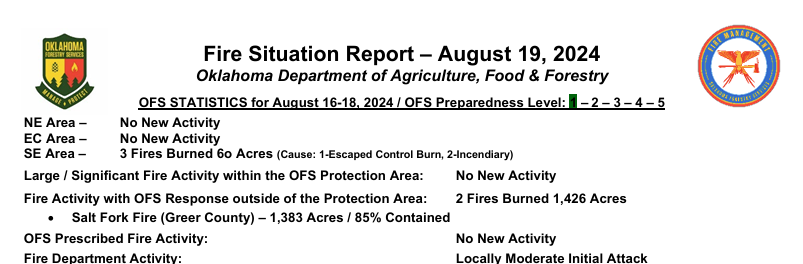
Smithfield Foods Donates $150,000 in Grant Funding to the National FFA Organization

First round of annual grant funding to support 21 local FFA chapter activities and operational needs

Smithfield Foods donated $150,000 in annual grant funding to support local chapters and members of the National FFA Organization.

"FFA provides students with valuable learning opportunities and resources to succeed in their communities," said Steve Evans, vice president of community development for Smithfield Foods. "We're proud to partner with FFA so that future leaders have the experiences and skills necessary to help create a brighter future."

The first round of grants totaling $75,000 was awarded to 21 local FFA chapters in Illinois, Iowa, Missouri and North Carolina, with the next round to be distributed in October.

As a corporate partner of the National FFA Organization, Smithfield has committed to providing annual funding for Smithfield's chapter grants program. The chapter grants program was launched in spring 2024 and offers FFA members the opportunity to experience and take part in activities in which they otherwise would not be able to.

"National FFA is grateful for Smithfield's partnership and commitment to impacting local chapters and members," said Molly Ball, president of the National FFA Foundation and chief marketing officer of the National FFA Organization. "The $150,000 in grant funding that Smithfield is providing to local FFA chapters across the country will expand access to educational opportunities and provide the resources needed for them to thrive."

Grant recipients will use the funds towards chapter activities, operational needs and community service projects that support unique and innovative ideas aligning with Smithfield's focus areas of hunger relief, education and community vitality.

The second round of grant applications will open on Aug. 15, and the awards will be announced in October. Learn more and apply for Smithfield's chapter grants program through the National FFA Organization here.

Smithfield is committed to developing the next generation of leaders through donations to schools and education programs and providing scholarship assistance for 1,500 students globally by 2025. Last year, the company funded more than $2.5 million in education programs and awarded scholarships of more than $740,000 to 13 schools in seven states for the 2023–2024 school year. For more information, visit smithfieldfoods.com/helping-communities.

Grazing Forage Brassicas from Mike Trammell

Forage brassicas have been used in the U.S. for more than 100 years. The biggest factor affecting the popularity for brassicas as forages in the U.S. may be their suitability as cover crops as well. Many producers are attracted to the idea of improving their soil health while also feeding their livestock. This has led to an increase in brassica seed availability and new varieties. Brassica crops were developed by selective breeding and crossbreeding of a few species into many forms designed for different uses as forages, vegetables, oilseeds, and cover crops. In the U.S., turnips, rape, and kale are old standby forages. Newer additions to this group include swedes (rutabagas), forage collards, mustards, radishes, and a few interspecies hybrids selected for various traits like the production of high levels of secondary compounds to combat soil pests in crop rotations as cover crops. However, if the primary reason for growing them is for grazing, be sure the variety purchased was developed for that purpose.

The strength of brassicas as a forage crop is their cold tolerance allowing them to provide high-quality pasture well into the fall and winter when most other forages are dry and brown. Little new growth will occur after temperatures fall below freezing at night, but existing forage remains and holds its nutritional value very well. Brassicas extremely high moisture content makes preservation as a hay crop impractical. Brassicas that form big bulbs, such as turnips, swedes, and radishes, can be grazed but are less suitable for multiple grazing's than varieties that do not elevate their crowns on top of bulbs. However, there are turnip and radish varieties selected for grazing that have an increased proportion of top growth relative to the bulb and livestock readily learn to dig up brassica forage bulbs. Another strong point is a fast growth rate that, under good growing conditions, can provide emergency forage in as little as 45 days. Forage brassica yields are quite variable, ranging from 2 to 5 tons of dry matter per acre depending on species, variety, and environmental conditions.

Nutritionally, forage brassicas behave like a high moisture concentrate feed. Crude protein is typically sufficient to meet the needs of livestock on pasture. Brassicas are naturally low in fiber compared to grass and legume pasture. Brassica neutral detergent fiber (NDF) can range from 11 to 44 percent and has NDF digestibility up to 70 percent. Brassicas that form stems (rape and kales) will be at the higher end of the range, and leafy brassicas like turnips and radish will be at the lower end. Due to their high nutritive value, brassicas can produce excellent animal performance but require adjustments to grazing management. Animals should be introduced to brassica-based pastures slowly to allow the rumen time to adapt and should never be grazed on pure brassica pastures. Effective fiber can be provided by planting brassicas in mixtures with small grains (oats, cereal rye, triticale, or wheat) or other forages, supplementing pastures with hay or providing access to a separate grass pasture. A good rule of thumb is to limit brassicas to no more than 70 percent of the diet.

Forage brassicas do best on productive, fertile, well-drained soils and do not tolerate waterlogging. They are responsive to nitrogen (N) fertilizer up to 100 pounds per acre, which should be applied in split applications before planting and about three weeks post-planting. Phosphorus and potassium should be applied according to a soil test. Seeding rates are 2 to 4 pounds per acre for turnips, 4 to 5 pounds per acre for swedes, 5 to 6 pounds per acre for rape and kale, and 4 to 20 pounds per acre for radish.

Although infrequent, brassica crops can cause animal health disorders if grazing is managed improperly. Most brassica-related disorders in cattle tend to occur during the first two weeks of grazing while adjusting to the forage. The primary potential disorders are polioencephalomalacia or PEM, hemolytic anemia (mainly with kale), nitrate poisoning, and pulmonary emphysema. In general, potential problems can be minimized by feeding brassicas as no more than 70 percent of the dietary dry matter intake, introducing animals to brassica pasture slowly, never turning hungry animals onto a brassica pasture, providing a trace mineral supplement that includes iodine, not grazing immature rape (safe maturity is indicated by a reddish/bronze tint to leaves) and avoiding excessive N and sulfur fertility.

References

http://extension.msstate.edu/sites/default/files/publications/publications/P2845_web.pdf

https://www.uaex.uada.edu/publications/pdf/FSA61.pdf

Daily Email for August 13, 2024


Oklahoma's Latest Farm

And Ranch News

Tuesday, August 13, 2024

 
Howdy Neighbors!

Here is Your Daily Oklahoma Farm and Ranch News Update: 


  • Oklahoma's Spring-Planted Crops See Slightly Improved Conditions


  • 2024 Oklahoma Wheat Crop Left Unchanged at 105 Million Bushels- Cotton May Double 2023 Crop


  • USDA lowers its forecast for wheat production to 1.98 Billion bushels


  • Derrell Peel's Early Thoughts on Winter Wheat Grazing


  • Beef Checkoff Partners with Little League World Series: A Home Run for Nutrition and Awareness


  • NACD and Trust In Food™ Affirm Partnership


  • Leader Cyndi Munson on the death of Kirkpatrick Foundation Executive Director Louisa McCune
 

Oklahoma's Spring-Planted Crops See Slightly Improved Conditions

USDA's weekly Crop Progress Report shows that nationwide, the US Corn crop now stands at 68% good to excellent - up one point from last week. Soybeans were unchanged this week at 68% good to excellent - Cotton fell one point this week to 46% good to excellent and Sorghum improved four points to 51% good to excellent.
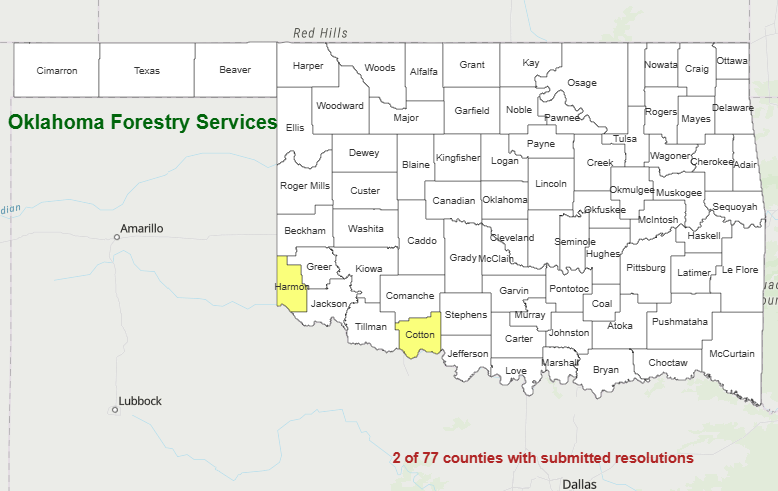


Oklahoma's spring-planted crop conditions are remain steady to better than a week ago. Corn conditions rated 64 percent good to excellent. Soybean conditions rated 52 percent good to excellent. Cotton conditions rated 61 percent good to excellent, and Sorghum conditions rated 62 percent good to excellent.


Kansas's conditions are pretty good with soybeans rated at 60 percent good to excellent. Cotton conditions rated 67 percent good to excellent. and Sorghum conditions rated 49 percent good to excellent.


Texas's spring-planted crop conditions are mixed as compared to last week with Corn conditions improved to 41 percent good to excellent from last week's 35 percent. Cotton conditions are up to 33 percent good to excellent from last week's 32 percent rating. Sorghum conditions improved to a 50 percent good to excellent rating from last week's 41 percent.


Pasture and Range Conditions for the 48 states are unchanged from last week at 35 percent good to excellent. Oklahoma has improved 6 points this week to 55% good to excellent - Kansas improved 1 point to 47% good to excellent - Texas declined three points at 28% good to excellent while Missouri declined 6 points to a 74% good to excellent rating.

Read more about Crop Progress here

Sponsor Spotlight

The vision of the Oklahoma Beef Council is to be a positive difference for Oklahoma's farming and ranching families and the greater beef community, and its mission is to enhance beef demand by strengthening consumer trust and exceeding consumer expectations. 

To learn more, visit www.oklabeef.org. Also, don't forget to like its Facebook page at www.facebook.com/oklabeef for stories on Oklahoma's ranching families and great beef recipes. 


And Check out this video below that helps you learn more about the Beef Checkoff:

2024 Oklahoma Wheat Crop Left Unchanged at 105 Million Bushels- Cotton May Double 2023 Crop

Oklahoma Farm Report's Ron Hays talked on Monday with Oklahoma State Statistician Troy Marshall about the August Crop Production report released on August 12th.


The 2024 Oklahoma Winter Wheat Crop in Oklahoma was left unchanged in the August report compared to the July USDA Crop Production report. NASS says Oklahoma wheat farmers have harvested 2.7 million acres- getting a yield of 39 bushels per acre for a total production of 105.3 million bushels, up 54% from the 2023 crop of just over 68 million bushels. Marshall told Hays there will be one more look at the 2024 crop in the September report- and that might tweak the crop slightly larger.

The Texas wheat crop was three million bushels smaller in 2024 versus 2023- at 74.25 million bushels. Meanwhile in Kansas, the largest wheat state in the union saw a 56% jump in total production in 2024 versus 2023 at 314.6 million bushels. Kansas is far and away the largest winter wheat producing state in the US- Washington is second with 125 million bushels and Oklahoma stands third based on the 105.3 million bushel 2024 crop.


The 2024 Oklahoma Cotton crop is forecast at 430 thousand bales,105 percent higher than 2023.

Yield averaged 655 pounds per acre, compared with 560 pounds last year. Acreage harvested, at

315 thousand acres, is up 75 percent from last year. Keep in mind that this is based on crop conditions as of August first- with critical growing conditions still ahead.


Listen to Troy Marshall's comments here and read more about the latest Crop Production Report here

USDA lowers its forecast for wheat production to 1.98 Billion bushels

Farm Director KC Sheperd talked with Allendale's Lynsey Such to discuss the latest WASDE report and its implications for the agricultural market.


Such provided an analysis of the latest USDA crop production report, highlighting significant surprises in the data. The report showed a 1 million acre increase in soybean production, a 1 million acre decrease in wheat production, and a surprising drop in wheat acreage.


"Wheat ending stocks were trimmed from 856 to 828 million bushels. This came from yield increase to 52 billion bushels per acre as acreage dropped from all wheat by 900,000 acres," Such said. "On the global front for wheat, Australia's production was increased by one million metric tons. Europe was reduced by 2 million metric tons while Ukraine was increased. So we did have some changes on the domestic as well as global front for wheat, which was a little bit friendly for now."


She also noted that the USDA's confidence in their production data has led to earlier changes, now made in August rather than October. She also pointed out that soybean exports would be a key factor to watch in the coming months.

Read more about the latest WASDE Report here
 
 
Sign Up for Our Daily Email- Free Because of Our Sponsors!

Support Our Sponsors!


KIS logo
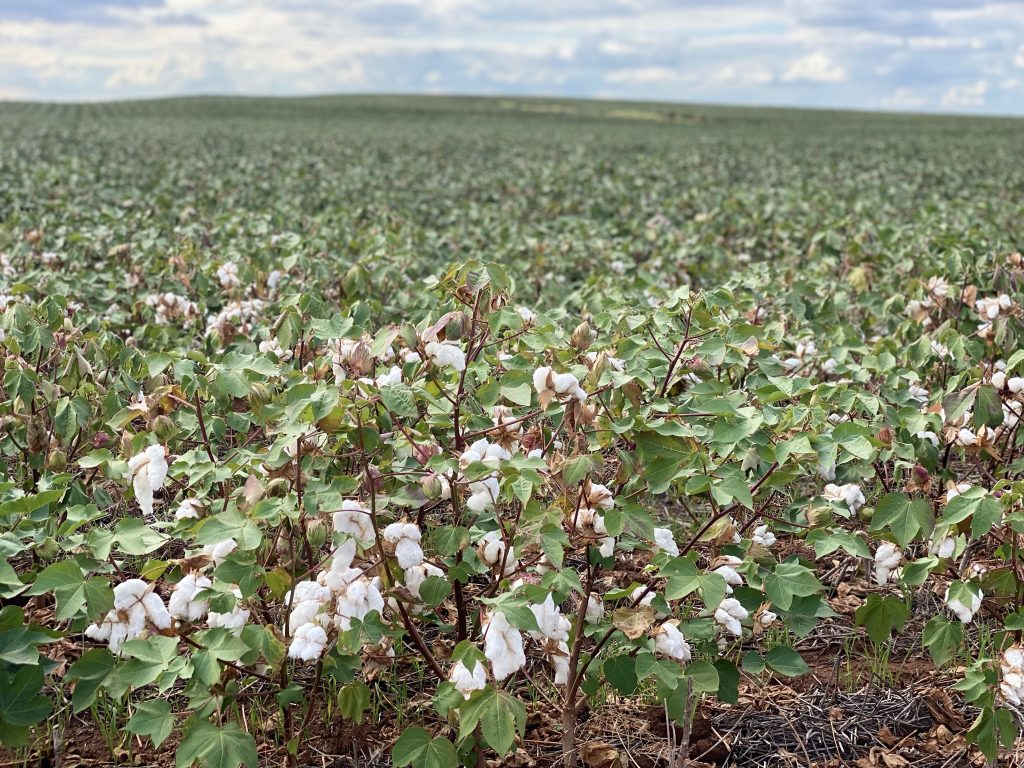


Advertise With Us!
 

For our farmers who have either- always have had cotton on their farms- or those who have more recently have added the fiber crop to their operations- we have a daily report heard on several of our Radio Stations- It's Called Cotton Talk!

Click on the Button below to listen to our most recent report
Click here for our Latest Cotton Talk- Hosted by KC Sheperd


Derrell Peel's Early Thoughts on Winter Wheat Grazing

Although it is only August, some forage-only and dual-purpose wheat producers in Oklahoma are already thinking about planting winter wheat for winter grazing. Early-planted winter wheat is fraught with agronomic challenges and risks. Soil moisture has generally been very short the last few weeks making wheat planting a bigger risk. 


Storms and rains in some regions of Oklahoma this past weekend may provide moisture to facilitate early wheat planting in some areas. In other cases, producers may "dust in" wheat into dry soil to await rain. High soil temperatures in late summer can delay germination for many years, though that seems to be less of a concern this year. Early planted wheat established in late August or September is subject to more weed and pest problems. 


Armyworms are a particular threat to early emerging wheat in the fall. Grain-only wheat producers will not plant wheat until October and thus avoid or minimize some of these agronomic challenges.

Read more of Dr. Derrell Peel's insights on Winter Wheat Grazing here
 

We invite you to listen to us on great radio stations across the region on the Radio Oklahoma Ag Network weekdays-

if you missed this morning's Farm News - or you are in an area where you can't hear it- click below for this morning's Farm news from Ron Hays and KC Sheperd on RON.
Listen to our Tuesday morning farm and ranch news
 
 
Subscribe To the Daily Email


Sponsor Spotlight


Invenergy is committed to Oklahoma, having completed its first project in the state in 2006. Today, Invenergy operates three wind energy centers in our state, employs over 60 Oklahomans and continues investing in our project communities. We believe building relationships is the key to being good community partners and we work to develop relationships to benefit our landowners, our employees, and our communities.


We invest in Oklahomans, and we take pride in their success. Our energy facilities provide jobs, tax revenues, landowner payments and other sources of local economic development.


For more information, visit www.InvenergyOklahoma.com


Beef Checkoff Partners with Little League World Series: A Home Run for Nutrition and Awareness

Spring means baseball and softball, and it also means the kickoff to summer grilling season. This year, the Beef. It's What's For Dinner. brand, funded by the Beef Checkoff, is excited to announce the perfect partnership between beef and baseball/softball as a proud partner of the Little League® World Series- which begins in Pennsylvania on Wednesday.


Senior Farm and Ranch Broadcaster Ron Hays recently caught up with Jennifer Nealson, the Senior Vice President of Global Marketing and Research for the National Cattleman's Beef Association to talk about how the Beef Checkoff supports the Little League World Series.


"We are an official partner of Little League, which is the largest youth sports organization with 2 million players," Nealson said. "We are very excited about having exposure to those kids and their parents."


A favorite at the ballpark and at home, beef makes dinner easy. As the official sponsor of the Perfect Home Plate with Little League, the Beef. It's What's For Dinner. brand will make mealtime even easier with delicious, balanced recipe inspiration, perfect for the busy sports family navigating a hectic schedule.

Click here to listen to Ron's interview with Jennifer Nealson and read more about the partnership

NACD and Trust In Food™ Affirm Partnership

Today, the National Association of Conservation Districts (NACD) and Trust In Food™ (TIF), a sustainability initiative of Farm Journal, signed a letter of agreement during NACD's Summer Meeting in Boston, Massachusetts. 


This letter of agreement affirms the partnership between NACD and TIF and builds on recent collaborations. Both organizations share common ground championing a locally-led approach to natural resources conservation and the importance of partnerships and continuous improvement. 


"We look forward to growing our partnership with Trust In Food™ and encourage conservation districts to participate in activities like field days and peer networking with TIF's America's Conservation Agriculture Movement (ACAM)," said NACD President Kim LaFleur. "It's great to have TIF—with their research-backed insights into what makes producers adopt regenerative and climate-smart agricultural practices—as a partner to help producers get more conservation on the ground through voluntary programs." 

Read more about the partnership between the NCAD and Trust in Food

Leader Cyndi Munson on the death of Kirkpatrick Foundation Executive Director Louisa McCune

House Democratic Leader Cyndi Munson, D-Oklahoma City, released the following statement issuing condolences for the passing of longtime animal advocate and philanthropist Louisa McCune on August 11, 2024- McCune, at the age of 54, passed this past Saturday after an extended battle with cancer:


"Oklahoma City has experienced a great loss with the death of Louisa McCune after her brave battle with cancer," said Leader Munson. "My heart goes out to her family, friends, and colleagues during this time, especially her three boys. Louisa worked tirelessly to advocate for animals and those without a voice to provide a safe, humane future for all living things. She was notoriously kind and intelligent and will be honored forever for her instrumental work with the Oklahoma Animal Alliance.


"McCune was the executive director of Kirkpatrick Foundation and served on the board of Patrons of OKC Animal Welfare and the Neighborhoods Subcommittee for MAPS4. She was previously the board president of Animal Grantmakers and in 2021, served as committee chairman for the Philanthropy Southwest Annual Conference."


The Daily Oklahoman wrote in their article on her passing about McCune's involvement with State Question 777. "Former Attorney General Drew Edmondson worked closely with McCune to respond to the 2016 State Question 777, which Edmondson argued would have allowed big agriculture to operate without regard to environmental concerns and animal welfare.


"The state question, the Right to Farm bill, failed 60% to 40%.


"Because she was working with a nonprofit with limits on campaigning, her mission was to educate, not politick," Edmondson said." The former Attorney General added McCune was instrumental in the defeat of the state question.


In more recent days- she has been a voice against gestation crates for sow housing- and was the lead in a 2023 conference in Oklahoma on that subject- and also the editor credited with a report released by the Kirkpatrick Foundation titled "The Way Forward" which has as it's central theme "It's time for Oklahoma pork producers to... eliminate cruel gestation crates for the betterment of pig health."

Let's Check The Markets!
OKC West is our Market Links Sponsor- they sell cattle three days a week- Cows on Mondays, Stockers on Tuesday and Feeders on Wednesday- Call 405-262-8800 to learn more.
 
Today's First Look:
Ron on RON Markets as heard on K101  
mornings with cash and futures reviewed- includes where the Cash Cattle market stands, the latest Feeder Cattle Markets Etc.
Hear Today's First Look
 

Wholesale Boxed Beef Prices were higher- Choice Beef was up $3.12 and Select Beef was up $1.58 on Monday 9/12/2024.


Click on the Button below for the latest report from USDA Market News

Boxed Beef Report from 8/12/2024
 

Oklahoma National Stockyards had 5,300 head on Monday, August 12, 2024.


Compared to last week: Feeder steers 2.00-6.00 higher. Steer calves 10.00 higher in a light test. Feeder heifers steady to 4.00 higher. Heifer calves 7.00-10.00 higher. Demand good. Quality plain to average. Weigh up conditions on the plainer cattle were in the buyers favor. Most of Oklahoma received good rains this past weekend. So far, the market has recovered nicely after last week's sharp downturn. NOTE- Special angus sale was today with estimated 1000 head. All these cattle were denoted as Value-Added.


Click below for the complete closing report.

Oklahoma National Stockyards Market Report from 08/12/2024
 

The Joplin Regional Stockyards had a total run of 5,100 head for Monday August 12, 2024.


Compared to last week feeder steers sold steady to 5.00 higher with the exception of light 4 weight and 3 weight calves selling up to 30.00 higher. Feeder heifers under 525 lbs. sold 10.00-15.00 higher with heavier weights selling steady to 5.00 higher. Supply was moderate with very good demand


Click on the button below for details of the trade as compiled by the USDA Market News Service.

 
Joplin Regional Stockyards Market from Monday 08/12/2024
 
OKC West in El Reno Cow and Bull Market Report from 08/12/2024
 
 
Each afternoon we are posting a recap of that day's markets as analyzed by Justin Lewis of KIS futures - click below for the latest update on the Livestock and Grain Futures Trade..
Click Here to Listen to Justin's Commentary From 8/12/2024
 
Okla Cash Grain:  
Daily Oklahoma Cash Grain Prices- as reported by the Oklahoma Dept. of Agriculture- The report available after the close of the Futures Trade for that day.
Read Cash Grains Report from 8/12/2024
 
Our Daily Market Wrapup from the Radio Oklahoma Ag Network - analyzing the Futures Markets for that trading day- as reported by KC Sheperd.
Click to Listen to Our Weekday Wrap with KC
 
Slaughter Cattle Recap: 
The National Daily Slaughter Cattle Summary- as prepared by the USDA Market News
Read Report
 
TCFA Feedlot Recap:  
Finally, here is the Daily Volume and Price Summary from the Texas Cattle Feeders Association.
Read Report

Our Oklahoma Farm Report Team!!!!


Ron Hays, Senior Farm/Ranch Broadcaster and Editor


KC Sheperd, Farm Director and Editor


Dave Lanning, Markets and Production


Stevie White, Farm News and Email Editor


Pam Arterburn, Calendar and Template Manager

Podcasts From Oklahoma Farm Report and More

Two of our regular reports are also podcasts that you can subscribe to- Our daily Farm and Ranch News with KC Sheperd- available here on the Apple Podcast Platform


The second is our daily Beef Buzz with Ron Hays- available here on the Apple Podcast Platform


Periodically- we offer interviews on our Ag Perspectives Podcast series- this podcast is available here.


Ron has also has a series of podcasts from interviews with newsmakers at the Cattlemen's Congress- Click here or you can find them on your favorite Podcast platform- look for them by searching for Cattlemen's Congress Conversations.


We are making plans to jump back into regular installments of what has been called the Road to Rural Prosperity- a new name and fresh content is in the works- for now- click on the blue button below for one of our favorites that is a timeless classic.

Listen to Episode 86 with Ron Hays talking with one of the legends in the Beef Cattle Business- Bob Drake of Davis, Oklahoma
 
 
Listen to Ron
Beef Buzz
 
Blue Green Gazette
Calendar
Auctions
Market Links
Facebook  Twitter  Youtube  

Our thanks to Midwest Farms Shows, P & K Equipment, Oklahoma Farm Bureau, Oklahoma Ag Mediation Program, Great Plains Kubota, Stillwater Milling Company, National Livestock Credit Corporation, Oklahoma Beef Council, Oklahoma Wheat Commission, Oklahoma AgCredit, the Oklahoma Cattlemens Association, Invenergy Oklahoma and  KIS Futures for their support of our daily Farm News Update.


For your convenience, we have our sponsors' websites linked here- just click on their name to jump to their website- check their sites out and let these folks know you appreciate the support of this daily email, as their sponsorship helps us keep this arriving in your inbox on a regular basis- at NO Charge!


We also appreciate our Market Links Sponsor - OKC West Livestock! 


We invite you to check out our website at the link below too that includes an archive of these daily emails, audio reports and top farm news story links from around the globe.

Head to Our Website OklahomaFarmReport.Com
God Bless!
Reach Out To Us:
Tim West
President/General Manager
Rural Oklahoma Networks

405-317-6361

***************

Mike Henderson
Director of Sales

405-615-4922

KC Sheperd
Farm Director
Radio Oklahoma Ag Network

405-443-5717

Email KC
Ron Hays
Senior Farm/Ranch Broadcaster
Radio Oklahoma Ag Network

405.473.6144
Email Ron

Dr. Jayson Lusk Discusses the Critical Role of OSU's Agronomy Research Station in Agriculture

Listen to Ron Hays talking with Dr. Jayson Lusk about the widespread importance and impact of the Agronomy Research Station.

While at the Oklahoma State University Agronomy Research Station, Senior Farm and Ranch Broadcaster Ron Hays got to talk with the Dean of the Division of Agriculture and Natural Resources at OSU, Dr. Jayson Lusk, about the Agronomy Research Station's importance, not only to the OSU campus but to the agricultural industry.

"The varieties we produce here are grown on about seventy percent of all wheat acres in Oklahoma and about ten percent of wheat acres across the United States," Dr. Lusk explained. "The research done here goes into adding bushels in the field, dollars in farmer's pockets, and ultimately, food in consumer's bellies all over the world."

While the program is impactful, it relies on 1940s and 1950s-era infrastructure, so to maintain that impact, it must be updated. "We are looking towards the future and there is a lot of momentum in thinking about how we can move forward. Now that we have the New Frontiers Campaign building on campus, we are starting to look for what is next," he said.

Lusk and his team evaluated the most important commodities in the state to determine their comparative advantage and what they could do to shore up the resources and infrastructure needed to push research frontiers, increase profitability, and sustainability.

The research done at the Agronomy Research Center is spearheaded by Dr. Brett Carver who is, arguably, the top wheat breeder in North America. "We have a rockstar in Brett Carver," Lusk said. "The other piece of the puzzle is that we are one of the few remaining public wheat breeding programs, meaning that we haven't partnered with any other entity to market our varieties. That is really a testament to Dr. Carver, that he has been innovative enough that he has had that kind of impact. Next year he will have been at the University for forty years and has been an incredible asset and an ambassador for both the University and the whole agricultural sector in Oklahoma."

The Station isn't only important to wheat farmers, but also to beef producers in the state. He explained that only half of the wheat acres in the state are harvested, occasionally due to poor weather conditions, but most often, it is used for grazing cattle. He added, "If you look at the dollar value of wheat produced in the state, that dramatically undercounts the economic value of wheat production."

He emphasized that OSU's Wheat breeding program isn't only focused on higher bushels of wheat to go into grain production, but also varieties that better tolerate being grazed by cattle and are good forage. This is unique to Dr. Carver's work in Oklahoma.

"When you add those two commodities together, wheat production and cattle production, we are right at the heart of that," Dr. Lusk commented.

Upgrades to the facility are adding new greenhouses to support the wheat improvement team, and an Agronomy Discovery Center which will include research and education space to host farm groups and research labs.

"Over 65,000 soil and water samples are analyzed every year through our various services, and we want to move those out here, so they aren't having to ship them through campus and so we can talk to producers about what they do," Dr. Lusk detailed. "We also plan to bring our wheat quality labs out to the facility here, as well. It is an effort to try to integrate a lot of the activities that are happening here, connect better with the industry and our students, and ultimately to try help make Oklahoma Agriculture more profitable."

OSU's Regency Board authorized a ten-million-dollar budget for the construction, and efforts are still being made to determine the actual cost of the upgrades. Dr. Lusk anticipates that it will likely cost more than the allotted ten million dollars.

"That is one of the things that we are celebrating today is the foundational gifts from the Wheat Commission and from Oklahoma Genetics Incorporated. Together, they gave six million dollars, which will really push this off of the starting block so that we can get serious about completing the project," Dr. Lusk said.

The donations are a great start, but additional funding will be needed to complete the vision. "We are going to need some help," he admitted. "We want to be even more impactful. We grow wheat that are on ten percent of U.S. acres, why can't we be on twenty or thirty? Why can't we have new varieties of wheat that are even more disease-resistant? Why can't we have varieties of wheat that are more digestible, that have consumer characteristics that may reduce rates of type 2 diabetes? What can we do to keep improving world hunger statistics? These are the things that we can do with the help of donors, and we are looking for folks to come along and investment in us so that we can continue to produce those kinds of outputs."

For more information on how to give to the Agronomy Discovery Center, contact Megan Smith at 405-747-1977 or mesmith@osugiving.com.

New Technology Addresses Agriculture's Soil Compaction Challenges

Farmers now have a new tool to address soil compaction, which is a significant agronomic challenge that can rob yields by up to 60% in affected areas.

The SmartProbe System creates maps highlighting areas of compaction (red/orange plots) at various depths within a given field so subsoiling can be targeted to areas where it's needed.
The SmartProbe System app and mounting kit in use.

The new SmartProbe System features the SmartProbe app and a mounting kit that attaches a smartphone to a soil penetrometer, a device that identifies soil compaction by measuring resistance to vertical penetration. Now, a farmer can easily record penetrometer readings and create real-time maps showing yield-robbing soil compaction at different depths in the field. This allows sub-surface tillage to be focused on areas of the field that need it—increasing yields, reducing costs and improving soil health.

"Growers know soil compaction isn't uniform across a field," says Josh Jeske, founder of Terraform Tillage and developer of the SmartProbe System. "The SmartProbe System allows growers to focus subsoiling on areas that will provide an economic return."

Josh Jeske, 25, founded Terraform Tillage as a student at Iowa State. His patent-pending technology makes soil compaction mapping more efficient, leading to more precise tillage for farmers.

Reduced Costs, Improved Yields
Jeske says during pilot tests with the SmartProbe System, farmers were able to reduce sub-surface tillage up to 90%. "Our value comes from reducing tillage in field areas that don't need it–and focusing tillage on areas that do," Jeske says. "That's better for the grower and the environment."

Free Trial of SmartProbe App
The SmartProbe app is now available in the Apple App Store and the Google Play Store. Downloading and use of the app is free until January 1, 2025. After that, the app will be available on a subscription basis. The mounting kit can be purchased at the Terraform Tillage website.

Compaction Mapping Service
The SmartProbe System is also available as a service in Iowa. Growers can contract Terraform Tillage to map fields for them and offer precise tillage recommendations. The service is available for $5 per acre for one-acre grids with minimum acreage thresholds based on the location of the fields being mapped.

To learn more about the Terraform Tillage service, visit https://terraformtillage.com/mapping-service-iowa.

NACD Holds 2024 Summer Conservation Forum and Tours and Northeast Region Meeting in Massachusetts

This week, the National Association of Conservation Districts (NACD) held its 2024 Summer Conservation Forum and Tours in Boston, Massachusetts with the NACD Northeast Region Meeting.

Hosted in partnership with the Massachusetts Association of Conservation Districts, this summer's meeting gathered conservation leaders from across the country to discuss natural resource concerns and solutions. The meeting included a discussion panel on water quality and climate resilience with U.S. Environmental Protection Agency Regional Administrator Dr. David W. Cash, Massachusetts' first Climate Chief Melissa Hoffer, and Cape Cod Conservation District Program Manager Martha Craig.

Remarks from U.S. Department of Agriculture (USDA), Natural Resources Conservation Service (NRCS) Chief Terry Cosby, Massachusetts Department of Agricultural Resources Commissioner Ashley Randle, Ocean Spray Senior Vice President of Research & Development and Sustainability Katy Galle, and Indigo Ag Vice President of Sustainability Sciences Dr. A.J. Kumar emphasized partnerships among producers, government, and the private sector for sustainable, resilient food systems.

Attendees also heard from USDA Under Secretary for Farm Production and Conservation Robert Bonnie. "This model that NACD, that NRCS, and others have developed around locally led, incentive-based conservation is critical," said Bonnie. "The science that we learn and the experience that we've had over the last couple of decades tell us that it's even more critical today."

"I'm so glad to welcome conservation leaders and partners across the country to my home state," said NACD President Kim LaFleur. "Boston has a storied history of building from strong foundations and inspiring new ideas. The setting created a great place to collaborate, where we can build from decades of knowledge and learn from new ideas to expand voluntary, locally led conservation in communities across the nation."

Earlier in the meeting, bipartisan efforts to pass a new farm bill were highlighted as staff representing Senate Agriculture Committee Chairwoman Debbie Stabenow and Ranking Member John Boozman were convened by NACD. These congressional staffers shared their perspectives on the prospects of the farm bill advancing this year, the status of NACD's priorities, and negotiations on policies within the conservation title. NACD's top farm bill priority is to integrate all remaining Inflation Reduction Act conservation investments into the conservation title to permanently increase funding for voluntary conservation programs. Senate and House agriculture committee leaders support the request on a bipartisan basis, but need to pass a farm bill this year to take advantage of this historic opportunity.

The meeting also provided attendees with the opportunity to see conservation in action in the City of Boston as well as Bristol and Plymouth Counties with tours led by the Mystic River Watershed Association, The Food Project, the Urban Farming Institute, Westport Rivers Vineyard, Bristol County Agricultural High School, and A.D. Makepeace Company.

Throughout the meeting, attendees were able to hear from conservation leaders, who shared their experiences addressing changing natural resource challenges in their regions. Keynote speakers, panelists, and board members addressed the importance of partnerships to delivering successful conservation now and in the future.

Joel Leftwich on Strategies to Combat Anti-Animal Agriculture Activism

Listen to Ron Hays talking with Joel Leftwich about staying ahead of activists against animal agriculture.

At the recent Livestock Marketing Convention, Senior Farm and Ranch Broadcaster Ron Hays caught up with Joel Leftwich, the Chief Strategy Officer for Kansas Farm Bureau, to talk about staying ahead of activists against animal agriculture. This is the first in a two-part discussion so watch for the second part to be posted tomorrow.

According to Leftwich, it is time for producers to push back, and many of the policy challenges are being seen in state and county ballot initiatives. He said, "The voices out there who are opposed to animal agriculture are strong, well-funded, and finding new ways to challenge the system. We, as an industry, need to look for new ways to fight back against them. We need to make sure that we are partnering with the right voices at a local level to help fight in the jurisdictions where the other side is bringing the fight to us."

Leftwich described aggressive new players on the other side with a lot of influence. "It's everyone from national organizations to micro-local organizations that have the same funding source. They will have a donor in a state on the other side of the country that comes in to set up a county animal agriculture citizen's concern group where 95 percent of the funding isn't coming from a local concerned citizen's group, but it is coming from a large outfit."

He advised those in the fight to leverage the credibility that the agricultural industry already has, which is the trust that voters have in farmers and ranchers, knowing that their life's work is to produce safe, affordable, and delicious food.
"If we understand the trust that voters have in the food and agriculture space, we can communicate to them about our shared values: keeping prices down and making sure that food is available and affordable to everyone."

He said that agricultural groups need to engage with non-agricultural voters to ensure that they are advocating for the same things because shared values are a given.

Leftwich suggested that the agricultural industry likely lost the vote in the Proposition 12 Farm Bill due to not understanding voters' trust, but said that looking back won't change anything. "We have to look forward to 'How do we avoid this situation in the future? Do we have the right tools in place to win the next time around? What can we be doing now to help reverse that decision?'" He mused.

The Beef Buzz is a regular feature heard on radio stations around the region on the Radio Oklahoma Ag Network and is a regular audio feature found on this website as well. Click on the LISTEN BAR at the top of the story for today's show and check out our archives for older Beef Buzz shows covering the gamut of the beef cattle industry today.

Ben Hale Says that Buyers are Being Cautious But Quality Sells

Listen to Ron Hays talk with Ben Hale about the latest in the cattle markets.

On Tuesdays, Senior Farm and Ranch Broadcaster, Ron Hays, visits with Ben Hale of Western Livestock Auctions as he talks about the latest in the markets and more. Established in 1995, Western has grown into a multi-generational family-owned and operated business and stands as a symbol of tradition, excellence, and a deep-rooted passion for the cattle industry. Western Livestock Auctions are located in Oklahoma City, Woodward, and Comanche.

The numbers were good this week at the Oklahoma National Stockyards. "We had about 5,300 compared to about 8,100 [a year ago], and about 900 of those were in conjunction with our Special Angus Ssale we have in August. Our next one will be the first week of December," Hale said.

He said that the Special Angus Sale improved the overall quality of the cattle. Six-weight cattle were standouts with prices ranging in the nineties, and 680s were quoted from $2.70 - $2.99. He said, "There were a few sets of those that were all black steers with some condition and were some of the knockout cattle that we had there yesterday," he said. "There were a lot of light grazing cattle, too. It was a good offering of a lot of good cattle."

He said that buyers are still paying for quality but are being pretty cautious. "I think everyone is holding their breath about what this board is going to do. We had a good rally on Friday, but then yesterday, that deal closed off $2, so I think they are just wanting some stability in the market."

Hale is predicting lighter numbers in the upcoming sales at Comanche and Woodward but expects a decent run on Thursday's feeder cattle sale in Woodward.

Hale can be contacted at 940-631-2333. Check out more about the marketing options that Western offers by clicking here.

President Duvall Invites County Leaders to AFBF Convention

This year's American Farm Bureau Convention will celebrate the most important position in Farm Bureau – The County Farm Bureau Leader!

At Convention, we're going to celebrate the challenges that you turned into opportunities for your county. You're going to hear from experts and share ideas with other county leaders to take your leadership and your county to the next level. And, you're going to learn how you can Step Up and Drive Forward our mission through your county's grassroots efforts.

Please listen as American Farm Bureau President Zippy Duvall tells you more about this upcoming event in this video, and contact your state Farm Bureau to tell them you're ALL IN for the American Farm Bureau Convention 2025 in San Antonio. We'll see you there!

Cattle Group Stands with Ranchers Facing Criminal Charges Over Grazing Allotment

Following the indictments of South Dakota cattle ranchers Charles and Heather Maude, R-CALF USA has urged the Department of Agriculture, the U.S. Forest Service and the Department of Justice to immediately drop all charges against the couple, encouraging a common-sense solution.

In June, the Maude's of Caputa, South Dakota, were individually indicted on charges of theft of government property. The couple are accused of stealing and modifying a USFS Grazing Allotment of about 25 acres, owned and managed by the Maude family, free of infraction or rule violation, for over 100 years. Having been charged separately, the couple must retain two attorneys and are each facing up to 10 years in prison and fines up to $250,000.

"The abuse of power exerted by the USFS in their sealed indictments for theft of government property against Charles and Heather Maude, is not only erroneous but retaliatory in nature. These actions must be reined in immediately," said R-CALF USA Property Rights Chair Shad Sullivan.

In a letter to USDA Secretary Tom Vilsack, R-CALF USA outlined the events and concerns with the USFS actions including a "lack of common-sense knowledge by USFS regarding the fact that dated and primitive survey boundaries are often imperfect," the lack of communication by USFS employees, and the incredibly nefarious manner in which each indictment was received. The letter concludes, "The Maude family are generational community members and upstanding citizens focused on land stewardship and food production. We encourage the USDA, USFS and the DOJ to effectively communicate with the Maude family to find a common-sense solution to what has become a nation-wide issue. We urge your agencies to restrain from overreach and from exercising abusive power in their duties."

Back to School Boost: Beef!

As students head back to classrooms and extracurriculars, maintaining optimal nutrition is crucial for their success. Packed with ten essential nutrients kids need to thrive, including zinc, protein, and iron beef is a food that stands out in supporting academic and physical performance.

This month we are encouraging you to share content on your social channels to help get the school year off to a happy and healthy start, by highlight easy meal ideas, school lunch recipes, and the nutritional benefits of beef. Read more below for other ideas on joining these conversations this month and how beef can play a vital role in a thriving school year.

Let us know what you are sharing on your social channels in the MBA Facebook Group, and by tagging Beef. It's What's For Dinner. in your social media posts!

Check out this delicious Recipe!

Tiny Taco Beef Tarts:

Ingredients:
12 ounces Ground Beef (93% lean or leaner)
1/2 cup chopped onion
1 teaspoon minced garlic
1/2 cup prepared mild or medium taco sauce
1/2 teaspoon ground cumin
1/4 teaspoon salt
1/8 teaspoon pepper
2 packages (2.1 ounces each) frozen mini phyllo shells (30 shells total)
1/2 cup shredded reduced fat Mexican cheese blend
Toppings:
Shredded lettuce, sliced grape or cherry tomatoes, guacamole, lowfat dairy sour cream, sliced ripe olives (optional)

Cooking:

  1. Heat oven to 350°F. Heat large nonstick skillet over medium heat until hot. Add Ground Beef, onion and garlic in large nonstick skillet over medium heat 8 to 10 minutes, breaking up beef into small crumbles and stirring occasionally. Add taco sauce, cumin, salt and pepper; cook and stir 1 to 2 minutes or until mixture is heated through.
  2. Place phyllo shells on rimmed baking sheet. Spoon beef mixture evenly into shells. Top evenly with cheese. Bake 9 to 10 minutes or until shells are crisp and cheese is melted.
  3. Top tarts with lettuce, tomatoes, guacamole, sour cream, and olives, as desired.

Safe Handling Tips:

  • Wash hands with soap and water before cooking and always after touching raw meat.
  • Separate raw meat from other foods.
  • Wash all cutting boards, utensils, and dishes after touching raw meat.
  • Do not reuse marinades used on raw foods.
  • Wash all produce prior to use.
  • Cook steaks and roasts until temperature reaches 145°F for medium rare, as measured by a meat thermometer, allowing to rest for three minutes.
  • Cook Ground Beef to 160°F as measured by a meat thermometer.
  • Refrigerate leftovers promptly.

For more information on degree of doneness and other cooking tips visit: https://www.beefitswhatsfordinner.com/cooking/determining-doneness

For more information on safe food handling and beef safety, see: https://www.beefitswhatsfordinner.com/cooking/food-safety

NEW NFIB SURVEY: Inflation Continues to Plague Main Street

Inflation remained the number one operating issue for small business owners in July

The NFIB Small Business Optimism Index rose 2.2 points in July to 93.7, the highest reading since February 2022. However, this is the 31st consecutive month below the 50-year average of 98. Inflation remains the top issue among small business owners, with 25% reporting it as their single most important problem in operating their business, up four points from June.

"Despite this increase in optimism, the road ahead remains tough for the nation's small business owners," said NFIB Chief Economist Bill Dunkelberg. "Cost pressures, especially labor costs, continue to plague small business operations, impacting their bottom line. Owners are heading towards unpredictable months ahead, not knowing how future economic conditions or government policies will impact them."

Though state-specific data is unavailable, NFIB State Director Jerrod Shouse urged Congress to make the 20% Small Business Deduction permanent to provide Main Street with greater certainty in the months ahead.

"Inflation remains the single biggest problem facing small business owners here in Oklahoma and across the country. As Main Street feels the squeeze of rising costs, the uncertainty of future economic conditions and government policies exacerbates the challenges of owning and operating a small business. Congress can help relieve the uncertainty by making the 20% Small Business Deduction permanent."

Key findings include:

  • Seasonally adjusted, a net 33% reported raising compensation in July, down five points from June and the lowest reading since April 2021.
  • A net 2% (seasonally adjusted) of owners plan inventory investment in the coming months, up four points from June. The last time inventory investment plans were positive was in October 2022.
  • The net percent of owners expecting higher real sales volumes rose four points in July to a net negative 9% (seasonally adjusted), the highest reading of this year.
  • The net percent of owners raising average selling prices fell five points from June to a seasonally adjusted net 22%.
  • Seasonally adjusted, a net 24% plan price hikes in July (down two points). This is the lowest reading since April 2023.
  • Thirty-eight percent (seasonally adjusted) of all owners reported job openings they could not fill in the current period, up one point from June.

As reported in NFIB's monthly jobs report, a seasonally adjusted 38% of all small business owners reported job openings they could not fill in their current period, up one point from June. Of the 57% of owners hiring or trying to hire in July, 86% reported few or no qualified applicants for the positions they were trying to fill.

Fifty-four percent of owners reported capital outlays in the last six months, up two points from June. Of those making expenditures, 36% reported spending on new equipment, 22% acquired vehicles, and 15% improved or expanded facilities. Ten percent spent money on new fixtures and furniture and 7% acquired new buildings or land for expansion. Twenty-three percent (seasonally adjusted) plan capital outlays in the next six months, unchanged for the third consecutive month.

A net negative 16% of all owners (seasonally adjusted) reported higher nominal sales in the past three months. The net percent of owners expecting higher real sales volumes rose four points to a net negative 9% (seasonally adjusted), the highest reading of this year.

The net percent of owners reporting inventory gains fell six points to a net negative 9%, the lowest since August 2020. Not seasonally adjusted, 11% reported increases in stocks and 17% reported reductions.

A net negative 4% (seasonally adjusted) of owners viewed current inventory stocks as "too low" in July, down two points from June. A net 2% (seasonally adjusted) of owners plan inventory investment in the coming months, up four points from June. The last time this was positive was in October 2022.

The net percent of owners raising average selling prices fell five points from June to a net 22% seasonally adjusted. Twenty-five percent of owners reported that inflation was their single most important problem in operating their business. Unadjusted, 13% reported lower average selling prices and 36% reported higher average prices.

Price hikes were the most frequent in the finance (57% higher, 6% lower), wholesale (47% higher, 9% lower), retail (40% higher, 14% lower), and construction (38% higher, 7% lower) sectors. Seasonally adjusted, a net 24% plan price hikes in July. This is the lowest reading since April 2023.

Seasonally adjusted, a net 33% reported raising compensation, down five points from June and the lowest reading since April 2021. A seasonally adjusted net 18% plan to raise compensation in the next three months, down four points from June. Nine percent of owners cited labor costs as their top business problem, down two points from June and only four points below the highest reading of 13% reached in December 2021. Nineteen percent said that labor quality was their top business problem, remaining behind inflation as the number one issue.

The frequency of reports of positive profit trends was a net negative 30% (seasonally adjusted), one point worse than June. Among owners reporting lower profits, 33% blamed weaker sales, 17% blamed the rise in the cost of materials, 11% cited labor costs, and 10% cited lower selling prices. For owners reporting higher profits, 45% credited sales volumes, 31% cited usual seasonal change, and 11% cited higher selling prices.

Two percent of owners reported that all their borrowing needs were not satisfied. Twenty-five percent reported all credit needs met and 62% said they were not interested in a loan. A net 6% reported their last loan was harder to get than in previous attempts.

Three percent of owners reported that financing was their top business problem in July, down one point from June.

The NFIB Research Center has collected Small Business Economic Trends data with quarterly surveys since the fourth quarter of 1973 and monthly surveys since 1986. Survey respondents are randomly drawn from NFIB's membership. The report is released on the second Tuesday of each month. This survey was conducted in July 2024. Inflation remained the number one operating issue for small business owners in July.

Senate Pro Tem Greg Treat Talks about the Mason Treat Act

Pic courtesy of Yukon Police Department Facebook page (Yukon Police officers with Treat family)

Listen to KC Sheperd's interview with Senator Greg Treat to hear more about this and stay tuned to the end to hear about Treat's plans and the elimination of the state grocery tax.

Farm Director KC Sheperd spoke with Greg Treat, President Pro Tempore of the Oklahoma Senate about the Mason Treat Act which was recently signed into law by Governor Kevin Stitt.

The act is named after Treat's son who was injured in a car accident on January 5th and spent five days in ICU and another 15 days still hospitalized. The accident was caused by a man driving across the country without adequate sleep, but it was Oklahoma's tag laws that put Mason in harm's way.

"We had purchased the vehicle from a private individual," Treat explained. "In Oklahoma prior to this law being signed, you legally had up to sixty days without a tag on your car."

The Treats had purchased the Dodge Charger for Mason, and he was driving it to basketball practice on the morning of the accident. He was pulled over by a Sherriff's deputy for not having a tag on his car.

"That is the way you operated in Oklahoma when you bought a car from a private party and were waiting on liens and other things to be released to be able to pay your taxes and be fully compliant," Treat said. "He had a bill of sale and insurance verification in his car and had complied with Oklahoma's law to the letter."

The exhausted driver, pulling a flatbed trailer full of steel and with three passengers, was driving 70 miles per hour when he rear-ended Mason where he was pulled off of I-40 with the Deputy Sherriff. Mason almost lost his life.

"As soon as we knew that Mason would live, I wanted to make sure that no other Oklahoman had to endure that for that reason. Obviously, we can't prevent every accident from happening, but we could clear up Oklahoma's law to make sure people aren't having to drive around without a tag for a long period of time," Treat said.

The Bill takes effect on September 1, 2024. While it will render temporary, paper tags that buyers typically leave a dealership with only valid for 10 days, it provides for a pre-registration process for vehicles purchased from a dealership or individual to utilize. Service Oklahoma tag agents will send a metal tag in the mail and buyers still have sixty days to come into compliance after the purchase date of their vehicle.

"My heart is about public safety, protecting the traveling public and law enforcement," Treat said. "The main impetus is for law enforcement to realize, 'Hey, this person is driving this car legally,' and not have to unnecessarily pull them over and put themselves or other drivers in jeopardy."

While Mason survived the crash, he still struggles with a traumatic brain injury. "Doctors had to remove the first quarter section of his skull on the right side, cauterize some veins, and get the swelling down, then reattach the section of his skull. He had seven or eight broken ribs and continues to experience pain throughout his body seven months after the accident. He still goes to physical therapy and counselling. He is a sixteen-year-old boy who just wants to be able to play football, and probably won't be able to again for the rest of his life," Treat said.

 He praised God that Mason is still with them and expressed gratitude to the people across the state and country who reached out to say that they were thinking about and praying for Mason during his ordeal.

Treat recognizes that the new law is a change for Oklahomans and the last thing he wants is for it to be confusing or make things more difficult. "These things should be clear and straightforward, "Treat said. "We want Oklahomans to know exactly how it is going to work. So if you purchase a car before September 1, the process will remain the same. If you purchase a car on September 1 or after, you will use the new process."

More information can be seen at readysettag.com which includes a FAQ section. Service Oklahoma will be doing some outreach to educate the public about the new process.

Mark Johnson on 2024 Creep Grazing Options

As opposed to creep feeding a traditional grain-based diet, creep grazing has potential to be a more cost-effective solution. There are many ways to adapt this system to each individual situation, but the bottom line is that it must be profitable.

Most forages can be used for successful creep grazing as long as they are high in nutrient quality and readily available. Time of year will affect which forage is used for creep grazing. During the cool season months, annual grasses like rye, oats, wheat or ryegrass will be used. During the warm season months, most producers will use legumes, Bermuda grass, pearl millet, or sorghum-sudan grass. With the potential of high nitrate millet or sorghum-sudan grass due to heat stress and spotty rainfall during the Oklahoma summer of 2024, calves are a safer bet to utilize those standing forages than cows. If you have done a forage analysis on millet or sorghum-sudan, you have likely seen the following information regarding the safest way to utilize these forages based on nitrate levels.

Generalized interpretation for Nitrate test (ppm-dry matter basis):

  • 0-3,000 = generally safe for all cattle
  • 3,000 – 5,000 = generally safe for non-pregnant cattle. Low risk of reduced breeding performance and early-term abortion
  • 5,000 – 10,000 = some risk for cattle, May cause mid to late-term abortions and weak newborn calves. May decrease growth and milk production.
  • 10,000 = potentially toxic for all cattle. Can cause abortions, acute toxicity symptoms and death  

Similar to grain creep feeds, the added weight gain from creep grazing depends on pasture quality. Regardless of forage quality, if forage quantity is a problem, creep grazing should have a positive effect on calf performance. Daily gains tend to be less than the full fed energy creep systems but are usually increased by 10 to 20 percent with creep grazing. This underscores the effects that pasture quality and quantity exert on gains of creep-grazed calves.

Creep grazing has a few other indirect benefits. One is that calves do not get as fat as when they are fed a grain-based creep feed and may not receive price discounts often applied to calves fed an unlimited high energy creep feed. Replacement heifers may get too fat if fed a grain-based creep feed and have reduced milk production. This problem is less likely to occur when using forage as a creep feed.

Remember most experiments that track cow weight change and calf milk intake show that calves consume all the milk available whether they are fed creep fed or not. Creep feeding simply does not change or improve cow weights or body condition. Calves prefer milk first, palatable creep feed second, then forage. Accordingly, the primary benefit of creep grazing is cost-effectively put pay weight on calves.

Reference: Creep Feeding Beef Calves.  University of Georgia Extension Bulletin 1315.

2024 Oklahoma Winter Wheat Crop Unchanged From July- 2024 Oklahoma Cotton May Double 2023 Crop

Oklahoma Farm Report's Ron Hays talked on Monday with Oklahoma State Statistician Troy Marshall about the August Crop Production report released on August 12th.

Click on the Listen Bar below to listen to Hays and Marshall discuss the Crop production numbers for Oklahoma and the neighboring states of Texas and Kansas.

The 2024 Oklahoma Winter Wheat Crop in Oklahoma was left unchanged in the August report compared to the July USDA Crop Production report. NASS says Oklahoma wheat farmers have harvested 2.7 million acres- getting a yield of 39 bushels per acre for a total production of 105.3 million bushels, up 54% from the 2023 crop of just over 68 million bushels.

The Texas wheat crop was three million bushels smaller in 2024 versus 2023- at 74.25 million bushels. Meanwhile in Kansas, the largest wheat state in the union saw a 56% jump in total production in 2024 versus 2023 at 314.6 million bushels. Kansas is far and away the largest winter wheat producing state in the US- Washington is second with 125 million bushels and Oklahoma stands third based on the 105.3 million bushel 2024 crop.

The 2024 Oklahoma Cotton crop is forecast at 430 thousand bales, 105 percent higher than 2023.
Yield averaged 655 pounds per acre, compared with 560 pounds last year. Acreage harvested, at
315 thousand acres, is up 75 percent from last year. Keep in mind that this is based on crop conditions as of August first- with critical growing conditions still ahead.

The Texas Upland cotton production is forecast at 4.50 million bales, 66 percent higher than 2023. Yield
averaged 592 pounds per acre, compared with 618 pounds last year. Acreage harvested, at 3.65 million
acres, is up 74 percent from last year.

Oklahoma soybean production is forecast at 13.7 million bushels, up 28 percent from last year.
Yield is expected to average 30.0 bushels per acre, compared with 26.0 bushels in 2023. Harvested
acreage, at 455 thousand acres, is 11 percent higher than last year.

Oklahoma corn production is forecast at 55.4 million bushels, up 9 percent from the previous year.
Statewide yields averaged 142 bushels per acre, 7.0 bushels lower than 2023. Acres harvested for
grain, at 390 thousand, is up 15 percent from last year.

Oklahoma sorghum production is forecast at 12.0 million bushels, down 27 percent from last year.
Yield averaged 42.0 bushels per acre, down 5.0 bushels from the previous year. Acres harvested,
at 285 thousand acres, is 19 percent lower than 2023.

Finally, USDA's August report provides us a look at hay harvested estimates for 2024- expecting a 21% smaller hay harvest in Oklahoma here in 2024 versus 2023. The number of acres of other hay to be harvested is 3.1 million acres, down 800,000 acres from what was harvested in 2023. The expected yield is unchanged from 2023 in 2024 at 1.7 tons, with a 5.27 million tons of hay expected to harvested in the state this year- which makes Oklahoma the third largest "other hay" crop in the US- behind Texas and Missouri.

Click here for the national Crop Production report for August 2024 from USDA. To see the Oklahoma/Texas breakdowns- click on the downlink below:

Leader Munson mourns death of Kirkpatrick Foundation Executive Director Louisa McCune

House Democratic Leader Cyndi Munson, D-Oklahoma City, released the following statement issuing condolences for the passing of longtime animal advocate and philanthropist Louisa McCune on August 11, 2024.

"Oklahoma City has experienced a great loss with the death of Louisa McCune after her brave battle with cancer," said Leader Munson. "My heart goes out to her family, friends, and colleagues during this time, especially her three boys. Louisa worked tirelessly to advocate for animals and those without a voice to provide a safe, humane future for all living things. She was notoriously kind and intelligent and will be honored forever for her instrumental work with the Oklahoma Animal Alliance.

"On a more personal note, I want to share my deep gratitude to Louisa for her kind friendship and fierce mentorship. Over the last couple of years, I had the opportunity to get to know her better professionally and personally–which makes me one of the lucky ones to have Louisa invest her time, knowledge, and energy into me. She is someone I have always admired, and I will continue to do so. Her legacy will live on through her precious boys and the incredible work she has done for our city, state, and world. Rest in peace, my friend, we will miss you."

McCune was the executive director of Kirkpatrick Foundation and served on the board of Patrons of OKC Animal Welfare and the Neighborhoods Subcommittee for MAPS4. She was previously the board president of Animal Grantmakers and in 2021, served as committee chairman for the Philanthropy Southwest Annual Conference.

In honor of her memory, McCune's family has requested people make donations to animal welfare organizations she supported.

Oklahoma's Spring-Planted Crops See Slightly Improved Conditions

U.S. Crop Progress:

Winter Wheat harvested reached 93 percent, up 2 percentage points from last year and from the average.

Corn silking reached 94 percent, down 1 percentage point from the previous year and equal to the five-year average. Corn dough reached 60 percent, equal to last year, and up 4 points from the five-year average. Corn dented reached 19 percent, up 3 points from last year and 6 points from the average. Corn conditions rated 67 percent good to excellent, 23 percent fair, and 10 percent poor to very poor. Last week's conditions rated 67 percent good to excellent, 23 percent fair, and 10 percent poor to very poor.

Soybeans blooming reached 91 percent, down 2 points from the previous year, but up 1 point from the five-year average. Soybeans setting pods reached 72 percent, down 3 points from last year, but up 2 points from the average. Soybean conditions rated 68 percent good to excellent, 24 percent fair, and 8 percent poor to very poor. Last week's conditions rated 68 percent good to excellent, 24 percent fair, and 8 percent poor to very poor.

Cotton squaring reached 96 percent, up 1 point from the previous year and from the five-year average. Cotton setting bolls reached 74 percent, up 5 points from the previous year and 1 from the average. Cotton Bolls opening reached 13 percent, up 1 point from last year and from the average. Cotton conditions rated 46 percent good to excellent, 29 percent fair, and 25 percent poor to very poor. Last week's conditions rated 45 percent good to excellent, 28 percent fair, and 27 percent poor to very poor.

Sorghum headed reached 73 percent, up 5 percentage points from the previous year and from the five-year average. Sorghum Coloring reached 32 percent, up 3 points from the previous year and up 4 points from the average. Sorghum conditions rated 47 percent good to excellent, 352 percent fair, and 183 percent poor to very poor. Last week's conditions rated 47 percent good to excellent, 32 percent fair, and 13 percent poor to very poor.

Oklahoma Crop Progress:

Corn dough reached 74 percent, up 14 points from the previous year, and up 23 points from the average. Corn conditions rated 64 percent good to excellent, 26 percent fair, and 10 percent poor to very poor. Last week's conditions rated 65 percent good to excellent, 42 percent fair, and 9 percent poor to very poor.

Sorghum headed reached 54 percent, up 15 points from the previous year, and 1 point from normal. Sorghum Coloring reached 18 percent, up 4 points from last year, but down 1 point from a year ago. Sorghum conditions rated 62 percent good to excellent, 26 percent fair, and 5 percent poor to very poor. Last week's conditions rated 60 percent good to excellent, 31 percent fair, and 9 percent poor to very poor.

Soybeans blooming reached 55 percent, down 19 points from the previous year and down 6 points from normal. Soybeans setting pods reached 17 percent, down 11 points from the previous year and 8 points from the average. Soybean conditions rated 52 percent good to excellent, 36 percent fair, and 12 percent poor to very poor. Last week's conditions rated 55 percent good to excellent, 33 percent fair, and 12 percent poor to very poor.

Cotton setting bolls reached 65 percent, down 4 points from the previous year, but up 4 points from the average. Cotton conditions rated 61 percent good to excellent, 35 percent fair, and 4 percent poor to very poor. Last week's conditions rated 61 percent good to excellent, 35 percent fair, and 4 percent poor to very poor.

Livestock conditions rated 70 percent good to excellent, 35 percent fair, and 4 percent poor to very poor. Last week's conditions rated 68 percent good to excellent, 24 percent fair, and 8 percent poor to very poor.

Pasture and range conditions rated 55 percent good to excellent, 34 percent fair, and 11 percent poor to very poor. Last week's conditions rated 49 percent good to excellent, 32 percent fair, and 19 percent poor to very poor.

Kansas Crop Progress:

Corn Silking reached 95 percent, up 2 points from last year and the five-year average. Corn dough was 78 percent, up 13 points from last year, and 15 points from the average. Corn conditions rated 46 percent good to excellent, 15 percent fair, and 23 percent poor to very poor.

Soybeans blooming reached 86 percent, down 3 percentage points from last year but up 4 points from the average. Setting pods reached 56 percent, down 7 points from last year, but up 1 point from the average. Soybean conditions rated 60 percent good to excellent, 28 percent fair, and 12 percent poor to very poor. Last week's conditions rated 59 percent good to excellent, 28 percent fair, and 13 percent poor to very poor.

Sorghum headed was 70 percent, up 12 percentage points from last year and 13 points from the average. Sorghum coloring was 20%, up 9 points from last year and 11 points from the five-year average. Sorghum conditions rated 45 percent good to excellent, 38 percent fair, and 17 percent poor to very poor. Last week's conditions rated 45 percent good to excellent, 37 percent fair, and 18 percent poor to very poor.

Cotton setting bolls reached 84 percent, up 7 points from last year and 21 points from the average. Cotton Bolls opening reached 8 percent, up 2 points from last year and 4 points from the average. Cotton conditions rated 51 percent good to excellent, 30 percent fair, and 13 percent poor to very poor. Last week's conditions rated 51 percent good to excellent, 39 percent fair, and 10 percent poor to very poor.

Pasture and range conditions rated 47 percent good to excellent, 29 percent fair, and 34 percent poor to very poor. Last week's conditions rated 43 percent good to excellent, 34 percent fair, and 23 percent poor to very poor.

Texas Crop Progress:

Corn silked reached 98 percent, equal to last year and to the five-year average. Corn dough reached 85 percent, up 3 points from the previous year, and from the average. Corn dented reached 69 percent, down 5 points from last year and 2 points from average. Corn mature reached 52 percent, down 5 points from last year, but equal to the average. Corn harvested reached 38 percent, up 139 points from last year and 22 points from the average. Corn conditions rated 41 percent good to excellent, 30 percent fair, and 29 percent poor to very poor. Last week's conditions rated 35 percent good to excellent, 37 percent fair, and 28 percent poor to very poor.

Cotton setting bolls reached 69 percent, up 8 points from the previous year, and 2 from the average. Cotton bolls opening reached 17 percent, up 1 point from the previous year but down 1 from the average. Cotton conditions rated 33 percent good to excellent, 30 percent fair, and 29 percent poor to very poor. Last week's conditions rated 32 percent good to excellent, 28 percent fair, and 40 percent poor to very poor

Sorghum headed reached 89 percent, down 2 points from the previous year but equal to the average. Sorghum coloring reached 73 percent, down 1 point from the previous year and the average. Sorghum mature reached 55 percent, up 6 points from the previous year, but up 1 point from the average. Sorghum harvested reached 47 percent, up 3 percent from the previous year and up 2 points from the average. Sorghum conditions rated 50 percent good to excellent, 31 percent fair, and 19 percent poor to very poor. Last week's conditions rated 41 percent good to excellent, 34 percent fair, and 25 percent poor to very poor.

Soybeans blooming reached 91 percent, down 1 point from the previous year and up 1 point from the average. Soybeans setting pods reached 75 percent, up 8 points from a year ago and 1 point from the average. Soybean conditions rated 28 percent good to excellent, 52 percent fair, and 20 percent poor to very poor. Last week's conditions rated 34 percent good to excellent, 50 percent fair, and 16 percent poor to very poor.

Pasture and range conditions rated 28 percent good to excellent, 30 percent fair, and 42 percent poor to very poor. Last week's conditions rated 31 percent good to excellent, 33 percent fair, and 36 percent poor to very poor.

NCFC President Chuck Conner's Statement on Departure of Rod Snyder from U.S. EPA

"Throughout his career, Rod Snyder has worked at the intersection of agriculture, environmental, conservation, and sustainability issues in an unprecedented way. All the while, he has brought common sense and a collaborative attitude and has first and foremost always been a champion of America's farmers, ranchers, and co-ops. At the EPA, Rod was a valuable resource not just for the agency, but for those of us in agriculture, including NCFC, when it came to navigating a number of sensitive issues. We wish Rod well in his new endeavors and look forward the possibility of working with him in the future."

OSU Department of Agricultural Economics announces lineup for Rural Economic Outlook Conference

The OSU Rural Economic Outlook Conference will feature discussions on key agricultural markets including Oklahoma's cattle inventory. (Photo by OSU Agriculture)

The Oklahoma State University Department of Agricultural Economics will host its annual Rural Economic Outlook Conference on Oct. 16 in Stillwater. The event connects sectors of the agricultural industry and provides an accurate preview of market activity and trends for the upcoming year.

Who: Members of the agricultural community and those interested in local, state and national ag markets

What: One-day conference featuring informational sessions and presentations from OSU Ferguson College of Agriculture faculty and OSU Extension specialists. Conference topics include:

  • Impact of the Agricultural Insurance Market on the Ag Industry, Randy Daniels, chief risk officer, Triangle Insurance
  • Research updates from the OSU Department of Agricultural Economics, Aleks Schaefer, assistant professor
  • Value-Added Enterprises, Rodney Holcomb, OSU agricultural economics professor and Charles B. Browning Endowed Professorship in Food Science, OSU Extension specialist in food economics
  • Livestock Market Outlook, Derrell Peel, OSU agricultural economics professor and Charles Breedlove Professorship in Agribusiness, OSU Extension specialist in livestock marketing
  • Livestock Risk Protection Insurance for Feeder Cattle: Applications and Challenges, Kenny Burdine, co-director, Extension professor in livestock economics, University of Kentucky
  • Ag Finance Update, Rodney Jones, OSU agricultural economics professor and OSU Extension specialist in ag finance and management
  • Grain Markets Update, John Michael Riley, OSU agricultural economics professor

See the complete conference agenda.

When: 8 a.m. to 3:30 p.m., Oct. 16, 2024

Where: ConocoPhillips OSU Alumni Center, Click Family Alumni Hall, 201 ConocoPhillips, Stillwater, OK 74078

Registration: $50 including breakfast and lunch. Registration fee raises to $75 after Oct. 9. Register online.

OSU Extension uses research-based information to help all Oklahomans solve local issues and concerns, promote leadership and manage resources wisely throughout the state's 77 counties. Most information is available at little to no cost.

Derrell Peel's Early Thoughts on Winter Wheat Grazing

Although it is only August, some forage-only and dual-purpose wheat producers in Oklahoma are already thinking about planting winter wheat for winter grazing.  Early planted winter wheat is fraught with agronomic challenges and risks.  Soil moisture has generally been very short the last few weeks making wheat planting a bigger risk.  Storms and rains in some regions of Oklahoma this past weekend may provide moisture to facilitate early wheat planting in some areas.  In other cases, producers may "dust in" wheat into dry soil to await rain.  High soil temperatures in late summer can delay germination in many years, though that seems to be less of a concern this year.  Early planted wheat established in late August or September is subject to more weed and pest problems.  Army worms are a particular threat to early emerging wheat in the fall.  Grain-only wheat producers will not plant wheat until October and thus avoid or minimize some of these agronomic challenges.

Assuming wheat stands are established and wheat forage prospects develop, stocker producers will be planning purchases this fall and looking ahead to feeder market prospects next spring.  Stocker production is tricky in the current market and requires careful planning.  Stocker calf prices have risen farther and faster than feeder cattle prices since 2022.  This means that the general buy/sell margin for stockers is narrowing.  Generally uptrending feeder cattle markets have partially offset this with the time lag between stocker purchase and feeder sale allowing for feeder prices to close the gap somewhat.  Risk management is important but feeder futures are not generally offering good opportunities to protect feeder cattle value. However, put options or LRP will provide minimum price protection from the enhanced volatility typical in current cattle markets.

In an average year, stocker calf prices would be expected to decrease seasonally from summer to a fall low.  The current market is anything but average and seasonal patterns may not happen.  Calf numbers will be relatively tight this fall, meaning that it may be hard to find stockers and they are likely to be expensive – especially if there is wheat pasture to keep stocker demand strong.

The cost of gain in feedlots has decreased this year and is expected to drop farther with corn prices remaining low in the coming months.  This gives feedlots more ability to bid for feeder cattle and outcompete stocker producers for limited feeder cattle supplies.  Feedlots are expected to place some feeder cattle that are lighter weight than usual as they attempt to maintain feedlot inventories. In the current market environment, prices across the spectrum of feeder cattle prices by weight generally suggest that stocker producers are increasingly relegated to the small end of feeder cattle – the basic signal is for stocker producers to purchase lighter cattle and turn them over more quickly.  In general, the market signals are to move limited feeder cattle supplies through the system more intensively to keep beef production as high as possible with fewer cattle. This does not mean that other stocker programs, e.g. owning cattle longer and putting on more weight, will not work but will require careful planning at the outset. 

A Rancher's Thursday Webinar Series from 2020 covered the basics of wheat production for grazing, supplementation, grazing practices, and managing market expectations, these videos can be found at https://extension.okstate.edu/programs/beef-extension/ranchers-thursday-lunchtime-series/cattle-on-wheat-and-small-grains.html  

Beef Checkoff Partners with Little League World Series: A Home Run for Nutrition and Awareness

Listen to Ron Hays talk with Jennifer Nealson about NCBA's Beef Checkoff partnering with the Little League.

Spring means baseball and softball, and it also means the kickoff to summer grilling season. This year, the Beef. It's What's For Dinner. brand, funded by the Beef Checkoff, is excited to announce the perfect partnership between beef and baseball/softball as a proud partner of the Little League® World Series.

Senior Farm and Ranch Broadcaster Ron Hays recently caught up with Jennifer Nealson, the Senior Vice President of Global Marketing and Research for the National Cattleman's Beef Association to talk about how the Beef Checkoff supports the Little League World Series.

"We are an official partner of Little League, which is the largest youth sports organization with 2 million players," Nealson said. "We are very excited about having exposure to those kids and their parents."

A favorite at the ballpark and at home, beef makes dinner easy. As the official sponsor of the Perfect Home Plate with Little League, the Beef. It's What's For Dinner. brand will make mealtime even easier with delicious, balanced recipe inspiration, perfect for the busy sports family navigating a hectic schedule.

Beef at dinnertime is always a home run on taste, but that's not enough when fueling a young athlete. Nutrition is key to supporting growth and development, and beef's unmatched nutrition package covers all bases with high-quality protein and 10 essential nutrients. The partnership with Little League will help busy families keep their young athletes fueled from the classroom to the practice field, and all the way through game day with nutritional information and recipes. 

For more information on how to add beef to your lineup, visit our Little League webpage on BeefItsWhatsForDinner.com.

While the Perfect Home Plate with Little League sponsorship encompasses an entire year, the year culminates with the Little League World Series that will be held, very soon, in Pennsylvania on August 14-25, 2024. The Beef Checkoff's sponsorship will provide a beef-based dinner to all of the players and their parents.

"As we continue to analyze who already loves beef, and who needs more encouragement, we are getting more sophisticated with our segmentation," Nealson commented. "We want to continue to tell that younger generation about the benefits of beef. It's a group that is important to us, and we are always looking for ways to catch their attention and to be in their decision set more often than not."

The NCBA has been focusing on the value of beef in a person's early years and has found that there are additional nutritional benefits to including beef in the diets of 13-17-year-olds.

"A couple of weeks ago, we had a session called Nourish Now in which we brought scientific researchers together with influential health professionals who specifically focus on this adolescent lifestage. The scientists shared the value of beef with the health professionals to help them understand the components of beef and how it is very specifically valuable for this age group," Nealson added.

The Beef Buzz is a regular feature heard on radio stations around the region on the Radio Oklahoma Ag Network and is a regular audio feature found on this website as well. Click on the LISTEN BAR at the top of the story for today's show and check out our archives for older Beef Buzz shows covering the gamut of the beef cattle industry today.

Daily Email for August 12, 2024


Oklahoma's Latest Farm

And Ranch News

Monday, August 12, 2024

 
Howdy Neighbors!

Here is Your Daily Oklahoma Farm and Ranch News Update: 


  • OSU's Agronomy Research Station to Get a $6 Million Boost for A New Discovery Center


  • Dr. Glynn Tonsor Predicts Tough Times Ahead for Feedlots


  • Maximizing Beef Cattle Nutrition Through High-Quality Forage


  • Help Oklahoma Get a Kubota Hometown Proud Grant


  • The August Pause- A Break in Hot and Dry Much Appreciated Across Oklahoma


  • Cattle Industry Leaders Disgusted With Targeted Persecution of Family Ranchers


  • U.S. peanut industry donates 15 tons of peanut butter to Oklahoma City food bank


  • Shelly Peper Legg Inducted Into the Ag Publications Council Hall of Fame
 

Oklahoma State University's Agronomy Research Station to Get a $6 Million Boost for A New Discovery Center

While at the Oklahoma State University Agronomy Research Station, Senior Farm and Ranch Broadcaster Ron Hays got to talk with Oklahoma Wheat Commission Chairman Don Schieber and Oklahoma Genetics Chairman Joe Shirley to talk about plans to revamp the station and the generous contribution that both entities invested to jumpstart the efforts.


A $5 million gift from Oklahoma Genetics Inc. and a $1 million gift from the Oklahoma Wheat Commission will jumpstart a new Agronomy Discovery Center at Oklahoma State University.

The two lead donations help launch a new fundraising initiative to advance OSU's mission to nourish the world. As part of a multiphase process, the Agronomy Discovery Center will be created through upgrades to the existing Agronomy Research Station, home to one of the world's top wheat breeding programs.


Phase one work will replace the greenhouses that were originally built in the 1940s and 50s.


 "The work conducted at the Agronomy Research Station really matters, greatly affecting both producers and consumers throughout Oklahoma and beyond," said Jayson Lusk, vice president and dean of OSU Agriculture. "We are doing state-of-the-art research, but we are doing it in antiquated facilities. The Agronomy Discovery Center will provide the infrastructure we need to compete in the modern era and achieve our mission of feeding the world.

Listen to Ron's interview with Schieber & Shirley and read more about it here.

Sponsor Spotlight

Oklahoma Farm Bureau works to improve the lives of all Oklahomans by supporting our state's agriculture community. As Oklahoma's largest general farm organization led by Oklahoma farmers and ranchers, OKFB takes grassroots values and advocates for agriculture at the state Capitol and in Washington, D.C., to ensure our way of life continues for generations to come. Farm Bureau hosts leadership events, supports our state's agricultural youth and connects consumers with agriculture in order to build a brighter future for our state. Become an OKFB member today online at okfarmbureau.org/join. Together, we are rural Oklahoma.

Dr. Glynn Tonsor Predicts Tough Times Ahead for Feedlots

Senior Farm and Ranch Broadcaster, Ron Hays, is featuring comments with Kansas State University Extension Livestock Market Economist, Dr. Glynn Tonsor about his most recent feedlot return study which doesn't look good for the beef cattle industry into the fall through early 2025. He warned of red ink for the feedlot business beginning in September and continuing through next spring.


"Those returns are projected to be negative," Dr. Tonsor said. "The main reason is, yes, fed cattle prices are expected to go up, but nowhere near the rate that the incoming feeder cattle prices have gone up."


He explained that the main profit drivers for feedlots are what they pay for cattle coming in, how much it costs to feed them, and what they bring when they sell. If they pay more at a higher rate for incoming feeder cattle than they make from outgoing cattle, margins will be squeezed. This is the scenario that Dr. Tonsor forecasts for the period encompassed from this September through next March.


Tonsor said that people who designated their LRP to protect against the feeder cattle price increase, so their purchasing price was lower. "Most of the time when we have that discussion, people jump to the fed cattle sale price protection part. There is a role for that, too, that we can talk about, but here in this arena, the biggest source of change is the rally we've seen in lighter-weight cattle. So, someone that was protecting against that upward move is definitely in a position to do better than what I've seen for the rest of the year."

Listen to Dr. Tonsor's interview with Hays and read more about it here

Maximizing Beef Cattle Nutrition Through High-Quality Forage

At the Women in Agriculture Conference, Stevie White visited with Dana Zook, OSU Area Livestock Specialist, about the importance of providing quality forage for beef cattle.


"Because cows are grazers, they rely on forage for the basis of their nutrition, so it is important to know if the forage you are providing is high quality or low quality," Zook said.


She explained that if it is high quality, producers may not have to feed as much of it, and perhaps could get away with complimenting it with a lower quality forage to save money. Alternately, if the forage is low quality, adding supplements may be necessary to avoid negative impacts to production efficiency, such as weight gain, maintaining condition for calving, breed back proficiency, and calving efficiency.


She said that a simple hay test is a great way to check the quality of your hay. "When you get an energy and protein analysis done, it gives insight into what other nutrients your cattle might need, in terms of supplementation."

Listen to White's interview with Dana Zook and read more about it here
 
Sign Up for Our Daily Email- Free Because of Our Sponsors!

Support Our Sponsors!


KIS logo


Advertise With Us!
 

For our farmers who have either- always have had cotton on their farms- or those who have more recently have added the fiber crop to their operations- we have a daily report heard on several of our Radio Stations- It's Called Cotton Talk!

Click on the Button below to listen to our most recent report
Click here for our Latest Cotton Talk- Hosted by KC Sheperd


Help Oklahoma Get a Kubota Hometown Proud Grant

As a continued commitment to its dealers, customers, and local communities, Kubota Tractor Corporation announced 20 grant recipients in its fourth annual Kubota Hometown Proud® grant program aimed at providing support across the country for local nonprofit organizations and their unique initiatives.


This year, the company is proud to announce that the Bristow Town Square Renovation, nominated by the Bristow Historical Society, Inc., and supported by local Kubota dealer Kubota Center of Tulsa, is one of those winners. Each of the 20 hometown projects now goes up for a public vote,* and the project with the most votes in each district will turn its $10,000 grant into a $50,000 grant.


Nestled in central Oklahoma, the rural community of Bristow is home to 4,000 people who love history. Local donations have repaired much of Town Square, but funding from the Kubota grant will add permanent seating and historic plaques to share the community's connection to Route 66 – and early Oklahoma history – for all to enjoy.


With a $10,000 Kubota grant, the Bristow Historical Society will purchase and install heavy-duty seating in the Town Square to replace the decades-old, unsafe wooden benches. Should they win the $50,000 grant, project organizers will add additional seating and permanent historic plaques, all before the 100th anniversary of Route 66 in 2026 when large crowds of tourists are expected as they travel the Mother Road.

Read more about it and find out how to vote here
 

We invite you to listen to us on great radio stations across the region on the Radio Oklahoma Ag Network weekdays-

if you missed this morning's Farm News - or you are in an area where you can't hear it- click below for this morning's Farm news from Ron Hays and KC Sheperd on RON.
Listen to our Monday morning farm and ranch news with KC Sheperd
 
 
Subscribe To the Daily Email


Sponsor Spotlight


Oklahoma AgCredit supports rural Oklahoma with reliable and consistent credit, today and tomorrow. We offer loans for land, livestock, equipment, operating costs and country homes (NMLSR #809962) to farmers, ranchers and rural businesses across 60 counties. As a cooperative, we are owned by the members we serve. Through our Patronage Program, we have returned more than $74 million to our members since 1997.


For more information on our services or to find a location near you, visit our website here.


The August Pause- A Break in Hot and Dry Much Appreciated Across Oklahoma

After a stretch of hot and dry conditions in the latter part of July leading into August- the cold front that swept into much of Oklahoma at the end of this past week was very much welcomed.


While the southeastern corner of Oklahoma didn't get the fall like overnight lows on Saturday morning- the 60s and even 50s that the majority of Oklahomans enjoyed were amazing. Three Mesonet Stations recorded 55 degrees Saturday morning- Putnam in Custer County and Eva and Hooker in Texas County. (Check out the low temps for Saturday in the graphic above)


And then there's the weekend rains:

After this past week's Drought Monitor showing 44% of Oklahoma in Moderate Drought- the August rain that has swept across the state is truly a Godsend. The map above is an interactive map that gives you the chance to look at specific rainfall amounts for each Mesonet station since this past Friday.

Cattle Industry Leaders Disgusted With Targeted Persecution of Family Ranchers

Today, leaders of the National Cattlemen's Beef Association (NCBA) and Public Lands Council (PLC) issued statements in response to news of the indictment of Charles and Heather Maude, multi-generational family ranchers in western South Dakota, by U.S. Forest Service law enforcement officers and the U.S. Attorney's Office for the District of South Dakota:


"I am deeply disgusted by the Forest Service's persecution of family ranchers Charles and Heather Maude," said NCBA President and rancher Mark Eisele. "The Maude family has been ranching in South Dakota for five generations and Charles and Heather have spent their lives protecting natural resources, investing in their land, and raising their children. The U.S. Forest Service and U.S. Attorney's Office have maliciously targeted and prosecuted these family ranchers, and it's clear that if this can happen in South Dakota, government overreach can happen anywhere."


"The Forest Service's actions in this case—especially the deference they've given to a heavy-handed special agent with a long history of abusing permittees—is absolutely unconscionable," said NCBA Vice President of Government Affairs Ethan Lane. "NCBA is actively engaged with Congress to address this situation and find an outcome that protects this family. The Forest Service has a long, shameful history of creating confrontations with ranchers in South Dakota, and their escalation to imprisonment over a century-old fence line has shaken the confidence of permittees nationwide. Secretary Vilsack and the White House must engage now to get control of the Forest Service and the Department of Justice."

Read more about it here

U.S. Peanut Industry Donates 15 tons of Peanut Butter to Oklahoma City Food Bank

The U.S. peanut industry today donated more than 15 tons of peanut butter to the Regional Food Bank of Oklahoma. Contributions came from the American Peanut Research and Education Society (APRES), the American Peanut Council's Peanut Butter for the Hungry, and Peanut Proud. In total, the organizations donated 21 pallets (30,240 one-pound jars) of peanut butter. The donation was made as part of the 56th APRES Annual Meeting, which took place July 9-11 in Oklahoma City. 


"Peanut butter is one of the most requested items by food banks in the U.S. because it's shelf stable and protein packed, plus kids and adults love it," said Darlene Cowart, chair of the APRES public relations committee and vice president of food safety and quality at Birdsong Peanuts. "The peanut industry feels it's important to give back to communities that bring us together, such as Oklahoma City for the recent APRES meeting, so we are excited to make this donation to the Regional Food Bank of Oklahoma to help those who are most vulnerable."   


Founded in 1980, the Regional Food Bank of Oklahoma distributes food through a network of more than 1,300 community-based partner agencies and schools in 53 counties in central and western Oklahoma. The Regional Food Bank not only distributes food, but it is also a leader in educating the public on hunger, advocating for those living with hunger and providing access to additional resources.


"Not only is peanut butter an incredible source of protein for Oklahoma families in need of food assistance, but it is also one of our most requested items," said Stacy Dykstra, chief executive officer of the Regional Food Bank. "We are so thankful to the American Peanut Research and Education Society, Peanut Butter for the Hungry, and Peanut Proud for this generous donation."

Read more about the donations here

Shelley Peper Legg Inducted Into the Ag Publications Council Hall of Fame

Shelly Peper Legg, professor in the OSU Department of Agricultural Education, Communications and Leadership, was inducted into the Ag Publications Council Hall of Fame at the 2024 Ag Media Summit in Kansas City.


Dr. Legg joined the faculty as an agricultural communications instructor in February 1992 and is now a professor. She teaches three classes, oversees internships, and serves as an academic adviser for the discipline. She is managing editor for the Cowboy Journal magazine, the publication produced by students each semester in her AGCM 4413 Agricultural Communications Capstone course. Legg is actively involved in the North American Colleges and Teachers of Agriculture organization. 


We have watched and interacted with Shelly since those first days of coming to OSU as the instructor and advisor for Ag Communications- and she has always been a class act- and has supported and inspired so many students that have helped tell the story of agriculture- congratulations Shelly- you are the best!!!!

Let's Check The Markets!
OKC West is our Market Links Sponsor- they sell cattle three days a week- Cows on Mondays, Stockers on Tuesday and Feeders on Wednesday- Call 405-262-8800 to learn more.
 
Today's First Look:
Ron on RON Markets as heard on K101  
mornings with cash and futures reviewed- includes where the Cash Cattle market stands, the latest Feeder Cattle Markets Etc.
Hear Today's First Look
 

Wholesale Boxed Beef Prices were higher- Choice Beef was up 59 cents and Select Beef was up 56 cents on Friday 8/9/2024.


Click on the Button below for the latest report from USDA Market News

Boxed Beef Report from 8/9/2024
 

Oklahoma National Stockyards had on Sunday evening at 9 PM  4,892 head on the yards. The sale will start at 6:30 am. We are expecting to start with 4,800 to 5,300. Today, August 12, is our Angus turn.


According to USDA Market News last Monday- Compared to the previous week: Steers and heifers 5.00-10.00 lower with instances of up to 15.00 lower. Demand moderate. August feeder cattle down 5.17. Dow Jones down 945. All buyers being very cautious today with all classes of cattle. The Oklahoma heat is not helping either. Quality mostly plain early in the sale with some average drafts coming in at the end of the sale. 


Click below for the complete closing report.

Oklahoma National Stockyards Market Report from 08/05/2024
 

Here's our regular feature that is a part of the Monday Daily Email- market commentary from Bob Rodenberger, a partner with Stockman Oklahoma Livestock Marketing.


Bob talks Fridays with our own KC Sheperd with his commentary and is posted on our website-click here for this past Friday's story featuring Rodenberger's comments.


Learn more about Stockman Oklahoma by clicking here.

 
Listen to KC Sheperd talk with Bob Rodenberger about the cattle markets from the past week
 
 
Each afternoon we are posting a recap of that day's markets as analyzed by Justin Lewis of KIS futures - click below for the latest update on the Livestock and Grain Futures Trade..
Click Here to Listen to Justin's Commentary From 8/9/2024
 
Okla Cash Grain:  
Daily Oklahoma Cash Grain Prices- as reported by the Oklahoma Dept. of Agriculture- The report available after the close of the Futures Trade for that day.
Read Cash Grains Report from 8/9/2024
 
Our Daily Market Wrapup from the Radio Oklahoma Ag Network - analyzing the Futures Markets for that trading day- as reported by KC Sheperd.
Click to Listen to Our Weekday Wrap with KC
 
Slaughter Cattle Recap: 
The National Daily Slaughter Cattle Summary- as prepared by the USDA Market News
Read Report
 
TCFA Feedlot Recap:  
Finally, here is the Daily Volume and Price Summary from the Texas Cattle Feeders Association.
Read Report

Our Oklahoma Farm Report Team!!!!


Ron Hays, Senior Farm/Ranch Broadcaster and Editor


KC Sheperd, Farm Director and Editor


Dave Lanning, Markets and Production


Stevie White, Farm News and Email Editor


Pam Arterburn, Calendar and Template Manager

Podcasts From Oklahoma Farm Report and More

Two of our regular reports are also podcasts that you can subscribe to- Our daily Farm and Ranch News with KC Sheperd- available here on the Apple Podcast Platform


The second is our daily Beef Buzz with Ron Hays- available here on the Apple Podcast Platform


Periodically- we offer interviews on our Ag Perspectives Podcast series- this podcast is available here.


Ron has also has a series of podcasts from interviews with newsmakers at the Cattlemen's Congress- Click here or you can find them on your favorite Podcast platform- look for them by searching for Cattlemen's Congress Conversations.


We are making plans to jump back into regular installments of what has been called the Road to Rural Prosperity- a new name and fresh content is in the works- for now- click on the blue button below for one of our favorites that is a timeless classic.

Listen to Episode 86 with Ron Hays talking with one of the legends in the Beef Cattle Business- Bob Drake of Davis, Oklahoma
 
 
Listen to Ron
Beef Buzz
 
Blue Green Gazette
Calendar
Auctions
Market Links
Facebook  Twitter  Youtube  

Our thanks to Midwest Farms Shows, P & K Equipment, Oklahoma Farm Bureau, Oklahoma Ag Mediation Program, Great Plains Kubota, Stillwater Milling Company, National Livestock Credit Corporation, Oklahoma Beef Council, Oklahoma Wheat Commission, Oklahoma AgCredit, the Oklahoma Cattlemens Association, Invenergy Oklahoma and  KIS Futures for their support of our daily Farm News Update.


For your convenience, we have our sponsors' websites linked here- just click on their name to jump to their website- check their sites out and let these folks know you appreciate the support of this daily email, as their sponsorship helps us keep this arriving in your inbox on a regular basis- at NO Charge!


We also appreciate our Market Links Sponsor - OKC West Livestock! 


We invite you to check out our website at the link below too that includes an archive of these daily emails, audio reports and top farm news story links from around the globe.

Head to Our Website OklahomaFarmReport.Com
God Bless!
Reach Out To Us:
Tim West
President/General Manager
Rural Oklahoma Networks

405-317-6361

***************

Mike Henderson
Director of Sales

405-615-4922

KC Sheperd
Farm Director
Radio Oklahoma Ag Network

405-443-5717

Email KC
Ron Hays
Senior Farm/Ranch Broadcaster
Radio Oklahoma Ag Network

405.473.6144
Email Ron

APHIS Announces Funding Opportunities Supporting Animal Disease Preparedness and Response Activities

The U.S. Department of Agriculture's (USDA) Animal and Plant Health Inspection Service (APHIS) is continuing to advance animal disease preparedness and response through its Farm Bill animal health programs. APHIS is seeking project proposals for the National Animal Disease Preparedness and Response Program (NADPRP). The agency is also announcing its next round of noncompetitive funding to National Animal Health Laboratory Network (NAHLN) laboratories and purchases for the National Animal Vaccine and Veterinary Countermeasures Bank (NAVVCB).

The 2018 Farm Bill provided funding for these programs as part of an overall strategy to help prevent animal pests and diseases from entering the United States and reduce the spread and impact of potential disease incursions through advance planning and preparedness. APHIS has invested over $172 million since 2019 in these critical programs.

National Animal Disease Preparedness and Response Program 
APHIS will make available up to $16.5 million in funds to support new NADPRP projects in FY 2025. Projects selected for funding will be awarded in spring 2025. 

NADPRP helps our nation prevent and respond to high consequence animal pest and disease outbreaks through cooperative or interagency agreements between APHIS and States, universities, livestock producer organizations, Tribal organizations, land-grant universities, and other eligible entities. This program enhances APHIS' animal health efforts through collaboration with animal health partners throughout the nation. Together, APHIS and its partners carry out high-value projects that enhance prevention, preparedness, detection, and response to the most damaging emerging and foreign animal diseases that threaten U.S. agriculture. 

APHIS invites stakeholders to submit proposals for the FY 2025 NADPRP funding opportunity. The open period for submitting proposals runs from August 8, 2024 to October 18, 2024. Through NADPRP, APHIS supports projects focused on advancing animal disease preparedness and response capabilities in priority topic areas developed through stakeholder consultation. The priority topics are detailed in the funding opportunity announcement.  

Those interested in submitting proposals should visit the APHIS Funding Opportunities or APHIS NADPRP  websites for resources and guidance, including the funding opportunity announcement, application instructions, frequently asked questions, templates, help session webinar information, and more. Applicants can also find information on the ezFedGrants website or the Grants.gov website by searching CFDA number 10.025 or Funding Opportunity Number USDA-APHIS-10025-VSSP0000-25-0001.

APHIS is offering a webinar to assist eligible entities who are interested in applying for NADPRP funding: 
Information for Applicants: FY 2025 NADPRP Funding Opportunity 
Thursday, August 15 at 12:00 PM – 1:00 PM ET   
To participate, join the conference from your computer at: Join ZoomGov Meeting 
https://www.zoomgov.com/j/1615624267?pwd=ZUphDfdJ5E43T7p0vOLBXwb4WVGt5N.1&from=addon
Meeting ID: 161 562 4267
Passcode: 381331
Phone number for Audio Only +1 669 254 5252 US (San Jose)or +1 646 828 7666 US (New York)  In fall 2024, APHIS will provide an additional $500,000 in the NADPRP Tribal funding opportunity to enhance Tribal animal disease preparedness and response capabilities. We will announce more information about this opportunity in the coming months

USDA lowers its forecast for wheat production to 1.98 Billion bushels

USDA released its August Crop Production and World Agricultural Supply and Demand Estimates (WASDE) reports on Monday.

Farm Director KC Sheperd met with Allendale's Lynsey Such to discuss the latest WASDE report and its implications for the agricultural market.

Such provided an analysis of the latest USDA crop production report, highlighting significant surprises in the data. The report showed a 1 million acre increase in soybean production, a 1 million acre decrease in wheat production, and a surprising drop in wheat acreage.

"Wheat ending stocks were trimmed from 856 to 828 million bushels. This came from yield increase to 52 billion bushels per acre as acreage dropped from all wheat by 900,000 acres," Such said. "On the global front for wheat, Australia's production was increased by one million metric tons. Europe was reduced by 2 million metric tons while Ukraine was increased. So we did have some changes on the domestic as well as global front for wheat, which was a little bit friendly for now."

She also noted that the USDA's confidence in their production data has led to earlier changes, now made in August rather than October. She also pointed out that soybean exports would be a key factor to watch in the coming months.

 USDA on Monday forecast a record soybean crop while also bumping up corn production.

Farmers will grow a record soybean crop at 4.589 billion bushels (bb), above the range of pre-report estimates. USDA increased its planted and harvested acreage forecast by 1 million acres each after reviewing acreage data. The agency's yield forecast also increased to 53.2 bushels per acre. Ending stocks of 560 million bushels (mb) for the 2024-25 season is the highest in six years.

USDA bumped up corn production for the 2024-25 crop to 15.147 billion bushels by raising yield estimates to a record 183.1 bushels per acre (bpa).

USDA released its August Crop Production and World Agricultural Supply and Demand Estimates (WASDE) reports on Monday.

You can also view the full reports here:

-- Crop Production: https://www.nass.usda.gov/...

-- World Agricultural Supply and Demand Estimates (WASDE): http://www.usda.gov/...

WHEAT

USDA lowered its forecast for wheat production to 1.98 billion bushels, a 26 mb cut, after reducing planted acreage to 46.3 million and harvested acres to 37.9 million. Both are a 900,000-acre reduction from previous estimates. Nationally, yields are expected to average 52.2 bushels per acre.

Winter wheat production is forecast at 1.36 bb, with yields of 53.2 bpa. Hard red winter wheat production, at 776 mb, is up 2% from last month. Soft red winter wheat production is down less than 1% from last month at 342 mb. Hard white winter wheat is forecast to be at 19.3 mb and soft white at 224 mb. Durum production is forecast at 76.9 mb with a national average yield of 38.1 bpa. Farmers are expected to grow 544 mb of spring wheat with an average yield of 52.6 bpa.

USDA lowered wheat stocks by 28 million bushels to 828 mb, reflecting lower production estimates and a slight bump in seed use. The national average farm gate price was unchanged from last month at $5.70 per bushel.

Globally, world wheat production for 2024-25 was pegged at 798.28 mmt, up 2.09 mmt from July. Global exports were projected at 214.86 mmt, up 1.97 mmt from last month. Global wheat ending stocks were projected at 256.62 mmt, down 0.62 mmt. Russia's production was projected at 83 mmt and the European Union was 128 mmt.

CORN

USDA lowered planted acres 800,000 acres to 90.7 million acres while also lowering projected harvest acres by 700,000 acres to 82.7 million acres.

But USDA also increased the national corn yield 2.1 bushels per acre to a record 183.1 bpa.

Corn production is projected at 15.147 billion bushels, up 47 mb from July.

For demand, USDA projected total Feed and Residual use at 5.825 bb. Ethanol use is forecast at 5.45 bb. Total domestic use is forecast at 12.665 with a 15 mb decline in Food, Seed & Industrial use.

Exports for the 2024-25 crop are forecast at 2.3 bb, up 75 mb from July.

Ending stocks for the new crop are projected at 2.073 bb, a decline of 24 mb from July.

The farm gate price for 2024-25 is projected at $4.20 a bushel, a 10-cent decline from July.

Looking at the 2023-24 "old crop," ending stocks are pegged at 1.867 bb, down 10 mb. That dropped the carryover of beginning stocks as well.

Globally, USDA pegs 2024-25 production at 1,219.82 million metric tons (mmt), down 4.97 mmt from July. Global ending stocks were pegged at 310.17 mmt, down 1.47 mmt. USDA pegs 2024-25 Brazilian corn production at 127 mmt and Argentina at 51 mmt.

For the global 2023-24 crop, ending stocks are pegged at 308.52, down 0.61 mmt from July. USDA also held Brazil's 2023-24 production at 122 mmt. Exports remain pegged at 50 mmt. USDA lowered Argentina's production to 50 mmt. Export volume was lowered to 35 mmt.

SOYBEANS

Farmers will grow a record soybean crop at 4.589 billion bushels, above the range of pre-report estimates. USDA increased its planted and harvested acreage forecast by 1 million acres each after reviewing acreage data. The agency's yield forecast also increased to 53.2 bushels per acre.

Ending stocks for the new-crop, 2024-25 marketing year are forecast at 560 mb, the highest in six years. USDA increased production estimates by 154 mb. On the demand side, crush was left unchanged while export forecasts increased 25 mb. Residual use was up 4 mb, resulting in total demand increase of 29 mb from last month.

The national average farm gate price fell, reflecting higher ending stocks. It's now $10.80 per bushel, down 30 cents from last month's report.

Globally, world ending stocks for the 2024-25 season soared alongside higher U.S. crop estimates. At 134.3 million metric tons, USDA's estimate topped the highest pre-report trade guess by 3.8 mmt.

USDA left 2023-24 soybean production in Brazil unchanged at 153 mmt, despite lingering discrepancies with Brazilian crop forecaster CONAB. Argentina's estimate was lowered by 0.5 mmt to 49 mmt.

LIVESTOCK

Monday's WASDE report was supportive to both the cattle and beef markets, according to DTN Livestock Analyst ShayLe Stewart. Beef production for 2024 was raised by 81 million pounds, as production for both fed steers and heifers and cows is expected to be stronger in the second half of the year than originally anticipated. Feedlot operators should be encouraged by the forecast in quarterly steer prices, as in 2024, steer prices are expected to average $193 (up $3 from last month), and in the fourth quarter, steers prices are expected to average $190 (up $2 from last month). Steer prices in the first quarter of 2025 are expected to average $189 (up $1 from last month) and the second quarter is expected to average $190 (which is unchanged from a month ago). 2024 beef imports were raised by 42 million pounds, but beef exports for 2024 were also increased 32 million pounds as global demand remains strong.

Monday's WASDE report was a mixed report for both the pork and hog markets. 2024 pork production was decreased by 91 million pounds, as slaughter speeds are expected to be reduced in the third quarter, and dressed weights are projected to be lighter as well. Quarter price projections were a mixed bag for the hog complex as prices in the third quarter of 2024 are expected to average $63 (which is unchanged from a month ago), but prices in the fourth quarter are expected to average $53 (up $1 from last month). Unfortunately, price projections for 2025 were decreased as the first quarter of 2025 is expected to average $55 (down $1), and the second quarter of 2024 is expected to average $61 (down $1). 2024 pork imports were decreased by 25 million pounds, but pork exports also fell by 125 million pounds.

You can also view the full reports here:

-- Crop Production: https://www.nass.usda.gov/...

-- World Agricultural Supply and Demand Estimates (WASDE): http://www.usda.gov/...

Graduate Students Advancing Beef Industry Eligible for Scholarship

Deadline for W.D. Farr Scholarship Program is September 20

Applications are now being accepted for the annual W.D. Farr Scholarship program. Established in 2007 by the National Cattlemen's Foundation (NCF), the scholarship recognizes outstanding graduate students pursuing careers in meat science and animal agriculture. 

Two $15,000 grants are awarded to graduate students who demonstrate superior achievement in academics and leadership and are committed to the advancement of the beef industry. Previous scholarship recipients recognize that the program not only benefits their work but also the entire industry. 

"One day I'd like to share my knowledge, experiences and research findings related to meat science with future students, colleagues and industry professionals; receiving this scholarship gets me closer to that aspiration," said 2023 recipient and West Texas A&M University doctoral candidate Megan Eckhardt.

Graduate students must apply online by submitting a cover letter, curriculum vitae, description of applicant's goals and experience, a short essay, statement of belief in the industry, as well as a review of the applicant's graduate research and three letters of recommendation by Sept. 20, 2024. The 2024 scholarship recipients will be recognized at CattleCon 2025, Feb. 4-6, in San Antonio, Texas. 

The scholarship honors the successful career of the late W.D. Farr, a third-generation Coloradan, pioneer rancher, statesman and banker who was known for his extraordinary vision. His dedication to improving agriculture, livestock and water development resulted in significant changes in farming methods that have influenced the practices of ranchers and farmers throughout the nation. Farr was the first president of the NCF and served as president of the American National Cattlemen's Association, which would later become the National Cattlemen's Beef Association (NCBA). Farr died at age 97 in August 2007.

The NCF advances the future of the beef industry by assisting in the education of the next generation of beef industry professionals. For more information and to apply for the scholarship, visit www.nationalcattlemensfoundation.org.

Ranking Member David Scott Statement on Rob Snyder Departure from EPA

House Agriculture Committee Ranking Member David Scott today released the following statement regarding the departure of Rob Snyder as the Senior Advisor for Agriculture to the Administrator of the U.S. Environmental Protection Agency (EPA).

"For nearly two decades, Rob Snyder has kept the farmer's voice at the table. Whether as the head of Field to Market or at the National Corn Growers Association, or in his role as Senior Advisor for Agriculture at the Environmental Protection Agency, Rob has been a consistent champion for our farmers. I thank him for his service to American agriculture and the hardworking people who make it the envy of the world."

Reminder: Congressman Josh Brecheen to Host August In-Person Town Halls This Week

In case you missed it, Congressman Josh Brecheen announced the following in-person town halls for the month of August. Constituents are invited to attend and share their thoughts and ask questions on policy issues impacting Washington, D.C. and Oklahoma.

Congressman Brecheen has so far held 92 in-person town halls during his first term in office, visiting every county in Oklahoma's 2nd Congressional District.

If you are a member of the media and would like to attend any of the in-person town halls, please RSVP to Ben Decatur at ben.decatur@mail.house.gov.

Schedule (all times Central):

Tuesday, August 13:
12:00 pm – 1:00 pm
McAlester Town Hall
Downtown 312
312 E. Choctaw Ave.
McAlester, OK 74501

6:30 pm – 7:30 pm
Claremore Town Hall
Claremore Conference Center
Will Rogers South Ballroom
1400 W. Country Club Rd.
Claremore, OK 74017

Wednesday, August 14:
8:00 am – 9:00 am 
Tahlequah Town Hall
Tahlequah Public Library 
Carnegie Room
120 S. College Ave.
Tahlequah, OK 74464

2:00 pm – 3:00 pm
Nowata Town Hall 
Nowata City/County Library
West Room
224 S. Pine St.
Nowata, OK 74048

4:00 pm – 5:00 pm
Pryor Town Hall
Graham Community Center
6 N. Adair Street
Pryor, OK 74361

6:30 pm – 7:30 pm
Miami Town Hall
Miami Civic Center Banquet Room
129 5th Ave. NW
Miami, OK 74354

Thursday, August 15:
3:30 pm – 4:30 pm
Grove Town Hall
Grove Community Center 
Room 7
104 West 3rd Street
Grove, OK 74344

6:30 pm – 7:30 pm
Stilwell Town Hall
Stilwell Public Library
Meeting Room
5 N. 6th Street
Stilwell, OK 74960

Friday, August 16:
8:00 am – 9:00 am
Sallisaw Town Hall
Wheeler Event Center
103 N. Wheeler Ave. 
Sallisaw, OK 74955

10:00 am – 11:00 am
Stigler Town Hall
Stigler Haskell County Public Library
Meeting Room
410 NE 6th Street
Stigler, OK 74462

GreenGold Dairy embraces industry diversity, advocacy

There's an adage that says, "If you've seen one dairy, you've seen one dairy." From different climates to facility types, to technology use, and even to the breed of cows, no two dairies are the same.

At GreenGold Dairy, in Nehalem, OR, the Cowan family embraced the mild Oregon climate, which provides green pastures most of the year. That allows Brad, Melody, Julian and Marika Cowan to operate a seasonal dairy, in which their 600 cows have access to about 550 acres of pasture for grazing; the animals are outside as much as the weather permits. The Cowans have found success with the approach, in which most of their cows are dried off in the winter, and peak milk production aligns with when the farm has peak feed and resources.

For Marika Cowan, producing "nature's most perfect beverage" is the best job, and she hopes other farmers can be confident in their work and not be afraid to tell their stories to consumers, politicians, and fellow dairy farmers. "We're becoming a smaller and smaller community, and being able to rely on each other to support each other, even if somebody is not doing things the way you would do them, is important," she said.

For the rest of the GreenGold Dairy story or to view other stories in our Farmer Focus series, check out NMPF's Sharing Our Story page.

Traffic Safety Alert: Back-to-School Creates Driving Dangers

As summer draws to a close, the next couple of weeks are when most Oklahoma students return to schools across the state. AAA Oklahoma warns drivers to be especially vigilant, especially during the before- and after-school hours.

This time of year is particularly dangerous due to the combination of young inexperienced drivers, school buses, and student pedestrians and bicyclists, all sharing the road. Through its annual 'School's Open – Drive Carefully' public awareness campaign, AAA aims to help reduce fatalities and injuries among child pedestrians and others during busy school commutes.

"It's that time when drivers need to avoid distractions, and be much more aware and careful, as students head back to schools," said Rylie Fletcher, AAA Oklahoma spokesperson. "Kids will be walking and biking to school, getting on and off school buses and in and out of cars as parents drop them off and pick them up. All of these situations create extra hazards for drivers as well as the student pedestrians and bicyclists. Also, many new, inexperienced teen drivers will be driving to school for the first time, creating additional concerns for traffic safety."

Nearly one-fifth of traffic fatalities of children below the age of 15 are pedestrians, with more school-age pedestrians killed between the hours of 3 p.m. and 4 p.m. than any other time of day.

To keep school kids safe, AAA Oklahoma recommends these seven safety tips:

  1. Slow down. Speed limits in school zones are reduced for a reason. According to the AAA Foundation for Traffic Safety, a pedestrian struck by a vehicle traveling at 25 m.p.h. is nearly two-thirds less likely to be killed compared to a pedestrian struck by a vehicle traveling just 10 m.p.h. faster.
  2. Ditch the distractions. Children often cross the road unexpectedly and may emerge suddenly between two parked cars. Research shows that taking your eyes off the road for just two seconds doubles your chances of crashing. Put down the phone and focus on driving safely.
  3. Brake for buses. It may be tempting to drive around a stopped school bus, but not only is it dangerous, it's against the law, no matter from which direction you're approaching the stopped bus.
  4. Reverse responsibly. Every vehicle has blind spots. Check for children on the sidewalk, driveway and around your vehicle before slowly backing up. Teach your children to never play in, under or around vehicles— even those that are parked.
  5. Talk with your teen driver. Car crashes are one of the leading causes of death for teens in the United States, and more than one in four fatal crashes involving teen drivers occur during the after-school hours of 3 p.m. to 7 p.m. Learn more at https://cluballiance.aaa.com/traffic-safety/teen-driving
  6. Come to a complete stop. Research shows that more than one-third of drivers roll through stop signs in school zones or neighborhoods. Always come to a complete stop, checking carefully for children on sidewalks and in crosswalks before proceeding.
  7. Be aware of bicycles. Children on bikes are often inexperienced, unsteady and unpredictable. Slow down and allow at least three feet of passing distance between your vehicle and the bicycle. If your child rides a bicycle to school, require that they know proper bicycle-traffic safety rules and wear a properly-fitted bicycle helmet on every ride.

USCA Past President Kenny Graner Appointed toAg Trade Advisory Committee

U.S. Cattlemen's Association Past President Kenny Graner was recently appointed to the Agricultural Trade Advisory Committee for Trade in Animals and Animal Products.

U.S. Cattlemen's Association (USCA) past president Kenny Graner was recently appointed to the Agricultural Trade Advisory Committee for Trade in Animals and Animal Products.

"We are fortunate to have one of our past leaders in this critical role," USCA President Justin Tupper said "Several of our policy priorities include issues with international trade, including concerns of forced labor in Brazil and safety standards in countries like Paraguay. Having Graner on the committee will help to elevate our voice even further."

The advisory committee system was created by Congress to ensure that U.S. agricultural stakeholders have input and insight into U.S. trade policy and negotiating objectives. The Agricultural Technical Advisory Committees (ATAC) provide technical advice and guidance from the perspective of their specific product sector.

"It's important for USCA to have a member on the ATAC, especially when it comes to prioritizing health and safety in beef trade as outlined in our group's policies," Graner said. "Not only does it help us better understand how the committee works and how they advise trade negotiations, but it gives us the ability to have input on these important deals."

Graner is a fourth-generation farmer and rancher in the Missouri Breaks in North Dakota. Today he operates a cow-calf ranch and raises row crops, small grains, and several specialty crops including peas, canola, and flax, along with his wife and family. He currently sits on USCA's Committees on Trade, Animal Health, and the Beef Checkoff. He was a president of the Independent Beef Association of North Dakota as well and has been involved in industry policy organizations, both on the state and national level, for the past twenty years.

NACD and Trust In Food™ Affirm Partnership

 Today, the National Association of Conservation Districts (NACD) and Trust In Food™ (TIF), a sustainability initiative of Farm Journal, signed a letter of agreement during NACD's Summer Meeting in Boston, Massachusetts. 

This letter of agreement affirms partnership between NACD and TIF and builds on recent collaborations. Both organizations share common ground championing a locally led approach to natural resources conservation and the importance of partnerships and continuous improvement. Farm Journal was recently named one of Fast Company's Most Innovative Companies in the agriculture category for TIF's work identifying strategies to accelerate farmer engagement in regenerative agriculture practices.  

"We look forward to growing our partnership with Trust In Food™ and encourage conservation districts to participate in activities like field days and peer networking with TIF's America's Conservation Agriculture Movement (ACAM)," said NACD President Kim LaFleur. "It's great to have TIF—with their research-backed insights into what makes producers adopt regenerative and climate-smart agricultural practices—as a partner to help producers get more conservation on the ground through voluntary programs." 

"Conservation districts across the U.S. are the tip of the spear for putting conservation on the ground and accelerating adoption," said Trust In Food™ President Amy Skoczlas Cole. "Our partnership with NACD allows us to tap that technical expertise in making place-based change on the ground and combine it with our knowledge of how to reach farmers by understanding how they think, feel, and make decisions. Together, ACAM and NACD are poised to capture this historic funding opportunity for conservation agriculture and propel adoption forward toward a more sustainable future."  

With this letter of agreement, NACD and TIF will continue to work together to participate in collaborative activities, share learnings, and promote events and resources to grow and empower agricultural producers and land stewards across the nation to conserve natural resources.  

Storing Corn or Soybeans: what is the futures market Incentivizing?

Storage is an important marketing and risk management tool that allows producers to extend the marketing interval and avoid seasonal low prices at harvest. As harvest rapidly approaches, producers will need to determine the amount of production that can be stored on-farm or in commercial storage and which commodities to store if limited space is available. Looking at current futures market price spreads provides an indication of whether the futures market is incentivizing storing corn or soybeans (Table 1 and 2). To compare the benefit of storage between commodities, we can look at the spread between the nearby and deferred futures contracts and the interest cost associated with carrying the commodity for sale at a later date. In this analysis, the interest rate is assumed to be 8.0%. This results in a monthly interest cost of $0.026/bu ($3.83/bu x 8% x 1/12 months) for corn and $0.067/bu/month ($10.08/bu x 8% x 1/12 months) for soybeans. 

Comparing the May futures contract and interest cost for corn and soybeans indicates a benefit to storing corn over soybeans. The futures market spread between the September and May corn contract is $0.46/bu ($4.29/bu – $3.83/bu). The interest cost is $0.20/bu ($0.026/bu/month x 8 months). The spread less interest is $0.26/bu.  For soybeans, the September and May spread is $0.54/bu ($10.62/bu – $10.08/bu) with an interest cost of $0.54/bu ($0.067/bu/month x 8 months). This results in a soybean spread less interest of $0.00/bu. Examining other deferred contract months provides a similar result. Thus, the futures market is indicating a stronger incentive to store corn than soybeans. It is important to note that this analysis does not include changes in basis, which will vary by location and could change the storage preference between commodities.

References

Barchart.com. December Corn and Soybean Futures Prices. Accessed August 7, 2024 at: https://www.barchart.com/futures/grains?viewName=main. 


Article courtesy of Southern Ag Today: Smith, Aaron. "Storing corn or soybeans: what is the futures market incentivizing?" Southern Ag Today 4(33.1). August 12, 2024. Permalink

4-H honors state award recipients

The Oklahoma 4-H Youth Development program recognized its 2024 Outstanding Alumni and State Partner Award winners at the Honors Night Banquet during the 103rd State 4-H Roundup in Stillwater on July 25.

Betty Gardner, second from right, received the 2024 Outstanding 4-H Alumni Award during the 103rd State 4-H Roundup at Oklahoma State University. Presenting the award, from left, are Steve Beck, state 4-H program leader; Jerry Kiefer, Oklahoma 4-H Foundation Board of Directors president; and Milford Jenkins, Oklahoma 4-H Foundation executive director. (Photo by Mitchell Alcala/OSU Agriculture)

Betty Gardner, Outstanding Alumni Award

At 80 years old, Betty Gardner has been involved with the 4-H Youth Development program for most of her life.

Growing up on a farm in Woodward County as one of five children, 4-H gave her an opportunity to develop new skills and contribute to her family.

"I wanted to learn how to sew. I wanted to learn how to cook," she said. "My dad died when I was 8 years old, so we were a busy family on this farm."

In the late 1950s, Gardner attended the Oklahoma State Fair as a 4-H participant. She fondly remembers the week of workshops and judging contests and having fun with other 4-H'ers in the evening, calling it a highlight of her life during high school.

When her oldest daughter joined 4-H, Gardner began volunteering for the organization.

"We were a 4-H family," she said.

Her husband, Louis, also participated in 4-H.

"I liked learning, and I wanted my kids to learn how to do things," she said.

Each of her five children was an active club member and became a state 4-H officer.

Once her children left the house, Gardner continued serving the 4-H community, volunteering her judging expertise at local and county fairs, cooking the 4-H Achievement Night Banquet meal for Dewey County, serving more than 20 years as chairperson for the gardening department at the Woodward County Fair and more.

She spent countless hours contributing to youth development, encouraging kids to participate in 4-H, helping them prepare for activities, inspiring them to be their best and raising money for their travel to national competitions.

Gardner said that parents still come up to her to tell her how much of an impact she had on their children.

Steve Bomhoff, Outstanding Alumni Award

Steve Bomhoff was encouraged to join 4-H in Kingfisher County when he was 9 by his mother, who also participated in 4-H while growing up.

Although he was involved in 4-H until his freshman year of college, his experience with the organization reached a new level once he had children.

"Whenever I started having a family, my kids took an interest in doing some of the things we could do in 4-H, so I started trying to get them involved in the organization," he said.

Bomhoff's son, Rob, joined 4-H to show horses, and Bomhoff took the opportunity to volunteer as a 4-H leader, reviving the Horse Club for Kingfisher County, which had been idle for several years. He also became involved in the 4-H Foundation, the West District North Region Horse Council and the State 4-H Horse Council.

Steve Bomhoff with white hair and wearing a suit holds his clear, glass plaque while shaking the hand of a man wearing a brown suit. Two other men in blue and black suits pose with him in the photo.
Steve Bomhoff, left, received the 2024 Outstanding 4-H Alumni Award during the 103rd State 4-H Roundup at Oklahoma State University. The award was presented by Jerry Kiefer, Oklahoma 4-H Foundation Board of Directors president; Steve Beck, state 4-H program leader; and Milford Jenkins, Oklahoma 4-H Foundation executive director. (Photo by Mitchell Alcala/OSU Agriculture)

He volunteers at the State 4-H Horse Camp, the Northwest District 4-H Horse Show and the State 4-H Horse Show. He leads the Okarche 4-H and Kingfisher County 4-H horse clubs and is a member of the Oklahoma 4-H Foundation Board of Directors.

"I'm a firm believer in 4-H because it does establish those ground-level skills you won't necessarily get through an education program," Bomhoff said.

Once 4-H'ers develop those skills, he said they have the foundation to become leaders.

He hopes more adults and former 4-H members will follow his lead and volunteer their time to the organization.

"It's never too late to get back involved as a volunteer," Bomhoff said. "4-H does not exist without volunteer help. We need a lot of volunteers to make it work."

Rodd and Dona Moesel, State Partner in 4-H Award

Husband and wife Rodd and Dona Moesel own American Plant Products and Services Inc., a wholesale company specializing in greenhouses, horticultural equipment, supplies and services.

Rodd Moesel joined 4-H in Oklahoma County when he turned 9, following in the footsteps of his mother, who was an active member and longtime supporter of the organization.

"I grew up the first few years having my 4-H club at the governor's mansion," he said.

At the time, Gov. Henry Bellmon's daughters were the president, vice president and secretary of the club.

Moesel's project areas included horticulture and leadership. He was a member of 4-H Key Club, attended the National 4-H Congress, received a national 4-H scholarship and Oklahoma 4-H Hall of Fame award, and he served as Oklahoma 4-H state vice president in 1972.

Moesel met Dona during high school, and the couple began their business in 1974 with a $500 4-H scholarship. They have dedicated their time to the organization ever since.

In the past 25 years, the Moesels and American Plant Products and Services have contributed more than $40,000 to the Oklahoma 4-H Foundation to support a variety of 4-H programs. Moesel has also been a member of the Oklahoma 4-H Foundation Board of Directors since 2003, serving as chairperson in 2009.

Rodd and Dona stand with three other men to accept their award, which is a clear, glass plaque. Rodd is wearing glasses, khaki pants and a black jacket. Dona is wearing glasses, black pants and a green and black blouse.
Rodd and Dona Moesel, left, received the 2024 State Partner in 4-H Award during the 103rd State 4-H Roundup at Oklahoma State University. The award was presented by Jerry Kiefer, Oklahoma 4-H Foundation Board of Directors president; Steve Beck, state 4-H program leader; and Milford Jenkins, Oklahoma 4-H Foundation executive director. (Photo by Mitchell Alcala/OSU Agriculture)

The Moesels regularly attend 4-H fundraising events and activities at the county, district and state levels. They have provided support and training for horticultural judging teams and helped rural 4-H'ers travel to Oklahoma City for Capitol Camp. Oklahoma County Extension and 4-H recognized the couple with the Outstanding Supporter of the Year Award in 2022.

"Even though I never was a part of 4-H, I love 4-H," Dona Moesel said. "I think that I will continue to love it because it involves just amazing young people."

Moesel said he looks forward to seeing what young members do with their careers in the future and the impact they will make in the state and country.

William 'Billy' Haltom, State Partner in 4-H Award

William "Billy" Haltom has served as the youth program manager for the Muscogee (Creek) Nation Agriculture Youth Program in Okmulgee County since 2012.

"I'm proud to say that we are the only tribal government within the state of Oklahoma and one of the very few that have an agricultural-based youth program," he said.

Haltom has supported 4-H through involvement at county fairs, competitions and educational camps. One of his biggest roles includes organizing the Archery Club and taking members to county, district and state 4-H shooting sports competitions.

He hosts educational trips each summer to Washington, D.C., where 4-H'ers visit their legislators and tour the U.S. Department of Agriculture to learn more about careers in agriculture through tribal governments. Haltom also helps 4-H participants travel to Alabama and Georgia to learn about their cultural heritage.

Billy stands holding his clear, glass plaque award while posing in a picture with three other men in suits. Billy is wearing glasses, a tan suit and a navy tie.
William "Billy" Haltom, second from left, received the 2024 State Partner in 4-H Award during the 103rd State 4-H Roundup at Oklahoma State University. Presenting the award, from left, are Jerry Kiefer, Oklahoma 4-H Foundation Board of Directors president; Steve Beck, state 4-H program leader; and Milford Jenkins, Oklahoma 4-H Foundation executive director. (Photo by Mitchell Alcala/OSU Agriculture)

He said it's rewarding to see kids as young as 8 or 9 years old grow up and become outstanding public speakers with fulfilling careers in agriculture and many different areas.

"The way that I can be involved in agriculture is through helping young people, and that's my calling," Haltom said. "That is one of the things the good Lord has really blessed me with some talent in, and I try to use it to the best of my ability."

Oklahoma Wheat Growers Meeting Set for Enid Tuesday

On Tuesday in Enid, wheat producers can hear the latest insights and research findings from one of the world's top wheat breeders just in time to finalize planting decisions for their 2025 wheat crop. Dr. Brett Carver, Oklahoma State University Regents Plant and Soil Science Professor and Wheat Genetics Chair, will headline the 2024 annual meeting of the Oklahoma Wheat Growers Association (OWGA) which gets underway at 10:30 a.m. Tuesday, August 13, at Autry Technology Center in Enid. A continuing education credit is also available for "Seed Treatment Insights" presented by Josh Bushong, OSU Area Extension Agronomist.

The annual meeting, including lunch presented by Oklahoma AgCredit, is open to OWGA members as well as any wheat producer or agribusiness professional. Registration is free for OWGA members and only $50 for non-members which includes membership for the coming year. Register online at oklahomaag.com or by phone at the association office at 580-233-9516.

The event gets underway with a come-and-go open-house at Chisholm Trail Milling from 10:30 a.m. to 11:30 a.m. at the Strate Center business incubator at Autry. Attendees can check-in and visit with exhibitors until the Oklahoma AgCredit lunch is served at 11:30 a.m. The program which begins at noon and is scheduled to conclude by 5 p.m. features several informative presenters including OSU's Small Grains Specialist Dr. Amanda Silva, OSU Plant & Soil Sciences Professor Dr. Brian Arnall, and former Oklahoma CareerTech State Director Dr. Marcie Mack, Enid Regional Development Alliance executive director. The afternoon also includes a report on happenings at the nation's Capitol and state Capitol from former Oklahoma Speaker of the House Jeff Hickman, OWGA executive director; details on the benefits to wheat growers of the Oklahoma Wheat Checkoff and the impact of a proposed penny increase to be considered by the Oklahoma Wheat Commission (OWC) next month from OWC Executive Director Mike Schulte; and an update from new National Association of Wheat Growers President Keeff Felty of Altus.

"This event is an excellent opportunity for wheat growers to gain valuable knowledge, network with fellow growers, and stay informed on the latest developments in the industry," said OWGA President Dennis Schoenhals of Kremlin. "Farmers can also learn more about the OWGA Blue Cross Blue Shield group health insurance benefit for themselves, their family and their employees from Triangle Insurance of Enid."

For more information, please visit the Oklahoma Wheat Growers Association website at Oklahomaag.com or call 580.233.9516.

Cooking Oil Mystery

U.S. producers were already skeptical of used cooking oil entering the country from several other countries, including China. But now there is a federal investigation underway into whether imposter oil could be originating from within the borders, too.

The oil is oil. The concern is that it could be virgin palm oil, not the used cooking oil needed to qualify for the federal and state subsidies. And if you are a producer or investor in a biofuels facility following the rules, then you might not be too thrilled that another producer is claiming credits for an unqualified cooking oil.

That is the crux of a federal investigation underway.

Reuters first reported the story Wednesday that the U.S. Environmental Protection Agency is investigating the supply chains of renewable fuels producers following concerns that producers could use fraudulent biodiesel feedstocks, so that they can get federal subsidies.

Which renewable fuels producers are under investigation? The EPA declined to confirm to Reuters since the investigation is not complete.

How many renewable fuels producers are part of this investigation? "At least two," according to the Reuters report.

RELATED: Read the full report from Reuters on the U.S. Environmental Protection Agency investigation into whether renewable fuel producers are fraudulently attempting to get subsidies from the federal government when they don't really qualify.

Members of Congress have been concerned for months about used cooking oils coming into the U.S. market from foreign countries. They want federal agencies to investigate as the volume of imported used cooking oil has increased.

Are foreign countries like China, Malaysia, and Indonesia exporting used cooking oils into the U.S. that are mixed with virgin palm oil?

That type of oil isn't viewed as environmentally friendly, since it is full of carbon.

That also would make it ineligible for the federal tax credits, which is another reason why the foreign supply has drawn the ire of U.S. soybean crush facilities. Those facilities want their share of the available tax credits.

RELATED: The Storm Lake Times Pilot in Storm Lake, Iowa, reported on a local soybean crush facility's frustration with the rise of foreign oil entering the country. Read that story here.  

Farm Progress reported in April how foreign-made used cooking oil has been shrinking profits for U.S. soybean processors. That oil influx was so large that it forced some U.S. producers to pull back on production and rethink expansion plans.

The oil from soybeans can be used to make renewable diesel. That energy source can qualify for government incentives. Those incentives, along with consumer expectations, have fueled demand for cleaner-burning alternatives. But foreign sources like the used cooking oil and canola oil threaten U.S. producers' market share.

RELATED: Read the report here from Farm Progress, which also details the increased competition that soybean oil faces, the rapid expansion of renewable diesel plants in the U.S., and why competition could be even tougher this fall.

In July, a bipartisan group of U.S. senators called on the Biden administration to stop taxpayer money from going toward biofuels produced from foreign sources like China's used cooking oil and Brazil's ethanol.

Lawmakers established a tax credit that was part of the Inflation Reduction Act called the 45Z Clean Fuel Production Credit to add to the country's energy independence and increase biofuels production.

But the senators want to make sure those credits go to U.S. farmers and producers rather than companies that rely on foreign suppliers.

In their letter to U.S. Department of Treasury Secretary Janet Yelling, the senators wrote, "As Treasury works to craft 45Z guidance, we urge you to restrict the eligibility to renewable fuels made from feedstocks sourced domestically." 

They added, "If drafted and implemented correctly, the credit will help to support robust American energy independence—incentivizing the production of biofuels made with domestically-produced feedstocks. In order to ensure this objective, it is essential that the 45Z rule articulate clear, workable pathways for domestically-produced renewable fuels derived from domestically-produced feedstocks."

Read the full letter here.  

Article Courtesy of AmericanFarmlandowner.

Feedlot Calf Playing King of the Hill

Dr. Glynn Tonsor Predicts Tough Times Ahead for Feedlots

Listen to Ron Hays's featured comments with Dr. Glynn Tonsor about his most recent feedlot return study.

Senior Farm and Ranch Broadcaster, Ron Hays, is featuring comments with Kansas State University Extension Livestock Market Economist, Dr. Glynn Tonsor about his most recent feedlot return study which doesn't look good for the beef cattle industry into the fall through early 2025. He warned of red ink for the feedlot business beginning in September and continuing through next spring.

"Those returns are projected to be negative," Dr. Tonsor said. "The main reason is, yes, fed cattle prices are expected to go up, but nowhere near the rate that the incoming feeder cattle prices have gone up."

He explained that the main profit drivers for feedlots are what they pay for cattle coming in, how much it costs to feed them, and what they bring when they sell. If they pay more at a higher rate for incoming feeder cattle than they make from outgoing cattle, margins will be squeezed. This is the scenario that Dr. Tonsor forecasts for the period encompassed from this September through next March.

Tonsor said that people who designated their LRP to protect against the feeder cattle price increase, so their purchasing price was lower. "Most of the time when we have that discussion, people jump to the fed cattle sale price protection part. There is a role for that, too, that we can talk about, but here in this arena, the biggest source of change is the rally we've seen in lighter-weight cattle. So, someone that was protecting against that upward move is definitely in a position to do better than what I've seen for the rest of the year."

He added that his study is a barometer that doesn't represent any one operation and that feeders who are getting higher premiums per head due to the grid they operate on or their higher quality product, will be in better shape. However, the same goes for feeders that are behind the average and will experience larger losses than his study based on averages shows.

Another project that Dr. Tonsor has been working on is the Meat Demand Monitor. Recently, he and his team have been using it to look at the concentration of public meat purchases.

"A minority of the public is buying a majority of the meat, as opposed to the 330 million people in the country all buying similar amounts," he said.

"The frequency of beef consumption is notably higher for males than females, and for younger individuals than older individuals," he said. "Looking at adjustments across income, when you have a lower income, you are more likely to have had ground beef yesterday than a steak. For higher income, it is the reverse, and there is a shift within the beef space on frequency much more than there is across pork and chicken products."

The Beef Buzz is a regular feature heard on radio stations around the region on the Radio Oklahoma Ag Network and is a regular audio feature found on this website as well. Click on the LISTEN BAR at the top of the story for today's show and check out our archives for older Beef Buzz shows covering the gamut of the beef cattle industry today.

Oklahoma State University's Agronomy Research Station to Get a $6 Million Boost for A New Discovery Center

Gifts from Oklahoma Genetics Inc. and the Oklahoma Wheat Commission lead new fundraising initiative.

Listen to Ron Hays talking with Oklahoma Wheat Commission Chairman Don Schieber and Oklahoma Genetics Chairman Joe Shirley to talk about plans to revamp the OSU Agronomy Research Station.

While at the Oklahoma State University Agronomy Research Station, Senior Farm and Ranch Broadcaster Ron Hays got to talk with Oklahoma Wheat Commission Chairman Don Schieber and Oklahoma Genetics Chairman Joe Shirley to talk about plans to revamp the station and the generous contribution that both entities invested to jumpstart the efforts.

A $5 million gift from Oklahoma Genetics Inc. and a $1 million gift from the Oklahoma Wheat Commission will jumpstart a new Agronomy Discovery Center at Oklahoma State University.

The two lead donations help launch a new fundraising initiative to advance OSU's mission to nourish the world. As part of a multiphase process, the Agronomy Discovery Center will be created through upgrades to the existing Agronomy Research Station, home to one of the world's top wheat breeding programs.

 "The work conducted at the Agronomy Research Station really matters, greatly affecting both producers and consumers throughout Oklahoma and beyond," said Jayson Lusk, vice president and dean of OSU Agriculture. "We are doing state-of-the-art research, but we are doing it in antiquated facilities. The Agronomy Discovery Center will provide the infrastructure we need to compete in the modern era and achieve our mission of feeding the world.

For Shirley, the value in upgrading the facility is about maintaining status. "If we want to keep Dr. Brett Carver as the preeminent wheat breeder in the United States here, and keep the program going, we have to improve on these 1941 model greenhouses," he said. "I couldn't believe what he gets done with the little amount of facilities that he has. We had to contribute to the facility's improvements."

He emphasized that Oklahoma Genetics was formed to add funding to the wheat improvement team and breeding program at a time when other sources of funding were retreating.

For Schieber, it is about keeping the credibility that has already been gained. "A couple of weeks ago, we had a Brazilian trade team here in Tulsa. They told us that they buy some Russian wheat, but it is junk, and they have to buy our wheat to mix with it to make it usable. That is why we have to keep improving the quality of our wheat. It goes all over the world and we need to keep that opportunity open," he said.

He reiterated that 50 percent of Oklahoma's wheat crop is exported to other countries, so the quality of wheat that foreign buyers expect must be maintained.

Oklahoma Wheat Commission Chairman Don Schieber (left) and Oklahoma Genetics Chairman Joe Shirley (right)

A few of the benefits of OGI wheat varieties are improved disease resistance, drought resistance, and higher yields. Shirley said that no matter which variety is used, it will be a better product.

Showdown is good for producers that are only producing grains. Butler's Gold is preferred by double-croppers because it can be planted late and still produce a good crop. Double Stop can be grown on foul ground because it can be sprayed with Beyond to clean the field up.

"Those are just three varieties," he said. "OGI varieties are better than anybody else's across the board. Once in a while, somebody else beats us a little bit in the yield category, but then their disease resistance isn't any good, or they don't do well on acid soil. Dr. Carver stays on top of all the things that are necessary to make a really good wheat variety."

The modernized research station will elevate OSU Agriculture's research capabilities even further and create ample opportunities for program growth and impact. Early priorities include constructing a new headhouse and 12 research greenhouses, which will become the birthplace of OSU's new wheat lines.

Plans also include a dynamic and multipurpose Research and Education Center, featuring classrooms and laboratory spaces that can accommodate industry audiences. The building will house the lab spaces for the Wheat Quality Laboratory; Soil, Water and Forage Analytical Laboratory; and the Plant Disease and Insect Diagnostic Laboratory, where more than 65,000 samples are analyzed each year from farms, ranches, and gardens across the state.

 Throughout Oklahoma, where wheat is the top crop, 71% of all wheat acres planted are developed at OSU, including 36 varieties commercialized by the university since 2000. Twenty-five percent of named wheat varieties grown in Texas also originated at OSU.

 Discoveries made at the research station significantly impact the state's $42 billion agricultural industry and influence food security worldwide.

"The Agronomy Research Station directly serves OSU's land-grant mission, channeling research and education to empower farmers, enhance food security and foster sustainable practices," OSU President Kayse Shrum said. "Through the Agronomy Discovery Center, we reaffirm our commitment to advancing agricultural innovation to serve our community and the world."

 In addition to the two lead gifts, the university has approved early funding for the Agronomy Discovery Center, and architectural planning is underway. Further private support is needed to complete the transformation.

 The fundraising initiative includes four levels of donor recognition: Triumph ($1 million+), Chisholm ($500,000-$999,999), Duster ($250,000-499,999) and Gallagher ($50,000-$249,999).

 "When products of the wheat breeding program stand a better chance against nature than the facilities used to create them, then we know it's time to upgrade," said Brett Carver, OSU Regents professor and wheat genetics chair. "Investments like this do not merely produce wheat for today; they ensure a better breed of Oklahoma wheat for tomorrow."

 For more information on how to give to the Agronomy Discovery Center, contact Megan Smith at 405-747-1977 or mesmith@osugiving.com.

Daily Email for August 9, 2024


Oklahoma's Latest Farm

And Ranch News

Friday, August 9, 2024

 
Howdy Neighbors!

Here is Your Daily Oklahoma Farm and Ranch News Update: 


  • The Latest Drought Monitor Report Shows Worsening Conditions across Oklahoma


  • Beef Export Value Climbs in June; Pork Trends Lower but Posts Strong First Half


  • The Rise of Lopez-Dorada Foods: From McDonald's Franchisee to a Major Beef Supplier


  • YF&R members join together in Tulsa for the 2024 YF&R Summer Conference


  • Dr. Alicia Gorczyca Southerland On the Importance of Biosecurity


  • This week on SUNUP


  • CAB acceptance rate hits seasonal record-highs
 

The Latest Drought Monitor Report Shows Worsening Conditions across Oklahoma

According to the latest Oklahoma Drought Monitor report, exceptional drought and extreme drought remain at zero percent, unchanged from the start of the calendar year.


Severe drought or worse has increased to 5.4 percent, from 3.78 percent last week.


Moderate drought, or worse has increased to 43.79 percent, from 22 percent last week.


Abnormally dry or worse conditions are now at 86.47 percent, up from last week's 69.21 percent.


As for our neighbors, deterioration occurred in northern and western portions of Texas, eastern Oklahoma, southern Arkansas, and Mississippi, while near- to above-normal precipitation during the past 30-day period led to widespread improvements across Tennessee. 


The Kansas Drought Monitor stats showed Moderate Drought or worse jumping ten points to 46.6% this week versus 36.2% a week ago while the Texas Moderate Drought number is at 24.08% this week versus 20.6% last week.


Click here for the Kansas Drought Monitor Page and Click here for the Texas Drought Monitor Page.

Read More about the Latest Drought Monitor Report here

Sponsor Spotlight


The Oklahoma Wheat Commission promotes greater use of wheat in domestic and international markets through research, market development and public education.


Our Commissioners develop policy and programs, direct the funding, represent producer interests and, of course, promote Oklahoma wheat!


Learn more about the Oklahoma Wheat Commission by clicking here for their website.


Beef Export Value Climbs in June; Pork Trends Lower but Posts Strong First Half

June exports of U.S. beef reached the highest value in nearly two years, according to data released by USDA and compiled by the U.S. Meat Export Federation (USMEF). While June pork exports were lower year-over-year, shipments through the first half of the year remained ahead of the record value pace of 2023. USMEF President and CEO Dan Halstrom gives details on both beef and pork exports through the first half of 2024 in this week's Audio Report.


Beef exports totaled 110,155 metric tons (mt) in June, down 4% from a year ago but the second largest of 2024. Export value reached $938.3 million, up 3% year-over-year and the highest since August 2022. Through the first half of the year, beef export value climbed 5% from a year ago to $5.22 billion, despite a 4% decline in volume (643,733 mt).


"June beef exports performed very well in Japan, which was great to see given the significant headwinds U.S. beef has faced there this year," said USMEF President and CEO Dan Halstrom. "Export value also rebounded nicely in Korea and shipments to Taiwan and Canada were outstanding. This made for another strong month in terms of export value per head slaughtered, which was nearly $460 in June."


June pork exports totaled 224,392 mt, down 9% from a year ago and the lowest since September, while export value fell 5% to $659.7 million. However, January-June volume still reached 1.52 million mt, 3% above the first half of 2023, while export value increased 5% to $4.26 billion.

Read more about the beef export values here and listen to Dan Halstrom's comments here

The Rise of Lopez Dorada Foods: From McDonald's Franchisee to a Major Beef Supplier

Senior Farm and Ranch Broadcaster Ron Hays had the chance to talk with the President of Lopez Dorada Foods, John Patrick Lopez about how his family's business became a top ground beef supplier for the McDonald's Corporation.


Lopez Foods was started in the '90s and has grown to become one of five suppliers of beef patties to the McDonalds Corporation.


After operating for several years, Lopez Foods was instrumental in helping transition McDonald's from frozen to fresh beef in their quarter-pound burgers.

"McDonalds was looking at the quality score associated with their sandwiches. Notably, McDonalds was losing out to other quick-service restaurants," Lopez explained. "If someone said that their beef was fresh, never froze, then obviously, the consumer had a higher perception of that product."


When McDonald's decided to change that, Lopez Foods went to work to develop a fresh beef program for them. The pilot was first introduced in Fort Worth, Texas, and Tulsa, Oklahoma, and the consumers showed an obvious preference for the quarter-pounders served at those restaurants.


The pilot program was a success and McDonald's went nationwide with fresh beef for their quarter pounders. "We developed the full program, worked with the grinders to implement it at their facilities, and when we launched it, it was a huge success," Lopez said, proudly. "The fresh beef program has been an outstanding success, and we are very proud to have been a part of developing that and launching it nationwide."

Read more about Lopez-Dorada Foods and listen to the interview with Ron and  John Patrick Lopez 
 
 
Sign Up for Our Daily Email- Free Because of Our Sponsors!

Support Our Sponsors!


KIS logo


Advertise With Us!
 

For our farmers who have either- always have had cotton on their farms- or those who have more recently have added the fiber crop to their operations- we have a daily report heard on several of our Radio Stations- It's Called Cotton Talk!

Click on the Button below to listen to our most recent report
Click here for our Latest Cotton Talk- Hosted by KC Sheperd


Sponsor Spotlight

The Oklahoma Cattlemen's Association is the trusted voice of the Oklahoma Cattle Industry. With headquarters in Oklahoma City, the OCA has a regular presence at the State Capitol to protect and defend the interests of cattlemen and cattlewomen.


Their Vision Statement explains the highest priority of the organization- "Leadership that serves, strengthens and advocates for the Oklahoma cattle industry."


To learn more about the OCA and how you can be a part of this forward-looking group of cattle producers, click here for their website. For more information- call 405-235-4391.


YF&R members join together in Tulsa for the 2024 YF&R Summer Conference

More than 50 Oklahoma Farm Bureau Young Farmers and Ranchers joined together in Tulsa for the 2024 YF&R Summer Conference July 26-28.


Farm Bureau members ages 18-35 had the opportunity to tour local agricultural facilities and network with fellow farmers and ranchers during the three-day event.


Tommy and Chalaynna Salisbury welcomed the group Friday evening for dinner at their sale barn, where Meggie and Jake Gibbs shared financial resources and opportunities farmers for farmers and ranchers.


Saturday morning began at the Tulsa Port of Catoosa, where members had the opportunity to tour the port while learning its history. Tour guide Shelia Shook shared how the port allows for international commodities to become local. 

Read more about the Conference here
 

We invite you to listen to us on great radio stations across the region on the Radio Oklahoma Ag Network weekdays-

if you missed this morning's Farm News - or you are in an area where you can't hear it- click below for this morning's Farm news from Ron Hays and KC Sheperd on RON.
Listen to our Friday morning farm and ranch news with KC Sheperd
 
 
Subscribe To the Daily Email


Sponsor Spotlight


As the premier John Deere dealer across Oklahoma & Arkansas, P&K Equipment is proud to serve our 20 communities and the surrounding areas. From residential, small ag & hay, large ag, & compact construction equipment- the P&K team makes it easy to buy & own your John Deere equipment. You'll find transparent pricing & easy financing options on the website & in stores. You'll have technology, sales, parts, and service support long after the sale. So when you're ready to experience the ease of operating John Deere equipment- you can trust the experts at P&K Equipment.


Dr. Alicia Gorczyca Southerland On the Importance of Biosecurity

At the Pork Congress, Farm Director KC Sheperd talked with Dr. Alicia Gorczyca-Southerland, Assistant State Veterinarian, about being on the front lines of animal disease preparedness. Dr. Gorczyca-Sutherland said that there are things that both commercial and show pig producers can do to prevent disease in their operations.


She warned that any detection of African Swine Fever initiates a national response. It would invoke a national standstill, which means that no hogs would be permitted to be moved for 72 hours. During and after that time, state vets would establish control areas to determine where the disease exists and does not. Movement for business continuity would be permitted, but things only after enhanced biosecurity has been implemented and along with extensive testing.


"Education and outreach are pivotal because we need to be able to discuss what biosecurity is and bring it to a level that farmers can understand," she said. "There are things that folks can do today to help protect their farms, but we also have to talk to them about what response looks like so it isn't such a scary concept. We hear a lot of misconceptions about how the state, or feds, will come in and kill all of a person's pigs."


The outbreak of Highly Pathogenic Avian Influenza (HPAI) only served to prove that having good biosecurity practices in place is of the utmost importance. "It isn't necessarily animal movement that spreads HPAI, but rather a break in biosecurity, as far as what we call fomites: the movement of the disease itself on vehicles, people, and equipment. If we can take steps today to prevent that from happening, on everyday farms, we are going to be in better shape for any type of outbreak."

Listen to Dr. Alicia Gorczyca-Sutherland's interview and read more about it here

This week on SUNUP: 

  • Dave Lalman, OSU Extension beef cattle specialist, discusses creep feeding and offers guidance on effectively implementing it in your operation.


  • Wes Lee, OSU Extension Mesonet agricultural coordinator, looks at the current soil moisture maps in comparison to what they looked like in June. State climatologist Gary McManus explains why drought is expanding. 


  • Jonathan Cammack, OSU Extension livestock entomologist, says the late summer months are the peak season for seed ticks.


  • Roger Sahs, OSU Extension agricultural economist, discusses updates to land values. 


  • Mark Johnson, OSU Extension beef cattle breeding specialist, has advice on when to begin weaning spring-born calves. 


SUNUP can be seen:

Weekly Statewide Broadcast: Saturday at 7:30 a.m. & Sunday at 6 a.m. on OETA (PBS)

Stream Anytime: YouTube.com/SUNUPtv

CAB acceptance rate hits seasonal record-highs

The negotiated cash fed cattle trade last week was technically lower than the week prior by a little more than $1/cwt. For all practical purposes, prices have been steadily sideways for the past four weeks, trading in the low to mid-$190s for the period. Weekly packer needs for spot market cattle reflect good demand. This remains especially true in the northern feeding region, where last week's prices remained stout at $196/cwt., down from the $198/cwt., live basis, highs recently achieved.


The headline news in cattle presently surrounds the massive sell-off in both Live Cattle and Feeder Cattle futures beginning July 29. In a week's time the free-fall devalued the August Live Cattle contract by roughly $7/cwt. while the October and December contracts dropped $10/cwt.


As is often the case, beef market fundamentals were no factor in the multi-day routing of cattle contracts. Rather, the headline-grabbing correction in equities fueled the sell-off as hedge funds exited positions and algorithm trading created a continuation of the snowball effect. Meanwhile, the August Live Cattle contract is currently priced $10/cwt. lower than last week's cash fed steer price.


The small 593,000 head of federally inspected cattle harvest signals a continuation of the slowed harvest pace. Looking at fed steers and heifers alone, the week's 483,000 head harvest total was interestingly 2,000 head larger than the same week last year. The prior week ran 3,000 head larger than a year ago.

Read more about it here
Let's Check The Markets!
OKC West is our Market Links Sponsor- they sell cattle three days a week- Cows on Mondays, Stockers on Tuesday and Feeders on Wednesday- Call 405-262-8800 to learn more.
 
Today's First Look:
Ron on RON Markets as heard on K101  
mornings with cash and futures reviewed- includes where the Cash Cattle market stands, the latest Feeder Cattle Markets Etc.
Hear Today's First Look
 

Wholesale Boxed Beef Prices were lower - Choice Beef was down $1.73 and Select Beef was down 80 cents on Thursday 8/8/2024.


Click on the Button below for the latest report from USDA Market News

Boxed Beef Report from 8/8/2024
 

Weekly Cattle Auction Reports


The buttons below allow you to check out the weekly Cattle Auctions in the region that we post on our website and here in our daily email update:


Oklahoma National Stockyards Market Report from 08/05/2024
 
Tulsa Stockyards on Monday August 5, 2024
 
Joplin Regional Stockyards Market from Monday 08/05/2024
 
Oklahoma National Stockyards Replacement Cattle for Tuesday 08/06/2024
 
OKC West in El Reno Market Report from 08/06 and 08/07/2024
 
Woodward Livestock Market from Thursday 08/08/2024
 
Each afternoon we are posting a recap of that day's markets as analyzed by Justin Lewis of KIS futures - click below for the latest update on the Livestock and Grain Futures Trade..
Click Here to Listen to Justin's Commentary From 8/8/2024
 
Okla Cash Grain:  
Daily Oklahoma Cash Grain Prices- as reported by the Oklahoma Dept. of Agriculture- The report available after the close of the Futures Trade for that day.
Read Cash Grains Report from 8/8/2024
 
Our Daily Market Wrapup from the Radio Oklahoma Ag Network - analyzing the Futures Markets for that trading day- as reported by KC Sheperd.
Click to Listen to Our Weekday Wrap with KC
 
Slaughter Cattle Recap: 
The National Daily Slaughter Cattle Summary- as prepared by the USDA Market News
Read Report
 
TCFA Feedlot Recap:  
Finally, here is the Daily Volume and Price Summary from the Texas Cattle Feeders Association.
Read Report

Our Oklahoma Farm Report Team!!!!


Ron Hays, Senior Farm/Ranch Broadcaster and Editor


KC Sheperd, Farm Director and Editor


Dave Lanning, Markets and Production


Stevie White, Farm News and Email Editor


Pam Arterburn, Calendar and Template Manager

Podcasts From Oklahoma Farm Report and More

Two of our regular reports are also podcasts that you can subscribe to- Our daily Farm and Ranch News with KC Sheperd- available here on the Apple Podcast Platform


The second is our daily Beef Buzz with Ron Hays- available here on the Apple Podcast Platform


Periodically- we offer interviews on our Ag Perspectives Podcast series- this podcast is available here.


Ron has also has a series of podcasts from interviews with newsmakers at the Cattlemen's Congress- Click here or you can find them on your favorite Podcast platform- look for them by searching for Cattlemen's Congress Conversations.


We are making plans to jump back into regular installments of what has been called the Road to Rural Prosperity- a new name and fresh content is in the works- for now- click on the blue button below for one of our favorites that is a timeless classic.

Listen to Episode 86 with Ron Hays talking with one of the legends in the Beef Cattle Business- Bob Drake of Davis, Oklahoma
 
 
Listen to Ron
Beef Buzz
 
Blue Green Gazette
Calendar
Auctions
Market Links
Facebook  Twitter  Youtube  

Our thanks to Midwest Farms Shows, P & K Equipment, Oklahoma Farm Bureau, Oklahoma Ag Mediation Program, Great Plains Kubota, Stillwater Milling Company, National Livestock Credit Corporation, Oklahoma Beef Council, Oklahoma Wheat Commission, Oklahoma AgCredit, the Oklahoma Cattlemens Association, Invenergy Oklahoma and  KIS Futures for their support of our daily Farm News Update.


For your convenience, we have our sponsors' websites linked here- just click on their name to jump to their website- check their sites out and let these folks know you appreciate the support of this daily email, as their sponsorship helps us keep this arriving in your inbox on a regular basis- at NO Charge!


We also appreciate our Market Links Sponsor - OKC West Livestock! 


We invite you to check out our website at the link below too that includes an archive of these daily emails, audio reports and top farm news story links from around the globe.

Head to Our Website OklahomaFarmReport.Com
God Bless!
Reach Out To Us:
Tim West
President/General Manager
Rural Oklahoma Networks

405-317-6361

***************

Mike Henderson
Director of Sales

405-615-4922

KC Sheperd
Farm Director
Radio Oklahoma Ag Network

405-443-5717

Email KC
Ron Hays
Senior Farm/Ranch Broadcaster
Radio Oklahoma Ag Network

405.473.6144
Email Ron

Bob Rodenberger Advises Producers to evaluate their Cow herds to Capitalize on high Salvage values

Listen to KC Sheperd talk with Bob Rodenberger about the latest in the cattle markets.

KC Sheperd, Farm Director, is back talking with Bob Rodenberger, a partner with Stockman Oklahoma Livestock Marketing, as he gives the latest on the cattle markets.

Rodenberger says that overall, the markets have seen a slump, but says that five-weight cattle and lighter are still bringing premium prices. Cattle that weigh 750 and heavier are seeing an adjustment, mainly because they've adjusted all of the back months of fat cattle.

"Right now, there is still enough demand that people are buying calves and pretty much giving steady money, but you've got LRP you are protected. The markets have ebbed and flowed since the beginning of time. It has to breathe to grow," he said.

Rodenberger said that the cow-calf producer is in the driver's seat as calves bring $1,200 - $1,700 depending on weight. Older, 8-9-year-old cows are bringing as much now as they will likely ever be worth, so it is a good time to cull the older ones. Packer cows, depending on if they classified as light-carcass or high-yield, brought $1.00 - $1.40 per pound.

Solar Energy Expansion and its Impacts on Rural Communities

Alternative energy sources such as wind, geothermal, hydro and solar have grown increasingly popular as ways to reduce greenhouse gas emissions and strengthen the grid by decentralizing power production. Solar energy, which converts energy from the sun into thermal or electrical power, is rapidly expanding across America and the world.

Solar energy can provide numerous benefits but, like most things, also has its share of drawbacks. This Market Intel will dive deeper into solar energy's expansion and economic impacts, particularly in rural America, where there is great tension between private property rights and concerns over the loss of productive farmland.

Solar's Growth

Over the last decade, solar energy production has grown 25% on average per year and installation costs have dropped more than 40%, according to the Solar Energy Industries Association (SEIA), which tracks trends and trajectories in the solar industry. Figure 1 shows the dramatic increase in annual solar capacity additions since 2014.

SEIA reports that as of June 2024, 200 gigawatts (GW) of solar energy have been installed across the U.S., generating enough power for 36 million homes. In addition, solar's share of new grid capacity has grown rapidly, making up 55% of all new electricity generation capacity in 2023 and 75% of new capacity in the first quarter of 2024. This rapid expansion of the solar industry has been financially aided by federal policies and incentives like the Infrastructure Investment and Jobs Act, the Inflation Reduction Act and solar investment tax credits; and also driven by declining solar installation costs.

Research from a 2021 U.S. Department of Energy (DOE) study projects solar energy to rise from 4% of our nation's total energy production to 45% by 2050, potentially requiring nearly 10.4 million acres of land in solar production. This is about 30% larger than the state of Maryland. DOE expects 90% of projected solar development to be from utility-scale projects in rural communities. Figure 3 is a table pulled directly from the DOE Solar Futures Study.

Solar on Farmland

Although solar development will be distributed nationwide, large utility-scale projects will be concentrated in areas with favorable siting and interconnection opportunities. The ideal location for installing a solar power facility is on land that is clear, dry, relatively flat and close to existing grid infrastructure. Farmland typically meets many of these standards and has lower construction costs compared to other types of land. The same traits that make specific plots of land good for farming can also make them a prime candidate for utility-scale solar.

Modeling by the American Farmland Trust (AFT) finds that 83% of projected solar development will be on agricultural land, of which 49% will be on land AFT deems "nationally significant" due to high levels of productivity, versatility, and resiliency. In May 2024, the U.S. Department of Agriculture's (USDA) Economic Research Service (ERS) reported that between 2009 and 2020, 43% of solar installations were on land previously used for crop production and 21% on land used as pasture or rangeland. While percentages of projections are readily available, up-to-date national data on the number of acres covered in solar panels is scarce.

The ERS approximates solar's footprint as of 2020 at 336,000 acres of rural land based on the total solar production capacity installed in U.S. Census designated rural areas. As solar capacity has more than doubled since 2020 and is increasingly coming from utility-scale solar, this estimate is woefully out-of-date. Using SIEA's current estimate of 200 GW of installed solar capacity, ERS's estimate of 7.5 acres used per MW of production, and AFT's estimate that 83% of solar installations are on farmland, we roughly estimate that 1.25 million acres of farmland have been converted for use in solar production. While that may be a startlingly high number to some, it would represent 0.14% of the 879 million acres of farmland in the United States.

Impact on land values

Solar developers can offer significantly higher payments than landowners might earn from renting to other farmers, with many guaranteeing long-term leases lasting 30-35 years. In June 2024, the Purdue Ag Economy Barometer, a monthly survey of farmers and ranchers from across the country, found that 16% of farmers surveyed had discussed a solar leasing project with a company in the last six months. This is an increase from just 12% in March, but a decline from a high of 20% in May. Of the 16% of farmers surveyed in June, 69% were offered an annual lease rate of over $1,000 per acre or more, with 27% offered leases of over $1,500 an acre. Combining results from the April and May surveys, the Ag Economy Barometer also found that 30% of farmers who had been contacted by a solar leasing project had advanced to the contracting stage of negotiations. To compare, the nationwide average cash rental ratefor non-irrigated cropland is $146. In the Midwest, the most expensive non-irrigated cropland to rent is in Iowa at an average rental rate of $276 per acre.

Another consideration is the transitioning of agricultural land used for energy crop production into solar energy. Last year, U.S. farmers planted 94.6 million acres of corn to produce 15.3 billion bushels of corn, of which, 36% was used in ethanol production[BR1] . Soybeans are also increasingly being used for biofuels, and in the 2024/25 marketing year 14 billion pounds, or 50%, of soy oil used in the U.S. is expected to go to biofuels such as renewable diesel, a 100% renewable alternative to petroleum-based diesel. Renewable diesel and, one day, sustainable aviation fuel are two fuels created from agricultural products that are used to power heavy machinery and airplanes, which will be difficult or impossible to electrify.

While solar energy leasing can help farmers who own land diversify their income, it can be a double-edged sword for farm operators, as more than half of cropland is rented. As solar development in rural areas grows, it drives up demand for land. And as demand goes up, so do land values and rental prices – representing another increasing input cost for farmers.

A recent Reuters analysis found that 12% of USDA-classified prime farmland in Pulaski County, Indiana was under contract to be converted to solar projects. In 2023, the average cash rent for non-irrigated cropland in Pulaski County was $229 an acre, a 26% increase since 2020. Land rents in Pulaski Co. are increasing at a rate significantly higher than the state and national levels for non-irrigated cropland, which increased by 16% and 13%, respectively, over the same period. Pulaski County is a rural area; it is not included in a metropolitan or micropolitan statistical area. It ranks 89 out of 92 Indiana counties in population density at only 28.5 residents per square mile. The increase in land values is seemingly due to the proliferation of solar installations and not urban encroachment.

The rural community angle

The potential for increased land competition and the higher rental rates that come with it aren't the only cause for unease. Concerns over "nonmonetary impacts" of solar energy leases, including land use changes from agricultural to industrial use, arose in 82% of delayed or stopped utility-scale renewable energy projects between 2008 and 2021, according to an analysis from the Massachusetts Institute of Technology.

The construction of solar facilities on any land area requires clearing and grading, which can result in soil compaction, potential changes in drainage channels and increased runoff and erosion. Additionally, bare and disturbed soil is a favorable environment for noxious and invasive species. Without proper vegetation plans, the function of a solar facility and surrounding agricultural land could be significantly impacted. Some states and localities are making efforts to protect the land under solar facilities. For example, Illinois has instituted agricultural impact mitigation agreementsthat are required by law to ensure that the land utilized by renewable energy projects is restored to its preconstruction agricultural capabilities after decommissioning.

Quality farmland is clearly not the only place that solar facilities can be built, though it may often be the easiest and least costly place. Private property rights advocates lean heavily toward allowing landowners to use their land for whatever the market will pay for, however, there are robust policy discussions as to on what government assistance for renewable energy should look like. Some hold the belief that incentives should be targeted to avoid or reduce the disruption of productive agriculture. Others question if the federal government should be limiting the landowner's economic opportunity and decision-making abilities.

Disposal of Decommissioned Panels

Forecasts suggest that 8 million metric tons of solar panels will have reached the end of their lifecycles by 2030. The National Renewable Energy Laboratory reports that less than 10% of decommissioned panels are recycled. Many end up in landfills at the end of their lifecycle, which could be problematic, according to researchers with the Electric Power Research Institute because panels could break and leak toxic materials like lead and cadmium into the soil. If decommissioned panels are not disposed of properly, they could contaminate the surface and groundwater in the surrounding area, making disposal a major issue for farmers and rural communities who rely on groundwater for needs ranging from crop irrigation to drinking water.

Making the Connection

The U.S. electric power grid uses transmission lines to move power from where it is generated to where it is used and is divided into three major regions: the Eastern Interconnection, the Western Interconnection and the ERCOT (Texas) Interconnection. These three interconnections are minimally linked and are not able to share electricity between regions at scale. Managing the transmission planning and electricity distribution within these regions are 10 different regional transmission organizations (RTOs) and independent system operators (ISOs).

One foreseeable challenge with integrating renewables like solar into rural communities is the interconnection queue, or the list of energy projects requesting and awaiting connection to the power grid. According to the Southwest Power Pool (SPP), building a new transmission line can take anywhere from three to nine years. This long process includes a planning study, selection of the transmission owner, design, right-of-way acquisition and construction. As of March 2024, SPP has 31,726 MW of solar energy in generator interconnection requests under study.

Long interconnection queues can cause delays and jeopardize clean energy timelines, creating uncertainties for communities and farmers leasing their land to solar projects. In some instances, the long wait for interconnection has led to land options expiring and the cancellation of entire projects.

An additional concern with the expansion of solar production into rural areas is the transmission infrastructure that must be built and upgraded to support renewable energy. The existing infrastructure was originally designed to meet a very different supply and demand. Solar and wind energy are intermittent, which can cause reliability issues within the current system designed to produce energy consistently. Additionally, as our technology advances to incorporate things like artificial intelligence data centers, the quantity of energy needed will significantly increase to ensure efficient and effective use. Thus, the need for new and upgraded transmission is critical.

However, to farmers and ranchers, the construction of a new transmission line can cause disruptions to agricultural operations, preventing them from efficiently planting, raising and harvesting crops. For example, on May 8, 2024, the DOE proposed a list of 10 potential National Interest Electric Transmission Corridors (NIETCs), areas of the country where DOE has deemed consumers are harmed by the "lack of adequate transmission" and the development of new transmission would advance "important national interests." If implemented, the NIETCs would impact 21 states through easing acquisition of private property through eminent domain for new transmission line projects.

Advancing an Agriculture-Friendly Solar Industry

While there are several concerning issues related to the integration of solar and agriculture, there are some encouraging developments that may provide a pathway to sustainability for both industries. Agrivoltaics is the co-location of agricultural production and solar energy generation on the same land. At the moment, these projects often consist of sheep grazing, but research is being done to incorporate cattle grazing and crop production. Recently, the Ohio Power Siting Board approved the largest agrivoltaic project in the U.S. This project will be 6,050 acres, have at least 1,000 sheep and produce 2,000 acres of crops in the first year of operation. Within eight years, about 4,000 acres at the Ohio site will be required to include agrivoltaics. While the Ohio project is promising, there are still considerable technical challenges to incorporating productive agriculture at a viable scale into solar systems.

According to the National Renewable Energy Laboratory's agrivoltaics map, 59% of the nation's 567 projects defined as incorporating "agrivoltaics" did not list an agricultural output as an outcome, instead exclusively incorporating pollinator or native grass habitats. A new term, ecovoltaics, better suits solar projects incorporating pollinator habitats and is defined as a combined system of energy production and ecosystem services.

Conclusion

The U.S. energy system is undergoing rapid development with exploding electricity demand and power generation shifting toward low-carbon, renewable sources. Solar energy is leading the way, with much of the new development occurring on farmland and in rural communities. It has the potential to be a financial opportunity for landowners, yet it can also create barriers for farmer renters and the next generation. Solar energy can be a great tool in the reduction of greenhouse gases, but it risks decommissioning our most productive agricultural lands. As we navigate towards clean energy solutions, it is critical that we prioritize the preservation of agricultural land. America needs renewable energy sources, and it also needs resilient farms and ranches to continue providing the food, fiber and fuel we all depend on. Ultimately, the issue is not whether we have solar energy production, but where and how we have solar energy production.

Cattle Industry Leaders Disgusted With Targeted Persecution of Family Ranchers

Today, leaders of the National Cattlemen's Beef Association (NCBA) and Public Lands Council (PLC) issued statements in response to news of the indictment of Charles and Heather Maude, multi-generational family ranchers in western South Dakota, by U.S. Forest Service law enforcement officers and the U.S. Attorney's Office for the District of South Dakota:

"I am deeply disgusted by the Forest Service's persecution of family ranchers Charles and Heather Maude," said NCBA President and rancher Mark Eisele. "The Maude family has been ranching in South Dakota for five generations and Charles and Heather have spent their lives protecting natural resources, investing in their land, and raising their children. The U.S. Forest Service and U.S. Attorney's Office have maliciously targeted and prosecuted these family ranchers, and it's clear that if this can happen in South Dakota, government overreach can happen anywhere."

"The Maude family are public lands permittees in good standing, and they have always been the first to step forward as constructive partners in federal land management," said PLC President Mark Roeber, a public lands grazing permittee. "This case is a prime example of what can happen when federal agencies view ranchers as enemies, rather than partners. I urge the U.S. Forest Service to rethink their plan to slap handcuffs on these hardworking ranchers and instead pursue an alternative resolution to this issue."

"The Forest Service's actions in this case—especially the deference they've given to a heavy-handed special agent with a long history of abusing permittees—is absolutely unconscionable," said NCBA Vice President of Government Affairs Ethan Lane. "NCBA is actively engaged with Congress to address this situation and find an outcome that protects this family. The Forest Service has a long, shameful history of creating confrontation with ranchers in South Dakota, and their escalation to imprisonment over a century-old fence line has shaken the confidence of permittees nationwide. Secretary Vilsack and the White House must engage now to get control of the Forest Service and the Department of Justice."

"As active partners with federal agencies, public lands ranchers rely on open, transparent communication with the government. In this case, the U.S. Forest Service apparently decided to abandon decades of collaborative partnership with the Maude family, threatening their family, their ranch, and their land," said PLC Executive Director Kaitlynn Glover. "This kind of law enforcement behavior should never have been allowed to result in criminal charges. PLC is committed to a resolution to this situation that protects the Maude family and ensures the Forest Service is a good partner to ranchers, not a looming threat over every range management decision."

Background

Charles and Heather Maude operate a diversified ranch in western South Dakota raising cattle, hogs, and crops. On June 20, 2024, the U.S. Attorney's Office for the District of South Dakota indicted the Maudes on charges of theft of government property related to a small piece of Forest Service land surrounded by the Maude's private land—land the Maude family has stewarded for generations. The Forest Service law enforcement officer who targeted the Maudes and the U.S. Attorney's Office have both acted far beyond their scope in pursuing the Maudes, which is why NCBA and PLC are both engaged in protecting the rights of these ranchers.

National Sorghum Foundation Names Annual Scholarship Winners

The National Sorghum Foundation is honored to award three exceptional students—Charles Colvin, Andrew Marchetti and Allie Herring—with scholarships totaling $4,500 to support their educational endeavors in the 2024-2025 academic year.

Charles Colvin

Charles Colvin, the recipient of the prestigious Bruce Maunder Scholarship, is a junior pursuing a bachelor's degree in Plant Sciences at The Pennsylvania State University. Colvin is from Malvem, Pennsylvania, where gardening in his suburban neighborhood led to a desire to better understand the performance of his plant yields and pests and diseases, setting the path for his area of study and future career. Colvin plans to pursue a doctoral degree and hopes to focus more on plant genetics, physiology and biotechnology.

Andrew Marchetti 

Andrew Marchetti receives the Darrell Rosenow Memorial Scholarship. From Reklaw, Texas, Andrew is a senior at Texas A&M University studying plant and environmental soil science. Andrew has actively engaged in advanced research projects focusing on sorghum breeding and genetics, aiming to continue his education with a graduate degree in plant breeding. His work includes significant contributions to understanding the genetic traits of sorghum to improve crop management and resilience.

Allie Herring

Allie Herring of Franklin, Texas, is this year's recipient of the Bill Kubecka Memorial Scholarship and is a senior at Texas Tech University, double majoring in agribusiness and agricultural communications. Allie combines her academic achievements with a passion for conveying agricultural stories. Her internship experiences, including a significant role with the U.S. House of Representatives Committee on Agriculture, have poised her to make substantial impacts in agricultural policy or corporate communications, two areas of interest for Herring. 

"A part of the National Sorghum Foundation's mission is to foster the growth and leadership potential of passionate university students pursuing agricultural studies with a particular focus on sorghum," Foundation Chairman Jeff Dahlberg, Ph.D., said. "In line with this purpose, we take great pride in granting scholarships to these three exceptionally deserving students and eagerly anticipate the remarkable achievements they will make in their respective fields of study."

These scholarships provide each winner $1,500 to assist with education expenses. The Bill Kubecka Memorial Scholarship winner, Herring, will also have the opportunity to travel to Washington, D.C., with National Sorghum Producers as part of the scholarship award to learn more about policies and regulations impacting the U.S. sorghum industry.

For more information about the National Sorghum Foundation, visit SorghumGrowers.com/foundation-scholarships.

Cotton Incorporated Executive Update

August 2024

Macroeconomic Overview: Financial markets were rocked by volatility in recent trading.  A selloff in technology stocks was a factor.  Concern about the strength of the U.S. economy following the release of the latest employment data may have also been a contributor.

The U.S. economy has proven surprisingly resilient and has been an engine for global economic growth since COVID.  A reason the U.S. economy has performed well is that consumer spending has been strong.  Stimulus was an initial source of support for spending after the pandemic.  More recently, the labor market has buoyed consumers.

Unemployment rates held at historically low levels below four percent for a period of 27 months, extending from February 2022 to April of this year.  Low unemployment encouraged wage growth.  Since 2022, after the distortive effects of stimulus calmed, year-over-year increases in income have been consistently higher than any point in the decade between the financial crisis and the onset of COVID.  Simultaneously, inflation diminished consumers' buying power, and even though inflation has slowed, price levels remain elevated.  Nonetheless, wages have been growing faster than inflation since March 2023 and consumers have continued to spend.

Because the labor market was an important factor sustaining consumer spending and overall economic growth in recent years, signs of weakening in the latest employment data prompted worries about recession.  In the latest data, the unemployment rate climbed from 4.1% to 4.3%.  While the current rate remains low by historical standards, and while the rise in unemployment was partly due to more workers entering the labor force (a positive for the economy over the longer-term), last month's increase reinforced the gentle upward trend in the unemployment rate that has been in place since the first quarter of 2023 (when the unemployment rate was near 3.5%).  In addition, wage growth has been slowing.  The latest annual rate of income growth was the lowest since the middle of 2021 (but it still ranks higher than any value from 2010 to 2019, and it was still higher than the overall inflation rate).

While there is increasing evidence that the labor market is slowing, questions remain about what it might mean for consumer spending and the overall economic situation in the U.S.  Is the economy normalizing after a period of exceptional tightness in the labor market?  Or, is the economy on track to dip into recession?  After increasing rates to slow the economy because of inflation, the combination of a weakening labor market and slowing inflation appear to have put the Federal Reserve in a position to begin lowering rates.  While any decreases can be expected to be gradual, any lightening of the interest rate brakes may help prevent an economic contraction.

Employment: The U.S. economy is estimated to have added +114,000 new jobs in July.  Revisions to previous months were negative.  The figure for May was lowered -2,000 positions to +216,000.  The figure for June was lowered -27,000 to +179,000.  The current twelve-month average is +209,000.

The unemployment rate increased from 4.1% to 4.3%.  There was a +420,000 person increase in the estimated number of people wanting to work last month.  This increase in the size of the labor force contributed to the rise in the unemployment rate.

Wage growth slowed last month.  In July, the year-over-year rate of change in average hourly private wages was +3.6%.  The rate of wage growth has been trending lower since March 2022, when it peaked at level of +5.9%.  The overall inflation rate (CPI, all goods and services) was +3.0% higher year-over-year in June (month with the latest available data).

Consumer Confidence & Spending: The Conference Board's Index of Consumer Confidence increased slightly in July (from 97.8 in June to 100.3).  The current value remains in the lower half of the range between 95 and 115 that has contained values for the past two years.

Overall consumer spending increased +0.2% month-over-month and +2.6% year-over-year.  Consumer spending on clothing increased +1.1% month-over-month and +4.7% year-over-year.  This was the strongest rate of annual growth for apparel sales since early 2022, when year-over-year comparisons were still being affected by stimulus payments.

Consumer Prices & Import Data: The CPI for garments increased +0.3% month-over-month in June.  Year-over-year, average retail prices were +0.8% higher.

Average import costs for cotton-dominant apparel, represented by the value per square meter equivalent, decreased -1.0% month-over-month (seasonally-adjusted).  Year-over-year, average import costs for cotton-dominant garments were down -7.2%.

Daily Email for August 8, 2024


Oklahoma's Latest Farm

And Ranch News

Thursday, August 8, 2024

 
Howdy Neighbors!

Here is Your Daily Oklahoma Farm and Ranch News Update: 


  • Rare August Cold Front Expected To Cool Down the State This Weekend


  • NCBA CEO Colin Woodall Excited About Strategic Planning Underway by Beef Producers


  • Meet OSU's Jenny Dudak As She Talks Cotton Across the State


  • Terry Stuart Forst to be Inducted into Ag Hall of Fame at OCA Ranch Rodeo


  • Chairman Lucas and Rep. Miller Introduce Legislation to Improve Weather Prediction


  • Congressional Letter to Commerce Questions Tariffs on Popular Herbicide


  • Dr. Temple Grandin Headlines Woodward Meeting This Coming Monday


  • FY 24 State Revenue Exceeds Estimate, Deposits Made to Reserve Funds
 

Rare August Cold Front Expected To Cool Down the State This Weekend

We have seen triple-digit temperatures and high heat indexes the past few weeks, but according to State Climatologist Gary McManus a cold front will be moving through the state this weekend, "The front arrives in NW OK on Thursday then overspreads the state over the next 24 hours. Should get some showers and storms forming in the High Plains and then heading our way in the NW flow around the periphery of the heat dome to the west, it's meandering that way allowing the cold front to slip through. Pretty nice temps setting up, just like we detailed yesterday, but maybe the rain chances are slipping a bit farther south along with the milder air."


We will still have to suffer through a few more days of hot temps; in fact, a heat advisory is in effect today as the heat and humidity will build up today, pushing the heat index up to dangerous levels.


Highs over the weekend include some 80's and some 70s throughout the state and there's also a chance of rain in the forecast.


To read more from State Climatologist Gary McManus on his mesonet ticket, click here.

Click here to see the Mesonet weather maps

Sponsor Spotlight


National Livestock was founded in 1932 in Oklahoma City. National's Marketing Division offers cattle for sale weekly at the Oklahoma National Stockyards in Oklahoma City. The Finance Division lends money to ranchers across several states for cattle production. The Grazing Division works with producers to place cattle for grazing on wheat or grass pastures. 


One of the newest additions to the National Family is Dakota Moss- and Livestock Risk Services.


National also owns and operates other livestock marketing subsidiaries including Southern Oklahoma Livestock Auction in Ada, Oklahoma, OKC West Livestock Market in El Reno, Oklahoma, and the nation's premier livestock video sale, Superior Livestock Auction. National offers customers many services custom made for today's producer. To learn more, click here for the website or call the Oklahoma City office at 1-800-310-0220.  

NCBA CEO Colin Woodall Excited About Strategic Planning Underway by Beef Producers

What's ahead for the beef cattle industry? As we wrap up our multi part conversation with Colin Woodall of the National Cattlemen's Beef Association, I spent some time with the CEO talking about his responsibilities of helping guide the future direction of the NCBA.


At the Richard McDonald Leadership Institute session at the Summer Cattle Industry Meeting earlier this summer, Woodall and Cattle Industry leaders requested and got feedback on the state of the cattle industry from participants. "Richard McDonald was a long-time President/CEO of the Texas Cattle Feeders Association. When he passed away the Texas Cattle Feeders Association donated money for us to have this leadership institute to help develop the future leaders of this association. We are going to sit down with them and do an old-fashioned swat analysis: strengths, weaknesses, opportunities, and threats. We are going to hear from our members how they think we are doing and where we need to focus our time."


Woodall plans to use the feedback to formulate NCBA's strategic plan which will be revealed in San Antonio during CattleCon 2025. "This is an exciting time for us because demand is great. The consumer is with us. They want our product. We know that we play a role in the discussion of maintaining open space and being able to upcycle with our cattle by taking grasses that have no use to humans and turning them into a high-quality protein. The overall quality of our product is the best it's ever been and only continues to improve. We have opportunities for niche local marketing that is giving younger producers the ability to market their cattle like they've never had in the past. This truly is a beef renaissance time for us."


To read and listen to Hays's earlier conversation with Woodall about the Beef Checkoff, click here. In another conversation, they discussed reducing regulations to ease the burden on newcomers to the beef industry. To read and listen to it, click here.

Click here for our third segment this week with Colin Woodall- where he tells us about casting a vision for the future of the cattle business 

Meet OSU's Jenny Dudak As She Talks Cotton Across the State

Farm Director KC Sheperd caught up with the new OSU Extension Cotton Specialist, Jenny Dudak, to talk about her and the position she recently gained.


Dudak was raised in Northeast Iowa and obtained her Undergraduate and Masters at Texas A&M University where she worked in the Cotton Extension program. When she finished her Masters in the cotton program, her area of study was controlling reniform nematodes in cotton. She moved to Oklahoma and obtained her PhD at OSU under Dr. Todd Baughman, who was an extension weed scientist. She graduated in May 2024 and became the OSU Cotton Specialist the same month.


Dudak's interest in cotton began in her first semester at Texas A&M University when she took a class that entailed developing a research project which happened to be a cotton corn rotation field under a pivot.


"That was the first time I had ever seen a cotton plant and it really intrigued me," Dudak said. "So, when the student worker position opened up in the Cotton Extension program run by Dr. Gaylon Morgan at the time, I applied, was accepted and the rest is history."

Listen to Jenny Dudak's interview and read more about it here
 
 
Sign Up for Our Daily Email- Free Because of Our Sponsors!

Support Our Sponsors!


KIS logo


Advertise With Us!
 

For our farmers who have either- always have had cotton on their farms- or those who have more recently have added the fiber crop to their operations- we have a daily report heard on several of our Radio Stations- It's Called Cotton Talk!

Click on the Button below to listen to our most recent report
Click here for our Latest Cotton Talk- Hosted by KC Sheperd


Terry Stuart Forst to be Inducted into Ag Hall of Fame at OCA Ranch Rodeo

Terry Stuart Forst, a fifth-generation Oklahoman who owns and manages the state's oldest and most continuous family-operated ranch, will be inducted into the Oklahoma Agriculture Hall of Fame during the 40th Annual OCA Ranch Rodeo on Aug. 17, 2024.


Forst is the 27th inductee into the Oklahoma Agriculture Hall of Fame and the first woman recipient of Governor Stitt's Outstanding Achievement in Agriculture Award.


"I have a tremendous amount of respect for Terry Stuart Forst as a rancher, a leader and an Oklahoman," said Sec. of Agriculture Blayne Arthur. "Having had the chance to visit her operation and watch Terry and her family work side-by-side to build and continue the success of their business, I know first-hand how deserving she is of this award. Terry is incredibly accomplished and has already received several accolades, so it's very fitting that she is the latest inductee into the Oklahoma Agriculture Hall of Fame."


Oklahoma Cattlemen's Association Executive Vice President Michael Kelsey said Forst's place in the Oklahoma Agriculture Hall of Fame is well deserved.

Read more about Terry Stuart Forst here
 

We invite you to listen to us on great radio stations across the region on the Radio Oklahoma Ag Network weekdays-

if you missed this morning's Farm News - or you are in an area where you can't hear it- click below for this morning's Farm news from Ron Hays and KC Sheperd on RON.
Listen to our latest Farm and Ranch News for Thursday with KC Sheperd
 
 
Subscribe To the Daily Email


Sponsor Spotlight


The Oklahoma Agriculture Mediation Program knows this is a hard time for farmers and ranchers. We want you to know we are still open, and we are still here for you. The Ag Mediation program is a free service that provides mediation to agriculture producers who may need help with ag-related disputes.


At Oklahoma Ag Mediation, we have been helping people in agriculture resolve conflicts since 1987. We know firsthand about working together to resolve conflicts, so you don't have to go through the court systems. Let our professional mediators help you. Mediation is allowed for lease issues, farmer/neighbor disputes, family farm transitions, and more. These services are available at no cost for Oklahoma farmers and ranchers in all 77 counties. For more information, you can go to ok.gov/mediation, or give us a call at 800 248 5465.


Chairman Frank Lucas and Rep. Miller Introduce Legislation to Improve Weather Prediction

Science, Space, and Technology Committee Chairman Frank Lucas and Congressman Max Miller (OH-07)introduced H.R. 9219, the Weather Data Taxpayer Protection Act. This legislation is a critical step in improving the accuracy and reliability of weather prediction by ensuring weather tools, purchased with taxpayer funds, are more accurate, standardized, and able to account for ever-changing weather risks.


The Weather Data Taxpayer Protection Act would establish a commission to ensure the quality, reliability, usability, timeliness, and accuracy of weather risk data and models utilized or purchased by Federal departments and agencies.


"For millions of Americans, accurate weather predictions can make or break one's livelihood. Whether you work in the agricultural industry, the oil and gas industry, or on Main Street, rapidly changing weather patterns have increasingly affected our day-to-day lives," said Congressman Frank Lucas. "We've accomplished so much in enhancing weather predictions, but there is still work to be done. That is why I'm proud to join Rep. Miller in introducing the Weather Data Taxpayer Protection Act." 


"Ensuring the proper use of taxpayer dollars will always be a priority of mine," said Congressman Miller. "I am proud to support this legislation to protect our communities by improving the accuracy of data used to predict the weather. We have all been impacted by severe weather at some point. By seeking the input of experts from a variety of industries, this legislation is a positive step forward in ensuring the proper use of American tax dollars in one of the most unpredictable aspects of life—the weather." 

Click here to read more about the background of this legislation

Congressional Letter to Commerce Questions Tariffs on Popular Herbicide

Eighteen members of Congress sent a letter to Commerce Secretary Gina Raimondo yesterday saying they are concerned that tariffs on imports of a widely used herbicide – called 2,4-D – could compromise reliable, affordable access to agricultural inputs. The effort was led by Sen. Chuck Grassley (R-Iowa) and Reps. Adrian Smith (R-Neb.) and Jimmy Panetta (D-Calif.).


"Agricultural producers already face record-high input costs while competing in a volatile market and prices for all crops are forecasted to decline over the next several years," the representatives said. "Without careful consideration of the facts during these preliminary investigations, new tariffs will result in difficulties for producers who rely on this critical input. This will only exacerbate their economic challenges."


The National Corn Growers Association supported the congressional effort.


"Duties on 2,4-D imports would intensify what is already a difficult period for many growers as key input costs continue to increase," said Minnesota farmer and NCGA President Harold Wolle. "The tariffs could make these products hard to acquire and more expensive for farmers. We applaud these members of Congress for pushing this issue with Commerce and we hope the administration will listen."

Read more about it here

Dr. Temple Grandin Headlines Woodward Meeting This Coming Monday

Farm Director KC Sheperd caught up with Troy White of Bull Creek Ag and Outdoors in Mooreland, Oklahoma, to discuss the upcoming 580 Cattle Conference to be held on August 12 at the Woodward County Event Center in Woodward, OK. The doors open at 12:30 pm and the conference will begin at 1 pm.


The event was created after a series of conversations that White had with his vet, Dr. Richard Prather, about how they would like to organize a seminar for cattlemen in their area to help them understand the importance of vaccination protocols, matching cattle to their environment, low-stress cattle handling, and other topics that affect herd health and profitability.


Headlining the Conference is the world renowned Dr. Temple Grandin. The beef cattle industry has been greatly influenced by her work with the humane handling of beef cattle and she is considered the premiere designer of livestock handling facilities in the world. Dr. Grandin is a Professor of Animal Science at Colorado State University. 

Listen to KC and Troy White talk about the 580 Beef Cattle Conference coming Monday in Woodward

FY 24 State Revenue Exceeds Estimate, Deposits Made to Reserve Funds

General Revenue Fund collections for fiscal year 2024 were approximately $8.5 billion, which is $177.7 million, or 2.1%, above the estimate for the year and $547.2 million, or 6.1%, below the all-time high record collections of the previous year. In addition, fiscal year 2024 registered $262.2 million and $91.3 million in deposits to the Revenue Stabilization Fund and Constitutional Reserve (Rainy Day) Fund, respectively. The combined balance in both funds is slightly above $2 billion. 


"In the wake of two consecutive years of record collections, total general revenue collections from fiscal year 2024 still pulled ahead of the estimate and enabled additional deposits into state savings accounts," said Katie DeMuth, interim director of OMES. "These reserves position the state to enter the new fiscal year with a strong foundation."


General Revenue Fund collections for the month of June totaled $753.3 million, which is $84.2 million, or 10.1%, below the monthly estimate after $154.9 million in collections was deposited into state reserve funds. This is $113.4 million, or 13.1%, below collections in June 2023. In the month of June, there was a $130.2 million deposit to the Revenue Stabilization Fund and a $24.7 million deposit to the Rainy Day Fund, bringing the current balances to $663.6 million and $1.3 billion, respectively.


Revenue tables are available on the OMES website.


Click here to view the revenue tables on our website
Let's Check The Markets!
OKC West is our Market Links Sponsor- they sell cattle three days a week- Cows on Mondays, Stockers on Tuesday and Feeders on Wednesday- Call 405-262-8800 to learn more.
 
Today's First Look:
Ron on RON Markets as heard on K101  
mornings with cash and futures reviewed- includes where the Cash Cattle market stands, the latest Feeder Cattle Markets Etc.
Hear Today's First Look
 

Wholesale Boxed Beef Prices were lower - Choice Beef was down $1.96 and Select Beef was down 79 cents on Wednesday 8/7/2024.


Click on the Button below for the latest report from USDA Market News

Boxed Beef Report from 8/7/2024
 

OKC West in El Reno had 4,827 head on Tuesday and Wednesday of this week.


According to USDA Market News- Compared to last week: Feeder steers sold 5.00-8.00 lower. Feeder heifers fully 5.00 lower. Demand moderate. Steers and heifer calves that were weaned sold 5.00 lower. Short or un-weaned calves sharply lower, mostly 10.00-15.00 lower. Demand light as the heat continues to remain in triple digits.


Meanwhile- OKC West Manager Bill Barnhart writes o the market's Facebook page- "The market made a major shift lower this week. As financial markets crashed lower the cattle market followed suit. The DOW has lost 2,000 points or roughly 5% in the last week. Live Cattle futures are off 10.00, Feeders 15.00 also about 5%. Cash feeder cattle today at the auction were 5.00-10.00 lower on a light run. The fundamentals have not changed but momentum and attitudes particularly among unhedged cattlemen certainly has. No fat trade as of yet but packers will take advantage and bid lower."


Click below for the complete closing report.

 
OKC West in El Reno Market Report from 08/06 and 08/07/2024
 
 
Each afternoon we are posting a recap of that day's markets as analyzed by Justin Lewis of KIS futures - click below for the latest update on the Livestock and Grain Futures Trade..
Click Here to Listen to Justin's Commentary From 8/7/2024
 
Okla Cash Grain:  
Daily Oklahoma Cash Grain Prices- as reported by the Oklahoma Dept. of Agriculture- The report available after the close of the Futures Trade for that day.
Read Cash Grains Report from 8/7/2024
 
Our Daily Market Wrapup from the Radio Oklahoma Ag Network - analyzing the Futures Markets for that trading day- as reported by KC Sheperd.
Click to Listen to Our Weekday Wrap with KC
 
Slaughter Cattle Recap: 
The National Daily Slaughter Cattle Summary- as prepared by the USDA Market News
Read Report
 
TCFA Feedlot Recap:  
Finally, here is the Daily Volume and Price Summary from the Texas Cattle Feeders Association.
Read Report

Our Oklahoma Farm Report Team!!!!


Ron Hays, Senior Farm/Ranch Broadcaster and Editor


KC Sheperd, Farm Director and Editor


Dave Lanning, Markets and Production


Stevie White, Farm News and Email Editor


Pam Arterburn, Calendar and Template Manager

Podcasts From Oklahoma Farm Report and More

Two of our regular reports are also podcasts that you can subscribe to- Our daily Farm and Ranch News with KC Sheperd- available here on the Apple Podcast Platform


The second is our daily Beef Buzz with Ron Hays- available here on the Apple Podcast Platform


Periodically- we offer interviews on our Ag Perspectives Podcast series- this podcast is available here.


Ron has also has a series of podcasts from interviews with newsmakers at the Cattlemen's Congress- Click here or you can find them on your favorite Podcast platform- look for them by searching for Cattlemen's Congress Conversations.


We are making plans to jump back into regular installments of what has been called the Road to Rural Prosperity- a new name and fresh content is in the works- for now- click on the blue button below for one of our favorites that is a timeless classic.

Our most recent Ag Perspectives Podcast is with Colin Woodall of the NCBA- Ron talked with him at the recent Summer Cattle Industry Business Meeting
 
 
Listen to Ron
Beef Buzz
 
Blue Green Gazette
Calendar
Auctions
Market Links
Facebook  Twitter  Youtube  

Our thanks to Midwest Farms Shows, P & K Equipment, Oklahoma Farm Bureau, Oklahoma Ag Mediation Program, Great Plains Kubota, Stillwater Milling Company, National Livestock Credit Corporation, Oklahoma Beef Council, Oklahoma Wheat Commission, Oklahoma AgCredit, the Oklahoma Cattlemens Association, Invenergy Oklahoma and  KIS Futures for their support of our daily Farm News Update.


For your convenience, we have our sponsors' websites linked here- just click on their name to jump to their website- check their sites out and let these folks know you appreciate the support of this daily email, as their sponsorship helps us keep this arriving in your inbox on a regular basis- at NO Charge!


We also appreciate our Market Links Sponsor - OKC West Livestock! 


We invite you to check out our website at the link below too that includes an archive of these daily emails, audio reports and top farm news story links from around the globe.

Head to Our Website OklahomaFarmReport.Com
God Bless!
Reach Out To Us:
Tim West
President/General Manager
Rural Oklahoma Networks

405-317-6361

***************

Mike Henderson
Director of Sales

405-615-4922

KC Sheperd
Farm Director
Radio Oklahoma Ag Network

405-443-5717

Email KC
Ron Hays
Senior Farm/Ranch Broadcaster
Radio Oklahoma Ag Network

405.473.6144
Email Ron

The Rise of Lopez Dorada Foods: From McDonald's Franchise to a Major Beef Supplier

John Patrick Lopez at Trust in Beef Conference

Senior Farm and Ranch Broadcaster Ron Hays had the chance to talk with the President of Lopez Dorada Foods, John Patrick Lopez about how his family's business became a top ground beef supplier for the McDonald's Corporation.

Lopez Foods was started in the '90s and has grown to become one of the biggest suppliers of beef patties to the McDonalds Corporation.

Prior to the establishment of Lopez Foods, an Oklahoma beef company was involved in a hostile takeover. Management of the McDonalds Corporation at the time didn't like people being able to buy their way into the McDonald's system so they recanted controlling interests and began searching for a new owner.

They were looking for more diversity, and Hispanic, Asian, African American, and female were all demographics that they considered. Ultimately, they decided that they needed more Hispanics and decided to look at their franchisees to find a likely candidate.

"It was a risky move on their part because they had never done it before, but they said [of my parents] they have a true entrepreneurial spirit. They know what is required of them on the restaurant side," Lopez said. "To make a long story short, they did a nationwide search and selected my parents who lived in Los Angeles, California at the time."

They invited the Lopezes to Oklahoma with instructions not to decide until they understood the business model.

After operating for several years, Lopez Foods was instrumental in helping transition McDonald's from frozen to fresh beef in their quarter-pound burgers.

"McDonalds was looking at the quality score associated with their sandwiches. Notably, McDonalds was losing out to other quick-service restaurants," Lopez explained. "If someone said that their beef was fresh, never froze, then obviously, the consumer had a higher perception of that product."

When McDonald's decided to change that, Lopez Foods went to work to develop a fresh beef program for them. The pilot was first introduced in Fort Worth, Texas, and Tulsa, Oklahoma, and the consumers showed an obvious preference for the quarter-pounders served at those restaurants.

The pilot program was a success and McDonald's went nationwide with fresh beef for their quarter pounders. "We developed the full program, worked with the grinders to implement it at their facilities, and when we launched it, it was a huge success," Lopez said, proudly. "The fresh beef program has been an outstanding success, and we are very proud to have been a part of developing that and launching it nationwide."

Lopez and his team are always aware of what is going on in the beef industry. "We have to understand things like herd liquidation and the impact that it will have on our operation. We also have to be mindful of what is happening from a drought standpoint, and with feed such as the price of corn, and the export market. We also have to pay attention to what competing proteins are doing.

"We are not just a grinder that makes a product. We have to engage with the industry so that we can make key business decisions to not only say 'This is what's best for our core customer, but this is also what's best for us as a company.' We need to be sure we can provide a five-day-per-week schedule for our employees. They love to work and are proud of the product they make. So, we have to watch our inventory levels and also be mindful of what is going on in the industry."

Lopez-Dorada Foods supplies McDonald's restaurants across Oklahoma, Texas, Kansas,  Nebraska, Missouri, Louisiana, New Mexico, Colorado, and Utah. "We also provide contingency support if another grinder goes down, because we all have to have some downtime to work on equipment or a facility. We all support each other on behalf of the brand McDonald's."

Lopez said that most of their beef is sourced from the U.S., but there are times when they have to purchase beef from other countries due to low supplies. On the rare occasion that happens, it most often comes from Australia and New Zealand.

Lopez was a speaker earlier this summer at the Trust in Beef Sustainable Ranchers Tour held in Stillwater, Oklahoma.

The Beef Buzz is a regular feature heard on radio stations around the region on the Radio Oklahoma Ag Network and is a regular audio feature found on this website as well. Click on the LISTEN BAR at the top of the story for today's show and check out our archives for older Beef Buzz shows covering the gamut of the beef cattle industry today.

Maximizing Beef Cattle Nutrition Through High-Quality Forage

Listen to Stevie White's conversation with Dana Zook about providing quality forage for beef cattle.

At the Women in Agriculture Conference, Stevie White visited with Dana Zook, OSU Area Livestock Specialist, about the importance of providing quality forage for beef cattle.

"Because cows are grazers, they rely on forage for the basis of their nutrition, so it is important to know if the forage you are providing is high quality or low quality," Zook said.

She explained that if it is high quality, producers may not have to feed as much of it, and perhaps could get away with complimenting it with a lower quality forage to save money. Alternately, if the forage is low quality, adding supplements may be necessary to avoid negative impacts to production efficiency, such as weight gain, maintaining condition for calving, breed back proficiency, and calving efficiency.

She said that a simple hay test is a great way to check the quality of your hay. "When you get an energy and protein analysis done, it gives insight into what other nutrients you cattle might need, in terms of supplementation."

Protein is the biggest need for beef cows. So, once a hay test shows how much protein they are getting from their forage, a producer can compare different supplements based on the cost per pound of protein to determine which one they will use.

"The basic nutritional needs of cattle aren't always an easy thing to figure out," Zook said. "It depends on things like which stage of production they are in, their age, and purpose. Things like that all play a role in understanding what their nutritional needs specifically are from one animal to the next."

Adding to the puzzle, Zook said that forage quality changes from year to year. "You might say that you have produced eight percent Bermuda grass hay for twenty years, but it probably varies a little bit. Of course, weather impacts forage quality, but so does fertility, depending on if you have native grass or an improved grass such as Bermuda. Bermuda and other improved grasses could use some fertilizer to maintain their quality."

Zook also spoke of maturity trade-off which means that allowing your grasses to become more mature may sacrifice some of the quality of your hay in favor of a higher yield. The grasses are more nutritious when they are newly sprouted, but baling at that time would produce poor yields, so there is a fine line to baling at a time when yields are acceptable, and quality isn't diminished.

"We want to find the balance between waiting until the end of the season or grazing or baling too early," she explained. "Usually in hay meadows, we say by July 1. In Bermuda grass production, it is a little different. You will get multiple cuttings from multiple fertilizer applications."

The Latest Drought Monitor Report Shows Worsening Conditions across Oklahoma

To view the latest Oklahoma drought map, CLICK HERE.

According to the latest Oklahoma drought monitor report, exceptional drought and extreme drought remain at zero percent, unchanged from the start of the calendar year.

Severe drought or worse has increased to 5.4 percent, from 3.78 percent last week.

Moderate drought, or worse, has increased to 43.79 percent, from 22 percent last week.

Abnormally dry or worse conditions are now at 86.47 percent, up from last week's 69.21 percent.

According to the 6-to-10-day precipitation outlook map, most of the state is near normal chances of precipitation through August 17th.  The southern portion, stretching as far north as Caddo County at its apex, is leaning below a 33 – 40 percent chance of precipitation.

To view the United States Drought Map, CLICK HERE.

According to the latest U.S. Drought Monitor, this week saw widespread improvement in drought-related conditions on the map across areas of the Southeast, Mid-Atlantic, and in areas of the Midwest. Elsewhere, hot and dry conditions prevailed in areas of the West, Plains, and the South during the past 14-to-30-day period, leading to the expansion and intensification of drought on this week's map with particular concern over the developing flash drought situation in areas of the Plains states. In the Southeast, Hurricane Debby (Category 1) made landfall Monday morning in Florida's Big Bend region bringing a powerful storm surge, strong winds, torrential rains, and severe flooding to much of Florida's Gulf Coast region from southwest Florida to the north-central region. Rainfall accumulations ranged from 2 to 20+ inches across affected areas with the heaviest accumulations logged in the greater Sarasota area. The impacts of Hurricane Debby, which weakened to a tropical storm shortly after making landfall, were also felt across the coastal zones and plains of Georgia and South Carolina with heavy rainfall (up to 15 inches according to radar estimates) and flooding. On the map, some drought-related improvements were made this week in the Carolinas in association with the remnant moisture from Hurricane Debby. However, it is noteworthy that this week's drought depiction is representative of rainfall that fell until the data cutoff at 8 a.m. ET on Tuesday and additional improvements are expected on next week's map. Elsewhere, light-to-moderate rainfall accumulations (2 to 4 inches) were observed across areas of the Northeast, Midwest, and in isolated areas of the Northern Plains. Out West, some monsoon-related storm activity was observed in isolated areas of the Four Corners states and Nevada as well as some light shower activity in areas of Idaho and Montana. In terms of reservoir storage in areas of the West, California's reservoirs continue to be near or above historical averages for the date (August 6) with the state's two largest reservoirs (Lake Shasta and Lake Oroville) at 111% and 116% of their averages, respectively. In the Southwest, Lake Powell is currently 39% full (64% of typical storage level for the date) and Lake Mead is 33% full (53% of average) with the total Lower Colorado system 44% full as of August 5 (compared to 44% full at the same time last year), according to the U.S. Bureau of Reclamation. In Arizona, the Salt River Project is reporting the Salt River system reservoirs 85% full, the Verde River system 64% full, and the total reservoir system 83% full (compared to 91% full a year ago). In New Mexico, the state's largest reservoir along the Rio Grande is currently 11% full (25% of average). In the Pacific Northwest, Washington's Franklin D. Roosevelt Lake is 93% full (121% of average for the date) and Idaho's American Falls Reservoir on the Snake River is 50% full (84% of average).

In the Southern Plains, dry conditions prevailed across the region this week as well as above-normal temperatures with the greatest anomalies (+4 to 8 degrees F) observed in the Texas Panhandle and Trans-Pecos regions as well as in areas of southeastern Oklahoma, and southern portions of Louisiana and Mississippi. On the map, deterioration occurred in northern and western portions of Texas, eastern Oklahoma, southern Arkansas, and Mississippi, while near- to above-normal precipitation during the past 30-day period led to widespread improvements across Tennessee. In Oklahoma, the rapidly declining soil moisture and escalating fire danger are heightening concerns about widespread flash drought, according to the Oklahoma Climatological Survey. In Texas, Water for Texas (August 7) is reporting statewide reservoirs currently at 76.7% full with numerous reservoirs in the eastern part of the state in good condition, while many reservoirs in the western half of the state are experiencing below-normal levels. In terms of topsoil conditions across the region, the USDA (week August 4) is reporting the statewide topsoil moisture rated by percent short to very short as follows: Tennessee 29%, Mississippi 39%, Arkansas 47%, Louisiana 22%, Oklahoma 59%, and Texas 67%.

The High Plains saw degradations in response to a combination of factors including below-normal precipitation (past 30-60-day period), above-normal temperatures (+4 to 10 degrees F during the past 14 days), high evaporative demand, and intensifying flash drought conditions in recent weeks. Moreover, within the past 30 days, numerous agricultural impacts have been reported by extension agents as well as by local farmers and ranchers to the National Drought Mitigation Center's (NDMC) Condition Monitoring Observer Reports (CMOR) system. Impact reports include crop stress, critically low soil moisture, water hauling, and reduced forage, with the highest concentration of reports coming in from western portions of the Dakotas, western Nebraska, and eastern portions of Montana and Wyoming. According to the USDA (August 4), statewide topsoil moisture rated by percent short to very short is as follows: Kansas 55%, Nebraska 49%, South Dakota 32%, North Dakota 25%, Montana 68%, Wyoming 83%, and Colorado 58%.

In the West, the overall hot and dry pattern observed during the past 30-60-day period continued to desiccate many parts of the region leading to the addition of numerous areas of Abnormally Dry (D0) as well as expansion of areas of drought (primarily Moderate Drought D1) in the Pacific Northwest, California, Intermountain West, and the Southwest. Furthermore, the hot and dry weather continued to exacerbate fire conditions with numerous large fires burning across the region, including California's Park Fire (northeast of Chico, CA), which has burned ~414,890 acres and was only 34% contained, according to the U.S. Forest Service on August 7. In terms of wildland fire potential for the remainder of August 2024, the National Interagency Fire Center's Significant Wildland Fire Potential Outlook is forecasting above-normal fire potential across areas of Washington, Idaho, Montana, California, Nevada, and Utah. Looking at statewide reservoir storage (August 1), reservoir storage (as compared to the 1991-2020 median) is above normal in Arizona, Idaho, Nevada, Oregon, and Utah with below-normal levels in Colorado, Montana, New Mexico, Washington, and Wyoming, according to the National Resources Conservation Service.

Looking ahead, the NWS Weather Prediction Center (WPC) 7-Day Quantitative Precipitation Forecast (QPF) calls for moderate-to-heavy rainfall accumulations ranging from 4 to 10 inches across areas of the Eastern Seaboard from Georgia to New England. Lesser accumulations, ranging from 1 to 2 inches, are expected across areas of the Four Corners states as well as in the Central Plains and southwestern portion of the Midwest. Elsewhere in the conterminous U.S., generally dry conditions are forecasted. The Climate Prediction Center (CPC) 6-10-day Outlook calls for a moderate-to-high probability of above-normal temperatures across much of the Four Corners States, much of the Plains states, the South, and Southeast. Conversely, below-normal temperatures are expected across much of California, eastern portions of the Midwest, and the Northeast. In terms of precipitation, there is a low-to-moderate probability of above-normal precipitation across the Pacific Northwest, Intermountain West, areas of the Desert Southwest, Central and Northern Plains, and in Alaska. Below-normal precipitation is expected across most of the South, Southeast, and western portions of the Great Basin.

To view the 6-10 Day Precipitation Outlook Map, click here.

To view the 6-10 Day Temperature Outlook Map, click here.

To view the Monthly Drought Outlook Map, click here.

Dr. Alicia Gorczyca Southerland On the Importance of Biosecurity

Listen to KC Sheperd talk with Dr. Alicia Gorczyca-Southerland
about the importance of biosecurity measures.

At the Pork Congress, Farm Director KC Sheperd talked with Dr. Alicia Gorczyca-Southerland, Assistant State Veterinarian, about being on the front lines of animal disease preparedness. Dr. Gorczyca-Sutherland said that there are things that both commercial and show pig producers can do to prevent disease in their operations.


She warned that any detection of African Swine Fever initiates a national response. It would invoke a national standstill, which means that no hogs would be permitted to be moved for 72 hours. During and after that time, state vets would establish control areas to determine where the disease exists and does not. Movement for business continuity would be permitted, but things only after enhanced biosecurity has been implemented and along with extensive testing.


"Education and outreach are pivotal because we need to be able to discuss what biosecurity is and bring it to a level that farmers can understand," she said. "There are things that folks can do today to help protect their farms, but we also have to talk to them about what response looks like so it isn't such a scary concept. We hear a lot of misconceptions about how the state, or feds, will come in and kill all of a person's pigs."


The outbreak of Highly Pathogenic Avian Influenza (HPAI) only served to prove that having good biosecurity practices in place is of the utmost importance. "It isn't necessarily animal movement that spreads HPAI, but rather a break in biosecurity, as far as what we call fomites: the movement of the disease itself on vehicles, people, and equipment. If we can take steps today to prevent that from happening, on everyday farms, we are going to be in better shape for any type of outbreak."


Dr. Gorczyca-Sutherland spoke about large gatherings of animals such as what is seen at the Oklahoma Youth Expo, where biosecurity measures are taken very seriously. "When you have that number of animals all together, having a disease break out would be a nightmare. So, we do take the time to check animals, walk the barns, and look for disease, so that we can stop it as quickly as possible. Then for the exhibitors going home after the show, we take the time to educate on isolating those animals. Don't introduce animals that have just been exposed to thousands of other animals and whatever diseased they could potentially have had or carried at the time, back into your animals on the farm."


She admitted that it can be a headache sometimes and that people on all fronts do get frustrated but emphasized the importance of protecting each farm and animal from disease introduction.


She advised exhibitors to clean and disinfect all equipment before, during, and after the show. Also to be mindful of their footwear. "I think overall the show industry does a great job with biosecurity measures, but maybe, at a show, if they see people who aren't doing so well, to offer a friendly hand to show them some things that would help them and their livestock be safer. I think that would be even more useful down the road."

Beef Export Value Climbs in June; Pork Trends Lower but Posts Strong First Half

Listen as Dan Halstrom gives details on both beef and pork exports through the first half of 2024.

 June exports of U.S. beef reached the highest value in nearly two years, according to data released by USDA and compiled by the U.S. Meat Export Federation (USMEF). While June pork exports were lower year-over-year, shipments through the first half of the year remained ahead of the record value pace of 2023. USMEF President and CEO Dan Halstrom gives details on both beef and pork exports through the first half of 2024 in this week's Audio Report.

Beef exports totaled 110,155 metric tons (mt) in June, down 4% from a year ago but the second largest of 2024. Export value reached $938.3 million, up 3% year-over-year and the highest since August 2022. Through the first half of the year, beef export value climbed 5% from a year ago to $5.22 billion, despite a 4% decline in volume (643,733 mt).

"June beef exports performed very well in Japan, which was great to see given the significant headwinds U.S. beef has faced there this year," said USMEF President and CEO Dan Halstrom. "Export value also rebounded nicely in Korea and shipments to Taiwan and Canada were outstanding. This made for another strong month in terms of export value per head slaughtered, which was nearly $460 in June."

June pork exports totaled 224,392 mt, down 9% from a year ago and the lowest since September, while export value fell 5% to $659.7 million. However, January-June volume still reached 1.52 million mt, 3% above the first half of 2023, while export value increased 5% to $4.26 billion.

"June was a slower month in a few of our key destinations for U.S. pork, including Mexico and Colombia, where exports have been on a blistering pace and buying accelerated again in July," Halstrom said. "But June was another terrific month for U.S. pork in Korea, where exports could be record-large this year. Shipments also trended higher year-over-year to Central America and Canada, and it was encouraging to see export value per head slaughtered hold firm in the $66 range."

Japan, Taiwan, Canada lead strong June performance for beef export value

Despite a difficult economic climate, Japan has reclaimed its position as the largest volume destination for U.S. beef in 2024. June exports jumped 8% from a year ago to 22,308 mt, the largest since March 2023. Export value reached $181.5 million, up 9% and the highest since August 2022. Through the first half of the year, exports to Japan were still 2% below last year at 127,020 mt, but export value climbed 6% to $978.2 million.

While U.S. beef maintains a strong retail presence in Japan, foodservice demand has benefited from a huge jump in tourism, as the record number of foreign visitors entering Japan this year is expected to approach 35 million. Japan's inventories of imported beef at the end of June were nearly 9% lower year-over-year, suggesting further import demand should be expected in the second half of 2024.

June beef exports to Taiwan reached 7,318 mt, up just slightly from a year ago but the highest since April 2022 and the third largest on record. Export value increased 18% to $80.1 million – also the third highest on record. While first-half exports to Taiwan were still 9% below last year at 30,710 mt, export value edged 2% higher to $334.8 million.

Beef exports to Canada posted impressive gains in June, with value reaching the highest level in 10 years at $116.5 million – up 29% from a year ago. June volume was up 17% to 11,854 – the highest in nearly nine years. Through the first half of the year, exports to Canada dipped slightly in volume (51,438 mt, down 1%) but climbed 12% in value to $469 million.

Other January-June results for U.S. beef exports include:

  • June exports to Korea totaled 19,378 mt, down 9% from a year ago. But export value rebounded to $190.4 million – up 2% from a year ago and a 13% increase from the previous month. Korea is the leading value destination for U.S. beef in 2024, with first-half export value increasing slightly from a year ago to $1.1 billion, despite a 13% decline in volume (116,338 mt).
  • Although June beef exports to Mexico were below last year's volume (17,150 mt, down 5%), value still increased 1% to $98.8 million. The June slowdown was in variety meats, as muscle cut volume was still up 4% to 8,293 mt. Mexico's demand for U.S. beef soared in the first half of the year, with beef and beef variety meat volume climbing 13% to 113,473 mt, while export value jumped 19% to $662.8 million. U.S. beef's momentum in Mexico was fueled in part by a strong peso in the first half of the year, so the recent decline in buyers' purchasing power and heightened economic uncertainty could impact the market in coming months. However, beef supplies remain tight in Mexico due to severe drought.
  • Beef exports to the Middle East have rebounded impressively in 2024 and this trend continued in June with shipments reaching 4,270 mt, up 22% from a year ago. Export value increased 25% to $20.8 million. Led by larger variety meat exports to Egypt and stronger demand for muscle cuts in the United Arab Emirates, Kuwait, Qatar, Bahrain, and Oman, January-June exports to the region soared 31% in volume (28,195 mt) and 33% in value ($127 million) from a year ago.
  • Led by strong demand in the Dominican Republic and a surge in shipments to Cuba, June beef exports to the Caribbean totaled 2,711 mt, up 35% from a year ago, while value climbed 19% to $22 million. First-half exports to the region, which were also bolstered by record variety meat shipments to Trinidad and Tobago and strong demand for variety meat in Jamaica, increased 28% from a year ago in volume (17,485 mt) and 14% in value ($143.8 million).
  • Colombia's ban on imports of U.S. beef originating from states with cases of highly pathogenic avian influenza (HPAI) in dairy cows continues to take a toll on export volumes, with June exports plunging 77% from a year ago to just 91 mt. Exports to Colombia were strong in the first quarter but have been restricted since April, pushing first-half exports 22% below last year at 2,224 mt, while export value fell 13% to $13.4 million. Fortunately, Colombia is the only trading partner to impose HPAI-related restrictions on U.S. beef.
  • Beef export value equated to $459.21 per head of fed slaughter in June, up 13% from a year ago. The January-June average was $418.37 per head, up 6% from the first half of 2023. Exports accounted for 15% of total June beef production and 12.8% for muscle cuts only, up from 14.3% and 12%, respectively, a year ago. The January-June ratios were 14.1% of total production (down from 14.4% a year ago) and 11.8% for muscle cuts (down from 12.2%).

June pork exports lower, but bright spots include Korea, Central America, Caribbean

Pork exports to leading market Mexico cooled modestly in June, with volume down 3% from a year ago to 83,007 mt. But export value still edged higher, increasing 4% to $187.4 million. January-June exports to Mexico remained well ahead of last year's record pace, up 6% in volume (563,200 mt) and jumping 13% in value to $1.2 billion. Mexico's domestic hog price surged last month, and weekly export data suggest U.S. pork exports to Mexico also accelerated in July. 

Mexico suspended imports of all Brazilian poultry in mid-July following a finding of Newcastle virus, which contributed to high poultry and turkey prices in the market. In early August, Mexico resumed imports of Brazilian poultry from all states except Rio Grande do Sul.  

Korea's demand for U.S. pork remained very robust in June, with exports climbing 20% from a year ago to 17,327 mt, while export value increased 30% to $64.2 million. January-June exports to Korea soared 33% above last year's pace at 135,419 mt, while value was 38% higher at $459.6 million (by comparison, when pork export value to Korea peaked in 2018, the first-half value total was $386.5 million). The U.S. industry has capitalized on higher pork consumption in Korea but is also capturing larger market share. U.S. share of Korea's imported pork market climbed from 26% in the first half of 2022 to 38% this year.

Fueled by gains in Honduras and Costa Rica and a steady performance in Guatemala, June pork exports to Central America totaled 10,371 mt, up 2% from a year ago. But export value increased impressively, climbing 14% to $34.3 million. Through the first half of the year, exports to the region increased 21% from a year ago to 74,532 mt, while value soared 31% to $231.1 million. First-half exports increased year-over-year to all Central American markets and shipments to Honduras, Guatemala, Costa Rica, El Salvador and Nicaragua were on a record pace.  

Other January-June results for U.S. pork exports include:

  • June pork exports to the Caribbean increased 14% from a year ago to 8,408 mt, while value climbed 19% to $25.8 million. Despite heightened competition from Brazilian pork, June exports to the Dominican Republic increased 11% from a year ago to 6,280 mt, valued at $18.4 million (up 17%), while exports to Cuba nearly quadrupled to 824 mt. Through June, exports to the Caribbean were 3% below last year's record pace at 63,691 mt, with value steady at $183.4 million. 
  • Following several months of strong gains, pork exports to Colombia took a step back in June, falling 17% from a year ago to 7,612 mt, while value dropped 7% to $22.2 million. But shipments to Colombia remained on a record pace through June, climbing 33% year-over-year in volume (56,927 mt) and jumping 44% in value ($157.5 million). Weekly export data also indicate shipments rebounded in July, after slowing in part due to market access uncertainty related to storage condition labeling.
  • Pork exports to Canada reached 17,226 mt in June, up 3% from a year ago, while value increased 9% to $72.7 million. This pushed first-half export volume even with last year at 102,702 mt, while value increased slightly to $410.4 million.
  • Malaysia continues to emerge as a promising destination for U.S. pork, with June exports up 24% from a year ago to 576 mt, valued at $1.8 million (up 18%). January-June exports to Malaysia increased 50% to a record 4,065 mt, while value climbed 43% to $12.6 million. The U.S. industry received good news last month when an additional U.S. pork plant was approved for export to Malaysia without the need for an on-site audit, which could clear the way for an increased U.S. presence in the market.
  • With the persistently weak yen making Japan a more price-sensitive market, pork exports to Japan took a step back in June. Shipments fell 12% from a year ago to 28,498 mt, while value was down 10% to $118.7 million. January-June exports to Japan were down modestly from a year ago, falling 3% in volume (181,550 mt) and 2% in value ($737 million). The Bank of Japan's recent interest rate increase and signals of a possible U.S. rate cut in coming weeks provided some positive movement for the yen, which has strengthened from 160 per U.S. dollar in mid-July to around 145 this week. Inventories of imported pork at the end of June were down 14% from last year, signaling the potential for larger imports in the second half of the year.
  • Pork export value equated to $66.53 per head slaughtered in June, up slightly from a year ago. The January-June average was $66.54 per head, up 4% from the first half of 2023. Exports accounted for 29.4% of total June pork production and 25.4% for muscle cuts only, down from the very high year-ago ratios of 31% and 26.6%, respectively. For January through June, exports accounted for 30.5% of total production (up from 29.9% a year ago) and 26.3% for muscle cuts (up from 25.6%).

Lamb export volume trends higher in June

June exports of U.S. lamb totaled 191 mt, up 26% from a year ago, although value declined 16% to $827,000. June exports increased to Mexico, the Bahamas and the Philippines, and were steady to Japan. Through the first half of 2024, lamb exports increased 12% in volume (1,485 mt) and 19% in value ($8 million), with shipments trending higher to the Caribbean, Mexico, the ASEAN region, Canada and Taiwan, while exports were steady to Japan.

Complete January-June export results for U.S. pork, beef an

YF&R members join together in Tulsa for the 2024 YF&R Summer Conference

More than 50 Oklahoma Farm Bureau Young Farmers and Ranchers joined together in Tulsa for the 2024 YF&R Summer Conference July 26-28.

Farm Bureau members ages 18-35 had the opportunity to tour local agricultural facilities and network with fellow farmers and ranchers during the three-day event.

Tommy and Chalaynna Salisbury welcomed the group Friday evening for dinner at their sale barn, where Meggie and Jake Gibbs shared financial resources and opportunities farmers for farmers and ranchers.

Saturday morning began at the Tulsa Port of Catoosa, where members had the opportunity to tour the port while learning its history. Tour guide Shelia Shook shared how the port allows for international commodities to become local. 

Members had opportunity to visit the Public Service Company of Oklahoma power plant in Tulsa before rounding out their evening in Claremore at A Bar Ranch. Here, the Armitage Family shared their story of how their ranch began and their traditional approach to ranching. 

"One of the reasons of being involved in YF&R is the networking," said Tommy Salisbury, YF&R District 9 Representative. "You get to meet people from all over the state. You'll use that networking further in life, and if you stay involved in agriculture, you'll end up needing it."

Jamie Stevenson concluded the conference Sunday morning sharing a devotion with the group

Alva FFA Officer Retreat Brings Fun Memories and Leadership Skills

Alva FFA Officers smile for a picture in their OKFFA gear. Officers from left to right are Madison Blocker, Sydney Sanborn, Jansen Shirley, Katelee Martin, Kaylen Woods, Brady Lott, Christina Jenlink, Kaylee Springer, Kayla Leeper, and Ember Sandoval.

"Alone we can do so little; together we can do so much." - Helen Keller. On August 3-4, the Alva FFA Officer Team put this quote into action at their annual Alva FFA Officer Retreat.


The Officers worked on team building, connection, and communication, as well as planned the 2024-2025 school year's Program Of Activities. When not working, the Officers spent time on Lake Eufaula boating, tubing, knee boarding, wakeboarding, and swimming.


The Alva FFA Officer team created a mission statement for this year: "Alva FFA strives to make a positive difference in the lives of students and the community by developing the next generation of agriculture leaders." This mission statement highlights the Alva FFA Chapter's love for it's community, members, and agriculture.


Alva FFA Vice President Avery McMurphy reflects on the weekend by saying this: "Whether we were planning for the school year or mastering the art of not flipping off the tube, we built stronger connections and sharpened our leadership skills. The laughter and near-wipeouts will be cherished memories as we set forwardn into the exciting future we've
planned."


One of the first community events the Officers placed on the agenda is the annual Ice Cream Social, held at Hatfield Park on August 15, 2024 at 5:30 PM. All FFA members, 4-H members, Cloverbuds, and Community members are welcome to attend and eat homemade Icecream. The Officer Team came home with leadership skills in their tool belts, a plan for the
year, a few sunburns, and excitement for the new year.

OCCA Annual Banquet Coming up on September 28

The Okfuskee County Cattlemen's Association (OCCA) is pleased to announce its yearly fundraising event will take place on Saturday, September 28, 2024 at 6 p.m. at the Okfuskee County Fairgrounds.

This free event will welcome beef industry vendors, a live auction, Pepino's Mexican Restaurant enchiladas, and homemade desserts. The enchilada dinner by Pepino's Mexican Restaurant is completely sponsored by American Exchange Bank in Okemah. No membership is required to attend. Please bring your families and friends to enjoy an evening of fun and good food together.

Come join a group of beef producers from our community who help promote education and agriculture. This member led and driven organization has a vision to be the leadership that serves, strengthens, and advocates for the Oklahoma cattle industry. No ownership of cattle is required. If you enjoy a hamburger then you are a part of the cattle industry here in Oklahoma. Come join other producers and neighbors for an evening of education, community, and fun! This event funds our prize goals for local Okfuskee County 4-H and FFA members who participate in the OCCA Carcass Contest in the spring and for graduation scholarships. Weigh in for the Carcass Contest is September 7th at the Fairgrounds from 8 a.m. to noon. Steers do not have to be halter broken at this time.

To become a vendor, sponsor, or provide a homemade dessert for auction please contact Tom Goode at (940) 393-9815.

AFBF Appreciates USDA Reforms to Loan Process

American Farm Bureau Federation President Zippy Duvall commented today on USDA's proposed changes to the Farm Service Agency's Farm Loan Programs meant to increase the availability of loans for new and beginning farmers.

"The changes announced today by USDA's Farm Service Agency follow a conversation American Farm Bureau recently held with FSA Administrator Zach Ducheneaux about the importance of USDA loans to our nation's young, new and beginning farmers and ranchers.

"Administrator Ducheneaux and his team have taken a good, hard look at their lending programs and are putting forth common-sense changes that provide much-needed flexibility, and – hopefully – can ease some of the significant stress farm families experience in a difficult economy, like what we are experiencing now.

"American Farm Bureau welcomes the concept of USDA's changes, and we look forward to diving into the details of the rule. We will, certainly, provide feedback to the agency on what adjustments, if any, are necessary to make sure farm and ranch families can continue farming."

Leaders can maximize local rewards from renewable energy development

New Center for Rural Affairs guide explores Community Benefit Agreements

The potential for economic growth, job creation, and additional tax revenue for rural communities continues to drive interest in renewable energy development across the country. But, as some decision makers are learning, there are other ways such projects can positively impact a community.

Rural leaders in Iowa, Minnesota, and South Dakota, for example, have negotiated Community Benefit Agreements (CBAs) to receive additional funding, scholarships, and local donations. The project-specific agreements are negotiated between community groups and developers. 

"CBAs identify tangible community benefits a developer agrees to deliver to broaden the positive impact of renewable energy development while ensuring residents' involvement and support of a given project," said Mallory Tope, policy associate with the Center for Rural Affairs. "Benefits vary based on a community's needs and desires but can include provisions for labor, allocation of resources to community funds, and direct donations to local emergency services and schools."

"Empowering Rural Development through Community Benefit Agreements," a new Center for Rural Affairs resource guide written by Tope, can help rural community leaders better understand the CBA process and how to approach negotiations to fully take advantage of clean energy development in their communities. The guide outlines the various forms of CBAs and the type of benefits that can be negotiated, and it shares success stories from developments in Iowa, Minnesota, and South Dakota. 

While CBAs have been used since the late 1990s, Tope said the type of community benefits available have continuously evolved, and there is no standard approach to establishing an agreement. 

"In researching this report, we learned that most developers don't enter into legally binding Community Benefit Agreements but instead agree on good faith," Tope said. "Local leaders should keep that in mind and work together to ensure all voices are heard during the negotiation process. I also encourage them to read the success stories in our report, look at surrounding communities and counties with CBAs, and use that information during negotiations with developers."

To read and download a copy of "Empowering Rural Development through Community Benefit Agreements," visit cfra.org/CommunityBenefitAgreements.

Help Oklahoma Get a Kubota Hometown Proud Grant

As a continued commitment to its dealers, customers, and local communities, Kubota Tractor Corporation announced 20 grant recipients in its fourth annual Kubota Hometown Proud® grant program aimed at providing support across the country for local nonprofit organizations and their unique initiatives.

This year, the company is proud to announce that the Bristow Town Square Renovation, nominated by the Bristow Historical Society, Inc., and supported by local Kubota dealer Kubota Center of Tulsa, is one of those winners. Each of the 20 hometown projects now goes up for a public vote,* and the project with the most votes in each district will turn its $10,000 grant into a $50,000 grant.


Nestled in central Oklahoma, the rural community of Bristow is home to 4,000 people who love history. Local donations have repaired much of Town Square, but funding from the Kubota grant will add permanent seating and historic plaques to share the community's connection to Route 66 – and early Oklahoma history – for all to enjoy. This beautiful open-air structure offers a shady, safe place for concerts, festivals and anyone who wants to enjoy the small town of Bristow and its family-run businesses. Upon completion, the towering glass-tile Town Square structure will be the focal point of
Bristow's Main Street.


With a $10,000 Kubota grant, the Bristow Historical Society will purchase and install heavy duty seating in the Town Square to replace the decades old, unsafe wooden benches. Should they win the $50,000 grant, project organizers will add additional seating and permanent historic plaques, all before the 100th anniversary of Route 66 in 2026 when large crowds of tourists are expected as they travel the Mother Road.


Vote Daily for More Chances to WIN


From now until August 14, 2024, at 11:59 p.m. CT, the public is encouraged to visit KubotaHometownProud.com and rally for their hometown project by casting a vote for one of the 20 community projects. Every vote submitted will be automatically entered into a sweepstakes* for the chance to win a Kubota residential Z200 Series zero-turn mower or BX Series sub-compact tractor.

Voters can make their selections once per day to increase their odds of winning. The community projects
with the most votes will be announced in September.

National Support for More Local Resources
Each dealer in Kubota's 1,100-strong dealer network strives to give back in their communities, and Kubota is helping to further bridge their local relationships by connecting national grant resources to important community projects that make significant local impact.

For a list of all the 2024 grant recipients and Kubota Hometown Proud® grant program official rules, visit KubotaHometownProud.com.

CAB acceptance rate hits seasonal record-highs

The negotiated cash fed cattle trade last week was technically lower than the week prior by a little more than $1/cwt. For all practical purposes prices have been steadily sideways for the past four weeks, trading in the low to mid-$190s for the period. Weekly packer needs for spot market cattle reflect good demand. This remains especially true in the northern feeding region, where last week's prices remained stout at $196/cwt., down from the $198/cwt., live basis, highs recently achieved.

The headline news in cattle presently surrounds the massive sell-off in both Live Cattle and Feeder Cattle futures beginning July 29. In a week's time the free-fall devalued the August Live Cattle contract by roughly $7/cwt. while the October and December contracts dropped $10/cwt.

As is often the case, beef market fundamentals were no factor in the multi-day routing of cattle contracts. Rather, the headline-grabbing correction in equities fueled the sell-off as hedge funds exited positions and algorithm trading created continuation of the snowball effect. Meanwhile, the August Live Cattle contract is currently priced $10/cwt. lower than last week's cash fed steer price.

Create emails quickly with structures
The small 593,000 head of federally inspected cattle harvest signals a continuation of the slowed harvest pace. Looking at fed steers and heifers alone, the week's 483,000 head harvest total was interestingly 2,000 head larger than the same week last year. The prior week ran 3,000 head larger than a year ago.

Boxed beef cutout values were mixed in Urner Barry's data with Choice reported $1.16/cwt. lower on the week and Select up by $1.55/cwt. The Select cutout is still finding support on increased 90% lean grinding material values.

The CAB cutout gained $0.97/cwt. last week, increasing its premium over USDA Choice to $13.82/cwt. for the week. This is a modest spread compared to a year ago, reflecting relaxed middle meat demand so typical of late July and early August. Carcass tonnage supply for the brand has recently been quite strong compared to the past two years as marbling rates, on average, continue to show a quality-rich fed cattle offering in recent weeks.


Big Departure for Branded Carcasses

During the 1980s, new restaurants and grocery chains stepped up to acknowledge the quality advantage of the Certified Angus Beef® brand, and it was relatively easy to fulfill the added demand. By licensing another packing plant to join the CAB supply chain, the supply reach expanded. Today opportunities for supply growth are more challenging, given that 85% of the U.S. packing volume is licensed under the brand. Thus, supply dynamics come down to one fickle component: the quality of the cattle.

Nearly two decades have passed since the carcass quality low-point was realized with a mere 14% of Angus-influenced cattle meeting the brand's 10 carcass specifications. Advancements in genetics, feedstuffs, feeding technology and methods have all culminated in the latest highs with over 40% of eligible carcasses meeting brand specifications.

This summer's timeline shows the brand's acceptance rate breaking out to the high side, even compared to the already-strong year to date trend. The two-week leap from a 37.6% certification rate to 40.3% began in mid-June, presenting an anomaly data point. But, the trend held higher than expected in the ensuing weeks. This comes in a period when the national fed steer and heifer quality grade trend historically weakens precipitously to the September low.

We've documented this year's USDA Prime grade trend, which has either charted record-highs or near-record highs for several weeks since April. The CAB brand's Prime and traditional Premium Choice product offerings combined to boost this summer's certification pace to seasonal record highs.

Heavy carcass weights continue to play a key role in this trend. The country's USDA Prime grade share is impressive for mid-summer, recently pulling back from a lofty 12% to 10% of fed cattle carcasses. The share of heavy Prime carcasses meeting the brand's specifications consequently pushed up to 12.3% of the the CAB total in June and July, compared to 11% for the period a year ago. Although average carcass weights are far from last winter's heaviest weights, the heaviest pens of long-fed steers are presenting an outsized proportion of CAB Prime carcasses compared to recent summers. This seemingly small percentage point change equates to a significant move in CAB Prime carcass supplies.

If carcass weights continue to run more than 15 lb. heavier than a year ago, the tables will turn in the fourth quarter. In December 2023, the heaviest steer weights ever were recorded, reaching a 942 lb. average --partially fueled by a major futures market setback. Still, if unchecked by a trend change this year, steer weights will be massive late in the fourth quarter. Should that develop, a disproportionate share of steer carcasses will not meet the brand's standards due to one or more factors. Those factors could include excess weight, large ribeye size and too much backfat thickness.


Smithfield Foods and Feed the Children Distribute Food and School Supplies in Local Communities

Smithfield donates $100,000 and thousands of pounds of food to host resource rallies and help fight food insecurity

Smithfield Foods is teaming up with leading anti-hunger organization Feed the Children this back-to-school season to provide children and families with wholesome food items, backpacks, shelf-stable food, household essentials and more in three communities where Smithfield Foods operates as a local employer.

Together, the organizations are holding three resource rallies, each serving approximately 400 families, to help take a bite out of hunger in local communities. The first rally was held in Crete, Nebraska, on Aug. 6, and future rallies are planned in Monmouth, Illinois, on Aug. 13, and Sioux Falls, South Dakota, on Aug. 26. The rallies are made possible by a $100,000 donation from Smithfield Foods.

Smithfield Foods is also donating thousands of pounds of much-needed protein to the families served at the events, including products such as Smithfield® bacon, hams, ribs and loins.

"Having access to safe and wholesome food is key to starting the school year off on the right foot," said Steve Evans, vice president of community development for Smithfield Foods. "We're proud to partner with Feed the Children to ensure that local children and families have the support they need for success in and out of the classroom."

"Children cannot thrive unless their basic needs are met," said Travis Arnold, president and CEO of Feed the Children. "A widespread issue like childhood hunger will only be solved when enough people work together. Partners like Smithfield Foods are vital to our mission as we serve communities across the U.S."

At each of these events, families will receive a 25-pound box of shelf-stable food including canned vegetables, macaroni and cheese and cereal. Families will also receive a 15-pound box of household essentials containing items such as shampoo, laundry detergent, razors and toothpaste. In addition, children will receive backpacks that contain a variety of school supplies such as notebooks, folders, glue sticks, crayons, pens and pencils as well as a shelf-stable meal kit.

With one in five children in the U.S. experiencing food insecurity, hunger remains a serious issue in many communities, especially during summer months and the back-to-school season. With the cost of supplies steadily increasing, it can be difficult for many families to send their children to school with the materials they need to learn and grow in the classroom.

Smithfield also recently donated $500,000 to fund SUN Bucks in North Carolina, a newly established, permanent USDA program that provides food assistance to children and families during the summer, and $100,000 to two pay-what-you-can cafés in Missouri and North Carolina.

Smithfield's hunger relief program, Helping Hungry Homes®, has provided hundreds of millions of servings of protein all 50 U.S. states, as well as in Poland, Romania and Mexico, since 2008. Smithfield donated nearly 28 million servings of protein to food banks, disaster relief efforts and community outreach programs across the U.S. in 2023 and has pledged to donate 200 million servings of protein by 2025.

Daily Email for August 7, 2024


Oklahoma's Latest Farm

And Ranch News

Wednesday, August 7, 2024

 
Howdy Neighbors!

Here is Your Daily Oklahoma Farm and Ranch News Update: 


  • OCA Ranch Rodeo Coming up August 16-17th at the Lazy E Arena


  • Ag Economy Barometer- U.S. Farmer Sentiment Stable as Inflation Expectations Subside


  • Colin Woodall – We Need to Lower Entry Barriers for Newcomers in the Beef Cattle Industry


  • Mark Johnson Asks Is It Time To Wean?


  • National Farmers Market Week August 4-10th


  • AFR Cooperative announces its 2024-2025 Youth Advisory Council


  • Dairy Cow Slaughter Posts Strong Rebound
 

OCA Ranch Rodeo Coming up August 16-17th at the Lazy E Arena

At the Oklahoma Cattleman's Convention, Intern Kate Munson visited with OCA Ranch Rodeo Committee Chairman Kent Trentman about the OCA Ranch Rodeo to be held August 16 -17, at the Lazy E Arena in Guthrie, Oklahoma.


"The eleven ranches that will be competing a mostly all in good standing with OCA and are true ranches that will represent all corners of the state. We are in coordination with the Oklahoma Ford Dealers, who is a major sponsor," Trentman said. "We have a great committee. All of our stock has been donated because this is a charity event to benefit the Children's Hospital Foundation."


With the tagline "Cowboys Helping Kids," the OCA Ranch Rodeo has benefited the Children's Hospital Foundation by raising funds for the children's hospital in Oklahoma City for 27 years and continues to grow each year.


"At some point in the rodeo, we'll pass a boot through the audience and every dollar donated goes directly to the CFA," he said.

Read more about the Ranch Rodeo and listen to Kent Trentman's interview here

Sponsor Spotlight


Dating back to 1891, Stillwater Milling Company has been supplying ranchers with the highest quality feeds made from the highest quality ingredients. Their full line of A & M Feeds can be delivered direct to your farm, found at their Agri-Center stores in Stillwater, Davis, Claremore and Perry or at more than 125 dealers in Oklahoma, Arkansas, Kansas and Texas. We appreciate Stillwater Milling Company's long time support of the Radio Oklahoma Ag Network and we encourage you to click here to learn more about their products and services.


Ag Economy Barometer- U.S. Farmer Sentiment Stable as Inflation Expectations Subside

The latest report from the latest Purdue University/CME Group Ag Barometer indicates that U.S. farmers' inflation expectations have subsided while overall producer sentiment changed little.


The December barometer recorded a reading of 114, just one point lower than in November. Both sub-indices of the barometer, the Index of Current Conditions and the Index of Future Expectations, mirrored this slight decline, settling one point below their respective November figures at 112 and 115. Notably, farmers' inflation expectations for the upcoming year were markedly lower than those reported a year ago for 2023. This month's Ag Economy Barometer survey was conducted from Dec. 4-8.


Farmers reported another improvement in their farms' financial performance during the month of December. The Farm Financial Performance Index saw a 2-point increase compared to the previous month, marking a continued positive trend. Since late summer, the index has climbed 11 points, and at year-end, it was 21 points above the low point for 2023, which occurred in May.


"The shift in farmers' perception of financial performance during the fall quarter corresponds with USDA's (U.S. Department of Agriculture's) more optimistic 2023 farm income outlook released in late November, which was $10 billion higher than their previous forecast," said James Mintert, the barometer's principal investigator and director of Purdue University's Center for Commercial Agriculture.


Read more about the Ag Economy Barometer Reading here

Colin Woodall – We Need to Lower Entry Barriers for Newcomers in the Beef Cattle Industry

We continue to feature parts of an extended conversation that we had recently with National Cattlemen's Beef Association CEO Colin Woodall. One of his responsibilities is ensuring that young people have the opportunity to succeed in the beef cattle business.


To read and listen to Hays's earlier conversation with Woodall about the Beef Checkoff, click here.


Woodall says he believes the organization has an obligation to help keep the barriers to getting into the business as low as possible.


Woodall acknowledged the barriers to entering the beef cattle industry not the least of which is the current prices of cattle and land. "One area where NCBA can have a big influence is making sure that price of entry, because of government regulations is as low as possible. That is a big focus of ours. Not only the regulation part, but also on taxes. For example, we are going to be facing a significant tax increase here in the next year, year and a half, if we can't maintain the tax incentives and tax decreases that were passed by the Trump administration."


Hays and Woodall also talked about the problems of getting a 2024 Farm Bill across the finish line. Woodall admitted that like everyone else involved, the NCBA is frustrated with the slow progress of the Farm Bill and emphasized that everyone in agriculture needs the certainty that the Farm Bill would provide.


"Chairman Thompson did a tremendous job getting that bill out of the House Ag Committee, but unfortunately, that is where it sets," Woodall said. "We are in a full-fledged campaign season, so we don't expect a whole lot more out of Congress, yet, we need them to get to work on a whole host of issues especially pushing back on some of the rules and regulations that we are seeing out of this administration."

Read more and listen to Ron and Colin Woodall's interview here
 
 
Sign Up for Our Daily Email- Free Because of Our Sponsors!

Support Our Sponsors!


KIS logo


Advertise With Us!
 

For our farmers who have either- always have had cotton on their farms- or those who have more recently have added the fiber crop to their operations- we have a daily report heard on several of our Radio Stations- It's Called Cotton Talk!

Click on the Button below to listen to our most recent report
Click here for our Latest Cotton Talk- Hosted by KC Sheperd


Mark Johnson Asks Is It Time To Wean?

Mark Johnson, Oklahoma State University Extension Beef Cattle Breeding Specialist, offers herd health advice as part of the weekly series known as the "Cow Calf Corner," published electronically by Dr. Peel, Mark Johnson, and Paul Beck. Today, Johnson talks about how to know when it's time to wean.


As of August 1, 2024, the Mesonet Oklahoma Drought indicates over 69% of Oklahoma is abnormally dry. Of that percentage over 25% of our state is rated in moderate to severe drought. One potential management solution to dwindling forage resources in cow-calf operations is weaning calves. 


The average age of beef calves weaned in the United States is a little over 7 months of age. While calves can be weaned as early as 60 days of age, this comes with quite a bit of added management. Simply weaning calves one to two months early is a cost-effective management strategy that saves body condition score (BCS) and allows thinner cows (falling below BCS of 4) to more easily recapture flesh before having their next calf. When the nutritional demands of lactation are removed by weaning there is significant reduction (15 – 20%) in the dietary energy needed by cows. Saving BCS on cows now comes with the potential benefit of improved cow productivity in the years that follow. Weaning earlier than normal is most beneficial in years when pasture forage is inadequate to support herd nutritional requirements. From the standpoint of range management, it reduces the risk of overgrazing and accordingly adds to the long-term health of the grazing system.


If you plan to wean earlier than normal to alleviate stress on cows and pastures, keep the following management practices in mind:

Read about those management practices here
 

We invite you to listen to us on great radio stations across the region on the Radio Oklahoma Ag Network weekdays-

if you missed this morning's Farm News - or you are in an area where you can't hear it- click below for this morning's Farm news from Ron Hays and KC Sheperd on RON.
Listen to our latest Farm and Ranch News for Wednesday with KC Sheperd
 
 
Subscribe To the Daily Email


Sponsor Spotlight


Midwest Farm Shows is proud to produce the two best Farm Shows in the State of Oklahoma annually- the Tulsa Farm Show each December and the Oklahoma City Farm Show each April.


The Tulsa Farm Show is Oklahoma's premier agricultural and ranching event- and returns to the SageNet Center (Expo Square) December, 12-13-14, 2024. 


Now is the ideal time to contact the Midwest Farm Show Office at 507-437-7969 and book space at the 2024 Tulsa Farm Show.  To learn more about the Tulsa Farm Show, click here. 


National Farmers Market Week August 4-10th

Celebrate National Farmers Market Week! Secretary Vilsack proclaimed Aug. 4-10 as National #FarmersMarketWeek to champion the direct-to-consumer producers, market managers, and customers that make their communities come alive during market days.


Whether your local farmers market is online, drive-thru, or in-person, make sure to support your local farmers during National #FarmersMarketWeek.


The Farmers Market Directory lists markets that feature two or more farm vendors selling agricultural products directly to customers at a common, recurrent physical location. Maintained by the Agricultural Marketing Service, the Directory is designed to provide customers with convenient access to information about farmers market listings to include: market locations, directions, operating times, product offerings, accepted forms of payment, and more.


USDA AMS's new and improved Local Food Directories are up and running!

Read more about National Farmers Market Week here

AFR Cooperative announces its 2024-2025 Youth Advisory Council

American Farmers & Ranchers (AFR) Cooperative has announced its 2024-2025 AFR Youth Advisory Council. This year's council members were chosen by popular vote during the organization's 2024 Senior Leadership Summit, which was held July 26-29.


Members of the 2024-2025 AFR Youth Advisory Council are LeAundre Delonia, Okmulgee; Darla Fesmire, Oklahoma Union; Addyson Schneberger, Hydro-Eakly; Coy Davidson, Elgin; and Taryn McCaa, Elmore City-Pernell.


The AFR Youth Advisory Council is an opportunity for high school seniors who are active in the AFR Youth Program to further their leadership and program management skills. Council members assist in planning many AFR Youth Program events, facilitate general AFR events and act as mentors for younger Oklahoma youth. Council members also participate in agriculture-based service projects throughout the year.


"The AFR Cooperative is proud to invest in the future of Oklahoma through our state's youth," said AFR President Scott Blubaugh. "The AFR Youth Council is a unique opportunity to recognize and encourage some of our exceptional program participants."

Read more about the AFR Youth Advisory Council here

Dairy Cow Slaughter Posts Strong Rebound

Dairy cow slaughter rebounded sharply in the two weeks after the holiday shortened fourth of July week.  It's pretty normal for dairy cow slaughter to climb seasonally after early July but, the magnitude of this weekly increase is larger than usual.  Even with the rebound in culling, weekly slaughter remained smaller than last year and the average of the last 5 years.  The trend of smaller dairy cow culling is likely to continue the rest of the year, even though culling may increase seasonally.  


Over the last 8 weeks dairy cow culling is 18 percent smaller compared to the same time period last year.  Dairy cow slaughter is reported by region.  Region 4 (Southeastern states), region 6 (Texas, Arkansas, and Louisiana), and region 3 (Virginia and Pennsylvania) include Southern states.  Dairy cow slaughter in regions 3 and 4 are down 10 percent and 8 percent, respectively.  Slaughter in region 6 is down 32 percent.  Regional differences in slaughter rates continue to indicate shifts in regional milk production with faster than average culling rates in the South but slower culling in the Southern Plains.  On an interesting note, region 8, which includes Colorado and the Dakotas, has reported larger dairy cow slaughter this year than last year and is the only region to do so.  Dairy cow culling is likely to remain relatively low in coming months due to fewer dairy cows in total, relatively few replacement heifers, and rising milk prices.


The overall decline in dairy cow slaughter is further supporting cull cow prices across the South and the country.  Dairy cow slaughter has made up, on average, about 48.6 percent of all cow slaughter over the last decade.  This year dairy cow slaughter represents 48.3 percent of all cow slaughter.  Reduced dairy cow culling coinciding with reduced beef cow slaughter is further cutting supplies of lean beef.  Wholesale boneless 90 percent lean beef hit a new high of $3.76 per pound last week.  The cow-beef cutout is in record territory at over $290 per cwt.  Lean slaughter cows at auction continue to hover around $125 per cwt.  The lack of dairy replacements and need for replacements by some has bred dairy cow and heifer prices up from $300 to $600 per head in Kentucky dairy auctions.  


Overall, reduced dairy cow culling is supporting cull cow prices.  Reduced total cow culling is putting additional strain on cow packing plants across the region.  

Read more about how this affects the markets here
Let's Check The Markets!
OKC West is our Market Links Sponsor- they sell cattle three days a week- Cows on Mondays, Stockers on Tuesday and Feeders on Wednesday- Call 405-262-8800 to learn more.
 
Today's First Look:
Ron on RON Markets as heard on K101  
mornings with cash and futures reviewed- includes where the Cash Cattle market stands, the latest Feeder Cattle Markets Etc.
Hear Today's First Look
 

Wholesale Boxed Beef Prices were higher- Choice Beef was down $2.13 while Select Beef was off 44 cents on Tuesday, August 6, 2024.


Click on the Button below for the latest report from USDA Market News

Boxed Beef Report from 8/6/2024
 

OKC West in El Reno had 1,000 head of stockers and calves on Tuesday, August 6th.


Compared to last week: Steers and heifer calves that were weaned sold 5.00 lower. Short or un-weaned calves sharply lower, mostly 10.00- 15.00 lower. Demand light as the heat continues to remain in triple digits.


For our YearlingSale today-

Expecting 3,500 head

1,000 Feeder Heifers @ 9:00 am

2,500 Feeder Steers @ 10:30 am


Click below for the complete closing report.

OKC West in El Reno Stocker and Calf Market Report from 08/06/2024
 

On Tuesdays, Ron Hays gets the latest market commentary from Ben Hale of Western Livestock Auctions.


This commentary is posted on our website-click here for this Tuesday's story featuring Hale's comments.


Learn more about Western Livestock Auctions, Click Here.

 
Listen to Ron Hays talk with Ben Hale about the cattle markets
 
 
Each afternoon we are posting a recap of that day's markets as analyzed by Justin Lewis of KIS futures - click below for the latest update on the Livestock and Grain Futures Trade..
Click Here to Listen to Justin's Commentary From 8/6/2024
 
Okla Cash Grain:  
Daily Oklahoma Cash Grain Prices- as reported by the Oklahoma Dept. of Agriculture- The report available after the close of the Futures Trade for that day.
Read Cash Grains Report from 8/6/2024
 
Our Daily Market Wrapup from the Radio Oklahoma Ag Network - analyzing the Futures Markets for that trading day- as reported by KC Sheperd.
Click to Listen to Our Weekday Wrap with KC
 
Slaughter Cattle Recap: 
The National Daily Slaughter Cattle Summary- as prepared by the USDA Market News
Read Report
 
TCFA Feedlot Recap:  
Finally, here is the Daily Volume and Price Summary from the Texas Cattle Feeders Association.
Read Report

Our Oklahoma Farm Report Team!!!!


Ron Hays, Senior Farm/Ranch Broadcaster and Editor


KC Sheperd, Farm Director and Editor


Dave Lanning, Markets and Production


Stevie White, Farm News and Email Editor


Pam Arterburn, Calendar and Template Manager

Podcasts From Oklahoma Farm Report and More

Two of our regular reports are also podcasts that you can subscribe to- Our daily Farm and Ranch News with KC Sheperd- available here on the Apple Podcast Platform


The second is our daily Beef Buzz with Ron Hays- available here on the Apple Podcast Platform


Periodically- we offer interviews on our Ag Perspectives Podcast series- this podcast is available here.


Ron has also has a series of podcasts from interviews with newsmakers at the Cattlemen's Congress- Click here or you can find them on your favorite Podcast platform- look for them by searching for Cattlemen's Congress Conversations.


We are making plans to jump back into regular installments of what has been called the Road to Rural Prosperity- a new name and fresh content is in the works- for now- click on the blue button below for one of our favorites that is a timeless classic.

Listen to Episode 86 with Ron Hays talking with one of the legends in the Beef Cattle Business- Bob Drake of Davis, Oklahoma
 
 
Listen to Ron
Beef Buzz
 
Blue Green Gazette
Calendar
Auctions
Market Links
Facebook  Twitter  Youtube  

Our thanks to Midwest Farms Shows, P & K Equipment, Oklahoma Farm Bureau, Oklahoma Ag Mediation Program, Great Plains Kubota, Stillwater Milling Company, National Livestock Credit Corporation, Oklahoma Beef Council, Oklahoma Wheat Commission, Oklahoma AgCredit, the Oklahoma Cattlemens Association, Invenergy Oklahoma and  KIS Futures for their support of our daily Farm News Update.


For your convenience, we have our sponsors' websites linked here- just click on their name to jump to their website- check their sites out and let these folks know you appreciate the support of this daily email, as their sponsorship helps us keep this arriving in your inbox on a regular basis- at NO Charge!


We also appreciate our Market Links Sponsor - OKC West Livestock! 


We invite you to check out our website at the link below too that includes an archive of these daily emails, audio reports and top farm news story links from around the globe.

Head to Our Website OklahomaFarmReport.Com
God Bless!
Reach Out To Us:
Tim West
President/General Manager
Rural Oklahoma Networks

405-317-6361

***************

Mike Henderson
Director of Sales

405-615-4922

KC Sheperd
Farm Director
Radio Oklahoma Ag Network

405-443-5717

Email KC
Ron Hays
Senior Farm/Ranch Broadcaster
Radio Oklahoma Ag Network

405.473.6144
Email Ron

FY 24 state revenue exceeds estimate, deposits made to reserve funds

General Revenue Fund collections for fiscal year 2024 were approximately $8.5 billion, which is $177.7 million, or 2.1%, above the estimate for the year and $547.2 million, or 6.1%, below the all-time high record collections of the previous year. In addition, fiscal year 2024 registered $262.2 million and $91.3 million in deposits to the Revenue Stabilization Fund and Constitutional Reserve (Rainy Day) Fund, respectively. The combined balance in both funds is slightly above $2 billion. 

"In the wake of two consecutive years of record collections, total general revenue collections from fiscal year 2024 still pulled ahead of the estimate and enabled additional deposits into state savings accounts," said Katie DeMuth, interim director of OMES. "These reserves position the state to enter the new fiscal year with a strong foundation."

General Revenue Fund collections for the month of June totaled $753.3 million, which is $84.2 million, or 10.1%, below the monthly estimate after $154.9 million in collections was deposited into state reserve funds. This is $113.4 million, or 13.1%, below collections in June 2023. In the month of June, there was a $130.2 million deposit to the Revenue Stabilization Fund and a $24.7 million deposit to the Rainy Day Fund, bringing the current balances to $663.6 million and $1.3 billion, respectively.

Revenue tables are available on the OMES website.

Historical General Revenue Fund collections FY 2014 to FY 2024
Fiscal year 2024 General Revenue estimate to actual bar graph
Fiscal year 2024 General Revenue actual to prior year actual bar graph
June 2024 General Revenue estimate to actual bar graph
June 2024 General Revenue actual to prior year actual bar graph

As state government's main operating fund, the GRF is the key indicator of state government's fiscal status and the predominant funding source for the annual appropriated state budget. GRF collections are revenues that remain for the appropriated state budget after rebates, refunds, other mandatory apportionments and after sales and use taxes are remitted back to municipalities. In contrast, gross collections, reported by the state treasurer, are all revenues remitted to the Oklahoma Tax Commission.

NCBA CEO Colin Woodall Excited About Strategic Planning Underway by Beef Producers

Listen to Ron Hays talk with NCBA's Colin Woodall about the Strategic Planning underway for NCBA.

At the Cattle Industry Summer Business meeting in San Diego, California, Senior Farm and Ranch Broadcaster Ron Hays had the chance to talk with National Cattlemen's Beef Association CEO Colin Woodall. One of his responsibilities is planning the future direction of the NCBA. To read and listen to Hays's earlier conversation with Woodall about the Beef Checkoff, click here. In another conversation, they discussed reducing regulations to ease the burden on newcomers to the beef industry. To read and listen to it, click here.

Our coverage from the 2024 Cattle Industry Summer Business Meeting in San Diego is being powered by Farm Data Services of Stillwater.

At the Richard McDonald Leadership Institute session at the Summer Cattle Industry Meeting, Woodall and Cattle Industry leaders requested and got feedback on the state of the cattle industry from participants. "Richard McDonald was a long-time President/CEO of the Texas Cattle Feeders Association. When he passed away the Texas Cattle Feeders Association donated money for us to have this leadership institute to help develop the future leaders of this association. We are going to sit down with them and do an old-fashioned swat analysis: strengths, weaknesses, opportunities, and threats. We are going to hear from our members how they think we are doing and where we need to focus our time."

Woodall plans to use the feedback to formulate NCBA's strategic plan which will be revealed in San Antonio during CattleCon 2025. "This is an exciting time for us because demand is great. The consumer is with us. They want our product. We know that we play a role in the discussion of maintaining open space and being able to upcycle with our cattle by taking grasses that have no use to humans and turning them into a high-quality protein. The overall quality of our product is the best it's ever been and only continues to improve. We have opportunities for niche local marketing that is giving younger producers the ability to market their cattle like they've never had in the past. This truly is a beef renaissance time for us."

Woodall promised to ensure that NCBA's strategic plan would be set up to capitalize on all of the aforementioned opportunities to be sure that NCBA would still be relevant in another 120 years and the industry would still be strong and vibrant.

A previous goal of the NCBA was to reduce the cattle industry's carbon footprint, and Woodall said that they continue to make progress albeit not as quickly as they would like. "Our focus now is trying to identify what additional research we need to conduct in order to get new information on practices and procedures that we can help our producers take advantage of.

"When people talk about things such as sustainability and our sustainability goals, we've done a really good job of showing producers that this is not about government involvement, climate change, or more red tape. Its about helping them improve what they are doing on their operations so they can have better pastures and ranges in order to withstand droughts when they show up. This is about resilience. Not caving to the bureaucrats or the activists. It's about telling our story and helping our producers improve."

Hays and Woodall also talked about the challenges of telling the story of beef production and why it is so important. Woodall says that the bottom line is that organizations like NCBA are needed to fight for the individual cattle producer, and especially, to keep the government out of their business.

The Beef Buzz is a regular feature heard on radio stations around the region on the Radio Oklahoma Ag Network and is a regular audio feature found on this website as well. Click on the LISTEN BAR at the top of the story for today's show and check out our archives for older Beef Buzz shows covering the gamut of the beef cattle industry today.

OSU Agriculture to announce news about Agronomy Research Station

 Oklahoma State University Agriculture will share a special announcement about the OSU Agronomy Research Station in Stillwater on Aug. 9. The research station directly serves OSU's land-grant mission of teaching, research and Extension and includes 28 buildings utilized for classroom instruction, greenhouse trials, research and support services.

The Agronomy Research Station is home to the Wheat Improvement Team, recognized as one of the world's top wheat breeding programs. Since 2000, this team of scientists has commercialized 36 varieties accounting for 71% of all wheat acres planted in Oklahoma and around 10% across the country.

WHEN: 10 a.m., Friday, August 9, 2024

WHERE: Agronomy Research Station Farm Shop, 2902 W 6th Ave, Stillwater, OK 74074

WHAT: Jayson Lusk, vice president and dean of OSU Agriculture; Blayne Arthur, Oklahoma secretary of agriculture; and Brett Carver, OSU Regents professor and wheat genetics chair, will share exciting news about the OSU Agronomy Research Station and discuss how the station is helping the university's mission to nourish the world.  

RSVP: Media attending are encouraged to RSVP to gail.ellis@okstate.edu.

PARKING: Parking is reserved for media on the east side of the Agronomy Research Station Farm Shop.

VIDEO AND STILLS AVAILABLE: B-roll, soundbites and still photos will be available in a news release distributed to media following the event.

MEDIA CONTACT: Gail Ellis | Office of Communications & Marketing, OSU Agriculture | 405-744-9152 | gail.ellis@okstate.edu

Chairman Lucas and Rep. Miller introduce legislation to improve weather prediction

Science, Space, and Technology Committee Chairman Frank Lucas and Congressman Max Miller (OH-07)introduced H.R. 9219, the Weather Data Taxpayer Protection Act. This legislation is a critical step in improving the accuracy and reliability of weather prediction by ensuring weather tools, purchased with taxpayer funds, are more accurate, standardized, and able to account for ever-changing weather risks.

The Weather Data Taxpayer Protection Act would establish a commission to ensure the quality, reliability, usability, timeliness, and accuracy of weather risk data and models utilized or purchased by Federal departments and agencies.

"For millions of Americans, accurate weather predictions can make or break one's livelihood. Whether you work in the agricultural industry, the oil and gas industry, or on Main Street, rapidly changing weather patterns have increasingly affected our day-to-day lives," said Congressman Frank Lucas. "We've accomplished so much in enhancing weather predictions, but there is still work to be done. That is why I'm proud to join Rep. Miller in introducing the Weather Data Taxpayer Protection Act." 

"Ensuring the proper use of taxpayer dollars will always be a priority of mine," said Congressman Miller. "I am proud to support this legislation to protect our communities by improving the accuracy of data used to predict the weather. We have all been impacted by severe weather at some point. By seeking the input of experts from a variety of industries, this legislation is a positive step forward in ensuring the proper use of American tax dollars in one of the most unpredictable aspects of life—the weather." 

BACKGROUND: 

·    Unlike weather modeling, in which the NOAA Climate Prediction Center routinely scrutinizes the accuracy of short-term and medium-term weather forecasts (often called "skill-scoring"), there is no analogous mechanism in place to assess weather-hazard or hazard-loss data and models.

·    The Weather Data Taxpayer Protection Act would remedy this lack of skill-scoring and transparency by establishing a commission co-chaired by the NOAA Administrator and NIST Director and composed of members who are qualified to provide advice regarding weather risk data and models. 

·    Members would include representatives from State or local governments, a State regulatory entity, FEMA, USFS, a rural community organization, the insurance industry, the banking industry, non-governmental organizations, the engineering industry, and institutions of high education. 

·    The Commission would establish data, metadata, and service standards and specifications to validate weather risk data and models utilized or purchased from the private sector by Federal departments and agencies. 

4-H Enrollment is now OPEN!

4-H enrollment for the 2024-2025 4-H year is open for new and returning 4-H members and new or returning adult volunteers. The cost for members is $20 per child, with a maximum fee of $60 per family. If you have more than 3 children who will enroll, please contact our office at 405-527-2174 before paying. If you have any other questions please reach out. You must be enrolled and the enrollment fee paid to participate in any 4-H event, activities, or contests.

1. If you were enrolled last year, you ARE NOT automatically enrolled for the new 4-H year (2024-25). You must re-enroll EVERY August.

2. If you had children who were enrolled last year, DO NOT CREATE another profile or household profile.

3. When enrolling PLEASE PAY ONLINE for faster approval. You can pay with cash or check at the Extension Office within 30 days of online enrollment but it does take longer to show ACTIVE status in ZSuite.

4. If you start an enrollment without completing it or paying within 30 days, it will be removed from the system.

Access the 4-H enrollment website here.

Terry Stuart Forst to be Inducted into Ag Hall of Fame at OCA Ranch Rodeo

Terry Stuart Forst, a fifth generation Oklahoman who owns and manages the state's oldest and most continuous family-operated ranch, will be inducted into the Oklahoma Agriculture Hall of Fame during the 40th Annual OCA Ranch Rodeo on Aug. 17, 2024.

Forst is the 27th inductee into the Oklahoma Agriculture Hall of Fame and the first woman recipient of Governor Stitt's Outstanding Achievement in Agriculture Award.

"I have a tremendous amount of respect for Terry Stuart Forst as a rancher, a leader and an Oklahoman," said Sec. of Agriculture Blayne Arthur. "Having had the chance to visit her operation and watch Terry and her family work side-by-side to build and continue the success of their business, I know first-hand how deserving she is of this award. Terry is incredibly accomplished and has already received several accolades, so it's very fitting that she is the latest inductee into the Oklahoma Agriculture Hall of Fame."

Oklahoma Cattlemen's Association Executive Vice President Michael Kelsey said Forst's place in the Oklahoma Agriculture Hall of Fame is well deserved.

"Terry Forst is one of those generational leaders," Kelsey said. "Her insight, wisdom and passion continually move the needle forward in the right direction for agriculture. On behalf of the Oklahoma Cattlemen's Association, congratulations to Terry and thank you for your great leadership."

The 40th Annual OCA Ranch Rodeo is a two-day event Aug. 16-17 at Lazy E Arena in Guthrie. Forst's induction ceremony will follow the Grand Entry on Saturday, Aug. 17. The show begins at 7 p.m.

Tickets to the 40th Annual OCA Ranch Rodeo can be purchased HERE. A portion of OCA Ranch Rodeo ticket sales benefits the Oklahoma Children's Hospital Foundation.

For more information about the Oklahoma Agriculture Hall of Fame, contact Kirsten Hollansworth at kirsten.hollansworth@ag.ok.gov.

Meet OSU's Jenny Dudak As She Talks Cotton Across the State

Listen to KC Sheperd's interview with Jenny Dudak to get to know her and how she came to be the new OSU Extension Cotton Specialist.

Farm Director KC Sheperd caught up with the new OSU Extension Cotton Specialist, Jenny Dudak, to talk about her and the position she recently gained.

Dudak was raised in Northeast Iowa and obtained her Undergraduate and Masters at Texas A&M University where she worked in the Cotton Extension program. When she finished her Masters in the cotton program, her area of study was controlling reniform nematodes in cotton. She moved to Oklahoma and obtained her PhD at OSU under Dr. Todd Baughman, who was an extension weed scientist. She graduated in May 2024 and became the OSU Cotton Specialist the same month.

Dudak's interest in cotton began in her first semester at Texas A&M University when she took a class that entailed developing a research project which happened to be a cotton corn rotation field under a pivot.

Cotton in Western Oklahoma

"That was the first time I had ever seen a cotton plant and it really intrigued me," Dudak said. "So, when the student worker position opened up in the Cotton Extension program run by Dr. Gaylon Morgan at the time, I applied, was accepted and the rest is history."

Dudak's plans as the OSU Cotton Specialist include conducting variety trials around the state. She is also implementing a defoliation trial this year and plans to expand defoliation trial demos to on-farm locations next year as well as OSU's variety trials.

"Some of the research that I am really excited about is reevaluating some of the last effective bloom dates that we have throughout the state, and also insecticide termination timings and irrigation termination timings. With the new varieties coming out, I feel like it is a good opportunity to go back and revisit some of those standards that people are using to make sure that we are still up to date on those timings," Dudak said.

She added that she has spent much of her first summer on the job out and about visiting with producers and looking at the cotton crop across the state.

One thing that she has observed so far was an unexpected species of nematode that is affecting cotton in Southwest Oklahoma. "There is a nematode species that historically was not known in Oklahoma: the reniform nematode. That is what I focused my Masters research on and historically, they were not known to be this far north; however, there have been confirmed cases of reniform nematodes in certain pockets throughout the state."

Other pests Dudak has also observed are stinkbugs, which affect setting bolls, and boll worms. She warned producers, "If you didn't plant one of those varieties of cotton that contain the Cry1, Cry2, or VIP, you do want to make sure you are watching for an egg lay and for boll worm damage to make sure that you are spraying on time."

Dudak said that the condition of cotton across the state is currently dependent on irrigation. "Our irrigated crop across the state looks pretty fair. Looking at the drought monitor this morning, southwest Oklahoma is abnormally dry with pockets of severely dry. Central Oklahoma is abnormally dry, and Western Oklahoma ranges from moderate drought to pockets of severe drought. So, if you have irrigation this year, it is saving you."

Dudak will be participating in the upcoming OSU Field Days in September and will attend a meeting in Elk City in late August to talk about Cotton Wheat management practices. She said that she is available by email to any producers who want to talk cotton.

Rare August Cold Front Expected To Cool Down the State This Weekend

We have seen triple digit temperatures and high heat indexes the past few weeks, but according to State Climatologist Gary McManus a cold front will be moving through the state this weekend, "The front arrives in NW OK on
Thursday then overspreads the state over the next 24 hours. Should get some showers and storms forming in the High Plains and then heading our way in the NW flow around the periphery of the heat dome to the west, its meandering that way allowing the cold front to slip through. Pretty nice temps setting up, just like we detailed yesterday, but maybe the rain chances are slipping a bit farther south along with the milder air."

We will still have to suffer through a few more days of hot temps; in fact, a heat advisory is in effect today as the heat and humidity will build up today, pushing the heat index up to dangerous levels.

Highs over the weekend include some 80's and some 70s throughout the state and there's also a chance of rain in the forecast.

To read more from State Climatologist Gary McManus on his mesonet ticket, click here:

Cooler Temperatures Are on the Way

According to State Climatologist Gary McManus, a cold front is sashaying its way into our beloved state on Thursday. From Friday through Sunday, we're talking temperatures cooler than a snowman's backside in August. The front arrives in NW OK on Thursday then overspreads the state over the next 24 hours. We should get some showers and storms forming in the High Plains and then heading our way in the NW flow around the periphery of the heat dome to the west, its meandering that way allowing the cold front to slip through. Pretty nice temps setting up, but maybe the rain chances are slipping a bit farther south along with the milder air.


That rain is sorely needed farther south, so let's hope it spreads out a bit more through the weekend.

This week, however...two more hot days.

Public Health and Animal Agriculture Leaders Convene for One Health

The National Pork Board (NPB) partnered with the National Institute for Animal Agriculture (NIAA) to convene a group of public health, animal health and swine professionals in Sioux Falls, South Dakota, to build relationships and explore opportunities for One Health collaborations. The event was sponsored by the Pork Checkoff with the support of several state pork associations and producers from Minnesota and South Dakota.

The One Health farm-to-fork experience spanned all phases of swine production, a feed mill, truck wash and processing plants in Minnesota, South Dakota and Iowa. The educational tour focused on biosecurity, animal well-being and sustainability to create a dialogue between human health, animal health and food safety professionals.

"This Checkoff investment is evidence of our holistic approach to connecting directly with our colleagues in the public health sector," said Heather Fowler VMD PhD MPH DACVPM, director of producer and public health at NPB. "The We Care® Ethical Principles and Pork Quality Assurance® Plus training our producers abide by are proof that we are committed to people, pigs and the planet. It was inspiring to talk directly with the event attendees about how on-farm practices contribute to a healthy community and the health of the people we are proud to feed."

The following organizations were represented:

·              Association for State and Territorial Health Officials (ASTHO)

·              The U.S. Centers for Disease Control and Prevention (CDC)

·              FDA Center for Veterinary Medicine

·              Illinois Department of Public Health

·              Iowa Department of Health and Human Services

·              Iowa Pork Producers Association

·              Minnesota Department of Health

·              Minnesota Pork Board

·              National Pork Board (host)

·              NIAA

·              PIPESTONE

·              South Dakota Department of Health

·              South Dakota Pork Producers Council

·              U.S. Food and Drug Administration

·             Wisconsin Department of Health Services

"Observing and learning about swine production from farrow to finish highlighted the need of these systems to have the highest rigor of biosecurity and production practices to protect herd health," said Alexandra Medley DVM MPH, Associate Director for Antimicrobial Resistance for the Centers for Disease Control and Prevention's (CDC) Division of Foodborne, Waterborne and Environmental Diseases. "In turn, we learned how maintaining a healthy herd can directly and indirectly affect animal, crop, and public health, including enhancing food safety and preventing, within their part of the One Health spectrum, the development and spread of antimicrobial resistance (AR)." 

Next month, animal agriculture leaders from multiple species sectors will host a reversal of the previous farm tour experience with a meeting in Atlanta at the CDC campus. This meeting will support CDC delegates as they provide informed One Health information including perspectives and practical applications from experts and professionals in the animal agriculture sector.

"By sharing our respective priorities and challenges as swine producers and public health scientists, we hope that the takeaway is that CDC is eager to collaborate on identifying and furthering efforts to advance human, environmental and animal health and address the threat of AR," continued Medley. "We are grateful to the producers and companies that graciously brought us into their world to foster learning and discussion across a diversity of topics."

Meet Dr. Temple Grandin at the 580 Cattle Conference: Insights into Animal Behavior & Welfare

Listen to KC Sheperd talk to Troy White about the upcoming 580 Cattle Conference.

Farm Director KC Sheperd caught up with Troy White of Bull Creek Ag and Outdoors in Mooreland, Oklahoma, to discuss the upcoming 580 Cattle Conference to be held on August 12 at the Woodward County Event Center in Woodward, OK. The doors open at 12:30 pm and the conference will begin at 1 pm.

The event was created after a series of conversations that White had with his vet, Dr. Richard Prather, about how they would like to organize a seminar for cattlemen in their area to help them understand the importance of vaccination protocols, matching cattle to their environment, low-stress cattle handling, and other topics that affect herd health and profitability.

At a different conference, White's sister, Kristen Stinnett met Dr. Temple Grandin, and invited her to speak at their developing conference. "The one day out of the year that Dr. Grandin could go to Woodward, Oklahoma, is August 12, so we set the date and are looking forward to having her here.

"She is probably the most influential person in the last 50 years in animal welfare, and understanding animals and what scares them and how they move. She absolutely has an understanding of the world that I never will."

In addition to Dr. Grandin, speakers will also include:

  • Congressman Frank Lucas, to give an update on the Farm Bill and the latest happenings in Washington D.C. that will impact those involved in the cattle industry.
  • Dr. Prather, DVM, Ellis County Animal Hospital, will cover vaccination protocols for optimum herd health and vitamin and mineral deficiency in breeding stock.
  • Dr. David Lalman, professor and Extension Beef Cattle Specialist at Oklahoma State University, will speak about finding forage efficient cows, and matching that cow to your environment.
  • Tom Fanning - Buffalo Feeders Feedyard Manager, will speak on adding and capturing value in the feed yard, DNA testing, and efficiency and gain.
  • National Resources Conservation Service Representatives will give an overview of producer cost share programs.

"We wanted to get as much useful information into the day that we could," White said. "We didn't have the time to make it a multi-day event, and we got the best speakers that we could get. It is a fantastic lineup, and we are very excited about it."

 In addition to learning what the speakers have to say, door prizes will be given, and the evening will close with a steak dinner and a performance by country music artist Clare Dunn. There will also be a small tradeshow comprised of event sponsors.

"There is a new generation of producers coming along, and sometimes we get stuck doing what's always been done. But there are very effective vaccines, and tons of research on vitamin and mineral deficiency and how it affects breeding viability in cows and overall herd health. It is so important to be profitable and to know how to maximize that profitability with your cattle, so a lot of information can be gained that day," White said. "I don't know if we will ever be able to get Dr. Grandin to come back to Woodward, Oklahoma again, so this might be a once in a lifetime opportunity to see her."

Tickets are $25 and can be purchased through the 580 Cattle Conference Facebook page, or in person at the Mooreland Bull Creek Ag and Outdoors storefront.

Commodity Program Payment Limits, Farm Entity Creation, and Implications for the Next Farm Bill

Payment limitations are not a novel policy tool.  Modern day limits have been imposed since the 1970 Farm Bill, with multiple changes to the payment limit in subsequent farm bills (Congressional Research Service, 2020; Ferrell, Fischer, Lashmet, 2024). We provide an example of what incentivizes a producer to create a new entity to receive potentially forgone commodity program payments and how it could be completed in practice when appropriate.  It should be note that there are rules in place that prohibit farmers from restructuring just to avoid payment limits.

Suppose a producer is one of three members (with equal ownership shares) of Dead and Company, LLC, located in Lawrence County, Arkansas. The entity has 2,800 acres of long grain rice base; the county average Price Loss Coverage (PLC) payment yield is 63 cwt/ac[1], and the payment rate is $2.10/cwt. This would result in a total PLC payment for Dead and Company, LLC of $370,440[2]. However, under current rules, Dead and Company, LLC is subject to a $125,000 payment, and each member is also subject to a personal payment limit of $125,000, however, based on their one-third share they are limited to $41,667. In this example, Dead and Company, LLC receives the full $125,000 payment limit, effectively forgoing $245,440 ($81,813 per member) of the total payment. A visual example is provided in Figure 1 below.

Figure 1. Example of Payment Limit Distribution and Forgone Payment under an LLC

If it makes sense within the operation of the business, the three members of Dead and Company, LLC could choose to reallocate the 2,800 base acres to different entities to increase their individual payment received and stay within the $125,000 individual payment limit. This could be done by creating two new entities, HRE, LLC and Lucky 13, LLC, which have the same three members as Dead and Company, LLC. The three individuals are now members of three different LLCs, each containing 933 acres, or an even share of the 2,800 base acres, resulting in a total payment per entity of $123,436, below the $125,000 payment limit per LLC. While there are three entities that have separate payment limits, one should note that the three entities have to maintain separate sets of books.  In other words, while setting up additional entities is relatively easy with the help of a lawyer, the additional time associated with the requirement to maintain separate records for each farm also needs to be taken into consideration.  In addition, while the math on this exercise is fairly easy, there are significant rules and procedures that have to be followed when reorganizing to avoid the appearance of reorganizing to take advantage of payment limit rules.  Figure 2 shows how the forgone payment due to current payment limit rules increases per individual as each person receives an additional payment from a different entity. In short, each individual receives $41,145 in three PLC payments under Dead and Company, LLC, HRE, LLC, and Lucky 13, LLC.

Figure 2. Payments to each member under base reallocation from Dead and Company, LLC to Lucky 13, LLC and HRE, LLC

The 2014 farm bill provides a unique setting for studying the impact of payment limits on entity creation. First, producers had to make a one-time decision in 2014 for the commodity program to place their base acres in (i.e., ARC or PLC), which would not change for the life of the 2014 farm bill. Second, for a given crop year, all entities would receive a PLC payment if a payment was triggered for a crop in which base acres were enrolled. Third, historical plantings directly tied to the land determine the number of base acres, and enrolled entities are free to dissolve and be created. Therefore, while these conditions do not allow for reallocation to a new program election (i.e., switching from PLC to ARC), they can allow for base acreage reallocation to different entities.

While considering the individual payment limit itself is important in discussions that include higher statutory reference prices, it is also important to consider the number of entities allowed to receive payments. This is because of rules such as the "3-entity-rule" which existed prior to the 2008 farm bill, which repealed this rule. Understanding why a producer would create a new farm entity and how this can be done in practice is important as increasing farm size could limit the whole farm protection provided by commodity program payments and threaten farm income stability.

References

Congressional Research Service, 2020, U.S. Farm Programs: Eligibility and Payment Limits, https://crsreports.congress.gov/product/pdf/R/R46248. Accessed 22 May 2024. 

Ferrell, Shannon L., Tiffany Dowell Lashmet, and Bart L. Fischer. "Paved with Good Intentions: Unintended Impacts of Farm Bill Payment Limitations." Southern Ag Today 4(19.4). May 9, 2024. Permalink


[1] This value was taken from USDA-FSA data files and could be converted to bu/ac using a conversion factor of 2.22. In this case, this same yield in bu/ac is 140 bu/ac.

[2] This value is found by multiplying the total base acreage, the payment yield, and the payment rate.


Article courtesy of Southern Ag Today: Biram, Hunter, Ryan Loy, and Eunchun Park . "Commodity Program Payment Limits, Farm Entity Creation, and Implications for the Next Farm Bill." Southern Ag Today 4(32.3). August 7, 2024. Permalink

Congressional Letter to Commerce Questions Tariffs on Popular Herbicide

Eighteen members of Congress sent a letter to Commerce Secretary Gina Raimondo yesterday saying they are concerned that tariffs on imports of a widely used herbicide – called 2,4-D – could compromise reliable, affordable access to agricultural inputs. The effort was led by Sen. Chuck Grassley (R-Iowa) and Reps. Adrian Smith (R-Neb.) and Jimmy Panetta (D-Calif.).

"Agricultural producers already face record-high input costs while competing in a volatile market and prices for all crops are forecasted to decline over the next several years," the representatives said.  "Without careful consideration of the facts during these preliminary investigations, new tariffs will result in difficulties for producers who rely on this critical input. This will only exacerbate their economic challenges."

The National Corn Growers Association supported the congressional effort.

"Duties on 2,4-D imports would intensify what is already a difficult period for many growers as key input costs continue to increase," said Minnesota farmer and NCGA President Harold Wolle. "The tariffs could make these products hard to acquire and more expensive for farmers. We applaud these members of Congress for pushing this issue with Commerce and we hope the administration will listen."

In May, The U.S. International Trade Commission agreed to advance a petition by Corteva Agribusiness to place anti-dumping and countervailing duties on imports of the herbicide 2,4-D shipped from two Asian countries.
 

Growers have said America's farmers cannot rely upon a sole domestic supplier of 2,4-D to meet nearly all the market's needs, a sentiment echoed in today's letter.

"Given that there is only one domestic source of 2,4-D, with limited capacity to meet domestic demand, American agricultural producers rely on imports to supplement their management plans," the letter said. "Changes in the duties owed on these products could have far-reaching impacts on producers as they plan their expenses for the crop year."

The Department of Commerce is slated to release preliminary duties by September 10th, though that deadline could be extended. The final rate will not be published until next year.

Hay Trade Still Slow throughout the State

The hay trade is at a standstill to slow demand. Due to an excessive supply of hay from 2023, the 2024 hay continues to be baled, along with cattle continuing to be sold.

Trends:
Alfalfa Large squares $175-$200 a ton - New Crop
Alfalfa Rounds - No Trend
Grinding hay - No Trend
Bermuda 5x6 rounds - $70-$90 a bale - New Crop
Bermuda 5x6 rounds - $50-$55 a bale - Year Old Hay
Bermuda Large Squares - No Trend
Wheat Hay 5x6 Round/Large Squares - $80-$100 a Ton - New Crop Grass Hay 4x5-4x6 - $45-$55 a bale - New Crop
Grass Hay 5x6 - No Trend Rough
Grass Hay any size $30-$40 a bale - Year Old Hay

The Oklahoma Mesonet Drought Monitor shows we are at 0 percent in exceptional drought, 0 percent in an extreme drought, 3.78 percent in severe drought, 22 percent in moderate, 69.21 percent in abnor-mally dry conditions, and 30.79 percent that has no drought condi-tions.

* The next report release will be on August 16*

Farmers Markets in Oklahoma Showcasing Fresh Fruits and Vegetables

This week we are celebrating National Farmers Market Week! Oklahoma farmers have delicious produce, farm-fresh eggs honey, fresh cut flowers, and locally produced meat.

Click here to or look at the list below find a farmers market or farmers market hub near you!

Central Oklahoma

Arcadia Farmers Market General Store - Arcadia

Chandler OK Farmers Market - Chandler

Dunagan-Farms at Wheeler District - Oklahoma City

Dunagan-Farms Fresh Meats - Guthrie

Eastside Fresh Market - Oklahoma City

Edmond Farmers Market Midweek - Edmond

Edmond Farmers Market - Edmond

EOC Mobile Market - Nicoma Park

Farmers Market at Scissortail Park - Oklahoma City

Flora Bodega - Oklahoma City

Friday Nights at the Park - Choctaw

Harrah Farmers Market - Harrah

Lakeview Market- Yukon

McLoud Farmers Market - McLoud

McLoud Farmers Market Association - McLoud

Meeker Farm & Craft Market - Meeker

Moore Farm Market - Moore

NEOKC Farmers Market - Oklahoma City

Nicoma Park Farmers Market - Nicoma Park

Noble Farmers Market - Noble

Norman Farm Market - Norman

OKC Farmers Public Market - Oklahoma City

Stillwater Farmers Market - Stillwater

Wellston Farmers Market - Wellston

Whitmore Farms Market - Stillwater

Northeast Oklahoma

Downtown Tulsa Mid-Week Market - Tulsa

Early Bird Market - Bartlesville

Elzina's Farmers Market - Locust Grove

Farm Hippie - Collinsville

Jay Farmers Market - Jay

Joe's Farm - Bixby

OK Roots Farm to Market - Collinsville

Okmulgee Farmers Market - Okmulgee

Ottawa County Farmers Market - Miami

Owasso Farmer & Artisan Market - Owasso

Quapaw Farmers Market & Food Hub - Quapaw

Robinson Ranch - Bixby

Rooted Harmony Market Hub - Claremore

Rose District Farmers Market - Broken Arrow

Shepherd's Cross - Claremore

Shortline Produce Co. - Park Hill

Tahlequah Farmers Market - Tahlequah

The FARM-acy Barn to Table Market - Ochelata

The Saturday Market - Langley

Toledoth Acres Farmers Market - Spavinaw

Tulsa Farmers Market -Tulsa

West End Market by Rooted Harmony - Claremore

Northwest Oklahoma

Rowdy Stickhorse Market - Enid

Rowdy Stickhorse Market Hub - Enid

Sunny Creek Trading Post - Ponca City

South Central Oklahoma

Lindsay Farmers Market - Lindsay

Southeast Oklahoma

Blue Mountain Farm General Store - McCurtain

Old Timers Farmers Market - Wilburton

Quinton Farmers Market - Quinton

Smacker Farmers Market - Poteau

Stigler Farmers Market - Stigler

Talihina Farmers Market - Talihina

Southwest Oklahoma

Garden Hub & The Duncan Farmers Market - Duncan

Lawton Farmers Market - Lawton

The Mangum Farm Market - Mangum

Weatherford Farmers Market - Weatherford

USDA Updates Farm Loan Programs to Increase Financial Freedom, Resilience and Profitability for Agricultural Producers

Policy changes support building equity, saving for long-term needs and making strategic operational investments

The U.S. Department of Agriculture (USDA) today announces changes to the Farm Service Agency's (FSA) Farm Loan Programs, effective Sept. 25, 2024 — changes that are intended to increase opportunities for farmers and ranchers to be financially viable. These improvements, part of the Enhancing Program Access and Delivery for Farm Loans rule, demonstrate USDA's commitment to improving farm profitability through farm loans designed to provide important financing options used by producers to cover operating expenses and purchase land and equipment.

"USDA recognizes that Farm Service Agency's loan making and servicing activities are critical for producers, especially in tough times. Providing borrowers the financial freedom to increase profits, save for long-term needs and make strategic investments is the best way to ensure the nation's farmers and ranchers can build financial equity and resilience," said Zach Ducheneaux, FSA Administrator. "Implementing these improvements to our Farm Loan Programs is the next step in our ongoing commitment to removing lending barriers that may prevent access to credit for borrowers, especially those who need it most."

Farm loan policy changes outlined in the Enhancing Program Access and Delivery for Farm Loans rule, are designed to better assist borrowers to make strategic investments in the enhancement or expansion of their agricultural operations.

The three most notable policy changes include:

  • Establishing a new low-interest installment set-aside program for financially distressed borrowers. Eligible financially distressed borrowers can defer up to one annual loan installment per qualified loan at a reduced interest rate, providing a simpler and expedited option to resolve financial distress in addition to FSA's existing loan servicing programs.
  • Providing all eligible loan applicants access to flexible repayment terms that can increase profitability and help build working capital reserves and savings. By creating upfront positive cash flow, borrowers can find opportunities in their farm operating plan budgets to include a reasonable margin for increased working capital reserves and savings, including for retirement and education.
  • Reducing additional loan security requirements to enable borrowers to leverage equity. This reduces the amount of additional security required for direct farm loans, including reducing the frequency borrowers must use their personal residence as additional collateral for a farm loan.

Additional Farm Loan Program Improvements

Under the Biden-Harris Administration, USDA's FSA has embarked on a comprehensive and systemic effort to ensure equitable delivery of Farm Loan Programs and improve access to credit for small and mid-size family farms. FSA has also included additional data in its annual report to Congress to provide information that Congress, stakeholders, and the general public need to hold USDA accountable on the progress that has been made in improving services to underserved producers. This year's report shows FSA direct and guaranteed loans were made to a greater percentage of young and beginning farmers and ranchers, as well as improvements in the participation rates of minority borrowers. The report also highlights FSA's microloan program's new focus on urban agriculture operations and niche market lending, as well as increased support for producers seeking direct loans for farm ownership in the face of increasing land values across the country.

FSA has a significant initiative underway to streamline and automate the Farm Loan Program customer-facing business process. For the over 26,000 producers who submit a direct loan application annually, FSA has made several impactful improvements including:

  • The Loan Assistance Tool that provides customers with an interactive online, step-by-step guide to identifying the direct loan products that may be a fit for their business needs and to understanding the application process.
  • The Online Loan Application, an interactive, guided application that is paperless and provides helpful features including an electronic signature option, the ability to attach supporting documents such as tax returns, complete a balance sheet, and build a farm operating plan.
  • An online direct loan repayment feature that relieves borrowers from the necessity of calling, mailing, or visiting a local USDA Service Center to pay a loan installment.
  • A simplified direct loan paper application, reduced from 29 pages to 13 pages.

USDA encourages producers to reach out to their local FSA farm loan staff to ensure they fully understand the wide range of loan and servicing options available to assist with starting, expanding, or maintaining their agricultural operation. To conduct business with FSA, please contact your local USDA Service Center.

FSA helps America's farmers, ranchers and forest landowners invest in, improve, protect and expand their agricultural operations through the delivery of agricultural programs for all Americans. FSA implements agricultural policy, administers credit and loan programs, and manages conservation, commodity, disaster recovery and marketing programs through a national network of state and county offices and locally elected county committees. For more information, visit, www.fsa.usda.gov.

USDA touches the lives of all Americans each day in so many positive ways. In the Biden-Harris administration, USDA is transforming America's food system with a greater focus on more resilient local and regional food production, fairer markets for all producers, ensuring access to safe, healthy and nutritious food in all communities, building new markets and streams of income for farmers and producers using climate smart food and forestry practices, making historic investments in infrastructure and clean energy capabilities in rural America, and committing to equity across the Department by removing systemic barriers and building a workforce more representative of America. To learn more, visit www.usda.gov.

Paul Beck Talks Management Strategies to Increase the Resilience of the Beef Cattle Supply

Weekly, Oklahoma State University Extension Beef Cattle Nutrition Specialist Paul Beck offers his expertise on the beef cattle industry. This is a part of the weekly series known as the "Cow-Calf Corner." Today, he talks about increasing resiliency in beef cattle.

In recent weeks I discussed the impacts of drought and climate disturbances on cattle numbers, cow fertility, and lifetime productivity of calves. This week I am covering some of the ways we can improve the resilience of our production systems to drought and other climate disturbances.

Matching Environment and Cow Biological Type

Research from the USDA ARS Southern Plains Experimental Range in Harper County Oklahoma from the late 1950's and 1960's indicated that the economically ideal stocking rate was 0.07 animal unit equivalents per acre. For the 1,000-pound cows common at the time this was 14.5 acres per cow. Since then the cow mature bodyweight has increased by 7 pounds per year, with current cow mature weights of 1,350 pounds. Where cows are still stocked at 14.5 acres per cow, the actual stocking rate has been increased by 25% to 0.086 animal units per acre. While cow size has increased by 350 pounds over the last 60 years, calf weaning weights have only increased by 66 pounds. With increasing resources (precipitation, fertilizer, feed, etc.) the potential for a ranch to maintain a larger cow with a higher level of milk production increases. As cow mature weight and level of milk increases costs, level of management, and risk also increase.

Flexible Stocking

Flexible stocking is not a new concept; it is common practice by many ranches in harsh environments in the western U.S., but many producers have lost sight of this system as we become more specialized in our production. If we stock the ranch with the optimal number of cows for drought years, additional forage resources could potentially be used for an alternative enterprise during years of plenty. These alternative enterprises could be a stocker operation, custom grazing for other producers, or hay production. In drought years, we can cut back on the alternative enterprise and use the excess acres for maintaining the cowherd. This would make it possible for the ranch to keep from purchasing large quantities of hay at a high price or increased culling of the cowherd at a low price.

Improved Grazing Management

Research in Arkansas (Beck and others, 2016; doi: 10.2527/jas.2016-0634) looked at the effects of improving grazing management by integrating multiple strategies including rotational grazing, stockpiling bermudagrass, and planting a few acres of cool season annuals into bermudagrass pastures on cow-calf productivity and hay feeding requirements. During years with normal precipitation, hay was only fed to cows in the pastures with improved grazing management during periods of ice and snow cover of the standing forage (less than 3 days per year) compared with 90 days in the continuously grazed pastures. During drought years, cows in continuously grazed pastures were fed hay for 140-days, compared with only 40 days for cows in pastures with improved grazing management. Improving grazing management was able to reduce reliance on stored forages and improve forage stand persistence during drought conditions.

There are multiple ways we can change our management to improve our operation's resilience to drought. Integrating multiple alternatives may be the best way to counter the predicted changes in our environment to maintain long-term sustainability.

Agriculture Leaders Awarded at 2024 Oklahoma Pork Congress

On Friday, August 2, 2024, the Oklahoma Pork Council hosted the 65th Oklahoma Pork Congress at the Colcord Hotel in Downtown Oklahoma City.

The event brought together approximately 70 pork producers and supporters for educational sessions and Oklahoma Pork's annual business meeting to elect new leadership. 

One highlight included celebrating four award recipients for outstanding performance within Oklahoma's pork industry. The 2024 Oklahoma Pork Council slate of award winners are as follows: 

Clay Meeks

Clay Meeks of Meeks Family Farms was inducted into the Oklahoma Pork Council Hall of Fame for nearly 50 years of exemplary work throughout pork production. Meeks, of Wetumka, Oklahoma, recently retired after 38 years successfully running his hog farm in cooperation with Tyson's Pork Group. He became known as "the guy to beat" in Tyson's production rankings, holding various records throughout his tenure and receiving several noteworthy accolades throughout the broader industry. Induction into Oklahoma Pork's Hall of Fame is reserved for leaders who exhibit a longstanding example of character and dedication to the pork industry. 

Ash Dennie

Ash Dennie of Ran-Mar Farms was the first recipient of the 2024 Oklahoma Pork Council Excellence Award. Dennie serves as the co-owner and manager of Ran-Mar Farms in Holdenville, Oklahoma. While working with more than 2,400 sows throughout his operation, Dennie has a keen eye for animal health and has earned a solid reputation for quality animals in partnership with Tyson's Pork Group. The Excellence Award is a peer-recommended accolade for pork producers who have made the daily work of raising pigs more than a job, but a true calling to take care of their animals and their teams. 

Kelly Haymaker

Kelly Haymaker of The HANOR Company also earned a 2024 Oklahoma Pork Council Excellence Award. Haymaker serves as the Boar Stud Manager for The HANOR Company in Ames, Oklahoma. Haymaker has become known for her deep love of her boars, her strong commitment to biosecurity, and her focus on continuous improvement. The Excellence Award is a peer-recommended accolade for pork producers who have made the daily work of raising pigs more than a job, but a true calling to take care of their animals and their teams. 

Ryan Sites

Ryan Sites of Show-Rite and Sites Livestock was the final recipient of the 2024 Oklahoma Pork Council Excellence Award. Sites has served the pork industry in a variety of roles, ranging from his time as an agricultural education instructor to his current position with Show-Rite as a national swine support specialist. He leads educational clinics throughout the United States and sees raising pigs as the perfect opportunity to teach young people valuable life skills. Sites is also a respected swine evaluator, often being called upon to judge pig shows at every level. The Excellence Award is a peer-recommended accolade for pork producers who have made the daily work of raising pigs more than a job, but a true calling to take care of their animals and their teams. 

"Oklahoma pork producers are leaders on and off the farm," Kylee Deniz, executive director of the Oklahoma Pork Council shared. "Our 2024 award winners showcase the integrity, passion, and commitment that exists throughout the pork supply chain. On behalf of our board and our staff, it's an honor to celebrate these four champions within Oklahoma's agriculture community." 

To learn more about Oklahoma Pork's 2024 award recipients, watch their recognition videos on the Oklahoma Pork Council YouTube page. 

Lankford Issues Statement Following Growing Partnership to Support Armed Forces at Fort Sill

Senator James Lankford (R-OK) issued a statement following an expansion at Lawton Fort Sill's Fires Innovation Science and Technology Accelerator (FISTA) Innovation Park, a leading center for technological advancement and home to the Joint Counter small Unmanned Aircraft Systems (C-sUAS) University (JCU) based in Lawton, Oklahoma. 

"Oklahoma continues to put the 'state' in our state-of-the-art military. The FISTA Innovation Park in Lawton streamlines collaboration and enables the Army to utilize advancements to modernize our defense capabilities. This continued partnership is an exciting way to pioneer counter-UAS technologies to defend against threats America faces at home and abroad." said Lankford.  

"It's great to welcome Epirus to Oklahoma's flourishing innovation ecosystem," added Senator Markwayne Mullin (R-OK). "I've long called FISTA a game-changing investment for the future of Southwest Oklahoma—and, with Epirus joining the FISTA community, I have no doubt our state will remain at the forefront of technology modernization for our military.   

"Congratulations to the Epirus and FISTA teams on the opening of this new space. Epirus' pioneering work in next-generation high-power microwave technology to counter unmanned systems is a welcome addition to Oklahoma's growing innovation arena. With low-cost, attritable systems dominating modern-day conflict, I'm pleased to see FISTA and Epirus continue their work to develop best-in-class technologies to counter emerging threats," said Representative Tom Cole (R-OK).   

"I am pleased to welcome Epirus to the FISTA family. Companies like Epirus are reimagining how national security-minded technology companies can work with the federal government to deliver breakthrough technologies to our warfighters faster than our adversaries," said Representative Stephanie Bice (R-OK). "Partnerships like this are important steps to ensuring Oklahoma and Fort Still remain integral to Army modernization and artillery training."

FISTA Innovation Park is a leading center for technological advancement and development in Lawton-Ft. Sill, Oklahoma. Dedicated to promoting research and education in defense and technology, FISTA acts as a collaborative hub for industry, government, and academia to tackle some of today's most critical challenges.

USDA Forest Service announces $25M funding opportunity to reduce wildfire risk, support local businesses

Funding opportunity is made possible by the Biden-Harris Administration's Inflation Reduction Act

Today, the U.S. Department of Agriculture's Forest Service is announcing a funding opportunity through the hazardous fuels transportation assistance program to reduce wildfire risk, expand and create market opportunities, and support local jobs. This program is available to local businesses and partners that remove hazardous fuels from national forests and transport the material to be processed for wood products or services.

"The timber and wood products industries help support healthy and sustainable forests," said Agriculture Secretary Tom Vilsack. "Thanks to historic funding from the Biden-Harris Administration, this funding opportunity empowers local communities to create and support jobs while helping the USDA Forest Service implement sustainable forest management practices that reduce wildfire risk and support the Wildfire Crisis Strategy."

Removing hazardous fuels from forests can reduce the risk of wildfires, protects watersheds, and improves forest health and resilience. Hazardous fuels are typically woody material with little commercial value. Although these materials can become useful products or services, the transportation costs are often prohibitive. Without transportation assistance, these materials are often burned in place or not removed from the national forests, increasing the risk of insects, disease, and wildfires that threaten ecosystems, communities and critical infrastructure.

Made possible by the Biden-Harris Administration's Inflation Reduction Act, the grants support wood utilization facilities across the country and the rural economies that depend on them. In 2023, these grants helped remove almost 59,000 tons of hazardous fuels from nine national forests to facilities that produced peeled poles, firewood and animal bedding.

Applications for this grant opportunity will be accepted for 30 days. Public information sessions will be available later and will support organizations in completing the application and answering questions. Project selections will be announced later this year. For more information, visit the Forest Service website.

USDA touches the lives of all Americans each day in so many positive ways. In the Biden-Harris Administration, USDA is transforming America's food system with a greater focus on more resilient local and regional food production, fairer markets for all producers, ensuring access to safe, healthy and nutritious food in all communities, building new markets and streams of income for farmers and producers using climate smart food and forestry practices, making historic investments in infrastructure and clean energy capabilities in rural America, and committing to equity across the Department by removing systemic barriers and building a workforce more representative of America. To learn more, visit www.usda.gov.

Daily Email for August 6, 2024


Oklahoma's Latest Farm

And Ranch News

Tuesday, August 6, 2024

 
Howdy Neighbors!

Here is Your Daily Oklahoma Farm and Ranch News Update: 


  • Latest US Crop Progress Report Shows Decline in Crop Condition of Corn, Sorghum, and Cotton


  • NCBA's Colin Woodall Assures Producers That Their Beef Checkoff Dollars are Being Invested Well


  • Making Pork Relevant Again: Kevin Sheehan's Strategy for Engaging Youth


  • Derrell Peel Discusses two Scenarios for Beef Herd Expansion: Slow; and even Slower


  • NCGA Reminds Congress Farm Bill Remains on To-Do List


  • Pollard Farms to donate 2025 Heifer Package


  • Sam's Club Buyers from China Visit Korea for Insights on Merchandising U.S. Beef and Pork
 

Latest US Crop Progress Report Shows Decline in Crop Condition of Corn, Sorghum, and Cotton

USDA's weekly Crop Progress Report shows that nationwide, the US Corn crop now stands at 67% good to excellent - down one point from last week. Soybeans was a point higher this week to 68% good to excellent - Cotton fell four points this week to 45% good to excellent and Sorghum dropped eight points to 47% good to excellent.


Oklahoma's spring-planted crop conditions are pretty good. Corn conditions rated 67 percent good to excellent. Soybean conditions rated 59 percent good to excellent. Cotton conditions rated 53 percent good to excellent, and Sorghum conditions rated 67 percent good to excellent. Editor's Note- While we have had reports of both corn and sorghum harvest in parts of Oklahoma- NASS is not reporting any numbers this week)


Kansas's conditions are a bit better with soybeans rated at 62 percent good to excellent. Cotton conditions rated 67 percent good to excellent. and Sorghum conditions rated 49 percent good to excellent.


Texas's spring-planted crop conditions have declined since last week with Corn conditions down to 43 percent good to excellent from last week's 50 percent. Cotton conditions are down to 40 percent good to excellent from last week's 46 percent rating. Sorghum conditions fell to a 57 percent good to excellent rating from last week's 63 percent. Soybean conditions fell fell to a 26 percent good to excellent rating from last week's 32 percent good to excellent rating.


Pasture and Range Conditions for the 48 states are down four points from last week at 35 percent good to excellent. Oklahoma has declined 1 point this week to 49% good to excellent - Kansas dropped 5 points to 47% good to excellent - Texas improved one point at 31% good to excellent while Missouri declined 5 points to an 80% good to excellent rating.

Click here to read more about the latest Crop Progress Report

Sponsor Spotlight


Invenergy is committed to Oklahoma, having completed its first project in the state in 2006. Today, Invenergy operates three wind energy centers in our state, employs over 60 Oklahomans and continues investing in our project communities. We believe building relationships is the key to being good community partners and we work to develop relationships to benefit our landowners, our employees, and our communities.


We invest in Oklahomans, and we take pride in their success. Our energy facilities provide jobs, tax revenues, landowner payments and other sources of local economic development.


For more information, visit www.InvenergyOklahoma.com


NCBA's Colin Woodall Assures Producers That Their Beef Checkoff Dollars are Being Invested Well

At the Cattle Industry Summer Business meeting in San Diego, California, Senior Farm and Ranch Broadcaster Ron Hays had the chance to talk with National Cattlemen's Beef Association CEO Colin Woodall. In addition to his role in guiding NCBA's policies, Woodall also oversees the organization that is the largest single contractor for the $1 per head Beef Checkoff. The two men talked about what the Beef Checkoff Program has done for producers which can no longer be discussed without mention of the Return On Investment study completed by Dr. Harry Kaiser of Cornell University.


Our coverage from the 2023 Cattle Industry Summer Business Meeting in San Diego is being powered by Farm Data Services of Stillwater.


Woodall said that producers should be asking what their dollar per head is being used for and what it is doing for them. "Dr. Kaiser's work is well known. He spends a lot of effort analyzing this and looking at what it means for the producer – not the packer – the producer. This number of $13.41 in value being returned per every single checkoff dollar being invested is huge! We know that is accurate. We can look at a lot of the work that NCBA does as a contractor for the National Beef Checkoff."


He emphasized the importance of knowing that NCBA isn't the checkoff, only a contractor that has to compete for the contract to do the work which includes promoting beef and moving as much product as possible through such programs as eCommerce and through advertising with the slogan "Beef. It's What's For Dinner."

Listen to Colin Woodall talking about Beef Checkoff Dollars and read more about it here

Making Pork Relevant Again: Kevin Sheehan's Strategy for Engaging Youth

Farm Director, KC Sheperd, had the chance to visit with the Senior Director of Processing and Engagement for the National Pork Board, Kevin Sheehan about transforming pork's image in the eyes of America's Youth.


At the Oklahoma Pork Congress, Sheehan said that pork is currently irrelevant to young people, whether on the menu or otherwise. He said, "We found through our research that there are more air fryers in homes than coffee pots. Millennials and Gen Zs are cooking with air fryers and pork loins and pork butts aren't air fryer friendly. We need to make pork relevant to them and get them to cook more of it. We know that it is tasty, flavorful, and nutritious, but we need to make it convenient for them."


Air fryer convenient pork is going to be a smaller cut than a large pork butt, and frozen, precooked products will be more convenient. "We also realized that this generation looks at pork as an ingredient. When you ask someone what their favorite meal is, someone who is a Boomer age might say that they like beef or pork or chicken. When you ask a Gen Z or Millennial, they say, 'I like pasta. I like Pho. I like lasagna or tacos.' Pork needs to be an ingredient there, so teaching them that pork is a great ingredient, is what we need to do."

Listen to Kevin Sheehan talk about making pork relevant and read more about it here
 
 
Sign Up for Our Daily Email- Free Because of Our Sponsors!

Support Our Sponsors!


KIS logo


Advertise With Us!
 

For our farmers who have either- always have had cotton on their farms- or those who have more recently have added the fiber crop to their operations- we have a daily report heard on several of our Radio Stations- It's Called Cotton Talk!

Click on the Button below to listen to our most recent report
Click here for our Latest Cotton Talk- Hosted by KC Sheperd


Derrell Peel Discusses Two Scenarios for Beef Herd Expansion: Slow; and Even Slower

Dr. Derrell Peel, Oklahoma State University Extension Livestock Marketing Specialist, offers his economic analysis of the beef cattle industry as part of the weekly series known as the "Cow Calf Corner," published electronically by Dr. Peel and Mark Johnson. Today, Dr. Peel talks about herd expansion.


Coming into 2024, the beef cow herd is at a 63-year low – the smallest beef cow inventory since 1961. This has pushed cattle prices to record levels through 2023 and 2024. And yet, there are no indications that any beef herd rebuilding is underway. The question of rebuilding the beef cow inventory is fundamental for cattle markets in the next few years.


A review of historical herd expansions is instructive. From 1990-1996, the beef cow herd increased by 2.864 million head. From 2014-2014, the beef cow herd increased less – by 2.734 million head – in one less year but faster. The beef cow herd increased by 1.2 million in just two years from 2014-2016.

Read more about Dr. Peel's scenarios for beef herd expansion here
 

We invite you to listen to us on great radio stations across the region on the Radio Oklahoma Ag Network weekdays-

if you missed this morning's Farm News - or you are in an area where you can't hear it- click below for this morning's Farm news from Ron Hays and KC Sheperd on RON.
Listen to our latest Farm and Ranch News for Tuesday with KC Sheperd
 
 
Subscribe To the Daily Email


Sponsor Spotlight


The vision of the Oklahoma Beef Council is to be a positive difference for Oklahoma's farming and ranching families and the greater beef community, and its mission is to enhance beef demand by strengthening consumer trust and exceeding consumer expectations. 


To learn more, visit www.oklabeef.org. Also, don't forget to like its Facebook page at www.facebook.com/oklabeef for stories on Oklahoma's ranching families and great beef recipes. 


And Check out this video below that helps you learn more about the Beef Checkoff- .


NCGA Reminds Congress Farm Bill Remains on To-Do List

As members of Congress head to their home states and districts for the August recess, the National Corn Growers Association (NCGA) is reminding Representatives and Senators that the farm bill is still on their legislative to-do list this year.


"The farm bill is a top legislative priority for corn growers and agriculture at large," said Minnesota farmer and NCGA President Harold Wolle. "There is still an opportunity to build upon the 2018 farm bill by strengthening the commodity, conservation, trade and crop insurance titles and USDA programs."


The farm bill was originally scheduled for reauthorization in 2023. Last November, Congress voted to extend the legislation to September 30, 2024, with the Agriculture Committee leaders committing to work together to pass the legislation this year.


"We are counting on our elected officials to find a path forward for a strong bipartisan farm bill that can be signed into law this year," Wolle said. "Let's get it done.

Pollard Farms to Donate 2025 Heifer Package

Pollard Farms of Waukomis, Oklahoma, will donate the 2025 Angus Foundation Heifer Package in support of furthering education, youth and research. The heifer, Pollard Rita 4012 (AAA* 20875621), is a daughter of EXAR Cover the Bases 0819B and out of a productive, young two-year-old that is on her way to the donor pen; she stems from the PF W34 Rita 4139, a long-time donor in the Pollard program.


The heifer will sell at the National Angus Bull Sale on January 10, at the 2025 Cattlemen's Congress in Oklahoma City. "I am honored to donate the Angus Foundation Heifer Package this year," said Dr. Barry Pollard of Pollard Farms. "I think it is an excellent opportunity for me to offer a fine animal for sale to help raise money for the Angus Foundation and the junior program."


He continued, "The Angus Foundation plays an important role in our industry as it is our gateway to the youth. The Foundation is the vehicle to better themselves, to grow and to excel in our world. That is what it is all about, so I am happy to support it."


Pollard Farms is owned by Pollard and his wife Roxanne. Together they have five children and 10 grandchildren.


"It is a huge honor to have Pollard Farms as donors of the 2025 Heifer Package," said Jaclyn Boester, Angus Foundation executive director. "Dr. Pollard and Roxanne have been huge supporters of the Angus Foundation and advancing it's mission."

Read more about Pollard Farm's Heifer Package here

Sam's Club Buyers from China Visit Korea for Insights on Merchandising U.S. Beef and Pork

In China, Sam's Club is one of the leading retail outlets for high-quality beef and pork. With support from the Beef Checkoff Program and the National Pork Board, the U.S. Meat Export Federation (USMEF) recently brought a team of Sam's Club buyers from China to South Korea to gain insights on packaging, merchandising and promotion of U.S. beef and pork.


Jihae Yang, USMEF vice president for the Asia Pacific, explains that the Sam's Club buyers were not only interested in new merchandising trends for beef and pork cuts, but also for value-added items in the home meal replacement (HMR) category. Yang adds that the buyers also heard from a leading Korea importer on how to more efficiently move U.S. beef and pork into retail channels. 


Click here to listen to Jihae Yang's discussion about the Sam's Club buyers
Let's Check The Markets!
OKC West is our Market Links Sponsor- they sell cattle three days a week- Cows on Mondays, Stockers on Tuesday and Feeders on Wednesday- Call 405-262-8800 to learn more.
 
Today's First Look:
Ron on RON Markets as heard on K101  
mornings with cash and futures reviewed- includes where the Cash Cattle market stands, the latest Feeder Cattle Markets Etc.
Hear Today's First Look
 

Wholesale Boxed Beef Prices were higher- Choice Beef was up $4.17 and Select Beef was up $2.89 on Monday 8/5/2024.


Click on the Button below for the latest report from USDA Market News

Boxed Beef Report from 8/5/2024
 

Oklahoma National Stockyards had 3,800 head on Monday, August 5, 2024.


Compared to last week: Steers and heifers 5.00-10.00 lower with instances of up to 15.00 lower. Demand moderate. August feeder cattle

down 5.17. Dow Jones down 945. All buyers being very cautious today with all classes of cattle. The Oklahoma heat is not helping either.

Quality mostly plain early in the sale with some average drafts coming in at the end of the sale.


Click below for the complete closing report.

Oklahoma National Stockyards Market Report from 08/05/2024
 

The Joplin Regional Stockyards had a total run of 2,080 for Monday, August 5, 2024


Compared to last week feeder steers under 625 lbs. sold 15.00-20.00 lower with heavier weights selling 4.00-7.00 lower. Feeder heifers sold

8.00-12.00 lower. Supply was light with moderate demand. Quality was off from last week. Also several lots of unweaned, unvaccinated

calves were in the offering.


Click on the button below for details of the trade as compiled by the USDA Market News Service.

 
Joplin Regional Stockyards Market from Monday 08/05/2024
 
OKC West in El Reno Cow and Bull Market Report from 08/05/2024- Cows and Bulls Were Mostly Steady
 
 
Okla Cash Grain:  
Daily Oklahoma Cash Grain Prices- as reported by the Oklahoma Dept. of Agriculture- The report available after the close of the Futures Trade for that day.
Read Cash Grains Report from 8/5/2024
 
Our Daily Market Wrapup from the Radio Oklahoma Ag Network - analyzing the Futures Markets for that trading day- as reported by KC Sheperd.
Click to Listen to Our Weekday Wrap with KC
 
Slaughter Cattle Recap: 
The National Daily Slaughter Cattle Summary- as prepared by the USDA Market News
Read Report
 
TCFA Feedlot Recap:  
Finally, here is the Daily Volume and Price Summary from the Texas Cattle Feeders Association.
Read Report

Our Oklahoma Farm Report Team!!!!


Ron Hays, Senior Farm/Ranch Broadcaster and Editor


KC Sheperd, Farm Director and Editor


Dave Lanning, Markets and Production


Stevie White, Farm News and Email Editor


Pam Arterburn, Calendar and Template Manager

Podcasts From Oklahoma Farm Report and More

Two of our regular reports are also podcasts that you can subscribe to- Our daily Farm and Ranch News with KC Sheperd- available here on the Apple Podcast Platform


The second is our daily Beef Buzz with Ron Hays- available here on the Apple Podcast Platform


Periodically- we offer interviews on our Ag Perspectives Podcast series- this podcast is available here.


Ron has also has a series of podcasts from interviews with newsmakers at the Cattlemen's Congress- Click here or you can find them on your favorite Podcast platform- look for them by searching for Cattlemen's Congress Conversations.


We are making plans to jump back into regular installments of what has been called the Road to Rural Prosperity- a new name and fresh content is in the works- for now- click on the blue button below for one of our favorites that is a timeless classic.

Listen to Episode 86 with Ron Hays talking with one of the legends in the Beef Cattle Business- Bob Drake of Davis, Oklahoma
 
 
Listen to Ron
Beef Buzz
 
Blue Green Gazette
Calendar
Auctions
Market Links
Facebook  Twitter  Youtube  

Our thanks to Midwest Farms Shows, P & K Equipment, Oklahoma Farm Bureau, Oklahoma Ag Mediation Program, Great Plains Kubota, Stillwater Milling Company, National Livestock Credit Corporation, Oklahoma Beef Council, Oklahoma Wheat Commission, Oklahoma AgCredit, the Oklahoma Cattlemens Association, Invenergy Oklahoma and  KIS Futures for their support of our daily Farm News Update.


For your convenience, we have our sponsors' websites linked here- just click on their name to jump to their website- check their sites out and let these folks know you appreciate the support of this daily email, as their sponsorship helps us keep this arriving in your inbox on a regular basis- at NO Charge!


We also appreciate our Market Links Sponsor - OKC West Livestock! 


We invite you to check out our website at the link below too that includes an archive of these daily emails, audio reports and top farm news story links from around the globe.

Head to Our Website OklahomaFarmReport.Com
God Bless!
Reach Out To Us:
Tim West
President/General Manager
Rural Oklahoma Networks

405-317-6361

***************

Mike Henderson
Director of Sales

405-615-4922

KC Sheperd
Farm Director
Radio Oklahoma Ag Network

405-443-5717

Email KC
Ron Hays
Senior Farm/Ranch Broadcaster
Radio Oklahoma Ag Network

405.473.6144
Email Ron

USDA Announces Tranche 2 of RAPP Funding

In response to the USDA Press Release below which details a funding notice for the second tranche of the Regional Agricultural Promotion Program (RAPP) which utilized Commodity Credit Corporation funds to diversify export markets for U.S. agricultural products.  The second round matches the $300 million allocated to various organizations in the initial investment announced earlier this year.

U.S. Meat Export Federation (USMEF) President and CEO Dan Halstrom explains in this audio report that RAPP funding is already working to diversify the reach of U.S. agricultural products in key developing markets.

Listen to Dan Halstom's explanation here.

The U.S. Department of Agriculture will make an additional $300 million available through the Regional Agricultural Promotion Program to help grow export markets for American farm and food products around the world, Deputy Agriculture Secretary Xochitl Torres Small announced today.

"Access to international markets supports U.S. farmers at home and food security throughout the world," said Deputy Secretary Torres Small. "USDA launched RAPP last year as part of the Biden-Harris Administration's commitment to create more, new and better markets for U.S. producers and agribusinesses, and we've seen tremendous interest, culminating in more than a billion dollars in proposals for the first $300 million round of RAPP funding earlier this year. Given the importance of exports in supporting farm income and rural economic development, we're delighted to be able to make an additional $300 million available this year."

Secretary Vilsack announced in October 2023 that USDA would use $1.2 billion from the Commodity Credit Corporation to establish RAPP to help U.S. exporters expand their customer base beyond established markets such as China, Mexico and Canada, which collectively account for nearly half of all current export sales. In May, USDA allocated the first $300 million in RAPP funding to 66 U.S. organizations to implement hundreds of market development projects focusing on a wide range of products and markets.

USDA published a Notice of Funding Opportunity on Grants.gov today and interested organizations must apply by Oct. 4. USDA anticipates that allocations will be announced before the end of the calendar year. As with the first round of RAPP funding, USDA is again setting aside $25 million specifically for activities in Africa, which has the some of the fastest-growing economies – but the lowest levels of U.S. export market investment – of any region in the world.

For more information about RAPP, visit: fas.usda.gov/programs/regional-agricultural-promotion-program

USDA touches the lives of all Americans each day in so many positive ways. In the Biden-Harris Administration, USDA is transforming America's food system with a greater focus on more resilient local and regional food production, fairer markets for all producers, ensuring access to safe, healthy, and nutritious food in all communities, building new markets and streams of income for farmers and producers using climate smart food and forestry practices, making historic investments in infrastructure and clean energy capabilities in rural America, and committing to equity across the Department by removing systemic barriers and building a workforce more representative of America. To learn more, visit www.usda.gov.

Provided by USMEF.

Mullin it Over Column – "Harris Can't Hide from Her Radically Progressive Record"

Under Vice President Kamala Harris, Democrats are the party of high prices and open borders. The past four years have not been easy on hard-working Americans. From record-high prices, increased regulation, and the loss of U.S. energy independence – Americans are worse off under the Biden-Harris administration.

San Francisco liberal Kamala Harris' record speaks for itself. As Vice President, Harris has cast the most tie-breaking votes in Senate history to greenlight the Democrats' most radical, inflationary priorities. These votes include trillions of dollars' worth of reckless Democrat spending and tax increases included in the so-called Inflation "Reduction" Act and American Rescue Plan which collectively bankrupted our economy, as well as the confirmation of radical far-Left activist judges who support defunding the police and sanctuary cities.

Harris has been mounting her attack on American energy independence for decades. During her time as San Francisco District Attorney and California Attorney General, she frequently targeted American energy producers. As Senator, she was one of the earliest supporters of the radical Green New Deal. In 2019, then-presidential candidate Harris claimed she wanted to ban fracking. Since then, she has worked in lockstep with Joe Biden to cancel Liquified Natural Gas (LNG) permits, deplete our strategic reserves, and embolden adversaries like Venezuela and Iran through America's subsequent reliance on foreign energy supply.

At a time of heightened global unrest, Harris turned her back on one of our greatest allies– Israel. U.S strength brings global stability, and it's more important than ever that we stand with the only democracy in the Middle East to help keep America safe. Unfortunately, Harris has chosen to appease our adversaries and those on the radical left instead. Harris was notably absent during Israeli Prime Minister Benjamin Netanyahu's recent address to Congress. Additionally, she has called for a ceasefire over affirming Israel's right to defend itself against brutal terrorist attacks.

Arguably the most notable, however, is Harris' failed role as 'Border Czar.' In March 2021, Joe Biden appointed Harris as Border Czar and tasked her with solving their administration's record-breaking border crisis. As we all know – the border crisis has only gotten worse. As Border Czar, Harris has allowed more than 10 million illegal immigrants to cross the southern border. Deadly fentanyl, rapists, murderers, and terrorists are flooding into the country and have now made every state a border state. This should come as no surprise to anyone. Harris stated herself: "An undocumented immigrant is not a criminal."

Senate Republicans' pro-America, pro-family, and pro-business agenda runs completely contrary to Kamala Harris and her plan to impose her party's most radical progressive ideas on the American people. Republicans stand united against her attacks on American energy, skyrocketing prices, and disregard for the safety of our communities. One thing is for sure: Oklahomans cannot afford a far-Left San Francisco liberal in the White House.

By U.S. Senator Markwayne Mullin

Activate Oklahoma Demo Day 2024

Join us for our 2024 Demo Day at the Hamm Institute for American Energy

The Oklahoma Grassroots Rural & Ag Business Accelerators invite you to a day of innovation demonstrations from our Activate Oklahoma cohort members.

Wednesday, September 11
Oklahoma City • 2:30 p.m. – 5 p.m.

Hamm Institute for American Energy • 300 NE 9th St, Oklahoma City

Parking is available in the Hamm Institute parking garage accessible via Northeast 9th street.

Our 2024 Demo Day will highlight Oklahoma innovators creating value in rural Oklahoma.

Our Demo Day will also provide you with an opportunity to personally meet and network with our cohort members to learn even more details about their ideas, processes and opportunities.

We hope you will make plans to join us for this exciting event!

Activate Oklahoma
Our Activate Oklahoma accelerator connects rural entrepreneurs and innovators with resources from Oklahoma's world-class business development community to build an even brighter future for rural Oklahoma.

Activate Oklahoma cohort members complete a rigorous curriculum of business development experiences as we connect them with contacts and resources that will help them grow.

RSVP online today!

For questions about the Activate Oklahoma pitch event or the Oklahoma Grassroots Rural & Ag Business Accelerators program, contact Sadie Heap at sadie.heap@okfb.org.

Colin Woodall - We Need to Lower Entry Barriers for Newcomers in the Beef Cattle Industry

Listen to Ron Hays talk with NCBA's Colin Woodall about reducing regulations to make entry into the cattle industry easier for newcomers.

At the Cattle Industry Summer Business meeting in San Diego, California, Senior Farm and Ranch Broadcaster Ron Hays had the chance to talk with National Cattlemen's Beef Association CEO Colin Woodall. One of his responsibilities is ensuring that young people have the opportunity to succeed in the beef cattle business. To read and listen to Hays's earlier conversation with Woodall about the Beef Checkoff, click here.

Our coverage from the 2024 Cattle Industry Summer Business Meeting in San Diego is being powered by Farm Data Services of Stillwater.

One of the things that I've noticed here in San Diego at the Summer Business Meeting is that we do have a lot of young faces," Woodall said. "And they are not just here observing. They are here to engage and they are here making policies for the National Cattleman's Beef Association and ANCW, and they are also engaging with the Cattleman's Beef Board, so that is very promising, but we have to make sure that we are doing our part as an association to keep that regulatory burden down so they can get in."

Woodall acknowledged the barriers to entering the beef cattle industry not the least of which is the current prices of cattle and land. "One area where NCBA can have a big influence is making sure that price of entry, because of government regulations is as low as possible. That is a big focus of ours. Not only the regulation part, but also on taxes. For example, we are going to be facing a significant tax increase here in the next year, year and a half, if we can't maintain the tax incentives and tax decreases that were passed by the Trump administration."

Woodall admitted that like everyone else involved, the NCBA is frustrated with the slow progress of the Farm Bill and emphasized that everyone in agriculture needs the certainty that the Farm Bill would provide.

"Chairman Thompson did a tremendous job getting that bill out of the House Ag Committee, but unfortunately, that is where it sets," Woodall said. "We are in a full-fledged campaign season, so we don't expect a whole lot more out of Congress, yet, we need them to get to work on a whole host of issues especially pushing back on some of the rules and regulations that we are seeing out of this administration."

He mentioned the recent Packers and Stockyards Proposal which would remove a producer's ability to differentiate their product to brand and market it in a certain way needed to be pushed back.

He said that the Chevron Deference ruling would impact regulations like it in the future, as its existence has impacted them for the past forty years. "We are looking very carefully at what that decision means, not only for this particular proposal, but on things such as endangered species, waters of the United States, and all of the issues that we have been working on. This is an opening for us to get in there and be more successful in reining some of this over-regulation back," he commented.

Today's report is a part of an extensive discussion that Hays had with Woodall at the Summer Cattle Industry Summer Business meeting- click here to jump to the Ag Perspectives Podcast where you can listen to the entire conversation

The Beef Buzz is a regular feature heard on radio stations around the region on the Radio Oklahoma Ag Network and is a regular audio feature found on this website as well. Click on the LISTEN BAR at the top of the story for today's show and check out our archives for older Beef Buzz shows covering the gamut of the beef cattle industry today.

2024 Young Cattle Raisers Clay Shoot & Dinner Registration is Now Open

Texas & Southwestern Cattle Raisers Association announced registration is now open for the 2024 Young Cattle Raisers Clay Shoot & Dinner. This event will take place Sept. 21, from 3-10 p.m. at Joshua Creek Ranch in Boerne.

The event features a hosted clay shoot, an open bar and dinner social and is open to ranchers, landowners, wildlife managers and other young professionals aged 25-40 with a vested interest in the future of the Southwest. Attendees need not be a member of Texas & Southwestern Cattle Raisers Association to participate.

The event is a part of Texas & Southwestern Cattle Raisers Association's commitment to developing and engaging future land and livestock stewards and leaders.

"We have such a thriving community of young leaders within Texas & Southwestern Cattle Raisers Association, and providing those opportunities for these men and women to connect, network and grow in their involvement in the association is always exciting," said President Carl Ray Polk Jr. "From cattle raisers to wildlife managers and landowners, I welcome anyone who has been curious about the association to grab a friend and join us at Joshua Creek Ranch."

Registration is complimentary, but tickets are limited.

For more information and to register, visit tscra.org/leadership-development-foundation/.

U.S. peanut industry donates 15 tons of peanut butter to Oklahoma City food bank

The U.S. peanut industry today donated more than 15 tons of peanut butter to the Regional Food Bank of Oklahoma. Contributions came from the American Peanut Research and Education Society (APRES), the American Peanut Council's Peanut Butter for the Hungry, and Peanut Proud. In total, the organizations donated 21 pallets (30,240 one-pound jars) of peanut butter. The donation was made as part of the 56th APRES Annual Meeting, which took place July 9-11 in Oklahoma City. 

"Peanut butter is one of the most requested items by food banks in the U.S. because it's shelf stable and protein packed, plus kids and adults love it," said Darlene Cowart, chair of the APRES public relations committee and vice president of food safety and quality at Birdsong Peanuts. "The peanut industry feels it's important to give back to communities that bring us together, such as Oklahoma City for the recent APRES meeting, so we are excited to make this donation to the Regional Food Bank of Oklahoma to help those who are most vulnerable."    

Founded in 1980, the Regional Food Bank of Oklahoma distributes food through a network of more than 1,300 community-based partner agencies and schools in 53 counties in central and western Oklahoma. The Regional Food Bank not only distributes food, but it is also a leader in educating the public on hunger, advocating for those living with hunger and providing access to additional resources.

"Not only is peanut butter an incredible source of protein for Oklahoma families in need of food assistance, but it is also one of our most requested items," said Stacy Dykstra, chief executive officer of the Regional Food Bank. "We are so thankful to the American Peanut Research and Education Society, Peanut Butter for the Hungry, and Peanut Proud for this generous donation."

Managed by the American Peanut Council, the Peanut Research and Education Society (APRES) is a professional society that promotes scientific research on the properties, production and use of the peanut by providing forums, treatises, magazines and other forms of educational material for the publication and dissemination of scientific information and research papers.

The American Peanut Council'sPeanut Butter for the Hungry is an initiative of the U.S. peanut industry (including growers, shellers, manufacturers and allied industry members) to provide shelf stable, protein rich peanut butter to food banks throughout the U.S., as well as support the production and delivery of ready-to-use therapeutic food (RUTF) to food insecure countries in the developing world.

Peanut Proud partners with state grower organizations to supply peanuts and peanut butter to U.S. food banks and school programs. The organization also donates peanut products to areas affected by natural disasters, as well as supports RUTF production.

ODAFF confirms First case of the Asian longhorned tick in Oklahoma

ODAFF has received confirmation of the first case of the Asian longhorned tick in Oklahoma. The tick was detected in Mayes County.

Oklahoma is the 20th state to confirm the tick's presence since it was first discovered in New Jersey in 2017.

In large numbers the Asian longhorned tick may cause severe anemia to the animals it infests. The ticks can carry both human and animal diseases.

ODAFF will be conducting an epidemiological investigation to find how the ticks arrived in Oklahoma and to determine if it is present on other premises. We encourage all livestock owners to closely monitor their livestock.

For more information, click here:

Farmer Sentiment Improves Despite Financial Performance Concerns

Farmer sentiment improves despite financial performance concerns (Purdue/CME Group Ag Economy Barometer/James Mintert)

All three broad-based measures of farmer sentiment improved in July. The Purdue University-CME Group Ag Economy Barometer Index rose 8 points to 113. At the same time, the Index of Current Conditions increased by 10 points to 100, and the Index of Future Expectations at 119 was 7 points higher than a month earlier. July's sentiment improvement occurred even though prices for both corn and soybeans declined from the time survey responses were collected in June to July. For example, Eastern Corn Belt cash prices for corn and soybeans declined 11% and 5%, respectively, from mid-June to mid-July. Responses to the individual questions used to calculate the indices indicated that the sentiment shift was primarily attributable to fewer respondents saying that 1) conditions were worse than a year earlier and 2) fewer saying that they expect bad times in the future. Data collection for the July survey took place from July 15-19, 2024, which coincided with the dates for the Republican National Convention held in Milwaukee.

Figure 1. Purdue/CME Group Ag Economy Barometer, October 2015-July 2024.
Figure 2. Indices of Current Conditions and Future Expectations, October 2015-July 2024.
Figure 2. Indices of Current Conditions and Future Expectations, October 2015-July 2024.

When asked about their biggest concerns in the year ahead, the top choice among producers once again was high input costs, chosen by 34% of respondents. However, weak commodity prices were also on producers' minds, as 29% of producers in the July survey pointed to the risk of lower crop and livestock prices as a top concern, up from 25% of respondents in June. Only 17% of respondents cited rising interest rates as a top concern, down from 23% in June, consistent with signals from the Fed that interest rates have peaked.

Figure 3. Biggest Concerns for Your Farming Operation, June 2023-July 2024.
Figure 3. Biggest Concerns for Your Farming Operation, June 2023-July 2024.

The Farm Financial Performance Index weakened by 4 points in July to 81, leaving the index 6 points lower than a year earlier. July's decline followed back-to-back improvements in the index in May and June. The index's fall reflects farmers' concerns about the impact of weakening commodity prices combined with high input prices. Although the cost of production for principal crops, including corn and soybeans, has fallen year-to-year, output prices have declined even more, raising the possibility of a cost-price squeeze for U.S. crop producers.

Despite the weakness in producers' perspectives on their farm's financial performance, the Farm Capital Investment Index rose 6 points in July to 38. Although the index rose above June's reading, it remains in very weak territory as it was still 7 points lower than in July 2023. This month's improvement in the index was primarily attributable to a modest shift in the percentage of producers who said it was a bad time to make large investments. In July, 75% of survey respondents said it was a bad time to invest, down from 80% who felt that way in June. The shift in perspective coincided with fewer producers citing interest rates as a top concern for the upcoming year.

Figure 4. Farm Financial Performance Index, January 2021-July 2024.
Figure 4. Farm Financial Performance Index, January 2021-July 2024.
Figure 5. Farm Capital Investment Index, October 2015-July 2024.
Figure 5. Farm Capital Investment Index, October 2015-July 2024.

There was a small improvement in July's Short-Term Farmland Value Expectations Index, which rose to 118, up from 115 in June. The small sentiment shift was attributable to more respondents saying they expect farmland values over the next year to stay the same, with fewer farmers saying they expect values to rise or fall. The long-term index weakened in July to 146, 6 points lower than in June. The change in the long-term index came about because fewer respondents said they expect to see values rise over the next five years, while more farmers said they expect values to remain unchanged.

Figure 6. Short-Term Farmland Value Expectations Index, January 2018-July 2024.
Figure 6. Short-Term Farmland Value Expectations Index, January 2018-July 2024.

Farmland leasing discussions for the 2025 crop year are starting to take place across the nation. This month's survey asked farmers who grow corn, soybeans, wheat, or cotton what their expectations are for cash rental rates in their area. Nearly three-fourths (72%) of farmers who responded to the July survey said they expect cash rental rates to remain about the same as in 2024. The remaining respondents' views on cash rental rates were split almost evenly between those who expect rates to rise (15%) vs. those who expect rates to fall (13%). 

Figure 7. Expectations for Farmland Cash Rental Rates in 2025, July 2024.
Figure 7. Expectations for Farmland Cash Rental Rates in 2025, July 2024.

Wrapping Up

The broad measure of farmer sentiment, the Ag Economy Barometer, climbed 8 points above the June reading as producers' perspectives on both current conditions and the future improved. The sentiment improvement was puzzling in part because prices for principal commodities weakened from mid-June to mid-July, which could be expected to reduce farmers' income. In contrast to the sentiment improvement, producers confirmed that their farms' financial condition was weaker than a year ago. Looking ahead, producers continue to express concerns about high input costs and declining prices for crops and livestock. Producers in July were somewhat less concerned about the impact of interest rates on their farm operations, and that could be a reason why their outlook on capital investments improved modestly. Despite this month's improvement in their investment perspective, farmers' outlook on capital expenditures remained weak from both a long-term perspective and compared to a year ago. Finally, looking ahead to 2025, nearly three-fourths of crop farmers in this month's survey said they expect farmland cash rental rates to remain about the same as in 2024.

Written by Morgan French for Purdue University

Ben Hale says Rising Temperatures And Low Cattle Numbers Impacted Cattle Markets Negatively This Week

Listen to Ron Hays talk with Ben Hale about the latest in the cattle markets.

On Tuesdays, Senior Farm and Ranch Broadcaster, Ron Hays, visits with Ben Hale of Western Livestock Auctions as he talks about the latest in the markets and more. Established in 1995, Western has grown into a multi-generational family-owned and operated business and stands as a symbol of tradition, excellence, and a deep-rooted passion for the cattle industry. Western Livestock Auctions are located in Oklahoma City, Woodward, and Comanche.

Rising temperatures have certainly affected the markets, as Hale said, "The board was down big on Thursday, and at Woodward, our heifers were pretty even money, and some of the steers would be a little lighter. When we took it down $4 or $5 on Friday, we knew something else was going on. Yesterday was four to eight lower, finishing back four lower, so, we sure took some money off of it yesterday in Oklahoma City."

Oklahoma City sold 3,800 head compared to about 6,200 a year ago. Hale said that the heat is a component of the current market situation, but it is typical of this time of year and the additional rainfall in July should have helped pastures. Overall, he said there are just fewer cattle to sell.

"We had some thousand-pound steers that didn't seem to be much cheaper at all," Hale said. "We sold several of those good, tight four-weight steers at $3.40 - $3.45, but those soft calves were sure a good bit cheaper. I think everybody was just a little cautious. I got the board up this morning right up to about a dollar on these feeders, so maybe we can find a bottom. They are still bringing good dollars per head, we would just like to have it back."

Hale can be contacted at 940-631-2333. Check out more about the marketing options that Western offers by clicking here.

American Simmental Association Invites Applications for Executive Vice President

The American Simmental Association (ASA) is currently accepting applications for the Executive Vice President position. Dr. Wade Shafer, current Executive Vice President, recently announced his retirement, effective July 1, 2025.

The Executive Committee of the American Simmental Association is the hiring committee for the Executive Vice President position and will meet during the August ASA Board meeting to review all applications received to date.

All interested applicants are encouraged to send their letters of interest and resumes prior to August 21, 2024, to be included in this first review. The committee intends to move forward with selected applicants' initial interviews soon after their meeting in August.

Letters of inquiry and resumes will continue to be accepted until the next Executive Vice President is hired; however, the committee encourages all interested applicants to submit their applications prior to August 21, 2024.

The detailed position description, which provides comprehensive information about the role's responsibilities and qualifications, can be found at simmental.org. Letters of inquiry and resumes should be sent to the ASA Board of Trustees Executive Committee and ASA's legal counsel. Contact information and further instructions for applying are included in the detailed position description.

Founded in 1968, the American Simmental Association is headquartered in Bozeman, MT. ASA is committed to leveraging technology, education, and collaboration to accelerate genetic profitability for the beef industry. In keeping with its commitment, ASA, along with its partners, formed International Genetic Solutions — the world's largest genetic evaluation of beef cattle. Learn more at www.simmental.org.

AFR Cooperative announces its 2024-2025 Youth Advisory Council

LeAundre Delonia, Okmulgee
Darla Fesmire, Oklahoma Union
Addyson Schneberger, Hydro-Eakly
Coy Davidson, Elgin
Taryn McCaa, Elmore City-Pernell

American Farmers & Ranchers (AFR) Cooperative has announced its 2024-2025 AFR Youth Advisory Council. This year's council members were chosen by popular vote during the organization's 2024 Senior Leadership Summit, which was held July 26-29.


Members of the 2024-2025 AFR Youth Advisory Council are LeAundre Delonia, Okmulgee; Darla Fesmire, Oklahoma Union; Addyson Schneberger, Hydro-Eakly; Coy Davidson, Elgin; and Taryn McCaa, Elmore City-Pernell.


The AFR Youth Advisory Council is an opportunity for high school seniors who are active in the AFR Youth Program to further their leadership and program management skills. Council members assist in planning many AFR Youth Program events, facilitate general AFR events and act as mentors for younger Oklahoma youth. Council members also participate in agriculture-based service projects throughout the year.


"The AFR Cooperative is proud to invest in the future of Oklahoma through our state's youth," said AFR President Scott Blubaugh. "The AFR Youth Council is a unique opportunity to recognize and encourage some of our exceptional program participants."


To become an AFR Youth Advisory Council member, the student or an immediate family member must be an AFR Insurance policyholder and have attended a Senior Leadership Summit prior to the year applying.


The AFR Youth Advisory Council is just one of many AFR Youth Program traditions. The organization also hosts a youth leadership summit, statewide scholarships, speech contests, livestock judging and grading competitions, and many other development opportunities.

For more information, visit the AFR Cooperative website at www.afrcoop.org.

For more information about the 2024 -2025 Youth Advisory Council, contact AFR Youth Coordinator Michelle Noggle at 405-218-5566.


AFR Cooperative is a membership services organization established in 1905 as Oklahoma Farmers Union. AFR provides educational, legislative and cooperative programs across the state and serves as a watchdog for Oklahoma's family farmers and ranchers and rural communities. The organization is actively supportive of the state's agricultural industry and rural population with membership consisting of farmers actively involved in production agriculture and non-farmers adding their voice in support of AFR principles.

August Harvest of the Month: Peaches!

Stick to the Facts:

  • Peaches are classified as a stone fruit, meaning that they possess a single large seed or stone surrounded by juicy flesh.
  • Some of the popular varieties grown in Oklahoma are Candor, Sentinel, Redhaven,
    Reliance, Ranger, Glohaven, Nectar, Cresthaven, Autumn Gold, Ouachita Gold, White Hale, Starks Encore and Fairtime.
  • Orchards in Stratford and Porter continue to be the areas where most of Oklahoma's
    peaches are produced.
  • The peach tree originated in western China about 4,000 years ago.

Picking the Best Peach:

  • Choose peaches that have a sweet smell and give slightly to gentle pressure.
  • Look for fruits with a bright yellow back ground (not red).
  • Place firm peaches in a brown paper bag. Store at room temperature until ripe.
  • Store ripe peaches in a plastic bag in the refrigerator for up to five days.

MyPlate Fruit

MyPlate Healthy Serving Suggestions

Learn how to eat healthy with MyPlate, the official symbol of the five food groups.

Peaches contain key nutrients that benefit your health. Peaches are a stone fruit rich in nutrients like vitamin A, vitamin C, B-complex vitamins, and potassium. Peach peels are a good source of fiber. 

1 large peach counts as 1 cup-equivalent in the Fruits Group.

Focus on whole fruits and have a peach for your next snack!

Check out the link below for more free peach resources.

Tasteful Harvest Resources

American Farmland Trust Releases Bi-Lingual Transfer Training Curriculum: A Toolkit to Support Farm and Ranch Transfers

Providing resources to support beginning farmers and ranchers develop strong communication skills, navigate transfer issues, and build and sustain key relationships

American Farmland Trust released a new resource, available in English and Spanish, that builds the skills and knowledge of beginning farmers and ranchers participating in a transfer. The Transitioning Land to a New Generation: Land Transfer Training curriculum fills a gap to face a pressing need --nearly 300 million acres of American agricultural lands are expected to change hands in the coming decades.  

As aging farmers and ranchers retire, the incoming generation is struggling to afford to enter it, putting land at risk of changing to non-farming uses. Few tools exist to help cultivate relationships and plan for conversations involved in a farm or ranch transfer. This new curriculum supports land seekers to learn what they need to know and do what they need to do as transitions occur. 

For the retiring generation, a farm transfer means they must consider retirement, end of life care, finances, and family relationships. For those in the incoming generation, individuals may not have family land to inherit, may have complicated relationships to navigate and limited access to funds that can support the financial needs of the retiring farmer or rancher. There is no single solution to a successful transfer. Roadblocks may exist along the way, while the process can take years to complete.  

"Time and again we hear – from farmers, ranchers and the service providers that support them – that each transfer situation is different, even more so as fewer transitions happen within a family," said Erica Goodman, AFT Farms for a New Generation Director. "The Land Transfer Training is designed to meet people where they are and be adaptable while still building off of steps that are universal. It is our hope that people who use these resources will find a more direct pathway to address their unique needs."   

The new Land Transfer Training, developed in partnership with skilled service providers, includes five modules that create an adaptable pathway for farmers, ranchers, and practitioners to work through the diverse and unique steps of a farm or ranch transfer.   

Curriculum resources include training plans, storyboards (PowerPoint presentation with detailed notes for use in a classroom or to prepare for one-on-one services), information sheets, worksheets, resource lists, and a final transfer plan to support farmers and ranchers plan their next steps. The curriculum package also includes a training manual for educators and audio case studies of different transfer experiences.   

Lesson topics include:  

·       Getting started with farm or ranch transfer 

·       Assessing your finances and building your team 

·       Choosing business and legal tools 

·       Telling your story to support your vision 

·       Preparing for negotiation

In addition, all training resources have been translated into Spanish.  

"We are excited to have been able to translate the curriculum into Spanish," said Megan Faller, AFT's Farms for a New Generation Senior Manager. "It is essential that we create and improve tools that remove language barriers for producers and practitioners. We hope this effort can help bridge language gaps in transfer situations." 

A national cohort of agriculture service providers helped AFT create the curriculum.  In addition to providing feedback and piloting the curriculum in their communities, they tested new ideas on how best to approach challenges farmers and ranchers face during transition. As the training rolls out, AFT continues to refine the resources while training and expanding new networks of service providers who can support farm and ranch transition. 

Both Spanish and English versions can be found on AFT's website. 

Ensuring our farms and ranches transition to a new generation is crucial for the future of food production in this country. The resources alone are not all AFT offers. We are also available to support transitions tailored to the situation and location. Contact our team of experts at the Farmland Information Center for free technical assistance.  

The Transitioning Land to a New Generation: Land Transfer Training was made possible by a Beginning Farmer and Rancher Development Program grant from the USDA/National Institute of Food and Agriculture (grant #2020-49400-33257), with additional support from Farm Credit Council.

BioLumic Pioneers New Seed Traits with Seed Company Partners

UV Light Treatments Address Inbreeding Depression in Seed Production

BioLumic, the world's only company treating seeds with light to activate genetic expression for new crop traits, has achieved a breakthrough in enhancing inbred corn lines. These genetically 'pure' parent seeds are crucial for producing the world's high-performing hybrid seeds favored by most farmers.

After achieving significant performance milestones in 2023 field trials, BioLumic is partnering with Beck's Hybrids, Peterson Corn Genetics, Peterson Farms Seed, Breeder Direct and other seed companies to use BioLumic's Genetic Expression Trait™ light-activated technology on a wide range of inbred and hybrid corn lines aiming to enhance their productivity. The inbred trials specifically target improved germination, emergence, seedling vigor, yield, and hybrid seed quality – all issues often associated when working with inbred seed corn breeding and production.

BioLumic harnesses ultraviolet (UV) light signaling, a scientifically-proven process, to rapidly activate natural genetic expression in plants for improved yield, quality, and plant defense traits without requiring genetic modification or chemical additives. BioLumic's technology is being commercialized for inbred and hybrid corn cultivars, with plans underway for light-treated seeds to be available to farmers for the 2025 planting season.

"By activating Genetic Expression Traits in corn parent lines and showing the ability to lock in those traits to hybrid corn progeny without any ensuing treatments, our UV light technology is rewriting the playbook for seed production," said Steve Sibulkin, BioLumic CEO. "It eliminates years of trait identification and breeding work for driving yield, quality and plant health without the multi-year regulatory process associated with genetic modification."

United States field corn production is dominated by vigorous, high-yielding hybrid cultivars bred from crossing genetically pure inbred seed lines to target specific traits. However, problems experienced with inbreeding depression – including reduced germination, poor seedling emergence and vigor, increased susceptibility to environmental stressors and nutrient deficiency – often result in reduced yields and poor hybrid seed quality during the seed production process.

BioLumic's light treatments for inbred seed are tailored to solve the problems associated with inbreeding depression. In 2023 trials, treated inbred corn lines with the stand establishment and yield trait package demonstrated a more than 7.3% yield gain without any changes compared to the grower's standard practice – and the company is targeting double-digit yield gains this year. These substantial improvements in inbred uniformity and yield were driven by enhanced early-season germination and increased seedling vigor, including an average 16% advantage in root biomass.

BioLumic's Genetic Expression Traits can also be stacked together as trait packages to target multiple traits, such as improved stand establishment, yield, and composition (e.g. lipid content).

"Through our partnership with BioLumic, we are integrating this unique technology into our hybrid and inbred corn lines, evaluating BioLumic's trait performance on some of our most promising germplasm this season," said Marc Neuman, Director of Sales and Product Development at Breeder Direct. "Our mission is to deliver elite genetics that give our seed company clients improved margin opportunity. BioLumic's ability to improve the yield potential of germplasm that is already outstanding creates a big opportunity for us and independent seed companies."

BioLumic is set to commercialize Genetic Expression Traits for both inbred and hybrid corn in partnership with Gro Alliance in Q1 2025. The company is actively collaborating with genetics providers to develop new traits for their cultivars. Additionally, BioLumic is advancing trait development of soybean parent lines, with initial trials commencing this year.

About BioLumic

Founded in 2013, BioLumic is a U.S. and New Zealand-based agricultural biotech company using light signaling as a programming language for plants, rapidly unlocking Genetic Expression TraitsTM for improved yield, composition, quality and health. BioLumic combines biological data, plant science and genetic marker knowledge to mediate plants' natural genetic expression with a tailored one-time application of ultraviolet (UV) light signals. BioLumic's Light TreatmentsTM are scalable and require no chemical application, genetic modification, facility expansion or additional input costs. For more information on programming plants with light, see www.biolumic.com or email info@biolumic.com.

National Farmers Market Week August 4-10th

Celebrate National Farmers Market Week! Secretary Vilsack proclaimed Aug. 4-10 as National #FarmersMarketWeek to champion the direct-to-consumer producers, market managers, and customers that make their communities come alive during market days.

Whether your local farmers market is online, drive-thru, or in-person, make sure to support your local farmers during National #FarmersMarketWeek.

The Farmers Market Directory lists markets that feature two or more farm vendors selling agricultural products directly to customers at a common, recurrent physical location. Maintained by the Agricultural Marketing Service, the Directory is designed to provide customers with convenient access to information about farmers market listings to include: market locations, directions, operating times, product offerings, accepted forms of payment, and more.

USDA AMS's new and improved Local Food Directories are up and running!

Visit our Local Food Directories page to find other operations offering locally grown products. An API is available for developers to integrate this data into other applications.

NATIONAL FARMERS MARKET WEEK
August 4–10, 2024
By the Secretary of Agriculture of the United States of America
A PROCLAMATION

WHEREAS farmers markets play a vital role in providing access to fresh, locally grown
produce and other agricultural products, supporting the health and well-being of our
communities; and

WHEREAS farmers markets offer a vibrant and inclusive space for education and
engagement, where individuals can learn about food production, nutrition, and community;
and

WHEREAS farmers markets provide consumers with affordable options in their
communities, and foster relationships between consumers and farmers, enhancing
transparency and trust in our food system; and

WHEREAS farmers markets contribute significantly to local economies by creating more,
new, and better market opportunities that allow farmers to sell their products directly to
consumers, thereby retaining a greater share of the food dollar within the community; and
WHEREAS farmers markets further USDA's Food System Transformation framework to
build a fairer system that works better for both family farmers and the families they support;
and

WHEREAS National Farmers Market Week, held annually, recognizes the important role
farmers markets play in our food system and encourages Americans to support local
producers by purchasing their products at farmers markets.

NOW, THEREFORE, to further awareness of farmers markets' essential contributions to
American life, I, Thomas J. Vilsack, Secretary of Agriculture, do hereby proclaim the week
of August 4-10, 2024, as National Farmers Market Week. I call upon the American people to
celebrate farmers markets with appropriate observances and activities.
IN WITNESS WHEREOF, I have hereunto set my hand this 25th day of July, the
two -hundred and forty-eighth year of the Independence of the United States of America.

THOMAS J. VILSACK
Secretary

OCA Ranch Rodeo Coming up on August 16-17th at the Lazy E Arena

Listen to Kate Munson's interview with Kent Trentman about the upcoming OCA Ranch Rodeo.

At the Oklahoma Cattleman's Convention, Intern Kate Munson visited with OCA Ranch Rodeo Committee Chairman Kent Trentman about the OCA Ranch Rodeo to be held August 16 -17, at the Lazy E Arena in Guthrie, Oklahoma.

"The eleven ranches that will be competing a mostly all in good standing with OCA and are true ranches that will represent all corners of the state. We are in coordination with the Oklahoma Ford Dealers, who is a major sponsor," Trentman said. "We have a great committee. All of our stock has been donated because this is a charity event to benefit the Children's Hospital Foundation."

With the tagline "Cowboys Helping Kids," the OCA Ranch Rodeo has benefited the Children's Hospital Foundation by raising funds for the children's hospital in Oklahoma City for 27 years and continues to grow each year.

"At some point in the rodeo, we'll pass a boot through the audience and every dollar donated goes directly to the CFA," he said.

The ranch rodeo is a WRCA-qualifying event and is composed of five events: ranch bronc riding, stray gathering, calf branding, team penning, and wild cow milking. Tickets are available on the Lazy E website.

Mark Johnson Asks Is It Time To Wean?

Mark Johnson, Oklahoma State University Extension Beef Cattle Breeding Specialist, offers herd health advice as part of the weekly series known as the "Cow Calf Corner," published electronically by Dr. Peel, Mark Johnson, and Paul Beck. Today, Johnson talks about how to know when it's time to wean.

As of August 1, 2024, the Mesonet Oklahoma Drought indicates over 69% of Oklahoma is abnormally dry. Of that percentage over 25% of our state is rated in moderate to severe drought. One potential management solution to dwindling forage resources in cow-calf operations is weaning calves. 

The average age of beef calves weaned in the United States is a little over 7 months of age.  While calves can be weaned as early as 60 days of age, this comes with quite a bit of added management. Simply weaning calves one to two months early is a cost-effective management strategy that saves body condition score (BCS) and allows thinner cows (falling below BCS of 4) to more easily recapture flesh before having their next calf. When the nutritional demands of lactation are removed by weaning there is significant reduction (15 – 20%) in the dietary energy needed by cows. Saving BCS on cows now comes with the potential benefit of improved cow productivity in the years that follow. Weaning earlier than normal is most beneficial in years when pasture forage is inadequate to support herd nutritional requirements. From the standpoint of range management, it reduces the risk of overgrazing and accordingly adds to the long-term health of the grazing system.

If you plan to wean earlier than normal to alleviate stress on cows and pastures, keep the following management practices in mind:

  • The first two weeks post-weaning are a critical time for calves to overcome weaning stress, maintain health and become nutritionally independent by learning to consume feed.
  • Lower the risk of health problems and promote calf growth by giving proper vaccinations prior to weaning. Castrate and dehorn calves when giving pre-weaning vaccinations. This permits calves to deal with the stress of these management practices while still nursing.
  • Get calves accustomed to a feed bunk and water trough as quickly as possible (if not prior to weaning). Creep feeding calves for a few weeks prior to weaning will ease the transition and get calves accustomed to concentrate feed. Maintain access to good quality, clean water at all times.
  • Fence line wean if possible. This eliminates stress by permitting calves to remain in the same pasture where they are familiar with feed, water, shade, etc.
  • The feed ration is critical because feed intake is initially low after weaning. It needs to be highly palatable, nutrient-dense, dust-free, and include a complete vitamin and mineral supplement.
  • After calves are over the stress of weaning they should begin to consume approximately 3% of their body weight in high-quality feed each day. Feed intake variation or depressed appetite can indicate health problems.
  • Shade is important if weaning during summer heat.

Dairy Cow Slaughter Posts Strong Rebound

Dairy cow slaughter rebounded sharply in the two weeks after the holiday shortened fourth of July week.  It's pretty normal for dairy cow slaughter to climb seasonally after early July but, the magnitude of this weekly increase is larger than usual.  Even with the rebound in culling, weekly slaughter remained smaller than last year and the average of the last 5 years.  The trend of smaller dairy cow culling is likely to continue the rest of the year, even though culling may increase seasonally.  

Over the last 8 weeks dairy cow culling is 18 percent smaller compared to the same time period last year.  Dairy cow slaughter is reported by region.  Region 4 (Southeastern states), region 6 (Texas, Arkansas, and Louisiana), and region 3 (Virginia and Pennsylvania) include Southern states.  Dairy cow slaughter in regions 3 and 4 are down 10 percent and 8 percent, respectively.  Slaughter in region 6 is down 32 percent.  Regional differences in slaughter rates continue to indicate shifts in regional milk production with faster than average culling rates in the South but slower culling in the Southern Plains.  On an interesting note, region 8, which includes Colorado and the Dakotas, has reported larger dairy cow slaughter this year than last year and is the only region to do so.  Dairy cow culling is likely to remain relatively low in coming months due to fewer dairy cows in total, relatively few replacement heifers, and rising milk prices.

The overall decline in dairy cow slaughter is further supporting cull cow prices across the South and the country.  Dairy cow slaughter has made up, on average, about 48.6 percent of all cow slaughter over the last decade.  This year dairy cow slaughter represents 48.3 percent of all cow slaughter.  Reduced dairy cow culling coinciding with reduced beef cow slaughter is further cutting supplies of lean beef.  Wholesale boneless 90 percent lean beef hit a new high of $3.76 per pound last week.  The cow-beef cutout is in record territory at over $290 per cwt.  Lean slaughter cows at auction continue to hover around $125 per cwt.  The lack of dairy replacements and need for replacements by some has bred dairy cow and heifer prices up from $300 to $600 per head in Kentucky dairy auctions.  

Overall, reduced dairy cow culling is supporting cull cow prices.  Reduced total cow culling is putting additional strain on cow packing plants across the region.   

Article courtesy of Southern Ag Today: Anderson, David. "Dairy Cow Slaughter Posts Strong Rebound." Southern Ag Today 4(32.2). August 6, 2024. Permalink

Latest Crop Progress Report Shows Nationwide Decline in Crop Condition of Corn, Sorghum, and Cotton

U.S. Crop Progress:

Winter Wheat harvested reached 88 percent, up 3 percentage points from last year and 1 point from the average.

Corn silking reached 88 percent, down 2 percentage points from the previous year and equal to the five-year average. Corn dough reached 46 percent, up 4 points from last year, and 4 points from the five-year average. Corn dented reached 7 points equal to last year and up 2 points from the average. Corn conditions rated 67 percent good to excellent, 23 percent fair, and 10 percent poor to very poor. Last week's conditions rated 68 percent good to excellent, 23 percent fair, and 9 percent poor to very poor.

Soybeans blooming reached 86 percent, down 2 points from the previous year, but up 2 points from normal. Soybeans setting pods reached 59 percent, down 2 points from last year, but up 3 points from the average. Soybean conditions rated 68 percent good to excellent, 24 percent fair, and 8 percent poor to very poor. Last week's conditions 67 percent good to excellent, 25 percent fair, and 8 percent poor to very poor.

Cotton squaring reached 91 percent, up 1 point from the previous year and equal to the five-year average. Cotton setting bolls reached 60 percent, up 2 points from the previous year and 1 from the average. Cotton Bolls opening reached 8 percent, up 1 point from last year and the average. Cotton conditions rated 45 percent good to excellent, 28 percent fair, and 27 percent poor to very poor. Last week's conditions rated 49 percent good to excellent, 29 percent fair, and 22 percent poor to very poor.

Sorghum headed reached 63 percent, up 8 percentage points from the previous year and 9 points from the five-year average. Sorghum Coloring reached 25 percent, no change from the previous year and up 1 point from the average. Sorghum conditions rated 47 percent good to excellent, 32 percent fair, and 13 percent poor to very poor. Last week's conditions rated 55 percent good to excellent, 32 percent fair, and 13 percent poor to very poor.

Oklahoma Crop Progress:

Corn silking reached 95 percent, up 8 points from the previous year and 9 points from normal. Corn dough reached 51 percent, equal to the previous year, and up 13 points from the average. Corn conditions rated 65 percent good to excellent, 42 percent fair, and 9 percent poor to very poor. Last week's conditions rated 69 percent good to excellent, 23 percent fair and 8 percent poor to very poor.

Sorghum headed reached 46 percent, up 12 points from the previous year, and up 6 points from normal. Sorghum Coloring reached 16 percent, up 4 points from a year ago, and from the average. Sorghum conditions rated 60 percent good to excellent, 31 percent fair, and 9 percent poor to very poor. Last week's conditions rated 67 percent good to excellent, 26 percent fair, and 7 percent poor to very poor.

Soybeans blooming reached 39 percent, down 25 points from the previous year and down 10 points from normal. Soybeans setting pods reached 9 percent, down 5 points from the previous year and from the average. Soybean conditions rated 55 percent good to excellent, 33 percent fair, and 12 percent poor to very poor. Last week's conditions rated 59 percent good to excellent, 33 percent fair, and 8 percent poor to very poor.

Cotton squaring reached 95 percent, up 7 points from the previous year and from the five year normal. Cotton setting bolls reached 50 percent, down 14 points from the previous year, but up 6 points from the average. Cotton conditions rated 61 percent good to excellent, 35 percent fair, and 4 percent poor to very poor. Last week's conditions rated 61 percent good to excellent, 28 percent fair, and 11 percent poor to very poor.

Livestock conditions rated 68 percent good to excellent, 24 percent fair, and 8 percent poor to very poor. Last week's conditions rated 67 percent good to excellent, 25 percent fair, and 8 percent poor to very poor.

Pasture and range conditions rated 49 percent good to excellent, 32 percent fair, and 19 percent poor to very poor. Last week's conditions rated 50 percent good to excellent, 34 percent fair, and 16 percent poor to very poor.

Kansas Crop Progress:

Soybeans blooming reached 77 percent, down 5 percentage points from last year but up 4 points from the average. Setting pods reached 41 percent, down 8 points from last year, and 1 point from the average. Soybean conditions rated 59 percent good to excellent, 28 percent fair, and 13 percent poor to very poor. Last week's conditions rated 62 percent good to excellent, 27 percent fair, and 11 percent poor to very poor.

Sorghum headed was 58 percent, up 17 points from last year and up 19 points from the average. Sorghum coloring was 10%, up 2 points from last year but up 5 points from the five-year average. Sorghum conditions rated 45 percent good to excellent, 38 percent fair, and 17 percent poor to very poor. Last week's conditions rated 49 percent good to excellent, 38 percent fair, and 13 percent poor to very poor.

Cotton setting bolls reached 72 percent, up 5 points from last year and 23 points from the average. Cotton conditions rated 57 percent good to excellent, 30 percent fair, and 13 percent poor to very poor. Last week's conditions rated 67 percent good to excellent, 27 percent fair, and 6 percent poor to very poor.

Pasture and range conditions rated 47 percent good to excellent, 29 percent fair, and 34 percent poor to very poor. Last week's conditions rated 51 percent good to excellent, 30 percent fair, and 19 percent poor to very poor.

Texas Crop Progress:

Corn silked reached 95 percent, up 4 percentage points from the previous year and 1 point from the five-year average. Corn dough reached 82 percent, up 5 points from the previous year, and 6 points from the average. Corn dented reached 65 percent, down 3 points from last year but up 2 points from average. Corn mature reached 47 percent, down 1 point from last year, but up 5 points from the average. Corn harvested reached 35 percent, up 19 points from last year and 28 points from the average. Corn conditions rated 35 percent good to excellent, 37 percent fair, and 28 percent poor to very poor. Last week's conditions rated 43 percent good to excellent, 31 percent fair, and 26 percent poor to very poor.

Cotton squaring reached 87 percent, equal to the previous year, and down 1 point from the five-year average. Cotton setting bolls reached 51 percent, up 3 points from the previous year, and equal to the average. Cotton bolls opening reached 11 percent, up 2 points from the previous year and from the average. Cotton conditions rated 32 percent good to excellent, 28 percent fair, and 40 percent poor to very poor. Last week's conditions rated 40 percent good to excellent, 29 percent fair, and 31 percent poor to very poor.

Sorghum headed reached 86 percent, down 1 point from the previous year but equal to the average. Sorghum coloring reached 69 percent, equal to the previous year and the average. Sorghum mature reached 55 percent, up 6 points from the previous year, and equal to the average. Sorghum harvested reached 55 percent, up 20 percent from the previous year and up 13 points from the average. Sorghum conditions rated 41 percent good to excellent, 34 percent fair, and 25 percent poor to very poor. Last week's conditions rated 57 percent good to excellent, 28 percent fair, and 15 percent poor to very poor.

Soybeans blooming reached 83 percent, down 1 point from the previous year and equal to the average. Soybeans setting pods reached 60 percent, up 2 points from a year ago but down 2 points from the average. Soybean conditions rated 34 percent good to excellent, 50 percent fair, and 16 percent poor to very poor. Last week's conditions rated 26 percent good to excellent, 61 percent fair, and 13 percent poor to very poor.

Pasture and range conditions rated 31 percent good to excellent, 33 percent fair, and 36 percent poor to very poor. Last week's conditions rated 30 percent good to excellent, 31 percent fair, and 39 percent poor to very poor.

USMEF Statement on Regional Agricultural Promotion Program Notice of Funding Opportunity

Deputy U.S. Agriculture Secretary Xochitl Torres Small announced a Notice of Funding Opportunity for the second tranche of funding under the Regional Agricultural Promotion Program (RAPP), which utilizes Commodity Credit Corporation funds to diversify export markets for U.S. agricultural products.

U.S. Meat Export Federation (USMEF) President and CEO Dan Halstrom issued the following statement:

The first tranche of RAPP funding is already at work identifying and developing new opportunities globally for U.S. pork, beef and lamb, and USMEF is excited to see that implementation of the program continues to move forward. RAPP's emphasis on market diversification is especially critical, as it allows for dedication of resources in markets where demand has only scratched the surface. In this respect, RAPP is an excellent complement to USDA's Market Access Program and Foreign Market Development Program, as well as the checkoff investments of our industry partners, which allow USMEF to expand and defend market share in both emerging and well-developed destinations.

USDA Announces Additional RAPP Funding to Expand, Diversify Export Markets

The U.S. Department of Agriculture will make an additional $300 million available through the Regional Agricultural Promotion Program to help grow export markets for American farm and food products around the world, Deputy Agriculture Secretary Xochitl Torres Small announced today.

"Access to international markets supports U.S. farmers at home and food security throughout the world," said Deputy Secretary Torres Small. "USDA launched RAPP last year as part of the Biden-Harris Administration's commitment to create more, new and better markets for U.S. producers and agribusinesses, and we've seen tremendous interest, culminating in more than a billion dollars in proposals for the first $300 million round of RAPP funding earlier this year. Given the importance of exports in supporting farm income and rural economic development, we're delighted to be able to make an additional $300 million available this year."

Secretary Vilsack announced in October 2023 that USDA would use $1.2 billion from the Commodity Credit Corporation to establish RAPP to help U.S. exporters expand their customer base beyond established markets such as China, Mexico and Canada, which collectively account for nearly half of all current export sales. In May, USDA allocated the first $300 million in RAPP funding to 66 U.S. organizations to implement hundreds of market development projects focusing on a wide range of products and markets.

USDA published a Notice of Funding Opportunity on Grants.gov today and interested organizations must apply by Oct. 4. USDA anticipates that allocations will be announced before the end of the calendar year. As with the first round of RAPP funding, USDA is again setting aside $25 million specifically for activities in Africa, which has the some of the fastest-growing economies – but the lowest levels of U.S. export market investment – of any region in the world.

For more information about RAPP, visit: fas.usda.gov/programs/regional-agricultural-promotion-program

USDA touches the lives of all Americans each day in so many positive ways. In the Biden-Harris Administration, USDA is transforming America's food system with a greater focus on more resilient local and regional food production, fairer markets for all producers, ensuring access to safe, healthy, and nutritious food in all communities, building new markets and streams of income for farmers and producers using climate smart food and forestry practices, making historic investments in infrastructure and clean energy capabilities in rural America, and committing to equity across the Department by removing systemic barriers and building a workforce more representative of America. To learn more, visit www.usda.gov.

USDA is an equal opportunity provider, employer, and lender.

NCBA Reminds Cattle Producers to Review Corporate Transparency Act and Avoid Costly Penalties

Farms and Ranches Structured as Certain Legal Entities Are Required to File Beneficial Ownership Information Reports Under New Law

The National Cattlemen's Beef Association (NCBA) is reminding cattle producers to consult with their tax attorneys regarding the Corporate Transparency Act, with key deadlines approaching at the end of 2024. NCBA's grassroots members recently passed policy at the 2024 Summer Business Meeting directing the association to take action on the Corporate Transparency Act, including outreach and education to cattle producers.

The Corporate Transparency Act was passed by Congress in 2021 and requires companies to report beneficial ownership information to the Financial Crimes Enforcement Network (FinCEN), a division of the U.S. Department of the Treasury. The goal of the legislation is to reduce financial crime, but the new mandate will impact farmers and ranchers whose operations have fewer than 20 employees and are structured as corporations such as limited liability companies (LLC) or companies that are registered with the secretary of state.

"Farmers and ranchers need to speak with their tax attorneys to make sure they are not in violation of this new law, and to submit necessary information to FinCEN before the December 31 deadline," said NCBA Tax and Credit Committee Vice Chair Jeff Magee, a Mississippi cattle producer and former Internal Revenue Service agent. "I strongly encourage you to review the resources on www.fincen.gov/boi to determine if the Corporate Transparency Act applies to your business. Deadlines are coming up soon and failing to comply with the law can carry a fine of $500 per day and possible jail time. For more information, contact FinCEN and consult your attorney or tax professional."

Farms and ranches that are structured as corporations, LLCs, or other entities that file with the secretary of state may be subject to the Corporate Transparency Act and required to file a "beneficial ownership" report with FinCEN, identifying the individuals who own or manage the operation. For companies registered and operating before January 1, 2024, the deadline to file this report is the end of 2024. Companies registered or created in 2024 have 90 days from the date of registration or creation to file their beneficial ownership report. In 2025, the reporting period will be reduced to 30 days.

These reports require basic identifying information like legal name, date of birth, and home or business address. Resources, including a frequently asked questions document and a Small Entity Compliance Guide, and the filing form are available online at www.fincen.gov/boi. Producers with additional questions should contact FinCEN by calling 1-800-767-2825 toll free or 703-905-3591.

Every producers' situation is different, and this information should not be construed as professional advice. Always consult your attorney and/or tax professional to determine how the Corporate Transparency Act impacts you.

Pollard Farms to donate 2025 Heifer Package

The 2025 Angus Foundation Heifer Package will be donated by Pollard Farms of Waukomis, Oklahoma. The sale of the Angus Foundation Heifer Package will take place Friday, January 10, 2025,  at the 86th National Angus Bull Sale during Cattlemen's Congress in Oklahoma City

Pollard Farms of Waukomis, Oklahoma, will donate the 2025 Angus Foundation Heifer Package in support of furthering education, youth and research. The heifer, Pollard Rita 4012 (AAA* 20875621), is a daughter of EXAR Cover the Bases 0819B and out of a productive, young two-year-old that is on her way to the donor pen; she stems from the PF W34 Rita 4139, a long-time donor in the Pollard program.

The heifer will sell at the National Angus Bull Sale on January 10, at the 2025 Cattlemen's Congress in Oklahoma City. "I am honored to donate the Angus Foundation Heifer Package this year," said Dr. Barry Pollard of Pollard Farms. "I think it is an excellent opportunity for me to offer a fine animal for sale to help raise money for the Angus Foundation and the junior program."

He continued, "The Angus Foundation plays an important role in our industry as it is our gateway to the youth. The Foundation is the vehicle to better themselves, to grow and to excel in our world. That is what it is all about, so I am happy to support it."
Pollard Farms is owned by Pollard and his wife Roxanne. Together they have five children and 10 grandchildren.

"It is a huge honor to have Pollard Farms as donors of the 2025 Heifer Package," said Jaclyn Boester, Angus Foundation executive director. "Dr. Pollard and Roxanne have been huge supporters of the Angus Foundation and advancing it's mission."

Pollard says his passion for agriculture began in Hennessey, Oklahoma, where he was raised, and where he worked alongside his father and family.

"Growing up, I always envisioned spending more time in agriculture," he said. "All of my family are farmers and ranchers. I grew up showing animals and in agriculture. My upbringing was an important part of my life, and I loved that part of my life."

Pollard always desired to return to agriculture but first he pursued a career outside of the industry. He attended Oklahoma State University and Oklahoma University to become a board-certified neurosurgeon. In 1982, Pollard moved to Enid, Oklahoma where he opened a medical practice.

"Moving to Enid for my practice allowed me to get back to an agriculture community and allowed me to raise my children in rural America," Pollard said. "It was important to me as we started to think about raising a family that we raised them in agriculture."

In 1992, the Pollards started building their Angus herd by purchasing several bred heifers and yearling females. Today, Pollard Farms has an extensive donor battery consisting of 30 elite donor cows, 400 performance females and calve out 400-500 spring and fall calves yearly. Pollard says their goal is to produce quality cattle that are complete both phenotypically and genotypically. They strive to produce bulls and females that will be profitable to purebred and commercial cattlemen by emphasizing marbling and $Values indexes. They also focus on maintaining a strong maternal base and a great phenotypic look across their progeny.  

"When Dr. Pollard mentioned he would be interested in donating the heifer package, it was a true testament of his unwavering commitment to the Angus breed and sustaining its future legacy," Boester said. "Whether they are watching their grandchildren show cattle through youth involvement or helping advance the Angus breed through research projects, they are always willing to support in any way they can."

The heifer package sale benefits the Angus Fund, which provides unrestricted funding for a variety of programs supported by the Angus Foundation including Beef Leaders Institute, the Leaders Engaged in Angus Development (LEAD) conference and Angus University. Again, the Angus Foundation Heifer Package will sell Friday, January 10, 2025, at the 86th National Angus Bull Sale during Cattlemen's Congress. The sale will start at 2 p.m. at the Oklahoma State Fairgrounds in Oklahoma City.

For more information about the package, contact Boester at JBoester@Angus.org or visit the Angus Foundation website.

Making Pork Relevant Again: Kevin Sheehan's Strategy for Engaging Youth

Sheehan moderating a Panel Discussion at the Oklahoma Pork Congress

Listen to KC Sheperd talking with Kevin Sheehan about transforming pork's image in the eyes of America's Youth.

Farm Director, KC Sheperd, had the chance to visit with the Senior Director of Processing and Engagement for the National Pork Board, Kevin Sheehan about transforming pork's image in the eyes of America's Youth.

At the Oklahoma Pork Congress, Sheehan said that pork is currently irrelevant to young people, whether on the menu or otherwise. He said, "We found through our research that there are more air fryers in homes than coffee pots. Millennials and Gen Zs are cooking with air fryers and pork loins and pork butts aren't air fryer friendly. We need to make pork relevant to them and get them to cook more of it. We know that it is tasty, flavorful, and nutritious, but we need to make it convenient for them."

Air fryer convenient pork is going to be a smaller cut than a large pork butt, and frozen, precooked products will be more convenient. "We also realized that this generation looks at pork as an ingredient. When you ask someone what their favorite meal is, someone who is a Boomer age might say that they like beef or pork or chicken. When you ask a Gen Z or Millennial, they say, 'I like pasta. I like Pho. I like lasagna or tacos.' Pork needs to be an ingredient there, so teaching them that pork is a great ingredient, is what we need to do."

Sheehan said that when Covid hit, it did the pork industry the favor of teaching millions of people how to cook. He said that people purchased large pieces of meat and used Insta-Pots and crockpots to cook it. That habit had begun to taper off before the expense of eating at restaurants became so expensive that people have begun to gravitate back to eating more at home.

"We have to teach them to cook with pork through recipes, through convenience, through pre-marinated items – we are seeing a lot more pre-marinated items out there on the pork side," he said.

Ground pork, being a delicious, nutritious, and convenient product, is becoming popular in the pre-packaged meals that people are having shipped to their homes. "When you look at the nutritional value of 85 percent lean ground pork, it has the same lean content of 85 percent lean ground turkey. So, then you get to choose the flavor profile and the texture profile that you like and ground pork sure wins in those.

"When you get the home meal delivered to your house, the ground pork shipped in those comes in what is called a brick pack. It is a little bit different than what you might see at some of the grocery stores, but it is a very convenient option. It is probably one of the most sustainable ways of packaging. There is no soaker pad in it, and it can be frozen very easily so you can buy several of them at a time."

The ways that the National Pork Board is reaching young people include a lot of social media outlets. "Young people are getting their recipes through Instagram or TickTock rather than from recipe books. They are looking at a fifteen-second video of a piece of pork dropping onto a cutting board and automatically turning into six pieces of pork. So getting in through influencers and geotargeting also works. Several states are high, people population states, and low, pig population states: California, Texas, Florida, New York, and cities like Chicago or Miami. Geotargeting those areas with specific multicultural advertising and recipes, and recipes for millennial moms... that's how we are doing it."

Daily Email for August 5, 2024


Oklahoma's Latest Farm

And Ranch News

Monday, August 5, 2024

 
Howdy Neighbors!

Here is Your Daily Oklahoma Farm and Ranch News Update: 


  • House Ag Committee Chair GT Thompson Admits More Work to Do on 2024 Farm Bill After CBO Score


  • Dr. Barry Whitworth Talks Beef Quality Assurance


  • NFU President Larew Tours Southeastern Oklahoma and Talks Farm Bill Prospects


  • OKFB to host public meeting on private property rights in Lincoln County


  • Read an Accurate Ag Book Registration Going on Now with Ag in the Classroom


  • USW Helps Customers Understand the Value of U.S. Wheat Inspection Procedures


  • Transitioning to Organic: Practical Advice from Harriet Behar


  • Cattle Producers Forum Focuses on Solving Issues by Finding Common Ground
 

House Ag Chair Thompson Admits More Work to Do After CBO Score of His 2024 Farm Bill

U.S. House Agriculture Committee Chairman Glenn Thompson of Pennsylvania said the release of the Congressional Budget Office's score of the proposed Farm, Food, and National Security Act of 2024 shows more needs to be done to bring that bill to completion — including cooperation from Senate Democrats.


"Bringing about a five-year farm bill is a long process, one filled with multiple steps and a lot of hard work," Thompson said Friday. "Today's score from CBO is part of that process, but shows me there is still more to be done to make certain the bill - one that has been consistently praised by those across the agriculture value chain - can be brought across the finish line."


Thompson said of how the Budget Office computed their estimate "Unfortunately, the score relies on the same methodology that has led CBO to underestimate Commodity Credit Corporation (CCC) outlays by more than $60 billion over the past seven fiscal years. I will continue to work with the Budget Committee and CBO to bring about a clear-eyed, defensible interpretation of restricting Section 5 discretionary authority."


He also criticized the Farm Bill process going on in the Senate.


Senate Ag Committee Chair Debbie Stabenow has released a "framework" listing dozens of proposals offered by lawmakers that are related to the farm bill discussion- but has yet to craft an actual bill that her Committee could consider. She quickly criticized Thompson and the House Ag Committee passed bill when news of the CBO Score was released. "Today's score from CBO shows once again that the House Republican proposal is not paid for and relies on magic math and wishful thinking. 

Read More About the CBO Score of the House Ag Committee's Farm Bill

Sponsor Spotlight


Oklahoma AgCredit supports rural Oklahoma with reliable and consistent credit, today and tomorrow. We offer loans for land, livestock, equipment, operating costs and country homes (NMLSR #809962) to farmers, ranchers and rural businesses across 60 counties. As a cooperative, we are owned by the members we serve. Through our Patronage Program, we have returned more than $74 million to our members since 1997.


For more information on our services or to find a location near you, visit our website here.


Dr. Barry Whitworth Talks Beef Quality Assurance

Senior Farm and Ranch Broadcaster, Ron Hays spoke with Dr. Barry Whitworth, DVM, Senior Extension Specialist, Oklahoma State University Cooperative Extension Service and currently the statewide coordinator for the Beef Quality Assurance Program (BQA) about the BQA program.


The BQA Program began in the eighties to eliminate chemical and drug residue, and later turned its focus to injection site lesions. Currently, its view broadly covers a variety of possible quality control issues in beef.


"Certification is a three-year deal, and now, there are continuing education courses you can take to get recertified. I think they are trying to make it easier for producers to get their certification," Dr. Whitworth said.


In response to people who have already been certified wondering if they should get recertified, Dr. Whitworth said, "Things change over time, so it is important to constantly be updated on the different aspects as far as production of beef goes. Looking at beef quality audits, go back and look at the original one and the most recent one that came out in 2016. Emphasis on different things change over time. We don't have injection site lesion problems the way we did when we initially started. Now, there are other quality issues that we are focusing on so it does change over time."

Read more about the Beef Quality Assurance Program and listen to Dr. Barry Whitworth's interview here

NFU President Rob Larew Tours Southeastern Oklahoma and Talks Farm Bill Chances

Farm Director KC Sheperd visited with National Farmer's Union President Rob Larew about his tour across Oklahoma and the Farm Bill probability.

American Farmers & Ranchers (AFR) Cooperative hosted National Farmers Union (NFU) President Rob Larew on a tour of Southeastern Oklahoma on July 24 – 25. The tour showcased the area's agriculture and provided an opportunity for AFR leadership and Larew to discuss regional industry issues.


"One of my favorite parts of my job is getting out of Washington D.C., and on the ground in the real world," Larew said. "Getting the chance to see a lot more detail about operations in the southeastern part of Oklahoma was fantastic. The weather cooperated. We put a lot of miles on the road, but we had a lot of great conversations and it was a lot of good education for me."


Larew laughed as he assured Sheperd that a Farm Bill would eventually be seen to fruition, but could not say when. "The fact is that we already knew when we had to roll into this year after things didn't get done on time last year that this election year was going to be tough in the best of times," he said. "I wouldn't call this the best of times, and we already know that that's the big dilemma right now."


He remains hopeful that the Farm Bill will be passed by the end of the year and maintains that the powers that be are pushing for that. After hearing and learning from growers and producers in Oklahoma, Larew said that the current message is for them to help their House and Senate leaders understand why they need the certainty of the Farm Bill.

Click here to read more and listen to KC and Rob Larew talk about his time in Oklahoma- as well as talking the continued work on a 2024 Farm Bill
 
 
Sign Up for Our Daily Email- Free Because of Our Sponsors!

Support Our Sponsors!


KIS logo


Advertise With Us!
 

For our farmers who have either- always have had cotton on their farms- or those who have more recently have added the fiber crop to their operations- we have a daily report heard on several of our Radio Stations- It's Called Cotton Talk!

Click on the Button below to listen to our most recent report
Click here for our Latest Cotton Talk- Hosted by KC Sheperd


Sponsor Spotlight


KIS FUTURES specializes in Futures and Options for Institutions, Commercials, Hedgers, and Individual Traders and executes trades for its clients in the following markets: Livestock, Grains, Energy, Metals, Softs, Financials, Currencies, and Stock Index Futures. For more information, please give them a call Toll Free at (800) 256-2555. Click here for their website to learn more.

And- their iPhone App, which provides all electronic futures quotes is available at the App Store- click here for the KIS Futures App for your iPhone.  


OKFB to host public meeting on private property rights in Lincoln County

Oklahoma Farm Bureau is set to host the first of several public meetings on private property rights Wednesday, Aug. 14, from 6-8 p.m. at the Lincoln County fairgrounds in Chandler.


The educational meeting will focus on the importance of private property rights in Oklahoma – a longstanding priority issue for Farm Bureau members.


The push comes as recent wind farm developments in Oklahoma have stirred many residents to call for zoning and land-use restrictions, which have the potential to significantly affect family farmers and ranchers. The meeting is free and open to the public. For more information, contact Oklahoma Farm Bureau's Kinsey Westwood at (405) 523-2300.


We invite you to listen to us on great radio stations across the region on the Radio Oklahoma Ag Network weekdays-

if you missed this morning's Farm News - or you are in an area where you can't hear it- click below for this morning's Farm news from Ron Hays and KC Sheperd on RON.
Listen to our latest Farm and Ranch News for Monday with KC Sheperd
 
 
Subscribe To the Daily Email


Sponsor Spotlight


Oklahoma Farm Bureau works to improve the lives of all Oklahomans by supporting our state's agriculture community. As Oklahoma's largest general farm organization led by Oklahoma farmers and ranchers, OKFB takes grassroots values and advocates for agriculture at the state Capitol and in Washington, D.C., to ensure our way of life continues for generations to come. Farm Bureau hosts leadership events, supports our state's agricultural youth and connects consumers with agriculture in order to build a brighter future for our state. Become an OKFB member today online at okfarmbureau.org/join. Together, we are rural Oklahoma.


Read an Accurate Ag Book Registration Going on Now with Ag in the Classroom

Last year students in all 77 counties heard accurate ag books. Please join us again this year as we reach even more students with a positive message about agriculture! 


Participate by reading to your own class: 


Reading an accurate ag book to your own class is great! In order to qualify to be entered in the drawing for the bushel of books, you will need to register at the link below AND post a picture of you reading on Facebook using hashtags #okagclass and #readagbooks2024, OR if you do not have a Facebook, please email pictures with information (which school, etc) to emily.ague@ag.ok.gov.  **Please make sure the students in your photographs have signed permission forms, on file at the school, allowing their photographs to be shared on social media. If they do not, do not include them in the photograph. Please understand all photos, even those emailed to Emily, will be shared on social media.


Participate by having a guest read to your class OR go into a classroom to read (4-H, FCCLA or FFA groups):


Click here to read more about program on our website

USW Helps Customers Understand the Value of U.S. Wheat Inspection Procedures

The U.S. farm families who produce the wheat and the industry that supplies it are committed to keeping and open and transparent market. There are many reasons why our overseas customers know they can depend on our supply chain's integrity, the quality of U.S. wheat and our unmatched reliability as a supplier. A crucial example is the third party wheat inspection procedures that yield valuable data customers can use, with help from U.S. Wheat Associates (USW), to get even more value from their purchases.


USW has partnered with USDA's Federal Grain Inspection Service (FGIS) and Foreign Agricultural Service (FAS) to produce an "Overview of U.S. Wheat Inspection." This publication compiles official sampling, weighing, inspection, and certification procedures employed by FGIS, or FGIS-authorized state and private agencies, for U.S. wheat export shipments. The "Overview" provides a convenient, concise reference for U.S. wheat importers and end users about U.S. wheat standards, inspection methods, procedures, and resulting data about their purchases.


Federally Mandated Wheat Inspection


Based on two congressional acts establishing a standardized process, trained and certified officials inspect and grade all wheat exported from the United States as it is loaded onto an export vessel, whether it be a train or ship. This independent wheat inspection procedure sets the United States apart by providing a form of certainty and protection for global wheat buyers.


The supply chain follows federally regulated and uniform grain segregation and inspection procedures. U.S. country elevators and export elevators inspect and test wheat as it arrives and segregates by class and quality to meet customer requirements. FGIS independently inspects wheat at vessel loading to certify that the quality loaded matches the customer's specifications. No wheat is loaded onto a vessel until inspection is completed.

Transitioning to Organic: Practical Advice from Harriet Behar

At the Women in Agriculture Conference held in Edmond, Oklahoma, Stevie White spoke with Harriet Behar of the Organic Farmers Association about how to get started with organic certification.


Behar said that, as with all things, the first step is to find your market. "Next, you have to make sure that everyone is on board with changing their system of production to one that includes organic management," she said.


One such change is that organic farming is not an input substitution. "Although we have approved organic and synthetic inputs, we look at organic farming more as a management style that uses things like crop rotation and beneficial insect habitat, rather than just looking at what the organic herbicide exchange would be, because there really aren't any," she said.


She said that organic production can be accomplished on an acre-by-acre basis meaning that the entire farm doesn't have to be organic. The acres that are would need to have a 30-foot buffer area protecting them from the nonorganic practices around them and also the produce would need to be stored apart from the non organic produce.

Click here to listen to Harriet Behar's interview and read more about organic farming

Cattle Producers Forum Focuses on Solving Issues by Finding Common Ground

Last week, the U.S. Cattlemen's Association (USCA) cohosted the Cattle Producer's Forum with the Montana Stockgrowers Association (MSGA) in Billings, Montana during the Northern Livestock Video Auction Summertime Classic. The event brought together members from multiple organizations to focus on issues that all producers share and drive progress by finding common ground.


The powerful slate of speakers included agency leads from Washington D.C. down to local producers with hands on experience.  Discussion topics ranged from trade and competitive markets to the tax climate, labor challenges, beginning farming and ranching, and the Livestock Risk Protection Program. 


"Regardless of our organization affiliation, cattle producers are facing many of the same issues, so when you gather us all in the same room to have these discussions, real progress can be made," USCA President Justin Tupper said.  "Our organization walked away with actionable steps to take to improve the Livestock Risk Protection Program and the current tax climate for family farms and ranches."


A quick show of hands during the closing remarks found that attendees were in agreeance that the number one concern for their sustainability and succession today is the current tax climate. On the tax panel, staff from Montana Senators' Jon Tester and Steve Daines offices were on hand to field comments to share with the Congressmen back in D.C.  

Read more about the forum here
Let's Check The Markets!
OKC West is our Market Links Sponsor- they sell cattle three days a week- Cows on Mondays, Stockers on Tuesday and Feeders on Wednesday- Call 405-262-8800 to learn more.
 
Today's First Look:
Ron on RON Markets as heard on K101  
mornings with cash and futures reviewed- includes where the Cash Cattle market stands, the latest Feeder Cattle Markets Etc.
Hear Today's First Look
 

Wholesale Boxed Beef Prices were mixed - Choice Beef was up 98 cents and Select Beef was down 29 cents on Friday 8/2/2024.


Click on the Button below for the latest report from USDA Market News

Boxed Beef Report from 8/2/2024
 

Oklahoma National Stockyards had 3,075 head on the yards as of 9 PM last night. The sale will start at 6:30 am. We are expecting to start with 3,200 to 3,500.


According to USDA Market News this past Monday- July 29th- Compared to the previous week: Feeder steers weak, with instances to 5.00 lower on those over 800 lbs. Feeder heifers 2.00-5.00 higher. Steer and heifer calves steady to 4.00 higher. Demand good. Quality average. The market held together better than most thought despite heat and humidity returning to Oklahoma and cattle futures posting losses of over 2.00.


Click below for the complete closing report.

Oklahoma National Stockyards Market Report from 04/29/2024
 

Here's our regular feature that is a part of the Monday Daily Email- market commentary from Bob Rodenberger, a partner with Stockman Oklahoma Livestock Marketing.


Bob talks Fridays with our own KC Sheperd with his commentary and is posted on our website-click here for this past Friday's story featuring Rodenberger's comments.


Learn more about Stockman Oklahoma by clicking here.

 
Listen to KC Sheperd talk with Bob Rodenberger about the cattle markets from the past week
 
 
Each afternoon we are posting a recap of that day's markets as analyzed by Justin Lewis of KIS futures - click below for the latest update on the Livestock and Grain Futures Trade..
Click Here to Listen to Justin's Commentary From 8/2/2024
 
Okla Cash Grain:  
Daily Oklahoma Cash Grain Prices- as reported by the Oklahoma Dept. of Agriculture- The report available after the close of the Futures Trade for that day.
Read Cash Grains Report from 8/2/2024
 
Our Daily Market Wrapup from the Radio Oklahoma Ag Network - analyzing the Futures Markets for that trading day- as reported by KC Sheperd.
Click to Listen to Our Weekday Wrap with KC
 
Slaughter Cattle Recap: 
The National Daily Slaughter Cattle Summary- as prepared by the USDA Market News
Read Report
 
TCFA Feedlot Recap:  
Finally, here is the Daily Volume and Price Summary from the Texas Cattle Feeders Association.
Read Report

Our Oklahoma Farm Report Team!!!!


Ron Hays, Senior Farm/Ranch Broadcaster and Editor


KC Sheperd, Farm Director and Editor


Dave Lanning, Markets and Production


Stevie White, Farm News and Email Editor


Pam Arterburn, Calendar and Template Manager

Podcasts From Oklahoma Farm Report and More

Two of our regular reports are also podcasts that you can subscribe to- Our daily Farm and Ranch News with KC Sheperd- available here on the Apple Podcast Platform


The second is our daily Beef Buzz with Ron Hays- available here on the Apple Podcast Platform


Periodically- we offer interviews on our Ag Perspectives Podcast series- this podcast is available here.


Ron has also has a series of podcasts from interviews with newsmakers at the Cattlemen's Congress- Click here or you can find them on your favorite Podcast platform- look for them by searching for Cattlemen's Congress Conversations.


We are making plans to jump back into regular installments of what has been called the Road to Rural Prosperity- a new name and fresh content is in the works- for now- click on the blue button below for one of our favorites that is a timeless classic.

Listen to Episode 86 with Ron Hays talking with one of the legends in the Beef Cattle Business- Bob Drake of Davis, Oklahoma
 
 
Listen to Ron
Beef Buzz
 
Blue Green Gazette
Calendar
Auctions
Market Links
Facebook  Twitter  Youtube  

Our thanks to Midwest Farms Shows, P & K Equipment, Oklahoma Farm Bureau, Oklahoma Ag Mediation Program, Great Plains Kubota, Stillwater Milling Company, National Livestock Credit Corporation, Oklahoma Beef Council, Oklahoma Wheat Commission, Oklahoma AgCredit, the Oklahoma Cattlemens Association, Invenergy Oklahoma and  KIS Futures for their support of our daily Farm News Update.


For your convenience, we have our sponsors' websites linked here- just click on their name to jump to their website- check their sites out and let these folks know you appreciate the support of this daily email, as their sponsorship helps us keep this arriving in your inbox on a regular basis- at NO Charge!


We also appreciate our Market Links Sponsor - OKC West Livestock! 


We invite you to check out our website at the link below too that includes an archive of these daily emails, audio reports and top farm news story links from around the globe.

Head to Our Website OklahomaFarmReport.Com
God Bless!
Reach Out To Us:
Tim West
President/General Manager
Rural Oklahoma Networks

405-317-6361

***************

Mike Henderson
Director of Sales

405-615-4922

KC Sheperd
Farm Director
Radio Oklahoma Ag Network

405-443-5717

Email KC
Ron Hays
Senior Farm/Ranch Broadcaster
Radio Oklahoma Ag Network

405.473.6144
Email Ron

NCBA's Colin Woodall Assures Producers That Their Beef Checkoff Dollars are Being Invested Well

Listen to Ron Hays talk with NCBA's Colin Woodall about the Beef Checkoff and how each $1 per head is being used.

At the Cattle Industry Summer Business meeting in San Diego, California, Senior Farm and Ranch Broadcaster Ron Hays had the chance to talk with National Cattlemen's Beef Association CEO Colin Woodall. In addition to his role in guiding NCBA's policies, Woodall also oversees the organization that is the largest single contractor for the $1 per head Beef Checkoff. The two men talked about what the Beef Checkoff Program has done for producers which can no longer be discussed without mention of the Return On Investment study completed by Dr. Harry Kaiser of Cornell University.

Our coverage from the 2023 Cattle Industry Summer Business Meeting in San Diego is being powered by Farm Data Services of Stillwater.

Woodall said that producers should be asking what their dollar per head is being used for and what it is doing for them. "Dr. Kaiser's work is well known. He spends a lot of effort analyzing this and looking at what it means for the producer - not the packer - the producer. This number of $13.41 in value being returned per every single checkoff dollar being invested is huge! We know that is accurate. We can look at a lot of the work that NCBA does as a contractor for the National Beef Checkoff."

He emphasized the importance of knowing that NCBA isn't the checkoff, only a contractor that has to compete for the contract to do the work which includes promoting beef and moving as much product as possible through such programs as eCommerce and through advertising with the slogan "Beef. It's What's For Dinner."

"We know that with a lot of the investment we make for banner ads and partnerships with retailers, every dollar that we invest in some of this advertising, we can get anywhere from thirty to ninety dollars in beef sold," Woodall said. "So, we know that Dr. Kaiser's number is spot on just given the results that we have seen in the work that we have done as a contractor over time."

For those who think their investments aren't being used correctly, Woodall says that they haven't engaged with the programs enough to find out for themselves. "There aren't any secrets with the checkoff. Everything is public. Whether you see it in the work we do as a contractor or if you find it by going to the Cattleman's Beef Board's website where all of this is opened up. There are no secrets and there is a very firm firewall written in statute that ensures that no checkoff money is used in the work that NCBA does on our policy division side, and we have to account for that – not only with the Cattleman's Beef Board, but also with the USDA.

"For example, I have to keep track of every fifteen minutes of my time every day in order to make sure that we are spending these dollars right. Not only do we have our internal accounting department that is always auditing what we do, but our records, expense reports, timekeeping, and invoices, - all of that is audited by the Cattleman's Beef Board, which is the Checkoff, and the United States Department of Agriculture. So we feel very comfortable that we are always going to be adhering to the letter of the law ensuring that those checkoff dollars are used for promotion and research only."

Woodall feels that their contract with the Beef Checkoff is worthwhile to the NCBA. He said, "We see the great work that the Beef Checkoff does whether it is the iconic Beef. It's What's for Dinner commercials, or the Issues Management/Public Relations work that we do. When you look at this past Spring and bird flu and all the consternation that brought to not only the dairy industry, but the beef industry, and everybody else, it was that checkoff-funded Issues Management team that was really at the forefront to ensure that the messaging was correct and we were protecting the consumer perception of beef, and because of that, we did not see any decrease in demand. Even when they started testing beef, consumers stuck with us because we were able to get the information out there to them."

Woodall added that one of the fundamental tenets of the Checkoff is research, which includes food safety and new product development. "All of these things are making this industry better," he said. "All of these things are giving producers opportunities to be profitable and keeping demand high, so yes, it is absolutely worth it to go through the hoops to make that we can do great work with these checkoff dollars."

Today's report is a part of an extensive discussion that Hays had with Woodall at the Summer Cattle Industry Summer Business meeting- click here to jump to the Ag Perspectives Podcast where you can listen to the entire conversation

The Beef Buzz is a regular feature heard on radio stations around the region on the Radio Oklahoma Ag Network and is a regular audio feature found on this website as well. Click on the LISTEN BAR at the top of the story for today's show and check out our archives for older Beef Buzz shows covering the gamut of the beef cattle industry today.

Opioid settlement funds set for distribution to nearly 40 Oklahoma cities, counties

Attorney General Gentner Drummond's office is poised to distribute more than $5 million of settlement funds to nearly 40 Oklahoma cities and counties to combat the epidemic of opioid abuse.

Cities and counties that elected to participate in the Opioid Distributor Settlement in exchange for releasing claims against several major manufacturers will receive funding as a non-litigating political subdivision.

Drummond placed a priority on making funds available to communities across the state after taking office last year. The State of Oklahoma received its fourth annual payment last month and has received a partial prepayment for year seven of the 18-year payment plan. 

"The opioid epidemic continues to harm every region of our state," Drummond said. "Oklahomans from all walks are threatened by fentanyl and other deadly opioids. Cities and counties that opted to participate in the settlement finally will have the opportunity to fund critical remediation initiatives to fight against this dreadful epidemic."

Total funding will be determined by the population per capita of participating cities and counties, the number of opioid overdose deaths in each political subdivision, and the amount of opioids distributed within the subdivision.

The cities of Norman, McAlester and Tahlequah are set to receive the largest funding with Norman eligible for more than $1 million, McAlester eligible for more than $350,000 and Tahlequah eligible for more than $261,000.

Settlement funds can be used for a variety of recovery and treatment programs as well as education, prevention, drugs to reverse opioid overdoses, and other opioid abatement initiatives.

The Office of the Attorney General has communicated with all eligible political subdivisions and funds will be distributed after agreements are finalized. 

July 2024 Gross Receipts to the Treasury for Oklahoma

  Total revenue for July increased over July of last year by $44M or 3.3% while totals equal $1.36B. Receipts for the last 12 months through July total $16.93B, a decrease of $450.45M, or 2.6%, when comparing revenue from the previous year. Gross Production Tax or "GPT" totals equal $1.1B, down $639.9M or 37% for the last 12 months. In contrast, total income tax increased 2.4%, total sales and use tax increased 0.5% and motor vehicle tax increased 2.7% for the same period while other sources show a decrease of 1.1%
. 12-Month End
GPT
OK Unemployment — June reports a seasonally adjusted rate of 3.4%, down 0.1% from May. US Unemployment — July reports an adjusted rate of 4.3%, increasing 0.2% from June. Consumer Price Index — Index declined 0.1% in June seasonally adjusted basis, after being unchanged in May. The index for gasoline fell 3.8% in June, after declining 3.6% in May, more than offsetting an increase in shelter. The energy index fell 2.0% over the month, as it did the preceding month. The index for food increased 0.2% in June. The food away from home index rose 0.4% over the month, while the food at home index increased 0.1%. The all items index rose 3.0% for the 12 months ending June, a smaller increase than the 3.3% increase for the 12 months ending May. The all items less food and energy index rose 3.3% over the last 12 months and was the smallest 12-month increase in that index since April 2021. The energy index increased 1.0% for the 12 months ending June.
OK Business Conditions The state's Business Conditions Index for June saw a dip under growth neutral.           January 48.7     February 46.9     March 53.3     April 54.7     May 48.4     June 47.5 According to the latest U.S. International Trade Administration data, Oklahoma's manufacturing sector expanded year-to-date 2024 exports to $2.2 billion from $1.9 billion for the same period in 2023 for an 18.3% gain. Components of the overall June index were: new orders at 47.7; production or sales at 53.4; delivery lead time at 52.3; inventories at 49.9; and employment at 34.3.  
About As a timely, broad view of the state's economy the report releases in conjunction with the General Revenue Fund report. Providing information to state agencies for budgetary planning purposes, the General Revenue Fund acts as the state's main operating account and receives a portion of the state's gross receipts as well as state, city and county funds.
3 By line
12-Month Period End Comparison Gross receipts total $16.93 billion, down $450.5 million or 2.6 percent.
Combined individual income tax and corporate income tax $6.1 billion, up $145.1 million or 2.4 percent. Individual tax of $5.2 billion, up $223.7 million or 4.4 percent. Corporate tax of $907 million, down $78.7 million or 8 percent. Combined sales tax and use tax–including city and county remittances–of $7.1 billion, up $38.3 million or 0.5 percent. Sales tax of $5.9 billion, down $42.6 million or 0.7 percent. Use tax, received on out-of-state and Internet purchases, of $1.2 billion, up $80.9 million or 7.3 percent. Revenue Sources
Oil and gas gross production tax of $1.1 billion, down $639.9 million or 36.9 percent. Motor vehicle tax of $903.7 million, up $24 million or 2.7 percent. Other sources, including 70 different revenues, of $1.63 billion, down by $17.9 million or 1.1 percent. line Monthly Comparison Gross receipts total $1.36 billion, down $44 million or 3.3 percent for June 2024 vs. 2023. Income tax of $445.8 million, up $53.2 million or 13.5 percent. Individual tax of $421.8 million, up $57.4 million or 15.7 percent. Corporate tax of $24 million, down $4.2 million or 14.9 percent. Sales and use tax of $601.4 million, down $12.7 million or 2.1 percent. Sales tax of $503.1 million, down $17.9 million or 3.4 percent. Use tax of $98.3 million, up $5.3 million or 5.7 percent. Monthly Gross Receipts Gross production taxes of $83.7 million, down $4.6 million or 5.2 percent. Motor vehicle taxes of $80.4 million, up $5.5 million or 7.4 percent. Other sources of $149.5 million, up $2.5 million or 1.7 percent. line Month-Over-Month Comparison Gross receipts total $1.36 billion, down $68.4 million or 4.8 percent from last month. Decrease in income tax of $90 million or 16.8 percent. Decrease in sales and use tax of $0.5 million or 0.1 percent. Increase in gross production taxes of $0.6 million or 0.7 percent. Increase in motor vehicle taxes of $4.4 million or 5.7 percent. Increase in other sources of $17.2 million or 13 percent. line View full PDF report below. GR_July24.pdf

Stop on Red Week: Over a Thousand Lives Lost Every Year as Red-Light Running Rages On

Whether it's due to impatience, a "me first" attitude, aggressiveness or distraction, drivers running red lights cause more than 1,000 fatalities every year―putting not only their own lives at risk but the lives of other road users as well. National Stop on Red Week is Aug. 4-10 and AAA is taking the opportunity to remind drivers that ignoring traffic signals can have dire consequences.

1000 fatalities.png"Drivers who make the choice to run a red light when they could have stopped safely are making a reckless decision that puts others in danger," said Rylie Fletcher, public affairs manager, AAA Oklahoma. "It's critical that all road users understand this increased risk and adjust their own behaviors accordingly. While you can't control the bad driving habits of others, there are precautions you can take to minimize your own risk." 

According to a study released in 2019 by the AAA Foundation for Traffic Safety, red-light running fatalities had reached a 10-year high of 939 lives lost in 2017. With fewer road users, those numbers dipped slightly during the height of the pandemic but began to climb again in recent years.

The Insurance Institute for Highway Safety (IIHS) reports that 1,149 people were killed and more than 100,000 injured in crashes that involved red-light running in 2022. The number of fatalities represents a nearly 4% increase over the prior year and a greater than 22% jump compared to 2017 numbers. At least half of those killed were the driver's passengers, pedestrians, bicyclists or people in other vehicles.

Among drivers involved in fatal, red-light-running, multiple-vehicle crashes in 2022, the red-light runners were more likely than other drivers to be male, to be younger and to have prior crashes or alcohol-impaired driving convictions, according to IIHS. They were also more likely to be speeding or alcohol-impaired at the time of the crash and less likely to have a valid driver's license.

Curbing red-light running
The latest AAA Foundation Traffic Safety Culture Index suggests drivers may acknowledge the risks of red-light running, but simply believe their bad driving behavior won't catch up to them. While over 83% of those surveyed believe red-light running is extremely or very dangerous, 25% of respondents admitted to running a red light in the past 30 days.

AAA believes enforcement is the best way to get drivers to comply with any law, but it is impossible for police to be at every intersection. Communities are looking to other measures to fill that void.

Half of those killed v2.pngStudies have shown that increasing yellow light timing to values recommended by the Institute of Transportation Engineers can significantly decrease the frequency of red light violations and reduce the risk of crashes, according to IIHS. But adjusting yellow signal time alone may not be enough to significantly reduce red-light running crashes.
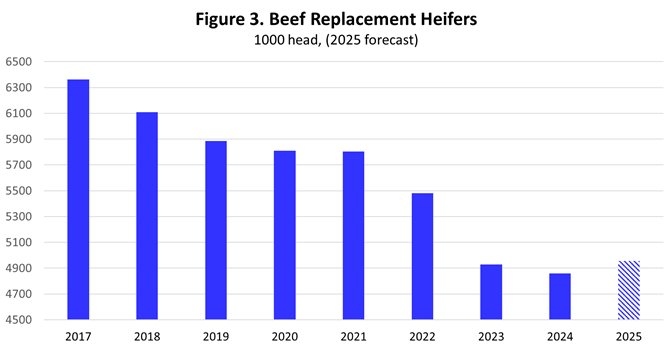
An IIHS study conducted in Philadelphia found that while the longer yellow reduced red light violations by 36%, adding camera enforcement further cut red light running by an additional 96%.

IIHS research has shown that cameras reduce the fatal red-light running crash rate of large cities by 21% and the rate of all types of fatal crashes at signalized intersections by 14%. Well-publicized camera programs can discourage would-be violators who may be less willing to risk a citation than they were to risk a life.

AAA, IIHS and other traffic safety advocates have developed an automated enforcement program checklist for communities to follow when implementing a camera program. Among the recommendations are that camera programs be utilized as one component of a more comprehensive traffic safety program and that they target roadways with a demonstrated pattern of violations or crashes.

It's also recommended that drivers be notified of camera use through signage, education and other methods. Cameras should be calibrated regularly and only operated under direct supervision of law enforcement personnel. As with all traffic safety programs, results should be evaluated periodically to ensure safety benefits are being realized.

Reducing risks from red-light runners
With the number of red-light running crashes continuing to climb, AAA offers these tips for avoiding crashes caused by running red lights:

  • Limit distractions. AAA Foundation research finds that distraction from activities such as hands-free texting or dialing while sitting at a red light, can linger with a driver for up to 27 seconds afterward.
  • Drive defensively. Before you advance through an intersection after the light has turned green, take a moment to look both ways and then proceed. Don't assume all cross traffic has obeyed the red light. 
  • Prepare to stop. Lift your foot off the accelerator and "cover the brake" when preparing to enter any intersection by positioning your right foot just above the brake pedal, without touching it. 
  • Use good judgment. Monitor "stale" green lights―those that have been green a long time―as you approach the intersection. They are more likely to turn yellow by the time you arrive at the intersection, so anticipate the need to make a safe stop.
  • Tap the brake. Tap your brakes a couple of times before fully applying them to slow down. This will help catch the attention of drivers behind you who may be inattentive or distracted.

Pedestrians and cyclists should also stay safe when traveling near intersections. AAA recommends the following:

  • Wait. Give yourself a few seconds to make sure all cars have come to a complete stop before moving through the intersection. Look for turning traffic that may be less likely to see you.
  • Stay alert and listen. Don't take chances and don't wear headphones. Watch what is going on and give your full attention to the environment around you.
  • Be visible. Stay in well-lit areas, especially when crossing the street.
  • Make eye contact. Look at drivers in stopped vehicles to ensure they see you before crossing the road in front of them.

Derrell Peel Discusses two Scenarios for Beef Herd Expansion: Slow; and even Slower

Dr. Derrell Peel, Oklahoma State University Extension Livestock Marketing Specialist, offers his economic analysis of the beef cattle industry as part of the weekly series known as the "Cow Calf Corner," published electronically by Dr. Peel and Mark Johnson. Today, Dr. Peel talks about herd expansion.

Coming into 2024, the beef cow herd is at a 63-year low – the smallest beef cow inventory since 1961.  This has pushed cattle prices to record levels through 2023 and 2024.  And yet, there are no indications that any beef herd rebuilding is underway.  The question of rebuilding the beef cow inventory is fundamental for cattle markets in the next few years.

A review of historical herd expansions is instructive.  Figure 1 shows the path of beef cow herd increase for the past two complete cyclical expansions.  From 1990-1996, the beef cow herd increased by 2.864 million head.  From 2014-2014, the beef cow herd increased less – by 2.734 million head – in one less year but faster.  The beef cow herd increased by 1.2 million in just two years from 2014-2016.  

One of the keys to herd expansion is heifer retention.  Figure 2 shows the changes in beef replacement heifer inventories leading to and during herd expansion.  Beef replacement inventories increased three of four years prior to the beginning of herd expansion in 1991 and for three years prior to herd expansion in 2015.  Both expansions included one year of very large heifer retention (year 3 in 1993 and year 2 in 2015) with smaller increases before and after.

History provides some insight into what to expect in the next few years.  First, is the fact we do not yet have a zero year (low inventory) from which herd rebuilding can begin.  Beef cow slaughter is sharply lower, down nearly 16 percent year over year thus far in 2024.  However, that level of beef cow slaughter, combined with the low beef replacement heifer inventory in 2024 (Figure 3) implies that the beef cow herd continues to liquidate by another 0.5 – 1.0 percent in 2024.  Beef cow slaughter would have to drop by roughly 22 percent year over year to avoid additional liquidation this year.  The current rate of beef cow slaughter indicates a herd culling rate in excess of 10 percent this year.  The culling rate is expected to drop below 10 percent during herd expansion.  Thus, 2025 is the earliest zero year for the next expansion to begin.  There is no certainty that additional liquidation will not occur in 2025.

Figure 3 shows the level of beef replacement heifer inventories since the cyclical peak in 2017.  Liquidation of beef replacement heifer inventories in recent years means that there is no pipeline or momentum for herd expansion compared to previous expansions.  Moreover, the level of heifer slaughter and heifers in feedlots in 2024 suggests that the replacement heifer inventory in 2025 is likely to show modest growth at best.  Figure 3 shows a projected 2.0 percent year over year increase in beef replacement heifers in 2025.  At that level, the beef cow herd is limited to stable numbers or very minimal increase in 2025.  Beyond 2025, heifer retention could increase more and accelerate herd expansion beginning in 2026.  Current conditions do not suggest a high likelihood of sharply accelerating heifer retention anytime soon. 

The threat of continuing/redeveloping drought is one of the factors limiting the beginning of herd expansion at the current time.  Should developing drought conditions become a reality in the coming months with the return of La Niña, additional herd liquidation is likely, and any herd rebuilding could be pushed off further into the future.  The beef cattle industry is smaller than needed and signals for rebuilding will continue and growth in coming months.  However, herd rebuilding is likely to be slow to start and proceed quite slowly initially.

Sam's Club Buyers from China Visit Korea for Insights on Merchandising U.S. Beef and Pork

Jihae Yang

In China, Sam's Club is one of the leading retail outlets for high quality beef and pork. With support from the Beef Checkoff Program and the National Pork Board, the U.S. Meat Export Federation (USMEF) recently brought a team of Sam's Club buyers from China to South Korea to gain insights on packaging, merchandising and promotion of U.S. beef and pork. 

Jihae Yang, USMEF vice president for the Asia Pacific, explains that the Sam's Club buyers were not only interested in new merchandising trends for beef and pork cuts, but also for value-added items in the home meal replacement (HMR) category. Yang adds that the buyers also heard from a leading Korea importer on how to more efficiently move U.S. beef and pork into retail channels. 

House Ag Chair Thompson Says More Work to Do After CBO Score of His 2024 Farm Bill

U.S. House Agriculture Committee Chairman Glenn Thompson of Pennsylvania said the release of the Congressional Budget Office's score of the proposed Farm, Food, and National Security Act of 2024 shows more needs to be done to bring that bill to completion — including cooperation from Senate Democrats.

"Bringing about a five-year farm bill is a long process, one filled with multiple steps and a lot of hard work," Thompson said Friday. "Today's score from CBO is part of that process, but shows me there is still more to be done to make certain the bill — one that has been consistently praised by those across the agriculture value chain — can be brought across the finish line."

Thompson said of how the Budget Office computed their estimate "Unfortunately, the score relies on the same methodology that has led CBO to underestimate Commodity Credit Corporation (CCC) outlays by more than $60 billion over the past seven fiscal years. I will continue to work with the Budget Committee and CBO to bring about a clear-eyed, defensible interpretation of restricting Section 5 discretionary authority. "

He also criticized the Farm Bill process going on in the Senate.

Senate Ag Committee Chair Debbie Stabenow has released a "framework" listing dozens of proposals offered by lawmakers that are related to the farm bill discussion- but has yet to craft an actual bill that her Committee could consider. She quickly criticized Thompson and the House Ag Committee passed bill when news of the CBO Score was released. "Today's score from CBO shows once again that the House Republican proposal is not paid for and relies on magic math and wishful thinking. 

"To reach a bipartisan agreement, we need to have a real negotiation on how to pay for our investments in the Farm Bill.  To do that, Republican colleagues need to join me at the negotiating table in a serious way. 

"My door is open, and I have demonstrated a willingness to think creatively and bring in new investments outside of the Farm Bill. If we work together, I know we can finish our work, but we are running out of time. I urge my colleagues to join me."

Chairman Thompson did offer a response within his reaction to the CBO Score on Friday.

"The continuous grandstanding and inaction of Senate Democrats is not working to honor the men and women who feed, fuel, and clothe our great nation," Thompson said. "I implore Chairwoman (Debbie Stabenow, D-Mich.) to release text so we can begin good faith conversations on producing a bicameral, bipartisan farm bill before years' end."

Time is running short if a 2024 Farm Bill is to be completed in the current calendar year. The House will not return until after Labor Day and much of the floor time left in September will be needed to debate and pass the seven remaining Appropriations measures to fund the federal government for the new fiscal year that starts October first. That leaves little if any floor time for consideration of the House Ag Committee passed Farm Bill. And there's even more work to be done in the Senate if they want to have a bill that could go to conference between the House and the Senate.

There has been some talk of getting a Farm Bill done in a lame duck session of Congress after the November elections- but that's a true "hail Mary" to become a reality.

More likely is a second extension to the 2018 Farm Law- we operate now under a one year extension that expires on September 30, 2024- and a another one year extension will kick the decisions on Farm Policy to a new Congress that will convene in January.

A second extension becomes more problematic as the value of the Title One farm safety net reference prices that were set in the 2014 Farm Law have been eroded by inflation and more. The 2024 Farm Bill proposal of the House Ag Committee addresses those inadequate support levels- but that costs a lot of money and is a part of the CBO Score showing more money needed than is available.

Below is the full statement from Chairman Thompson on his Farm Bill proposal in relationship to the CBO Score of that measure.

Following the the release of the Congressional Budget Office's (CBO) score of the Farm, Food, and National Security Act of 2024, House Committee on Agriculture Chairman Glenn "GT" Thompson (PA-15) issued the following statement: 

"Bringing about a five-year farm bill is a long process, one filled with multiple steps and a lot of hard work. Today's score from CBO is part of that process, but shows me there is still more to be done to make certain the bill—one that has been consistently praised by those across the agriculture value chain—can be brought across the finish line. 

"Unfortunately, the score relies on the same methodology that has led CBO to underestimate Commodity Credit Corporation (CCC) outlays by more than $60 billion over the past seven fiscal years. I will continue to work with the Budget Committee and CBO to bring about a clear-eyed, defensible interpretation of restricting Section 5 discretionary authority. 

"The Farm, Food, and National Security Act was built by rural America, for rural America. Its historic investments in the farm safety net, biosecurity, trade promotion, agricultural research, conservation, and so much more deliver certainty in times of crisis, when disastrous regulatory and Democratic policies are eroding the American dream. The continuous grandstanding and inaction of Senate Democrats is not working to honor the men and women who feed, fuel, and clothe our great nation. I implore Chairwoman Stabenow to release text so we can begin good faith conversations on producing a bicameral, bipartisan farm bill before years' end."

Background:

The Congressional Budget Office's May 2023 baseline of USDA Farm Programs forecasts outlays of $1 billion per year in 'Other Administrative CCC Spending,' totaling $10 billion over ten years. That spending is primarily attributed to authority granted from Section 5 of the CCC Charter Act. The February 2024 baseline update forecasts annual outlays that range from $1 billion to $3 billion and total $17 billion over ten years. The June 2024 baseline mirrors the falling outlays described in the February 2024 baseline update, with a different total amount of $12 billion over ten years. Despite three significant changes across 13 months to CBO's baseline, projections of spending under Section 5 for the next ten years remain significantly lower than historic outlays would suggest.   

From fiscal years 2012 to 2017, Congress restricted the Secretary's discretionary use of the CCC Charter Act. Since the restriction was dropped in fiscal year 2018, spending under Section 5 has averaged $10.7 billion annually.  The Trump Administration used Section 5 to spend $28 billion on the Market Facilitation Program (MFP) in response to Chinese retaliatory tariffs and $20.5 billion on the Coronavirus Food Assistance Program (CFAP) in response to pandemic-related market disruption. This spending resulted in the need for $14 billion in off-cycle replenishment authorized by the Coronavirus Aid, Relief, and Economist Security (Cares) Act. The Biden Administration has funded at least 15 programs across various mission areas, totaling more than $12 billion.  Despite a modest increase in the February 2024 baseline update, CBO's forecasts of outlays since 2018 have been off by more than $60 billion.  

Even when eliminating the completely unpredictable event that was COVID-19, an average of outlays over the six years since Section 5 authority was restored yields annual average Section 5 outlays of $7.3 billion. Considering a 10-year history, annual average Section 5 outlays are $6.4 billion, including four years of $0 in outlays while Section 5 authority was eliminated.

With outlays under authority granted by Section 5 of the CCC since 2018 averaging anywhere from $6.4 billion to $10.7 billion, and outlays in the June 2024 baseline averaging $1.2 billion, along with clear indications from both political parties of the intent to fully maximize spending under this authority, the forecast of Section 5 outlays does not match reality.  

NFU President Rob Larew Tours Southeastern Oklahoma and Talks Farm Bill Probability

AFR group with centennial OFU monument.

Farm Director KC Sheperd visited with National Farmer's Union President Rob Larew about his tour across Oklahoma and the Farm Bill probability.

American Farmers & Ranchers (AFR) Cooperative hosted National Farmers Union (NFU) President Rob Larew on a tour of Southeastern Oklahoma on July 24 – 25. The tour showcased the area's agriculture and provided an opportunity for AFR leadership and Larew to discuss regional industry issues.

"One of my favorite parts of my job is getting out of Washington D.C., and on the ground in the real world," Larew said. "Getting the chance to see a lot more detail about operations in the southeastern part of Oklahoma was fantastic. The weather cooperated. We put a lot of miles on the road, but we had a lot of great conversations and it was a lot of good education for me."

Three Rivers' Brandon White discusses value added with Larew -center- and AFR Board Member Ryan Plemmons.

On day one, they toured the Three Rivers Meat Company, a new locally-owned meat processing facility near Smithville. Next, the AFR group visited the Forest Heritage Center at Beavers Bend State Park. The Center's Museum includes an in-depth look at the logging industry in southeastern Oklahoma, including information on logging communities and the people who worked to make early logging companies economic powerhouses.

Next on the agenda was a meeting with Jarred Campbell, a longtime AFR member, district manager of the Little River Conservation District and member of the Oklahoma Water Resources Board.

Terry and Stephanie Miller, AFR Insurance agents from Antlers, hosted the last stop of the day's tour. The AFR group saw the Miller homeplace near Finley and toured the Tucker Ranch with longtime AFR Member Todd Tucker as a guide. The Tucker Ranch produces highly prized performance and show quarter horses.

Todd Tucker (right) discusses his operation with Larew.

Day two began at Marty and Hope Hutchings's place at Hendrix. The Hutchings are longtime AFR members; their family operation includes beef production and custom hay cutting. Hope is also a crop insurance agent.

In Colbert, the AFR group talked with AFR members Rusty Brigman and Brent Hicks at Brigman Sod Farm. The group learned about the area's shift from peanut farming to sod far

AFR group with a sod cutter on Brigman's Sod Farm.

From Colbert, the AFR group traveled to Tishomingo, where a centennial marker recounts the origins and mission of Oklahoma Farmers Union, now known as AFR. While in Tishomingo, the group also saw the Chickasaw National Capitol Building and learned about the town's relatively recent celebrity presence and economic revival.ming and the challenges they face in the sod industry.

Bill Johnston discusses beef with NFU President Rob Larew and AFR President Scott Blubaugh.

The AFR group spent the afternoon in the Wapanucka area. Their first stop was at the Albrecht Ranch, where AFR members Kelly and Laura Albrecht raise high-performance purebred Angus cattle.

Next in the Wapanucka area was a visit with AFR members Jesse Wommack and Tammy Dunegan. They own a new backgrounding yard where they prepare stocker cattle for pasture through vaccinations, deworming and more.

The final stop was at Bill's Custom Processing outside Wapanucka. AFR members Bill and Gena Johnston have owned the custom-exempt processing facility for about seven years.

"It's what we all know, but when we get to see Ma and Pop operations, and families making it work, whether it is a cow calf operation or a backgrounding operation or even a small meat locker, understanding what these families are doing to make these businesses work, everybody chipping in, dealing with a lot of uncertainty - whether it is the weather, the marketplace, or all kinds of disruptions – but in so many cases, these families do whatever they possibly can to be successful. It's a huge contribution to these small-town communities."

The AFR Youth Conference was going on during his tour, and it was a stop well worth his time. "There isn't another organization [besides the AFR and Oklahoma Farmers Union Youth Program] that does a better job of setting our youth up for future success. It was really my distinct honor to get to see the end of the leadership camp and all of those amazing emerging leaders run the camp in many ways and grow their peers' leadership as well."

Larew was impressed with the overall hospitality of Oklahomans as their plans had to change with short notice, and Connors State College stepped up to offer an impromptu tour and arranged for him to meet OSU President Kayse Shrum.

Next week, Larew will be back on the road to visit with producers in Washington state, before traveling to Minnesota to sit on a panel with Farm Bureau President Zippy Duvall midweek, before going to Illinois later in the week.

"Part of the reward of the job is getting out to visit as many farmers and ranchers as possible," Larew said. "We are excited to bring the National Farmers Union Convention next year in March to Oklahoma City. It's a really vibrant city, and there are so many farms and agricultural sites to see in the surrounding area, so a lot of our members from across the country are super excited about getting the chance to come and enjoy a little taste of what I got to experience last week, and that is that fantastic Oklahoma hospitality."

Farm Bill Probability

Larew laughed as he assured Sheperd that a Farm Bill would eventually be seen to fruition, but could not say when. "The fact is that we already knew when we had to roll into this year after things didn't get done on time last year that this election year was going to be tough in the best of times," he said. "I wouldn't call this the best of times, and we already know that that's the big dilemma right now."

He remains hopeful that the Farm Bill will be passed by the end of the year and maintains that the powers that be are pushing for that. After hearing and learning from growers and producers in Oklahoma, Larew said that the current message is for them to help their House and Senate leaders understand why they need the certainty of the Farm Bill.

Although political divisiveness is an issue, Larew says that leaders in the agricultural sector understand the need for bipartisan cooperation to find common ground. "Even as we are looking at some of those differences in a farm bill, I think a lot of us see the real possibility of finding a compromise."

With the compromise, the heart of the farm bill must have certain attributes such as a strong safety net for producers. Larew commented, "Whatever we can do in this farm bill to set us up for greater certainty. We need to make sure that farmers and ranchers have the best chance possible to be successful in the marketplace so that those families can stay on the land and in the communities."

He said that if they could get the key players in a room, a lot of creativity will happen, and while they won't all get everything they come up with, it is the ultimate compromise needed to get the farm bill across the finish line.

He cautioned that with the election so close, forcing the farm bill through without allowing it the care and attention it is due, could do more harm than good.

Ranking Member David Scott Statement on Farm Bill CBO Score

House Agriculture Committee Ranking Member David Scott todayreleased the following statement after the nonpartisan Congressional Budget Office (CBO) released the score of the Republicans' partisan 2024 Farm Bill. CBO calculated that the Republican bill includes nearly $33 billion in deficit spending. 

"I want to thank the CBO analysts and staff for their hard work over the last two years. The CBO score is the latest evidence that Republicans have problems with their farm bill and will need Democrats to pass it. Only by working together can we make progress. Republicans must return to the negotiating table and work with Democrats to craft a truly bipartisan farm bill.

"Farmers need a farm bill this year and time is running out. It's time to stop complaining about CBO. It's time to stop blaming delays on appropriations. It's time to stop waiting for the Senate. 

"The House does not work for the Senate and their failure to come together should not deter us in the House from moving forward together, Democrats and Republicans. The best way to encourage the Senate is for the House to pass a farm bill before the election. House Democrats are ready to help.  "Republicans can choose to keep pushing a bill that has no future, or to work with Democrats to get a farm bill signed into law this year. That work must start now. Waiting till after the election to make the hard choices is not leadership. That decision would fuel our farmers' frustration with Washington, and jeopardize our chances of success with a dwindling calendar. Farmers deserve better than that and Democrats stand ready to help deliver."

Statement of Chairwoman Stabenow on CBO Score of House Farm Bill

Senator Stabenow (D-MI), Chairwoman of the Senate Agriculture, Nutrition, and Forestry Committee, Friday released the following statement on the Congressional Budget Office (CBO) score of the House Farm Bill. 

"Today's score from CBO shows once again that the House Republican proposal is not paid for and relies on magic math and wishful thinking. 

"To reach a bipartisan agreement, we need to have a real negotiation on how to pay for our investments in the Farm Bill.  To do that, Republican colleagues need to join me at the negotiating table in a serious way. 

"My door is open, and I have demonstrated a willingness to think creatively and bring in new investments outside of the Farm Bill. If we work together, I know we can finish our work, but we are running out of time. I urge my colleagues to join me."

NACD Applauds USDA Investments Combating Drought

Yesterday, the U.S. Department of Agriculture (USDA) announced the investment of $400 million to be allocated to select Western irrigation districts to help producers conserve water and improve the efficiency of their operations. The investments will allow irrigation districts to help producers install and utilize water saving technologies and conservation practices in response to ongoing drought. These investments are expected to conserve up to 50,000 acre-feet of water across 250,000 acres of irrigated land currently in production, while expanding sustainable market opportunities. In a follow-up briefing USDA stated the intention of this program is to employ local knowledge and partnerships to best address the individual needs of identified areas.


USDA also announced a set-aside within the program to support additional awards within Indian Country. In coordination with the Department of the Interior's Bureau of Indian Affairs and Tribes, USDA has allocated $40 million to assess needs and implement practices to reduce water consumption and maintain land in agricultural production.

 
"NACD appreciates USDA's investments enabling producers and local conservation leaders to take meaningful steps to more effectively conserve water resources and address significant drought conditions in the American West," said NACD President Kim LaFleur. "NACD and conservation districts across the country are committed to working with USDA and our partners to help producers implement conservation practices that conserve water and improve their operations."


See USDA's press release to learn more about these investments and additional administration initiatives to conserve water and address drought.

NCGA Reminds Congress Farm Bill Remains on To-Do List

As members of Congress head to their home states and districts for the August recess, the National Corn Growers Association (NCGA) is reminding Representatives and Senators that the farm bill is still on their legislative to-do list this year.

"The farm bill is a top legislative priority for corn growers and agriculture at large," said Minnesota farmer and NCGA President Harold Wolle. "There is still an opportunity to build upon the 2018 farm bill by strengthening the commodity, conservation, trade and crop insurance titles and USDA programs."

The farm bill was originally scheduled for reauthorization in 2023. Last November, Congress voted to extend the legislation to September 30, 2024, with the Agriculture Committee leaders committing to work together to pass the legislation this year.

"We are counting on our elected officials to find a path forward for a strong bipartisan farm bill that can be signed into law this year," Wolle said. "Let's get it done.

NFIB Jobs Report: Main Street Compensation Plans Fall As Labor Costs Grow

NFIB's July jobs report found a seasonally adjusted net 33% of small business owners reported raising compensation in July, down five points from last month and the lowest reading since April 2021. A net 18% (seasonally adjusted) plan to raise compensation in the next three months, down four points from June.

"Fewer small business owners are planning to raise compensation in the coming months, and plans to hire remain stable," said NFIB Chief Economist Bill Dunkelberg. "July marks the second month of net gains in employment on Main Street, and the number of firms with open positions remains exceptionally high."

Though state-specific data is unavailable, NFIB State Director Jerrod Shouse said: "As costs remain elevated, small business owners have been topped out in wage increases. Despite these challenges, Main Street will continue to try to fill their open job postings."

The percent of small business owners reporting labor quality as their top small business operating problem was unchanged from June at 19%, although labor quality as the top problem has eased considerably over the last two quarters. Labor cost reported as the single most important problem for business owners fell two points to 9%, four points below the highest reading of 13% reached in December 2021.

Thirty-eight percent (seasonally adjusted) of small business owners reported job openings they could not fill in July, up one point from June.

A seasonally adjusted net 15% of owners plan to create new jobs in the next three months, unchanged for the third consecutive month.

Overall, 57% of small business owners reported hiring or trying to hire in July, down three points from June. Forty-nine percent (86% of those hiring or trying to hire) of owners reported few or no qualified applicants for the positions they were trying to fill. Twenty-nine percent of owners reported few qualified applicants for their open positions and 20% reported none.

Thirty-two percent have openings for skilled workers (up one point) and 16% have openings for unskilled labor (unchanged).

Job openings in construction were up four points from June and over half of them (55%) have a job opening they can't fill. Job openings were the highest in the construction, transportation, and retail sectors, and the lowest in the agriculture and finance sectors.

CLICK HERE to view the entire NFIB Jobs Report.

NMPF, USDEC Expand Strong Partnerships in South America

The National Milk Producers Federation (NMPF) and the U.S. Dairy Export Council (USDEC) advanced a pair of partnerships in South America this week. The organizations signed a Memorandum of Understanding (MOU) with Abraleite, a prominent Brazilian milk producers association, and renewed an existing MOU with Argentine farmer organization Sociedad Rural Argentina (SRA).

The agreements enhance cooperation between the United States and South American dairy industries, focusing on critical areas such as the economic and social significance of the dairy sector and the removal of trade barriers affecting both producers and consumers.

"Our engagements in South America this week underscored the shared challenges and opportunities facing dairy producers and processors in the United States, Brazil and Argentina," said Krysta Harden, president and CEO of USDEC. "Partnerships with like-minded organizations have been proven to be crucial as we strive to promote the benefits of dairy on the international stage and tackle attempts to erect trade barriers throughout the Americas."

The updated MOU with SRA includes the launch of a Sustainability and Trade Taskforce, an initiative to provide a balance to European policies that could unfairly impact producers in the United States and Argentina. Objectives include demonstrating that livestock production is a cornerstone of sustainable food systems and advocating for science-based trade policies.

"Dairy producers throughout the Western Hemisphere confront many of the same issues and priorities," said Gregg Doud, president and CEO of NMPF. "We look forward to working alongside Abraleite and SRA to advance policies that promote dairy and limit trade barriers."

The two MOUs follow a partnership signed on June 4 with the Colombian dairy organization Asoleche. The partnership formalized USDEC and NMPF's prior collaboration with Asoleche, demonstrating the value in focusing on areas of common ground, in contrast to the politically driven countervailing duty investigation into U.S. milk powder exports recently initiated by the Colombian government.

In addition to the Latin American partnerships in Argentina, Brazil, and Colombia, USDEC and NMPF have also established MOUs with the Inter-American Institute for Cooperation on Agriculture (IICA) and the Chilean Federacion Nacional de Productores de Leche (Fedeleche).

Daily Email for August 2, 2024


Oklahoma's Latest Farm

And Ranch News

Friday, August 2, 2024

 
Howdy Neighbors!

Here is Your Daily Oklahoma Farm and Ranch News Update: 


  • Drought Monitor- Oklahoma and Kansas See Drought Expand


  • Tanner Beymer: How Ag Appropriations Help Shape the Regulatory Landscape for Cattle Producers


  • Supporting Climate-Informed Decision-Making to Reduce Agricultural Production Risk with Dr. Andres Cibils


  • From This Weekend's SUNUP- Derrell Peel Sees No Herd Rebuilding Happening Anytime Soon


  • U.S. Wheat Production Outlook: Turning a Corner in 2024


  • Food and Agricultural Products Center marks second anniversary of Cowboy Meats retail store


  • USGC Elects Former Sorghum Checkoff Chair Verity Ulibarri as New Board Chairwoman

Drought Monitor- Oklahoma and Kansas See Drought Expand

According to the latest Oklahoma Drought Monitor report, exceptional drought and extreme drought remain at zero percent, unchanged from the start of the calendar year.


Severe drought or worse is still at 3.78 percent, unchanged from last week.


Moderate drought or worse, is now at 22 percent, which increased from 17.79 percent last week.


Abnormally dry or worse conditions are now at 69.21, up from last week's 62.72 percent.


As for our neighbors, central Kansas has seen reports of dry ponds and fear of total crop failures. Statewide- Kansas saw Moderate Drought double from 18.9% last week to 36.23% this week. Abnormally Dry or worse in Kansas jumped thirty points to 88.8% of the state this week.


West of south-central Texas, northeastward to central Arkansas saw trace amounts of rain. The Texas Drought numbers were little changed from last week to this week.


Click here for the Kansas Drought Monitor Page and Click here for the Texas Drought Monitor Page.

Read more about the latest Drought Monitor Report here

Sponsor Spotlight


As the premier John Deere dealer across Oklahoma & Arkansas, P&K Equipment is proud to serve our 20 communities and the surrounding areas. From residential, small ag & hay, large ag, & compact construction equipment- the P&K team makes it easy to buy & own your John Deere equipment. You'll find transparent pricing & easy financing options on the website & in stores. You'll have technology, sales, parts, and service support long after the sale. So when you're ready to experience the ease of operating John Deere equipment- you can trust the experts at P&K Equipment.


Tanner Beymer: How Ag Appropriations Help Shape the Regulatory Landscape for Cattle Producers

Senior Farm and Ranch Broadcaster, Ron Hays, got the chance to visit with Tanner Beymer, Senior Director of Government Affairs at the National Cattlemen's Beef Association, about Ag Appropriations and how over the years it has been used for more than just funding the government..


"The appropriations process is how we fund the federal government," Beymer said. "Very rarely does NCBA go to appropriators with a funding request."


Beymer said that most of the time, they go to ask Congress to rein in federal agencies' regulators who are creating ridiculous rules; however, after the Chevron Deference decision, new opportunities have been revealed.


"These federal agencies no longer have unilateral authority to broadly interpret vague statutes. That is a very positive step in the right direction," he stated hopefully. "Maybe in the future, we will have to rely on the appropriations process less, which would probably make those bills function more like they are intended to, but until that happens, we heavily rely on that process to get Congress to rein in some of this regulatory red tape."

Listen to Ron Beef Buzz with Tanner Beymer and read more about it here

Supporting Climate-Informed Decision-Making to Reduce Agricultural Production Risk with Dr. Andres Cibils

Farm Director KC Sheperd spoke with Dr. Andres Cibils, Director of the USDA Southern Plains Climate Hub, to learn more about the most recent National Weather Assessment. Dr. Cibils is a Rangeland Scientist whose professional interests revolve around resilient rangeland-based animal agriculture systems.


The USDA Southern Plains Climate Hub, based in El Reno, Oklahoma, serves Oklahoma, Kansas, and Texas. The Climate Hub's central mission is to support climate-involved decision-making, reduce agricultural risks, and build climate resilience. This is accomplished through three main workstreams: Science and data synthesis, Technology for development and decision support, and outreach by partnering with extension offices and other agencies.


During the Peanut Symposium, Dr. Cibils shared the results of the fifth, and most recent, national climate assessment. The report, published every four years by the U.S. Government, is mandated by Congress, and summarizes recent trends and climate projections.


Some of the trends outlined in Dr. Cibils's presentation showed through weather records from the previous century, that temperature and precipitation trends are changing. Roughly, he said, there is somewhat increased precipitation on the eastern side of the continental U.S., and decreased precipitation on the western side according to a comparison of the latest 30-year normal to the 20th-century average for rainfall.

Listen to Dr. Andres Cibils's Interview and read more about it here
 
 
Sign Up for Our Daily Email- Free Because of Our Sponsors!

Support Our Sponsors!


KIS logo


Advertise With Us!
 

For our farmers who have either- always have had cotton on their farms- or those who have more recently have added the fiber crop to their operations- we have a daily report heard on several of our Radio Stations- It's Called Cotton Talk!

Click on the Button below to listen to our most recent report
Click here for our Latest Cotton Talk- Hosted by KC Sheperd


Sponsor Spotlight


KIS FUTURES specializes in Futures and Options for Institutions, Commercials, Hedgers, and Individual Traders and executes trades for its clients in the following markets: Livestock, Grains, Energy, Metals, Softs, Financials, Currencies, and Stock Index Futures. For more information, please give them a call Toll Free at (800) 256-2555. Click here for their website to learn more.

And- their iPhone App, which provides all electronic futures quotes is available at the App Store- click here for the KIS Futures App for your iPhone.  


From This Weekend's SUNUP- Derrell Peel on Lack of Herd Rebuilding

This weekend's SUNUP features OSU's Derrell Peel talking cattle markets- Dr. Peel says that herds continue to shrink and significant signs of herd rebuilding have yet to appear.


"There are two things that will happen when we start herd rebuilding," Dr. Peel said. "One will be heifer retention – that's the big one that we are looking for – the other one is that cow-culling will reduce to minimal levels as producers try to hang on to cows a little bit longer than usual."


He said that cow slaughter is down about 16 percent this year, but in the broader field of numbers, that isn't enough of an indication that producers are rebuilding herds. In addition, Peel said that feedlot cattle on feed numbers indicate that 40 percent of their numbers are heifers.


With the prediction of La Nina returning to the forecast, Dr. Peel says that it might still be a while before producers begin to rebuild their herds notably.


We have the audio of Peel's comments that are a part of SUNUP for this weekend- and we have the full lineup for you to preview as well- click on the blue button below for it all.

Click Here To Read more and Listen to Derrell Peel from the upcoming SUNUP from OSU
 

We invite you to listen to us on great radio stations across the region on the Radio Oklahoma Ag Network weekdays-

if you missed this morning's Farm News - or you are in an area where you can't hear it- click below for this morning's Farm news from Ron Hays and KC Sheperd on RON.
Listen to our latest Farm and Ranch News for Friday with KC Sheperd
 
 
Subscribe To the Daily Email


Sponsor Spotlight


The Oklahoma Wheat Commission promotes greater use of wheat in domestic and international markets through research, market development and public education.


Our Commissioners develop policy and programs, direct the funding, represent producer interests and, of course, promote Oklahoma wheat!


Learn more about the Oklahoma Wheat Commission by clicking here for their website


U.S. Wheat Production Outlook: Turning a Corner in 2024

As harvest rolls throughout the U.S. Plains, farmers see the culmination of their year's hard work and investment as crops move from field to bin, eventually becoming products consumed worldwide. After three years of drought that reduced yields, impacted quality, and drove near-record abandonment, the 2024 harvest season stands out as the most promising in recent memory.


The following will outline current harvest progress, crop conditions, and export trends for the marketing year to date as the 2024 crop suggests production will "turn a corner" away from the challenges seen over the last three years.


When the 2023 U.S. winter wheat crop was seeded in 2022, income potential for wheat appeared favorable, with prices still elevated by Russia's invasion of Ukraine. As a result, total seeded wheat area for 2023 was up 8% from the prior year. With current prices falling in line, or in some cases below pre-war trends, and input prices remaining high, profit margins have tightened, placing additional pressure on farmers. As a result, 2024 wheat acres were down 5% to 47.2 million acres, nearly even with the five-year average.

Read more about U.S. Wheat's Market Outlook here

Food and Agricultural Products Center Marks Second Anniversary of Cowboy Meats Retail Store

Oklahoma State University's Robert M. Kerr Food and Agricultural Products Center will celebrate the Cowboy Meats Retail Store's second anniversary from 1-5 p.m. on Aug. 23.


Cowboy Meats is the meat processing facility at the Food and Agricultural Products Center. In 2022, Joel Jackson, Food and Agricultural Products Center meat pilot plant manager, accomplished his goal of opening the Cowboy Meats Retail Store. The shop is open to the public from 1-5 p.m. every Friday on Dock 4 of the Food and Agricultural Products Center.


"The Cowboy Meats Retail Store has become an integral part of the meat processing activities at the Food and Agricultural Products Center as beef, pork and lamb products are regularly produced from meat science and evaluation courses, meat judging contests, workshops and demonstrations," Jackson said. "In the past two years, the retail store has grown in the OSU and Stillwater communities and provides many benefits in fulfilling its initial goal to minimize wasted product and cover expenses."   


Cowboy Meats offers a variety of locally processed meats including beef, pork, lamb and value-added products. It is a student-operated meat processing plant where student employees assist with harvest, fabrication, further processed products (such as smoked sausages, bacon and boudin), packaging, labeling, marketing and sales.    

Read more about Cowboy Meats here

USGC Elects Former Sorghum Checkoff Chair Verity Ulibarri as New Board Chairwoman

The U.S. Grains Council (USGC) elected Verity Ulibarri, a past chairwoman of the United Sorghum Checkoff Program, as its new chairwoman this week during the USGC's 64th Annual Board of Delegates Meeting held in Salt Lake City.


"We are thrilled to see Verity elected as chairwoman of the U.S. Grains Council," Sorghum Checkoff CEO Tim Lust said. "Her leadership and dedication to the sorghum industry is exceptional, and we are confident she will continue to drive innovation and growth in international markets for sorghum, and the other commodities the Council represents, in her new role at the USGC."


Ulibarri brings extensive experience and leadership in the sorghum industry to the forefront of the Council's efforts. As a former chairwoman of the Sorghum Checkoff, Ulibarri has been instrumental in promoting the value and benefits of sorghum both domestically and internationally.


"I am honored to be elected chairwoman of the U.S. Grains Council," Ulibarri said. "My experience with the Sorghum Checkoff has prepared me well for this position, and I look forward to working to further the Council's mission to develop markets, enable trade and improve lives."

Read more about Verity Ulibarri here
Let's Check The Markets!
OKC West is our Market Links Sponsor- they sell cattle three days a week- Cows on Mondays, Stockers on Tuesday and Feeders on Wednesday- Call 405-262-8800 to learn more.
 
Today's First Look:
Ron on RON Markets as heard on K101  
mornings with cash and futures reviewed- includes where the Cash Cattle market stands, the latest Feeder Cattle Markets Etc.
Hear Today's First Look
 

Wholesale Boxed Beef Prices were lower - Choice Beef was down $1.98 and Select Beef was down $2.70 on Thursday 8/1/2024.


Click on the Button below for the latest report from USDA Market News

Boxed Beef Report from 8/1/2024
 

Weekly Cattle Auction Reports


The buttons below allow you to check out the weekly Cattle Auctions in the region that we post on our website and here in our daily email update:


Oklahoma National Stockyards Market Report from 07/29/2024
 
Tulsa Stockyards on Monday July 29, 2024
 
Joplin Regional Stockyards Market from Monday 07/29/2024
 
Oklahoma National Stockyards Replacement Cattle for Tuesday 07/30/2024
 
OKC West in El Reno Market Report from 07/30 and 07/31/2024
 
Woodward Livestock Market from Thursday 08/01/2024
 
 
Okla Cash Grain:  
Daily Oklahoma Cash Grain Prices- as reported by the Oklahoma Dept. of Agriculture- The report available after the close of the Futures Trade for that day.
Read  Cash Grains Report from 8/1/2024
 
Our Daily Market Wrapup from the Radio Oklahoma Ag Network - analyzing the Futures Markets for that trading day- as reported by KC Sheperd.
Click to Listen to Our Weekday Wrap with KC
 
Slaughter Cattle Recap: 
The National Daily Slaughter Cattle Summary- as prepared by the USDA Market News
Read Report
 
TCFA Feedlot Recap:  
Finally, here is the Daily Volume and Price Summary from the Texas Cattle Feeders Association.
Read Report

Our Oklahoma Farm Report Team!!!!


Ron Hays, Senior Farm/Ranch Broadcaster and Editor


KC Sheperd, Farm Director and Editor


Dave Lanning, Markets and Production


Stevie White, Farm News and Email Editor


Pam Arterburn, Calendar and Template Manager

Podcasts From Oklahoma Farm Report and More

Two of our regular reports are also podcasts that you can subscribe to- Our daily Farm and Ranch News with KC Sheperd- available here on the Apple Podcast Platform


The second is our daily Beef Buzz with Ron Hays- available here on the Apple Podcast Platform


Periodically- we offer interviews on our Ag Perspectives Podcast series- this podcast is available here.


Ron has also has a series of podcasts from interviews with newsmakers at the Cattlemen's Congress- Click here or you can find them on your favorite Podcast platform- look for them by searching for Cattlemen's Congress Conversations.


We are making plans to jump back into regular installments of what has been called the Road to Rural Prosperity- a new name and fresh content is in the works- for now- click on the blue button below for one of our favorites that is a timeless classic.

Listen to Episode 86 with Ron Hays talking with one of the legends in the Beef Cattle Business- Bob Drake of Davis, Oklahoma
 
 
Listen to Ron
Beef Buzz
 
Blue Green Gazette
Calendar
Auctions
Market Links
Facebook  Twitter  Youtube  

Our thanks to Midwest Farms Shows, P & K Equipment, Oklahoma Farm Bureau, Oklahoma Ag Mediation Program, Great Plains Kubota, Stillwater Milling Company, National Livestock Credit Corporation, Oklahoma Beef Council, Oklahoma Wheat Commission, Oklahoma AgCredit, the Oklahoma Cattlemens Association, Invenergy Oklahoma and  KIS Futures for their support of our daily Farm News Update.


For your convenience, we have our sponsors' websites linked here- just click on their name to jump to their website- check their sites out and let these folks know you appreciate the support of this daily email, as their sponsorship helps us keep this arriving in your inbox on a regular basis- at NO Charge!


We also appreciate our Market Links Sponsor - OKC West Livestock! 


We invite you to check out our website at the link below too that includes an archive of these daily emails, audio reports and top farm news story links from around the globe.

Head to Our Website OklahomaFarmReport.Com
God Bless!
Reach Out To Us:
Tim West
President/General Manager
Rural Oklahoma Networks

405-317-6361

***************

Mike Henderson
Director of Sales

405-615-4922

KC Sheperd
Farm Director
Radio Oklahoma Ag Network

405-443-5717

Email KC
Ron Hays
Senior Farm/Ranch Broadcaster
Radio Oklahoma Ag Network

405.473.6144
Email Ron

Read an Accurate Ag Book Registration Going on Now with Ag in the Classroom

Last year students in all 77 counties heard accurate ag books.  Please join us again this year as we reach even more students with a positive message about agriculture! 

Participate by reading to your own class:  

Reading an accurate ag book to your own class is great! In order to qualify to be entered in the drawing for the bushel of books, you will need to register at the link below AND post a picture of you reading on Facebook using hashtags #okagclass and #readagbooks2024, OR if you do not have a Facebook, please email pictures with information (which school, etc) to emily.ague@ag.ok.gov.    **Please make sure the students in your photographs have signed permission forms, on file at the school, allowing their photographs to be shared on social media. If they do not, do not include them in the photograph. Please understand all photos, even those emailed to Emily, will be shared on social media.

Participate by having a guest read to your class OR go into a classroom to read (4-H, FCCLA or FFA groups):

If you are able to have a guest come to your classroom or go into a classroom to read, that is great! In order to qualify to be entered in the drawing for the bushel of books, you will need to register at the link below AND post a picture of you reading on Facebook using hashtags #okagclass and #readagbooks2024 OR if you do not have a Facebook, please email pictures with information (which school, etc) to emily.ague@ag.ok.gov.    **Please make sure the students in your photographs have signed permission forms, on file at the school, allowing their photographs to be shared on social media. If they do not, do not include them in the photograph. Please understand that all photos, even those emailed to Emily, will be shared on social media.

Participate virtually through our offered Zoom sessions:

We have lined up some wonderful readers who are ready to read to your students through Zoom. When you register using the link in this email, we have a list of dates throughout the week, times, and our volunteer reader. Please sign up for the Zoom sessions you would like to receive links for and participate in. Your students are in for a treat! You can choose to attend one Zoom session or as many as you like! There will also be an opportunity for your class to ask a question to our reader - more details will be explained in the email with the Zoom link. Zoom links will be sent to you the first week of September. We will track participation on Zoom by asking you to put teacher name and school, leader name and 4-H group, OR teacher name and FFA Chapter name into chat box – you will be entered in the drawing for a bushel of books by participating this way also! ****You must check the box at the end of the form to be sent the Zoom sessions - we will send those out the week before so you can plan!.****

Click here to get registered!

Transitioning to Organic: Practical Advice from Harriet Behar and the Organic Farmers Association

Listen to Stevie White talking with Harriet Behar about the value of organic farming.
Harriet Behar

At the Women in Agriculture Conference held in Edmond, Oklahoma, Stevie White spoke with Harriet Behar of the Organic Farmers Association about how to get started with organic certification.

Behar said that, as with all things, the first step is to find your market. "Next, you have to make sure that everyone is on board with changing their system of production to one that includes organic management," she said.

One such change is that organic farming is not an input substitution. "Although we have approved organic and synthetic inputs, we look at organic farming more as a management style that uses things like crop rotation and beneficial insect habitat, rather than just looking at what the organic herbicide exchange would be, because there really aren't any," she said.

She said that organic production can be accomplished on an acre by acre basis meaning that the entire farm doesn't have to be organic. The acres that are would need to have a 30-foot buffer area protecting them from the nonorganic practices around them and also the produce would need to be stored apart from the non organic produce.

Behar said that the producer's viewpoint of how to do things is the most challenging thing to change when converting to an organic operation, but the rewards are great. She said, "There are a lot of things we do in organic farming that are climate smart like using cover crops, and even in a large scale, inter-seeding into corn with a legume to give nitrogen to both. We do weed smothering, and prevent soil erosion. Then that organic corn gets a premium of at least double what the conventional corn will bring," she said.

She said that organic farming has fit well with family scale operations because of the higher premiums for their smaller quantities of production. She warned that organic farming is more labor intensive, but the producer has less cost of inputs than one using traditional methods.

Behar invites curious producers to use the contact information below so she can answer any additional questions.

Dr. Barry Whitworth Talks Beef Quality Assurance

Listen to Ron Hays visit with Dr. Barry Whitworth about the Beef Quality Assurance Program.

Senior Farm and Ranch Broadcaster, Ron Hays spoke with Barry Whitworth, DVM, Senior Extension Specialist, Oklahoma State University Cooperative Extension Service and currently the statewide coordinator for the Beef Quality Assurance Program (BQA) about the BQA program.

The BQA Program began in the eighties to eliminate chemical and drug residue, and later turned its focus to injection site lesions. Currently, its view broadly covers a variety of possible quality control issues in beef.

"Certification is a three-year deal, and now, there are continuing education courses you can take to get recertified. I think they are trying to make it easier for producers to get their certification," Dr. Whitworth said.

In response to people who have already been certified wondering if they should get recertified, Dr. Whitworth said, "Things change over time, so it is important to constantly be updated on the different aspects as far as production of beef goes. Looking at beef quality audits, go back and look at the original one and the most recent one that came out in 2016. Emphasis on different things change over time. We don't have injection site lesion problems the way we did when we initially started. Now, there are other quality issues that we are focusing on so it does change over time."

He went on to explain that training sessions cover several different topics as far as quality is concerned from handling, cattle behavior, herd health, record keeping, biosecurity, and a variety of other topics.

"Personally, as a veterinarian, I am biased, and I think the health and biosecurity are really important," Dr. Whitworth remarked. "We are all hearing about high path avian influenza and we've seen that it has gotten into the dairy cattle so biosecurity is going to become more and more important as we go along."

Dr. Whitworth observed that consumers are becoming more and more concerned with how their food is raised and quality issues within that scope. Even as he noted that cattle producers have been raising cattle in line with BQA standards long before becoming certified, he still encourages certification so that producers can show their record of good practices.

"A lot of the VAC-45 programs are now requiring that you are BQA certified, and a study was done to show that there is a premium for BQA Certified cattle. There is an incentive here beyond just doing the right thing, but there could be some financial benefit to it, too," he said.

Producers can get more information and obtain online training at bqa.org, by emailing Dr. Whitworth here or by visiting their county extension office and speaking to the ag educator.

The Beef Buzz is a regular feature heard on radio stations around the region on the Radio Oklahoma Ag Network and is a regular audio feature found on this website as well. Click on the LISTEN BAR at the top of the story for today's show and check out our archives for older Beef Buzz shows covering the gamut of the beef cattle industry today.

USW Helps Customers Understand the Value of U.S. Wheat Inspection Procedures

The U.S. farm families who produce the wheat and the industry that supplies it are committed to keeping and open and transparent market. There are many reasons why our overseas customers know they can depend on our supply chain's integrity, the quality of U.S. wheat and our unmatched reliability as a supplier. A crucial example is the third party wheat inspection procedures that yield valuable data customers can use, with help from U.S. Wheat Associates (USW), to get even more value from their purchases.

USW has partnered with USDA's Federal Grain Inspection Service (FGIS) and Foreign Agricultural Service (FAS) to produce an "Overview of U.S. Wheat Inspection." This publication compiles official sampling, weighing, inspection, and certification procedures employed by FGIS, or FGIS-authorized state and private agencies, for U.S. wheat export shipments. The "Overview" provides a convenient, concise reference for U.S. wheat importers and end users about U.S. wheat standards, inspection methods, procedures, and resulting data about their purchases.

Federally Mandated Wheat Inspection

Based on two congressional acts establishing a standardized process, trained and certified officials inspect and grade all wheat exported from the United States as it is loaded onto an export vessel, whether it be a train or ship. This independent wheat inspection procedure sets the United States apart by providing a form of certainty and protection for global wheat buyers.

The supply chain follows federally regulated and uniform grain segregation and inspection procedures. U.S. country elevators and export elevators inspect and test wheat as it arrives and segregates by class and quality to meet customer requirements. FGIS independently inspects wheat at vessel loading to certify that the quality loaded matches the customer's specifications. No wheat is loaded onto a vessel until inspection is completed.

Bob Rodenberger says Runs are lighter this week, but Markets remain strong

Listen to KC Sheperd talk with Bob Rodenberger about the latest in the cattle markets.

KC Sheperd, Farm Director, is back talking with Bob Rodenberger, a partner with Stockman Oklahoma Livestock Marketing, as he gives the latest on the cattle markets.

While this week's numbers have been light when compared to a year ago, Rodenberger said that markets remain strong. "This calf market has been tremendous. The feeder market was excellent, yesterday. The cow market is still steady. Killer bulls were cheaper, but still high." The fat cattle market has weakened compared to what it was two weeks ago."

He noted that retail hamburger meat is up to $7 per pound in some areas, when a ribeye steak is $12 per pound.

He warned producers to lock in their margins to prepare for what the markets might do, however, he doesn't see calves becoming any cheaper by next week.

Cattle Producers Forum Focuses on Solving Issues by Finding Common Ground

Event Brought Together Producers from Multiple Associations

U.S. Cattlemen's Association President
Justin Tupper
Livestock Marketing Association President Mike VanMaanen
Montana Farmers Union Membership Ambassador and USCA Board Member Samantha Ferrat
Montana Stockgrowers Association
2nd Vice President
Turk Stovall
Last week, the U.S. Cattlemen's Association (USCA) cohosted the Cattle Producer's Forum with the Montana Stockgrowers Association (MSGA) in Billings, Montana during the Northern Livestock Video Auction Summertime Classic. The event brought together members from multiple organizations to focus on issues that all producers share and drive progress by finding common ground.

The powerful slate of speakers included agency leads from Washington D.C. down to local producers with hands on experience.  Discussion topics ranged from trade and competitive markets to the tax climate, labor challenges, beginning farming and ranching, and the Livestock Risk Protection Program. 

"Regardless of our organization affiliation, cattle producers are facing many of the same issues, so when you gather us all in the same room to have these discussions, real progress can be made," USCA President Justin Tupper said.  "Our organization walked away with actionable steps to take to improve the Livestock Risk Protection Program and the current tax climate for family farms and ranches."

A quick show of hands during the closing remarks found that attendees were in agreeance that the number one concern for their sustainability and succession today is the current tax climate. On the tax panel, staff from Montana Senators' Jon Tester and Steve Daines offices were on hand to field comments to share with the Congressmen back in D.C.  

"Our organizations having a unified voice on tax policy when we travel to Washington D.C. is one of the first steps to ensure working lands stay in production agriculture," MSGA President John Grande said. "We look forward to working together to improve the tax climate for American ranchers."

Also sitting on the tax panel was Livestock Marketing Association (LMA) Director of Governance and Industry Relations Kevin Thielen.  LMA has championed improving the ranchers tax climate and LMA President Mike VanMaanen of Missouri attended to partake in the conversation as well.

"I was pleased to participate with members of the United States Cattlemen's Association and Montana Stockgrowers Association on the recent Producer Profitability Panel," VanMaanen said.  "I'm a big believer in our industry working together for common goals and appreciate the opportunity to share ideas with their members and leaders.  Our industry needs more of the same." 

Attendees not only gleaned important information and shared their concerns to effect change, but the event offered opportunities to network with like-minded individuals and exchange ideas.

"It was great to get so many groups who represent Montana family ranches and farms in one place to focus on the issues that matter to us all as producers," Montana Farmers Union Board Member Sarah Degn said. "I was especially honored to be on the panel focused on beginning and first-generation ranchers and farmers who face an extra set of challenges regarding access to land and financing. We all have challenges, and coming together is important to work on the issues we can solve."

The event was made possible by the presenting sponsor Ag Risk Advisors, along with collaboration amongst U.S. Cattlemen's Association, Montana Stockgrowers Association, Livestock Marketing Association, and Montana Farmers Union. 

Smithfield Foods Supports North America's Largest Environmental Education Program with $89,000 in Sponsorships

Smithfield Foods is sponsoring the 2024 National Conservation Foundation (NCF)-Envirothon Competition, an international environmental and natural resource problem-solving competition that builds leadership experience for high school students, with $89,000 in funding.

"Empowering youth through educational programs and competitions like NCF-Envirothon is key to solving the planet's most pressing environmental challenges such as the need to create clean, renewable energy," said Stewart Leeth, chief sustainability officer for Smithfield Foods. "Sustainability has been a long-term priority for Smithfield, and we're proud to support Envirothon to inspire students to take action in their local communities."

Smithfield provided $30,000 to be awarded as scholarships to the top three teams in the national competition, as well as an additional $59,000 to support 51 state competitions held across the country earlier this year.

"The NCF-Envirothon and student teams from across the world competing this year are grateful for Smithfield's continued support of the National Conservation Foundation and our programs," said Jeremy Peters, NCF executive director. "Smithfield's sponsorship helps support the 50,000 high school students globally who participate each year and makes it possible to provide opportunities like NCF-Envirothon at the global level and in many of our partner states."

The 2024 NCF-Envirothon competition topic is renewable energy for a sustainable future, highlighting the ongoing work to build a vibrant renewable energy industry. Students learn about different sources of renewable energy, challenges facing the transition from traditional fossil fuels to renewables, environmental, economic and social impacts of energy consumption and how individuals can affect change in their communities.

Smithfield is a partner in two renewable natural gas (RNG) joint ventures: one with Dominion Energy, known as Align RNG, and a second with Roeslein Alternative Energy and TPG Rise, known as Monarch Bioenergy. These projects transform methane from hog manure into carbon-negative renewable natural gas (RNG) on farms.

The company's Grayson, Kentucky, Sioux Falls, South Dakota, and Tar Heel, North Carolina, food-processing facilities also produce biogas from wastewater that is used on-site as a replacement for natural gas or refined to create RNG that is injected into a local natural gas pipeline.

For more information about Smithfield's sustainability efforts and its 2023 sustainability impact report, please visit smithfieldfoods.com/sustainability.

Additional state Envirothon images may be viewed here.

USDA, USTR Name New Agricultural Trade Advisors

Agriculture Secretary Tom Vilsack and U.S. Trade Representative Katherine Tai today announced the appointment or reappointment of 55 members to serve on seven agricultural trade advisory committees.

The advisory committee system was created by Congress to ensure that U.S. agricultural stakeholders have input and insight into U.S. trade policy and negotiating objectives. The Agricultural Policy Advisory Committee is comprised of senior representatives from across the U.S. agricultural community who advise the U.S. Department of Agriculture and the Office of the U.S. Trade Representative on overall trade policy matters, while members of the six Agricultural Technical Advisory Committees provide technical advice and guidance from the perspective of their specific product sectors.

This group of appointed advisors will serve until 2028. Applications for committee membership are encouraged at any time and will be considered for future appointments. A complete roster of members and additional information about the committees is available at www.fas.usda.gov/atacs.

Following is a list of the newly appointed or reappointed advisors, by committee:

Agricultural Policy Advisory Committee

Rebeckah Adcock International Fresh Produce Association
Peter Bachmann USA Rice Federation
Stephen L. Censky American Soybean Association
Constance Cullman American Feed Industry Association
Krysta Harden United States Dairy Export Council
David Puglia Western Growers
David J. Salmonsen American Farm Bureau Federation
Emily Skor Growth Energy
Trey Winthrop Bob's Red Mill Natural Foods, Inc.

ATAC for Trade in Animals and Animal Products

Robert A. DeHaan National Fisheries Institute
David Fischer Global Animal Products
Kenny Graner Graner Angus Ranch
James McClain McClain's Flying Leatherneck Ranch, LLC
Erica Sanko American Sheep Industry Association
Reneé T. Strickland Strickland Ranch & Exports, Inc.
William W. Westman Meat Import Council of America
Maria C. Zieba National Pork Producers Council

ATAC for Trade in Fruits and Vegetables

William Callis U.S. Apple Export Council
Casey D. Creamer California Citrus Mutual
Patrick N. Delaney Walmart
Jodi Devaurs California Table Grape Commission
Robert L. Guenther Breakthrough365 Government Relations Strategies
Shawn Harding North Carolina Farm Bureau Federation
Alyssa Houtby North American Blueberry Council
Matthew Lantz Cranberry Institute
Jonathan Maberry Maberry Packing, LLC
Caroline Stringer California Fresh Fruit Association
Kianna Wilson FMC Corporation

ATAC for Trade in Grains, Feed, Oilseeds, and Planting Seeds

Nathaniel Blum Sorghum United
Casey Chumrau Washington Grain Commission
Samuel Crowell American Seed Trade Association
Karah Fissel USA Rice Federation
Kacy Gehring Mountain States Oilseeds, LLC
Patrick Hayden North American Export Grain Association, Inc.
Kimberly Haynie Logan RivahView Farms, LLC
Dalton B. Henry U.S. Wheat Associates
Mark Holt Western Foods Company
Virginia Houston American Soybean Association
Edward Hubbard Renewable Fuels Association
Nancy Martinez National Corn Growers Association
John Torres Biotechnology Innovation Organization

ATAC for Trade in Processed Foods

Mara M. Burr Consumer Brands Association
Robert Davenport Virginia Department of Agriculture and Consumer Services
Laura Gerhard Blue Diamond Growers
James C. Griffiths Council for Responsible Nutrition
Adam Holland J.R. Simplot Company
Timothy M. Hyatt ISA, Inc.
Kevin Latner Leather and Hide Council of America
Blake Ramsey National Association of State Departments of Agriculture
Bernadette M. Wiltz-Lang Southern United States Trade Association

ATAC for Trade in Sweeteners and Sweetener Products

Kristy Goodfellow Mills Corn Refiners Association
Jack Pettus American Sugar Cane League
Daniel Shorts National Confectioners Association

ATAC for Trade in Tobacco, Cotton, Peanuts, and Hemp

Rachel Santos Premium Peanut
Dylan C. Summers Lazarus Naturals

OKFB to host public meeting on private property rights in Lincoln County

Oklahoma Farm Bureau is set to host the first of several public meetings on private property rights Wednesday, Aug. 14, from 6-8 p.m. at the Lincoln County fairgrounds in Chandler.

The educational meeting will focus on the importance of private property rights in Oklahoma – a longstanding priority issue for Farm Bureau members.

The push comes as recent wind farm developments in Oklahoma have stirred many residents to call for zoning and land-use restrictions, which have the potential to significantly affect family farmers and ranchers. The meeting is free and open to the public. For more information, contact Oklahoma Farm Bureau's Kinsey Westwood at (405) 523-2300

This Week on SUNUP: Dr. Derrell Peel Says Herd Rebuilding May Not Begin Anytime Soon

Dr. Derrell Peel says that there is still no significant sign of herd rebuilding.
Meet John Michael Riley, OSU Associate Professor in the Department of Ag Economics

Earlier this summer, Dr. Derrell Peel led a group of OSU students to the UK- including time on the Shetland Islands, the northern most part of the U.K. where he got to witness traditional forms of agriculture such as croft farming, sheep farming, and the chance to take in archaeological and historical information.

Fast forward to the end of July and the start of August and Dr. Peel is back in the states, where the cattle markets are still at the forefront of cattle producers minds, and Dr. Peel says that herds continue to shrink and significant signs of herd rebuilding have yet to appear.

"There are two things that will happen when we start herd rebuilding," Dr. Peel said. "One will be heifer retention – that's the big one that we are looking for – the other one is that cow-culling will reduce to minimal levels as producers try to hang on to cows a little bit longer than usual."

He said that cow slaughter is down about 16 percent this year, but in the broader field of numbers, that isn't enough of an indication that producers are rebuilding herds. In addition, Peel said that feedlot cattle on feed numbers indicate that 40 percent of their numbers are heifers.

With the prediction of La Nina returning to the forecast, Dr. Peel says that it might still be a while before producers begin to rebuild their herds notably.

This week on SUNUP: 

  • Eric DeVuyst, OSU Extension agricultural economist, discusses the economics of a bale of hay.
  • Wes Lee, OSU Mesonet agricultural coordinator, looks into how climate change has impacted rainfall in Oklahoma over the years. State Climatologist Gary McManus shows us how drought is expanding. 
  • SUNUP's Kurtis Hair packs his bags and heads to Scotland to follow a group of OSU students studying abroad and learning about agriculture in the UK.
  • Derrel Peel, OSU Extension livestock marketing specialist, says there is still no clear indications to whether herd rebuilding has started yet. 
  • SUNUP previews the upcoming Regional Canola Meeting.
  • We welcome John Michael Riley to the show! John Michael is covering crop markets for SUNUP.

Oklahoma Agriculture Starts at SUNUP!

Weekly Statewide Broadcast: Saturday at 7:30 a.m. & Sunday at 6 a.m. on OETA (PBS)
Stream Anytime: YouTube.com/SUNUPtv

Improvements to Crop Productivity Critical in Western U.S.

American Farm Bureau Federation President Zippy Duvall commented today on the USDA announcement to invest $400 million in crop productivity and water conservation projects largely in the western United States.

"Farm Bureau appreciates that USDA recognizes the unique challenges faced by our western farmers and ranchers and others. Prolonged drought conditions have threatened the sustainability of farms and ranches, and infrastructure improvements and crop productivity investments are needed to help farmers make it through the tough times. We look forward to learning more about the investment, and we urge USDA to provide flexibility as they deploy these resources."

USGC Elects Former Sorghum Checkoff Chair Verity Ulibarri as New Board Chairwoman

The U.S. Grains Council (USGC) elected Verity Ulibarri, a past chairwoman of the United Sorghum Checkoff Program, as its new chairwoman this week during the USGC's 64th Annual Board of Delegates Meeting held in Salt Lake City.

"We are thrilled to see Verity elected as chairwoman of the U.S. Grains Council," Sorghum Checkoff CEO Tim Lust said. "Her leadership and dedication to the sorghum industry is exceptional, and we are confident she will continue to drive innovation and growth in international markets for sorghum, and the other commodities the Council represents, in her new role at the USGC."

Ulibarri brings extensive experience and leadership in the sorghum industry to the forefront of the Council's efforts. As a former chairwoman of the Sorghum Checkoff, Ulibarri has been instrumental in promoting the value and benefits of sorghum both domestically and internationally.

"I am honored to be elected chairwoman of the U.S. Grains Council," Ulibarri said. "My experience with the Sorghum Checkoff has prepared me well for this position, and I look forward to working to further the Council's mission to develop markets, enable trade and improve lives."

Ulibarri is the second sorghum sector representative to serve as chair of the Council board in recent history, following former Council board chairman Dale Artho, a founding member of the Sorghum Checkoff board and representative of the Texas Grain Sorghum Producers, who served in the early 2000s.

"We are excited to see Ulibarri continue to carry the torch, extending invaluable influence from leaders like Dale Artho, who also served as chairman of the Council," Sorghum Checkoff Executive Director Norma Ritz Johnson said. "Dale's contributions continue to inspire and support the leadership of individuals like Verity, and we are proud to see her step into this critical role."

In addition to Ulibarri, the Sorghum Checkoff is further represented on the USGC board with Sorghum Checkoff Treasurer Kim Baldwin, a sorghum farmer from Inman, Kansas, who was appointed as the Innovation & Sustainability Advisory Team (A-Team) lead. The Council has seven A-Teams that engage members in the organization's export market development efforts.

Adam Schindler, a sorghum producer from Reliance, South Dakota, and the immediate past chairman of the Sorghum Checkoff board, was selected as the Council's Sorghum Sector Chair and will represent sorghum on the Council's board of directors.

The Sorghum Checkoff is a strategic partner of the USGC, working to promote the reliable quality of U.S. sorghum in markets around the world. More information about the Council's 64th Annual Board of Delegates meeting, including full election results, can be found at Grains.org.

Daily Email for August 1, 2024


Oklahoma's Latest Farm

And Ranch News

Thursday, August 1, 2024


Superior's Video Royale Sale Concludes Today-

 188,655 Head Selling This Week

 
Howdy Neighbors!

Here is Your Daily Oklahoma Farm and Ranch News Update: 


  • Champion Livestock Exhibitors Get their Day at the Capital


  • Tyson Foods Pioneers Climate-Smart Beef Part 2: A Revolutionary Effort to Reduce Emissions


  • Too Early Milo Harvest in Southwest Oklahoma


  • Exploring the Versatility of Soybeans: Innovations and Uses with Rick Reimer


  • Impact of Drought on Finishing Performance and Health with Paul Beck


  • Noble Research Institute Joins Forces with Merlin Tuttle's Bat Conservation to Further Research on Bats


  • Chicken will continue to meet the needs of consumers in 2035


  • US Pork Producers' Biosecurity Practices Virtually Eliminate Trichinella


Champion Livestock Exhibitors Get their Day at the Capitol

At the Oklahoma State Capitol today, Farm Director KC Sheperd caught up with Kylee Deniz with the Oklahoma Pork Council to discuss the celebration of National Champion livestock exhibitors at the Capitol.


Cattle, Sheep, Goat, and, of course, pig exhibitors who won championships throughout the year were invited by Secretary of Agriculture Blayne Arthur to a tour of the Oklahoma State Capitol to meet various legislators and Governor Kevin Stitt.


"I showed pigs a little bit growing up," Deniz said. "There was nothing like this when I was a kid. These kids are experiencing something very special and I think, unique to Oklahoma."


Although Deniz didn't have an official tally of how many kids made the trek to the Capitol, she said four of the ten qualified pig showmen were there.


"The students that are here today won at a national level so to see these kids be successful beyond our state lines is incredible," she remarked proudly.


The Oklahoma Pork Council often invests generously in its youth. Deniz commented, "That is one of our strategic intentions. If we can do right by the next generation, in terms of engagement and education, and train them to be our future leaders – to take my job – then that's winning."

Click here to listen to KC Sheperd's Interview with Kylee Deniz

Sponsor Spotlight

The Oklahoma Agriculture Mediation Program knows this is a hard time for farmers and ranchers. We want you to know we are still open, and we are still here for you. The Ag Mediation program is a free service that provides mediation to agriculture producers who may need help with ag-related disputes.


At Oklahoma Ag Mediation, we have been helping people in agriculture resolve conflicts since 1987. We know firsthand about working together to resolve conflicts, so you don't have to go through the court systems. Let our professional mediators help you. Mediation is allowed for lease issues, farmer/neighbor disputes, family farm transitions, and more. These services are available at no cost for Oklahoma farmers and ranchers in all 77 counties. For more information, you can go to ok.gov/mediation, or give us a call at 800 248 5465.


Tyson Foods Pioneers Climate-Smart Beef Part 2: A Revolutionary Effort to Reduce Emissions

At the recent Trust In Beef event, Senior Farm and Ranch Broadcaster, Ron Hays, caught up with Senior Director of Sustainable Food Strategy at Tyson Foods Dr. Justin Ransom to talk about Tyson Foods' efforts to create climate-smart beef.

This is the second part of Hays's conversation with Dr. Ransom. Part one can be found here.


A little over a year ago, Tyson Foods rolled out Brazen Beef. Dr. Ransom says that product introduction taught them a lot. "When we first started, we really thought we were going to create a brand that would take off at a consumer level," he said. "The reality is that consumers are interested, but they don't know enough. They are wondering what am I going to cook tonight in the next five minutes, not the decision about making an environmental purchase."


Dr. Ransom said that once Tyson Foods understood what drove consumer's decisions, they began working with their distributors to help them meet their own goals to reduce emissions.

Listen to Ron Hays's conversation with Dr. Justin Ransom and read more about it here

Early Southwest Oklahoma Milo Harvest- Too Hot- Too Dry

From our friend Matt Muller's Facebook page- a too early milo harvest in Jackson County on the last day of July- Matt says it was the result of the hot weather with no rain for 60 days at his location.


Yield was disappointing- it was in the 45-50 bushel per acre range.


But Matt says he's blessed that it made what it did.

Exploring the Versatility of Soybeans: Innovations and Uses with Rick Reimer

While attending the Oklahoma Cattlemen's Convention, Intern Kate Munson caught up with Executive Director of the Oklahoma Soybean Board Rick Reimer to talk about the variety of products that soybeans are being used in.


"The best thing about soybeans is that they are continuously coming up with new things that they can be used in, and that is a result of the Soybean Checkoff, which funds New Uses Research. We call soybeans the miracle crop of many uses," Reimer said.


Soybeans are a summer crop.. Soybean meal is used primarily for livestock feed. Soybean oil can be used in cosmetics, paints, plastics, fuels, and many other things. "There is just no end to the things you can do with soybeans," he said.


So far 2024 has been a good year in the soybean industry, according to Reimer. Soybeans are a summer crop and require a bit of rain in July and August which has been granted in Oklahoma this year. The state cultivates roughly 600,000 acres of soybeans.

Listen to the conversation with Rick Reimer and read more about it here
 
 
Sign Up for Our Daily Email- Free Because of Our Sponsors!

Support Our Sponsors!


KIS logo


Advertise With Us!
 

For our farmers who have either- always have had cotton on their farms- or those who have more recently have added the fiber crop to their operations- we have a daily report heard on several of our Radio Stations- It's Called Cotton Talk!

Click on the Button below to listen to our most recent report
Click here for our Latest Cotton Talk- Hosted by KC Sheperd


Impact of Drought on Finishing Performance and Health with Paul Beck

Weekly, Oklahoma State University Extension Beef Cattle Nutrition Specialist Paul Beck offers his expertise on the beef cattle industry. This is a part of the weekly series known as the "Cow-Calf Corner." Today, he talks about increasing resilience of beef cattle.


In recent weeks I covered some of the impacts of drought on cow numbers and feeder cattle supply based on comments I made at a symposium at the American Society of Animal Science meeting held in Calgary "Increasing the Resilience of the Beef Cattle Feeder Supply". This week I will cover some additional impacts of drought and changing weather patterns on performance and health of feeder calves.


Along with reduced cow rebreeding rates, heat stress or nutrient restriction of gestating cows will result in long-term reductions in productivity of their offspring. Last week I showed how heifer offspring of undernourished cows have lower fertility. The impacts affect growing and finishing performance as well. There has been a lot of research focusing on the impact of the environment the cow is experiencing during gestation on the offspring, this has been studied in humans, sheep, swine, cattle and other species. So, whether calf, lamb, piglet, or baby, adversity impacting the dam has profound effects on the next generation. This is called 'Fetal Programming'. Severe nutritional restrictions during the last half to third of gestation are required to reduce calf body at birth, which is more pronounced in heifers than mature cows. But there are other effects that have been demonstrated on feeder cattle production. The post-weaning performance through finishing from calves produced by the same cowherd in 2009 (a wet year) and 2010 (a drought year) are presented below. Breeding and management of the cowherd were relatively consistent across years, but finishing performance (average daily gain), bodyweight at harvest, hot carcass weight, and carcass quality (percentage USDA Choice and greater) were all lower for calves impacted by the drought.

Read more from Paul Beck here
 

We invite you to listen to us on great radio stations across the region on the Radio Oklahoma Ag Network weekdays-

if you missed this morning's Farm News - or you are in an area where you can't hear it- click below for this morning's Farm news from Ron Hays and KC Sheperd on RON.
Listen to our latest Farm and Ranch News for Thursday with KC Sheperd
 
 
Subscribe To the Daily Email


Sponsor Spotlight


National Livestock was founded in 1932 in Oklahoma City. National's Marketing Division offers cattle for sale weekly at the Oklahoma National Stockyards in Oklahoma City. The Finance Division lends money to ranchers across several states for cattle production. The Grazing Division works with producers to place cattle for grazing on wheat or grass pastures. 


One of the newest additions to the National Family is Dakota Moss- and Livestock Risk Services.


National also owns and operates other livestock marketing subsidiaries including Southern Oklahoma Livestock Auction in Ada, Oklahoma, OKC West Livestock Market in El Reno, Oklahoma, and the nation's premier livestock video sale, Superior Livestock Auction. National offers customers many services custom made for today's producer. To learn more, click here for the website or call the Oklahoma City office at 1-800-310-0220.


Noble Research Institute Joins Forces with Merlin Tuttle's Bat Conservation to Further Research on Bats for Land and Crop Management

Noble Research Institute (Noble) and Merlin Tuttle's Bat Conservation (MTBC) have entered a collaboration to explore the role and ability of bats as an alternative pest management strategy in agriculture. From its work, the partnership will disseminate information and educational materials to equip farmers and ranchers with the ability to incorporate bats into their operations.


This new partnership complements Noble's research into the impacts of soil health-building land management practices in farming and ranching operations and furthers MTBC's mission to "inspire bat conservation worldwide."


The growing conversation in agriculture surrounding bats' role in supporting ecosystem services in farming and ranching operations has strengthened the need for further research. With the intention of building broader collaborations with universities and public and private partners, the organizations will identify whether bats can serve as a sustainable alternative to chemical pest control in pecan orchards and grazingland settings.

Click here to read more about bats in agriculture

Chicken will continue to meet the needs of consumers in 2035

In the decade ahead, fast prep time, easy-to-prepare, single-serve packaging and other time savers will be priorities for Gen Z and younger Millennials who buy fresh chicken, according to research presented at the 2024 Chicken Marketing Summit. More than two-thirds (71%) of consumers surveyed said they now spend more than 30 minutes preparing a typical evening meal. Gen Z spends the most time preparing dinner, with almost a third spending an hour or more on a typical evening meal.


67% of Gen Z say that fast prep will be a priority in five years. "Beyond speed, Gen Z indicates a future need for advance meal prep, global flavors and minimal clean-up," according to Joyce Neth, WATT Global Media. "Meal kits, packaging that offers no mess and labels with information on nutrition are especially appealing to Gen Z who in five years will likely be in a different stage of lifestyle, balancing work and families.


The National Chicken Council (NCC) and WATT Global Media presented the results of a study that focused on current and anticipated U.S. consumer behavior, specifically, to better understand the consumer of 2035 with regards to consumption of fresh chicken and other proteins. Circana provided supporting data from its retail databases. The results compared and contrasted generational cohorts, spanning ages 18-67, and suggested several opportunities for chicken to maintain customer satisfaction through 2035.


The study was commissioned by NCC and conducted online by Circana June 28 – July 5, 2024, among 620 U.S. adults. Funding was provided by Elanco Animal Health, Evonik Animal Nutrition, NCC and WATT Global Media. A full copy of the presentation is available by clicking here. 

Read more about the chicken consumer study here

U.S. Pork Producers' Biosecurity Practices Virtually Eliminate Trichinella, Proving Safety of Pork

At the urging of the National Pork Producers Council (NPPC), a newly published U.S. Department of Agriculture (USDA) study found zero Trichinella positives in more than 3.2 million pork samples, demonstrating to domestic and global consumers the safety of U.S. pork. 


"USDA scientists have confirmed that U.S. pork producers' rigorous biosecurity efforts to keep pigs healthy are working," said NPPC President Lori Stevermer, a pork producer from Easton, Minn. "Because of decades of pork industry research and hard work on the farm, consumers can continue to be confident that the pork on their dinner table is safe to eat."

U.S. pork producers participate in the robust Pork Quality Assurance® Plus (PQA Plus) certification program for continuous improvement, including biosecurity practices to prevent on-farm exposure to wildlife and rodents, the main sources of Trichinella in pigs.


Trading partners have long restricted access for U.S. pork because of Trichinella concerns, as the U.S. did not have surveillance data to prove there was a negligible risk for Trichinella in the domestic swine herd. As a result of NPPC's persistence over the past decade, this USDA study validates the safety of U.S. pork.

Read more about the pork study here
Let's Check The Markets!
OKC West is our Market Links Sponsor- they sell cattle three days a week- Cows on Mondays, Stockers on Tuesday and Feeders on Wednesday- Call 405-262-8800 to learn more.
 
Today's First Look:
Ron on RON Markets as heard on K101  
mornings with cash and futures reviewed- includes where the Cash Cattle market stands, the latest Feeder Cattle Markets Etc.
Hear Today's First Look
 

Wholesale Boxed Beef Prices were mixed - Choice Beef was up 29 cents and Select Beef was down $1.22 on Wednesday 7/31/2024.


Click on the Button below for the latest report from USDA Market News

Boxed Beef Report from 7/31/2024
 

OKC West in El Reno had 5,790 head on Tuesday and Wednesday of this week.


According to USDA Market News- Compared to last week: Feeder steers steady to 3.00 higher. Feeder heifers were to lightly tested for a trend. Demand good for feeders. Steer and heifer calves sold 4.00-8.00 lower. Demand light as temperature's in the triple digits have buyers being cautions. Supply included: 100% Feeder Cattle (79% Steers, 21% Heifers, 1% Bulls). Feeder cattle supply over 600 lbs was 87%.


Meanwhile- OKC West Manager Bill Barnhart wrote for the Facebook page of the market- "The cash market remained strong this week on feeder cattle with spots higher despite the erratic futures. Cash is leading the way as futures remain a discount to cash. 190 was paid in the south on fats last week (2.00 higher) as the board lost ground. No trade so far this week but cattle feeders are in no hurry to accept lower bids. Calves were softer this week as the heat has returned."


Click below for the complete closing report.

 
OKC West in El Reno Market Report from 07/30 and 07/31/2024
 
 
Okla Cash Grain:  
Daily Oklahoma Cash Grain Prices- as reported by the Oklahoma Dept. of Agriculture- The report available after the close of the Futures Trade for that day.
Read Cash Grains Report from 7/31/2024
 
Our Daily Market Wrapup from the Radio Oklahoma Ag Network - analyzing the Futures Markets for that trading day- as reported by KC Sheperd.
Click to Listen to Our Weekday Wrap with KC
 
Slaughter Cattle Recap: 
The National Daily Slaughter Cattle Summary- as prepared by the USDA Market News
Read Report
 
TCFA Feedlot Recap:  
Finally, here is the Daily Volume and Price Summary from the Texas Cattle Feeders Association.
Read Report

Our Oklahoma Farm Report Team!!!!


Ron Hays, Senior Farm/Ranch Broadcaster and Editor


KC Sheperd, Farm Director and Editor


Dave Lanning, Markets and Production


Stevie White, Farm News and Email Editor


Pam Arterburn, Calendar and Template Manager

Podcasts From Oklahoma Farm Report and More

Two of our regular reports are also podcasts that you can subscribe to- Our daily Farm and Ranch News with KC Sheperd- available here on the Apple Podcast Platform


The second is our daily Beef Buzz with Ron Hays- available here on the Apple Podcast Platform


Periodically- we offer interviews on our Ag Perspectives Podcast series- this podcast is available here.


Ron has also has a series of podcasts from interviews with newsmakers at the Cattlemen's Congress- Click here or you can find them on your favorite Podcast platform- look for them by searching for Cattlemen's Congress Conversations.


We are making plans to jump back into regular installments of what has been called the Road to Rural Prosperity- a new name and fresh content is in the works- for now- click on the blue button below for one of our favorites that is a timeless classic.

Listen to Episode 86 with Ron Hays talking with one of the legends in the Beef Cattle Business- Bob Drake of Davis, Oklahoma
 
 
Listen to Ron
Beef Buzz
 
Blue Green Gazette
Calendar
Auctions
Market Links
Facebook  Twitter  Youtube  

Our thanks to Midwest Farms Shows, P & K Equipment, Oklahoma Farm Bureau, Oklahoma Ag Mediation Program, Great Plains Kubota, Stillwater Milling Company, National Livestock Credit Corporation, Oklahoma Beef Council, Oklahoma Wheat Commission, Oklahoma AgCredit, the Oklahoma Cattlemens Association, Invenergy Oklahoma and  KIS Futures for their support of our daily Farm News Update.


For your convenience, we have our sponsors' websites linked here- just click on their name to jump to their website- check their sites out and let these folks know you appreciate the support of this daily email, as their sponsorship helps us keep this arriving in your inbox on a regular basis- at NO Charge!


We also appreciate our Market Links Sponsor - OKC West Livestock! 


We invite you to check out our website at the link below too that includes an archive of these daily emails, audio reports and top farm news story links from around the globe.

Head to Our Website OklahomaFarmReport.Com
God Bless!
Reach Out To Us:
Tim West
President/General Manager
Rural Oklahoma Networks

405-317-6361

***************

Mike Henderson
Director of Sales

405-615-4922

KC Sheperd
Farm Director
Radio Oklahoma Ag Network

405-443-5717

Email KC
Ron Hays
Senior Farm/Ranch Broadcaster
Radio Oklahoma Ag Network

405.473.6144
Email Ron

Get BQA'd, Meet Coach Tang at Hy-Plains Feedyard


Join us August 21 for a dynamic, bilingual BQA workshop after Feeding Quality Forum in Kansas.
By Morgan Boecker, Certified Angus Beef, senior manager of producer communications
Whether your cattle operation has one employee or dozens, success happens from sharing a common goal and knowing the most up-to-date information.

Beef Quality Assurance (BQA) certification is an easy and effective way to pursue continued education in the cattle business. Cattlemen and women can become BQA certified, or renew an expired certification, on Wednesday afternoon, August 21, 2024, at Hy-Plains Feedyard in Montezuma, Kan. Plus, attendees will hear from Jerome Tang, Kansas State University men's basketball coach, about how it takes every player on a team to win. The workshop is free to attend and will offer simultaneous Spanish interpretation.

As a nationally coordinated, state-implemented program, BQA offers up-to-date best management strategies with a commitment to quality through every segment of beef production. Across the country, cow-calf producers and feedyard operators may be required to show a current BQA certificate to sell fed cattle to major packers.


Education will be led by Bob Smith, DVM, Veterinary Research and Consulting Services, and A.J. Tarpoff, DVM, K-State extension. Check-in starts at 1:30 p.m. with opening comments at 2:00 p.m. from Kirsten Nickles, Ph.D., Certified Angus Beef (CAB), and Tom Jones, Hy-Plains Feedyard. Then, attendees will split into rotations to learn more about herd health, a necropsy demonstration, cattle handling and other best management practices. The day will end with the BQA exam and comments from Coach Tang. Attendees are encouraged to stay and celebrate their BQA certification with refreshments and a meet-and-greet with the K-State head basketball coach.

After the BQA exam, attendees have a chance to win one of three giveaways. One attendee will take home a Yeti Tundra® cooler filled with Certified Angus Beef ® steaks. Another giveaway will be a CAB Kitchen Bundle, featuring a Yeti Tundra® cooler, home butchery set, 20 beef stick packs, deluxe grill set, salt and pepper cellar, smash burger spatula, reverse sear pan and leather barbecue gloves. The final giveaway is a CAB Swag Bag, filled with a rain jacket, vest, tote, ballcap, beanie, socks and gloves.

The workshop is scheduled after the Feeding Quality Forum event. The feedyard-focused BQA workshop is designed for cow-calf producers, feedyard managers and their employees. Sign-up is encouraged online at FeedingQualityForum.com under the BQA Workshop tab.


The Best Beef is Raised the Right Way

This workshop will be hosted by CAB and Sysco, in conjunction with Hy-Plains Feedyard, K-State Research and Extension, Kansas Livestock Association and NCBA Cattlemen's Education Series sponsored by the National Corn Growers Association. In 2023, CAB and Sysco launched a cattle care partnership with a campaign, Raised with Respect™. This campaign leans into animal welfare, continuing education and certification to tell a stronger ranch story to Sysco's customers in a way that builds confidence and trust in high-quality beef. The BQA workshop at Hy-Plains Feedyard is the second event in year two of the partnership.

"Beef Quality Assurance is the industry standard for cattle care, and it's proven to be an effective and easy way for cattle producers to demonstrate to consumers the hard work, dedication and passion it takes to produce high-quality beef," says Nickles, CAB animal care and sustainability scientist. "In-person events like this bring producers together regardless of age, experience or sector, and fosters conversation around continuous improvement in the best management practices that allow us to be the most sustainable beef industry in the world."

More information on Raised with Respect™ can be found at www.CABcattle.com/RaisedWithRespect.

Southwest, Far West Cotton Producers to See Georgia Operations

Pic Courtesy of National Cotton Council Facebook Page

Fourteen cotton producers from the Southwest and Far West cotton production
regions will observe cotton operations in Georgia on August 4-9 as part of the National Cotton Council's
(NCC) 2024 Producer Information Exchange (P.I.E.) program.


Launched in 1989, the P.I.E. program is sponsored by BASF Agricultural Solutions through a
grant to The Cotton Foundation. After this year's two P.I.E. tours, more than 1,200 U.S. cotton
producers will have been exposed to innovative production practices in Cotton Belt regions different
than their own. Specifically, the program helps producers improve their overall farming operation
efficiency by 1) gaining new perspectives in such fundamental practices as land preparation, planting,
fertilization, pest control, irrigation and harvesting; and 2) observing diverse farming practices and the
creative ways in which other resourceful producers use to integrate both new and traditional
technologies.


The tour participants are: Arizona – Burleson Smith, Tucson; California – Kevin Gilkey,
Fresno; Matthew Jasso, Dos Palos; Aaron Palmer, Blythe; Texas – Levi Ayers, Anton; Michael Block,
Travis Dusek, Roger Glass and Zachary Glass, all of San Angelo; August Guettler, III, Taft; Katy
Holladay and Calvin Neal, both of Lubbock; Robert Nedbalek, Mathis; and Kyle Nickelson, Littlefield.
On August 5, the group will begin their Georgia tour with a visit to Stoneville Research in
Dawson to learn about cotton breeding, followed by a trip to Harvey Jordan Farms to discuss irrigating
row crops. The day will also include a visit to a peanut shelling facility before an in-depth tour of the gin
and warehouse at McCleskey Cotton.


The group will begin the next day's activities at the University of Georgia in Tifton, where they
will learn about the university's micro gin and the impact of its extension programs. Other activities that
day include a visit to the Georgia Museum of Agriculture, an opportunity to learn about forestry and
Georgia agriculture policy at C. H. Cannon Company in Moultrie, and a final stop at the Sunbelt Ag
Expo.


On August 7, the group will visit Lewis Taylor Farms to learn about Georgia's produce and
logistics. They will then observe peanut processing at Premium Peanut in Douglas, tour the Southeastern
Gin Company in Surrency, and finally, witness the tobacco harvest at Reid Turner's farm.
The tour concludes on August 8 with cotton producers visiting Herndon Farms in Lyons to
observe onion and greens production, followed by a tour of Cromley Farms, and ending with an
engaging port tour in Savannah.


The season's other P.I.E. tour is currently taking Mid-South and Southeast producers through
California operations from July 28 – August 2.


The NCC's Member Services staff, in conjunction with local producer interest organizations,
coordinates the P.I.E. program's tours and participant selection.

Food and Agricultural Products Center marks second anniversary of Cowboy Meats retail store

Cowboy Meats offers locally processed meats including beef, pork, lamb and value-added products prepared in OSU's student-operated meat processing plant. (Photo by Emma Grace Nowotny, Robert M. Kerr Food and Agricultural Products Center)

 Oklahoma State University's Robert M. Kerr Food and Agricultural Products Center will celebrate the Cowboy Meats Retail Store's second anniversary from 1-5 p.m. on Aug. 23.

Cowboy Meats is the meat processing facility at the Food and Agricultural Products Center. In 2022, Joel Jackson, Food and Agricultural Products Center meat pilot plant manager, accomplished his goal of opening the Cowboy Meats Retail Store. The shop is open to the public from 1-5 p.m. every Friday on Dock 4 of the Food and Agricultural Products Center.

"The Cowboy Meats Retail Store has become an integral part of the meat processing activities at the Food and Agricultural Products Center as beef, pork and lamb products are regularly produced from meat science and evaluation courses, meat judging contests, workshops and demonstrations," Jackson said. "In the past two years, the retail store has grown in the OSU and Stillwater communities and provides many benefits in fulfilling its initial goal to minimize wasted product and cover expenses."   

Cowboy Meats offers a variety of locally processed meats including beef, pork, lamb and value-added products. It is a student-operated meat processing plant where student employees assist with harvest, fabrication, further processed products (such as smoked sausages, bacon and boudin), packaging, labeling, marketing and sales.       

"In addition to traditional meat processing, students learn about the retail environment, merchandising and customer service," Jackson said. "Proceeds from retail sales are used to fund student employment and reimburse most of the livestock expenses."

Cowboy Meats reflects the Food and Agricultural Products Center's vision to support and assist Oklahoma's food and agricultural business sector. The Cowboy Meats Retail Store features a selection of rotating items produced by the facility's clients and Industry Advisory Committee members, showcasing a diverse set of local products.

"Cowboy Meats is an excellent platform to showcase how the Food and Agricultural Products Center supports Oklahoma food companies and highlights their stories to increase awareness about Made in Oklahoma products," said Andrea Graves, Food and Agricultural Products Center business planning and marketing specialist. "Due to limited shelf space in the Cowboy Meats Retail Store, a rotational system was implemented to give customers a more diverse set of featured products."         

Select Cowboy Meats retail products are available for student purchase at the 1890 Market in the Central Market Place on campus. For students looking for a snack, on-the-go Cowboy Meats beef sticks are available in the Agricultural Hall Dairy Bar and the Emond Low Library Café Libro. 

The Cowboy Meats Retail Store is on the northwest corner of the Food and Agricultural Products Center at Dock 4. Free temporary parking in the dock area is available to all customers. The Cowboy Meats Retail Store only accepts checks and credit cards. For more information, call 405-744-MEAT.

The Robert M. Kerr Food and Agricultural Products Center, a part of OSU's Division of Agricultural Sciences and Natural Resources, helps to discover, develop and deliver technical and business information that will stimulate and support the growth of value-added food and agricultural products and processing in Oklahoma.

The Latest Drought Monitor Report Shows Increases in Some Drought Categories

To view the latest Oklahoma drought map, CLICK HERE.

According to the latest Oklahoma drought monitor report, exceptional drought and extreme drought remain at zero percent, unchanged from the start of the calendar year.

Severe drought or worse is still at 3.78 percent, unchanged from last week.

Moderate drought, or worse, is now at 22 percent, which increased from 17.79 percent last week.

Abnormally dry or worse conditions are now at 69.21, up from last week's 62.72 percent.

According to the 6-to-10-day precipitation outlook map, all of the state ­is leaning above normal chances of precipitation through August 10th.  The western half of the panhandle is leaning above a 40 to 50% chance of precipitation through August 10th, while the rest of the state is leaning above a 33 – 40% percent chance of precipitation.­­­­­­­

To view the United States Drought Map, CLICK HERE.

According to the latest U.S. Drought Monitor, heat continued to be the dominating feature in the Southwest and Plains. Temperatures were 2 to 6 degrees above normal, with isolated areas of 6 to 8 degrees above normal. The Southwest reached near record temperatures once again, with the highest 1-day maximum temperature for the week reaching 120 degrees in Death Valley and 110 degrees in surrounding areas. The West and Plains missed out on much of the precipitation that fell this week. These hot and dry conditions have lent themselves to increased fire potential and wildfires. The southern Plains missed out on the precipitation and experienced above-normal temperatures, leading to more drying and degradation. Similar degradations occurred along the western border of the High Plains due to the lack of precipitation, poor soil moisture, and declining streamflows. The Southeast, however, received substantial precipitation, vastly improving lingering dryness in the area. The northern Appalachian region saw 1-category degradations where streamflows in north-central West Virginia are critically low.

In the Southern Plains, Eastern portions of the South saw much of the heavy precipitation seen in the Southeast. Southeastern Texas into western Louisiana recorded areas of over 8 inches of rain falling this week. There was a sharp line of where the precipitation fell and did not. West of south-central Texas, northeastward to central Arkansas saw trace amounts of rain. Temperatures were also between 1 and 4 degrees below normal, with eastern Texas and western Louisiana having temperatures of 6 to 8 degrees below normal. Except for north-central Texas and parts of Oklahoma, and western Arkansas, 1-categoy improvements were made. Oklahoma saw a mixture of above- and below-normal temperatures, with hot temperatures heating up at the end of the week (July 23 to 30). Reports of "cover crops being cooked" and "no soil moisture for native grasses to draw from and large pastures have lost much green color and have shrunk considerably" in central Oklahoma's Logan County.

The High Plains received trace amounts of precipitation, leading to already dry conditions in the western and southern High Plains to further deteriorate. Poor soil moisture in much of Kansas brought about widespread 1-category degradations. In eastern Kansas, along the Missouri border there have been reports dryness and heat stress. Central Kansas has also seen reports of dry ponds and fear of total crop failures. Some of these drier conditions spilled northward into southern Nebraska, which also saw areas of the northeast and western Panhandle deteriorate because of an extended period of dry conditions, dry vegetation, and low streamflow values. Similar conditions were seen across western South and North Dakota and Wyoming. Colorado saw deterioration in the northern Front Range, where extreme temperatures and low humidity made for perfect conditions for wildfires. Two fires were reported on Monday July 29: the Alexander Mountain Fire west of Loveland, the Stone Mountain Fire southeast of Estes Park.

In the West, the Northwest saw some relief from the extreme heat this week, with temperatures in Nevada, California, Oregon, and Washington being 2 to 6 degrees below normal. Conversely, the Southwest saw more extreme heat. Southern California, the southern tip of Nevada, and western Arizona saw temperatures of over 90 degrees this week with the highest 1-day maximum temperature reaching over 110 degrees. In the northern West, Montana saw slight improvements in the far north where temperatures were slightly below normal but saw similar conditions as North and South Dakota conditions in the central and eastern parts of the state. Central Utah saw minor expansion of abnormal dryness as streamflow began to drop and vegetation is looking dry.

Looking ahead, over the next five days (August 1-6), the Midwest, Northeast, and eastern Southeast are expected to see 1 to 2 inches of rain with heavier amounts predicted in the eastern Midwest and southern Florida. The rest of the Southeast will see more modest amounts of precipitation, deviating from their previous weeks of heavy precipitation. There is currently an Atlantic Disturbance that the National Hurricane Center show a greater than 60 percent chance of developing into a tropical cyclone within the next two days (August 1-2) which could bring heavy rainfall along the Atlantic Coast in the coming week. Isolated areas from Wisconsin, Minnesota, and Iowa to Kansas and higher elevations of Colorado, New Mexico, and Arizona are expected to receive around 1 inch of precipitation. Otherwise, precipitation will be light and spotty leading to much of the West, Texas, southern Oklahoma and Arkansas missing out on the precipitation.

The National Weather Service Climate Prediction Center's 6-10 day outlook heavily favors above-normal temperatures from the Pacific Northwest across to the Southeast with conditions becoming near normal across the central U.S. and leaning to below normal temperatures further north toward Canada. Much of Alaska is expected to be above normal with below-normal temperatures possible to the southwest. Similarly, Hawaii is leaning towards above-normal temperatures. Many of the lower 48 states are leaning towards above-normal precipitation, centering around Wyoming and Colorado, along with the Atlantic Coast, which could see remnants of the Tropical Disturbance currently in the Caribbean. Alaska's border with Canada is seeing up to a 70 percent chance of below normal precipitation, with the probability increasing in the west and southwest. Hawaii probability of seeing below-normal precipitation is 33 to 40 percent.

To view the 6-10 Day Precipitation Outlook Map, click here.

To view the 6-10 Day Temperature Outlook Map, click here.

To view the Monthly Drought Outlook Map, click here.

EPA Issues Fuel Waiver for Four States Impacted by ExxonMobil Refinery Shutdown

Today, Aug. 1, as part of the federal government's response to tornadoes that caused the emergency shutdown of the ExxonMobil Refinery in Joliet, Illinois, U.S. Environmental Protection Agency Administrator Michael S. Regan issued an emergency fuel waiver to help alleviate fuel shortages in four states whose supply of gasoline has been impacted by the refinery shutdown.

EPA has waived the federal regulations and federally enforceable State Implementation Plan requirements for the low Reid vapor pressure (RVP) and reformulated gasoline (RFG) requirements in Illinois, Indiana, Michigan and Wisconsin to facilitate the supply of fuel in these areas. This waiver will continue through Aug. 20, 2024.

The Clean Air Act allows Administrator Regan, in consultation with the Department of Energy (DOE), to waive certain fuel requirements to address shortages. As a result of the ExxonMobil refinery shutdown, Administrator Regan determined that extreme and unusual fuel supply circumstances exist and has granted a temporary waiver to help ensure that an adequate supply of gasoline is available in the affected areas until normal supply to the region can be restored.

As required by law, EPA and DOE evaluated the situation and determined that granting a short-term waiver was consistent with the public interest.  EPA and DOE are continuing to actively monitor the fuel supply situation resulting from the ExxonMobil refinery shutdown and considering additional measures to alleviate the impact.

To mitigate any impacts on air quality, the Clean Air Act provides strict criteria for when fuel waivers may be granted and requires that waivers be limited as much as possible in terms of their geographic scope and duration.

For more information, please visit the EPA Fuel Waiver Page.

AC in the Heat...How to Get the Most out of your Car's Air Conditioning during a Heatwave

During extreme summer heat, a properly operating vehicle air conditioning system can be more than just a pleasant convenience. Maintaining a comfortable driving environment reduces fatigue, which can play an important part in driver alertness and vehicle safety.

AAA is reminding motorists that while your air conditioner can make driving in the heat more comfortable, it does come at a cost. Under very hot conditions, running your car's A/C can lower your fuel economy by upwards of 25% (particularly on short trips), according to the U.S. Department of Energy site FuelEconomy.gov. Car air conditioning

But there are things you can do to reduce its impact while staying cool. AAA offers the following tips to get the most out of your car's A/C while protecting your fuel efficiency.

Shade and vent. When looking for parking, seek out shade and take proactive measures, such as setting up a sun shade on the windshield to keep warming UV rays out. That way when you return to the car, the cabin isn't a sauna that requires even more energy to cool.

Roll down the windows first. Let the hottest air escape first so A/C doesn't work as hard. If it feels unbearably hot in your car, your first instinct might be to crank up the air conditioning and pre-cool your vehicle before hitting the road. But that's not an ideal move for fuel-efficiency if you have a gas or hybrid car. Unless you are charging an EV and it can draw on the external power, it's not more efficient to pre-cool with the air conditioner. Plus, your A/C actually works better and will cool the car faster when you're driving.

"When you first get into a hot vehicle, roll down the windows, if it's safe to do so. Then while driving, turn the fan on your climate control system on the fresh-air mode to help the hot air escape," said Ben Perricone, AAA Approved Auto Repair Territory Manager. "Running your air conditioning to cool your car down reduces fuel economy.  Resist that urge, unless health conditions require it."

After a few minutes of driving and allowing the hottest air to exit the vehicle, roll up your windows and switch to A/C. At that point, the added drag from having your windows down may outweigh the potential efficiency savings.

Recirculate, with an exception. The recirculation setting on your air conditioning can make it more efficient because it means the system is cooling already treated air, but there are cases where it's best to avoid it. One such instance is if you have passengers in the back.

"Do not use the recirculation feature if you have rear passengers as this will leave the rear passengers warmer than the front driver and passenger," said Perricone.

Change your cabin air filter regularly for better air flow. Many automotive climate control systems today are equipped with a cabin filter that prevents outside dust and debris from entering. If present, this filter should be inspected and replaced as needed to ensure maximum airflow and cooling during the summer months. For SUV's and vehicles with dual zone (rear) A/C, ensure both zones are active and cooling to increase cooling capacity and performance.

Check and maintain coolant and A/C system regularly. Vehicle engines work extra hard in the summer and it is the cooling system's job to protect the engine from overheating. In addition, additives in the coolant protect the radiator and internal engine components against wear and corrosion. However, over time, coolant becomes contaminated and its protective additives depleted.  

Without proper cooling system maintenance, the odds of long-term engine damage, and a summer time boil over increase. Flush the system and replace the coolant periodically as recommended by the vehicle manufacturer. See the owner's manual to determine the service interval appropriate for your vehicle.
Between flushes, make sure to fill coolant to the proper levels by checking the overflow reservoir. If necessary, top off the reservoir with a 50/50 mix of water and the coolant type specified by the vehicle manufacturer. 
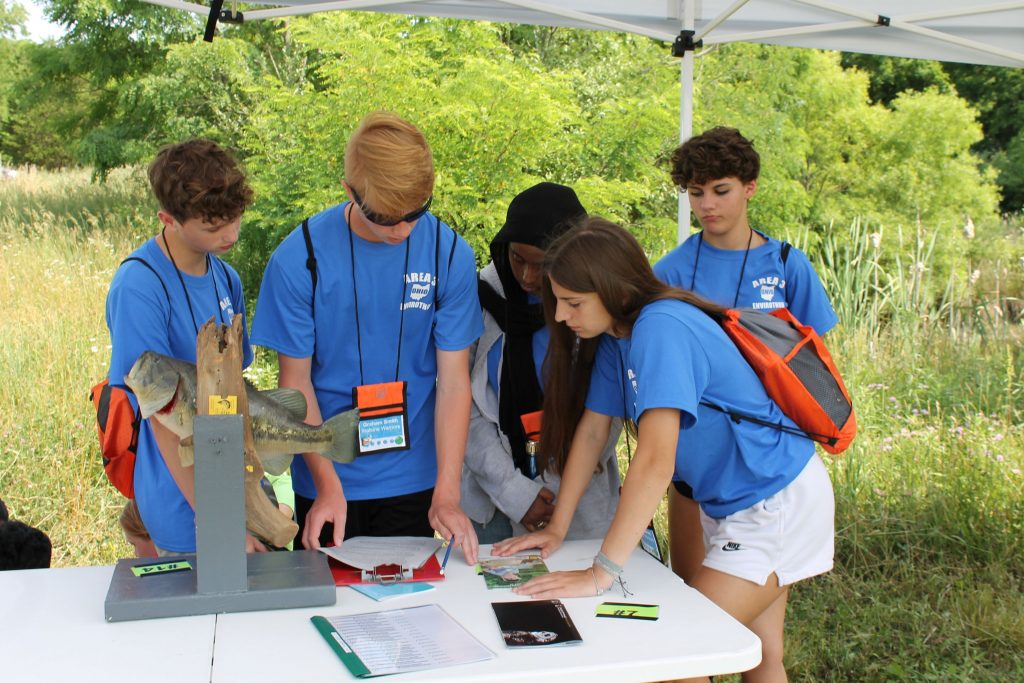
CAUTION! Never remove the radiator cap when the engine is hot – boiling coolant under pressure could cause serious burns. 

"If a car's air conditioning is not maintaining the interior temperature as well as it did in the past, it may mean the refrigerant level is low or there is another problem," Perricone said.

Food and Agricultural Products Center marks second anniversary of Cowboy Meats retail store

Oklahoma State University's Robert M. Kerr Food and Agricultural Products Center will celebrate the Cowboy Meats Retail Store's second anniversary from 1-5 p.m. on Aug. 23.

Cowboy Meats is the meat processing facility at the Food and Agricultural Products Center. In 2022, Joel Jackson, Food and Agricultural Products Center meat pilot plant manager, accomplished his goal of opening the Cowboy Meats Retail Store. The shop is open to the public from 1-5 p.m. every Friday on Dock 4 of the Food and Agricultural Products Center.

"The Cowboy Meats Retail Store has become an integral part of the meat processing activities at the Food and Agricultural Products Center as beef, pork and lamb products are regularly produced from meat science and evaluation courses, meat judging contests, workshops and demonstrations," Jackson said. "In the past two years, the retail store has grown in the OSU and Stillwater communities and provides many benefits in fulfilling its initial goal to minimize wasted product and cover expenses."   

Cowboy Meats offers a variety of locally processed meats including beef, pork, lamb and value-added products. It is a student-operated meat processing plant where student employees assist with harvest, fabrication, further processed products (such as smoked sausages, bacon and boudin), packaging, labeling, marketing and sales.       

"In addition to traditional meat processing, students learn about the retail environment, merchandising and customer service," Jackson said. "Proceeds from retail sales are used to fund student employment and reimburse most of the livestock expenses."

Cowboy Meats reflects the Food and Agricultural Products Center's vision to support and assist Oklahoma's food and agricultural business sector. The Cowboy Meats Retail Store features a selection of rotating items produced by the facility's clients and Industry Advisory Committee members, showcasing a diverse set of local products.

"Cowboy Meats is an excellent platform to showcase how the Food and Agricultural Products Center supports Oklahoma food companies and highlights their stories to increase awareness about Made in Oklahoma products," said Andrea Graves, Food and Agricultural Products Center business planning and marketing specialist. "Due to limited shelf space in the Cowboy Meats Retail Store, a rotational system was implemented to give customers a more diverse set of featured products."         

Select Cowboy Meats retail products are available for student purchase at the 1890 Market in the Central Market Place on campus. For students looking for a snack, on-the-go Cowboy Meats beef sticks are available in the Agricultural Hall Dairy Bar and the Emond Low Library Café Libro. 

The Cowboy Meats Retail Store is on the northwest corner of the Food and Agricultural Products Center at Dock 4. Free temporary parking in the dock area is available to all customers. The Cowboy Meats Retail Store only accepts checks and credit cards. For more information, call 405-744-MEAT.

The Robert M. Kerr Food and Agricultural Products Center, a part of OSU's Division of Agricultural Sciences and Natural Resources, helps to discover, develop and deliver technical and business information that will stimulate and support the growth of value-added food and agricultural products and processing in Oklahoma.

Training Labor to Detect BRD Early is Critical, and a Challenge

"We know that the earlier we detect bovine respiratory disease (BRD), the better the prognosis will be," said Nathan Meyer, DVM, PhD, Boehringer Ingelheim. "Getting the right treatment into that animal early and quickly will increase your chance of a successful outcome."

One reason for that is because by the time the animal shows clinical signs, the disease has already been incubating for several days.1 "If we detect clinical signs in the afternoon and think 'I'll treat her tomorrow,' there could be a lot more damage to the lung by the time tomorrow arrives," agreed Bob Smith, DVM, Veterinary Research & Consulting Services, LLC, which serves customers in California, Colorado, Idaho, Kansas, Nebraska, Oklahoma, Texas and Washington. "The progression of the disease is rapid, and antibiotics cannot reverse the damage that's been done. Early detection and treatment will help stop the infection so it doesn't spread further."
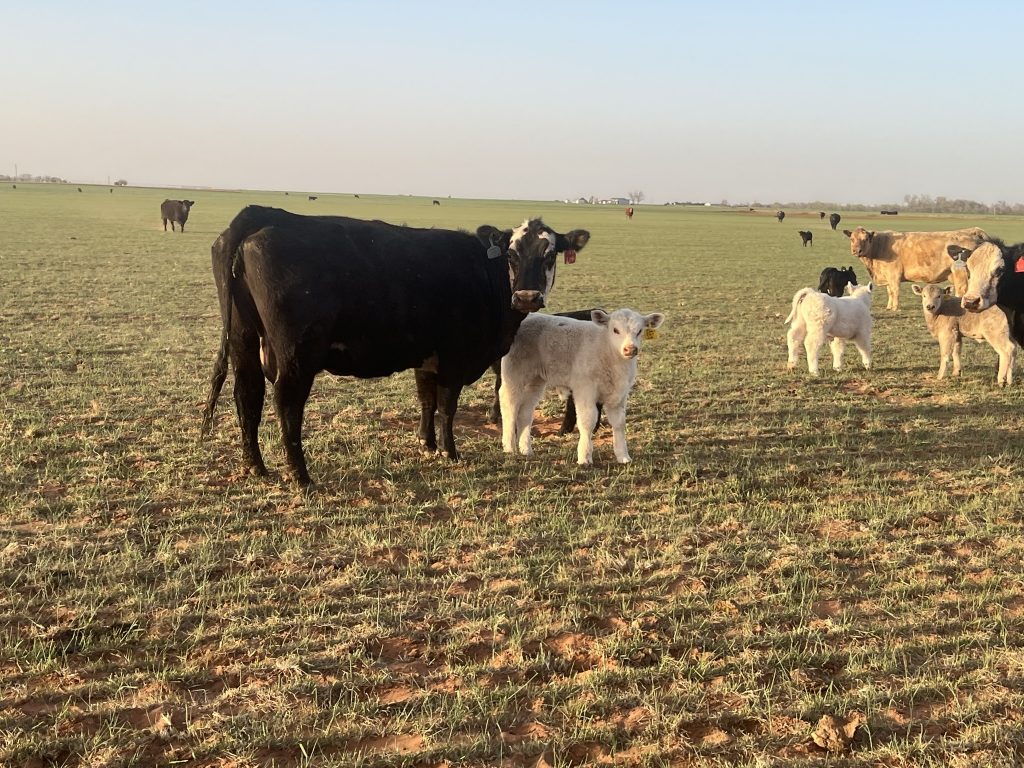
From spreadsheets that show herd data year over year, to software that tracks historical disease incidence on the farm, there are some systems and tools that allow for better identification of high-risk groups of cattle, but they don't offer detection help for individual animals.

Detecting disease

New technology to help diagnose BRD is in the early stages of development including remote detection systems, temperature-detecting ear tags and time management monitors. However, most are cumbersome or expensive, and in their infancy stages.

For now, it still comes down to a trained human eye. And that poses challenges, too.

"Trained labor who can spot BRD early is the key, but it's tough," Dr. Meyer explained. "Early signs are very subtle, but not always linked to BRD. How can a rider see a cough or sneeze and know it's BRD, versus pulling and overtreating an animal that doesn't need it?"

"Detecting sickness is as much an art as it is a science," Dr. Smith offered. "We have scientific observation cues like the D.A.R.T. scoring guide, but it is also subjective."

He provided a few pointers.

  • Look back at a pen of cattle after you've ridden through, after they all settle down and are likely to show you how they really feel.
  • Don't get in too big of a hurry, because you'll be more likely to miss a sick calf.
  • View the cattle from your truck to get a different perspective.
  • Focus is critical. If a pen of cattle generally looks good, a rider may be lulled into complacency. If a rider's mind starts to drift, it's time to back up and look at that pen again.

Dr. Smith reminds riders that if they think they're losing focus, get off the horse, stretch a bit, remount and pick up where they left off.

He then advised gaining as much information as possible about the calf to help make treatment decisions.

  • What is the calf's age? The younger the calf, the more susceptible it is to respiratory disease.
  • How long ago was the calf weaned? A weaned calf that has not had sufficient time to recover from the stress is more susceptible to disease.

Dr. Meyer added that once a calf has been diagnosed, using the appropriate treatment is crucial. "To optimize treatment success, look for a fast-acting, broad-spectrum antibiotic that provides coverage against all the major BRD-causing bacteria."

Training pen riders

The quantity and quality of labor can vary, depending on geography and size of the operation. Smaller, family-run operations raise their family members in the business. Larger operations may have to train people who haven't had a lot of experience with cattle.

"Something as basic as good horsemanship skills — making sure the pen rider is comfortable in the saddle — may need to be taught, and allows him or her to focus on looking at the cattle," Dr. Smith said.

The answer to "How can a rider spot BRD early on?" lies in purposeful training. Drs. Meyer and Smith offered up several ideas:

  • Match up a new employee with an experienced one to shadow.
  • Well-trained employees should review all they are seeing as they ride or walk pens together.
  • As new employees start making their own observations, continue to check animals together so their trainers can provide in-the-moment coaching.
  • Adjust how long the training period is to how much experience an employee has.
  • Schedule follow-up trainings after a newly trained employee has been on their own for a bit.
  • Set up learning time with a veterinarian or consultant, riding pens but also classroom training with videos and images.

Part of Dr. Smith's role is to help train feedlot staff in southwest Kansas, the upper portion of the Texas panhandle and western Oklahoma. In addition to identification training, they also analyze data by pen rider, checking temperatures and illness status of the calves they pulled.

"Detection is tricky; it takes a very astute individual with good training to be able to see the early signs of BRD," Dr Meyer said. "It's always a good idea to work with a veterinarian on training and treatment protocols."

"They all want to do a good job," Dr. Smith added. "It's important to look for ways we can help them improve their skill set, and stay positive and encouraging when they do succeed."

Tanner Beymer: How Ag Appropriations Help Shape the Regulatory Landscape for Cattle Producers

Listen to Ron Hays visit with Tanner Beymer about Ag Appropriations.

Senior Farm and Ranch Broadcaster, Ron Hays, got the chance to visit with Tanner Beymer, Senior Director of Government Affairs at the National Cattlemen's Beef Association, about Ag Appropriations.

"The appropriations process is how we fund the federal government," Beymer said. "Very rarely does NCBA go to appropriators with a funding request."

Beymer said that most of the time, they go to ask Congress to rein in federal agencies' regulators who are creating ridiculous rules; however, after the Chevron Deference decision, new opportunities have been revealed.

"These federal agencies no longer have unilateral authority to broadly interpret vague statutes. That is a very positive step in the right direction," he stated hopefully. "Maybe in the future, we will have to rely on the appropriations process less, which would probably make those bills function more like they are intended to, but until that happens, we heavily rely on that process to get Congress to rein in some of this regulatory red tape."

In response to a question about the decades-old USDA Fairness Rule on the Packers and Stockyards Act, Beymer replies, "These rules are not new. They have been promulgated and USDA has attempted to put these rules on the books three or four different times in the last fifteen or sixteen years. They are right back at it trying to push these rules out that would have very harmful effects on cattle producers, which are the very people they claim the rules are there to help. Hopefully, we can get Congress to intervene through the appropriations process."

He warned that the most dangerous of the rules is the one most recently proposed related to harm to competition. Comments from stakeholders on this proposal are open until September 11th. Beymer was quoted in a NCBA release reacting to a 15-day extension to accepting comments from the public, "While today's extension is welcome, it is not nearly enough time to properly solicit public comment and review a rule that will have such an overarching impact on the cattle industry. The proposed rule is already a direct attack on producer profitability and now USDA is running down the clock to prevent meaningful input from cattle producers."

Meanwhile, Congress's next opportunity to work on ag appropriations will be after Labor Day- and Beymer says that NCBA will be working to block the Fairness Rule's implementation ahead of the end of this calendar year.

Other policies that the NCBA Washington, D.C., office is working on are the CME Group, which is working on a live cattle contract review in addition to the price limit discussions, the Livestock Risk Protection Program, and the National Agricultural Statistics Service, about which he commented, "We are focused on discontinuing some of those big reports that they have been publishing for decades. We are trying to get them to republish some of those reports. We are having some really good success working with bi-partisan, bicameral members of Congress in order to accomplish that. We are banging on all cylinders as far as the policy arena is concerned."

The Beef Buzz is a regular feature heard on radio stations around the region on the Radio Oklahoma Ag Network and is a regular audio feature found on this website as well. Click on the LISTEN BAR at the top of the story for today's show and check out our archives for older Beef Buzz shows covering the gamut of the beef cattle industry today.

U.S. Wheat Production Outlook: Turning a Corner in 2024

As harvest rolls throughout the U.S. Plains, farmers see the culmination of their year's hard work and investment as crops move from field to bin, eventually becoming products consumed worldwide. After three years of drought that reduced yields, impacted quality, and drove near-record abandonment, the 2024 harvest season stands out as the most promising in recent memory.

The following will outline current harvest progress, crop conditions, and export trends for the marketing year to date as the 2024 crop suggests production will "turn a corner" away from the challenges seen over the last three years.

A Look Back

When the 2023 U.S. winter wheat crop was seeded in 2022, income potential for wheat appeared favorable, with prices still elevated by Russia's invasion of Ukraine. As a result, total seeded wheat area for 2023 was up 8% from the prior year. With current prices falling in line, or in some cases below pre-war trends, and input prices remaining high, profit margins have tightened, placing additional pressure on farmers. As a result, 2024 wheat acres were down 5% to 47.2 million acres, nearly even with the five-year average.

Looking at the acreage by class, the area included 24.1 million acres of HRW (down 6% year over year), 6.1 million acres of SRW (down 17%), 10.6 million acres of HRS (up 1%), 2.2 million acres of durum (up 31%), and 4.6 million acres of white wheat (up 6%). Although the 2024 wheat area is lower year over year, the July 2024 World Agricultural Supply and Demand Estimates (WASDE) put U.S. wheat production a 54.6 MMT, up 10% from the year prior on increased yields, improved weather, and good moisture.

Looking at the acreage by class, the area included 24.1 million acres of HRW (down 6% year over year), 6.1 million acres of SRW (down 17%), 10.6 million acres of HRS (up 1%), 2.2 million acres of durum (up 31%), and 4.6 million acres of white wheat (up 6%). Although the 2024 wheat area is lower year over year, the July 2024 World Agricultural Supply and Demand Estimates (WASDE) put U.S. wheat production a 54.6 MMT, up 10% from the year prior on increased yields, improved weather, and good moisture. Source: July WASDE

A Current Harvest Snapshot

As the U.S. winter wheat harvest begins to wind down, the July 21 Crop Progress Report estimates that 76% of winter wheat is in the bin, up 11 points from the year prior and 4 points ahead of the five year average. Warm weather and improved moisture accelerated crop maturation across much of the hard red winter (HRW) growing region and the first by class estimates put HRW production at 20.8 MMT, a 27% increase from the year prior. On the other hand, soft red winter (SRW) production estimates sit at 9.4 MMT, down 23% from last year's record yields, though still sitting 4% ahead of the five-year average.

Spring wheat development remains on schedule with 89% of the crop headed, nearly even with the five-year average. As of July 21, 77% of the crop sits in good to excellent condition, up from 49% last year as rains and cool weather boost yield potential. A reflection of the good ratings, the July WASDE put hard red spring (HRS) production at 14.5 MMT and durum at 2.4 MMT, a yearly increase of 14% and 51%, respectively. For white wheat (which includes both winter and spring varieties), production estimates sit at 7.6 MMT, a 19% increase year over year.

Although the 2024 wheat area is lower year over year, the July 2024 World Agricultural Supply and Demand Estimates (WASDE) put U.S. wheat production a 54.6 MMT, up 10% from the year prior on increased yields, improved weather, and good moisture. The USDA estimates also show renewed optimism for exports, with the July projections setting exports at 22.4 MMT, the highest since 2020/21, but still 15% below the pre-drought five-year average. Source: July WASDE

Although the 2024 wheat area is lower year over year, the July 2024 World Agricultural Supply and Demand Estimates (WASDE) put U.S. wheat production a 54.6 MMT, up 10% from the year prior on increased yields, improved weather, and good moisture. The USDA estimates also show renewed optimism for exports, with the July projections setting exports at 22.4 MMT, the highest since 2020/21, but still 15% below the pre-drought five-year average. Source: July WASDE

Customers Capture Value

More normalized production has helped prices become more competitive in recent weeks. When U.S. wheat prices hit multi year lows in late June, buyers responded with increased purchases of U.S. wheat, peaking at 805,300 MT on June 27, 2024. Over the last month, weekly net sales averaged 576,200 MT and as of July 11, the total known outstanding sales for MY 2024/25 reached 7.7 MMT, 49% ahead of last year's pace.

Customers worldwide have increased their purchases relative to last year, with notable increases in four of the top five U.S. wheat importers to date. Likewise, buyers in Panama, Brazil, Thailand, and Indonesia have logged additional sales, showing increase of 571%, 240%, 175%, and 273%. Source: USDA FAS Export Sales Data

Customers worldwide have increased their purchases relative to last year, with notable increases in four of the top five U.S. wheat importers to date. Likewise, buyers in Panama, Brazil, Thailand, and Indonesia have logged additional sales, showing increase of 571%, 240%, 175%, and 273%. Source: USDA FAS Export Sales Data

Customers worldwide have increased their purchases relative to last year, with notable increases in four of the top five U.S. wheat importers to date. The USDA's July projections reflect this renewed optimism, setting exports at 22.4 MMT, the highest since 2020/21, though still 15% below the pre-drought five-year average.

As the harvest progresses, there is an opportunity to capitalize on the value of U.S. wheat. Price spreads have narrowed and continue to align more closely with other origins. Improved production simplifies purchasing decisions, and as always, U.S. Wheat Associates is ready to help customers find the best value.

Ceremonial Signing Held for Legislation to Lock Oklahoma's Clock

Senate Bill 1200 by Sen. Blake Cowboy Stephens, R-Tahlequah, was ceremonially signed by Gov. Kevin Stitt Wednesday. The measure provides that the State of Oklahoma shall adopt permanent Daylight Saving Time (DST) upon approval of federal legislation to allow states to choose whether or not they change their clocks twice a year.

"This day has been many years in the making as I have tirelessly advocated for our state to lock our clock on permanent Daylight Saving Time. Oklahomans, businesses, and the state as a whole will greatly benefit from an extra hour of daylight in the evenings throughout the winter months. I truly appreciate everyone who helped us get this legislation across the finish line and those who joined us for today's ceremonial bill signing to recognize this forward-thinking measure. I look forward to further collaboration with our federal delegation to support the passage of the Sunshine Protection Act and officially lock Oklahoma's clock," Stephens said.

Speaker Charles McCall served as the House author of SB 1200.

Supporting Climate-Informed Decision Making to Reduce Agricultural Production Risk with Dr. Andres Cibils

Listen to KC Sheperd speak with Dr. Andres Cibils, about the most recent National Weather Assessment and it's implications to farming in the Southern Plains.

Farm Director KC Sheperd spoke with Dr. Andres Cibils, Director of the USDA Southern Plains Climate Hub, to learn more about the most recent National Weather Assessment. Dr. Cibils is a Rangeland Scientist whose professional interests revolve around resilient rangeland-based animal agriculture systems.

The USDA Southern Plains Climate Hub, based in El Reno, Oklahoma, serves Oklahoma, Kansas, and Texas. The Climate Hub's central mission is to support climate-involved decision-making, reduce agricultural risks, and build climate resilience. This is accomplished through three main workstreams: Science and data synthesis, Technology for development and decision support, and outreach by partnering with extension offices and other agencies.

During the Peanut Symposium, Dr. Cibils shared the results of the fifth, and most recent, national climate assessment. The report, published every four years by the U.S. Government, is mandated by Congress, and summarizes recent trends and climate projections.
Some of the trends outlined in Dr. Cibils's presentation showed through weather records from the previous century, that temperature and precipitation trends are changing. Roughly, he said, there is somewhat increased precipitation on the eastern side of the continental U.S., and decreased precipitation on the western side according to a comparison of the latest 30-year normal to the 20th-century average for rainfall.

He added, "With rainfall, the other thing we see is that, depending on the region, but in general and especially on the eastern part of the United States, is an increasing frequency of extreme rainfall events."

Concerning temperatures, he said that the continental United States is hotter according to a comparison of the latest 30-year normal to the average of the entire century.  "In general, in the western part of the United States, we see larger increases in annual mean temperatures. In the eastern United States, we also see increases, but in many cases, not as severe as what we saw in the western United States."

He added that extreme patterns have changed according to the most recent national climate assessment. "The frequency of hot days and warm nights, especially, has varied across the country, but the frequency in warm nights has increased quite a lot."

The implications for the Southern Plains that the recent national weather assessment has revealed are twofold: the combination of varying precipitation patterns and hotter temperatures affect the frequency, onset, and duration of flash droughts.

"This situation of drought characteristics happening sooner because of the compounding effect of a period of less rain and higher temperatures is one thing we have observed," he explained. "On the other side of the spectrum for places in the Southern Plains region where we received more annual rainfall, the increased frequency of extreme rainfall events increases the risk of flooding."

Additionally, the latest climate assessment maps showed changes in the frequency of later frost dates which also impacts crops and animal agriculture in the Southern Plains.

When asked what concerns his Climate Hub the most, Cibils replied, "One of the things that we are worried about is being of use to our producer base. In being able to work with our producer base to develop tools that will help with decision-making in varying weather and climate situations.

"There are many sources of information and a variety of decision-support tools out there, but they are not easy to find. So, our Hub is trying to develop our website to serve as a real hub for weather and climate information."

Dr. Cibils said that producers can help the USDA Southern Plains Climate Hub better serve them by providing feedback through a variety of tools they have developed with various partners, one of which in known as the Grass-Cast. "It gets used quite a bit by folks involved in ranching on rangelands. With this tool, we try to reach out to people who we know are using it to receive feedback about how to improve it. Feedback from producers and users of these tools and websites is very important to help us improve them, to know which tools are being used, and which tools are not useful at all."

Producers can access the information on the website by Googling "Southern Plains Climate Hub" or by clicking here.


Ron salutes our daily email sponsors!

Upcoming Events

November

S M T W T F S
1 2 3 4 5 6 7
8 9 10 11 12 13 14
15 16 17 18 19 20 21
22 23 24 25 26 27 28
29 30          

Visitor Polls

Do you like the new website?
Add a Comment
(Fields are Optional)

Your email address is never published.